As you have seen from the readings, the Ancient Greeks were concerned with an elaboration of the concepts of Matter, Being, and Becoming. Below is a history of the ideas of the Ancient Greek philosophers and their relation to the thinking in modern physics. These are notes to a history of the development of the Natural Sciences.
Thales of Miletus
Thales and the Milesian School: “Water is the material cause of all things.”:
Expresses three fundamental ideas of philosophy:
The question as to the material cause of all things: the “what” and the “how” of things
The demand that the question be answered in conformity with reason without resort to myths or mysticism: the grounding of the principle of reason
The postulate that ultimately it must be possible to reduce everything to one principle
Thales’ statement is the first expression of the idea of a fundamental substance of which all other things were transient forms (i.e. water as Being and the forms of things, Becoming). Rest and motion, the permanent and the transient were central issues for the Greeks.
“Substance” is not to be understood in the material sense. Life is inherent in this “substance”.
Aristotle ascribes to Thales the statement: “All things are full of gods.”
It may be best to consider Thales’ statement in a metaphysical sense, that is, the qualities and characteristics of water are the fundamental principles of all things (categories).
Anaximander
Anaximander:
Denies that the fundamental substance is water or any known substance.
The primary substance is infinite, eternal, and ageless (Being) and encompasses the world. This infinite substance undergoes no change.
The primary substance is transformed into the various substances that we see before us.
“Into that from which things take their rise they pass away once more, as is ordained, for they make reparation and satisfaction to one another for their injustice according to the ordering of time.”
Here we have the antithesis of Being and Becoming. The primary substance: the infinite, ageless, undifferentiated Being, degenerates into various forms which leads to endless struggles. Becoming is perceived as a debasement of infinite Being—a disintegration into the struggle ultimately expiated by a return into that which is without shape or character.
The struggle is the struggle of opposites: hot and cold, dry and moist. The temporary victory of one over another is the injustice for which they finally make reparation in the ordering of time. According to Anaximander there is “eternal motion”, the creation and passing away of worlds from infinity to infinity.
Relation to modern science: the physicists today try to find a fundamental law of motion for matter from which all elementary particles and their properties can be derived mathematically.
The fundamental equation of motion may refer to waves of a known type, to proton or meson waves, or to waves of an essentially different character which have nothing to do with any of the known waves or elementary particles.
First case: All other elementary particles can be reduced in some way to a few sorts of ‘fundamental’ elementary particles.
Second case: All different elementary particles could be reduced to some universal substance which we may call matter or energy, but none of the different particles could be preferred to the others as being more fundamental. The second case is similar to Anaximander. In general, quantum physicists hold this view.
Anaximenes of Miletus
Anaximenes: Air is the primary substance. “Just as our soul, being air, holds us together, so do breath and air encompass the whole world.”
Anaximenes says that ‘condensation’ causes the change of the primary substance into the other substances.
Heraclitus of Ephesus
Heraclitus of Ephesus: the concept of Becoming
That which moves, the fire, is the basic element
The difficulty: to reconcile the idea of one fundamental principle with the infinite variety of phenomena is solved by recognizing that the strife of opposites is really a kind of harmony.
The world is a ‘one and a many’ and it is the opposite tension of the opposites that constitutes the unity of the One.
“We must know that war is common to all and strife is justice, and that all things come into being and pass away through strife.”
We can see that ancient pre-Socratic Greek philosophy deals with the question of the “One and the Many”
For our senses, the world consists of an infinite variety of things and events, colours, sounds. In order for it to be understood, we must impose some kind of order, and order means what is equal, to make something a unity. This is called the mathematical projection. From this springs the need and search for one fundamental principle to account for the infinite variety of things.
Since the world appears to be made of matter, a material cause of all things was looked for.
From this comes the idea of the undifferentiated Being, whether material or not, to attempt to explain the infinite variety of things.
This leads to the antithesis of Being and Becoming and finally to Heraclitus’ solution: change is the fundamental principle. Change itself is not a material cause and therefore it is represented by Heraclitus as the fire, the basic element, which is both matter and a moving force.
This is very close to modern science: if we replace fire with “energy” we can almost repeat Heraclitus’ statements word for word.
“Energy” is the substance from which all elementary particles, all atoms and therefore all things, are made.
Energy is that which moves. Energy is a substance since its total amount does not change and the elementary particles can be made from this
“Energy” is the substance from which all elementary particles, all atoms and therefore all things, are made.
Energy is that which moves. Energy is a substance since its total amount does not change and the elementary particles can be made from this substance as is seen in many experiments.
Energy can be changed into motion, heat, light and tension.
Parmenides
Parmenides: the concept of the One
“One cannot know what is not – that is impossible – nor utter it; for it is the same thing that can be thought and that can be.”
For Parmenides, there is only the One and there is no becoming or passing away. Parmenides denies the existence of empty space for logical reasons. Since change requires empty space, he dismissed change as an illusion. Parmenides presents a paradox.
Empedocles
Empedocles: the shift from materialism to dualism.
There are four elements: earth, air, fire, water. The elements are mixed together and separated by the actions of Love and Strife. Love and Strife are corporeal elements and responsible for imperishable change.
For Empedocles: there is the infinite Sphere of the One, but in this primary substance, Love has mixed all four elements. When Love is passing away, Strife enters and the elements are partially separated and partially combined. After that, the elements are completely separated and Love is outside the World. Finally, Love is bringing the elements together again and Strife is passing out, so that we return to the original Sphere.
Empedocles: the four elements are not so much fundamental principles as real material substances. The mixture and separation of a few substances explains the infinite variety of things and events. While it does not satisfy those who wish to think in fundamental principles, it is a reasonable kind of compromise which avoids the difficulties of a monistic view and allows the establishment of some order.
Anaxagoras
Anaxagoras: all change is caused by mixture and separation. All things are composed of small “seeds” and this allows for a geometrical interpretation of the term “mixture”: see two sands of different colours and relative positions, and the number of grains may change but they are held in ‘proportion’ in one thing or another.
“All things will be in everything; nor is it possible for them to be apart, but all things have a portion of everything.”
The universe of Anaxagoras is set in motion not by Love and Strife but by “Nous” which is translated “Mind”.
From Anaxagoras’ seeds, it is a small step to the concept of the atom of Leucippus and Democritus.
The antithesis of Being and Not-being in Parmenides is made into the “Full” and the “Void”.
Being is not only One, it can be repeated an infinite number of times. This is the atom, the indivisible smallest unit of matter. The atom is eternal and indestructible, but it is finite in size. Motion is made possible by the empty space between atoms. This is the first time that a concept of the smallest ultimate particle as the fundamental building block of matter is expressed.
Democritus
Democritus’ atom consists not only of the “Full”,but also of the “Void” of empty space in which the atoms move. The logical objection of Parmenides against the Void, the not-being did not exist, is rejected to comply with experience.
From the modern point of view, the empty space between atoms is not nothing; it is the carrier for geometry making possible the various movements of the atoms. In the theory of general relativity, the answer is that geometry is produced by matter or matter by geometry.
This corresponds to the view of many philosophers that space is the extension of matter. But Democritus departs from this view to make change and motion possible.
The atoms of Democritus are all of the same substance, have the property of being, and have different sizes and shapes.
They were pictured as divisible mathematically, but not in a physical sense.
The atoms could move and occupy different positions in space, but they have no other physical properties.
They have no sensible qualities: sense, smell, taste.
The properties of atoms that we perceive with our senses are supposedly produced by the movements and positions of the atoms in space.
Just as tragedy and comedy can be written by using the language of the alphabet, the vast variety of events/experiences/things in the world are realized by the same atoms through their different arrangements and movements.
Geometry and the study of motion (I.e. the study of space and time) are made possible by the Void.
“A thing merely appears to have colour, it merely appears to be sweet or bitter. Only atoms and empty space have a real existence.” –quote attributed to Democritus
“Nothing happens for nothing, but everything from a ground and of necessity.” – Leucippus
The atomists see everything as a causality; causality can only explain later events by earlier events, but it can never explain the beginning.
Plato
Plato: The Timaeus.
Plato was not an atomist; Plato disliked Democritus so much that he thought all of his books should be burned. But Plato combines ideas near to the atomists with those of the Pythagoreans and the teachings of Empedocles.
The Pythagorean school: an offshoot of Orphism which goes back to the worship of Dionysus. There is an establishment of a connection between religion and mathematics. Pythagoreans were the first to realize the creative force inherent in mathematical formulations.
The Pythagoreans discovered that two strings sound in harmony if their lengths are in a simple ratio. For the Pythagoreans, the simple mathematical ratio between the length of the strings created the harmony in sound.
Plato knew of the discovery of regular solids made by the Pythagoreans and of the possibility of combining them with the elements of Empedocles. Earth=cube, air=octahedron, fire=tetrahedron, water=icosahedron. There is no element that corresponds to the dodecahedron; here Plato says: “There was a fifth combination which the God used in his delineation of the universe.”
If the regular solids, which represent the four elements, can be compared to atoms at all, it is clear in Plato that they are not indivisible. Plato constructs the regular solids from two basic triangles: the equilateral and the isosceles, which when put together form the surface of solids.
The elements can be partly transformed into each other. The regular solids can be taken apart into their triangles and new regular solids can be formed of them. Ex: one tetrahedron and two octahedron can be taken apart into 20 equilateral triangles which can be recombined to form one icosahedron. That means: one atom of fire and two atoms of air can be combined to give one atom of water.
But the fundamental triangles cannot be considered as matter as they do not have extension in space. It is only when the triangles are put together to form a regular solid that a unit of matter is created.
The smallest parts of matter are not the fundamental Beings, as in the philosophy of Democritus, but are the mathematical forms.
The form is more important than the substance of which it is the form since it is the form that brings the thing to presence.
Comparison of Ancient Greek and Modern Science:
There might be some confusion over the use of the word “atom”. Democritus’ atoms should be compared to the elementary particles: the proton, neutron, electron, and meson.
Democritus was well aware that atoms do not have the properties of colour, taste and smell but their motion and arrangement explain these properties. The atom is an abstract piece of matter.
The atom does have the quality of “being”: extension in space, shape and motion. Democritus leaves these qualities because it would have been difficult to speak about the atom at all if such qualities had been taken away. On the other hand, this implies that the concept of the atom cannot explain geometry, extension in space or existence because it cannot reduce them to something more fundamental (which explains, perhaps, why Plato might want to burn his books).
Let’s shift to the modern view: What is an elementary particle?
“A neutron” but we can give no well-defined picture of what we mean by the word: a particle, a wave, a wave packet; but we know that none of these descriptions is accurate.
The neutron has no colour, taste or smell. It resembles the atom of Greek philosophy.
The concepts of geometry and motion, space and time, cannot be applied to it consistently.
If one wants to give an accurate description of the elementary particle-with an emphasis on the word ‘accurate’- the only thing that can be written down is a ‘probability function’. But then one sees that not even the ‘quality’ of being belongs to what is described. It is a possibility for being or a tendency for being (Aristotle). The elementary particle is far more abstract than that of the Greeks’ atom and it is this abstractness that may help it to explain the behaviour of matter.
In Democritus, all atoms consist of the same ‘substance’. The elementary particles of modern physics carry a mass in the same limited sense that they have other properties.
Since mass and energy are, according to the theory of relativity, essentially the same concepts we can say that all elementary particles consist of energy. Ergo: energy is the primary substance of the world.
The views of modern physics are very close to Heraclitus: fire is energy; energy is that which moves; it is the primary cause of all change and energy can be transformed into matter, heat or light. The strife of opposites in Heraclitus can be found in the strife between two different forms of energy.
For Democritus, the atoms are eternal and indestructible units of matter which can never be transformed into each other.
Modern physics stands with Plato and the Pythagoreans and against the materialism of Democritus on this issue.
The elementary particles can be transformed into each other. Two elementary particles moving through space at a very high velocity, collide, and create many new elementary particles from the available energy and the old particles have disappeared in the collision.
The elementary particles in Plato’s Timaeus are finally not ‘substance’ but mathematical forms. “All things are numbers” according to Pythagoras.
In modern physics, the elementary particles will finally also be mathematical forms, but of a much more complicated nature than the Pythagorean triangles.
The Greeks thought of static forms and found them in the regular solids. Modern science, since Newton, is concerned with the dynamic problem, the creation of a ‘law of motion’. Newton’s law of motion holds at all times, it is in this sense eternal, whereas the geometrical forms, like the orbits, are changing.
The mathematical forms that represent the elementary particles will be the solution of some eternal law of motion for matter. This is a problem which has not been solved.
Werner Heisenberg
Heisenberg: “The final equation of motion for matter will probably be some quantized nonlinear wave equation for a field of operators that simply represents matter, not any specified kind of waves or particles….the fundamental equation for matter [will follow] by much the same mathematical process by which the harmonic vibrations of the Pythagorean string follow from the differential equation of the string.”
The final fundamental equation should result in a “simple” (Heisenberg’s words) mathematical formula. “This fact fits in with the Pythagorean religion, and many physicists share their belief in this respect…”
WARNING: There is an enormous difference between modern science and Greek philosophy and the difference is the empiricist attitude of modern science. Since Galileo and Newton, modern science has been based upon a detailed study of nature and upon the postulate that only such statements should be made as can be verified by experiment. The scientific method of Francis Bacon.
The idea that one could single out from nature a series of events by experiment in order to study the details and to find out the constant law in the continuous change did not occur to the Greek philosophers. Why?
When Plato says that the smallest particles of fire are tetrahedrons, it is difficult to see what he means. Is the form symbolic? Are they rigid or elastic? What force can separate them into equilateral triangles? (the mind?)
When modern science states that the proton is a certain solution of a fundamental equation of matter, it means that we can from this solution deduce mathematically all the possible properties of the proton and check the correctness of the solution by experiments in every detail.
The possibility of checking the correctness of a statement experimentally with very high precision and in any number of details gives enormous weight to the statement that could not be attached to the statements of early Greek philosophy.
The Greeks show that by combining our ordinary experience of nature with untiring efforts to get some logical order into this experience and to understand its general principles, this gets one far along the path to knowledge.
“What we observe is not nature in itself but nature exposed to our method of questioning. Our scientific work in physics consists in asking questions about nature in the language that we possess and trying to get an answer from experiment by the means that are at our disposal.”–Werner Heisenberg
Introduction:
In examining what we call the natural sciences we are asking the question: what are the essential characteristics of the modern age and how are these related to what we call the natural sciences? In understanding the essence of the natural sciences, we shall see why it is the most dominant of the subject choices in the IB Diploma program. Why is the knowledge arrived at in the Natural Sciences considered to be “knowledge” in its most “robust” form and what is it knowledge of?
The characteristics of the modern age: 1. the first is science itself, particularly mathematical physical science, and we will look at the details of this science later. 2. Second is machine technology which arises from out of the essence (the “whatness”) of modern technology which is identical with the essence (the what and the how) of modern metaphysics. 3. Third is the ‘experience’ of art as aesthetics, which is considered to be a ‘subjective experience’, and this is dealt with in the section on The Arts as an Area of Knowledge and in those reflections on Reason in the Core Theme. 4. Fourth is the idea that all human activity is conceived and consummated as ‘culture’ (our IB Learner Profile). 5. Fifth is the loss of the gods and the resulting psychological and historical investigation of myths. These characteristics of the modern age have been determined from out of the metaphysics of the modern age which have been called here modern technology.
To characterize what modern technology is, we can say that it is the disclosive looking that disposes of the things which it looks at. Technology is the framework that arranges things in a certain way, sees things in a certain way, and assigns things to a certain order: what we call mathematical projection. TOK uses the term “modelling” for this framework that arranges the things. The term taxonomy is also an appropriate term to use when attempting to arrive at the essence of what this viewing looks like. The looking (the theory) is our way of knowing which corresponds to the self-disclosure of things as belonging to a certain order that is determined from within the framework itself. From this looking, human beings see in things a certain disposition; the things belong to a certain order that is seen as appropriate to the things i.e. our areas of knowledge. The seeing of things within this frame provides the impetus to investigate the things in a certain manner. That manner is the calculable. Things are revealed as the calculable. Modern technology is the disclosure of things as subject to calculation. Modern technology sets science going; it is not a subsequent application of science and mathematics. “Technology” is the outlook on things that science needs to get started. Modern technology is the viewing/insight into the essence of things as coherently calculable. Science disposes of the things into a certain calculable order (the knowledge framework as based on the principle of reason). Science is the theory of the real, where the truth of the things that are views and reveals those things as disposables.
The metaphysics of the modern age (technology) has been accomplished by the determination of what is as ‘object’ and the judgement regarding what we conceive to be the essence of truth. This metaphysics grounds our age in that through a specific interpretation of what is (beings/things as objects) and through a specific comprehension of truth (as correspondence, correctness), it gives to our age the basis or ground (history) upon which it has been and is essentially formed. This basis or grounding holds complete domination over all the things/beings that come to distinguish our age in that it provides the interpretations of what those things/beings are. It is our metaphysics as technology that forms the paradigm that determines how we perceive things/beings in our age and, thus, the methodologies of our sciences. This paradigm is the understanding of the environment, including our whole being-in-the-world (shared knowledge) as object. Technology is the meta-physic of the age, the modern age.
How Is Modern Science “Mathematical”: The Essence and History of Method
Ta mathemata is what the Greeks meant by that which human beings know in advance in their observations of whatever is and in their interactions with the things of the world: the corporeality of bodies, the vegetable character of plants, the animality of animals, the humanness of man. Along with this already-known (the mathematical in the Greek sense) are numbers. If we come upon three books on our desk, we recognize that there are three of them. But the number three, threeness, we already know. This means that number is something mathematical. Because numbers represent the most striking example of the always-already-knowns and is thus the most familiar instance of the ‘mathematical’, mathematics is understood by us as numerical (Heidegger). But the essence of the mathematical for the Greeks was not numberness.
Physics is, in general, knowledge of nature and in particular knowledge of material corporeality (mass) in motion. The corporeality (mass) manifests itself immediately and universally in everything natural, even if in a variety of ways (chemistry, biology, etc.). If physics takes shape explicitly as something mathematical, then this means that something is projected in advance as what is already known. That projecting in advance as what is already known is already what is determined to be nature i.e. what we call the “object”, the ‘standing against’. This projection or ground plan which establishes nature as object is, for us, what we call Classical Physics or Newtonian physics. In Classical physics, nature is set up as a grid or framework of calculable forces. Physics constrains nature in its very way of posing nature, in its theoretical stance. Nature is required to report in a certain way and can only report in this way, and the way is determined by the principle of reason. In modern atomic physics, unfortunately, Nature is not reporting according to our expectations and so we speak of the crisis of science as to what it conceives knowledge to be. We cannot have knowledge of nature in the way that we have traditionally understood knowledge and in the way that we have traditionally understood Nature. (See the quote from Heisenberg above).
In what is called Classical Physics, the projection or ground plan is the self-contained system of motion of units of mass related in space and time. Motion means change of place. In Newton’s physics, no motion or direction of motion is superior to any other. Every place is equal to every other place. No point in time has superiority or preference to any other. Every force is defined according to (is only) its consequences in motion, and that means in the magnitude of change of place in the unity of time. Every event must be seen as to be fitted to this ground plan of nature. Only from within this ground plan of nature does an event in nature become visible as such an event. From this, Physics must report itself numerically and as calculable. The projected plan of Nature finds the guarantee of its truth through the physical research (the scientific method, experimentation) in that every one of its questioning steps is bound in advance to adhere to the ground plan which is the principle of reason. This rigor of experimental research is bound within the projected plan at any given time. It is somewhat analogous to a blueprint in architecture. The ground plan is what has been called the principle of reason.
Newton
The idea that nature is a calculable framework of forces stands at the beginning of experiments, or prior to the experiments, and is not the result of experiments. Galileo’s rolling of balls down an inclined plane does not result in a view of nature as calculable forces; Galileo must first see, must first have the “theory” in view in advance of what he believes that things in general are like. The grounding of this theory, this looking, is beautifully encapsulated in the title of Newton’s great work Philosophae Naturalis Principia Mathematica, which we translate The Mathematical Principles of Natural Philosophy. “Natural Philosophy” is science of nature or what we call knowledge. Modern science must possess this disclosive looking, these mathematical principles or axioms, before it sets to work, before it conducts experiments. In the light of this mathematical view, science devises and conducts experiments in order to discover to what extent and how nature, so conceived, reports itself. Experimentation itself cannot discover what nature is, what the essence of nature is, since a conception of the essence of nature is presupposed for all experimentation. Without the conception of nature in advance, the scientist would not know what sort of experiments to devise.
The rigor of mathematical physical science is exactitude. Science cannot proceed randomly. All events, if they are at all to enter into representation as events of nature, must be defined beforehand as spatio-temporal magnitudes of motion. Such defining is accomplished through measuring, with the help of number and calculation. Mathematical research into nature is not exact because it calculates with precision; it must calculate in this way because its adherence to its object-sphere (the objects which it investigates) has the character of exactitude. In contrast, the Group 3 subjects, the Human Sciences, must be inexact in order to remain rigorous. A living thing can be grasped as a mass in motion, but then it is no longer apprehended as living. The projecting and securing of the object of study in the human sciences is of another kind and is much more difficult to execute than is the achieving of rigor in the “exact sciences” of the Group 4 subjects.
Knowledge Questions in and for the Sciences
In examining knowledge questions that arise in the sciences, we can begin by saying that science itself cannot discover whether nature in itself is mathematical or that nature is lawful or that nature excludes final causes. Science presupposes these ideas in advance (faith as a way of knowing) and then conducts experiments especially designed to determine which mathematical formulas apply and which laws hold for nature. The mathematical goal or result has to be designed into the experiment; only mathematical experiments give mathematical results and, thus, physics must report itself mathematically. This is what the philosopher Kant meant when he stated that natural science was set on a secure course only when nature was constrained to answer not random questions but questions stemming from an explicit design of reason. The design of reason in natural science is the design of mathematical reason is founded on the principle of reason: nothing is without reason which restated can be said to mean “that there is nothing for which a sufficient reason cannot be given”.
Modern science then could never discover that nature is non-mathematical, or unlawful, or that final causes exist in nature for these results are ruled out in principle. Modern science’s faith in itself is a fundamentalist faith; it is a faith based on the principle of reason as its ground. Scientific experiments can do no more than demonstrate how nature reports itself if viewed in a certain way when asked certain sorts of questions. Science can indeed prove that certain laws apply to nature, but science must assume that it is nature to which the laws apply. This is the meaning of the statement from Heisenberg which begins this writing; and he should know as he is the one who discovered, or rather, created the new mathematics necessary for the development of quantum physics. Science has made great strides within its domains once it has been given its domains to work on. Science, however, has no power over the adequacy of those domains as a conception of nature. Is the field in which science does its work of experimentation truly nature? According to Heisenberg, no. Are things, in general, essentially mathematical? Is nature genuinely a calculable framework of forces? The answers to these questions depend on how much truth there is in the theoretical outlook that precedes the practice of science.
The pursuit of science is the human response to a certain mode/way in which truth discloses or reveals itself. Science arises as a response to a claim laid upon human beings in the way that the things of nature appear. It is Being that makes this claim (but, then, what is Being?). The sciences set up certain domains and then pursue the revealing that is consistent within those domains. The domain, for example, of chemistry is an abstraction. It is the domain of chemical formulas. Nature is a realm of formulae. Scientists pose this realm by way of a reduction; it is an artificial realm that arises from a very artificial attitude towards things. Water has to be posed as H2O. Once it is so posed, once things are reduced to chemical formulas, then the domain of chemistry can be exploited for practical ends. We can make fire out of water once water is seen as a compound of hydrogen and oxygen. In the illustration, we have the chemical formula for the physical composition of Van Gogh’s yellow. While interesting, it tells us absolutely nothing of the painting itself.
What are the implications of this? The things investigated by chemistry are not “objects” in the sense that they have an autonomous standing on their own i.e. they are not “the thrown against”, the jacio, as is understood traditionally. For science, the chemist in our example, nature is composed of formulas, and a formula is not a self-standing object. It is an abstraction, a product of the mind. A formula is posed; it is an abstraction. A formula is posed; it is an ob-ject, that is, it does not view nature as composed of objects that are autonomous, self-standing things, but nature as formulas. The viewing of nature as formulas turns things into posed ob-jects and in this posing turns the things of nature, ultimately, into dis-posables. This is what the physicist Heisenberg is saying in his quote introducing this unit. The viewing of water as H2O is an example of a Rubicon that has been crossed. There is no turning back once this truth has been revealed. That water can be turned into fire has caused restrictions in our bringing liquids onto airplanes, for instance, for they have the capability of destroying those aircraft.
Technology as a Way of Knowing and Science
How is modern science related to technology? It should be remembered that technology is theoretical and not instrumental as has been discussed throughout these writings. Technology reveals or discloses truth or aletheia and determines the modes of disclosedness or revealing of truth within the areas of knowledge or domains of the natural sciences. Theory in its original sense means ‘the looking back’ in response to Being’s look upon us. Technology is the way of our looking back upon things in correspondence to the way that the things give themselves to us to be revealed as what they are. Technological knowledge is knowledge of what it means to be; it is an ontology. It comes prior to the establishment of the domains or areas of knowledge of the sciences. The challenging, commandeering stance of technology views nature as a reserve of disposables and gives rise to this stance or under-standing of nature, the ground of our standing and for our posing.
The focus of this looking upon nature is energy. All we see in nature is energy or the power to be harnessed for our purposes, for the securing of our purposes. Money is, really, congealed energy. The main point here is that nature presents itself as a storehouse of disposables, particularly in the form of energy, only when disclosed in the mode of disclosure that is characteristic of modern technology. A contrary view to this looking is presented in imagination as a way of knowing included under the area of the Arts.
It is not because science attacks or challenges nature with experiments and instruments that leads to the commandeering stand. It is the pre-understanding of nature as something that can be challenged and attacked that gives direction to the experiments and sets science to its work. The challenging precedes the experimentation and imposes the frame or understanding of nature, through its mathematics, that allows the experiment to fill in the details, reporting how nature is in its details mathematically. Nature has to first be established as that which can be dominated through the applications of mathematics and instruments and this establishment of nature as such is a choice or judgement of human beings. Science presupposes technology, not vice versa. Modern technology is not applied science; science is applied technology, the applied knowledge of what we think things are. Technology is the basis of science and is not based on science.
But, someone may argue, mathematical natural science arose almost two hundred years prior to modern technology so how can this assertion be correct. This view is based on the instrumental view of technology and does not consider the essence of modern technology. The essence of modern technology is nothing technological. The framing or en-framing stance is not a technological gadget, not an IPad or a technological thing at all; in fact, it is not a thing at all. The essence of modern technology is not a thing but a theory, a way of looking and of understanding of what makes a thing a thing at all. It is a way of looking disclosively at things that allows the manufacture of high-tech things. If we look at the order, we have: technology > modern science > modern technological gadgets, Science works as mediator: it serves to establish the world view where modern technological gadgets can find their home, their place. Science serves the essence of technology by bringing about the com-posing (composites, the producing) of high tech things. The essence of modern technology is the beginning or source, but it does not manifest itself until the end, in the technological things, much as the acorn does not manifest itself as the oak until the end.
The essence of what something is determines from the start what that something will be, but it does not manifest itself until the end. We cannot see the oak in the acorn until the acorn fully manifests itself as an oak. We do not see the efficacy of the theory until it comes to its fruition and realization in practice. The essence of something does not show itself from the start but remains hidden until the end, until its end products appear and are pro-duced or “brought forth”. The essence of what something is keeps itself concealed the longest. Science mediates between the essence and the things of technology. Science through its mathematical projection is logos.
Modern Physics and Causality: A Few Notes on Heisenberg
Heisenberg in his lecture “The Picture of Nature in Contemporary Physics”, from which the quote that begins this writing is taken, presented the thesis that the picture of nature in contemporary mathematical physics is not a picture of nature. Natural science is no longer natural science. The nature that the scientist explores is no longer the nature of common sense or common experience. Heisenberg states that the representations of physicists are abstractions and do not picture that which we experience as nature. Currently, many physicists do not care what the object of scientific knowledge is as long as the practical results are guaranteed. This is a fundamentalist faith. From this fundamentalism we can speak of the crisis of science.
For Heisenberg, that what has been called nature has been ordered to report mathematically and is the first level of abstraction. The mathematical viewing of nature makes the ob-ject of science non-intuitive. What does this mean? In the example above of Van Gogh’s “Sunflowers”, the color yellow is reduced to a formula describing a variety of chemical reactions between various compounds. In physics, the color yellow would be reduced to a formula describing a certain electro-magnetic wave. A person can then possess a perfect scientific understanding of the color yellow and yet be completely color blind i.e. they could not experience Van Gogh’s “Sunflowers”. In the same fashion, a person who knows yellow intuitively by perceiving yellow things such as sunflowers will fail to recognize the scientific formulae as representing her lived experiences of the color yellow. This is what is meant to say that science is non-intuitive and is, thus, an abstraction. Sense perception as a way of knowing becomes very shaky in the sub-atomic realm of particles.
Initially, physicists attempted to hold on to the view that the things of nature, as we experience them (for example, sunflowers), were still represented by the scientific formulas only somewhat indirectly. Heisenberg showed that a further abstraction has occurred in physics. In Heisenberg’s own principle of indeterminacy, physicists today have no confidence that their formulas apply to autonomous objects, to an independent nature, but are only responses to the scientist’s intervention through experiment on nature. According to the principle of indeterminacy, what is registered by the experimental apparatus (sense perception as a way of knowing), is produced by that apparatus. What is recorded, the results, are separate from a supposed nature “in itself” and science has no way of attaining to an independent nature. As a result, scientific formulas are not even indirectly applicable to nature; there is no picture of nature in modern physics. Science is not a picture at all in that it is not like a picture that is a representation of some original because in science there is no original.
Quantum Joke
Heisenberg demonstrates most emphatically “thinking outside of the box”. From Heisenberg we can understand that the ob-ject of science is something which is posed or created by science in the very act of carrying out scientific experiments. Heisenberg in his lecture acknowledges that the object of natural science is not “nature”. The efficacy or ‘usefulness’ of Heisenberg’s principle is demonstrated in the very ability we have of creating blogs or in all of the electronic devices surrounding us. Their creation is all dependent on Heisenberg’s indeterminacy principle and their understanding as tools or instruments requires a very different understanding of what tools and instruments are and what we traditionally understand as causality.
Heisenberg claims that physicists have resigned themselves to this situation. The fact that we are able to make electronic devices illustrates that the experiments are able to give us data that can be relied upon and applied in practice. As long as the results can be guaranteed and applied in practice that certain phenomena will appear simultaneously or successively, as long as the predictions of science are dependable, as long as science “works”, it does not matter whether or not physicists know what, if anything, science is supposed to be a picture of:
“We [physicists] have resigned ourselves to the situation just described, since it turned out that we could represent mathematically and say in every case, dependably and without fear of logical contradiction, what the result of an experiment would be. Thus we resigned ourselves to the new situation the moment we could make dependable predictions. Admittedly, our mathematical formulas no longer picture nature but merely represent our own grasp of nature. To that extent, we have renounced the type of description of nature that was customary for centuries and that had been valid as the self-evident goal of all exact natural science. Even provisionally, we cannot say more than that in the field of modern atomic physics we have resigned ourselves, and we have done so because our representations are dependable.” (Werner Heisenberg, “The Picture of Nature in Contemporary Physics”)
What are the consequences of what Heisenberg is saying here? What he is saying is that the world of science is not the world in which we do live or could live. We can only inhabit a meaningful world and meaning derives from intuition or from ordinary sense perception. It is the intuitive world that gives meaning to the abstract mathematical one and not vice versa. We do not gain our understanding, our personal knowledge from an abstract mathematical world. The worlds in which we live, walk about, experience, could not be livable if reduced to mathematical formulas. We could, of course, use the mathematical formulas to program a laser knife and reproduce a person’s face exactly or sculpt Michelangelo’s “David” exactly, but no one could use the formula to recognize a friend in a crowd. A world reduced to mathematical formulas would be schizophrenic: on the level of abstract thought, everything would be perfectly rational; on the level of ordinary experience, nothing would make sense.
It is the implication of this ontology that has not been thought through by the proponents of artificial intelligence. A machine bearing artificial intelligence will never be able to compose a poem because it does not inhabit a “world” nor is the language that will be given to it the language of human being. We have, of course, machines capable of composing haikus which are indistinguishable from those composed by humans, but the machine has to be commanded to bring forth a poem and does not do so on its own. The language of machines will be the language of the commandeering, mastering sciences and the machines will be able to give these prompts to themselves because they will be abstractions. For those involved in researching artificial intelligence, it is clear that this will not matter as long as they receive results from the machines employed.
Gottfried Leibniz: The Founder of Finite Calculus
What motivates the renunciation of the lived world by science? The renunciation of the lived world is contained in the stance of how beings/things present themselves today as a world to be imposed upon and disposed of i.e. the essence of technology. The view of the world in the time of Newton and Leibniz required the creation of infinitesimal and finite calculus. The modern world requires Heisenberg’s matrix mechanics as its mathematical view and logos. Science must have recourse to the abstraction that is the mathematical projection because mathematization serves disposability.
The light that we see can be manipulated more efficiently by reducing the colors to wavelengths, mathematical formulas. The formulas have no intuitive meaning but they do have practical applications. The laser, for example, is so intense because its light is “coherent”; it is one single mathematically determined wavelength imposed on light. The scientist’s mathematical view of the world, reducing it to the calculable and the quantifiable, is the renunciation of things as intuited and makes the greater efficiency of imposition possible. Science has recourse to mathematics because science is already under the sway of imposibility and disposability that is the securing of nature for our own ends.
While physics can renounce the world as we intuitively understand it, physics and modern science can never renounce its use of algebraic calculation which creates a world understood as disposable systems of data. Modern physics may no longer provide a picture of nature and may no longer care to provide a picture of nature, but it does care to provide a coherent picture, a calculable, dependable, predictable picture. Such a picture is required by the viewing of things as disposable and such a viewing arises from the manner in which things have revealed themselves as disposables, as resources, to be stored as standing reserve and to be at the beck and call of human beings. Should a ‘brave new world’ arise and the viewing of the world as disposables be overcome, the viewing of this new world will not be science as we understand it.
What occurs to the concept of causality in contemporary science? In modern science, causality becomes the recording of the challenged contents that are guaranteed to appear simultaneously or successively. As Kant has said, nature must be constrained to present itself in a certain way, constrained to respond to questions which arise from the nature of pure reason. It is the “pure reason” which grounds the dominating, commandeering stand of the technological viewing, the theoretical viewing. In Heisenberg’s terms, the contents of science are produced, at least in part, by the scientific intervention into nature, produced by the experimental apparatus that is meant to look into nature. What does a scientist observe? She observes (or rather her instruments record) the path of a humanly induced streak of light in a humanly constructed cloud chamber. The light’s path is a humanly constructed phenomenon. It is not an observed phenomenon of nature. It is something we order up: it is a constrained, challenged content. The principles of causality and reason are not represented as false but reach the apex of their power.
Martin Heidegger
If we refer back to our example of Van Gogh’s “Sunflowers”, the chemical composition of Van Gogh’s yellow is what identifies the painting. The composition is understood in terms of simultaneity and succession: using the compounds indicated, you will end up with Van Gogh’s yellow. What has been recorded by chemistry is the succession of events that will occur in bringing together these compounds. What the contents of the compounds are is of no interest to the chemist. Science is not knowledge of contents as such. Science has abandoned its goal of knowing what the compounds or contents are in themselves. Science is the knowledge of the order of the compounds and which events will occur once they come together. The chemist records which contents regularly appear together and which succeed one another. They are an order of events in time and space. The chemist knows which contents will bring about which results. She can make dependable predictions. The chemist can guarantee the order of the appearances, but she can claim no insight into the essence of what is appearing. For science, causality is no longer an essential connection; it is a customary one. Causality is not what it was for the ancients (Aristotle in our examples), namely the active letting that brings forth, nor is it efficient causality and, therefore, it is not a formal causality.
The older ways of understanding causality all presuppose an insight into essence: the active letting begins with a contemplation of the essence, which is then nurtured and brought forth into visibility. The formal cause is the essence for the ancients. The efficient cause (which is a later understanding or misinterpretation of Aristotle’s causality) implies an insight into an essential connection and is not reducible to a mere recording of the temporal succession of events.
Plato’s Cave
Let us return to Plato’s cave for a moment. We can see from the above descriptions that the scientists exemplify the prisoners of the cave when it comes to providing a “likeness of our nature, with regard to learning and ignorance” (Republic, 514a). They are able to see only the shadows in front and not that which is behind the shadows. They are ignorant of the nature of that which they see. They have been in this condition since childhood; it is their shared knowledge from their historical and cultural contexts. They are unaware that the shadows are shadows. They are, nevertheless, learned. They record very well the order of succession and simultaneity in what they see which enables them to make predictions; and those who are capable of making predictions are honoured in their Cave. The cave-dwellers honour the prisoner “who best remembers which of the shadows customarily pass by prior to others, which succeed others, and which appear simultaneously, and who thereby has the greatest power of prophesying which shadows will come next” (Republic 516c-d). The mastery of the shadows, despite the ignorance of their true nature, is all that counts for the cave-dwellers. They are content with their learning (such as it is) and would even do violence to anyone who attempted to release them from their bondage to the shadows (517a). Mastery, the power to predict, is more honoured than insight into the object of the mastery. The resignation of the scientists as pointed out by Heisenberg is the contentment of the prisoners of the cave whose knowledge of predictability and dependability makes up for the lack of knowledge of the object of their studies and helps them alleviate the human condition: “Thus we have resigned ourselves to the new situation the moment we could make dependable predictions,” as Heisenberg has said.
Projection and the Apriori: Connections to the Core
Projection is ‘to throw’; it suggests ‘throwing away, off’, and is thus related to ‘jacio’ (Lat. ‘to throw’) and subject/object. It originally meant ‘to form a picture, design’ in weaving by turning the shuttle to and fro. It then came to apply to literary and mental formation. It acquired the sense of ‘provisional, preliminary drafting’ under the influence of the French projeter, ‘to plan, lit. throw before’. Today projection means ‘to sketch, design, draft, draw up, depict, outline’. Similarly, a project is a ‘sketch, outline, design, blueprint, draft’. The words are thus aptly translated as ‘project’ and ‘projection’, from the Latin proicere, ‘to throw forward’. Think of the steps of the Design Cycle which you learned in your MYP courses.
A projection is not a particular plan or project; it is what makes any plan or project possible. In TOK we have given various accounts of what is projected: a world; the being of beings/things or the ‘constitution of their being’; fundamental scientific conceptions of being such as the mathematical view of nature; Human Being itself. Human Being is the projection of something onto something else: the understanding projects the being of Human Being onto its ‘For-the-sake-of’ and onto the significance of its world; understanding, or Human Being itself, projects Human Being onto (its) possibilities or onto a possibility; beings are projected onto their being; Being is projected onto time. The answer to the age-old question “what is the meaning of life” is “Life itself is the meaning of life”. It is this “projection” which is the ground of our understanding of “the empowerment of the Self”.
A project (ion) is ‘free’. It is not determined by our prior knowledge or desires, since it is only in the light of a project that we can have any specific knowledge or desires. A project is not projected piecemeal, by gradual steps, but all at once, by a leap ahead. It might be understood as a ‘paradigm’ for the project indeed ‘stamps’, ahead of time, what we conceive ourselves to be. It is the project that determines what we call ‘personal knowledge’ and what we call ‘experience’.
There are three main types of project:
Any Human Being must project a world and have a pre-ontological understanding of being, i.e. a human being must project being, including its own being. Such a projection occurs at no definite time: it is an ‘original action’ of Human Being. This projection enables Human Being to understand, for example, what a tool is or what another person is, independently of the particular tools and persons it encounters. Think of the analogy of the map used in the new TOK Guide. It is comparable to one’s overall understanding of what a town is and one’s general sense of direction. This is our ‘personal knowledge’ and how it participates in our ‘shared knowledge’.
A science involves a project (ion) of the constitution of the entities/things it deals with, for example, Galileo’s and Newton’s projection of being as mathematical or a chemist’s projection of being as formulas. Such a project is not grounded in the experience of beings/things: the project decides in advance what counts as a being/thing and as experience. Nor is it grounded in a previous project or in criticism of it: a new project is not commensurable with its predecessor; it alters our whole view of being and beings/things. It is a paradigm shift. This type of project does not supplant the project of type 1: a mathematical physicist still needs a pre-ontological understanding of tools, people, time, etc. A scientific project is analogous to a selective map of a town; it cannot dispense with one’s overall pre-ontological understanding of beings any more than a map-user can do without a
Thomas Kuhn
sense of direction. Think of this in relation to Thomas Kuhn’s The Nature of Scientific Revolutions and the paradigm shifts which he speaks of in that understanding; but Kuhn’s paradigm shifts all occur within the overarching paradigm of the scientific projection itself and do not involve any change in human beings’ orientation to the things that are.
What you are required to do in TOK is to acquire a conceptual, ontological understanding of being, which involves an understanding of projects 1 and 2. The thinker cannot simply painstakingly describe these projects without any specific philosophical projection. The nature of being, of Human Being, etc. is ‘covered up’, not open to unvarnished empirical inspection or sense perception as a way of knowing. As a thinker, you must undertake an ‘existential’ projection or ‘phenomenological construction’ of, for example, Human Being’s historicality or what is called the social/cultural contexts.
The thinking human being must project a being (e.g. Human Being) onto its being and its structures. We understand something, x, by projecting it onto something else, y, the ‘Upon-which’ of the projection and the ‘sense’ of x. There is, thus, a ‘stratification’ of projects. We understand beings by projecting them onto Being. We understand Being by projecting it onto time (social/cultural contexts). The regress ends with time: time, owing to its ‘ecstatic unity’ (past, present, future are at one in time), is ‘self-projection’; it need not be projected onto anything else to be understood. TOK asks that your projections proceed in the reverse direction to the projection they conceptualize, Human Being’s basic project. This agrees with Aristotle’s view: what is prior in itself is posterior for us. Time is prior to being and makes it possible; Being is prior to beings and makes them possible. But owing to the obscurity of these relationships, we proceed from beings to Being, and thence to time.
A project involves ‘anticipation’ and the ‘apriori’. What a tool is; other people; that there is a world: these are apriori within project 1, and thus for every Human Being. That things/entities are calculable and exactly measurable: this is apriori for mathematical physics. That Human Being ‘exists’: this is apriori for us. ‘Apriori’ comes from the Latin for ‘what comes before, earlier’; the apriori is ‘the earlier’.
Immanuel Kant
The apriori is not true or ‘correct’, beyond the project which it helps to define: the apriori is the title or name for the essence of things, what things are. It is the determiner of what we call “facts”. The apriori and its priority are interpreted in accordance with our conception of the thinghood of the thing and our understanding of the Being of beings in general. A project is more like a decision than a discovery (this is a possible response to the question “Is mathematics discovered or invented?”); it cannot be correct or incorrect: correctness, and criteria for it, only applies within the light shed by the project. What the light of a project reveals are possibilities – for our everyday knowledge, but also for our other everyday dealings with beings, the beings understood and delimited/defined by the project. Thus in projecting, Human Being always projects itself on its possibilities, though the range of possibilities varies depending on whether it is resolute or not. In doing this it understands itself in terms of the possibilities open to it. Human Being projects itself in its own project – one of the meanings of the claim that a project is the thrown forward. Human Being does not have a constant, project-independent understanding of itself: it first understands itself, or understands itself anew, after the projection. Both Galileo and the Church leaders who oppressed him saw the same ‘facts’. It was in their differing ‘projections’ that those same facts came to be interpreted. Later, Descartes, Newton and Kant grounded the projection that Galileo initiated.
The essence of science is “re-search”. The projecting of a ground plan and methodology are essential features of research. Research is the search for the fixity of facts in the constancy of change: the “rule” = the fixity of facts; the “law” = the constancy of change. Investigation as research in the physical sciences takes place according to the field of investigation (the domain of the things being investigated/the areas of knowledge) by experiment and according to the explanation aimed at. Explanation accounts for the unknown by means of the known and it verifies the known by means of the unknown. Experiment becomes possible where the knowledge of nature is transformed into research.
Methodology: How Technology Determines the Theory of Modern Science
Technology as a way of knowing takes priority over modern science and determines what has come to be known as modern science; it is prior to science’s manner of looking at the world. What we call the scientific method is a predicate of the subject technology; science is applied technology.
Rene Descartes
Technology arranges things in a certain way, sees or reveals things in a certain way, and assigns things to a certain order. Technology discloses things as belonging to a certain order and things are only allowed to appear as within that order. Modern technology is the looking which corresponds to the self-disclosure of things as belonging to a certain order; this looking or revealing is what we hold as truth. It sees in things a certain disposition, it sees things as belonging to a certain order, and it sees a certain order as appropriate to things. Modern technology does not simply come onto the scene after the things have been investigated insofar as they pertain to this order; on the contrary, modern technology is that which sees this order as pertaining to things in the first place and so gives the investigations, the experiments their initial impetus.
What is this order and what is this way of disclosing things? It is the scientific way/method. The order is the scientific order, which means the mathematical order, the calculable order: things are only allowed to reveal themselves as that which can be algebraically calculated. Modern physics must report its results in the language of mathematics. It can do so because the seeing allows nature to be revealed as number and to see number as being the language (logos) that is in accord with nature’s revealing. Both time and space are revealed as uniform units (ones) and the objects that are revealed in time as space (conceived as mass) are calculable according to these uniform units.
Technology is the disclosure of things in general as subject to calculation. Technology reveals things as the possible objects of science. Technology is the outlook, the disposition which sees that things may only reveal themselves such that they are subject to scientific investigation. If they cannot, then they are only “subjective” and have no “actuality” or “reality” (Energeia). It is modern technology that starts science going; modern technology is not a subsequent application of science and mathematics.
Modern technology is the outlook on things that science needs to get started. Science is driven by the conviction that nature is calculable, that is, knowable. Modern technology is an insight into the essence of things in general, namely that things in general are coherently calculable. That is an insight into the essence of things, an insight into the Being of beings. As an in-sight, technology is a disclosive looking that rests in the unconcealment of the truth of the essence of what some thing is; and in this disclosiveness it is an assigning of things to a certain order (domain/area of knowledge), it is a disclosive looking that disposes of the things and makes the things disposable.
An “ob-ject” is something that we “throw in the way,” i.e., something that stems from our throwing or projecting or constituting. Our word “object” is correlated to “subject.” An object is precisely that which a subject has projected; an object is dependent on some subject. We could also say that an object is that which is opposed to a subject. But the word “op-posed” has to be taken in its literal sense: an object is that which has been posed by a subject to stand over and against itself. An object has no standing on its own; it is precisely posed by a subject, placed in a certain position by a subject. The sense of the word “object” is also captured by the term “proposal.” An object is something pro-posed, something the subject poses in front of itself. In this posing by the subject, the object does not get to “stand” on its own. Nature, the things about us, do not get to stand on their own, in their own right. They are revealed as that which can be dis-posed. They become disposables.
The Distinction between World View and World Picture:
In your study of Group 3 subjects, you will hear the word “world-view” said often. What does it mean and how does it differ from a “world-picture”? World views and world pictures distinguish the Group 3 from the Group 4 subjects.
World-view comes from the German Weltanschauung which is formed from Welt, ‘world’, and Anschauung, ‘view, etc.’, and means ‘view of, outlook on, the world’. This word is relatively new (19th century) and expresses the change in our seeing of ourselves in our world.
A “world-picture” comes from the German Weltbilt, a ‘picture [BiId] of the world’. A “world-view” and a “world picture” are not interchangeable. A “world-picture” is usually associated with science or a science (‘the mechanistic world-picture’, ‘the physicist’s world-picture’, etc., the chemist’s world-picture), while a “world-view” can be pre-scientific or scientific. A “world-picture” is usually a theoretical view of the external world, while a “world-view” is essentially a ‘view of life’, a view of our position in the world and how we should act (our ‘lifestyle’). Adherents of the same “world-picture” may hold different world-views and enter into conflict employing the weapons supplied by their common “world-picture”. A “world-picture” is only one constituent of a “world-view”. A world-view may be understood as what we mean by our “social and cultural contexts”.
“World-view” contrasts with science and with philosophy. Human being’s being-in-the-world essentially involves a “world-view”. How is this “world-view” related to Human being’s transcendence? How is it related to philosophy? Philosophy and “world-view” ‘are so incomparable’ according to the German philosopher Heidegger, ‘that no possible picture is available to illustrate their difference. Any picture would still bring them too close together’. The ‘world-view’ narrows and constricts real experience. Philosophy opens up experience, and for that reason cannot directly ground history. World-view is always an end, mostly a long drawn-out and unconscious end. Philosophy is always a beginning and requires its own overcoming’. A ‘world-view’ is often arbitrary and peremptory. It may be ‘personal’, expressing one’s own particular life-experience and opinions (personal knowledge), or ‘total’, extinguishing all personal opinions (shared knowledge). A total ‘world-view’ cannot understand itself, for this would put it in question. Hence its initial creativity is soon diverted ‘into the gigantomania of machination’. Philosophy too makes a claim to ‘totality’, if it is ‘knowledge of beings as such and as a whole’. But this applies to metaphysics. Technology, for example, is a world-view which encompasses and determines the many world-pictures from out of itself. “Ism” words are the pictures from the technological world-view i.e. communism, capitalism, liberalism, conservatism, feminism, etc.
The modern world-picture involves several constituents: mathematical science; machine technology; the reduction of art to an object of ‘experience’; the conception of human activity as ‘culture’ and as the realization of ‘values’, the concern of a ‘cultural policy’; a godlessness that co-exists with the ‘modernization’ of the Christian ‘world-view’ and with intense ‘religious experience’.
William Blake: The Tyger
Underlying all this, even natural science, is the very idea of a ‘world-picture’. At first sight it means a ‘picture of the world’, where the picture is not co-extensive with the world. But if we read it in the light of such expressions as ‘being in the picture’, ‘putting oneself in the picture’, ‘getting the picture’ – which imply a complete mastery of what the picture is a picture of – we see that ‘world-picture essentially means not a picture of the world, but the world conceived as picture. (cf. Blake’s “The Tyger”). Beings as a whole are now taken in such a way that they are in being first and only insofar as they are presented by man the representer and producer. The emergence of the world-picture involves an essential decision about beings as a whole. The being of beings is sought and found in the representedness of beings’.
World-picture is a distinctively modern conception of human being’s place within the world. There is no medieval world-picture: men are assigned their place by God in his created order. There is no Greek world-picture: man is at the beck and call of being, the playthings of the gods. There is no ancient or medieval ‘system’, an essential requirement for the reduction of the world to a picture (look at how we have designated the new areas of knowledge as religious knowledge ‘systems’ and ‘indigenous knowledge systems’). Ancient and medieval human being was not a ‘subject’: ‘The world’s becoming a picture is one and the same process as human beings’ becoming a subjectum among beings’. Hence humanism arises at the same time as the world-picture, a ‘philosophical interpretation of human being that explains and assesses beings as a whole in terms of human being and with a view to human being’.
Since man is ‘in the picture’, is the central focus of the world as picture, world-view, which concerns human beings’ position in the world, goes together with world-picture: ‘As soon as the world becomes a picture, the position of man is conceived as world-view’. Man’s present ‘position in the midst of beings’ not only differs from that of ancient and medieval man: ‘Now for the first time is there anything like a position of man at all’. For just as modern man decides about the contents of the world as picture and their arrangement, so he decides what his own position in it is to be; he positions himself, takes up a position, in a way that no previous type of man has done. Our age is ‘new’ or ‘modern’ not only because it differs from previous ages, but because ‘to be new belongs to the world that has become a picture’. (Heidegger, “The Age of the World Picture”) The whole picture and our position in it are within our control, so we can start from scratch and remake everything anew. This is what is meant by the earlier statement that metaphysics, humanism and technology are one.
There remains, however, an ‘invisible shadow that is cast over all things, when man has become the subjectum and the world a picture’. To manage the world as picture we need to think in terms of quantity and measurement, the ‘calculable’. ‘Each historical age… has its own particular concept of greatness’ (Heidegger); and our concept of it is the purely quantitative, the ‘gigantic’ – not only gigantic monuments, but the traversal of vast distances at immense velocities, etc. The difference between one concept of greatness and another is not, however, a quantitative, but a qualitative difference. Hence the ‘gigantic of planning and calculating…veers round into a quality of its own’ (Heidegger, “The Age of the World Picture”) and then it becomes incalculable. We can see this view most specifically in the construction of the new Dubai or in the calculations necessary for the new Singapore. Just as the essence of technology is not itself technological, so the essence of calculation and the calculable is not accessible to calculation. We should not retreat into tradition and reject the world-picture, but think it through in an uncalculating way.
A few notes of warning and guidance before we begin:
The TOK essay provides you with an opportunity to become engaged in thinking and reflection. What are outlined below are strategies for deconstructing the TOK titles as they have been given.
My notes are intended to guide you towards a thoughtful, personal response to the prescribed titles posed. They are not to be considered as the answer and they should only be used to help you provide another perspective to the ones given to you in the titles. You need to remember that most of your examiners have been educated in the logical positivist schools and this education pre-determines their predilection to view the world as they do. The TOK course itself is a product of this logical positivism.
There is no substitute for your own personal thought and reflection, and these notes are not intended as a cut and paste substitute to the hard work that thinking requires.
My experience has been that candidates whose examples match those to be found on TOK “help” sites struggle to demonstrate a mastery of the knowledge claims and knowledge questions contained in the examples. The best essays carry a trace of a struggle that is the journey on the path to thinking. Many examiners state that in the very best essays they read, they can visualize the individual who has thought through them sitting opposite to them. To reflect this struggle in your essay is your goal.
Remember to include sufficient TOK content in your essay. When you have completed your essay, ask yourself if it could have been written by someone who had not participated in the TOK course. If the answer to that question is “yes”, then you do not have sufficient TOK content in your essay.
Here is a link to a PowerPoint that contains recommendations and a flow chart outlining the steps to writing a TOK essay.
1. “The fields of study of academic disciplines can overlap, but adopting interdisciplinary approaches to the production of knowledge leads only to confusion.” Discuss this claim.
Title #1 invites us to question how the various ways of knowing determine the various methodologies for each of the areas of knowledge. The “fields of study” are the areas of knowledge or AOKs and are the objects that are studied in each AOK and whether the end result is knowledge or confusion when an interdisciplinary approach is taken. What an “interdisciplinary approach” is needs to be determined. The “approach” determines the “What”, or is determined by the pre-determined understanding of “what something is” that is studied and “How” it is to be studied.
In a preliminary way, we can say that any “approach” is using our ways of knowing and applying the schemata which results from them, the knowledge framework, to a different “field” or different objects for questioning. It is taking the methodology and schemata (framework) of the AOK natural sciences and applying these to the AOK human sciences where human beings are the objects of study rather than protons and electrons, for instance. The schemata is prior to how we recognize or “cognize” the things that we see about us. From it we get what we call “cognition” and the determination of how we will view things. The most predominant example of using a schemata for the cognizing of objects within “interdisciplinary studies” is the use of the “scientific method” in the study of the human sciences. This is shown by the nature of the AOKs included under the human sciences i.e. psychology, economics, politics, etc. Here, the objects of study are those that are of human making not those that are not of human making. Attempts are made to apply the results and laws of the natural sciences to human activities with mixed results which you can use in your RLSs.
The contents of each academic discipline or field of study are pre-determined: bio-logy, for example, already contains within itself a definition of what “life” or “bios” is and must do so in order for its “field of study” or domain to be determined. This already pre-determined understanding of what something is in the “areas of knowledge” is necessary in order for human beings to take a stand among the beings/things or to “approach to” the things to be found in the field of study under consideration and question. This “taking a stand” applies to both personal and shared knowledge. The area of knowledge and the approach to the AOK are pre-determined by the schemata we choose in order to be able to “work with” the things that are to be questioned within each AOK. In our understanding of personal knowledge, the thing must first be determined as something in order for us to cognize it, have an understanding of it, and to bring it to practical use or praxis. The decisive questions for each AOK is “what” the thing is that AOK is considering and the “why” the thing is as it is.
Biology or chemistry must, for instance, build on the discoveries of physics in order to move forward because “physics” studies the physical things, the objects that are about us and are not of our own making. Thus, the research in these disciplines, biology and chemistry, attempts to determine the nature of “life” from that which is lifeless and to find the origins of organic matter in inorganic matter or from inorganic matter. These fields of study are “overlapping” and must be overlapping because they rest on reason as a way of knowing (the principle of reason) and on the language of mathematics that is used in order to communicate their “knowledge” or “findings” to others. Reason and language (mathematics is language) as WOKs determine the methodology that will be used, “the scientific method”, and they pre-determine the “how” of the “viewing” of the things that are in advance and how this “viewing” will be reported. In the human sciences this is shown by its reliance upon “statistics” as “evidence” of the “correctness” of its use of the principle of reason: nihil est sine ratione or “nothing is without reason” or “nothing is without a cause”. Reason provides the schemata or framework necessary for the approach to the things. The schemata or framework comes first.
The overlapping of disciplines creates questions, and if the creation of questions is “confusing” then one has to concede that this overlapping is “confusing”. Is it possible for reason to give an account of itself, i.e. what reason is, rationally, and thus to determine its own grounds? Is it possible for emotion to give an account of what it is “emotionally”? Is it possible for human beings to be both the questioner and the object that is questioned in the human sciences and what is the relationship between the summonsers (questioners) and those who are being questioned? Similar questions apply to all the WOKs and to the choices of the “how” the things as a “field of study or AOK are being viewed.
But underlying this title is the need for “certainty” in what we call “knowledge” in order that confusion and obfuscation can be avoided. Certainty relates to the truth of things, and the truth of things is related to knowledge. Without truth, we have no knowledge. As moderns, we judge the truth of things to be in our calculations about them. Our calculations provide a permanent, secure, standing presence for the objects of study. These calculations help us to rise above what we call “truth relativism” or “truth perspectivism”.
We are more “certain” about the things which we ourselves have made: our computers and our hand phones, for instance, than we are about the things about us that we have not made. This is our “production of knowledge”; we are able to “bring forth” these things from out of our WOKs that have determined what the things about us are. Because we cannot attain to certainty about the things about us and what they are, we dismiss the need for knowing what the things are in themselves and choose to determine for ourselves what they are and what their “value” is to us. We do this through our calculating reason. The things about us become merely objects that are at our disposal; “beauty is in the eye of the beholder” is how this is understood in the Arts as an AOK. This viewing of things as objects determines our cognition, our personal knowledge, and our “personal knowledge” is pre-determined ahead of time since what “knowledge” is and how it is understood has already been pre-determined: human beings, too, become merely objects to be disposed of as “human resources” or “human capital” in the human sciences. It needs to be remembered that what we call the human sciences is a 19th century occurrence or phenomenon; in the history of thought this is very recent. RLEs can be chosen from any of the disciplines within the human sciences.
2. “We know with confidence only when we know little; with knowledge doubt increases” (adapted from JW von Goethe). Discuss this statement with reference to two areas of knowledge.
Title #2 expresses an old knowledge problem: the relation between “doubt” and “trust”. Doubt has always been linked to the search for knowledge and arose with the immediate empirical perceptions of the things about us. They are not what they seem. For the ancients, doubt was placed within the broader horizon of “trust”, but for us moderns “doubt” is the ground from which we begin our search for knowledge because of our need for “certainty” about things and what they are. Students are warned against trying to place Goethe into this quotation: while the research might be interesting, it will not prove useful in responding to this title.
Historical background: Modern philosophy and science finds it foundations in the thinking of Rene Descartes: Cogito ergo sum “I think therefore I am.” Descartes’ philosophy grounded what we call the subject/object distinction by beginning with a doubt/distrust in his observations of how things appeared, what we would call “simple facts”. Descartes showed that all physical things can be doubted as to their “whatness” and their “how”, but what could not be doubted was the human being thinking about the nature of the “whatness” and “howness” of the things. Descartes’ thinking was driven by the desire for “certainty”, and this desire is fulfilled by the principle of reason realizing itself in the calculating mathematical relations of the human subject regarding the things that are (language as WOK).
Through Descartes, the focus or paradigm shifted by placing human beings at the centre of the things that are and in their thinking determining what the things are. Rather than Nature establishing the standard of “what” something is i.e. its perfection or completeness, human beings come to determine what something is in their calculations of the relations between themselves and the objects that they behold in the AOKs.
The ancient Greeks and Latins did have doubt as a necessity to the beginning of thinking, but this doubt was enclosed within a greater trust that what is is good and the purpose of thought was to arrive at knowledge of that “goodness” in the things that are i.e. how does one become a good human being; how is the universe an expression of the god’s/gods’ goodness? What is the good life and how do you lead it? In modern thinking, the “goodness” of something is determined by its usefulness to us, and this usefulness determines its “value” for us. “Values” are human creations. Nothing is except in its relation to us and how we “measure” what it is. This is the root of our “to what extent…” questions: there is a measuring of something against an ideal standard of what that something is. The Greeks and Latins had no “values”.
As with many topics in TOK, the popular idea of “truth relativism” and the perspectivism of how one interprets the “what” and “how” that things are arises, but this is really a revisiting of the old historical occurrence of the issues and debates of what knowledge is between the sophists and the philosophers that has been present throughout the history of thinking. With doubt there are no “facts”; there are only interpretations of facts (the things that are). Truth and knowledge are related. All truth is one and is an illumination of the things that are whether one chooses the correspondence, coherence or pragmatic theories of truth. Each is an example of representational thinking: the mind corresponds to, coheres to or with, or makes pragmatic use of the perceptions of the things that are. Many criticize the “alternate facts” of the language of the alternate right at the moment. There are no “alternate facts”, of course; there are only alternative interpretations of the facts or the things that are. Either these interpretations illuminate the things that are or they do not; or in the most spurious cases they are used to convey “intentional ignorance” or obfuscation by those who have other ends in view. Socrates once said: “The opposite of knowledge is not ignorance, but madness”. This statement indicates the seriousness of the conclusions we reach when we have come to a decision about what knowledge is.
What we call “personal knowledge” was understood by the Greeks as phronesis and it was the knowledge that is gained from “experience” or praxis. For the Greeks, young people were deficient in “personal knowledge” because they simply lacked the experience that comes with age to make good choices. The end of phronesis is “happiness”: one makes good choices that will lead to one’s happiness. The role doubt plays here is whether or not the choices are good choices and whether or not to trust in authorities that may provide us with advice on the making of the choices: whether those authorities be parents, teachers, doctors, etc. In many cases, the reliance upon “experts” is important in the making of choices since they have the “experience” and the “know how” (techne) that we may not. Examples abound in the tragedies of the Greeks where the heroes fail to make the right choices and the choices that they do make lead to their tragic ends. In many cases, the choices made arise from having trust in “authorities” that are not “good” whether they be doctors, witches or politicians.
“Without the assumption of the existence of uniformities there can be no knowledge.” Discuss this claim with reference to two areas of knowledge.
Title #3 asks us to question our need for uniformities in order to know and to produce knowledge. Students should examine examples of “uniformities” present in what we have come to call knowledge and in our manner of viewing things as objects. “Knowledge frameworks” are based on uniformities which, in turn, are based on the principle of reason which, as a principle, is “uniform” or “universal”. Language and reason as WOKs and how they are conceived and understood is crucial here. Both language and reason as WOKs are uniform although they may manifest themselves in many particularities i.e. our various ways for accounting what reason is or the existence of the many languages present among human beings. While we may have English and German and Indonesian, for instance, they are “one” in that they are all examples of what we call “language”. What language itself is a very great mystery and much thoughtful exploration can take place when one reflects on it.
In our calculations we use “ones” and these “ones” are uniform and interchangeable. But what, exactly, is a “one”? Uniformity requires and relies on abstraction from the concrete particularity of things. In the sciences, all matter is conceived through uniform calculations of uniform masses in uniform motion. Time is conceived as units that are uniform i.e. seconds, minutes, hours, etc. Matter, space and time have been ascribed these uniform qualities by human beings and are our interpretations of the things that are. The knowledge question is whether or not these uniformities, created by human beings, are “real” in their “existence”? Are these uniform entities the true reality of the nature of the things they attempt to describe? Do we arrive at the thing’s essence, what the thing is, from these attempted descriptions? Modern physics suggests that this might not be the case.
In the AOK Human Sciences, the use of statistics is an attempt to make uniform that which is not uniform i.e. the object of study is human beings. Can this be done and is knowledge arrived at when we use statistics to understand the activities of human beings? Our viewing of the world as uniform is a decision that human beings make about the things that are. It determines our “seeing” and how the things about us are. Historically, we arrived at this viewing of things through the philosophy of Descartes. How we view a road, a tree or a child is pre-determined for us. The fact/value distinction in the human sciences (and the natural sciences) says that statements of “fact” must be distinguished from statements of “value”. But “values” are present prior to our interpretation of “facts” and they will determine what we consider the facts to be.
Counterclaims or discussions may be approached through Art as an AOK. In examining Art one needs to ask the questions “What is art”? What is a “work” of art? How is art present in the work? How does the particularity of the work manifest the uniformity of what art is conceived to be? How is a work of art knowledge? i.e. how is a Shakespearean drama, in its art, knowledge? What is it knowledge of? What is the connection between knowledge and art?
“Suspension of disbelief” is an essential feature of theatre. Is it essential in other areas of knowledge? Develop your answer with reference to two areas of knowledge.
Title #4 is somewhat of a repetition of title #2 i.e. the relation between “doubt” (disbelief) and “trust”. When we speak of an “essential feature” of something, we are talking about something’s essence or “what something is” and “how something is”. In exploring this title it is essential to examine the historical background and development of the AOKs that one is going to choose to consider. Whether or not The Arts as an AOK is to be chosen for this title is a choice that has to be considered carefully. It may be best to avoid it altogether.
The title makes the assumption that Shakespeare’s King Lear, for instance, is an object and that one must go beyond “disbelief” in the “rationality”, or lack of “rationality”, of the play in order to experience the true art and nature of the play. When we experience things as objects, we do not truly know them in their essence. By this I am suggesting that if one treats King Lear as an object, one will not be able to approach the truth of the play.
Our treatment of the things about us as objects limits our emotional response or Emotion as a WOK when we take them into consideration and questioning. Through this position of “doubt” as one of “command” in which the thing or object is summoned before us to give us its reasons for being as it is i.e. we make “judgements” as to what the thing is. This commanding/doubting is not a process, but is the initial ground from which, and upon which, we view the things of the world. This commanding viewing dismisses loving as a possible WOK the thing and the world and the things within it. This summonsing commanding position of our “subjective” view of the world which, historically, was made possible through the thinking of Descartes is made necessary when one considers that the world about us is chaos and that the constituents of chaos must be given “definitions” and placed within a “schema” or knowledge framework in order for them to be made “secure” and to make sense to us or for the world to be made “rational” before we can deal with it. The human being is at the centre of this “defining” in that it is human reason as a way of knowing which is responsible for the “setting of the limits” or the “horizons” of the thing and what the thing can be in its possibilities. It is at the root of our “to what extent” questions since “extent” is the “horizon” of something.
We “suspend our disbelief” in the AOKs of Mathematics and the Natural Sciences because these AOKs are based on reason (and we have a “belief” in reason) and reason helps us to “secure” and commandeer the world within our “knowledge frameworks” and “schemas”. If we suspend our belief in reason, we do not have mathematics and natural science as we know them. We can come to view the world as rational because, through our viewing, the world can be seen as “rational” with no contradictions and with “cause and effect” operating and understood and aiding us in securing the things and their possibilities. The justification for our belief in reason is assured by the results we arrive at through reason and the pragmatic usefulness we make of them for securing our being in the world. For example, we believe that if a teacher or a critic makes an absurd interpretation of King Lear nothing further happens; should a doctor misdiagnose a patient under her care, the consequences could be disastrous. Perhaps absurd interpretations in The Arts do lead to further consequences that we are unaware of further down the road.
If religion is “what we bow down to or what we look up to’, our belief in the principle of reason is the most “fundamental” belief for through it we are able to secure our survival and, in this securing, have certainty of reason’s efficacy towards our “salvation” in a world of chaos.
‘The quality of knowledge produced by an academic discipline is directly proportional to the duration of historical development of that discipline.” Explore this claim with reference to two disciplines.
Title #5 contains a number of assumptions that need to be questioned. The first assumption is that “knowledge” has a “quality”: what exactly is “quality” when it refers to knowledge? It seems that in order to have “quality” the knowledge must be useful in some respect. It is not hard to find examples where this can be justified: common sense tells us that there has been progress in the quality of knowledge present in the medical sciences, for instance. “Qualities” are “values” that we give to things in relation to how useful these things are to our ends, whatever those ends may be. Some comparisons and contrasts can include the knowledge of traditional disciplines and that of Indigenous Knowledge Systems.
One of the implicit assumptions of the title is that knowledge “progresses” i.e. develops. The discoveries of the sciences and their applications would certainly be evidence of the progression of what we call knowledge. But what is this? From other responses here, you can see that the application of the principle of reason produces what we call knowledge which is used to enhance our “security” i.e. the overpowering of nature and the determination of the things of nature to our own ends. We take what we have not made and turn it into something that we make i.e. light into lasers, hydrogen into bombs.
The fields that many of you have chosen to study in IB have been determined by the “value” that is placed on the knowledge to be gained from those fields in terms of ultimate monetary rewards. Such choices are “pragmatic”. These fields are “valued” by the communities of which you are members. Many of you are studying to become doctors, lawyers, accountants, etc. in the hope that your studies will provide you with a good, secure income from which you can begin your search for “happiness”. Any look at the data of what students are studying in the IB indicates this. The historical development of these various “disciplines” and the knowledge framework or schema encompassing the study within these disciplines is based on the principle of reason. While the principle of reason was defined relatively recently in the 17th century by Gottfried Leibniz, the German philosopher, it has been present and in operation throughout the history of Western thinking from its beginnings. However the Greeks, from where the principle of reason originates held Art, particularly poetry, to be higher than Reason (until the thinking of Socrates). This could be based on the “trust” that they had with regard to the nature of things (although this was still present in the thinking of Socrates and his view of Reason and its efficacy and ends is very different from our current view). If you are going to discuss The Arts as an AOK for this title it should be remembered that aesthetic theories of art arrive simultaneously with the arrival of the definition of the principle of reason in the 17th century. It is important to question Art as an “aesthetic theory”. The true paradigm shift that occurs in Western thinking, primarily through Descartes and Newton, can also be questioned as to whether or not it too follows some “historical development”.
“Robust knowledge requires both consensus and disagreement.” Discuss this claim with reference to two areas of knowledge.
“Robust” is the key term that needs to be defined and discussed with regard to this title. A dictionary definition of the term would be insufficient in dealing with it. Would we define a knowledge that is “robust” one that allows us to apply it to our world of things and to make use of them? “Robust” is a value that is placed on the knowledge that we discover and refers to its practical uses or applications i.e. a knowledge of something can be assumed to be “robust” if we can make use of it in our everyday dealings in the world. The Greeks referred to this type of knowledge as techne. The discoveries of quantum physics, for instance, can be referred to as “robust” knowledge as their applications have brought about the information technology that is the chief characteristic of our age. At the cutting edge of physics, consensus and disagreement abounds over quantum physics grounds, but there is no disagreement over its applications. The knowledge “produced” gives us our hand phones, computers, nano-technology, lasers, etc. “To produce” means to “bring forth” from out of the theoretical viewing, just as “produce”, the noun form, is that which is brought forth by nature from a season’s growth.
The Natural and Human Sciences are the two AOKs that lend themselves most readily to a discussion of this title as both use “the scientific method” to achieve and report their results which bring with them either consensus/agreement or disagreement or something in between. The use of Reason and Language as WOKs and the roles that they play in arriving at consensus/disagreement can be explored here.
How would we define “robust knowledge” in the AOK History, for example? The data that is compiled through “research” becomes “fact” based on “consensus”. There are no “facts” that we have knowledge of; what are called “facts” is that which can be determined by “consensus” of opinion or agreement in interpretation. However, “alternative facts” do not exist; there are only alternative interpretations of facts. In this area, common sense knowledge, what the Greeks called phronesis, is what is operative and common sense or “experience” is the chief end of the study of History. We study History in order to act rightly in the future: History is not so much about the past as much as it is about the future. The role of History in establishing “personal knowledge” can be discussed as well as the WOKs memory, reason, language or imagination. Consensus and disagreement relate to interpretation.
The Arts is another AOK that could be considered with regard to this title. Is there any consensus in Art with regard to the “value” of Art? What is Art? Etc. Does Art produce “robust knowledge”? Can the play Macbeth be considered “robust knowledge”? If so, of what? What would “robust knowledge” in the AOK of the Arts be? How would it be arrived at?

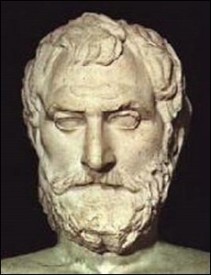
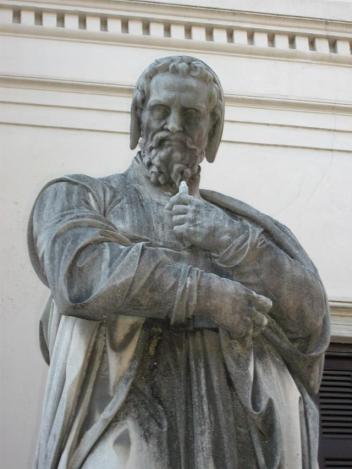
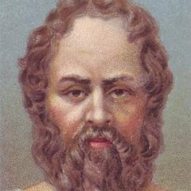
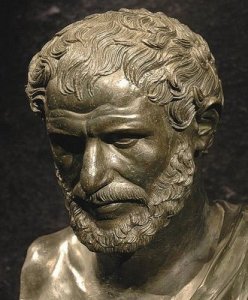
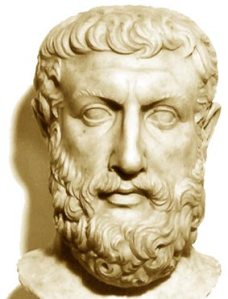
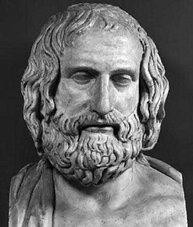
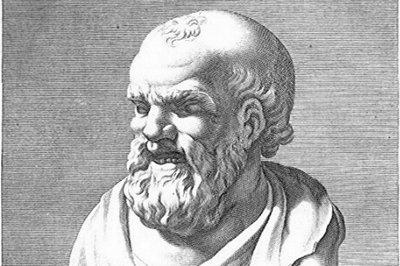
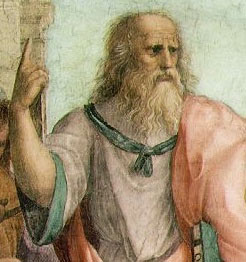

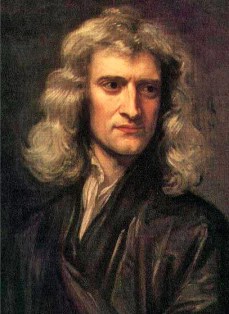


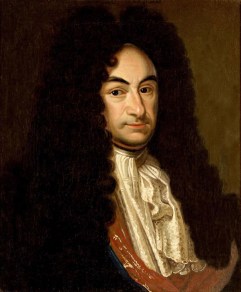

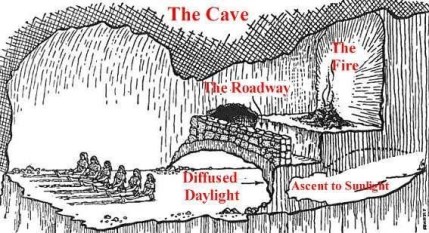
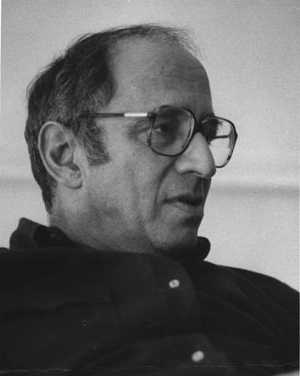
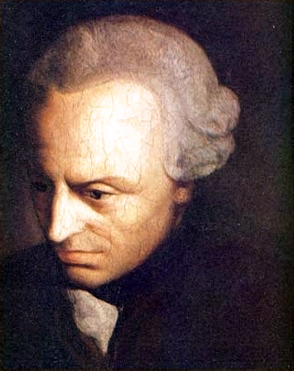
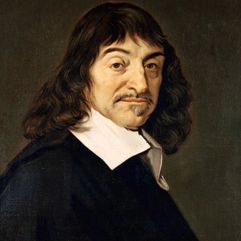
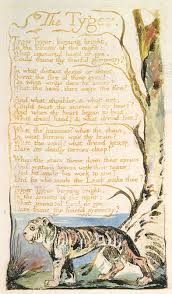

 Theory of Knowledge: An Alternative Approach