Nietzsche/Darwin Part VIII: Truth as Justice:

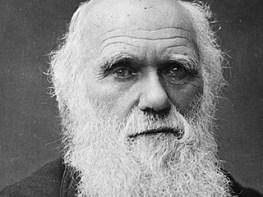
Darwin
Charles Darwin

When Darwin speaks of “survival of the fittest” as the “how” of living beings, he is making a statement regarding justice or the praxis or actions of living beings i.e. how they are required to be if they are to be at all. His statement is an ontological one; it says something about the essence of the being of beings. Whether his statement is compatible with democracy and “equality” as the political ends of action, that is of human beings living in communities, is quite another matter; but we are examining the foundation of the metaphysics of the thinking here. “Survival” is the urge or will to permanence and this will is the command of life itself. “Fittest” are those living beings who are most successful in applying the law of contradiction to the conditions of life, or what has been called algorithms lately, our conception of ourselves as the animal rationale as our essence.

As I have said in these writings on Nietzsche and elsewhere, technology is the highest form of will to power. Technology is conceived as both the means for making events happen and the establishment of the ends or goals of the actions through the use of those means. The word “technology” expresses the uniqueness of the “knowing” that understands itself as “will to power” (“enhancement”) and the “making” of modern civilization that was not present in, for example, Greek civilization. This co-penetration of the arts and the sciences is shown most clearly in Nietzsche. This is what we have come to call culture. This thinking is Western: the history of Chinese science and the writings of those civilizations based on the Sanskrit of the Vedanta show that such an understanding of knowing and making was not present in them. What was known regarding Nature in the Greek, Chinese and Vedanta was not a knowledge that put the energies of nature at their disposal, a knowledge of nature that viewed the beings of nature as disposables. It was through  Nietzsche, primarily, that our understanding of the arts and sciences was changed from what was meant by those civilizations prior to our own.

According to Nietzsche, knowledge is the securing of permanence through a conception of truth i.e. it is a value. Art, however, is of a value of higher value and is more necessary than knowledge. The transforming of life creates greater possibilities for the “surpassing” of life including all those noble activities undertaken to alleviate the suffering of human beings that are brought about by the conditions of life. Knowledge posits the fixated boundaries or horizons so that there can be something to surpass. Art and knowledge require each other in their essence. Art and knowledge (techne + logos) come together to bring about the full securing of permanence of the animate world. The securing of permanence comes about through the fixation of chaos through knowledge and the transforming of chaos through art. Knowledge and art assimilate (homoiösis) human beings to chaos. This assimilation is what Nietzsche understands as justice, not justice understood as a moral or legal term. Justice as a holding-to-be-true makes assimilation to chaos possible and necessary. It is what is “right” or correct, exact, the suitable, what makes sense, what fits. Justice is what points in the right direction and what conforms to that direction, to set a direction, and to send someone along the way in that direction. The desire to achieve “results”, for example, and the manners in which that desire will be achieved are examples of what is meant by “justice” here. A current cliche metaphor being used is “moral compass”. Justice is the grounding and understanding of the “moral compass” and it determines any sense of direction that might be found within that moral compass.

Nietzsche sees justice as a “mode of thinking”. What kind of thinking? “Justice as a constructive, exclusive, annihilative mode of thought, arising from estimations of value: supreme representative of life itself”.

What role does “freedom” play here? In Thus Spoke Zarathustra in the section “On the Way of the Creator” the relation of justice to freedom is outlined:

You call yourself free? Your dominating thought I want to hear, and not that you escaped from a yoke.

Are you the kind of person who had the right to escape from a yoke?

There are some who threw away their last value when they threw away their servitude.

Free from what? What does Zarathustra care! But brightly your eyes should signal to me: free for what?

Can you give yourself your own evil and good and hang your will above yourself like a law? Can you be your own judge and the avenger of your law?

It is terrible to be alone with the judge and avenger of one’s own law.

Thus does a star get thrown out into desolate space and into the icy breath of solitary being (loneliness).

Today you suffer still from the many, you lonely one: for today you still have your courage and your hopes intact…

Injustice and filth they throw at the lonely one. But my brother, if you want to be a star then you must shine through for them all the more!

The justice that is the mode of thinking for Nietzsche is not an everyday thinking that calculates by moving back and forth within a fixed horizon without being aware of that horizon. Thinking as poetizing and commanding is the thinking of Nietzsche and it is the establishment of the horizon in advance whose permanence provides a condition of the vitality of what lives. Justice is a way of thinking “arising from estimations of value”. Value-estimation is positing the conditions of life. By “values” Nietzsche does not mean the arbitrary circumstances of life. “Value” is an essential condition for what lives. “Value” is the essence of the making possible. The values of making possible are technology itself. “Values” are what are posited in determining what the essence of man is and what the essence of all beings are. Justice is not one way of thinking among many possible ways of thinking. Thinking is the activity of value-positing itself and is not a consequence of previous estimations of value. It is constructive, exclusive and annihilative. It is “technological thinking”.

This mode of “technological thinking” is “constructive” because it fashions the sort of thing that is not yet and is not yet ready-to-hand. We use the words “invent”, “create”, “produce” to indicate this mode of thinking to ourselves. It is “novelty”. To fashion is to “erect”, to build towards the heights. First, “the heights” must be attained and cleared. Those heights are the drive towards a perfection inherent in every “pro-duction” and “bringing forth” when that bringing forth is completed.

This constructive thought is “exclusive”. It fixes and maintains what can support the edifice of “pro-duction” and fends off whatever endangers it. It secures the foundation and selects the building materials. The most common example of this “exclusive” and “excluding” thought is the “fact/value” distinction arising from the “scientific method” and its applications in the social sciences. This thinking is a “value” in itself.

This thinking is also “annihilative” in that it destroys whatever stoppages and restraints hinder the construction to the heights. Annihilation offers security against decline. Popper’s suggestion of “falsification” as a mode of thinking in the sciences would be an example of this annihilative thought, but also most of the conclusions that you arrive at in your TOK discussions. It can be said to be captured in the words of Robert Oppenheimer who led American efforts to develop the atomic bomb: “When you see something that is technically sweet, you go ahead and do it and you argue about what to do about it only after you have had your technical success. That is the way it was with the atomic bomb.”

This constructive, exclusive, annihilative thinking characterizes the way of thinking by which justice is understood i.e. they are “fitting” for the being that is human being. By being constructive, the thinking moves towards erecting the heights (the goals, the concepts) so that this height may be achieved and surpassed in order to bring about what is fixated in the theories and concepts under and behind itself. It is a self-surpassing way of thinking, becoming master of oneself from moving to a higher height. We call such self-surpassing heightening empowerment.  It is the essence of power.

Power is a kind of force, the storing up of energies. Force is not in control of itself. Energy is the ability to do work. “To work” means to change something at hand into something else. Nietzsche speaks of “energy” and “expressions of energy” rather than of power and power relations. For “Justice as the function of a panoramic power that looks beyond the narrow perspectives of good and evil, and thus has a broader horizon of advantage—the intention to preserve something that is more than this or that person.” To “function” means execution, carrying out—how the power we are referring to is power and empowers. Advantage in its original meaning means “what has been allotted to someone in a distribution before the actual dividing takes place” i.e. what is “owed” to someone in advance. For Nietzsche, justice is the ground of every possibility and necessity of the harmony of human beings with chaos whether this harmony is the higher one of art or the one of knowledge. In this constructive allotment of what is due to other human beings and beings, there are some beings to whom nothing is due. We see something of this in the current agricultural industry, but it is also present in all our technological institutions and technologies.

Much confusion over the thought of Nietzsche has come from the equating of will and power. Nietzsche views will as “commanding” and as self-empowerment, empowerment as the excelling of itself. This empowerment is the homoiösis that is the reciprocal relation of knowledge and art—technology.

Nietzsche’s philosophy may be called extreme humanism: “To ‘humanize’ the world, that is, to feel ourselves more and more masters within it—(WP #614). His anthropomorphism is the end of the history of Western metaphysics: that thinking which thinks beings as a whole, that thinks the what and the how of beings. This end brings about the “overcoming” of the animal rationale together with human being considered as subjectum and ushers in what Nietzsche called the “overman” and what the German philosopher Martin Heidegger called “the technology of the helmsman”.

Reflections:

When we speak of justice in the modern age, we have to understand that that technology understood as justice by Nietzsche, that will to mastery, will be turned towards other human beings. It has its deeper origins in existentialism. One does not need Hemingway’s ‘bullet-proof crap detector’ to see the farce behind such aspirations. One finds the shift in the use of “emotional intelligence” or emotion as a way of knowing in the use of the word “sensitivity” today in a number of writings as another false means of hope in looking for a way to escape the quagmire that is the attempt to understand this technology that understands itself as modern rationality. This use of “emotional intelligence” and “sensitivity” is, perhaps, indicative of our inability to use the word “love” in any kind of meaningful way outside of a biological definition that has become the norm in its understanding of love as primarily sexuality.

As our education system achieves its end of producing mass meaninglessness in its demonstrations of the “what” of things (cosmology), the medical profession (psychiatry) with its palliative drugs as the solution to this lack of meaning pro-duced from this view of nature, will be among those most highly regarded. The new technologies of both human and non-human nature are responses to the crises brought about by technology itself. “Technology” is pervasive in our political and social lives and thus in our praxis. What we have done to nature we first had to do to our own bodies, and we are beings in bodies. We are this technology ourselves and solutions to the problems of the thinking within it are not to be found in the logic and rationalism that created the problems in the first place.

When we remember that technology viewed as the systematic application of reason (framing) to the invention of instruments to assist in the objectifying and the commandeering and ordering of the beings of nature for our disposal, we need to understand that these instruments are not merely hydro dams, computers or drugs, but also our systems of organization: our corporations, bureaucracies, and factories. We do not have the dams, the drugs or the computers without the social organizations necessary for their making. In the West, the novelty (Nietzschean creativity, inventiveness) of our civilization has reached the highest level of effectiveness because it is systematically related to our sciences and their co-penetration with the arts. This is now becoming world-wide.

To describe our fate as human beings as technological is not to judge that fate. The fundamental presuppositions that the majority of us inherit as our ‘shared knowledge’ in our civilization and which are taken for granted as the way things are that they are given to us as an almost absolute status (Darwinism, for instance) may be a great step forward in the ascent of human beings. The destiny imposed on us, technology as fate, has brought about the machines that have assisted us in freeing ourselves from many of the limitations that nature has imposed on us. But we ask, as Nietzsche asked, “What for? Whither? And what then?” One can see from the responses to these blogs that “results” are the goal, not knowledge.

The accounts of justice given to us in the dominant ideologies of our age (liberalism, communism, and historicism) come forth from the account of reasoning which is made so clear in the writings and thinking of Nietzsche. The instruments and our standards of justice in using them are bound together in the same destiny, and both have come forth from that destiny.

Darwin/Nietzsche Part VII: On Aristotle, Algorithms and the Principle of Contradiction and the Overturning of the True and Apparent Worlds

Nietzsche
Friedrich Nietzsche

Preamble:

Why Nietzsche? Nietzsche is the modern conscious of itself. The god of Delphi’s command sends us, directs us towards the path, the journey towards knowledge. “Know thyself” is the imperative that directs us not to see our psychologist as quickly as possible and to get ourselves in therapy as soon as possible, but to know for ourselves, to leave the Oracle priestesses (and psychiatrists) alone to indulge in their volcanic visions from the vent. What we learn while on this path is that we can come to know “who” and “what” we are, both as individuals and as human beings. On the path/journey, “thy self” can be an obstacle, a hindrance to knowledge rather than an aid to knowledge.

Nietzsche and Knowledge:

Nietzsche in Will to Power #515 writes  of the essence of reason and of thinking, what reason and thinking are, and their biological nature: “The subjective compulsion by which we are unable to contradict here is a biological compulsion …” Nietzsche thinks: all thinking in categories, all thinking in schemata i.e. in accordance with rules is perspectival, conditioned by the essence of life (Being) and accords with the rule of all thought which is the avoidance of contradiction.

Aristotle establishes the law of contradiction as the height of reason in Metaphysics IV 3-10. According to Nietzsche, this law has its origin and interpretation as logic in the essence of reason, and reason itself has its origin in life’s securing of permanence. In WP #516 Nietzsche says: “We are unable to affirm and to deny one and the same thing at the same time—this is a subjective empirical principle, the expression not of any necessity but only of an inability.”

This “subjective compulsion” is sometimes readily lacking; any look at the daily news indicates this. But why “facts” and the appeal to “facts”? “Facts” are secured solely on the basis of our following the principle of non-contradiction. What the law of contradiction expresses, what is posited in it, does not rest on experience, just as 2X2=4 does not rest on experience i.e. on a cognition that is always valid only as far as and as long as our knowledge extends at the time. We know 2X2=4 because we already think 4. The thinkability of this equation is made possible because it is something arrived at not from experience at all (Kant Critique of Pure Reason).

Aristotle in Bk IV 3 1005b of Metaphysics writes: “That the same thing come to be present and not come to be present at the same time is impossible in the same and with respect to the same”. We could also use this principle to understand the play Macbeth and the “non-being” of evil in general. Presence is the unfolding of Being. The law of contradiction deals with the Being of beings. Contradiction, for Nietzsche, is an “inability”, not an “impossibility” and not a matter of “necessity”. This means that the fact that something cannot be something and its opposite at the same time depends on the fact that we are not able “to affirm and deny one and the same thing”. Some thing cannot be represented, fixed as some thing and its opposite at the time, that is to say that it cannot “be”.  Confusion, stress results.

When Macbeth asks himself “Is this a dagger that I see before me”, the two-fold nature of beings as both Being and non-being is shown. One dagger is that which represents the soldier/savior of his country, his “manliness” (his “virtue”) as a human being; the other is the murder weapon that he will use to kill Duncan. Lady Macbeth’s bell tolling at the end of Macbeth’s speech signifies the death not only of Duncan but of Macbeth as a human being as well for his is now a mind that sees daggers and is no longer of the nature that is “too full of the milk of human kindness”. The play makes it clear that the old man, Duncan, who “had so much blood in him” is really the one who “outlives”, in his offspring Malcolm, the other that murdered him. The dagger as “symbol” is more “real” than the dagger that is used as a murder weapon.

For Nietzsche, Aristotle’s “impossibility” is an “inability” in our thinking, a “subjective not being able to” and has nothing to do with the object itself. The law of contradiction has only “subjective validity” for Nietzsche; it depends on the constitution of our faculty of thinking. In the event of a mutation in our faculty of thinking brought about by “life” itself, the law of contradiction could lose its validity. Algorithms, for example, are historical not permanent.

We can follow Nietzsche’s own interpretation of the essence of thinking, of the holding-to-be-true and of truth and where truth rests:

“If, according to Aristotle, the law of contradiction is the most certain of all fundamental principles, if it is the ultimate and most basic , upon which every demonstrative proof rests, if the principle of all other axioms lies in it, then one should consider all the more rigorously what sorts of assertions it already fundamentally presupposes. Either it asserts something about actuality, about being, as if one already knew this from another source, that is, as if opposite attributes could not be predicated from it. Or, perhaps, the presupposition means opposite attributes should not be predicated of it? In that case, logic would be an imperative, not to know the true, but to posit and devise a world that is to be called true for us.

Aristotle holds that the principle of the law of contradiction is the “principle of all other axioms.” Aristotle says (Metaphysics IV 3 1005b 33-34) “For according to its essence, this is the point of departure for and ruling for all the other axioms, indeed thoroughly so.” Nietzsche sees the law of contradiction as an axiom of logic and the most certain of all principles. Aristotle’s statement says something about “Being” and about the Being of beings. How does Aristotle hold that the law of contradiction is a law of Being as such? For Aristotle, the law of contradiction is a law of Being; for Nietzsche, the law of contradiction is a command of Being.

Nietzsche asks: “If the law of contradiction is the highest of all principles, “what sorts of assertions does it already fundamentally presuppose”? Aristotle answered this question: the law states something essential about things as such: that every absence is foreign to presence because it steals presence away into its non-essence, thus positing impermanence and destroying the essence of Being. Since Being has its essence in presence and permanence, the aspects according to which things are to be represented as things will have to take the “at the same time” and “in the same respect” into account. (How Being falls into non-essence as “shadow” is discussed in the writings on Plato’s allegory of the Cave and in the comments on Plato’s Sophist. Aristotle’s position on Plato’s account of Being is also discussed in his Metaphysics but this is not the place to engage in thinking about that great disagreement which is crucial for the development of philosophy in the West.)

Aristotle says that if the same thing is affirmed and denied of a being (i.e. the “alternate facts” of our current popular language), if human beings maintain themselves in contradiction, they are excluded from representing things as such and forget what they really want to grasp in their yes and no i.e. they become “mad” because they have displaced themselves from their essence into non-essence and dissolve their relations to things as such. This fall into non-essence appears “harmless” in that our everyday activities go on just as before and it doesn’t seem so important at all what and how one thinks until the catastrophe arrives that was centuries in its generation and growth i.e. the dominance of nihilism. More will be said about nihilism in later writings.

The essence of beings, for Aristotle, consists in the constant absence of contradiction. Martin Heidegger, the great philosopher of the 20th century, believes that Nietzsche does not understand the metaphysics of Aristotle and Plato and therefore does not successfully overturn the Western tradition of metaphysics as Nietzsche himself believes and claims he does. For Aristotle, Being is understood as presence, actuality and power. Nietzsche, instead, becomes deeply entangled in the web that is Western metaphysics.

Nietzsche decides that the positing of the law of contradiction as the essence of beings comes as command. In WP #516 he writes: “In short, the question remains open: are the axioms of logic adequate to reality or are they a means and measure for us to first create reality, the concept “reality”, for ourselves?—In order to be able to affirm the former, one would, as already said, have to have a previous knowledge of beings—which is simply not the case. The proposition therefore contains no criterion of truth, but an imperative concerning that which should count as true”.

How does Nietzsche affirm the possibility of a positing that determines how beings are to be grasped in their essence? This positing is not our thinking and representing adapting themselves to things in order to learn the essence of these things/beings. The law of contradiction determines beforehand what beings are and what alone can count as in being i.e. what does not contradict itself. We experience this “law” as “command”. We can see how this “command” is understood in today’s sciences where the law of contradiction and the “algorithms” of modern biology are perceived as “command” required by “practical need” understood as “survival”. But for Nietzsche, survival is not the highest form of will to power. “Enhancement” through art (techne) is the highest form of will to power.

The law of contradiction is the fundamental principle of a “holding-to-be-true” and makes possible the essence of holding-to-be-true. What we call knowledge has, for Nietzsche, the nature of command within it. Knowledge as the securing of permanence, whether in the form of algorithms or otherwise, is not brought about because it is advantageous and useful. These are “effects”, not causes. The securing of permanence is necessary because it enables a necessity to arise in and from itself, and from out of this necessity arises the “freedom of decision”. (Kant) What brings about this securing of permanence we call “robust knowledge”.

For Nietzsche, the law of contradiction posits a standard: positing, poetizing and commanding are contrasted with copying and imitating something at hand, or what is given in the Platonic mimetic arts. Truth as a holding-to-be-true is a necessary value. Necessity is a must of the commanding (empowerment) and poetizing that arises from freedom. Being-together-with-itself is what Nietzsche means by freedom and what we mean by “empowerment”. This “self-empowerment” is what distinguishes human beings from all living species—and is what essentially distinguishes Nietzsche from Darwin. The human adherence to the law of contradiction he calls an “instinct”, an “imperative” that lies in the realm of freedom. The essence of the compulsion that lies in the law of contradiction does not rest in the “biological realm”, but rather in the human commanding and poetizing, the determination of the perspective and the horizon representing beings, the things that are. Nietzsche calls this will to power and human “empowerment”.

When Nietzsche speaks of art he does not mean art in our familiar understanding of its many genres. For Nietzsche, art is the name for every form of transfiguring, transforming and transposing of life to higher possibilities (“added value”). What truth cannot do, art accomplishes: the transfiguration of what is alive to higher possibilities or the actualization and activity of life in the midst of the truly actual—chaos. Truth fixates chaos and maintains itself in the chaotic apparent world by stabilizing what is in becoming. Art transforms what becomes into its possibilities, frees what becomes into its becoming (genetic manipulation as an example) and thus moves about in the “true” world. Here, the inversion of Platonism is accomplished by Nietzsche from the arising of the techne-logos. The “true” world is the world of becoming; the “apparent” world is the stable and constant world. The worlds have exchanged places in Nietzsche. With this exchange of places, technology thence becomes the highest form of will to power.

Since we ourselves are this technology, how does this embrace become our “fate”? The “true”, as understood historically, is a denial of chaos; as a denial of chaos, it is not appropriate to the truth of that chaos. So: “Truth is the kind of error without which a certain kind of living being could not live”. (WP #493) Truth is an error because it does not harmonize or correspond with the chaos of the real; arts harmonizes or corresponds with chaos. But doesn’t art “fixate” and provide the error of “semblance”?

What is alive always maintains itself in a stand based on a perspectival range of possibilities that are “fixated” whether as the “true” of knowledge or the “work” of art. The delimiting and drawing of a horizon is a giving of semblance (“algorithms” are the latest attempt to define these installations). What is “figured” looks like the actual, but as figured it is no longer chaos but a determined urging, according to Nietzsche. “Semblance” originates where the actual perspective, with its definite point-of-view to which the horizon is “relative” prevails. In WP #567 Nietzsche says: “The perspectival therefore lends the character of the “appearance”. As if a world would still remain after one deducted the perspectival! By doing that, one would deduct the relativity!”

Relativity is where life creates a perspective and looks forward and from a viewpoint. Theories and theses are products of this perspectivism. “Relativity” expresses the horizon-like scope of perspectives, the creations of the “action” of life itself. We call this “world”. World arises from the life-activity of what is alive and is only what and how it arises. The “semblance” of the world is not one of “appearance”. Why not? Because the opening of a world (theory) through perspective and drawing a horizon with that world are not the result of our adapting to the world subsistent in itself or subsistent at all, that is, a “true” world. If there is no longer a measure or estimate with regard to something true how is the world that arises from the action of life supposed to be “semblance” at all? Nietzsche says: “With the abolition of the “true world” the “apparent world” is also abolished”. Few have grasped the depth of the consequences of this statement. Nietzsche was aware, more than anyone before or since, that “the antithesis of the apparent world and the true world reduces itself to the antithesis ‘world’ and ‘nothing’”. He was aware of the nihilism at the bottom of the thinking that we call modernism. What did he counter- pose to such nihilism?

What happens when the distinction between a true world and an apparent world falls away? What becomes of truth?


Theory of Knowledge: An Alternative Approach

Why is an alternative approach necessary?