
Before going on to outline what nihilism is in detail, we will be discussing how our understanding of mathematics has come to determine the principles for our actions i.e. how mathematics as algebraic calculation, the logos/logic, our account of things, determines our ethics or our practical actions. In doing so, we will look at some of the differences between what is called calculative thinking and what is called contemplative thinking or what has been referred to as “attention” in the other writings. If the intelligence is to be illuminated by love, how has this love and its attention, receptivity and consent to otherness been put aside in our relations to other human beings and to the things of this world through our understanding of mathematics, its teaching to our young people, and its uses even as we are not consciously aware of the effects of this paradigm of knowledge on our actions in our day-to-day lives?
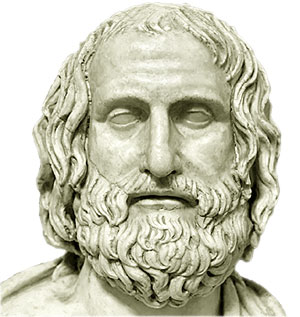
In this writing, an examination of a passage from Shakespeare’s King Lear will help us to understand how the Greeks understood the relation of mathematics to human actions and how we have come to misinterpret the famous passage of the Sophist Protagoras who said that “Man is the measure of all things”. We will attempt to make a distinction between Cartesian subjectivity and Protagoras’ statement and illustrate how our understanding of the world and our being in it shapes our understanding of the “shared knowledge” that we have inherited from the past using the Protagoras example as a case of mininterpretation. It should become clear that this writing deals with some of the most important matters for thinking although it provides only hints at possible directions that could lead to further thought.
What we call mathematics is a theoretical viewing of the world which establishes the surety and certainty of the world through calculation. What the Greeks meant by mathematics is “what can be learned and what can be taught”. Our mathematics is crucial in determining our understanding of what we think can be learned and can be taught. The abstractions that we make with our own thinking in mathematics are not those that a Greek would have made.
Mathematics deals with all beings. Calculative thinking determines that all the things of the world are disposables and are to be used by human beings in their various dispositions and comportments to the things that are. This comportment and disposition is a commandeering challenging of the world and the beings in it, and it is what we have come to call “knowledge”. This under-standing, or ground (subjectum), is that upon which all of our actions are based. This surety or certainty that beings are as we say they are through calculation arises through the viewing and use of algebraic calculation in the modern world. It was achieved in the thinking of the French philosopher Rene Descartes where human beings were conceived as subjectum and the world about them was conceived as objectum. The incredible results of what has been achieved through this calculative thinking have come to astonish us and to determine what knowledge is in our day and what is best to be known and how it is to be known.
Ethics are based on what Aristotle called phronesis: our careful deliberation over what best actions will ultimately bring about the best end result. We sometimes call this “common sense” because it is reason and judgement based on experience. We call this end result of our deliberations our “happiness” or what Aristotle called our eudaimonia, our “good spirits”. In today’s sciences, some have come to call the results of these deliberations algorithms and to consider them as what underlies all the things that are; this is really a re-statement of the principle of reason but it is an unthought of statement. Understanding the algorithm is what will bring about our happiness which in our case is mere “survival”; all higher level mammals have this awareness of algorithms. This understanding is brought about through some species of calculative thought. The algorithm and its understanding itself is a priori. The algorithm as a principle of addressing our practical need of survival is just one aspect of Nietzsche’s “will to power”. Nietzsche calls this algorithmic thinking “true, but deadly”.
We have confused our means of representing nature with nature itself and this confusion erodes our understanding of what it means to be human. We have traded in our “knowledge” of the search for the order of the world into a symbolic manipulation that provides predictive success allowing us to domineer and control nature. Our physics must report its findings in symbolic mathematics; that is its logos.
In the Cartesian view of things, human being as a “self” is defined by the world being referred back to man’s representing through the use of mathematical reason. This “how” of our being-in-the-world is as the distinctive ground underlying every representing of beings in their being. Through algebraic calculation, this representing is a “symbolic” representation. For Aristotle and the Latins who followed him, all beings are subjectum including rocks, animals, plants, but in Cartesian thinking man becomes the unique subjectum and rocks, animals, plants and other human beings become objectum. Subject “representation” gives being to objects, what the things are to the “representing” subject. “Representedness” is secured through algebraic reckoning/calculation. This is securing is called ‘the correspondence theory of truth”.
Our mathematical calculations give surety, certitude. “Truth” is correspondence, the agreement of our knowledge with the things, how the being with which knowledge is supposed to agree is understood (homoiosis), and how knowledge is to be “pro-duced” when it is “robust”. Knowledge and the “how” of the being must stand in agreement; the being must give its reasons for being the way it is. Knowing is “perception” and “cogitare”, what Descartes called thinking. What is the true is that which is secured, the certain, the being of which the subject can be certain in his representations (here the distinction between what we have come to call the “subjective” and the “objective” comes to the fore). “Method” is required as an advance procedure necessary for securing the truth as certitude. “Method” is affixed to the essence of subjectivity; what we have done to nature, we first had to do to our own bodies. “Method” is no longer simply a sequence arranged into various stages of observation, proof, exposition and summation i.e. the “scientific method”. “Method” is more; it is the name for the securing, conquering procedure against beings in order to grasp them as objects for a subject. The sequence of the titles for Descartes writings indicates this. It is man that determines the beingness for every being. Beingness means representedness through and for the subject. Truth is the certitude of the self-representing and securing representation. If you look at the structure of the TOK program, you can see a concrete illustration of this “representedness” and its method turned into approaches to obtaining and pro-ducing “knowledge”.
This representedness is what we mean when we say “Beauty is in the eye of the beholder”. Any survey of any class of young people will give unanimous agreement to this statement; all young people believe that “beauty is in the eye of the beholder”. But what is this “be-holding” of the “be-holder”? “Beholding” is the subject’s representing and grasping of what is given and how this representing gives being to the giveness of the things. The subject is the “beholder”. He “holds” the things in their “be”-ing; he brings them to presence and “represents” them and gives them permanence. To “behold” is to look at something face-to-face brought to presence. It is “representedness” itself. Beings are given being by this representedness. How this giving of being to things occurs is what we mean by “beholding”: the self-representing of the things that are that gives being to them. That there is a beauty in and of itself outside the subjectivity of the subject is not allowed. Since beauty cannot be understood through calculation and brought to surety and certainty, then it lacks its own being. Its “being”, its “reality” is “subjective” i.e. constructed by the be-holder. There is no room for “beauty” in the world of mathematical physics for there is nothing to love since the beautiful is what we love.
For Descartes, man is the measure of all things for he defines what is and what is not a being. The standard of measure places everything that can pass as a being under the reckoning of representation through the logical steps present in mathematical calculations. Descartes was well aware that he was turning Aristotle upside down and in doing so shifting the position of the being of human beings within the world. It is with Descartes and his centering of the human being as subjectum that what we call humanism truly finds its grounding. Following Descartes would come Newton who would posit that beings are “uniform mass” in “uniform space” in “uniform units of motion”. For Newton to do so would require algebra and the invention of calculus, the predominant method or technique of the most important applied mathematical thinking today, although Leibniz’ finite calculus is more in use than Newton’s and is, really, what is taught in IB mathematics. First comes the philosopher, then follows the scientist as Newton follows Descartes, Darwin follows Rousseau, and Einstein and Heisenberg follow Nietzsche. This is not to say that the great scientists were not themselves also philosophers. Any look at their writings shows that they were. (See, for example, Einstein’s reflections on time and space prior to the paper on special relativity “On the Electrodynamics of Moving Bodies” In The Theory of Relativity, trans. W. Perrett and G. B. Jeffery, 37–65. New York: Dover and Heisenberg’s Physics and Philosophy).
 Protagoras’ view of “man as the measure” comes from an entirely different view of things than that of Descartes because Protagoras has an entirely different view of “truth” than that given in Descartes. For Protagoras, “truth” is unconcealment; for Descartes, truth is correspondence or agreement. For Protagoras, man is not a subject that gives being to other beings. Man perceives what is present within the radius of his perception and takes his “measure” of it. The things about which man concerns himself are what the Greeks called chromata/chremata. These things are those that are are maintained in a realm of accessibility because that realm is one of unconcealment. They are the things of “experience”. The perception of what is present is grounded in the thing’s lingering in the realm of unconcealment as the given. By lingering in the realm of the unconcealed man, too, belongs to the fixed radius of the things present to him. Both are necessary to the other. What is not present in this realm of the unconcealed is the barrier, the web of necessity, the circumference or horizon of the experience of the individual man, a barrier which we try to breach through “fantasy” or the “imagination”.
It is through this restriction of the barrier of the circumference, the web of necessity, that we as individual human beings are an ego, “I”. It is our “personal/shared” knowledge through our experience of which we are the “measure”, metron. For things to be unconcealed requires light which allows the self-disclosure of the thing to be known. This is the opposite of the case with Cartesian subjectivity where the subject renders the thing its being as object. This accounts for the naming of the age following the Renaissance as the Age of Enlightenment; it is human beings who provide the light and this light is the light of reason so understood. Referring to this period of history as the Age of Enlightenment would not be the first time in history that our naming of things was not without its irony nor, undoubtedly, will it be the last. For Protagoras and the Greeks in general, it is through our physical actions/encounters with the world, what we understand as “work”, that we come to understand, experience and “measure” that realm that is unconcealed for us. We moderns understand and measure the world quite differently.
Aristotle in his Metaphysics outlined Pythagorean philosophy as (a) an identification of numbers with the sensible objects; (b) an identification of the principles of numbers with the principles of things that are; and (c) an imitation by objects of the numbers. From this we can see why Aristotle says Plato was a “pure Pythagorean” and why the question of whether mathematics was “discovered” or “invented” can be answered by saying “both”; mathematics as “number” was “discovered” by the ancients for it was a given, and “invented” through the symbolic algebraic manipulation of the moderns. The Greeks rejected the algebra that arrived through the Babylonians because it was “unnatural”. How might this be the case?
Justice makes us recognize bridges (metaxu in Greek) or connections that we are loathe to make between ourselves and the world and between ourselves and our communities. We loathe our “owingness” and our “indebtedness”. In our loathing we construct idols of the bridges themselves: modern mathematical physics (a predicate of the subject technology) is one such idol. In our modern science, a thoughtlessness is present, (according to Simone Weil and Martin Heidegger) which is indicative of the loss of the capacity for attention or contemplative thinking. The use of algebraic calculation undermines the encounter of human beings with the beauty of the world for it conceives of the world as a “machine” to which we can relate as slave or master, not as loving participants.
To use an example, I love to watch surfers as they try to ride the waves given to them at the beaches nearby. The good surfer “works” in tandem with what the wave gives her: if she try to master the wave, the power of the wave will wipe her out; if she submit totally to the wave, the same thing happens. The surfer is a loving participant through her “work” with the wave and what it gives her, and it is this working relationship with the wave that gives to her her sense of participation in the beauty of the world. Her “techne”, “know how”, reveals to her the beauty of the world in the web of necessity that has produced the wave and the sensation produced in her of her ability to work with the wave. That she should know that there is a geometry present in her experience of the beauty of the world would increase, not detract from, her experience of this beauty as she would know that she has attained a genuine perception of the world and not experienced some somnambulistic dream-like state.
Mathematical physics’ assimilation of the algebra that arrived in the 16th century through the 18th and 19th centuries increased the thoughtlessness of science by subordinating “method”, as scientific cognition, to symbolic formulae devoid of insight; that is, the actions became subordinated to the principles of the actions which became the actions themselves. This lack of insight is what prevails in today’s education. Symbolic algebraic physics represents the collectivization of thought where science becomes a technique of knowledge production and “thought” and ceases to be the responsibility and activity of any single individual. Nietzsche called this “the highest form of will to power”. The “usefulness” of science becomes predictive success (results) and the technological domination of nature (as Heisenberg has pointed out). This is what is called “technology” in these writings. The fact that the woman in Moscow, Idaho and the man in Moscow, Russia can work “collectively” or “collaboratively” illustrates the intractability of the symbolic collectivization (technology as fate) of thought in contemporary civilization. The loss of any relationship to nature is the cost of such collectivization. Globalization, “international mindedness” are “humanist” off-shoots of the ground of this thinking. But, as Simone Weil would say, in our modern science there is simply nothing to love and this will not change no matter what “idealistic” concepts we attach to it.
Algebra is the substitution of technique, “know how” in the manipulation of numbers for genuine insight into the web of necessity that is the world. The manipulation of formulae replaces insight and this manipulation is directed to its “usefulness”.
 Jacob Klein in his book Greek Mathematical Thought and the Origin of Algebra points out that algebra alters the very intelligibility of number by making number a symbolic entity. The Greeks understood number as an abstraction not a symbol. I have an abstract idea of “3” through my encounters with three chairs or three cats. “3” means the cats and the chairs. I cannot abstract “-3” because there are no things in nature, no countable collections, of “negative three things”. “-3” designates a symbolic entity. All numbers in the modern conception are treated in this way. Irrational numbers exist only as symbolic entities.
Because of this lack of connection to nature, the education of scientists and mathematicians today encourages the use of symbolic mathematical entities as replacements for the things that are. It is here that it encounters its thoughtlessness. The arrival of algebra in the 16th century required that nature be viewed in terms of uniform mass in uniform motion through uniform space. Newton’s attempt to retain the physical properties of nature became overruled by Leibniz in his finite calculus and by other mathematicians in the 18th and 19th centuries. As the philosopher Hegel demonstrated, “absolute knowledge” is essentially without a thinker; it is a “collective” thinking of the species human being. The thought of individual thinkers is constituted by the “system” itself founded upon the principle of reason (as outlined by Leibniz).
With the introduction of symbolic theoretical entities in principle (“wave particles”, “curved space-time”), 20th century physics closes off that access to the faculty of “attention” that Simone Weil saw as the necessary ground for that response to nature and the world of human actions that is coherent with love, attention to, reception of and consent to the “otherness” understood as the Good. For Weil, all true thinking is contemplation and all contemplation is prayer.
Simone Weil observes this about modern mathematical thinking and education: “The process of calculation places the signs in relation to one another on the sheet of paper, without the objects so signified being in relation in the mind; with the result that the actual question of the significance of signs ends by no longer possessing any meaning. One thus finds oneself in the position of having solved a problem by a species of magic, without the mind having connected the data with the solution. Consequently, here again, as in the case of the automatic machine, method seems to have material objects as its sphere instead of mind; only, in this case, the material objects are not pieces of metal, but marks made on white paper.” (Weil 1958, 94 Oppression and Liberty. Trans. Arthur Wills and John Petrie. London: Routledge and Kegan Paul.) This separation of the mind from our being-in-the-world and from nature is what was “unnatural” for the Greeks in their understanding of what mathematics and number are and why they rejected the algebra they received.
This separation of the mind from nature is indicated by the distinction between abstraction and symbol. What is the difference between abstraction and symbol?
What is different, of course, between the Greeks and the moderns is what is meant by “number” and how the being of things in the world is understood. The ideas of Plato, for instance, are abstractions not symbols. When it is said by Aristotle that the ideas of Plato are those Beings that generate the beings or things of experience, what Aristotle means is that the abstraction that is the idea of “house” is a form of genus or “universal” that generates, in cooperation with human beings, the “species” or specifics that are the individual houses of our experience. The “concrete” house is called a house because of its participation (metaxu in Greek), through the ratio (the logos or the “account”, “reason”) created by the mean proportional, to become the constitution of the house’s concrete reality from the “perfection” of the idea “house”. The conception of number in modern algebra is that number is no longer merely an abstraction brought about through the things which we experience and work with in nature but is a symbol, a product of the technological schema or frame placed under nature by human beings. To be a number in modern mathematics is to be a possible value of an algebraic variable.
This shift from abstraction to symbolic requires a change in the view of nature and of human beings’ place within that nature. Our view of nature is “symbolic”: the findings of modern physics can only be reported in “algebraic” calculations i.e. the logos is algebraic symbol. The relation and the logos established by the proportional mean to the things, the human relations to the things that are, is eliminated in so far as it is the algebra produced within the subject that gives “being” and determines the things that are. The things that are are not “givens” in themselves but are “symbolic” constructs from the minds of men. Nature itself is turned into “symbol”.
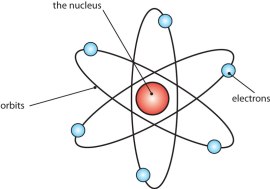 When, for example, we think of an atom we represent to ourselves a figure that appears probably along the lines of the Rutherford model. But this is pure fantasy: the atom and its being is an algebraic configuration. Number as understood in modern algebra is no longer merely an abstraction from experienced nature but rather a symbolic construction, itself a part of the technological enframing. As a result of this enframing viewing, modern mathematical or algebraic physics gives being to nature itself as a symbolic entity. This is the reason why a woman in Moscow, Idaho and a man in Moscow, Russia can be assured that in their calculations they are dealing with the same entity: the entity is an algebraic calculation. Nature’s particularity is lost in this interpretation as symbol. It is this symbolic understanding that allows for the domineering challenging and control that signifies the technological and is a product of the technological.
I will only say a few words about this difficult topic here. Suffice it to say that Galileo asserted that within the domain of mathematics, human understanding is equal to God (Galileo. 1967. Dialogue Concerning the Two Chief World Systems. 2nd ed. Trans. Stilman Drake. Berkeley: Univ. of California Press, 103). Descartes, through his understanding of cogitare, removes entirely the impersonal dimension of mathematical necessity (the web of necessity) inherent in the things that are and that is so necessary to the Greeks and in so doing dissolves the mystery of mathematics as a given. Mathematics is the creation and product of the human intellect, reason. Through Descartes, classical science based itself from the beginning on the idea of method as the means of control of our cognitive encounter through our actions with and upon nature according to the demands of the autonomous human intellect, subjectum. The death of God is the by-product of this initiation of humanism during the Renaissance since God is no longer necessary to human beings defining themselves and defining things. The Greek understanding that we are not our own becomes overturned. In the modern, we are very much our own and on our own.
For the Greeks, the experience of sensible objects within the radius of our experience of the world is conceived as a circle or “wheel” revolving upon itself. From the diameter of any circle which forms the hypotenuse, the lines or sides of the right-angled triangle cannot exceed the circumference (the horizon, the barrier) of the circle in which it is inscribed. Man’s being is understood as a measured restriction, bounded within and bound to the realm of necessity revealed to him by both what is unconcealed and what is hidden. This realm of necessity is what we call “experience” which in itself is a matter of luck or chance; we might use the metaphor “gravity” for it is subject to the same “laws”. “Experience” for the Pythagoreans was a world of wheels within wheels, circles within circles. Man in his existence was an irrational number for the Pythagoreans, and it was this understanding which led them to their great efforts in trying to understand the nature of number and the nature of man and his existence. Irrational numbers are numbers, such as the square root of 2, that cannot be expressed as fractions involving whole numbers i.e. the part cannot be reconciled to the whole.
Many mathematics teachers today are enamored with the story of Hippasos and his “murder” with regard to the legend of the Pythagoreans. Of course, Hippasos’ “discovery” of the “dangerous square root” is where the Pythagoreans began, not where they ended. Perhaps he deserved to be thrown overboard along with the teachers who teach this story! The Pythagoreans efforts involved rising above the contradictions present to thought from the experience of the world through attention and love to the experience of the world’s order as a whole. The perfection of Greek art and our musical scales and modes are just two of the discoveries that the Pythagoreans bequeathed to the world. For we moderns, through Descartes, man’s experience is a progressing towards a limitless representing and reckoning which recognizes no barriers or horizons with regard to the beings which he encounters. The Greeks would view such viewing and understanding as Descartes’ as hubristic.
But how can happiness be the end result of what is or what the Greeks would understand as, essentially, a hubristic way of viewing and being in-the- world? Why choose the word “hubristic” in describing human beings’ comportment and disposition in the world today? Hubris for the Greeks is that pride of human beings which recognizes no barriers or limits and absents the “ego” of self from association with the human community as a whole. These are clearly descriptions of modern human beings’ condition.
We shall reflect on these understandings by examining the passage below from Shakespeare’s King Lear and a subsequent comment on a passage from the play Hamlet.
CORDELIA
We are not the first
Who, with best meaning, have incurr’d the worst.
For thee, oppressed king, am I cast down;
Myself could else out-frown false fortune’s frown.
Shall we not see these daughters and these
sisters?
KING LEAR
No, no, no, no! Come, let’s away to prison:
We two alone will sing like birds i’ the cage:
When thou dost ask me blessing, I’ll kneel down,
And ask of thee forgiveness: so we’ll live,
And pray, and sing, and tell old tales, and laugh
At gilded butterflies, and hear poor rogues
Talk of court news; and we’ll talk with them too,
Who loses and who wins; who’s in, who’s out;
And take upon’s the mystery of things,
As if we were God’s spies: and we’ll wear out,
In a wall’d prison, packs and sects of great ones,
That ebb and flow by the moon.
EDMUND
Take them away.
KING LEAR
Upon such sacrifices, my Cordelia,
The gods themselves throw incense. Have I caught thee?
He that parts us shall bring a brand from heaven,
And fire us hence like foxes. Wipe thine eyes;
The good-years shall devour them, flesh and fell,
Ere they shall make us weep: we’ll see ’em starve
first. Come.
Explication of the Passage from King Lear
To attempt a summary and explication of the whole of the greatest work in the English language is impertinent, but a brief introduction is necessary to understand the play as it appears in the scene above.
At this point in the play, Lear and Cordelia, supported by French troops, have lost the civil war for Britain to Edmund’s forces. Lear, as King, has been ultimately responsible for this civil war. At the beginning of the play, he has disowned his ‘truthful’ daughter Cordelia and fallen victim to the flattery and machinations of his two eldest daughters, Goneril and Regan. He has divided the kingdom in two giving each sister control of half, his intention being to avert future strife. At the same time, Lear wishes to retain the appurtenances of a king, the appearances of a king, while retaining none of the responsibility: Lear is satisfied with the appearances rather than the realities of things. It is this satisfaction with the appearance of things that leaves Lear open to the machinations of his two daughters, Goneril and Regan.
Lear’s responsibility is, chiefly, a moral one. Goneril and Regan soon work together to remove from Lear the power and possessions that he once held. Lear becomes an “O”, a zero, a nothing. In his nothingness, Lear becomes mad and rages against the ingratitude shown by his daughters and the injustice that he sees in the nature of things and in the chaos of the created world as it is. This scene above is Lear’s anagnorisis or moment of enlightenment, the moment in tragedies when all tragic heroes recognize the errors of their ways and the consequences of their hubris.
Lear ends up houseless and homeless and wanders on the wasteland that is the heath in the heart of a terrible storm. Lear’s physical, mental and spiritual sufferings soon drive him mad. The storm’s effect is a purification of Lear: Lear removes his clothing; his ego is destroyed in the madness; he no longer focuses on himself but is able to see the ‘otherness’ of human beings and to feel compassion and pity for them (in the characters of Edgar as Poor Tom and the Fool) because he sees himself and his humanity in them. Edgar, too, has become a ‘nothing’ due to the machinations of his bastard brother Edmund. Lear has gone from King to nothing and he is ready for re-birth. His ego has blinded him to understanding what his true relationship to his god is: initially he looked upon this god and his power as being something which he, Lear, himself possessed. Lear believed that only he himself possessed the truth.
The play King Lear is a play about the consequences of not knowing who we truly are, as individuals and as a species. Lear, focused as he is on his ego, his Self, is willingly duped by machination in the play; he is willingly duped by flattery as this flattery gives recognition to his social prestige. His suffering and madness show him the true worth of social prestige and bring him to a true understanding of his relation to his god and to other human beings, and this relationship is Love. Love is, as Plato describes it, “fire catching fire”. It is recognition that in the most important things, all human beings are equal in that all are capable of the capacity for Love. It is not without reason that Love has been described as a homeless, houseless beggar.
Many critics suggest that the play King Lear is atheistic; Lear has lost his faith in God. Such an interpretation misses what the play as tragedy is supposed to teach. The above passage suggests that Lear has faith in God: what Lear has come to understand is his true relationship to his God, the true relationship of all human beings to God. Lear has lost the illusion of what he had once understood as God and what his relationship was to that God. It is this illusion that is the trap cast for those who believe that they are in possession of the truth or that truth is of their own creation or doing. The God in King Lear is absent: He will not perform some miracle preventing the hanging of Cordelia by the Captain later in the play; He will not destroy the order of the world and its necessity because of Lear’s perceived injustice of this order. Good does not triumph over the evil of human actions in this play and we, too, by our very silence, are made complicit in the death of Cordelia, the death of “truth”.
The play King Lear shows that the purpose of suffering is to allow the de-creation of our selves, the de-struction of ourselves. For the Pythagoreans, the study of geometry served an identical purpose: the purification of our selves through a contemplative understanding of the things that are. When we stand on the outside of the sphere (the circumference) and are subject to its spinning, we suffer the ups and downs of Fate.
This is the “wheel of fortune” motif that runs throughout the play: Fortune is personified in the passage through alliteration ‘out-frown false fortune’s frown’ to illustrate that it is, in this case, one of human making: even with the best of intentions one can incur the worst: good does not triumph over evil in this sphere of necessity but is subject to the same necessity as are rocks and stones. To decreate one’s Self is to have the Self replaced or reborn by an assimilation into the divine; it is to become one of ‘God’s spies’, to see all with God’s eyes and to see all for God. When a human being sacrifices the Self, his most treasured possession, for assimilation in God, “the gods themselves throw incense” upon this sacrifice. We believe our Self to be our most precious possession; the renouncing of this possession is not pleasant: it is done through suffering. It is the great sacrifice.
The centre of the sphere or wheel is both in time and space and out of time and space. The Self as center here is indifferent to the size of the prison, the size of the circle. For Lear, imprisonment is a liberation, not a restriction.”Suffering (affliction), when it is consented to and accepted and loved, is truly a baptism” (Weil, “The Love of God and Affliction”). Baptism is a spiritual re-birth. The spiritual rebirth for Lear is clear from this passage and from Act III onwards in the play. The attempted suicide of Gloucester in what is called the parallel plot of the play due to his suffering is a counterpoint to this: suicide is a sin against the gods because we falsely believe that our self is our own and of our own making. Lear never considers suicide as an option in the play and his release is given to him in the form of a “broken heart”. Gloucester’s realization that suicide is forbidden because we are not our own results in his finding Edgar again and having ‘his heart burst smilingly’. Contrary to our view, in the world of Shakespeare some kinds of suffering have a purpose but the outcomes are purely a matter of chance.
Our personal knowledge, as is shown in our example of Protagoras above, is our ‘sphere of influence’ on our world and on the other human beings who inhabit our world. That sphere should be seen as composed of wheels within wheels with our actions the spokes of the wheels. The spokes reach out to the circumferences of the wheels: from the diameter, the right angled triangle cannot exceed that circumference. The sphere created by the circumferences where the right-angled triangle may be placed, may be large or small; most of our lives are spent in our attempts to enlarge these spheres. In them we are ’empowered’ to carry out our activities, but the prison of ourselves is still a ‘prison’ beginning with our bodies and our egos which are placated by the social prestige which comes from this fulfillment of our ’empowerment’. We become the ‘poor rogues’ and ‘gilded butterflies’ that Lear and Cordelia will chat with, those who have succumbed to social prestige. The outer edges of the sphere in its spinning indicate the fates of those who are ruled by Fortune: ‘who loses and who wins; who’s in, who’s out’. It is the fate of all of us who are dominated by the wish for social prestige, recognition. This fate and our desire for this fate is part of the ‘mystery of things’: to see this we must remain at the centre of the sphere where we are not moved by the wheel’s or the sphere’s spinnings, nor are our desires dominated by the wish for social prestige and recognition.
We may view a similar example of this Shakespearean theme from the play Hamlet where Hamlet speaks of his friendship with Horatio:
HAMLET
Horatio, thou art e’en as just a man
As e’er my conversation coped withal.
HORATIO
O, my dear lord,–
HAMLET Nay, do not think I flatter;
For what advancement may I hope from thee
That no revenue hast but thy good spirits,
To feed and clothe thee? Why should the poor be flatter’d?
No, let the candied tongue lick absurd pomp,
And crook the pregnant hinges of the knee
Where thrift may follow fawning. Dost thou hear?
Since my dear soul was mistress of her choice
And could of men distinguish, her election
Hath seal’d thee for herself; for thou hast been
As one, in suffering all, that suffers nothing,
A man that fortune’s buffets and rewards
Hast ta’en with equal thanks: and blest are those
Whose blood and judgment are so well commingled,
That they are not a pipe for fortune’s finger
To sound what stop she please. Give me that man
That is not passion’s slave, and I will wear him
In my heart’s core, ay, in my heart of hearts,
As I do thee.
It is easy for most of us to accept fortune’s “rewards” and think that we are ‘blest’, but Horatio takes both fortune’s “buffets and rewards” with equal thanks. For the majority of us, this comportment is well nigh impossible.
Lear, through his madness and suffering, has been re-born (see other sections of the play particularly Lear’s awakening when he sees Cordelia as an angel, a mediator, and in the play she is, from the beginning, representative of truth). His self, ego, I has been destroyed. In this scene, Lear demonstrates the friendship that is the love between two unequal yet equal beings. Lear’s ‘kneeling down’ when asked for his blessing in order to ask for forgiveness is the recognition of this equality. It is no longer the view of the Lear who said “I am a man more sinned against than sinning”, a false view of Lear’s at the moment of its occurrence in the play for it is the view of most of us with regard to our own sufferings. Lear’s recognition of “owingness”, “otherness” and reception and consent to these conditions of human life creates the possibility for friendship with others.
It is with a great and terrible irony that after this speech of Lear’s, the following occurs:
EDMUND
Come hither, captain; hark.
Take thou this note;
Giving a paper
Go follow them to prison:
One step I have advanced thee; if thou dost
As this instructs thee, thou dost make thy way
To noble fortunes: know thou this, that men
Are as the time is: to be tender-minded
Does not become a sword: thy great employment
Will not bear question; either say thou’lt do ‘t,
Or thrive by other means.
Captain
I’ll do ‘t, my lord.
EDMUND
About it; and write happy when thou hast done.
Mark, I say, instantly; and carry it so
As I have set it down.
Captain
I cannot draw a cart, nor eat dried oats;
If it be man’s work, I’ll do ‘t.
The Captain’s final words are a statement for all of us motivated by social prestige. Human crime or neglect, the lack of attention, receptivity and consent, is the cause of most suffering. On the orders of superiors we carry out acts that we believe are “man’s work” i.e. they are not the work of Nature but we ascribe the moral necessity for our actions to Nature: “I cannot draw a cart, nor eat dried oats” i.e. I am not a horse, an animal. We believe that we are compelled to commit immoral actions because we believe Nature imposes its necessities upon us; and, at times, Nature does indeed do so. But if we live with a thoughtful recognition that there are simply acts which we cannot and must not do, we are capable of staying within these limits imposed by the order of the world upon our actions. Such words as the Captain’s have been used by human beings to justify to themselves and to others the reasons for their actions from the committing of petty crimes to genocides. They see their crimes as performing a duty, just following orders.
The root of all crimes is, perhaps, the desire for social prestige whether that is achieved through position, money or recognition. For the Captain, it is Edmund who will determine what ‘happy’ will become for him by his giving to the Captain ‘noble fortunes’; and the Captain believes it. He will achieve his noble fortunes through the committing of an ignoble act. One would need to look far across the breadth and depth of English literature to find two more contrasting views of humanity in a work than that which is presented here in these two brief scenes from King Lear. Human beings are capable and culpable of both forms of action: we have an infinite capacity for Love and forgiveness as well as a finite capacity for committing the most heinous crimes; only Love is both beyond and within the circle, and all human action is done within the circle (or the realm of Necessity).
Contemplation and Calculative Thinking: Living in the Technological World
The passages from King Lear give us an entry to understanding a practical alternative way of being-in-the-world to the current conditioning or ‘hard-wiring’ of our way of being under the technological world-view operating as it does under the principle of reason. This alternative way involves contemplative thinking as opposed to calculative thinking. This contemplative thinking is open to all human beings: it is not a special mental activity, not subject to an IQ test. It is an attitude toward things as a whole and a general way of being in the world. It is the attitude that Lear proposes for himself and Cordelia on how they will spend their time in prison: while they will still be in the world, they will not be of the world. While they will be involved with the “poor rogues” and “gilded butterflies”, the world of these rogues and butterflies will not be their world.
What does this mean for us? It suggests that we are in the technological world, but not of this technological world; we are here in body but not in spirit. We avail ourselves of technological things but we place our hearts and souls elsewhere. This detachment involves both a being-in and a withdrawal-from. Like Lear and Cordelia, we let the things of the technological world go by, but we also let them go on. Like Lear and Cordelia, the detachment is both a “no” to the social and its machinations, but it is also a “yes” to it in that it lets that world go on in their entertaining of it.
Where does calculative thinking rest in all this? Calculative thinking is how we plan, research, organize, operate and act within our everyday world. This thinking is interested in results and it views things and people as means to an end. It is our everyday practical attitude towards things. Contemplative thinking is detached from our ordinary practical interests and requires a detachment from things as in prayer.
Calculative thinking is not just computational thinking. It does not require computers or calculators and it is not necessarily scientific or sophisticated. It would be better understood in the sense of how we call a person “calculating”. When we say this we do not mean that the person is gifted in mathematics. We mean that the person is designing; he uses others to further his own self-interests. Such a person is not sincere: there is an ulterior motive, a self-interested purpose behind all his actions and relations. He is engaged with others only for what he can get out of them. He is an “operator” and his doings are machinations. His being-in-the-world may be said to rest on the principle attributed to H. L. Mencken, a cynical Nietzschean who helped introduce Nietzsche’s thinking to North America: “No one ever went broke underestimating the intelligence of the American public.” We can see this view followed up in the current president of the USA Donald Trump.
Calculative thinking is, then, more of a general outlook on things, our ‘way of life’. It is an attitude and approach that the things are there for what we can get out of them. People and things are there for us to exploit. This general outlook is determined by the disclosive looking of technology and its impositional attitude toward things. Things, including human beings, are disposables.
There is no lack of calculative thinking in our world today: never has there been so much planning, so much problem-solving, so much research, so many machinations. TOK itself is a branch and flowering of this calculative thinking. But in this calculative thought, human beings are in flight from thinking. The thinking that we are in flight from is contemplative thinking, the very essence of our being human. In this flight, we are very much like Oedipus who, after hearing the omen from the oracle at Delphi and its prophecy, rashly flees in the hope that he can escape his destiny. As with Oedipus we, too, have become blind and unable to see in our flight from thinking with our rash attempts to “change the world”.
Contemplative thinking, on the other hand, is the attention to what is closet to us. It pays attention to the meaning of things, the essence of things. It does not have a practical interest and does not view things as a means to an end but, much like Lear and Cordelia, dwells on the things for the sake of disclosing what makes them be what they are. Contemplative thinking allows us to take upon ourselves “the mystery of things”, to be “God’s spies” in the two-way theoretical looking of Being upon us and of ourselves upon Being. To be God’s spies we must remove our own seeing and our own looking, that looking and seeing that we have inherited as our “shared knowledge”, and allow Being to look through us. This seeing and looking is not a redemption that is easily achieved. The pain-filled ascent in the release from the enchainment within the Cave to the freedom outside of the Cave or Lear’s suffering and de-struction on the heath in the storm are indications of just the kinds of exertions that are required. King Lear in his anagnorisis has arrived at the truth of what it means to be, as such, and of his place in that Being. Contemplative thinking is a paying attention to what makes beings be beings at all, but it is not a redemption which can be cheaply bought.
The word “con-templation” indicates that activity which is carried out in a “temple”. It is a communing with the divine and is, essentially, what we call “prayer”. It is not the recitation of proscribed prayers. The temple is where those who gather receive messages from the divine and in this reception pray and give thanks. Lear and Cordelia’s prison is, as such, a “temple” to Lear. Within a temple, one receives auguries. An augury is an omen, a being which bears a divine message which must be heard by those to whom it is spoken. In and through this hearing one is given to see the essence of things and to “give back” those essences to Being. Contemplation is the observing of beings just as they exist and attending to their essence. It is a reserved, detached mode of disclosing that expresses itself in gratitude, the giving of thanks. This attention is available to all human beings who through their love, like Lear and Cordelia, are open to the otherness of beings without viewing those beings as serving any other purpose than their own being. For human beings, it is the highest form of action directed by what the essence of human being is. As the highest form of human being itself, it must be available to all since it is our very nature as human beings. Contemplative thinking is prayer.

 Theory of Knowledge: An Alternative Approach