Personal Knowledge: What is Called Thinking

“The answer to the question “What is called thinking?” is, of course, a statement, but not a proposition that could be formed into a sentence with which the question can be put aside as settled…The question cannot be settled, now or ever…Thinking itself is a way. We respond to the way only by remaining underway.” (Heidegger: What is Called Thinking?) 

“Just as it is with bats’ eyes in respect of daylight, so it is with our mental vision in respect of those things which are by nature most apparent.” Aristotle (Metaphysics​ Ch. I, Bk 2, 993b)

​”The conditions of the possibility of experience in general are at the same time conditions of the possibility of the objects of experience.” Kant (Critique of Pure Reason, A 158, B 197)

“There are these two young fish swimming along and they happen to meet an older fish swimming the other way, who nods at them and says ‘morning, boys. How’s the water?’ and the two young fish swim on for a bit, and then eventually one of them looks over at the other and goes ‘what the hell is water?'”- David Foster Wallace. Kenyon. 2005.

Thinking and TOK

This writing on Thinking attempts to show how thinking is not so much an “act” or “activity” as it is a way of living or dwelling or, as North Americans would say, “a way of life” or “lifestyle”. It is a remembering of who and what we are as human beings and where we belong. It builds on what has been discovered in the reading of Plato’s Allegory of the Cave and attempts to continue on the path to understanding the relationship between “education” and “truth”.

To begin with, thinking is not “having an opinion” or a notion about something. It is not representing or having an idea about something or about some state of affairs. Thinking is not “ratiocination”, developing a chain of premises which lead to a valid conclusion. Lastly, it is not conceptual or systematic. It is not algorithmic.

“We come to know what thinking means when we ourselves try to think” (Heidegger). Thinking involves a questioning and a putting ourselves in question as much as the cherished opinions and doctrines we have inherited through our education or our shared knowledge. Putting in question is not a “method” that proceeds from “doubt” as it was for Descartes. The questioning or inquiring is a “clearing of the path” (and anyone who has had to ‘clear a path’ through dense jungle in this part of the world knows the difficulty of “clearing a path”) with no destination in mind. Questioning and thinking are not a means to an end; they are self-justifying. But the paths of thinking often become “dead-ends”: and our age abhors “dead ends”. The approach to thinking that is thought here is to bring to light what is currently called thinking and to “awaken” a new approach to “what calls for thinking” which is the essence of what you are asked to do in the TOK course. But how can you go about doing this?

How is thinking to be distinguished from “method” or from following a method such as algorithmic thinking? What is the relationship between memory as a way of knowing and thinking? Does any “thinking” take place in the areas of knowledge of TOK? Is there room for thinking in TOK i.e. an openness to thinking?

The great work of literature on the relationship between thinking, method and memory is Shakespeare’s Hamlet. Polonius’ observation of Hamlet: “Tho’ this be madness yet there is method in it” could be used as an opening or a way into an analysis of our times. “Rationality” as method may not necessarily be sane…

What is thinking? What Calls for Thinking?

“We all still need an education in thinking, and first of all, before that, knowledge of what being educated and uneducated in thinking means. In this respect Aristotle gives us a hint in Book IV of his Metaphysics (1006a if.): . . – “For it is uneducated not to have an eye for when it is necessary to look for a proof and when this is not necessary.”—Martin Heidegger “The End of Philosophy and the Task of Thinking”

To examine what thinking is and to ask the further question of what calls for thinking, we shall examine what is called thinking and what the philosophers have thought on thinking. We shall try to stay mindful of how the understanding of thinking’s essence and what is called thinking today is a result of the manner in which Plato’s allegory of the cave came to be interpreted, primarily by the Greek philosopher Aristotle. When we are exhorted to think “outside of the box”, the manner of the thinking that we are exhorted towards still remains within the “box” in which thinking has been traditionally framed. This thinking remains an “active doing” upon the objects that present themselves before us.

The 20th century’s great philosopher, Martin Heidegger, said: “Most thought-provoking is that we are still not thinking – not even yet, although the state of the world is becoming constantly more thought-provoking.” (What is Called Thinking? p. 4) For us, thinking is traditionally thought to be “rationality”, “reason”, “judgement”. Heidegger, somewhat provocatively, says: “[M]an today is in flight from thinking.” (Discourse on Thinking p. 45) Not only do we not think; human beings are actively avoiding thinking. For Heidegger, all the scientific work today, all the research and development, all the political machinations and posings, even contemporary philosophy, represents a flight from thinking. “[P]art of this flight is that man will neither see nor admit it. Man today will even flatly deny this flight from thinking. He will assert the opposite. He will say – and quite rightly – that there were at no time such far-reaching plans, so many inquiries in so many areas, research carried on as passionately as today. Of course.” (Discourse on Thinking 45)

But for Heidegger, science does not think: and this is its blessing. “This situation is grounded in the fact that science itself does not think, and cannot think – which is its good fortune, here meaning the assurance of its own appointed course.” (What is Called Thinking? p. 8) What Heidegger is saying is that if science actually thought, we would cease to have science as we know it. And if this should happen, we would no longer have clean toilets, penicillin, and all of the wonderful discoveries of science. Science does not think because the grounding of science is in a faith: its belief  is that what is real is what it reveals.

We shall never learn “what is called swimming”, for example, or “what calls for swimming” by reading a book on swimming. Only a leap into the deep end of the pool will tell us what is called swimming and what calls for swimming. The question of “what is called thinking?” can never be answered by proposing a definition of the concept “thinking”.
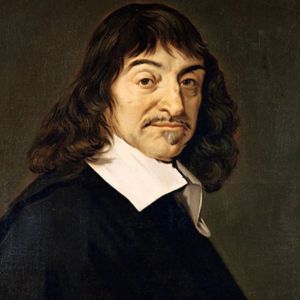
Descartes
Rene Descartes

In the West, thought about thinking has been called “logic” which we have associated with “reason as a way of knowing” based on the principle of reason. This “logic” has received its flowering in the natural and human sciences under the term “logistics”. Logistics, today, is considered the only legitimate form or way of knowing because its results and procedures ensure the construction of the technological world. Logistics is an interesting word in that its use as a noun implies “symbolic logic” (mathematical algebraic calculation) and it is also related to the conduct of warfare. Its use as mathematical calculation is found in what is called logical positivism which is a new branch of the branch of philosophy that was previously known as empiricism. The thinking in logical positivism is the thinking expressed as algebraic calculation: only that which can be calculated can be known and is worth knowing.  To elaborate how this has come to be the case would require an analysis of 17th century philosophy and mathematics beyond what we intend in this writing. Suffice it to say that this is part of our inherited shared knowledge that we have received from the philosopher Rene Descartes. It is called Cartesianism.

Calculative Thinking:

Today we think that thought is the mind working to solve problems. We can see this in many of the quotes that are looked to as words of inspiration for young people. Thought is the mind analyzing what the senses bring in and acting upon it. Thought is understanding circumstances or the premises of a situation and reasoning out conclusions, actions to be taken. This is thinking, working through from A to B in a situation. Thoughts are representations of the world (real or not doesn’t matter, only the mind’s action does), or considerations about claims or representations (knowledge issues or questions), and the conclusions or judgements that are made. We think we know exactly what thought is because it is what we think we do. And as the animal rationale, the “rational animal”, how is it possible for thinking to be something we can fly from as it is our nature? Any examination of materials for approaching TOK illustrates, rather clearly, that we assume we already know what thinking is, what knowledge is. That is why so many of the posed questions can begin with “To what extent…” There is a pre-conceived hierarchy against which a response can be measured.

When we use the word ‘thinking’, our thought immediately goes back to a well-known set of definitions that we have learnt in our life or in our studies, what we have inherited from our shared knowledge. Definitions provide the limits to things, their horizons so that they can be known to us. These limits we call “meaning”. To us thinking is a mental activity that helps us to solve problems, to deal with situations, to understand circumstances and, according to this understanding, to take action in order to move forward. It is algorithmic. Thinking for us also means to have an opinion, to have an impression that something is in a certain way. Thinking means reasoning, the process of reaching certain conclusions through a series of statements. Thinking is “a means of mastery” or control over the ‘problems’ which confront us and stand as obstacles in our achieving our ends.

On the special kind of thinking that occurs in science, Heidegger says that it is true that “[s]uch thought remains indispensable. But – it also remains true that it is thinking of a special kind.” (Discourse on Thinking 45) That is reasoning, rationalization, analysis by concept, logical operation are all part of a particular form of thought, one with presuppositions and operational rules. This is, and has been called, “method”. It operates within a system.  It is the thinking that you are required to do in order to be successful in the TOK course. It is not, however, a universal way of thought. Nor is it the oldest means of thought; human beings of the past did not approach the world in the manner given by Aristotle, but rather human beings (Aristotle, specifically) had to think in this manner after reaching certain conclusions about the world and human nature. For Aristotle, this view came from his understanding and critique of the Greek philosopher Plato.

heidegger
Martin Heidegger

The kind of thinking we are probably accustomed to is what Heidegger names “calculative thinking”, and it is the thinking proper to the sciences and economics, which we, belonging to the technological age, mainly — if not solely — employ. Calculative thinking, says Heidegger, “calculates,” “plans and investigates” (1966b, p. 46); it sets goals and wants to obtain them. It “serves specific purposes” (ibid., p. 46); it considers and works out many new and always different possibilities to develop. Despite this productivity of a thinking that “races from one aspect to the next”; despite the richness in thinking activities proper to our age, and testified by the many results obtained; despite our age’s extreme reach in research activities and inquiries in many areas; despite all this, nevertheless, Heidegger states that a “growing thoughtlessness” (1966b, p. 45) is in place and needs to be addressed. This thoughtlessness depends on the fact that man is “in flight from thinking” (ibid., p. 45).

 Thoughtlessness”, Heidegger states, “is an uncanny visitor who comes and goes everywhere in today’s world. For nowadays we take in everything in the quickest and cheapest way, only to forget it just as quickly, instantly. Thus one gathering follows on the heels of another. Commemorative celebrations grow poorer and poorer in thought. Commemoration and thoughtlessness are found side by side. (1966b, p. 45)

In the writing on Technology as a Way of Knowing, I have tried to show an example of this by comparing the “making” of the Japanese tea ceremony cup with the ubiquitous Styrofoam cup. The ‘creator’ of the Styrofoam cup, the patent holder, is Dow Chemical, the provider of the funds for Harvard’s “Project Zero”, and they, in turn, provide a number of IB educational institutions with their expertise on “what is called thinking” and are giving the techniques of thinking that will be used in the classrooms of those institutions. What and how are the ends of Dow Chemical, as a corporation, in alignment with the ends of Harvard University and the student learner outcomes in the IB Learner Profile? How do these relate to what is called thinking today?

Calculative thinking, despite being of great importance in our technological world, is a thinking “of a special kind.” It deals, in fact, with circumstances that are already given, and which we take into consideration, to carry out projects or to reach goals that we want to achieve. Calculative thinking does not pause to consider the meaning inherent in “everything that is”. It is always on the move, is restless and it “never collects itself” (Heidegger 1966b, p. 46). This fact, paradoxically, hides and shows that humanity is actually “in flight from thinking.” Now, if it is not a question of calculative thinking, then what kind of thinking does Heidegger refer to when he speaks of another way of thinking that might be possible for human beings? And why, if at all, is there a need for it? A possible answer might be that because we have no problem in understanding the importance of calculative thinking, we probably are not so clear about the need, in our existence, for a different kind of thinking.

 What Heidegger is saying, however, is something else. His thesis is that “reasoning” is not what thought really is. It is not the essence that defines thought. This is not to say that scientific thought is faulty, as Heidegger reiterates again and again. “The significance of science here (in the modern) is ranked higher here than in the traditional views which see in science merely a phenomenon of human civilization.” (What is Called Thinking? 22) How did science come to have this higher ranking?

Another Way of Thinking: “Poetically Man Dwells…”

Heidegger distinguishes from the traditional concept of thought (what he calls calculative thinking) a second form of thinking, ‘poetic’ thinking (meditative, contemplative thinking). Contrary to what it is commonly thought of, ‘poetic’ thinking is not a kind of thinking that is to be found “floating unaware above reality”, losing touch with reality. Nevertheless, the thinking he is proposing “is worthless for dealing with current business. It profits nothing in carrying out practical affairs.” (Discourse on Thinking 46) In other writings on this blog I have referred to Simone Weil’s term of “attention” as the form of contemplative thinking that Heidegger has in mind.

In the “Memorial Address,” Heidegger speaks of two kinds of thinking: the above mentioned “calculative thinking” and “‘poetic’ thinking” (1966b, p. 46). ‘Poetic’ thinking is a kind of thinking man is capable of, it is part of his nature; but nevertheless it is a way of thinking that needs to be awoken. When Heidegger states that man is “in flight from thinking” (1966b, p. 45), he means flight from ‘poetic’ thinking. What distinguishes ‘poetic’ thinking from calculative thinking? What does ‘poetic’ thinking mean? It means to notice, to observe, to ponder, to awaken an awareness of what is actually taking place around us and in us. It is a way of being quite different from that which I have described in “Understanding the Shadows in Plato’s Cave” as well as “Darwin/Nietzsche Part IX B” in other areas of this blog.

‘Poetic’ thinking does not mean being detached from reality or, as Heidegger says, “floating unaware above reality” (1966b, p. 46). It is also inappropriate to consider it as a useless kind of thinking by stating that it is of no use in practical affairs or in business. These considerations, Heidegger states, are just “excuses” that, if on the one hand appear to legitimize avoiding any engagement with this kind of thinking, on the other hand attests that ‘poetic’ thinking “does not just happen by itself any more than does calculative thinking” (1966b, p. 46-47). ‘Poetic’ thinking requires effort, commitment, determination, care, practice, but at the same time, it must “be able to bide its time, to await as does the farmer, whether the seed will come up and ripen” (Heidegger 1966b, p. 47).

‘Poetic’ thinking does not estrange us from reality. On the contrary, it keeps us extremely focused on our reality, on the essentials of our being, ‘existence’. To enact ‘poetic’ thinking, Heidegger says that we need to:

dwell on what lies close and meditate on what is closest; upon that which concerns us, each one of us, here and now; here, on this patch of home ground; now, in the present hour of history. (1966b, p. 47)

Even though “man is a thinking, that is, a meditating being” we need to train (“educate”) ourselves in the ability to think ‘poetically’, to look at reality, and thus ourselves, in a ‘poetic’ way. The cost of not doing so would be, Heidegger states, to remain a “defenseless and perplexed victim at the mercy of the irresistible superior power of technology” (ibid., p. 52-53). We would be – and today, more so than sixty years ago, when Heidegger gave this speech – victims of “radio and television,” “picture magazines” and “movies”; we would be “chained” to the imaginary world proposed by these mediums, and thus homeless in our own home. It is fairly clear that Heidegger has Plato’s allegory of the Cave in mind here. Heidegger further states:

all that with which modern techniques of communication stimulate, assail, and drive man – all that is already much closer to man today than his fields around his farmstead, closer than the sky over the earth, closer than the change from night to day… (Heidegger 1966b, p. 48)

It is very easy to see how much further from the openness around us we are when we are dwellers in our cities or see ourselves as avatars in virtual worlds on our computers given the pastoral description that Heidegger provides here.

If we view our current thinking in the light of Plato’s Cave, we can see that the risk for humanity in our current approach to thinking is to be uprooted not only from our reality, from our world, but also from ourselves and from our natures as human beings. If we think ‘poetically’, however, we allow ourselves to be aware of the risk implied in the technological age and its usefulness and we can, hence, act upon it. We can experience some of the freedom which is spoken about in Plato’s allegory when we are brought out into the Open where the light of the Sun shines and things are shown to us in their own being as they really are.

 When we think ‘poetically’ we do not project an idea, planning a goal towards which we move, we do not “run down a one-track course of ideas” (ibid., p. 53). When we think ‘poetically’, we need to “engage ourselves with what at first sight does not go together at all” (ibid, p.53). In order to understand what this means, think of the comportment (disposition) we have towards technological devices. We recognize that in today’s world technological machineries and devices are indispensable. We need just  think of computers and hand phones and their usage in our daily life’s activities to be convinced, beyond any doubt, that “we depend on technical devices” (Heidegger 1966 b, p.53). By thinking calculatively, we use these machineries and devices at our own convenience; we also let ourselves be challenged by them, so as to develop new devices that would be more suitable for a certain project or more accurate in the carrying out of certain research. (Think of the “madness” that usually occurs regarding the release of Apple’s latest IPhone or IPod.) We even allow our language to be determined by the machines and devices that we use (see Language as a WOK).

If calculative thinking does not think beyond the usefulness of what it engages with, ‘poetic’ thinking, on the other hand, would notice and become aware of the fact that these devices are not just extremely useful to us. It would also notice that they, by being so extremely useful, are at the same time “shackling” us: “suddenly and unaware we find ourselves so firmly shackled to these technical devices that we fall into bondage to them” (ibid., p. 53-54). If human beings, not being aware of this, are in a situation of being chained to their technological devices and tools, then by becoming conscious of this they find themselves in a different relation to them. They can become free of them. With this awareness human beings can utilize these instruments just as instruments, being at the same time free to “let go of them at any time” (ibid., p. 54). And this is so because once we acknowledge that their usefulness implies the possibility for us to be chained to them, we deal with them differently; we “deny them the right to dominate us, and so to wrap, confuse, and lay waste our nature” (ibid., p.54). It is a matter of a different comportment (disposition) towards them; it is a different disposition to which Heidegger gives the name “releasement toward things” or “detachment” from the things (ibid, p.54). This “releasement” and “detachment” means an “openness” or “availability” to what-is so as to allow that which is to be present in its mystery and uncertainty. (See Plato’s Cave and the “openness” required to view the beauty of the forms and ideas in their “outward appearance” on the outside of the Cave.)

“Releasement” toward things is an expression of a change in thinking and, like Plato’s prisoners in the Cave, a change in their being in the world. Thinking is not just calculation, but ponders the meaning involved and hidden behind what we are related to and engaged with. This hiddenness, even if it remains obscure, is nevertheless detected – by a meditating thinking – in its presence, a presence that “hides itself.” But, as Heidegger states:

if we explicitly and continuously heed the fact that such hidden meaning touches us everywhere in the world of technology, we stand at once within the realm of that which hides itself from us, and hides itself just in approaching us. That which shows itself and at the same time withdraws is the essential trait of what we call the mystery. I call the comportment which enables us to keep open to the meaning hidden in technology, openness to the mystery. (1966b, p. 55)

“Releasement towards things” and “openness to the mystery” are two aspects of the same disposition, a disposition that allows us to inhabit the world “in a totally different way.” But as we already mentioned, this disposition does not just happen to us. It develops through a “persistent courageous thinking” (ibid., p. 56), which is ‘poetic’ thinking.

The traditional concept of thinking intends thinking as a representing, and therefore as belonging to the context of willing (action). It is still involved with a subjectivism. Subjectivism is “setting up the thinking ‘subject’ as the highest principle of Being, and subordinating everything to the dictates and demands of the subject” (See Reason as a WOK, particularly the thoughts on Descartes). It is what we have come to call “humanism”.

Probably when we hear the word “acting” we immediately relate it to a familiar concept of action, such as the one that thinks of action as that which produces some kind of result, which means that we understand action in terms of cause and effect. To understand what Heidegger means by “higher acting,” we need to refer to the essential meaning that, according to Heidegger, pertains to ‘action’.

In the “Letter on Humanism” (1998b), Heidegger defines the essence of action as “accomplishment”, and he unfolds the meaning of accomplishment as “to unfold something into the fullness of its essence, to lead it forth into this fullness – producere” (1998b, p. 239). “Higher acting” is not, therefore, an undertaking towards a practical doing, but is a ‘higher’ acting as accomplishment, in the sense of leading forth of some thing into the fullness of its essence.

Releasement itself is what makes this available to man. For Heidegger, “higher acting” remains a techne, but it is “making”, a producing or accomplishing, that is more of a poiesis (poetry, for lack of better word) than the cheap, quick making of our production lines such as we find in the production of the Styrofoam cup. In poiesis, human beings allow something to be in its mystery while at the same time bringing forth of that ‘some thing’ from out of the hiddenness in which it once resided.

Heidegger’s ‘poetic’ thinking is contrasted with the thinking that is present in Aristotle’s four causes: the material cause, the formal cause, the final cause and the sufficient cause.

The conventional view of perception is what is called “representational”. Representation “places before us what is typical of a tree, of a pitcher, of a bowl . . . as that view into which we look when one thing confronts us in the appearance of a tree, . . .” (Discourse on Thinking 63) Objects are there; they are perceived in both their form and idea (the mathematical as something which can be known).

Heidegger does not think of perception in this manner. Heidegger also includes something called horizon (time), which is, in keeping with the definition, the horizon or limits of that which we perceive (space). Objects are within a horizon, but we do not place them there; rather they “come out of this (openness of the horizon) to meet us.” (Discourse on Thinking 64) For Heidegger, “the Open” that we discussed as outside of Plato’s Cave is that area or realm in which objects can be perceived.

Rather than actively search out objects to represent, or passively allowing things to enter into our sense experience, Heidegger believes that we have a sort of “active reception,” where that which is present “comes out to meet us.” The proper state towards that which is perceived is called “unconcealment”; thinking is “in-dwelling in unconcealment to that-which-regions.” (Discourse on Thinking 82) For Heidegger, this thinking is not a “grasping” or an “apprehending” but a “releasement” that allows the thing to be in its being as what it is in the “Openness” of the horizon of its being. If we think of Heidegger’s “Open” as the region outside of the Cave, we will be close to what Heidegger means by this term (but it should be remembered that for Heidegger, the Cave is our “home”). Whereas Plato emphasizes the “open” as that region outside of the Cave, and thus focuses on “space”, Heidegger’s focus is more on Time as the region where the “Being of beings” is “sighted”.

Our conventional thinking is an “active doing” whose purpose is to “change” or to “apprehend” what is in being and to make it a part of our “standing reserve” or as some thing disposable for our use at a later time. Heidegger’s thinking is more related to the Vedanta ananda or “bliss” as being in thinking itself.

What Calls for Thinking:

We cannot properly address the question What Is Called Thinking? without answering the question What Calls For thinking? This distinction between the two questions and the priority given to “what calls for thinking” over “what is called thinking” will be the focus of these discussions on thinking, and this will focus on “rationality” as what has come to be called thinking.

According to Heidegger, one is not thinking if one does not rank the objects of thought in terms of thought-worthiness. This point flies in the face of many contemporary accounts of rationality, for they suggest that one can be thinking well as long as one is following the right method. The emphasis today is on the method of what is called thinking. What one thinks about does not provide the standard for the role of such “ratio-inspired” accounts of thinking (see below for the contrast to legein-inspired or language-inspired models); indeed, critical thinking has come to mean critical whatever method-following thinking instead of critical whatever essential thinking. Heidegger’s point is that such means-end accounts involve and indeed propagate a distortion; a life spent rationally researching the history of administrative memos and emails is not a thoughtful life.  In rationally pursuing anything and everything we are not thinking.

Meta-analysis, meta-cognition, meta-linguistics and all other “meta”-prefixed approaches to thinking remain in the realm of “method” thinking and need to be contrasted with “logos” thinking. This is because these “meta” forms of thinking remain in the realm of the traditional thinking of Western “metaphysics”.

You will notice in many of your classes that you are encouraged to become “inquirers”. This is an attempt to re-introduce philosophy of some kind into the curriculum. The philosopher differs from the chess player, biologist, and politician in that the philosopher’s calling is to think about thinking as such. Moreover, to think philosophically about thinking, is to come to a confrontation with a mode of existing–“being-thoughtful”–and thereby with Being and how you stand in Being.

The Greek experience of thinking was grounded on a link between thinking and Being. This link is present in the earliest Greek thinking and carries over into the works of Plato and Aristotle. With Socrates in particular one catches the notion that built into thinking was a directedness towards order (particularly order within one’s self), goodness, beauty, truth, and Being.  Aristotle’s remarks on God and nature also underline this link. It is more revealing, Aristotle holds, to consider the relation between God and the world in terms of God as idea rather than God as creator or cause. God as idea can explain the striving of natural substances; the acorn seeks to become an oak, and thereby reproduce, and thereby the acorn mimics God’s eternality. In the same way, the human infant is on its way to becoming a thinking being, and so the human’s telos (purpose) is to mimic the highest being’s thinking. Moreover, Aristotle wonders what God would think about, and concludes that thought thinking thought is the only befitting topic for the most divine activity. The philosopher par excellence thus mimics the highest being (God) not only by thinking, but also by thinking about thinking.

What calls for thinking in our time? What is it that you should think about to be “educated”? The present age is the technological age, the age in which brain currents are recorded but the beauty of a tree in bloom is forgotten. What is thought-provoking about our time? Heidegger claims that what is thought-provoking about our time is that we are still not thinking. But what is it about our time that explains why we are still not thinking?

Heidegger diagnoses this age as the time of nihilism. The dominant characteristic of our time, then, is the forgetting or withdrawal of Being, and it is this that explains why we are still not thinking–even as we attempt to mimic intelligence via computer programs or connectionist (social) networks. We call to mind that in the allegory of Plato’s cave, “beauty” and “truth” must be “apprehended” as they will slip into “forgetfulness” or “forgottenness”. Our focus is on a “beauty” that withdraws (the physical appearance; the beauty in the “eye of the beholder”) the beauty that is “subjective” and belongs to the “subject” rather than on the Beauty that presences right before our very eyes in all that is in Being.

We are more distant from Being because the experience of thinking–in our technological age–has been shrunk to that of using a tool to operate within an already-fixed network of ends. This age, in other words, is more thought-provoking because in it ratio has triumphed over legein; thinking has become so severed from the being-thoughtful that the thoughtful being is in danger of being entirely eclipsed. This triumph of ratiocination is discussed further in imagination as a way of knowing.

We are still not thinking–despite Plato’s directive–because we have missed the object and source of thinking—Being, that thinking which occurs in the region of the “Open” outside of the Cave. We will continue to miss this thinking as long as we merely use thinking and do not dwell as thoughtful. All genuine thinking arises from and returns back to thoughtful existence; “thinking” that is not so anchored is homeless “thinking”, e.g., calculating, computing, or even reasoning, or all of the “meta” approaches to thinking that were mentioned earlier. This thinking floats on a great sea of nihilism. Thoughtful dwelling in the region of the “Open” is the existential ground of thinking; in such a mode we can hear what calls for thought.

The loss of thoughtful dwelling can be “remembered” by looking back to the Greek thinking experience in order to recover that which has been lost in the translation of the Greek legein into the Latin ratio. Legein carries with it two significations that are not preserved by the Latin ratio: thinking as speaking and thinking as gathering. Thinking moved from that which is bound in sense perception as a way of knowing to thinking that thinks in language as a way of knowing is the direction for thought. But how is this change in direction to be achieved?

Thinking as speaking, as language. Being calls for thinking, i.e., for articulation, and thus to let Being be in language is thinking. William Blake’s Songs of Innocence, for example, houses the carefree Being of playing children. The language of thinking plays a crucial role. That we are not thinking because we are not “mindful” of the language of thinking can be seen in how our technology is taking over the role of language in our being. A full elaboration of this idea is impossible here, but the claim, roughly, is that to be thoughtful is to exist as authentically immersed in language.

To begin, “the language of thinking”… all of these phrases can be taken either in the subjective or objective genitive, and those are possibilities on which we should reflect in our thinking. The phrase, “the idea of God”, for example, can mean “God’s idea” in the subjective genitive and “the idea about God” in the objective genitive. In like manner the phrase “the language of thinking” means “thinking’s language” or “the language found in thinking” in the subjective genitive and “language about thinking” in the objective genitive. The difference, then, is between the language found in thinking generally and the language found in thinking about thinking.

Thinking as gathering. Legein signifies gathering and the gathered. Thinking demands…that we engage ourselves with what at first sight does not go together at all.

Thinking is the gathering of that which calls to be gathered–the modes of our existence and Being as such. Thinking can begin when we hear that which calls for thinking:

Joyful things, too, and beautiful and mysterious and gracious things give us food for thought…if only we do not reject the gift by regarding everything that is joyful, beautiful, and gracious as the kind of thing which should be left to feeling and experience, and kept out of the winds of thought. Only after we have let ourselves become involved with the mysterious and gracious things as those which properly give food for thought, only then can we take thought also of how we should regard the malice of evil. (Heidegger: What is Called Thinking? P. 31)

Thinking, then, is not so much a matter of being an expert or technician in a field–even if the field be philosophy–as it is being responsive to the various ways of being of who we are, and this points to the disposition of “being thoughtful” as the ground of thinking.

We may now state some conclusions about thinking:

  1. Those who take as the object of their theories a purely mental activity, “thinking”, are missing the richest part of the phenomenon: being-thoughtful.
  2. Being-thoughtful is not essentially a mental activity; it is rather the encounter with Being (the manifesting of meaning which occurs in the ‘showing’ through the beautiful).
  3. Means-end analyses sever thinking from its existential ground; one can be “means-end” rational and yet not thoughtful (and this is the thinking which occurs in the technological world view of logical positivism, the language of algorithms).
  4. Receptivity is the distinguishing mark of thoughtful being; the mastering thinking of the human sciences and the natural sciences in their demanding stance towards being and beings do not think; Nietzsche, who stated that what characterizes contemporary science is the victory of scientific method over science, the victory of method over thought.

Thinking and Language:

What is it that is named in “thinking”, “think”, “thought”? The Old English ​thencan, ​​to think, and ​thancian, to thank, are closely related; the Old English noun for thought is thanc ​or thonc–a thought, a grateful thought, and the expression of such a thought; today it survives in the plural “thanks”. ​The “thanc”, that which is thought; the thought implies thanks.
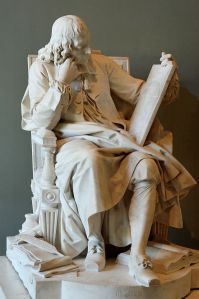
Pascal_Pajou_Louvre_RF2981
Blaise Pascal

Is thinking a giving of thanks? Or do the thanks consist in thinking? What does thinking mean here? “Thought” to us today usually means an idea, a view, an opinion or a notion. Pascal, the French mathematician and contemporary of Descartes, in his journals given to us as Pensees, ​​searched for a type of “thinking of the heart” that was in conscious opposition to the mathematical thinking prevalent in his day. Thought, in the sense of logical-rational representations (concepts), was thought to be a reduction and impoverishment of the word “thinking”. Thinking is the giving of thanks for the lasting gift which is given to us: our essential nature as human beings, which we are gifted through and by thinking for being what we essentially are.​ I have called this love in other sections of this blog.

“The gathering of thinking back into what must be thought is what we call the memory”. (Heidegger).

Today, some perceive that the task facing thinking is the overcoming of what is now described as its weaknesses:

  1. Thinking does not bring knowledge as do the sciences;
  2. Thinking does not produce usable practical wisdom;
  3. Thinking solves no cosmic riddles;
  4. Thinking does not endow (or empower) us directly with the power to act.

These observations of thinking’s weaknesses overrate and overtax thinking.

The question “What is called thinking?” can be asked in four ways:

  1. What is designated by the word “thinking”?
  2. What does the prevailing theory of thought, namely logic, understand by thinking?
  3. What are the prerequisites we need to perform thinking rightly?
  4. What is it that commands us to think?

A Brief History of What is called thinking:

​We can begin to answer question #2 above, what and why the prevailing theory of thought has determined thinking to be logic, by examining the titles of the major works of Rene Descartes. His first work is entitled Rules for the Direction of Mindthe second is entitled Meditations on First Philosophy; and the third is called Discourse on Method. ​These works describe the path of the grounding of what is called thinking today. Further discussion is available on What is Knowledge?

Resources

References:

—— (1966a). Conversation on a Country Path about Thinking. In: Martin Heidegger, Discourse on Thinking. Trans. John M. Anderson and E. Hans Freund. New York: Harper and Row.

—— (1966b). Discourse on Thinking. Trans. John M. Anderson and E. Hans Freund. New York: Harper and Row.

——(1968). What is Called Thinking?. Trans. J. Glenn Gray. New York. Harper and Row.
 

Personal Knowledge: Language as a WOK

Personal Knowledge: Language as a Way of Knowing:

“Now I am tempted to say that the right expression in language for the miracle of the existence of the world, though it is not any proposition in language, is the existence of language itself.”—Wittgenstein

“Language is the house of Being. In its home humans dwell.”—Heidegger “Letter on Humanism”

“‘En arche ‘en ‘o Logos” (“In the beginning was the Word”)—John 1:1

“…we ourselves no longer have the power to trust that the word is the essential foundation of all relations to beings as such.”—Heidegger: “Aristotle’s Physics” 

Language is probably the most important theme of 20th century philosophy and will be of the philosophy that moves into the 21st century. Why this has come to be the case will be the outline of these writings on language as a WOK.

The very essence of what we are as human beings, our ontology, our being-in-the-world is contained in our language and in our relation to and understanding of language. To understand language is to contrast instruction with teaching; and to do so is to recognize that the teaching in TOK is to be characterized as “useless” and it must be “useless” in order to allow true learning and teaching to happen.  To reflect on the issue of “uselessness” and “usefulness” is to connect these seemingly  irrelevant themes to the status of education in our modern technological age and what we think education is today.  In order to begin this reflection, we must think upon language and rethink language.

The rethinking of language takes place from and within the rethinking of technology. The relation between technology and language is crucial for a rethinking of language in our modern technological age. It is therefore necessary to talk about the technological language, which defines “a language that is technologically determined by what is most peculiar to technology,” that is, by framing (or “positioning” or enframing). It is imperative that we ask what is language and in what special way it remains exposed to the dictates of technology. Such imperatives to our thinking about language are only met in the rethinking of the current conception of language that we might characterize in the following way:

Personal/Shared Knowledge Background:

Today we think speech is: (1) a faculty, an activity and achievement of humans. It is: (2) the operation of the instruments for communication and hearing. Speech is: (3) the expression and communication of emotions accompanied by thoughts (dispositions) in the service of “information”. Speech is: (4) a representing and portraying (picturing, the making of pictures) of the real and unreal.

The traditional metaphysical connection of subject “the things” + predicate “the qualities of the things”, the categories, between language and thinking that we have seen in our discussions of Reason as a Way of Knowing defines language in terms of thinking. Thinking is the human activity of representing objects in this view, and thus language has been seen as a means for conveying information about objects. “In-form-ation” results from our providing a “form” in order to “inform” regarding what we call “data”. This is what we call “classification”, a providing of definitions or the limits and horizons of things. Traditional metaphysics places thinking as “reason” (reason, “logic” which has its root in “logos”) as the determining factor (the “-ation” or “atia” in Greek,  “that which is responsible for”) in the relation between language and thinking. Reason provides the “form” so that the data (the content) can be structured so that it may “inform”. This is shown in our current conception of language as an “instrument of expression” in the “service of thinking”. The common view believes that thought uses language merely as its “medium” or a means of expression. Thought is seen as logic, reason in this view.

We assume that language is a tool used by human beings to communicate information. We think that the same fact can be expressed in many different languages. We think a competent speaker is in control of language and can use it efficiently to convey data to his/her audience. In the quest for efficiency in communication, we have devised artificial languages that give us more control over language. Symbolic logic, computer programming languages, and the technical languages of the sciences are set up as systems in which each sign can be interpreted in only one way. Each sign points clearly to what it represents so that the sign itself becomes completely unobtrusive. The perfect language in this view is a technique for perfect representation.

heidegger
Martin Heidegger

There are two major schools of thought on language as a WOK: the “structuralist” or “analytical” school which has been described up to now, and the “continental” school. The “continental” school’s foremost representative is Martin Heidegger: “Language is the house of being. In its home humans dwell” is a quote that captures Heidegger’s understanding of language. But what does the quote mean? How is language a “house” and how through its use does it create a “home”?

The conception of language as a mere means of exchange of information undergoes an extreme transformation in our modern technological age that is expressed in the definition of language as “information”. The analytic school of thought on language offers a prime example of a “metaphysical-technological explanation” of language stemming from the “calculative frame of mind.” This view believes that thinking and speaking are “exhausted by theoretical and natural-scientific representation and statements,” and that they “refer to objects and only to objects.” Language, as a tool of “scientific-technological knowing”–which “must establish its theme (thesis, theory) in advance as a calculable, causally explicable framework”– is “only an instrument that we employ to manipulate objects.” We refer to this as an algorithm: the world is looked upon as a calculable, causal framework that gives us a problem that must be solved.

Think of this in terms of our computers and our other tools of “information technology”, particularly the speed reading technologies and applications that are becoming available: the principle of reason must establish the “frame” or “position” in advance so that data can be controlled through calculation in order to inform. This frame transform the manner in which things are approached.

Heidegger notes the influence and understanding of language by analytic philosophy in our modern technological age in the following way:

Of late, the scientific and philosophical investigation of languages is aiming more resolutely at the production of what is called “metalanguage.” Analytic philosophy, which is set on producing this super-language, is quite consistent when it considers itself metalinguistics. That sounds like metaphysics -not only sounds like it, it is metaphysics. Metalinguistics is the thoroughgoing technicalization of all languages into the sole operative instrument of interplanetary information. Metalanguage and sputnik, metalinguistics and rocketry are the Same.

Heidegger is speaking this in the late 1950s, but the connection to today’s information technology illustrates the truth of his statement. Given the logical bent of analytical philosophy, the modern mathematical and symbolic logic or “Logistik” is metaphysics. Logistics was for Heidegger the “unbroken rule of metaphysics” establishing itself everywhere; and modern epistemology (theories of knowledge) acquire a “decisive position of dominance.”  It was a matter of grave concern for Heidegger to see that logistics was being considered everywhere “the only possible form of strict philosophy” on the grounds that its procedures and results are deemed productive for what he called “the construction of the technological universe.” (Have a look at the etymological roots of “logistics” on dictionary.com). This must be thought about in relation to what we understand as “artificial intelligence” of AI: how does or will our understanding of what reason and language are determine the nature of what is called “artificial intelligence” and of the machines that will use it?

Heidegger’s negative characterizations of logistics abound: It is a “logical degeneration” of traditional categorical logic of Aristotle, and its development is a sign of the “decay of philosophy,” an indication of its “dissolution” and “completion.” At another point, Heidegger states: “Technique is the metaphysic of the age.”

Language and Concepts:

How does language determine what we call our “key concepts”, the manner in which we are to approach our personal and shared knowledge? If we think about what we call “dead” languages for a moment, we will notice that they are called “dead” because they are no longer subject to changes in meaning. Any “living” language will have changes in meaning and interpretation according to the historical time in which it occurs. As the poet T. S. Eliot wrote:

“Words strain,
Crack and sometimes break, under the burden,
Under the tension, slip, slide, perish,
Decay with imprecision, will not stay in place,
Will not stay still.”

Our modern attempts to fixate language into an unambiguous tool for communicating information and representing beings/things illustrates our desire to fulfill the revealing of truth as representation, to follow the correspondence theory of truth and the principle of reason. There is “truth” (according to Heidegger), but how we understand what this truth is is relative to the historical situation in which it occurs; it is not a “subjective” truth, but a communal truth: that is, it is not based on personal knowledge but is the knowledge that we all share. In our current situation, this is the global “revealing” through technology and this revealing drives us to realize the “global village” or “internationalism”. The “system” which results from the “framing” that is the technological requires no individual thinker or thinking. In science, time and place are not important and scientists from disparate locations can carry out their work with the certainty that their “accounts” will be correct when properly following the method established within the framing. This is because the language which they use is fixated.

If Heidegger is correct, the same fact cannot be expressed in many different languages because beings and “information” present themselves differently according to different cultural contexts. The quest for a universal, unambiguous language can only succeed in creating stillborn languages. These languages are locked into a particular interpretation of the world and the things in it (representational revealing) and are incapable of responding creatively to new experiences. Artificial languages (and one might say artificial intelligence since it will be based on these languages) are not more “objective” than natural languages—they are just narrower and more rigid because their goal is certainty and efficiency.

Language cannot be merely a tool that we use because we can control it: we owe our own Human Being to language. Language is fundamental to the revelation of the world; it is an essential part of what enables us to be someone, to be a human being and notice things in the world in the first place. Language has the power to reveal our world and transform our existence. But the lucid and creative moments are few both in individuals and in societies; the rest is inauthentic and derivative. Everyday “idle talk” is a pale, dull reflection of “creative meanings” that are first revealed and achieved in poetry.

Language as Representation:

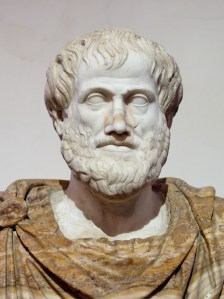
Aristotle_Altemps_Inv8575
Aristotle

Where does the understanding of language as representation come from? As the “doctrine of the logos” in Aristotle is interpreted as assertion or statement, logic is the doctrine of thinking and the science of statement (or the making of statements—propositions, the creation of “pictures”), that is, logic (the principle of reason) provides the authoritative interpretations of thinking and speaking that rule throughout the technological. More specifically, logistics has as its basis the modern interpretation of the statement or assertion as the “connection of representations” (the correspondence and coherence theories of truth).  It is in this sense that Heidegger regards it as another manifestation of the “unchecked power of modern thinking” itself.  Heidegger depicts the connections between logic and modern technology in very dramatic tones:

Without the legein (the saying) of [Western] logic, modern man would have to make do without his automobile. There would be no airplanes, no turbines, no Atomic Energy Commission. Without the logos, of logic, the world would look different.

The general form of modern metaphysical thinking is thus a “scientific-technological manner of thinking.” This thinking, this world-picture, threatens to “spread to all realms” thereby magnifying the “deceptive appearance which makes all thinking and speaking seem objectifying.” This thinking and speaking finds its full realization in algebraic calculation. It is this form of objectifying thinking that strives to “represent everything henceforth only technologically-scientifically as an object of possible control and manipulation.” With it, language itself takes a corresponding form: it becomes “deformed into an instrument of reportage and calculable information”. However, while the form that language takes is thus instrumental, in such a form of thinking, language itself exerts its own influence insofar as it is “treated like a manipulable object to which our manner of thinking must conform.” Language itself allows itself to be treated in such a way. Language and reason as WOKs are, in the end, inseparable. They allow themselves to create our box, what we call our “mindset”.

The traditional metaphysical manner of thinking in our age is a “one-track thinking,” (in Heidegger’s words) and this ‘one track’ can be understood and associated with technology.  It is a “one-sided thinking” that tends towards a “one-sided uniform view” in which “[everything] is leveled to one level,” and “[our] minds hold views on all and everything, and view all things in the same way.” Our manner of thinking is the box.  (*A link can be made to the uniformity of our understanding of number and its correspondence to Newton’s view of the uniformity of matter in the AOKs Mathematics and Natural Sciences.)

There is a kind of language that, as the expression of this form of thinking, is itself one-tracked and one-sided. One “symptom” of the growing power of the technological form of thinking is in our increased use of designations consisting of abbreviations of words or combinations of their initials. Our text messaging and our love of acronyms is a technological form of language in the sense that these herald the ordering in which everything is reduced to the univocity of concepts and precise specifications. This reduction and ordering also leads us to view all activities we engage in to be leveled to one level: the student who is asked to create a work of art either in words or other media, sees their activity as nothing more than their being in a shopping mall or at a supermarket. The activity ceases to have any priority in importance. In this view, “speed reading” will come to flourish since we cannot learn from texts anything other than “information” and this learning must be done as “efficiently” as possible.

Such interpretations are the “technological”; they are a given only “insofar as technology is itself understood as a means and everything is conceived only according to this respect (technology understood as “tools”).” If our way of thinking is one that values only that which is immediately useful, then language is only conceived and appreciated from this perspective of its usefulness for us. More importantly, this suggests it is the essence of technology as framing that somehow determines the “transformation of language into mere information.” We refer to this framing  of information as “the box” that inhibits our thinking.

If the essence of modern technology is framing, then there is also a “language of framing.” (See the unit on Technology as a WOK for an understanding of the concept of “framing”).

[All] ordering finds itself channeled into calculative thinking and therefore speaks the language of framing. Speaking is challenged to correspond in every respect to framing in which all present beings can be commandeered. –Heidegger

It is within framing (the “form”, the “position”), then, that “speaking turns into information.”

Computer_thumbWe can look at the computer as one manner in which modern technology controls the mode and the world of language as such.  We can infer that the computer is one crucial way in which this language of framing speaks.

“To compute”, obviously, means to calculate. With the construction of artificial intelligence, calculating, thinking and translating machines, speed reading applications, the computer is made possible insofar as its activities take place in the element of language. The term “computer” should not be taken as merely talking about calculators and computers. Machine technology itself is “the most visible outgrowth of the essence of modern technology” (Heidegger) and that ours is the age of the machine (and the Age of Information) is due to the fact that it is the technological age, and not vice versa.  More importantly, framing (the form) itself is not anything technological in the sense of mechanical parts and their assembly. In TOK we wish to explore our “key concepts” and language within a “knowledge framework”. Thus, the language of framing cannot itself be reduced to anything technological in this narrow sense. The computer intrudes by regulating and adjusting through its hardware and software and their functions how we can and do use language. Think of our smart phones and other assemblages that are linked to our computers and the manner of their linkages and how they assemble information and how this information must be assembled if it is to be communicated.

If there is a transformation of language in the computer that speaks the language of framing, then the question is what is the essence of language itself that it allows for its transformation into a technological language, into information? The essence of language is defined from the essence of language: It is a Saying that shows, in the sense of letting-appear. The possibility of a technological language lies here, for it is itself a Saying-Showing that is limited to the mere making of signs for the communication of information. Let us now examine some of the historical background for this development of language.

Historical Background of Language as Representation:

St. Augustine
St. Augustine

St. Augustine in his autobiography Confessions gives us the common understanding of how language comes about:

When they [my elders] named some object, and accordingly moved towards something, I saw this and I grasped that the thing was called by the sound they uttered when they meant to point it out.  Their intention was shown by their bodily movements, as it were the natural language of all peoples: the expression of the face, the play of the eyes, the movement of other parts of the body, and the tone of voice which expresses our state of mind in seeking, having, rejecting, or avoiding something.  Thus, as I heard words repeatedly used in their proper places in various sentences, I gradually learnt to understand what objects they signified; and after I had trained my mouth to form these signs, I used them to express my own desires. (Augustine, Confessions, I. 8)

Here, Augustine speaks of language as “signs”.  They are a “pointing out”, a “directing of the gaze or glance” and from them, the thing that is pointed out comes to stand for us as what it is in the saying so given and becomes “grasped” or “captured” by us. But notice that in Augustine’s description there are a number of steps involved in the “grasping” of the thing that is “pointed out”. First there is the pointing, then there is the bodily movement, then there is the sound uttered, then there is the notice of the “disposition” made when the sound is uttered, and all of this occurs within a social context; there is the “dialogue”. From this follows the “grammatical” structure of language, “the placing of the signs in their proper places in various sentences” which allows one to “express their own desires”.

Augustine is speaking of language as “representational”: the picture created is a word or a sign that stands for or represents a thing by virtue of that word or sign’s meaning. Each word means just one thing, and it does so by virtue of a meaning that we can think of or understand.  Language is, then, the communication of meanings from one person to another in the package of a sign: to communicate with you, I “frame” my intended meaning within the appropriate sign, and then give you the sign in speech or writing, whereupon you “decode” (interpret) it again, supplying the meaning for the sign I have given from within the same frame.  To speak language, then, is to imbue dead signs with life, to breathe air into the otherwise mute forms of signs.  Language is thought of as the breath of life animating lifeless form; language is the soul of meaning infusing and animating the bodies of signs.   Hence Aristotle discusses language as the “showing” of the soul’s “dispositions”:

Now, whatever it is [that transpires] in the creation of sound by the voice is a showing of whatever dispositions there may be in the soul, and the written is a showing of the sounds of the voice.  Hence, just as writing is not identical among all [human beings], so too the sounds of the voice are not identical.  However, that of which these [sounds and writing] are in the first place a showing are among all [human beings] the identical dispositions of the soul; and the matters of which these [dispositions] form approximating presentations (pictures) are likewise identical. 

Aristotle construes language as a kind of showing (in pictures), but taken in the view of the history of Western metaphysics that we have outlined in our writing on “Reason as a Way of Knowing”, Aristotle’s pictures imply that language is a mere instrument (tool) for the expression of inner intentions or thoughts (dispositions).  Within the tradition of Western thinking, this picture will imply that the relationship between signs and the thoughts they express is purely arbitrary, or to use the term favored by logical positivist philosophers, “conventional”; language is a system of arbitrary correlations (conventions) of signs to common meanings. Notice, though, that Aristotle insists that the “dispositions” themselves are the identical common meanings.

It is important to note here that Plato wrote “dialogues”; Aristotle wrote treatises. If one reads Plato’s dialogues in the same manner as one reads an Aristotelian treatise, one will fail to understand the dialogue. This reading of Plato in the same manner that we read Aristotle is one of the fates that have befallen us within the English-speaking community. British and American thinkers of previous generations read Plato as if they were reading a treatise of Aristotle.

The traditional picture of language found in Augustine, Aristotle, and the logical positivists, also has deep connections with the metaphysics of “subjectivity” (Descartes, Kant) that we have discussed in our understanding of “Reason as a Way of Knowing”.  In this traditional picture, the sign stands for an object (subjectum), but it is also the sign for a concept or image in the speaker’s mind (the frame).  The concept, or mental image, is a representation in the speaker’s mind or brain.  Even though we can exchange signs in communication, we can never be sure, in the traditional picture, that we are successful in communicating the mental representations, concepts, or images that go with them (the predicates).  The connection between a particular sign and the mental image that it evokes is the connection (or lack thereof) between something public and communicable, and something essentially private and incommunicable. Mathematics as “symbolic language” or “signs” overcomes this sense of arbitrariness in the public realm and is one of the reasons for its dominance in the realm of what can be called “knowledge”.

How can we rethink language and meaning, outside the traditional picture, in a way that reveals its essence as a showing (aletheia), rather than portraying it as a conventional correlation of signs to meanings, a mere instrument for the expression and communication of thoughts and dispositions?  To rethink the essence of language, we must attempt to “bring language as language to language.”  But how is this to be done?

To recapitulate: in the traditional view, language turns out to be “the eternally self-repeating labor of spirit to make articulated sound capable of being an expression of thought.” Language is what humans do to make sound able to express thought: it is the infusion of articulated sound with the spirit of meaning or intention.  It is an action. This way of “bringing language to language,” this labor of the spirit, the infusing of sound with meaning, has been the intellectual development of mankind.  But because it construes language as a human doing, as a labor of soul upon body, this traditional way of thinking of language remains trapped within the metaphysics of our age and fails to reveal the essence of language. According to Heidegger: “[this] way to language goes in the direction of man, passing though language on its way to something else: the demonstration and depiction of the intellectual development of the human race.” Heidegger continues:

“However, the essence of language conceived in terms of such a view does not of itself show language in its essence: it does not show the way in which language essentially unfolds as language; that is, the way it comes to stand; that is, the way it remains gathered in what it grants itself on its own as language.”

To determine what language is, we need to determine what pertains to language as language.

We list what pertains to language in order to understand what is essential to language, what is at the root of everything that happens in, and through, language.  One of the things that pertains to language as language is the speaker.  “To speech belong the speakers.”   In speaking, we presence things; we make present the objects of our concern and our common interest by “pointing them out”.

“In speech, the speakers have their presencing.  Where to?  Presencing to the wherewithal (purpose) of their speech, to that by which they linger (the “things” that are present-at-hand), that which in any given situation already matters to them.  Which is to say, their fellow human beings and the things, each in its own way; everything that makes a thing a thing and everything that sets the tone for our relations with our fellows.  All this is referred to, always and everywhere, sometimes in one way, at other times in another.” (Heidegger “The Way to Language”).

What else belongs to the essence of language?  We can run through the things that belong to language – the speaker, what is spoken, also the unspoken – but we do not thereby think their unity.  Their unity, the unity of the essence of language, remains hidden to us. What we are saying here becomes obvious, though hardly pondered in its full scope, when we indicate the following.  To speak to one another means to say something to one another; it implies a mutual showing of something, each person in turn devoting himself or herself to what is shown.  To speak with one another means that together we say something about something, showing one another the sorts of things that are suggested by what is addressed in our discussion, showing one another what the addressed allows to radiate of itself.” To speak, then, is not to talk to someone else; it is to participate in the “saying” (logos) that is a showing.

This “showing”, according to Heidegger, is older and more essential than the definition of language as a system of signs.  “What unfolds essentially in language is saying as pointing.  Its showing does not culminate in a system of signs.  Rather, all signs arise from a showing in whose realm and for whose purposes they can be signs.”  This showing (aletheia) is not simply something that we do, but a self-showing of that which shows (a revealing of what we are as human beings), a manifesting in which language itself speaks.  When we think of language as this self-showing, we can begin to understand it as something to which we ourselves belong and with which we ourselves may come into a more or less direct relationship:

“If speech as listening to language lets itself be told the saying, such letting can be given only insofar – and so near – as our own essence is granted entry into the saying.  We hear it only because we belong to it.  However, the saying grants those who belong to it their listening to language and hence their speech.  Such granting comes-to-stand in the saying; it lets us attain the capacity of speech.  What unfolds essentially in language depends on the saying that grants in this way.”  (Heidegger “The Way to Language”).

When we think language essentially, as a self-manifesting showing that points, we are well on the way to bringing language as language to language.  We experience language, then, as a possibility or a granting, an essence that allows manifestation (aletheia), rather than as something we do, make, or control. Thus, language as the saying (legein, logos) holds its own in the realm of truth. Think of this from your own experiences of when you are in a country in which you have no knowledge of the language. How does the experience of language show itself?

In a world in which language and speaking has become the mere exchange of information,

“the framing…sets upon human beings – that is, challenges them – to order everything that comes to presence into a technical inventory (standing reserve, resources or “disposable”), [and] unfolds essentially after the manner of appropriation (a “grasping” and an “owning”); at the same time, it distorts appropriation, inasmuch as all ordering sees itself committed to calculative thinking and so speaks the language of framing.  Speech is challenged to correspond to the ubiquitous orderability of what is present.  Speech, when posed in this fashion, becomes information.” (Heidegger “The Way to Language).

TOKQuestionAll that remains of language in information is “the abstract form of writing that is transcribed into the formulae of a logic calculus” whose clarity “ensures the possibility of a secure and rapid communication” (our text messaging and our public discourse as media bytes). The principles transforming language are technological-calculative. It is from the technological possibilities of the computer that the instruction (command) is set out as to how language can and shall still be language. Such instruction (command) spells out the absolute and overriding need for the clarity of signs and their sequences; the algorithm dominates. The fact that the computer’s structure conforms to linguistic tasks such as translating (i.e. whether the command/instruction is in Chinese or English does not matter) does not mean that the reverse holds true. For these commands are “in advance and fundamentally bound up” with the computer. With the “inexorability of the limitless reign” of technology, the insatiable technological demand for a technological language, its power increases to the point that the technological language comes to threaten the very essence of language as Saying-Showing. It is “the severest and most menacing attack on what is peculiar to language,” for language is “atrophied” into the mere transmission of signals according to Heidegger.
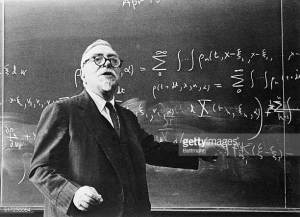
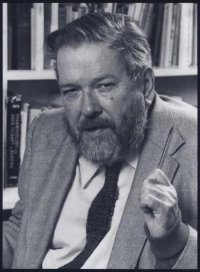

Weiner Norbert
Norbert Weiner

Moreover, when information (in the form of command) is held as highest form of language on account of its univocity, certainty and speed, then, we have a “corresponding conception” of the human being and of human life. Norbert Wiener, a founder of Cybernetics, said that language “is not an exclusive attribute of man but is one he may share to a certain degree with the machines he has constructed.”  This view is itself possible only when we presuppose that language is merely a means of information. This understanding of language as information represents, at the same time, a “threat to the human being’s ownmost essence.” (Heidegger) The fact that language is interpreted and used as an instrument has lead us into believing that we are the masters of the computer, but the truth of the matter might well be that the computer takes language into its management and masters the essence of the human being creating a fundamental change in human ontology (human being-there-in-the-world).

These assessments of the metaphysical-technological interpretation and form of language are indisputably critical. Why? What is at stake? Why should this be important for us?

The gripping, mastering effect technological language has over our very essence (ontology) makes “the step back out of metaphysics difficult.” (Heidegger) Language itself “denies us its essence” and instead “surrenders itself” to us as our “instrument of domination over beings.” (Heidegger) It is extremely difficult for us in the modern age to even understand a non-instrumental concept of language. The interpretation and form of “language as information” and of “information as language” is, in this sense, a circle determined by language and in language, within “the web of language.” (Heidegger) Hence, Heidegger has referred to language as “the danger of all dangers” that “necessarily conceals in itself a continual danger for itself.”  In fact, “we are the stakes” in the “dangerous game and gamble” that the essence of language plays with us.

CT 1: Knowledge and Reason as Empowering and Empowerment

Georgegrant
George Grant

“When one contemplates the conquest of nature by technology one must remember that that conquest had to include our own bodies.”—George Grant, “In Defence of North America” (1969)

The beginnings of tragic literature in the history of the West in the theatre of the Greeks illustrate how human beings, through lack of self-knowledge, are responsible for their own nemeses or tragic outcomes through their lack of knowledge of their origins. This lack of knowledge of who they are and what their limits are or what they are capable of leads them, through pride, to believe that they are capable of anything that they can accomplish through the force of their wills.

In the story of Oedipus the King, Oedipus learns of his terrible destiny to kill his father and marry his mother; and because he loves those who he thinks are his “real” father and mother, he sets out on a journey to be as far away from them as he possibly can. Oedipus’ lack of self-knowledge of his origins leads him directly to his “fate”, to his “real” father and mother. In “self-defense” he kills his actual father and eventually ends up marrying his “real” mother as a reward for solving the riddle of the Sphinx and ridding the city of Thebes from its curse. The answer to the riddle of the Sphinx is, of course, “human being”.

Our fates in the modern age may be compared to the story of Oedipus by way of an analogy or metaphor in that we may be said to have reached the fulfillment of our destiny as human beings by killing our Father in the name of “freedom”, and through our technology not so much marrying as raping our Mother through our domination and commandeering of Nature to meet the desired ends of our wills. But in our freedom and domineering we have not yet found that which is “fitting” to us and for us as human beings and in an essential way lack the self-knowledge of who and what we are as human beings. We are the, as yet, “undetermined animal” and our fate is likewise.

One of the most common words used today by students in TOK classes is “mindset”, but when asked what exactly this word means the users of the word are at a loss to explain it. It is one of the words that we use without thinking, or hearing.

This writing will attempt to explore the relationship of reason to what we understand as the “key concepts” that determine our “personal knowledge” (which some preclude is the product of a ‘mindset’) and how reason is, actually, the ground of the ‘mindsets’ that we think we have chosen in our “freedom”, or what we call our “empowerment”. How is reason “empowering” and how does it relate to “empowerment” as “enhancement of life”?

When we speak of ‘mindsets’, we are speaking of human cognition, how we think, perceive and understand the world around us, the language and key concepts that we use, and how the manner  or methodology of this thinking, perceiving and understanding has come about from our “shared knowledge” (historical background, social contexts, etc). We shall understand “cognition” as an (intellectual) processing of (intellectual) contents, the contents of which are what we have come to understand as “data” which is then shaped into what we have come to call “information”.

What we call reason as a way of knowing or a way of relating to the world is grounded in the principle of reason: nihil est sine ratione, “nothing is without reason” or “nothing is without a reason”. The principle of reason holds that each and every thing that is, no matter what it is or how it is, has a reason for its being as it is. Whatever happens to be actual has a reason for its actuality. Whatever happens to be possible has a reason for its possibility. Whatever happens to be necessary has a reason for its necessity.

We require “reasons” for the assertions that we make in knowledge claims: they provide the answers to our questions “how do I/we know x”; and the answers begin with “be-cause” or “the cause is….” We insist upon a foundation or a ground/cause for every attitude when we explore emotion as a way of relating to the world and how these emotions shape and determine our human cognition, our processing of the contents of our experiences. It is from within this principle of reason that we determine who among us is sane and who among us is not. In our search for reasons we begin with the immediate reasons for the things in front of us and then proceed to attempt to get to the bottom of, or ground of, the more remote reasons and, finally, ask about the ultimate reason, the “why” of Being, why is there something rather than nothing.

lamp-of-learning-376x160
The Lamp of Learning

The principle of reason is ubiquitous in all that we do and it is so because it is “illuminating”, and through this “illumination” it is “empowering”. Nothing happens without a reason: nothing happens without a cause. Every cause is in some way a reason. Not every reason brings about something in the way of causation, however. For example, the universally valid statement “All men are mortal” contains the reason for seeing that Socrates is mortal, but the statement does not bring about, is not the cause for, the fact that Socrates dies. As we shall see, the principle of reason is not the same as the principle of causality; it is broader and encompasses the principle of causality.

The principle of reason requires that reasons must be rendered for all that is. The rendering of reasons is carried out through logos or language as a way of knowing. Logos is any type of rendering; it is not merely that which can be expressed in words. All of your work in the Diploma program is based on the need to render sufficient or satisfactory reasons whether this rendering be in the form of words, mathematical formulae, products or performances. It is a bringing to presence of some thing, and the providing of a sufficient or satisfactory reason for the thing’s presence.

We need to ask and explain three questions that arise from this: 1. how come a reason is always a rendered or given reason? 2. How come a reason must be rendered in the first place, that is, explicitly brought forward? 3. to whom or to what is a reason rendered?

Leibniz_Hannover
Gottfried Leibniz: The Founder of Finite Calculus

The German philosopher Gottfried Leibniz was the first to formulate the principle of reason as a statement and as a principle in the 17th century. He insisted that it was the principle. What does this mean? Why did it take so long in the history of ideas and philosophy for this statement to be uttered and why was it written in Latin by Leibniz?

Leibniz answers our first question with the observation that a reason is a rendered reason “because a truth is only the truth if a reason can be rendered for it.” For Leibniz, truth is always a correct judgement. Judgement is the connection of what is stated with that about which the statement is made. We call this the correspondence theory of truth. As the philosopher Kant stated: “Judgement is the seat of truth”. What Kant’s statement indicates is that which, as the unifying unity of the subject and its predicate, supports their being connected as the basis, the ground of judgement: it gives a justification for the connection. Reason renders an account of the truth of judgement. To render an account in Latin is called ratio. The ground of the truth of judgement is represented as ratio. The first principle for Leibniz is the fundamental principle of rendering reasons. Whether this rendering of the account is in words or numbers is of no matter.

With regard to the second question “how come reasons must be brought forward whatever reasons”, Leibniz says that reason is ratio, that is, an account. If an account is not given, a judgement remains without justification. It lacks evidence of its correctness; it is “subjective”. The judgement itself is not truth. Judgement only becomes truth when the reason for the connection is specified and accounted for, when the ratio, that is, an account, is given. Such a giving of an account is in need of a site (“positionality”) where the account can be delivered and rendered. This site may be as formal as an experiment or an essay or an oral presentation, or it can be as informal as a statement made over coffee and donuts. The rendering of reasons is because reason is ratio, an account. If it is not given, the judgment remains without justification. It lacks the evidence, the support or the ground, for its correctness.

In answer to the third question: to whom or to what must reasons be rendered, the answer is to human beings who determine objects as objects by way of a “representation that judges”. Representation is in Latin representare: to make something present to humans, to present something, to bring something to a presence, to bring it forward.

Descartes
Rene Descartes

Since Descartes, and later in Leibniz and all modern thinking, human beings experience themselves as an “I” (an ego, a self) that relates to the world such that it renders this world to itself in the form of connections correctly established between its representations—its judgements—and this “I” sets itself over and against this world as to an “object”. Judgements and statements are correct, that means true, only if the reason for the connection of the subject and predicate is rendered, that is, given back to the representing I. A reason is this sort of reason only if it is a ratio or an account that is given about something that is in front of a person as a judging I, and is given to this I. An account is an account only if it is handed over to others.

This handing over of reasons can be experienced in human cognition in the form of works of art either as performances, paintings or language, as discoveries in the sciences through experiment or observation, or the personal experiences that one grasps and possesses through one’s own human cognition. A reason is a reason to be rendered. When the reason for the connection of representations has been directed back and expressly rendered to the I, what is represented first comes to a stand (“positionality”) so that it is securely established as an object, that is, as an object for a representing subject.

But a rendered reason only effects such a bringing-to-a-stand of objects when it gives in a sufficient way an account that is adequate for the secure establishing of objects. The reason rendered must be a ratio sufficiens or a “sufficient reason”. This is the principle behind all assessments in the IB Diploma and in all human cognition in general. It is the ‘mindset’ that demands results which in themselves satisfy the principle of sufficient reason. Doing well or not doing well in your assessments is whether or not you have sufficiently rendered the reasons in securely establishing the object about which you are making assertions.

Leibniz says: “Nothing exists for which the sufficient reason for its existence cannot be rendered.” The reason that demands its being rendered in every judgement about an object at the same time demands that, as a reason, it suffices—which means that it be completely satisfactory as an account. Of and for what? So that in every way and for everyone it can bring an object to stand in the entirety of its stance. The completeness of the reasons to be rendered—perfectio—is what guarantees that something is firmly established—secured in its place—as an object for human cognition. Only the completeness of the account, perfection, vouches for the fact that every cognition everywhere and at all times can include and count on the object and reckon with it. It is the principle of reason that gives security to the woman in Moscow, Idaho and the man in Moscow, Russia that their proceedings in their experiments or their mathematical propositions are correct. “Nothing is without reason”. The principle now says that every thing counts as existing when and only when it has been securely established as a calculable object for cognition. It is from this reckoning and calculability that we have “subjective” and “objective” statements regarding the things that are. “Subjective” statements are denigrated because they lack “reality”, they lack “objectivity”, and they lack this reality and objectivity because they lack sufficient reasons in the accounts of their being as they are.

This distinction between “subjective” and “objective” statements is what Leibniz determined as the “grandness” of the principle of reason. In the thinking of Leibniz, the Principle (here capitalized because it means the “first” or primary) decrees what may count as an object of cognition, or more generally, as a being/thing. What Leibniz is saying here is that human cognition is governed by the principle of reason and is under its power. Cognition becomes Rational and governed by Reason. For over 2000 years, ratio has meant not only an “account” in the sense of that which stands to account for something else, but ratio also means to “account for” in the sense of “vindicating”, of confirming something as being in the right, of correctly figuring something out and securing something through such reckoning or “accounting”. Reckoning is the way humans take up something, deal with it, and take it on; how, in general, human beings perceive something and assess something. Ratio is a manner of perceiving, which means, it is Reason.

Rational cognition follows the principle of reason. Reason first fully develops its essence (what it is) as Reason through the principle of reason. The principle of reason is the fundamental principle of Rational cognition in the sense of a reckoning (an accounting) that securely establishes something. One speaks of rational grounds, of evidence. When I discuss the prescribed titles given for the TOK essay for example, I am often criticized by those who say that my definition of the word “theory” isn’t correct for TOK and that my analyses of the titles is confusing. One of the forms that this criticism takes is that the understood definition of “theory” in the natural sciences is something supported and built from “facts, concepts and generalizations” and the theory is “universally true”. While this criticism is correct to a point, if we speak about the principle of reason we find that this definition is based upon a belief in the principle of causation and that it itself is “unfounded” or not grounded. The framework for the “seeing” that is the viewing of the theory is a priori and pre-determines how the beings that we wish to see will be seen and the manner of the outcomes of the questions we ask must be pre-determined ahead of time. What we do not understand is from where this principle of reason speaks to us and why the demand for reasons is made upon us initially.

Leibniz’s articulation of the principle of reason brings to fruition what we call “modernity”. The principle of reason comes to determine all cognition and behaviour, in other words, our “personal knowledge”. Since Leibniz’s articulation, the principle of reason has embedded itself in our human being and determines the manner in which we, as human beings, are moving forward into the future. But we are not fully aware of how the principle of reason operates in our day-to-day activities.

How do we hear this claim of the principle of reason in the determination of our “mindset”, how we understand our “experiences”? The manner in which the claim of the principle of reason is most heard is in the distinction between “subjective” and “objective” mentioned earlier. Today, we measure what is “great” and what is “grand” only where the principle of reason is authoritative. We see the evidence of the principle of reason in our technology as it drives forward and opens the space for the bringing of its contrivances and products to an all-encompassing greatest possible perfection. Perfection consists in the completeness of the calculably secure establishing of objects, in the completeness of reckoning with them, and with the securing of the calculability of possibilities for reckoning. Our contrivances and products (computers and hand phones, for instance) are not merely instruments, equipment and tools like hammers and pens. The contrivances and products of technology rest on the understanding of the world about us that has become secure in its calculability. This calculability arranges the objects about us so that they are secure and at our disposal; the things about us are turned into data, and from this data into information. It is this securing of the disposability of the objects about us which brings algebraic calculation to its height as the determination of what is considered knowledge in our age. It was Leibniz’s creation of “finite calculus” that helped to initiate the dominance of the principle of reason. This knowledge comes about through the application of method or the path which follows and at the same time leads from the principle of reason. That Leibniz was also the inventor of what is called the insurance industry should indicate how his thinking was dominated by the need for security and control over necessity, chance and contingency.

The striving for perfection in our technology is an echo of the demand for perfectio which means here the completeness of a foundation. It is a striving which demands the rendering of sufficient reasons for all that is. Perfection is based on the thoroughgoing calculability of objects. The calculability of objects presupposes the validity of the principle of reason. The authority and security of the results from this calculability of the principle of reason determines the essence of the modern, technological age. (See Werner Heisenberg’s comments on the grounding and outcomes of his indeterminacy principle and its operations in quantum physics).

What role does human freedom play in this ceaseless technological striving for perfection? In our knowledge and how we experience our lives, we must come to terms with the distinction between calculative thinking and reflective thinking. We may begin our reflection on why this age is called the “Information Age” in order to illuminate the difference in the forms and ways of being-in-the-world in which human beings are captured and enslaved by the principle of reason. We shall attempt to determine the distinction between the calculative thinking which the principle of reason prescribes and reflective thinking.

The Principle of Reason and Information

How does the principle of reason operate within the “information age”? “Information” is sometimes called knowledge by students in their essays and oral presentations. “In-form-ation” is the bringing of what is encountered to a stand in the “form” in which it can “in-form” or be rendered and handed over. To “inform” is to render an account, to pass on what has been brought to a stand in human cognition through “representational thinking”. We require that this rendering be as quick, comprehensive and bring about results in the most efficient manner possible in order to assist us in securing our necessities, requirements, and satisfactions. We speak of this rendering as “empowerment”, the ability to “make our thinking visible” as representations.  So it is that in our age the representation of language as an instrument of information has come to dominance and shows itself in our attempts to create machines with artificial intelligence and ever bigger, greater, more efficient computing frameworks with capacities for ever larger calculations. These attempts are based on our understanding of “intelligence” as information and contribute to the organizing within the framework that the principle of reason has established for itself.

In order to be passed on or rendered, what is encountered must be “trans-formed” into data so that it can be manipulated and controlled. The suffix “a-tion” comes from the Greek aition, “that which is responsible for” or “that to which something is obliged”, which was interpreted as “cause” by the Latins. In this trans-formation of what is encountered into what is called in-formation, into data, what is encountered ceases to be an “object” for us and only retains its validity, its reality, as long as it retains its sense as data. As data, it ceases to be an independently standing object. The principle of reason requires that all that is encountered is understood as data. Until it is so understood, the thing encountered does not have a “reality” for us; it is not a “fact”. It is “subjective”.

Why this need for everything we encounter to be rendered as “information”? Because in its rendering as “information”, the principle of sufficient reason can hold sway. What is the consequence of seeing and hearing language and speaking as information? Because of this manner of hearing and speaking, the possibility of a thoughtful conversation with a tradition that is considered to be our shared knowledge, a shared knowledge that could invigorate and nurture us, is lacking. Because language has been consigned to information, reflective thinking is pushed aside and is considered as something useless and superfluous because it does not achieve “useful” ends.

It is to the IB’s credit that it wishes to have TOK at the core of the Diploma program so that whatever embers might lie within our thinking that are the remnants of reflective thinking may still be able to catch fire and flame out as something other than calculative thinking.

Knowledge, Empowerment and Reason

What is the relation of the principle of reason to personal knowledge and what we have come to call empowerment? It is the power of the principle of reason that “empowers” what we think personal knowledge is. The principle of reason governs all modern thought and action in the sense that it makes all modern thought and its consequences possible. It is the principle of reason that “empowers” the modern age to be what it is. At the same time, the principle of reason “overpowers” all thought and action making it difficult, if not impossible, to think and act except in the manner prescribed by the principle of reason. Our enchainment to the principle of reason requires that we “hear” what is being said in it and, at the same time, how the “mighty” principle (in Leibniz’s word) has come to determine what is understood as “technology” and its “empowerment” of human beings in the modern age. This attentive “hearing” requires that we begin to listen to what we hear which we have previously been inattentive to in the principle of reason; and this hearing and seeing requires a responsiveness on our part to what is and what we are as human beings.

Theory of Knowledge: An Alternative Approach

Why is an alternative approach necessary?