The word “knowledge” has been traditionally understood as “science” or episteme, from which comes our word “epistemology” or “theory of knowledge”, the “science of knowledge”, “the knowledge of knowledge”, “how do I know X” or “how do we know Y”. The “science of…” something is considered to be the grounded knowledge that has come to constitute those specific things that are within each AOK as a unique area of knowledge and so they become part of the “shared knowledge” that we have which has been “given over” or handed over to us. But from where does this classification of the things within the AOKs stem? We believe our knowledge comes from the “rendering of an account” of some thing based on the principle of reason: “I know be-cause”, the cause “is”, the cause “being”. We believe we attain the truth of some thing, knowledge of it, through the principle of reason, primarily through one of its sub-principles, cause and effect, and the logic upon which the principle of causality is based.
Individuals and Societies, the Human Sciences, could be called “The Science of Humans”, the knowledge that we have already grounded with regard to what human being is and what human beings are, the starting points from which we can begin our journey towards understanding Human Being and human beings. This “science” originates in, has its grounds in, what we now call “biology”, “the science of” (“logy”) “life” (bios) or living things. The Human Sciences, Individuals and Societies, must take as their starting point the findings of the Natural Sciences. In order for the Human Sciences to begin their study, what human beings are and how they are must already be defined in some preliminary way through the findings of the Natural Sciences. This way of viewing is Western European in origin. Traditionally, it was known as psychology.
Two opposing views are present today and are related to the religions or faiths of both camps: human beings are either the products of modification and chance (evolution) or human beings are “created” beings that have a purpose and destiny for their being. i.e. they have an essence. This clash shows itself in the views of human beings as “ids” (“things”, “it”s) or “Selves”, or that human beings are not “their own” as Socrates expresses so beautifully in the Platonic dialogue Phaedo and elsewhere.
The Human Sciences consider not only what human beings are, but how they act or behave. Again, if we remember what the sciences attempt to do in the modern age, it is to domineer and control those objects which they investigate in order to possess predictive knowledge of the behaviours of those objects. The application of this knowledge toward the objects of study (in this case human beings), the enfolding of the “logos” into the “techne”, or the “knowing” into the “making” (the application of that knowledge), is what we have called technology. We have elsewhere called “technology” a way of knowing. It is one possible comportment of human beings towards beings/things that pre-determines what those beings/things are and how they are to be dealt with.
What we call the human sciences was called by the Greeks episteme ethika or ethos, the science of human behaviour, the comportment of human beings towards each other and towards the world which human beings inhabit. Human behaviour or “action” is “ethics”. The Greeks did not separate “theory” from “practice” as we do. “Theory” was one’s way of being in the world for it provided the comportment, the scope, for how one “viewed” the world. The deliberations we make about what course of action we are to take are not ethics; the actions themselves are the ethics. This confusion has created a lot of useless spilt ink and windy chat over the understanding of ethics and its relation to “values”. (For an understanding of the word “values” and its origins see the writings on Nietzsche, particularly the relation of values to will and action. (Darwin and Nietzsche: Part 3: Truth as “Correctness”: Its Relation to “Values”).
The Greeks divided up the sciences into three categories: Λόγος is the science of speaking, as opposed to ε͗πιστήμη φυσική the science of the cosmos and ε͗πστήμη η͗θική, the science of comportment towards others ,or ethics . However, for the Greeks, speaking is to be conceived neither as vocal utterance nor as an incidental property of human beings. Rather it encompasses ‘language, speaking, thinking’ as ‘the way in which we reveal and illumine (both for ourselves and for others) the world and our own human existence’ so that ‘we gain insight into ourselves and an outlook on, and a practical insight into, the world’. This emphasis on speech is the reason the poets were held in such high regard in ancient Greece.
Brief Historical Background
Historically, as mentioned above, the sciences were divided into three broad areas and were understood as the science of physics (the natural world), the science of ethics (the human sciences of human beings and their actions) and the science of “speech” or the logos. The science of speech is the way in which our personal and shared knowledge come together, how our knowledge is “handed over” and so becomes knowledge for us as individuals and as societies. It is the science of our “relatedness” to the world and the things of the world. So we have “the world” (physics) and “human beings” (ethics) and the “science of speech” (logos) which overlaps the two. This “science of speech” is what we refer to as our ways of knowing although this is not a clear definition of what the “science of speech” is. We could sum up the “science of speech” in the word “rhetoric”, but this word has too much derogatory historical baggage brought about by misunderstandings of what “rhetoric” originally meant. We might also call it “history” for it is a telling of human actions rendered in speech. To Josef Stalin is attributed the statement: “Only the winners get to write the history”, and this statement was recently appropriated by the US Attorney General William Barr when he was asked about his dropping of the case against Michael Flynn, a former National Security Advisor to the President. It is apropos that Barr should have chosen those words given what is currently occurring in US politics.
From this brief discussion, we can see that the Ethics and the AOK the Human Sciences are inextricably linked and that this linkage has been forgotten; and in our forgetfulness, we have come to classify them as two distinct AOKs (even though they are not done so in the May 2022 Guide). But why has this distinction become necessary? One of the causes for this is the “fact-value” distinction that is central to the methodology of the Human Sciences, and we shall discuss this distinction in more detail later (although the “fact/value” distinction is more of a consequence rather than a cause).
Once again, a few words regarding Plato’s allegory of the Cave will illustrate the problematic that is in question here. Some may find my repeated references to Plato’s allegory of the Cave tedious, but in the philosophy and history of the West this writing of Plato’s is crucial for our understanding (or misunderstanding) of ourselves and our actions. Since technology as a way of knowing has and will come to dominate the future of our comportment towards the world and the other beings and human beings in it, it is crucial to try to gain an understanding of who and what we are since we of the West have delivered this fate to the rest of humanity. If the subject matter of Individuals and Societies as an AOK is human beings, and if it is human beings that are in themselves being questioned by other human beings, then how those questioners understand themselves must be understood in order to gain any insight into the findings that will come about from the Human Sciences. It is quite clear from the many examples present today that graduates of the Human Sciences will use their knowledge to do ill rather than good to other human beings in the future, and this is but one example of how and why Ethics and the Human Sciences are inseparable.
In Plato’s allegory, human beings understand themselves only in terms of what they encounter, only in terms of the world. The enchained ones see themselves only as shadows. How does a transition to a higher level of truth come about? Where do we find what is essential to the differences in the levels of truth, what has come to be perceived (erroneously) as “truth relativism”? We are not speaking about a “truth relativism” here; our speaking about things will either bring things to a greater light or leave them in the shadows. There is no “alternative truth” or “alternative reality” here; things are either revealed as they truly are or they are not. It is the same “reality” that is being spoken about and that prevails.
Gaining more “experiences” by way of the old cognitions, having a greater variety and novelty of “uncovered things”, does not achieve the transition to a greater light because our mode of being or comportment is only one of shadows. This is explained in much more depth in the writing “Understanding Plato’s Shadows”. CT 1: Understanding the Shadows The enchained human being must be released so that they can see in the light itself, and in this light they can release the things which they be-hold. As we have written elsewhere, the light in Plato is a metaphor for Love and Human Being must gain knowledge of this light and its nature. This requires a change in the way human beings are in the world so that in their seeing, in their comportment towards the things that are, they will see the things as they really are.
Such a transition to a comportment moved by Love is not easily accomplished and the allegory speaks of a pain-filled journey to this state of comportment towards the things that are. It is nothing less than the de-construction of the ego, the Self, so that things may be viewed in the light of their otherness and consented to in their otherness so that they may be released. Shakespeare’s King Lear is the best example of this journey that we have in our language.
For Plato, what we call our “freedom” is only our recognition of the light as light i.e. truth. We are advised at times to avoid any discussions of truth; but the connection of what we call “knowledge” to what we conceive the truth to be is unavoidable; they cannot be separated nor avoided. Truth, the light, is not “relative”. The light is light. Human beings are not the creators of the light; one could say that they are more in the nature of abettors allowing the light to act and to bring things to light. The question is: how much does the light reveal of what the things are? Why do things resist their revealing? This must be recognized for how else are we to get “better” answers in our essays and exhibitions unless a norm has already been pre-established and aimed at. The silly talk of the relativity of truth in our public domain is brought about by those who would choose to hide or obfuscate the truth for reasons which are, usually, less than savoury. One is reminded of Shakespeare’s play Macbeth.
According to Plato, truth or the light is that which is given to us by the highest Idea, the Idea of the Good. This highest Idea is the completion of our understanding of the things that are and it prescribes the “limit” to our understanding of those things i.e. it allows us to state what the things are, to de-fine and de-limit them. The Idea of the Good is what gives to things their “fittedness” and beauty. It is the ground and origin of all beings and of Being itself. As the French philosopher Simone Weil wrote: “Faith is experience that the intelligence is illuminated by Love.” For Weil and Plato, Love is higher than Reason or logic if we wish to understand the truth of the being of beings. Both Love and Reason as ways of knowing and comportments towards the things that are, are prior to philosophy; they are not philosophy itself.
In our comportment to other human beings in the Human Sciences, we remain within the shadows of our caves, our “shared knowledge”. We are called upon to journey to understand the nature of the light itself so that we may see the things as they really are.
In the past, the TOK has found that the definition of knowledge as “justified true belief” which was provided in Plato’s Theatetus as inadequate for our understanding of what knowledge is. Plato’s Theatetus is part of a trilogy of dialogues, the others being Sophist and Statesman. There is a connection or linkage between the three dialogues and they relate to the three disciplines that were outlined above as encompassing all knowledge areas for the Greeks.
Plato’s Theatetus deals with aisthesis or what we call “sense perception” as a way of knowing, doxa or “opinion”, “language”, and episteme or “knowledge”. These concepts are all concerned with our modes of “apprehension” and our modes of knowledge or what we consider knowledge to be. They are our comportments to the things when Love is not present; and they are our knowledge of the things and the “statements” that are made about the things which give us the knowledge that is to be gained when Love is not present. For Plato, these comportments and their knowledge are “the shadows” or things that “are not”. But how can some thing both be and not be at the same time?
Our speaking with each other and to each other is not something that goes on all the time, but speech itself—λόγoς—is always going on—whether we’re repeating what others have said, or telling stories, or even just silently speaking to ourselves or explaining things to ourselves or taking responsibility for ourselves. In this broad and natural sense, speech and speaking is a way that human beings behave, one that reveals a natural, pre-scientific view, such as when we are young. It indicates what the difference is between human beings and other living things in the world. Our specific being as human beings is revealed by our speech. And what is essential about speaking is that it is experienced as speaking to others about something. It is a behaviour which makes us stand out as human beings. Through speech we learn how to guide all our other behaviours toward other human beings and things and this, in the most general way, is what we call our “education” and “experience”.
Personal knowledge and shared knowledge along with our speaking about them deals with all the things that can be called beings or that have existence. The things that have existence “change” or “become” something else; they are what is referred to as “becoming” and have been referred to as such since Plato. For Plato (and others after him) what does not change is the “idea” or the “outward appearance” of the thing that presents itself as what it is: the treeness of a tree, etc. Though the tree itself changes through the seasons and there are many varieties of trees, the “idea” of the tree is permanent; the ideas are unchanging; they are the “essence” of what a thing is. They delimit and define what the thing is so that it may be classified as some thing.
So how does the permanent relate to what is “changing”? This has been one of the most challenging knowledge questions for human beings. The German philosopher Nietzsche once wrote: “Only that which has no history can be defined”. The ideas, being timeless, have no history but the things that they define do. This is a contradiction for Nietzsche and one of the principles of reason is the avoidance of contradiction or non-contradiction. The French philosopher Jean Paul Sartre’s statement that “Existence precedes essence” is a response to this apparent contradiction. Plato, however, states that “Time is the moving image of eternity”, which when reflected on, is a very complex manner of attempting to resolve the conflict within the contradiction (one must remember that for the Greeks Nature itself is sempiternal).
What we give to the things that gives things their presence is the logos or “speech” in any of its many forms. From this word for speech and speaking, “logos”, we get the word logic and this word derives from the Latin understanding of what the Greeks meant by “speech”. The Greeks distinguished human beings from all other beings as the “zoon logon echon”, the “living being that can speak and defines its being through speech”. The Latins defined human being as the animale rationale, the animal that is capable of speech, logic and reason and who defines its being through this speech, logic and reason. What we call “logic”, after Aristotle, primarily develops through grammar, through speech. If we follow what is being said, “logic” is thus the science of the originary truth of our worldly existence as human beings. Consideration of this ‘naive beginning of logic’ (from out of which comes our current understanding and application of “algorithms”) raises the simple and far reaching question of whether, as the discipline of logic typically assumes, ‘theoretical cognitive truth, or even the truth of statements, is the basic form of truth in general’. We cannot speak of ‘knowledge’ in any “theory of knowledge” without discussing the relation of what we call truth to what we call knowledge. What we call artificial intelligence or AI is not possible without speech to originate it.
In our primary, natural experience of how human beings live together with each other, we understand speech as the revealing of something by speaking about it, and as a thinking that determines and orders it, defines and classifies it, and by doing so renders an account of it. Language, speaking, thinking coincide as the human way of being in the world. They are the way we reveal and illuminate (both for ourselves and for others) the world and our own human existence so that in this illumination we gain “sight”, the human insight into ourselves and an outlook on, and a practical insight into, the world. Logic as the science of speaking studies speech in terms of what it properly is: the revealing of something. The subject matter of logic is speech viewed with regard to its basic meaning, namely, allowing the world, human existence, and things in general to be seen and, thus, known.
This allowing to be seen is what the Greeks referred to as “truth”, but concurrent with it was the tendency to “hide”. As ways of knowing and being-in-the-world, language and reason dominate our understanding of what we are as human beings and what we think the world is and of what and how the world is seen and defined as what it is. Language and reason, along with intuition as a way of knowing, account for what we call “sense perception as a way of knowing”.
Aristotle begins his Metaphysics with the famous statement “All human beings by nature desire to see”. “To see” is usually translated (in the popular W.D. Ross translation, for instance) as “to know”, so we can see the close association of “seeing” to “knowing”. The fact that our existence has and understands and strives for this basic form of revealing by seeing implies that, for the most part, much of the world stands in need of “illumination” and “revelation”, of being un-covered from the darkness and made known to ourselves and to each other. In other words, much of the world and much of human existence is, by and large, not un-covered. So beings can be drawn out of their “not-un-covered-ness”, their hiddenness. They can be un-covered or un-hidden. This uncoveredness or unhiddenness of beings and things is what we call “truth”. What is the relation between “truth” and “logic” and how does “logic” illuminate for us all the areas of knowledge that we come to study as well as ourselves? We shall find the answer to these questions in what we call the proposition.
When we speak of experience as personal knowledge, we are usually referring to those “experiences” which we consider unique to ourselves as individuals, our individual “cognitions”, and these “cognitions” are primarily “pre-scientific’ or prior to what we would consider as “knowledge”. They do not become knowledge until they are “handed over” to others. If we do not hand them over, we cannot be certain whether or not we may be mad! But what makes or allows these cognitions, these “experiences” to become knowledge capable of being handed over? How do these “experiences” become “true” or contain “truth”? How do they “reveal” or “illuminate” and what is it that they reveal and illuminate? We shall attempt to answer these questions in Part II.
Intuition as a Way of Knowing: Historical Background
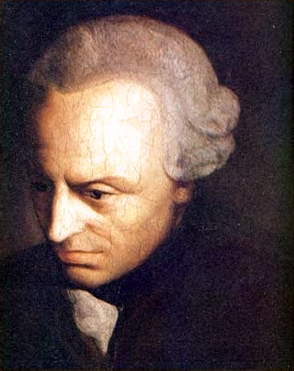
Immanuel Kant
”The conditions of the possibility of experience in general are at the same time conditions of the possibility of the objects of experience.” Kant (Critique of Pure Reason, A 158, B 197)
Intuition is another difficult, controversial term and its use as a way of knowing in Theory of Knowledge can sometimes be confusing. INTUITION as it is commonly understood may be defined as understanding or knowing without conscious recourse to thought, observation or reason. We shall see how Kant critiques this understanding of intuition in his writings later.
Intuition was traditionally known as “direct vision” or “direct seeing”. Some see this process as somehow mystical while others describe intuition as being a response to unconscious cues or implicitly apprehended prior learning involving memory and imagination as ways of knowing. All these understandings of intuition require re-presenting to let them be ways of knowing as we understand a “way of knowing”. Representation is the way we put ideas and thoughts into images so that they can be seen.
Although intuition has been mentioned in the texts of the philosophers and others from ancient times to the present, its grounding as a concept (or as a way of knowing) in the modern comes to us primarily through the philosophy of Immanuel Kant. Kant’s concepts of “transcendental intuition” and “transcendental imagination” describe his understanding of what intuition is. His grounding of intuition has determined how we understand “personal experience” in the present in both the scientific and common sense manners. Kant’s great effort shows us what we are as human beings in our understanding of “experience” and what the things about us are as “things” in the sense of an objective reality.
Sometimes people refer to intuition as ESP or “gut feeling” but these understandings, again, stress the “immediacy” of the “seeing” related to intuition. An examination of the historical background of the term will show why this understanding of intuition has come to be and why the kind of thinking involved in intuition has become denigrated to some degree because it resists calculation. Kant’s understanding is the calculation itself for his work is the grounding of mathematics as a way of knowing the objects of the world. We want to hold with us the commonly held view of what intuition means as immediacy as we try to clarify what it is as a way of knowing. We want to retain the notion of representation when we try to comprehend how intuition is a way of knowing.
Historically, intuition as a way of knowing is related to sense perception as a way of knowing, and what we call sense perception requires intuition if it is to provide “knowledge”. Intuition was considered “direct seeing” in the Middle Ages, and this understanding of intuition was based on the Scholastics interpretations of the Greek philosopher Aristotle. The speculation of philosophers in the Middle Ages was called “Scholasticism”, the speculation of the “schoolmen”. Scholastic thinking gave great importance to deductive reasoning, and this emphasis later found its flowering in the thinking of Rene Descartes where he discusses intuition.
We want to see how Aristotle’s unique term the “bios theoretikos” or “the life of theoretical speculation” is related to what was known as “intuition” and how it gave rise to our understanding of “logic” and the “correspondence theory of truth”. Aristotle’s bios theoretikos is a unique turning in Greek philosophy and we’ll try to show how this turning came about and why this turning came about. We need to remember (and emphasize) that “theory” is the “looking” or the “viewing”, and we need to understand how this “looking” relates to what was understood as knowledge and how that knowledge is related to truth.
Mozart’s apprehension of his music can be called “intuitive”. Many artists experience their insights by intuition. Here is a “supposed” letter of Mozart; its authenticity has been questioned.
“The question is how my art proceeds in writing and working out great and important matters. I can say no more than this, for I know no more and can come upon nothing further. When I am well and have good surroundings, travelling in a carriage, or after a good meal or walk or at night when I cannot sleep, then ideas come to me best and in torrents. Where they come from and how they come I just do not know. I keep in my head those that please me and hum them aloud as others have told me. When I have that all carefully in my head, the rest comes quickly, one thing after another; I see where such fragments could be used to make a composition of them all, by employing the rules of counterpoint and the sound of different instruments etc. My soul is then on fire as long as I am not disturbed; the idea expands, I develop it, all becoming clearer and clearer. The piece becomes almost complete in my head, even if it is a long one, so that afterwards I see it in my spirit all in one look, as one sees a beautiful picture or a beautiful human being. I am saying that in imagination I do not understand the parts one after another, in the order that they ought to follow in music; I understand them altogether at one moment. Delicious moments. When the ideas are discovered and put into a work, all occurs in me as in a beautiful dream which is quite lucid. But the most beautiful is to understand it all at one moment. What has happened I do not easily forget and this is the best gift which our God has given me. When it afterwards comes to writing, I take out of the bag of my mind what had previously gathered into it. Then it gets quickly put down on paper, being strictly, as was said, already perfect, and generally in much the same way as it was in my head before.”
Since most of us are not Mozarts or even artists of any description, Mozart’s experience of his music is difficult to comprehend and may border on the mystical. Clearly, Mozart’s description of his experience is not something that he himself “creates”. It comes to him from outside of himself. Perhaps the key to understanding his experience is the “seeing all in one look”. Mozart’s manuscripts are noted for how few revisions there are in them; their writing was as he said “already perfect”. How is it possible “to see all in one look” and how does this relate to intuition?
This “seeing of all in one look” is to be understood through our use of concepts. Questioning the concepts is the core of the Theory of Knowledge course. (Guide 2015, p.#8) The concepts we use come from our ways of seeing and being in the world, and they come to determine what we call the methodologies in each of the Areas of Knowledge and are embedded in our Ways of Knowing. All of our ways of knowing are manners of “seeing” what is about us in the world. But upon what are these concepts that determine our seeing grounded? It is with this question that we arrive at the philosophy of Kant and his revolutionary book Critique of Pure Reason. Kant grounds what we call intuition in this book and in doing so, the nature of our conceptual thinking. It is from Kant that what we call “theories of knowledge” derives. There are no “theories of knowledge” in the Greeks, for instance. To follow Kant’s understanding of intuition it will be necessary to explore the various manners of how things are perceived and understood and to determine what we call “experience”.
For Kant, experience was composed of three things: intuition, thought and judgement. “In whatever manner and by whatever means a mode of knowledge (a way of knowing) may relate to objects, intuition is that through which it is in immediate relation to them, and to which all thought as a means is directed. But intuition takes place only insofar as the object is given to us. This again is only possible, to man at least, insofar as the mind is affected in a certain way.” (A19 (first edition) B33(second edition) For Kant, human knowledge is the representational (images, “looks”) relating of the mind to objects, what we call the “correspondence theory of truth”.
A great danger that we face in today’s world with the worship of the Self and the social is solipsism: the belief that all reality is just one’s own imagining of reality and that one’s self is the only thing that exists i.e. that all things are “subjective”, and only “opinions” are what our interpretations of our world consist of. This “subjectivism” thinks that the existence of the world depends on the standpoint of the experiencing individual and the time point in which, on the part of the person, the experience of a thing happens to be made. It is what we have come to call ‘personal knowledge’—which, of course, is no “knowledge” at all in its true sense. Kant, in a way, is responsible for this.
What something is does not depend on our caprice or pleasure. Even if the experience of the external world does depend on us, it equally depends upon the existence of the things in the external world that we are ‘experiencing’. The questionableness of the truth of things that we experience in our daily experiences as to whether they are ‘subjective’ or ‘objective’, or both together or neither, stands in our understanding of what the truth of experience itself is. It could be that the distinction between subject-object and with it the subject-object relationship itself is highly questionable and this is the shared knowledge that we have gained in the West from Descartes, Kant and the other philosophers of modern times. There is no information to be gained from experience without knowledge of the kind of truth in which what we call “experience” stands.
In attempting to determine our answers to the questions “How do I know x” and “How do we know y” as they relate to intuition as a way of knowing, we want to keep in mind our commonplace understanding of intuition as “gut feeling” or “fore-sight” and our understanding of what the contents are of what we think we know i.e. the things we think we know and the situations we think we know as “experience”.
Some thing gets its “thingness” from its particular, unique relationship to time and space. It is indicated by a “this”: this computer here; this cup of coffee. Any other computer or coffee would be a “that” and would be located away from us in its time and place; it would be a “there”. If we look at the instrument before us through which we are viewing this writing, we will see that intuition is a “representation”, a bringing and a having before oneself as present a particular “this”: “this computer”, “this tablet”, “this hand phone”. Intuition is that way of knowing that places before some one some particular individual thing from which we can determine the thing’s qualities or categories/predicates: its hardness, its colour, its illumination, etc. We can calculate and measure these qualities as “intensities”. Thought, on the other hand, gives us the universal: computers, tablets and hand phones. Thinking is representing some thing in general in concepts that are “universals”. Intuition is the representing of some thing as a particular thing. Both thinking and intuition are necessary for a thing to be for us.
When we consider intuition as a way of knowing, we need to go to the grounds of what it is that we “know”. To do this requires the distinction between what we “know” as personal knowledge and what we know as shared knowledge. This will involve a brief discussion of the relation of what we know to the “truth” of what we know, how that truth is “shared” in the form of a proposition, in the statements the we make about things, our assertions about things.
The traditional definition of some “thing” is that it is something that is an existing bearer of the existing properties that belong to it. These properties are called “accidents” and are understood philosophically as the “categories” from which the limits of the thing may be determined and the thing defined and, thus, the thing itself. It is the defining of the thing that allows it to be “handed over” and so become part of our shared knowledge. Our defining of things rests in our understanding of what the “truth” of the thing is: the correspondence of our representations and accounts with the fact of the thing that it is an account of. The structure of truth and the structure of the thing of which it is said to be the truth must mirror each other. The “truth” contained in our propositions and assertions must “measure up” to the thing.
We grasp the truth of things in language but a single word, “house” for instance, is neither true nor false. Only a combination of words can be true or false: “The house is painted white”, for instance. Such a combination of words is called an “assertion”. The assertion is either true or false. The assertion is therefore, as Kant says, “the place and seat of truth”. Truths and untruths are assertions. There are no “alternative facts” here; there are only true and untrue assertions about the facts.
An “assertion” is an “account” of some thing or some situation. Assertions “of” some thing is called a “proposition”- a place that is put forward where some thing can stand as constant; assertions “about” some thing is “information” – something communicated to others; assertions “to” is the communication to others (shared knowledge); and self-assertions are expressions given to ourselves (personal knowledge). An assertion is a proposition that gives information when communicated to others. “Truth” is in the predicate’s belonging to the subject.
The concepts of what we think some thing is, the propositions regarding it, the assertions made, and the “correspondence theory of truth” (the judgement) in the account of the things in our Areas of Knowledge all cohere together. The structure of the properties (subject + predicate) regarding a thing as a bearer properties is a pro-jected structure (pro= “forward”; jacio = “to throw”) that we have placed upon things. Historically, we have made a decision that “how I know x” and “how we know y” has been determined by x’s and y’s being constructed as mirror images or “corresponding” images of some thing that is “unconditioned” whether that be the ego of Descartes, or Kant, or the Absolute Self of Hegel, or the God of the Old Testament where things are taken as ens creatum. In the 19th century “positivism” emphasized “facts” where only scientifically demonstrable “truths” were taken as answers to the epistemological questions that we have posed.
It is in our assertions about the categories of the things that we encounter which allows us to classify and delimit (define) them and so place them in our Areas of Knowledge. This addressing of things or giving an account of them was called logos by the Greeks, and this was later translated as ratio by the Latins (word, speech, reason). It is through the assertion that we intend and think things and bring them to presence before us. Our classifications tell us a great deal about how we understand the concepts that we are using today.
We become aware of some thing because we know what they are in advance: the body as bodily, the plant-like of the plant, the animal-like in the animal, the thingness in the thing, etc. This knowing in advance is what the Greeks termed “the mathematical” and it is the true ground of what we call “intuition”. It is what we bring with us to the things themselves. Our concept of number is one of the “things” that we bring to the things because number is not in the things themselves. This is what the word “mathematics” means. It is our basic presupposition of our knowledge of things, “how I know x” and “how we know y”. What is the relation of the mathematical to intuition as a way of knowing?
In speaking about intuition as a way of knowing we must understand its relation to the mathematical. The mathematical rests upon the positing of the determination of things that is not derived by way of experience from the things themselves and that, nonetheless, rests at the basis of all our determinations of things, makes them possible and creates “space” for them in the overlapping area of our Venn diagram. Galileo’s experiment of free falling bodies is an example.
According to Aristotle’s representation, bodies move themselves each according to their nature i.e. the heavy downward, the light upward, Galileo’s insight is the determination that all bodies fall equally quickly and that the differences in the times it takes for a body to fall stem from the resistance of air alone and not from the different inner natures of the bodies and not from their corresponding relations to their own locations i.e. the earthly, the airy, the fiery, the watery. Galileo’s experiment is a precursor to Newton’s first principle or law of motion.
Intuition is a pro-jection of what we think things i.e. “facts” are and allows these “facts” the space to show themselves. The projections posits what the things are to be and what and how they ought to be evaluated in advance. The Greeks called such evaluation axioma. The pre-conceived determinations and assertions in the statements are “axiomatic”. The axioms are prior to the principles or laws which are derived from them. How does intuition become a mode of access to things, a way of knowing things, as axiomatically determined i.e. how is intuition placed within the overlapping portion of our Venn diagram?
In the mathematical projection of intuition, things can only show themselves as relations of places and time points and as measures of mass and work forces. The mathematical projection (intuition) determines the manner of receiving and investigating what shows itself i.e. what we call “experience”, and what we call the “experiment” is derived from this pre-determined in advance. Investigation is pre-determined in advance, and nature must respond to this pre-determined manner of questioning. Our urge toward “facts” is a result of the over-leaping of the facts in the intuitive projection in the first place. This has led to the emphasis on “positivism” in our current understanding of the world: the world can only report to us “mathematically”. The analytical geometry of Descartes, Newton’s calculus, and Leibniz’s differential calculus became possible (and necessary) because of the fundamental character of mathematical thinking itself. But many questions arise from this basic human stance towards things and the world.
In the writings of Descartes, “method” is the manner and mode (way) through which we gain access to “truth” or the manner in which things are to be brought to presence i.e. how we will see them. Method is the way in which we go after things as such and decides in advance what truth we will track down in the things. Method determines what can become an object and how it will become one. The mathematical determines the being of things in advance (what they are) on the basis of the principles inherent in the mathematical itself i.e. the principle of reason: the “I”, the principle of contradiction and the principle of sufficient reason.
Our “knowledge framework” is an example of “method”. It is the ordering and arranging of things so that the “truth” about them can be discovered, so that they can be brought to “light”, so that they can be brought to presence. Intuition is the way of knowing where the axiomatic mathematical projection of things posits the first principles upon which everything further is based in sequential order. This is the “logic” of the principle of reason upon which are based what are popularly known as “algorithms”. It rests primarily upon our understanding of cause-effect. It is Descartes’ ego cogito, “I think” upon which all certainty and truth are grounded.
Intuition: Reason as Higher Ground: Principle of the “I”, Principle of Contradiction
In trying to get a grip on intuition as a way of knowing and to grasp how it has become degraded in our modern “gut feeling” understanding, we need to look more closely at the historical background of the concept. With Descartes’ ego cogito the “I” becomes the essential definition of human being. The human being as the animal rationale becomes the “subject” and the foundation of all knowledge and the determiner of the things that are. In Aristotle’s understanding of human being as the animal rationale, human reason is not singled out as the chief characteristic of the subjectivity of the subject. In our speaking about things, our propositions and assertions, our sayings must not contradict themselves. “I think” means “I avoid contradictions”. This is what is known as “pure reason”.
The basic philosophical axioms of intuition as a way of knowing are the principle of the I, the principle of contradiction, and the principle of sufficient reason. With the shift of human beings to the centre of “created things”, human beings are granted the power of not only naming the animals but all the things that are, and they grant this power to themselves. The philosopher Immanuel Kant grounds this power in his asking the question: “Are synthetic judgements a priori possible?” i.e. are judgements regarding things possible without the “experience” of those things? Our judgements regarding things determines and delimits (defines) what the things are so that they may be classified under the principle of reason.
Synthetic judgements refer to the categories or the predicates of the things i.e. “The house is green”. “Green” is a predicate of the general subject “house” and establishes it in its particularity. We can measure the greenness of the house by its intensity in terms of its colour. By making the assertion “the house is green”, we are making a judgement regarding the house. Judgements are “acts of understanding”, how we know what we know.
In order for intuition to be a way of knowing, it must provide knowledge from principles and it must be a capacity for principles and basic propositions: it must be a “system” within a framework.
If we return to the common understanding of intuition as “gut feeling” or “sense”, what makes the gut feeling or sense of some thing possible? To answer this we must try to say something about how Kant understood “experience”. “Experience” is that which is “possible”. It may be an event that happens “to” a subject or “an act of the subject”. Nature is the object of experience for the subjective “I”; how we understand the “object”. This “thing of nature”, for Kant, can only be understood by means of what is “before and above” all nature. That which is before and above all is “the system of principles”. Time and space are concepts of “pure intuition” for Kant and make possible “the objects of experience”. Kant relates his system of principles to the principle of contradiction, the principle of the I, and the principle of sufficient reason.
For Kant, the capacity to think is the capacity to unite representations in one consciousness. “I think” means “I combine”: “The house is white”. Kant calls this “judgement”. Thinking is the same as judgement or to the making of assertions. The assertions are what are called “synthetic judgements”. They are contrasted with “analytic judgements”.
For Kant, the first principle is “the principle of contradiction”. Our cognitions must be free from contradictions in their judgements. Intuition and thought are two components of cognition. Thought’s relation to intuition is one of servitude. Kant writes: “In whatever way and through whatever means a cognition may relate to objects, that through which it relates immediately to them, and at which all thought as a means is directed as an end, is intuition. But this takes place only insofar as the object is given to us; but this in turn is possible if it affects the mind in a certain way.” (A19/B33). Human cognition is conceptual, judgement forming intuition, a unity of intuition and thought and thus a way of knowing. Kant contradicts Descartes’ “rational cognition”, the cogito ergo sum by placing intuition prior to what we call thinking.
If we look at the instrument before us through which we are reading this writing, we will see that intuition is a “representation”, or a bringing and a having before oneself as present a particular “this”: “this computer”, “this tablet”, “this hand phone”. Intuition is that way of knowing which places before one some particular individual thing from which we can determine its categories/predicates: its hardness, its colour, its illumination, etc. Thought, on the other hand, gives to us the “universal”: computers, tablets, hand phones. Thinking is representing some thing in general in concepts that are “universals”.
Intuition as a way of knowing combines both intuition and thought in order to allow an object to be a possible object of cognition and to allow us to answer the questions “how do I know x” and “how do we know y”. Not just anything can become an object for us; the object must be something that stands “opposed” to us. What we encounter must be “standing” and “constant” for us. The “object” in Kant’s sense is not something merely sensed nor perceived.
What we understand by “subjective” can be determined from how Kant understood intuition and thought and how they both allow us to know objects. Our assertions about things around us are related to our sense perception of those things, but those perceptions are concerning what is given to us alone. This “subjectivity” is overcome when we make a causal relation of the thing to another thing: “if…then…”, or “because…therefore”. Saying such concerns the very thing itself whether I perceive it to be the case or not and is valid for everyone for all time; it is not “subjective” but is valid of the object itself. It is the concepts that give the object its “objectivity”. The intuitively given must be brought under the universality of certain concepts, concepts which are contained in the principle of reason such as the principle of cause/effect. The concept must overcome the intuition and determine what is given in a certain way. Sense perception as a way of knowing i.e. knowing objects “empirically” does not provide us with “experience” as such. “Knowing” only occurs when the given is represented through principles such as “cause and effect” (algorithms, for example) where intuitive perceptions and thought are combined. Our “gut feeling” understanding understanding of intuition is not a way of knowing without “thought” i.e. reason and language as ways of knowing, but thinking is always related to intuition which is given prior to thought.
For Kant, “pure intuition” is “time” and “space”. and these concepts are related to sense perception as a way of knowing. We can now understand Kant’s statement: “The conditions of the possibility of experience in general are at the same time conditions of the possibility of the objects of experience.” These conditions of possibility are time and space. These are prior to reason in human experience. It is time and space that constitutes the overlapping region of our Venn diagram and allows for both our ways of knowing and gives space for those things that we know. Sense perception is insufficient in and of itself as a way of knowing. It requires thought, which for Kant, is “pure reason”.
For Kant, the content of the “what” of our experience however it may be related to the object must not contradict itself in our judgements about that content. Thinking is at the service of intuition. What thinking is must already be decided. Thinking is logic. But how is it related to the judgements we make in our assertions about things?
The relation of the subject to the predicate is thought: “The house is white”. Thought is the combination of relations between several concepts. “Understanding” is the ability to combine representations i.e. to represent this subject-predicate relationship. In this “understanding”, Kant’s definition relates how our judgements about things are established in advance in the relation to the objects and to the cognizing human being. Every judgement is an analysis and a synthesis: “the house” is separate from “is white”; they are then combined to form the judgement. The analytic judgement is made in terms of the concept of “the house is extended” i.e. it is a physical body. A synthetic judgement is made when we say “is white” because there are other possibilities: it could be red or yellow.
In the discoveries of Galileo and Newton, their thinking “leaps ahead” of what verification and experience offer. They are a priori in that all assertions made about courses of motion and their regularity must be in accord with their “highest principles”. The a priori is the essence of things. How the thing is grasped and how its being is understood decides in advance its interpretation and classification, where it will belong in the Areas of Knowledge, for instance. The a priori is that which belongs to the subjectivity of the subject while everything that lies outside the subject is a posteriori.
Kant’s great effort and ultimate discovery was the grounding (and limitation) of synthetic judgements a priori. In doing so, he also grounds intuition as a way of knowing. With intuition, the judgement made is analytical: the truth is given in the concepts of the subject itself. With synthetic judgements, the truth rests in the object itself.
We can relate this to the overlapping region of our Venn diagram regarding personal and shared knowledge. In answering our questions of “how do I know x” and “how do we know y” we are relating that which we claim to know to judgements as assertions that we make with regard to things. When we make a proposition (a “throwing forward of a stand” or a thesis statement for an essay, for example) we are making a statement in which the basis for possible truth is posited, one that suffices to support the truth of a judgement and bring the thing “to light”, to reveal it. The thesis or proposition must be supported with “sufficient reason”.
We take care to express our cognitions and our questions and manners of thinking in propositions. It does not matter which Area of Knowledge we are relating to: the AOKs remain distinct. When we speak of biology, for example, we cannot determine our viewing biologically. It cannot be found under a microscope. The objects within the AOKs are already determined in certain ways in advance. These advance determinations are necessary so that we can stand before the object as such whether it is biology or art history. We must already have a “synthetic judgement a priori” in order for objects to stand before us as such or we could never begin to direct our questions, investigations and come to our proofs regarding them. Synthetic judgements, pre-judgements are already present in all scientific judgements. The notion of “scientific objectivity” without judgement is not tenable. For Kant, truthful things are objects of experience, but the objects only become accessible when we have made synthetic judgements about them. “The conditions of the possibility of experience in general are at the same time conditions of the possibility of the objects of experience.” This statement applies to both personal and shared knowledge and is Kant’s answer to “how do I know x” and “how do we know y”.
Kant’s “understanding” is based on principles. “Logic” defines “judgement” as the relation of subject/predicate representations where combining those representations do not contradict the principles inherent in the objects themselves. This combining is a determinate combining: the universal relation of “cause and effect” for instance helps us to understand many of the relations between objects that we experience. We currently dub these relation “algorithms”. This combining is what the Greeks originally meant by logos as a “gathering together”. This is why the Romans translated logos as ratio. The unities of the combinations are what we call “concepts” and lie in the “categories” or the predicates of some thing. The categories are quantity, quality, relation and modality. The “understanding” is both the “faculty of rules” and the source of rules. An object is a unity that stands or is constant. The presence of the object is made possible by our representing that is a thinking, a combining. The thinking can be of a subjective “I” with its emotions, moods, opinions, or it can be a disciplined “I” in which the rules for combining representations is present (methodology, the “scientific method”, for instance). But why is this combining represented by the mathematical?
Kant defines the thing of nature as a physical body that is in itself “mathematical” in terms of its time and space. What does this mean? Kant speaks of “axioms of intuition”. “All intuitions are extensive magnitudes”. “Appearances” are not illusions but the object itself in its constancy, its presence before us. Things have quantum and quantitas i.e. magnitude, and answer the question “how big?”. Quantum is the size of the whole thing overall; quantitas is the measure and measurement of the parts. Quantity is a pure concept of understanding and does not require experience. Quantum, on the other hand, is the given for an intuiting. Space and time are quanta. Appearances as intuitions must be measurable. Space is a quantum because it exists “as a whole”. Quantitas is possible because space is a quantum: the pieces or parts are within the whole.
Earlier we said that intuition is the immediate representing of a particular thing. Through this representing, the thing is given to us. Intuition is not a making or forming by way of assembly. Space is our representing that gives the possibility of a “where”, “there”, and “here”. In English, our prepositions in our statements express our apprehensions of relations in space. Space, as a quantum, is a “one” and a “this”. The immediate representing of a particular is a “this”. Space is intuited before all appearances of the objects within it. Space is not “sensed”in sensation but is intuited in advance–a priori– and determines everything empirically given to us in advance so that our sensations can be ordered. Space is not a thing at hand in itself (Newton) nor the many relations that result from the relations of things (Leibniz). Space is the unique whole of which all prepositions in our language regarding the things that encounter us are possible. Space determines our sensibility, the way we encounter what encounters us in advance, but it is not that which encounters us.
What Kant justifies here is that because space contains within itself the concept of extension and the thinking forms the various synthesis of the quantities of things (the logos as the “gathering together”) all mathematical principles (such as “the shortest distance between two points is a straight line”) are true because they apply to our experience of the objects themselves. The applicability of mathematics as extension and number can be justified because the conditions of mathematics itself, quantities and quantum, are at the same time the conditions of the appearances to which the mathematics is applied. The condition of experiencing appearances with regard to shape and magnitude (synthesis as quantity) is at the same time the possibility of the object of experience. The specific quantitas of spaces and times makes possible the encountering of the thing, its apprehension, and its coming to stand as an object. Appearances must be extensive magnitudes; it does not matter whether they are inside or outside the self. Objects have extensive magnitudes and this is the synthetic judgement (a “composing”) which is a priori made not on the basis of perception of particular objects but from what we call “experience” in general. The concept of quantum in space is transferred to objects appearing in space. Intuition and thought make this possible: they make possible the being of the object. We understand their outward appearing form.
Kant deals with the other “sensations” besides sight in his second principle. We know that the world is real because the things of the world have an intensity which opposes us. This intensity can be measured by mathematics. The sensations that we experience such as sights and sounds are after (a posteriori) we have apprehended the object a priori. The intensity of colours can be measured by us. These measurings are what we call “data” and are based on the “objectivity” of the objects around us. But when this is done, when we measure extension and resistance such as we do in modern physics, the intuitive perception of the thing is given over to what is given in the sensations, the empirical. The thing as understood in the sciences is based on the reliability of the measuring device but it is, nevertheless, an interpretation–much the same as what the poets do in the Arts. The colour of Van Gogh’s sunflowers, for example, belongs to the sunflowers themselves and to the original unity of our intuition of the kinds of things that they are. It is our relation to the things in the AOKs that is key.
The common perception is that human cognition is based upon sense perception as a way of knowing and that this allowed for the emergence of modern natural science, but if we look more closely we can see that the givens of our everyday experience of the world are determined by a mathematical point of departure which must see things as extensive and movable in space and time. In this mathematical world, the “real world” and our experience of it is forgotten.
Kant’s idea of “reality” differs from what we understand as reality. The common understanding is that reality is “actual” or “existing”. The word “reality” comes from res which in Latin means “the matter, thing, affair”. It is “what” something is. So “extension” is a “reality” of a natural body as well as its weight, density, and resistance. For Kant, reality is the “whatness” of the thing. Things and their opposites constitute reality: blindness is the negation of sight. In Kant, extension and intensity allow themselves to be ordered as numerical quantities or “degrees”. (We can measure the intensity of “hot or cold”, for example).
We take sensing something and perceiving something as the most ordinary, simplest things. But we do not sense a “something” or a “what”. Whatever is sensible must be re-presented in advance and anticipated within the area of knowledge in which they can be received (our “gut feelings”, for instance). Kant calls this “anticipation”. All perceiving is “anticipation”. Kant dismisses our “gut feeling” understanding of intuition: “But the real, which corresponds to sensation in general, in opposition to negation = 0, only represents something whose concepts in itself contains a being (i.e. the presence of something) and does not signify anything except the synthesis of an empirical consciousness in general.” (A 75-6/ B217).
Mathematics is applicable to objects because appearances come to stand as an “againstness” (ob-ject “the thrown against”) in advance in the gathering together of the intuition in the concepts of a unity from the categories of quantity and quality. On the basis of the mathematical construction, it is possible to meet up with something corresponding to the mathematical construction in the object and the construction itself and be able to demonstrate it by way of experiment. The conditions of the appearing of appearances, the specific quantitative determinations of their form and matter, are at the same time conditions of the standing against, the collectedness and constancy of appearances.
The unity of intuition and thought is the essence of experience. In looking at our ways of knowing we can say as A is to B, so C is to D, a correspondence. If the relation between A and B is given along with C, then by “analogy” D can be made available by the mathematical construction itself. This inference to a fourth, of something not given, is an indication of how we have to search for the non-given in light of the given and as what we must encounter it when it does show itself. This methodology is the essence of why the woman in Moscow, Russia can work in collaboration with the man in Moscow, Idaho in their research and why their findings must express themselves mathematically.
This methodology requires that the thing of nature be “present” as constant. In intuition as a way of knowing, time is also a concept of pure intuition for Kant. Time is one and whole. Different times are part of one and the same time, just as different locations in space are parts of one and the same space. Space is where all outward appearances encounter us. Time is both our inner and outer experience of the world and all experience is possible only within time. For Kant, time is “unchangable and lasting” and it is only that which is within time that changes. Time for Kant is the same as it was for Aristotle, a series of “nows” that can be measured as “magnitudes”.
Kant’s thinking regarding time runs: All appearances or what encounters us as human beings encounters us in time and stand, with regard to the unity of their properties, in a unity of a time-determination. Time itself is originally persistent/present because only as long as time persists is constancy as enduring in time possible. This constancy is what lasts in advance of all that encounters us and we call it “substance”.
Time itself cannot be perceived by itself i.e. even though we can only perceive things in time we cannot perceive the essence of time itself. Time requires that the determination of what exists (how we know what we know) exists in space and has constancy in space prior to its being perceived and taken up in any relation or way of knowing.
Kant’s conclusion: the standing and constancy of an object must be perceived on the basis of persistence. The representation of persisting throughout change belongs to the material reality of the object in advance. Change presupposes consistency or constancy. Only what persists can be altered while what is changeable cannot be altered. The constancy of objects is determined on the basis of the relations of the alterations to each other and we call these alterations “forces”. The principles that concern the existence of objects are called “dynamics”. Kant is attempting to ground the views of Newton’s “classical physics”. The standing of objects that encounter us is determined by what he calls persistence, succession, and simultaneity. But since time itself cannot be perceived, the temporary location and relations of an object cannot be understood intuitively a priori but only as a “now”. If we are to be able to see the whole of appearances (nature) in its objectivity then well-founded rules are needed that contain an indication of the time-relations in which our encountering them must stand so that the unity of appearances i.e. nature, an “objective world”, is possible. What Kant does is provide for the first time the foundations of the law of causality as a law of the objects of experience.
Kant in his Critique of Pure Reason illustrates four groups of categories that determine “how do I know x” and “how do we know y”. They are: quantity, quality, relation and modality. The section “Axioms of Intuition” shows in what way quantity as extensive magnitude belongs necessarily to the “whatness” of an object encountering us. In “Anticipations of Perception” quality as reality determines in advance the nature of our encountering as such. Kant calls these “Analogies of Experience”.
Kant uses the word “analogies” in order to illustrate the principles of correspondence of what stands-in-relation and its determination (the ways of knowing and the things to be known). We are speaking about the overlapping region of our Venn diagram here where what stands-in-relation are our ways of knowing and the things we encounter and come to know. Quantity, quality and relation determine in advance what belongs to the object as it encounters us and what is constant in that object. The categories are the realities of the essence of the object. The corresponding principles prove that the categories as realities make an object possible, belong to the object as such, and so have objective reality.
Modality from modus is “a way” and also a “how” so our ways of knowing have inherent in them the methodologies, the “hows”, of how we approach things in general. The categories of modality for Kant are: possibility, actuality or existence, and necessity. These do not belong to the object itself. They assert something about how the concept of the object is related to existence and it modes, and how, according to which way of knowing is chosen, the existence of the object is determined. These categories of modality do not concern the reality of the ways of knowing themselves since they do not belong to the reality of the objects themselves.
For Kant, the necessary is that which cannot be conceived as non-existent (the law of gravity, for example). We cannot know an object in its necessity in itself but only the existence of the state of the object in relation to another. Our awareness of things as thoughtfully intuited is related to the possibility of objects and the powers within the ways of knowing themselves.
Kant shows that we are able to know ourselves as well as know the things that we have not made (nature). The letting encounter of the object occurs through us. This is possible because our “experience” is through space and time as pure intuitions and the possibility of the objects themselves require space and time to be “objective”.
This long writing on intuition as a way of knowing is but an impertinent precis of one of the great texts belonging to our Shared Knowledge: Critique of Pure Reason. Its primary focus has been on the metaphysics within that text and Kant’s revolution in the history and thinking of metaphysics that he carries out there. We remain within the thrall of Kant’s thinking, though unthinkingly.

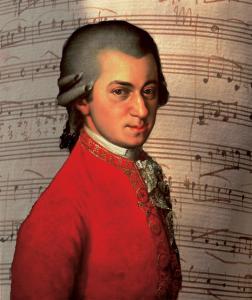 Mozart’s apprehension of his music can be called “intuitive”. Many artists experience their insights by intuition. Here is a “supposed” letter of Mozart; its authenticity has been questioned.
 Theory of Knowledge: An Alternative Approach