
 What is knowledge? What are the things known? Who and what are the knowers and how do they know? What we have called the ways of knowing are the perspectives, the manners or comportments, and the methods in which human beings bring the things of their world to light, into “unconcealment”, what the ancient Greeks referred to as aletheia or “truth”. In this “bringing to light”, the things are brought to a “stand” and are made “permanent” in their “presencing” in this standing. This “standing” of the things is what is called knowledge, for the things in their “standing” and permanence can be “counted upon” to be as they are. The Greeks defined human beings as the zoon logon echon, “the living being that is capable of speech”. The Latins later described human beings as the “animale rationale“, the “rational animal”. How did this change from speech to rationality occur and why is it important? Our definitions of concepts and things are crucial to our understanding of how we know and what the things are that we do know.
Because our speech is with reference to other human beings and things, it was called logos by the Greeks. Because it involved more than one person and more than one way of knowing, it was referred to as “dialectic”. “Dialectic” means “conversation”, “speech”. Within the speech dianoia and diaresis are used, “synthesis” and “separation”, to signify that which is being spoken about, but the dialectic itself is a manner of being underway towards knowledge and is insufficient in itself in attaining knowledge. “Dialectic” is one of those words that has gone through many various interpretations throughout the history of the West becoming more complex and obscure as it became intertwined with other ways of knowing.

Aristotle was first to distinguish five ways of knowing and the things that are known by them in Bk VI of his Ethics. Our word “ethics” comes from Aristotle’s two texts on this subject matter or theme: Nichomachean Ethics and Eudemean Ethics. Nichomachean Ethics is the text that is most commonly known. That a discussion of the manners in which human beings “know” is undertaken at the very heart, the centre, of the Ethics gives us an indication of the importance of understanding what we think human beings are when we are trying to determine the nature of the actions that human beings take. Thinking is a human action and a form or way of human being-in-the-world. What we have come to call our “ways of knowing” and the things about which they give us knowledge determine in advance the actions that we will undertake when we attempt to meet the ends or goals (desires) that we have decided upon. The ways of knowing are responsible for, are “needful of”, and contribute to, our actions and their outcomes. They are “actions” themselves, the choices that we have made the nature of which are “brought to light” in their outcomes or ends. In today’s word, we would call them “lifestyles”, those choices we have made as beings who live in communities which determine the manner of our being in those societies. In philosophical language it is called ontology.
“Bringing things to light” is an essential part of what human beings are. We are not human if we do not. As we proceed, we want to keep in mind Socrates’ saying that sounds so strange at first because it seems to defy our common sense experience: “No one knowingly does evil” or injustice, and we will try to understand what Socrates could possibly have meant by this. We will try to grasp the phenomenon of “intentional ignorance” and how our helplessness is not knowing what is “good” or “bad” and making decisions and choices in this state of ignorance.
The five ways of knowing and the things that are known by them are outlined by Aristotle as: 1. sophia or knowledge of the first things, the “permanent” things, the divine, Being. Sophia deals with what is “necessary” as well as what is “beyond” human beings; things that human beings cannot change, what is essential. For the Greeks, Nature was seen as “permanent” and “beyond” or “outside” of human beings; it was “sempiternal” even though the things within it did experience change; 2. episteme or what we call “theoretical knowledge” which deals with the “viewing” or the “seeing” of the things that are “permanent”. Episteme also deals with the “permanent things” through theoria, the viewing of the things. What we call “scientific knowledge” is part of episteme, and the study of knowledge itself is what is called “epistemology”. Aristotle refers to the bios theoretikos the “theoretical life” or the “scientific life, the life of the scientist” which was an innovation in the Greek language at the time by him; both sophia and episteme deal with sense perception, “seeing” or “viewing”, as their primary manner of accessing knowledge; 3. techne is “know-how” or “expertise”, “a being at home in something” and it deals with the things that do change, things that are in “motion” and their “possibilities” or “potentialities”. Techne deals with things that have to be made and which are not yet what they will be or are not yet in being. All human “production” is a realizing of the “potential” or the “possibility” of bringing forth new things and is a “bringing forth” as a result of techne whether it be shoes or a work of art. Techne is a plan or “projection”, an algorithm involving a “doing” that brings about some end “in another and for another”. The Greeks did not distinguish between shoemakers and poets as technites. “Architecture is the techne of the house”; 4. phronesis is the deliberation with regard to the things that are in one’s own self-interest. Phronesis is the way of knowing that we usually associate with “ethics” since our thinking about what is in our best self-interest involves the actions that we will undertake to attain those things which we desire. These actions will be undertaken in our lives as members of a community. Phronesis makes situations accessible, and the circumstances are always different for each situation. For the Greeks, sophrosyne or “moderation”, was the best outcome of the deliberation associated with phronesis; 5. nous is that thinking that we associate with the “intellect”, what we have come to call reason, intelligence. It involves the other four ways of knowing in some manner with regard to bringing the things to light, to knowledge. When the French philosopher Simone Weil says: “Faith is the experience that the intelligence is enlightened by Love”, she is attempting to illustrate a reality of human being-in-the-world where “intelligence”, “intellect” and all of the other ways of knowing are combined and, thus, her statement is an “ethical” statement because such a “faith” determines how one will think and act among others in their communities.
With the exception of sophia, the ways of knowing are not distinct in themselves as approaches to things but involve each other in our deliberations of the outcomes for which we are aiming. Sophia and episteme regard things that we know through the senses, primarily the sense of sight; techne, phronesis and nous are the ways we know things through speech whether written or spoken and whether in words or numbers.
When things are known through “speech”, they can become what we call “opinion”. Ethics is not “opinion” because ethics deals with praxis, concrete actions, and these actions were taken in the direction of some perceived “good”. An opinion is directed to something; it is a maintaining that some thing is such and such. Opinion is an orientation towards things as they would show themselves to a correct investigation and examination. “Opinion” is an attempt to “reveal” the truth of something covered over or hidden. “Opinion” is Plato’s “justified true belief” which he outlines in his dialogue Theatetus. Opinion is not a seeking for knowledge but is something someone already has whether it be true or false because an opinion can be true or false. Sophia and episteme are not “opinion” because they are already complete i.e. they are not underway towards something because they already possess knowledge of the things about which they deliberate. “Opinion” regards those things that can be otherwise and that is why it can be true or false. Opinion is the handing over of knowledge through “language” and what is handed over. One may distinguish between “informed” opinion and “uninformed” opinion. Uniformed opinion is not knowledge since it is merely the shadow of a shadow.
Many of today’s interpretations of the Greeks see them as living in a “split” world, one of Being and one of Becoming where the world of Being is placed “beyond” the actual world in which we dwell, where the realm of the Ideas, Beauty, Goodness and Truth are somehow and somewhere beyond us and are abstracted from the reality of our day-to-day living. A closer reading of Greek texts, particularly Plato, reveals this not to be the case. The Beauty of which Plato speaks is not one that is in “the eye of the beholder”; it is beyond the realm of “opinion”. The Greeks dwelt in both Being and Becoming simultaneously, as we do here in the present and as human beings have always done. Our interpretations of the Greeks derives from our “splitting” of the world into a dualism such as mind/body, subject/object, etc. and then attempting to reconcile those dualities through some form of “dialectic”.
We shall now discuss each of the ways of knowing as indicated by Aristotle more specifically.
Sophia as a Way of Knowing: (Nic. Ethics Bk VI Chap. 6-7)
Sophia and episteme concern the things that always already were and are and which human beings do not first produce. For the Greeks, this would be what we call Nature including ouranos, the heavens. Aristotle establishes a correlation between the ways of knowing in the psyche or the soul of the revealing the things and of the things themselves that are revealed i.e. a correspondence. This revealing of the appropriate beings by the appropriate ways of knowing is done so that the psyche might dwell with them. This “dwelling” with them does not mean that they have to be present at all times: because they always are, they can be “counted upon” to be as they are and be present when we wish them to be. Beings or things that are in “motion” and subject to change are not able to be known in any precise way and, thus, cannot be “counted upon” in themselves. (“Only that which has no history can be defined”, as Nietzsche would say.) This permanent “dwelling alongside” the things that are everlasting is what makes “scientific knowledge” possible. Science concerns itself with what Plato called Necessity, what we call “the real”. For the Greeks, the world was not “created” but always was, is and will be. Time itself was “a moving image of eternity”.
Aristotle began his Metaphysics with the famous line: “All human beings by nature desire to see”. ὀρέγονται “see” is commonly translated as “know”, but what Aristotle wants to emphasize is what we would call “knowledge by acquaintance”, a “becoming familiar with things so that we may dwell among them” and we do this through seeing them first. For Aristotle, sight is our primary sense. Along with sight, however, hearing is most important and even has greater primacy, for we must hear in order to share with others what we have seen. Human beings are the zoon logon echon, “the animal capable of speech”. It is what we do and can do with our speaking that distinguishes us from all other beings and, thus, makes us “human”.
The archai or genesis of things for the Greeks is the Good, and sophia is that way of knowing that gazes upon the first things, the permanent things of which the Good is the primary one, though it is not really a “thing” at all. The philosopher’s being is a “dwelling alongside and with” the Good. A philosopher is a philo sophia “a friend (lover) of the Good” or of the Whole. Such knowledge is called “wisdom” and only a few human beings ever attain it. One aspect of the sophia of the philosopher is his ability to distinguish the Necessary from the Good.
For Plato, evil is not the opposite of the Good, but the deprivation of the Good. The Good is what beings are fitted for, what their “nature” is that has been given to them. A drowning man knows all too well that it is good for human beings to breathe and that the air is good for that action of breathing. Goodness and its “fittedness” are present for us at all moments and in all situations. The “fittedness” of some thing is the “virtue” of that thing, its completeness, fullness. When I experienced the 2004 Indian Ocean tsunami, I had to come to understand that what I had experienced was a deprivation of “good”, not what we traditionally associate with “evil”. We moderns have chosen to lose sight of this most important understanding of Human Being. Wars, plagues, floods and famines were all very familiar to the Greeks. A glance at Thucydides History will demonstrate this. But beyond these ills, in spite of these ills, the Greeks sustained a belief, a knowledge that the essence of things was Good.
The Good is the first axiom, the first self-evident principle, from which we can draw all other axioms and conclusions. We are familiar with this attempt to account for the whole of things in the various ways i.e. that the elements were considered the archai of the whole: earth, water, fire, and air. For Plato, the ideas are derived from the Good and they provide the universals, the “wholes”, from which the particulars get their essence, what they are. It is the “light” which makes these universals and particulars possible, for from the light comes the ability to “see” and in Greek seeing is theoria, from which is derived our word “theory”. The seeing in the “theory” is a “two-way” seeing, and we will speak more about this later.
“Universals” are related to “hearing”, while “particulars” are related to “seeing”. We are able to see a tree as a tree because it participates in the idea of “treeness”. Our seeing of the tree is its “outward appearance” (eidos), but the outward appearance of the particular tree is not what the tree is in its essence. It is not the “being” of the tree. It is through speaking about the tree, the hearing, that we can arrive at its “universal” quality, and from this speaking are able to delimit and define what it is when we say the word “tree”.
The ability to distinguish the Necessary from the Good is what the Greeks called mathematike: things which can be learned and things which can be taught. We associate mathematics with numbers and symbols, but the Greeks did not. The mathemata covered a much broader theme. Within mathematics, the Greeks distinguished between arithmos-arithmetic and geometry. Arithmetic concerns itself with monas or units, things that are “unique”, “alone”, particulars. Geometry concerns itself with stigme or a “point”, a monas with a thesis added. A thesis is an orientation, a situation, a viewpoint; it has the character of being oriented toward something and of retaining something within one’s self in this orientation. The one who possessed wisdom, who possessed sophia, was a geometer. Plato stated: “The god is forever the geometer”, and above his Academy had inscribed “No one enters without knowledge of geometry”. More will be written about Greek geometry in Mathematics as an Area of Knowledge, but suffice it to say for the moment that geometry was the manner in which the proper Being of beings were outlined in their limits and their possibilities i.e. mathematics as an activity was “ethical” in its purposes and goals. A study of the Pythagoreans and their geometry illustrates this. Knowledge in geometry was to know a thing’s “place”, for in knowing its “place” one would be able to determine its essence or essential nature. When a thing was not in its appropriate place, it was “unnatural”.
The “seeing” or “knowing” in sophia is attained when the perception of the virtues of beings/things is known as well as a “seeing” why such and such should happen. This “knowing” is achieved through the study of geometry. The ultimate “why” is the “good” as telos or “end, purpose”. The “good” is the “for the sake of which” that determines what we call “knowledge” and this “for the sake of which” can be “in another and for another” such as in techne or it can be in one’s own self-interest as in phronesis. Sophia is the guide for episteme (theoretical knowledge), techne (“know how”), phronesis (ethics/actions), and nous (intellect, intelligence). Sophia is itself autonomous as a way of knowing, according to Aristotle. Sophia is both a way of being-in-the-world and a way of “seeing” which determines the best actions to be taken.
The “good” for Aristotle is an aition “something responsible for bringing about something else”: it is both the ultimate archai or beginning and telos or end.To the extent that a thing has reached its telos or purpose, its goal, and is whole and complete, it is as it was meant to be and this was called its “virtue”. What is meant by the “good” in the Greeks is quite distinct from what we mean by “values”, and our idea of “values” as moral assessments, “subjective preferences”, etc. are a poor derivative of the Greek understanding of the “good” and are one of the results of the intervention of Christianity in Western history.
The highest mode of “revealing” truth and, thus, the highest mode of human being/existence is to be found in sophia, and this mode is to be found “in another and for another”. Through knowing the limits placed on the things that are, including ourselves, human beings are able to see the gulf that separates the Necessary from the Good and to distinguish the virtues of the things themselves from the Good itself. While sophia might wish to simply gaze upon the Beauty of the Good itself, being a human being requires that we live with others in communities and, thus, requires phronetic knowledge. It would seem that sophia as a way of being-in-the-world is reserved for the gods alone (Nic. Ethics X Chap. 7); and that while sophia may be the best way of knowing, the other ways of knowing are more necessary and more pressing for human beings. Few human beings attain sophia.
Episteme as a Way of Knowing (Nic. Ethics Bk VI Chap 3)
Episteme is concerned with those things that do not change. Episteme has its roots in the archai, the first things: it uses the archai as its axioms, the self-evident principles from which it draws conclusions. The concerns of episteme are the archai (the beginnings, the first things), the purpose or goal (telos), the outward appearance (eidos), and the matter or material (hyle) i.e. the four causes of beings as indicated by Aristotle. The archai are what already is, and they are that from out of which every being is properly what it is. Episteme cannot retain the archai in itself i.e. reason cannot give an account of itself through reason just as science cannot give an account of itself scientifically. Episteme must be realized through theoria or a way of looking at the world.
The primary theme of episteme is the eidos or the outward appearance of things and from this it pursues its deliberations along the lines of the eidos. We call this viewing “representation”. Because of this focus, episteme is primarily concerned with theoria or “theory”, the “seeing”, the “viewing” and with the emperia, or what can be perceived through the senses and “experienced”. Techne only intends the eidos; it does not co-intend the telos or purpose as it takes its guidance from the “logistics” of the production, the algorithms inherent in its blueprint. This severance of the “making” from its goal or purpose in the deliberations of the techne is still with us today and is at the root of many of the problems that we associate with “technology”. In phronesis the “good action” is itself the archai for the archai is the purpose itself; phronesis is not speculation about the action itself because the “good action” is always before one as a concrete action, a “real possibility”.
Knowledge in episteme, unlike phronesis, is attainable at a young age. Aristotle believed that “much time is required” for phronesis while quite young people can have mathematical knowledge, for instance; this is due to the fact that mathematical knowledge does not have to do with concrete existence or experience but is abstracted from it. Pascal would be a modern example of a young person able to attain mathematical knowledge although there are many other examples.
For Aristotle, episteme has to do with “scientific knowledge”. What, for Aristotle, are the beings or things that are “uncovered” through scientific knowledge? Aristotle begins: “We say of that which we know that it cannot be otherwise”. Knowledge must always be as it is. Episteme deals with beings that always are. Only that which always is can be known. That which can be otherwise is not known in the strict sense since it depends on my being present to be what it is at a particular time. With the objects of episteme I do not have to be present to be able to rely on their being the way they are. This is why there can be universal collaboration on projects involving the theoretical things. To know is to have “uncovered” and hence knowledge is associated with truth. In this knowing there is a preservation of that which is known. It is a positionality towards the things that are known and it has at its disposal the outward look of the things. This positionality is that which can be shared.
Today’s concept of knowledge and our theory of knowledge and science take their orientation from this concept. Knowing may be said to be the preserving of the uncoveredness of beings that are independent of the knowing itself and these beings then are at the disposal of the knower. The knowing that I have at my disposal must always be so; it is the being which always is so, that did not become, that never was not and never will not be. It is constantly so. It is a being in the most proper sense. It is that which is permanent.
This permanence of known beings determines those beings that are in moments of time. The world for Aristotle is permanent, eternal; it did not come into being and is imperishable. The existence of what is alive and of the world as a whole is thus determined to be imperishable. The ouranos, heavens, determine for the living thing the length of its presence. The aidia, the permanent things, are what form the beginning for all other beings. They are, therefore, what properly is. Therefore, what dwells in the now and is most properly a being and is the archai or origin of the rest of beings determines all beings in their presence. This is not the separation of worlds that has come to be the common understanding of the Greeks in the West. The Being of the beings is immanent in them and in the world and it is what makes knowledge and science possible. Aristotle’s understanding of time is that to be “in time” means to be “measured by time with regard to being”. What always is is not “in time” but is a constant presence in the “now” and its nows are numberless, limitless. Because they are numberless, they are not measurable. The beings of episteme are those beings that are permanent.
The beings of episteme are “knowable” and “learnable” i.e. they are mathematical in the Greek sense. They are things that one can teach and learn. Scientific knowledge is “mathematical”; the knowledge of sophia is not mathematical. Knowledge may be understood as a stance towards beings which has their uncoveredness available without being constantly present to them. Knowledge is teachable i.e. communicable without there having to take place an uncovering. By speaking about the logoi or speeches here, Aristotle is referring to the distinction between the speech of the sophists before a court or the senate where they appeal to the common understanding of things which is shared by everyone i.e. “common sense”. Such speaking does not provide scientific proofs but its purpose is to awaken a conviction in the audience who hears the speech. “They show the universal through the obviousness of some particular case” i.e. through a definite example. In a similar way, “what is known at the outset” is the mode in which episteme is communicated. Hence it is possible to “teach” someone a science without that person having seen all the facts themselves provided the person possesses the necessary presuppositions. The axioms of mathematics operate in the same way: separate deductions can be made without the need of a genuine understanding of those axioms. Episteme requires presuppositions that it cannot elucidate itself as episteme. It shows something that is already familiar and known. It presupposes the archai and these are not properly uncovered by the episteme itself as a mode of knowledge. It cannot demonstrate that which it presupposes. It is not the highest possibility of knowledge: sophia is.
Genuine knowledge is always more than the mere possession of results. The person that has at their disposal what emerges at the end and then speaks further does not have knowledge. What is gained is knowledge from the “outside” and the person remains unknowing in any real sense. Episteme does not have at its disposal the ability to make the genuine beings available; these beings are still hidden in the archai. This has many implications for what we understand as the Social Sciences.
Techne as a Way of Knowing (Nic. Ethics Bk VI Chap. 4)
The objects of concern of techne are those things that are “coming into being” or things that are not yet. In techne, the “know how” is directed towards a “producing” of something that is not yet. All “know how” as the guiding of production moves within the horizon of those beings which are in the process of becoming and are on their way to Being. The “lifestyle” of the techne is of one who considers having things “occur in such and such a way” i.e. having something be correctly executed so that the intended end may be brought about. As a way of being-in-the-world, it is always a “preparation for something”. It is an “in order to” and a “for the sake of which” that determines its comportment towards the things with which it deals.
In techne, the arche of the beings or things, their genesis, is in the producer. If something is to be produced, deliberation is required. The “for which” must be determined (i.e. shoes for a certain customer) and “the look” of the “outward appearance” (eidos) of the thing, the work, the finished product (the shoes) must be determined. The blueprint, the algorithm or the plan, is determined prior to the production. The arche in the form of “idea” and “outward appearance” (eidos) are in the producers themselves. The arche do not reside in what is produced, the work or artifact. This is contrary to the things of Nature which “produce themselves”; the arche reside in them. In techne the work produced resides “beside” the activity of production; and as a “finished work” it is no longer an object of techne. (See the discussion on technology in OT2 where the “products” of technology, the computers, hand phones etc. are not technology itself but are distinguished from what the essence of technology is OT2: Knowledge and Technology). Insofar as the purpose or end (telos) constitutes the arche of techne, the arche itself is not available in the work that is produced. This shows that, for Aristotle, techne is not a genuine mode of revealing truth since the essence of what the thing is is not in the thing itself. (A few words on “artificial intelligence” can be noted here. The computers or robots that are supposedly producing haikus and the like are not really producing haikus because the arche are lacking. They may be producing something that for all intents and purposes looks like and sounds like a haiku but it is not; it is a shadow. The machines do not give the command prompt to themselves to “bring forth” haikus because as “finished products” themselves, they are lacking the idea or genesis of the haiku itself. When the machines are capable of doing this, then we will have “artificial intelligence”. What is called “artificial intelligence” today is really nothing more than the “rote learning” that is possible through nous and shares many parallels with it. The machine is “unaware” of the archai.)
The finished work of techne arises through production and fabrication or making. It is “for the sake of something”. It is “not an end pure and simple”, according to Aristotle. The “work” whether of art or a pair of shoes is “for something and for someone”. It is produced for further use for human beings. Techne is not concerned with the finished products but only with things that are in the process of becoming, the possible.
For Aristotle, three things are determined by becoming: 1. physei or “self-production”; 2. techne; and 3. chance or contingency. “Chance” is understood as “accidents” such as miscarriages and the like, things that are “against nature”. The modes of becoming that are not those of Nature Aristotle calls poiesis, from which our word “poetry” comes. Poiesis is a “bringing forth”. The “bringing forth” that occurs in techne is initiated by the eidos in the psyche or soul of the producer. The eidos or the “outward appearance” of the thing to be produced initiates the movement of deliberation (noesis) and then follows the poiesis or the action, “the making” that brings about the production itself. In Aristotle, the eidos or “the outward look” is the arche or beginning that connects the deliberation (noeisis) and the poiesis together: the “knowing and making” are both deliberative and practical action. Techne is a knowing and a making. What is produced, the work, is no longer of concern to techne. It is out of its hands, and this is the deficiency of techne as a way of revealing things according to Aristotle.
Phronesis as a Way of Knowing (Nic. Ethics Bk VI Chap. 5)
In Greek, the word arete means “virtue”. “Virtue” is the full development, the “perfection” of a being whether it be the “finished work” of the technite or of a human being. Its connection with the morals of Christianity came through their interpretations of Aristotle during the Medieval period. “Virtue” with regard to human beings initially meant the “manliness of a man”, the perfection of a human being and then later became the “chastity” of a woman when human perfection itself became defined in the person of Jesus Christ. Such is the fate of words in our language, and it is a warning about making assumptions of what the words may mean. A house that has a leaky roof would be lacking in “virtue” according to the Greeks. As the wife of Macbeth observes about her husband: he is “too full of the milk of human kindness/ To catch the nearest way” indicating that the tragic hero, Macbeth, is a “virtuous” man who through his actions loses that virtue and in so doing ceases to be a full human being becoming a tyrant and a monster. We shall explore these connections further as we discuss phronesis as a way of knowing and its relation to “virtue”.
Phronesis deals with “opinion” as opposed to episteme which is knowledge itself, according to Aristotle. Phronesis deals with arete itself as opposed to techne. The object of phronesis is human being itself and what constitutes its perfection. The human being who exercises phronesis “deliberates well, appropriately over that which is good (full and perfect)” and which is also good for the deliberator himself. The object of phronesis is some thing that can be otherwise but which from the outset has a connection or a relation to the deliberator. The deliberation of techne, on the other hand, deals simply with the production of something else, the “work”, for someone else. Phronesis is concerned with the work in so far as it relates to the individual directly.
A phronemos is not someone who thinks correctly with regard to particular personal advantages such as health and bodily strength but one who deliberates in the right way regarding “what is conducive to the right mode of Human Being as such and as a whole”. Phronesis is concerned with the right and proper way to be a human being and this is where it becomes connected historically with what we refer to as “morals”. Phronesis promotes “seriousness” in “relation to such things which cannot be the theme of a making or production” i.e. that “seriousness” is the proper attitude or relation to those things upon which phronesis deliberates.
In the case of phronesis the object of deliberation is Life itself where, unlike techne, the purpose or outcome is not separated from the deliberator himself as is the case with the “work” and techne. Phronesis’ goal or aim (telos) is the “best practice” or action and this is the “uncovering” and “revealing” itself. The purpose is disclosed and preserved in the life of the deliberator himself.
The “lifestyles” of the phronemos and the technite are each directed to a different mode of being-in-the-world: phronesis views oneself and one’s own acting while techne is cleverness, ingenuity, and resource regarding things I do not want to necessarily carry out or I am unable to carry out myself. Techne leads to “machinations”. The thinking of the phronemos, on the other hand, is a drawing of conclusions: if such and such is supposed to occur, if I am to behave and be in such and such a way, then…The deliberation is different in every case. The deliberation of phronesis is a “discussing”. Shakespeare’s soliloquies are probably the best examples that we have in the English language of “phronetic deliberation”. Macbeth’s “If it ’twere done when ’tis done” (Act I sc vii) is a brilliant example.
Macbeth is a play regarding truth and phronesis. It is not a play about “ambition” per se but about the appropriation of that which is “fitting” to one’s self in the appropriation, the acquisition of that which is appropriate or “right and fitting” to one’s own human being and the consequences of choosing that which is not appropriate for one’s self. The motif of ill-fitting clothing running throughout the play illustrates both the “hiddenness” of truth in the play regarding that which is appropriately one’s own and that one should make one’s own by taking possession of it, and that which is not “suitable” to one’s self. Macbeth is a great warrior, soldier but he is not a king because he does not have the temperament to be a king such as that exhibited by Duncan and Banquo. The temperament that makes for a great warrior is not that which makes for a great king, and so it is not “fitting” that great warriors attempt to make themselves kings.
Like techne but unlike episteme the deliberations of phronesis are regarding things that can be otherwise. The goal or aim of the deliberation of the phronemos is “such a disposition of human being that it has at its disposal its own transparency” i.e. self-knowledge, the proper being of a human being. The arche or beginning of phronesis is human life itself embodied in the human being. Life and the human being finds itself disposed and comports itself to itself in this way or that way. What phronesis deliberates about is not what brings praxis or an action to an end. Results are not what constitutes the being of an action. What constitutes the being of an action is the “how”. The purpose in phronesis is the human being himself; in the case of the “production” of the technite, the purpose is something other, to “bring forth” some thing over and against the human being. Not so with the action of phronesis which is “it’s thing”.
If human being itself is the object of phronesis then it must be characteristic of human beings that they are “covered up” to themselves and do not see themselves. A mood or disposition (attitude) can cover a human being up to themselves. A person can be concerned with things of minor significance; we can be so wrapped up in ourselves that we do not genuinely see ourselves and others. Phronesis is necessary to bring to light human beings to themselves. According to Aristotle and Plato, the “truth” of who and what we are must be wrested away from “hiddenness”. “Prudence” or sophrosyne is what saves us from being “covered over”, for “pleasure and pain can confuse every action” because they are corruptions, according to Aristotle. But because pleasure and pain are determinations of what human beings are, we are constantly in danger of covering ourselves up to ourselves in our search for the one and the avoidance of the other. Lethe “forgetfulness”, “oblivion” must become a-lethe “uncoveredness”, “revealed”. This “uncovering” occurs through the logos. We must talk to ourselves. The end of phronesis is where the “disposition of human being is such that in it I have at my disposal my own transparency” or my own self-knowledge. Its purpose is “the good life”, eudaimonia, or “happiness” which is “through action” and the action is transparent in itself also. Phronesis serves to guide the action which is a “truth” itself.
How does phronesis differ from episteme and techne in revealing truth and in so doing become a ground of ethical action since the grounds of ethical action are revealed in the things that these ways of knowing reveal i.e. knowledge? Phronesis differs from techne in that it possesses its outcome or its “work”; techne does not. As mentioned earlier, arete or “virtue” is the perfection of something, something brought to completion regarding a thing that has the potentiality to be completed. Techne possesses this; phronesis does not. We may complete a project, an exhibition, an essay but we cannot complete Life itself.
In the deliberations of techne, of “know how”, there are various degrees of development. Techne can presume things and concede things; trial and error are appropriate to it and through techne one discovers whether something works or not. The more techne risks failure the more sure it is of its methods and procedures. It is through failure that certainty is formed. It is precisely the individual who is ingrained in a definite technique, a set routine, but who continues to start anew and cuts through rigid procedures (who “thinks outside of the box”), who acquires the correct possibility of “know how” and has at her disposal the proper kind of “revealing” that corresponds to techne and who acquires more and more of that kind of “uncovering”. The possibility of failure is essential to the development of knowledge in techne.
In phronesis, however, the outcome is human Being or Life itself: mistakes are a shortcoming. The shortcomings are not “higher possibilities” but “miss the mark” or goal of phronesis. Aristotle called this missing the mark hamartia, a “flaw in character”. It is one of the essential characteristics of his tragic hero outlined in his Poetics. In moral action, one cannot experiment with oneself as one can say Macbeth does in his deliberations. The deliberation in phronesis is ruled by an “either-or”, the outcome determined by success or failure. There is no “this as well as that”; there must be “a road not taken”. Phronesis has a permanent orientation as it pursues its goal and this permanent orientation is agathon, the Good. This orientation will bring about the “best action”. Good and evil are not opposites; evil is the deprivation of good, the lack of light, the lack of knowledge. From this we can now understand why Socrates says: “No one knowingly does evil” for it is not possible to do evil “knowingly”. Evil is the product of a “lack of light”, a lack of “unconcealment”, a lack of “truth” whether this be due to “intentional ignorance” (as is the case in Macbeth or any number of politicians currently in power) or otherwise. The root of all “sin” is the “sin against the light”, the denial of truth, the denial of the light.
While with techne there is always the possibility of making things “bigger and better”, with phronesis the end, the action, is complete and finished in itself. Phronesis is not the “virtue” of techne. The object of techne is a “product” or “work” while the object of phronesis is a praxis or action. For this reason, phronesis is “virtue” or arete itself. In this it differs from techne, even though the object of both types of deliberation are “things that can be otherwise”.
How does phronesis differ from episteme? In relation to things that can also be otherwise, knowledge of these things is “opinion”. We all have views and opinions on the things of everyday life which come to pass and change. Aristotle takes up the relation of “opinion” to phronesis: “Phronesis is not a desire to disclose for the sake of disclosing, but is a desire for truth which is practical”. Phronesis is not the deliberation that aims at the acquisition of views and opinions and is, thus, not “subjective”. The “revealing” that rests in “opinion” is what the Greeks called mathesis from which our word “mathematics” is derived. What I have experienced, noticed or learned I can forget. “Forgetting” for the Greeks is lethe. It is a concealment, a hiddenness of things that “theory” can fall into. I can experience, notice and learn what has already been experienced, noted and learned, what the Greeks called mathemata and what we have called “shared knowledge”, whereas phronesis is in each case new and is “self-knowledge”. There is no lethe in phronesis since the light is always present in the here and now.
Phronesis is not a mode of “theoretical knowledge” and is not a “virtue” of theoretical knowledge or the knowledge of techne. What is most notable in Aristotle (and where he differs from Plato to a very great extent) is that he designates sophia as the “virtue” of techne whereas Plato designates sophia as the “virtue” of phronesis. Sophia is the highest mode of human existence and deals with things that do not change whereas techne deals with things that do change. We will have more to say on this at a later time.
In phronesis the good can show itself purely and simply or it can show itself in a momentary glance in which the concrete action is clear and then a decision can be made. It would appear that since phronesis concerns the being of human beings that the manner in which phronesis reveals things would be the highest and most important mode of disclosure of truth, way of knowing, and therefore the highest being or “virtue” of a human being. But this is not the case. Phronesis is not an autonomous mode of disclosure such as sophia. Aristotle points out that “The good (agathon) does not show itself except to the good person (agathos)”.
An evil disposition or a generally bad constitution can bring it about that the good presents itself to a human being as something it is not. So it follows that only someone who is already an agathos (a good person) can be a phronimos (a person who possesses phronesis). The possibility of the “uncovering” of the best action is bound up with the proviso that the person carrying it out must already be a good person. It is not enough that the person is guided by the circumspection that is phronesis; the anticipation of the good end as the mode of carrying out the action is only possible with the good person. Macbeth, in succumbing to the temptation of the three Weird Sisters, has already ceased to be a “good man”, and his subsequent confusion over the decision he is going to make indicates this.
Nous as a Way of Knowing
“Faith is the experience that the intelligence is enlightened by love.” — Simone Weil Gravity and Grace, Plon, Paris, 1948
Truly, truly, I say to you, except a corn of wheat fall into the ground and die, it stays alone: but if it die, it brings forth much fruit. John 12:24
Aristotle says: “If therefore the ways in which we disclose beings truly (“knowledge”) and thereby do not distort them by deceiving ourselves are episteme, phronesis, sophia and nous, and if the three first mentioned episteme, phronesis, and sophia do not properly make the archai thematic, then all that remains is that nous is that manner of disclosing truth which discloses the archai as archai.” Techne is left out here because trial and error, making mistakes, are part of its way of knowing. In the other modes of revealing we have certainty and are not subject to deception according to Aristotle.
Nous is that “seeing” which is dependent on “speech” i.e. it is an “intellectual” rendering of the beings and their archai. It is “discussion”, what we call “dialectic”, in that it proceeds in an algorithmic fashion, step by step, from the universals or the first things to the particular things being discussed. It holds within itself the natural divisions of the ideas as Plato presented them to us, those things that are permanent, and nous attempts to demonstrate how the individual thing, the specific thing, participates in its idea so as to become “standing” and be available for discussion. Nous prevents those errors that arise from language when something is presented “as something”, not what it is in itself. Something can be distorted only when it is grasped in terms of something else; in our language, all things are presented in words or symbols or numbers and are, therefore, subject to errors. This is the danger with all discussions using analogies and the like. The errors occur in the synthesis of the categories that are used to describe them. Every judgement or denial about something whether true or false is a synthesis. The rampant nonsense regarding “alternative facts”, etc. is the false or pseudo treatment of the nous and the logos.
It should be clear from these descriptions of the ways of knowing given here that we do not “use” the ways of knowing so much as they “use” us. With nous what we call the classification of things and the determination of their limits helps us to define what the things are and where they shall be “placed”. Nous is particularly concerned with our praxis and our choices that we make in our words. From the nous comes the step-by-step procedures to realize the ends that we desire from our apprehension of the situations and the circumstances.
The connection between nous and logos is shown in the manner in which we understand intelligence and intellect as that “place” where reason is grounded, where it resides. For the Greeks, human beings were defined and described as the zoon logon echon, the living being capable of discourse or speech; for the Latins, human beings became defined and described as the animale rationale, the animal capable of reason, the animal that uses logic which is derived from the logos; and today we would describe human beings as that species of animal that has evolved from the ape and which has discovered reason historically.
Today, we refer to nous as “the brain”, “the mind”, or “the psyche”. Nous relies on language for its uncovering in order to make possible the handing over of knowledge through the dialectic that is the distinguishing feature of human beings: the zoon logon echon. Sophia and episteme rely on “sense perception”, primarily sight, to see the permanent things and have direct experience of the permanent things, whereas nous uses the permanent things, the first things, the archai, in order to go forward and “produce” knowledge from those things which in themselves do not have to be directly experienced.
Nous allows us to see the limits of things and so be able to define and classify them. These limits were seen through the use of geometry in the Greeks. Nous is the deliberations of the doctor before he prescribes a course of action to treat a disease. In the structure of ethical deliberations, nous begins with the phronetic “for the sake of this, for the sake of the good” such and such is to be done. The circumstances and the situations of the action are such and such. This is the second premise of the deliberation. The second premise is determined by the outermost limits, the consequences. Next to be required is sense perception. All deliberation ends in a sense perception. All deliberation ends in a sense perception through the specific objects. The objects of this sense perception i.e. seeing, hearing, smelling, tasting, touching reveal their specificity in different ways: seeing – color, hearing – tone; etc. The situation is sized up “in the blink of an eye”, what we would call “intuition”. The specific ways of sensing a thing are the permanent “uncovering” of things for sense perception. These came to be called the “categories” and can be measured in their intensity. For Plato, these things were to be seen in the triangles, the elementary figures of geometry.
What is the connection between nous or intelligence and ethical action? Our paradigm of knowledge is that we have knowledge when we represent anything to ourselves as object and question it so that it will give us its reasons. In other writings I speak about this as “the mathematical projection”, the “throwing forward” of reason or what we understand as reason. This “throwing forward” is also called “research”. The limitations of the human mind in synthesizing facts necessitates that we separate that which is being researched into different areas of knowledge. This has led to many astounding practical achievements in all of those areas of knowledge. But what is being said about our ontology when we come to define ourselves in such a way?

What does Simone Weil mean when she says: “Faith is the experience that the intelligence is enlightened by love”? For the past 500 years or so, we have viewed the world and our being in it as a “subject/object” relation. We view our “freedom” to make this world as we wish to be the ground of our actions within it. What is the relation of this knowledge which is driven by domineering and commandeering to “faith”? And what could possibly be meant by “love” in Weil’s statement?
A number of years ago, students were asked to distinguish between knowing a mathematical theorem, riding a bicycle, and knowing a friend in one of the prescribed titles that were offered to them for writing an essay. In the responses to the title, the essays found that knowing a mathematical theorem and riding a bicycle were not so difficult to describe and explore. When it came to knowing a friend, however, they had some difficulty: they found that they turned their friends into objects such that if they had fleas, they would have counted them. In no essay that I read on the title (and I read more than 60) did students discuss that they knew their friend because they “loved” their friend and that it was this love which distinguished their friends from others.
When we speak of ethics, we are speaking about our living in communities or societies. We have formed societies because we have needs, and we depend on others to meet them. As we grow up, our self-consciousness brings the tendency to make ourselves the center of things, and with it the common sense understanding that our very survival depends on our own efforts. When we allow ourselves to be dominated by self-serving, the reality of “otherness” almost disappears for us. In Plato’s writings, the tyrant is described as the worst human being because his self-serving has reached the furthest point. The tyrant is mad because otherness has ceased to exist for him. In Shakespeare, King Lear and Macbeth are “mad” because otherness has ceased for them at different points in the plays. Plato says that the opposite of knowledge is not ignorance, but madness, and this may be found in the statement by J. P. Sartre that “Hell is other people” or, in its opposite sense, “Hell is to be one’s one”. One should not forget the “deformity” of the soul that Aristotle speaks about when he is talking of phronesis as a way of knowing and how this “deformity” may be at the root of our own madness today.
The Greeks loved otherness not because it is other but because it is beautiful. The beauty of otherness is open to all and it is experienced in different forms and at different stages in the journey toward that perfection which we have outlined in the section on phronesis. A shoe fetishist and a saint are at different stages in that road; a gamer and a philosopher experience a beauty of a different quality, but all beauty, like truth, is One.
Any statements about the beauty of the world appear meaningless given the language of today’s modern sciences whether human or natural. We speak of beauty being in the eye of the beholder, but what is beholding? What way of knowing has determined how we “behold” the world? What are its grounds? How does it answer the “Why” that is at the core of human desiring and determines our nature as human beings? In all scientific explanations of the world and the beings in it, we are required to eliminate any assumption of the world as beautiful. Plato’s assumption that the world is beautiful and love is the appropriate response to it is seen as “naive” today since we believe that the proper way of viewing the world is as object, and it is not possible to love an object. Plato’s and Aristotle’s trust in the beauty and goodness of the world was changed to “doubt” through the thinking of Descartes and the arrival of the modern sciences in the 16th and 17th centuries through the work of Newton.
Because the presence of Nature was permanent or eternal for the Greeks, the seeing of the beautiful was open to all human beings. With the modern development of the subject/object distinction, the beauty of the world has been obscured for us. If we confine our thinking and attention to any being as if it were only an object for us (such as the students who attempted to describe “knowing a friend”), it cannot be loved as beautiful. Only as something stands before us in some relation other than the “objective” can we learn of its beauty and from its beauty.
The beauty of the world was related to the goodness of the world by its being considered an image of goodness itself in both Plato and Aristotle. With the discovery of modern science in the 16th and 17th centuries, a great paradigm shift occurred for human being-in-the-world and the discussion of “goodness” shifted to human ethical questions. The “good” has been replaced by “values” in our modern discourse regarding the ethical questions but what “values”, in fact, are has become something of a conundrum for us.
Being those beings which are permanent, beauty and goodness transcend the thinking of nous, techne and phronesis and are related to sophia and episteme and, thus, to sense perception. They can be seen. “Good” is not to be understood as a feeling associated with the appetites but is being itself. A lot of silly writing has been done associating religion with “feeling” and with being, ultimately, irrational. Our ability to perceive or conceive of “good ends” or purposes to our willing and actions are because the “goodness” that is in them is something that is permanent and is there, and remains there, whether we choose to see it or not.
In Plato’s Republic we are shown that we start with trust in our knowledge of those things that are immediately present for us, and then doubt is the means of moving to an understanding of what makes that trust possible in an educated human being. In Aristotle’s episteme and nous, things are described with the conception of purpose, and the ultimate purpose was the good in his science. Modern understanding is to view things in terms of necessity and chance, and through algebraic calculation to control that chance outside of any idea of purpose and there is certainly no room for a conception of the good.
One can see quite clearly from the new TOK guidelines for May 2022 that there is an awareness and concern regarding the darkness that has fallen upon our ethics and our justice in recent times. We can also see this darkness with regard to the ethical as having risen from our current understanding of the arts. Much of our time is filled with works of art and their purpose is the agreeable occupation of our attention. But the purpose of a great work of art is not properly presented when represented as “entertainment” nor as “aesthetics”. It is not chiefly “entertainment” that we have consumed when we are consumed by great beauty. The viewing of a Greek tragedy’s beauty was understood by the Greeks themselves as a “religious activity” wherein they were “looking back at” the gods who they believed were looking upon them; and it should be remembered that Greek tragedy initially arose from religious rituals to the god Dionysus. Even though the metaphor has been used to speak of the modern cinema as a “house of worship”, one can hardly, with any seriousness, compare the consumption of a flic on a Marvel action hero to a “religious activity”.
The question of whether there are some works of art more worthy of our attention than others must finally be answered in that there are some works of art more worthy of attention than others because they point to a goodness which is quite unrepresentable to us and that is quite beyond us.
When nous as reason and logic is exalted above understanding (as is the case in modern science today), we invert the Platonic and Aristotelian view of the world in order to view human beings as “autonomous” and this lessens our receptivity to otherness in the name of our freedom. One key difficulty in the present is that our viewing of the world is no longer a viewing which beholds the beauty of the permanent things of sophia and episteme, but is a viewing dominated by a science whose chief desire is to change the world based on its combination of nous and techne. When the objects of the world are apprehended as “resource”, they cannot be apprehended as beautiful, and it cannot be forgotten that in the public realm human beings are viewed as “human resources” and “human capital”.
The beauty of the world is made most manifest for us in the beauty of other people whether sexually or as family or simply as others, but it must be understood that with our being-in-the-world based as it is on modern sciences, what we have done to nature, we first had to do to our own bodies. The connection to ethics here is that it is through our bodies that we participate most directly in what we have come to call ethics, whether in the actions that we carry out for ourselves or for the sake of others. As Simone Weil said: “Matter is our infallible judge” when it comes to ethical questions.
The ways in which sexual instinct and love are held together and detached from each other make up much of our being-in-the-world. (Prior to the arrival of Facebook, pornographic sites were the most viewed on the internet). Sexual desire can be our recognition of others as beautiful or it can be a calculated self-centredness that makes other people the instruments for producing sensations. Sexual desire can be the occasion where the light of what others are is enflamed for us or it can lock us into the madness of ourselves so that nothing is real but our own imaginings. In the past, when love and the beautiful were considered “sacred” things, it was necessary to remove these sacred restraints because they were not instrumental to the forwarding of “production” in capitalist societies. The social sciences themselves are a product of capitalist society. In the past, “to love” and “to know” were considered the same thing.
The division of love from intelligence or nous is seen when we speak of our knowledge of justice, our ethics. In Aristotle and Plato, justice is defined as the rendering to anything what is its due. Political justice was the attempt to render what is due among human beings, both body and soul. In the non-human world, it was a rendering what is due to cattle and polar bears, stones and wheat, to God or gods. Justice was not only the arrangements to be realized in any given society, but also in the being-in-the-world of the individual, the realization of the individual’s perfection or “virtue”.
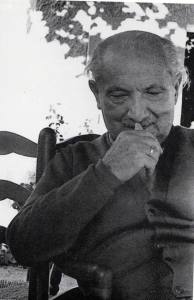
The philosopher Martin Heidegger made a statement that raised a great deal of controversy in the recent publications of his Notebooks: “Agriculture is now a motorized food industry, the same thing in its essence as the production of corpses in the gas chambers and the extermination camps, the same thing as blockades and the reduction of countries to famine, the same thing as the manufacture of hydrogen bombs. Man is not the lord of beings.” Many claimed that this quote justified the accusation against Heidegger that he was anti-Semitic and should have been properly shot following World War 2. What distinguishes Heidegger from his critics is that he is consistent in his thinking; his critics would like to have it both ways. The modern thinking that separates techne and nous from phronesis and sophia and provides the drive to domineering and commandeering the world as disposable resource, has cast a pall on the consistency of any modern theories of justice and ethics and has led to the confusion that is evident in many writings and actions of human beings today and, thus, provides the rationale for the TOK guidelines for May, 2022.
The journey to the perfection of individual virtue is not isolated from the requirements of living in the world. We can only fulfill those requirements and retain some relation to that perfection to the extent that we partake of that perfection. What we have come to call our freedom is simply our potential indifference to such a high end as Plato indicates and as Shakespeare shows so brilliantly in his Macbeth.
In the political writings of Plato and Aristotle, it was recognized that the wicked were not only individual criminals but those who wished to rule for their own self-assertion. Such tyrants were more destructive of justice than those who ruled simply in terms of the property interests of one class. They were worse than those who were simply ambitious for political power. Because tyrants were the most dangerous for any society, the chief political purpose anywhere was to ensure that those who ruled had at least some sense of justice which mitigated self-assertion and this was the purpose of their education. Such education is lacking in today’s leaders in many parts of the world.
The central distinction between ancient and modern theories of justice, where some limitation must be placed on individual liberties, can be seen in the hierarchy that has been outlined in this writing regarding the ways of knowing. The limitations in ancient societies are vertical in that they are understood by what the ancients knew about the whole which transcended the individual. What is given in knowledge of the whole is knowledge of the good which we do not measure and define but by which we are measured and defined. The modern theories are horizontal in the sense that one human being’s right to do what he or she wants has to come to terms with the rights of other human beings to do what they want. The basis of society was the rational calculation of the social contract. The contractarian basis of the state was both communist and capitalist: Marx’s dependence on Rousseau; the American founders dependence on Locke’s right to “life, liberty and property”. Kant’s Perpetual Peace emphasizes that we could have a just society composed of a nation of clever devils if they were clever enough to negotiate a social contract. The Universal Declaration of Human Rights owes a great deal to the ethical thinking of Kant.
In ancient societies, virtue was at the core of the just political order while the moderns have given freedom that central position. Modern theories of justice show it to be something human beings make and impose for human convenience. In the coming to be of technological science, the dependence of science upon calculus has been matched by the dependence for knowledge of justice upon calculation. These calculations are based on the logic and reason that has come to dominate what we understand as nous in our modern age.
We will finish up this overly long entry with an example which illustrates the disjunction of beauty and truth, the implications that this has for our understanding of ethics today, and why there is such confusion regarding our ethics. That the way of knowing called sophia has all but disappeared for us and with it the sense of the permanence of beauty and truth goes without saying. We can also say that the connection between love and intelligence has also experienced a rift in most aspects of our being-in-the-world. We shall speak of this with regard to Darwin.
Darwin’s discoveries and statements about what human beings are are taken as “fact” and not theory in our defining of what human beings and other species are. If we reflect on what we mean by loving something with intelligence, we could say that it is to want them to be. What is it about animals as products of modification through natural selection which would make us want them to be? Since Darwin, human beings have been responsible for the extinction of more species than at any other time in history. There is some connection between what we think other species to be and how we treat them. Facts and values are not as disjointed as we have been led to believe.
Darwin’s discoveries required disciplined attention, but what was discovered in his syntheses does not call forth love for the objects of his studies. To know that human and non-human species are modified through natural selection does not throw light on ourselves and others, on defining what human beings and other species are, but there is no reason for us to find “beautiful” that about which his formulation is made. It gives us no reason why we should love ourselves or other animals. Can we love ourselves and others just because we have come to be through natural selection? Darwin’s viewing provides us with no reason why we should. Darwin’s discoveries about natural selection do no make the animals ugly, but neither do his discoveries tell us why the animals are beautiful. The “fact/value” distinction is that separation in our seeing of the world where the true and the beautiful are disjointed, where scientific theorizing and propositions are ‘value neutral’ or ‘value free’.
Human beings will, obviously, go on loving otherness because they find it beautiful. But what is the result when they cannot hold in unity the love they experience with what they are being taught in the technological sciences? This is at the core of what appears to me to be an attempt by IB, through TOK, to deal with the most important issues that face us today in our everyday lives.
Our dominant paradigm of knowledge may not be of much concern to many of the young in IB schools because it is their ticket to professionalism and that is the name of the game. But there is little room for reflection in our paradigm of knowledge. The bios theoretikos of Aristotle has long since past away. The bios ethikos embodies all our waking hours, but there is hardly the opportunity to apply phronesis to most of the actions we take when the value of those actions are determined according to their efficiency and their results. How is it possible to think that the modern paradigm is sufficient to meet the needs of human beings?
 Theory of Knowledge: An Alternative Approach