

The recent killings of African-Americans by the police in a number of cities in the USA has prompted a great social uprising demanding change captured in the slogans “I Can’t Breathe”, “Black Lives Matter”, and “Defund the Police”. It is believed that these police killings are a result of a “systemic racism” inherent in all aspects of African-American lives, and there is a demand for change in these systems and institutions with the elimination of their oppression of the day-to-day lives of African-Americans, as well as women and members of the LGBTQ community. Here we will attempt to give some thought to how this “systemic racism” arose and from what and where are its origins.
For someone such as myself who remembers the social upheavals of the 1960s in the USA, I had, at first, perceived the current protests as simply another event in a long line of events where African-Americans protested against their oppression and that these protests would be either brutally crushed or simply allowed to wallow and eventually fade away due to the short memories of those of us who dwell within the technological society.
But these protests appear to be different from the protests of the 60s. For one, they appear to have the support of the white majority in the country. In the 60s, the protests were fragmented with the whites protesting the war in Vietnam while the African-Americans expressed their anger and outrage over the assassination of Dr. Martin Luther King. This fragmentation is not present in the current protests going on not only in North America but around the world. They appear to have evolved into a “movement” rather than merely a protest and this movement has gathered a significant amount of momentum..
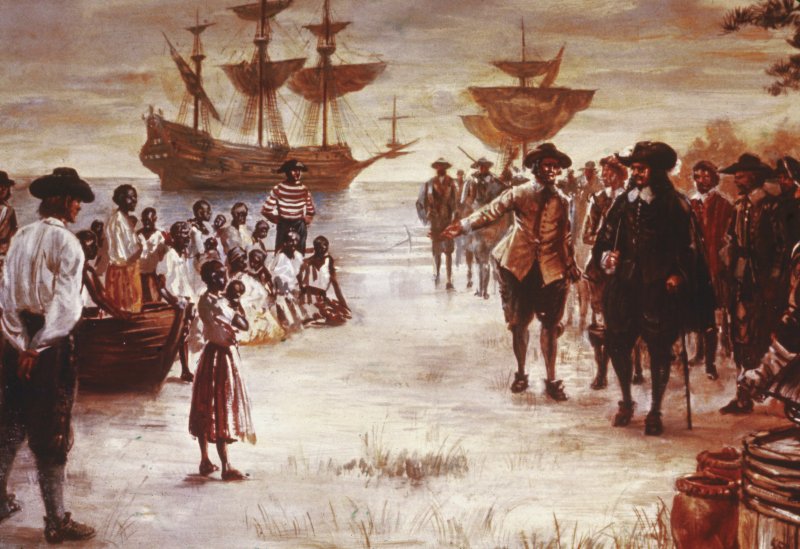
To begin to give thought to the history of North America is to note two basic facts: the history of North America begins with the genocide of its Native aboriginal peoples; and secondly, North America itself, for whites, has no history from before the Age of Progress. While the genocide against the Natives peoples was already well underway, the first 19 or so African slaves reached what were then the British colonies in Point Comfort, Virginia, near Jamestown, in 1619, brought by British privateers who had seized them from a captured Portuguese slave ship. This was over 150 years before the American Revolutionary War and the Constitution which resulted from it. In a somewhat incredible irony (based on superstition, perhaps), the slaves were usually baptized in Africa before embarking, the irony being that enslaving a human being is perhaps the most un-Christian action that a human being can do to another human being.
The “systemic racism” that is seen not only in North America but around the world wherever white Western Europeans be they English, Spanish, Portuguese, French or Dutch, through their imperial adventures, was established when they arrived at the various shores of lands that were alien to them. Their subjugation of the aboriginal inhabitants of those lands required a “morality”, a racism, that was the product of a perceived “superiority” either in their Christian faith or the result of what they perceived as the superiority of their “civilization” which found its concrete realization in the superiority of their weapons. The views of those conquered peoples by their conquerors were those of “savages” and “barbarians”. One can update this racism with a look at how America has treated those who have come under the oppression of its imperialism and its building of its empire. It should not be forgotten that the price to be paid for the realization of the American Dream at home is in the human blood shed by the victims of American imperialism abroad.
The view of Nature held by the Native peoples of North America, for instance, was quite different from that held by the white conquerors who came with Hobbes and Locke and the Protestant or Roman Catholic Christianity embedded in their consciousness. The vastness and intractability of the land created a fear that could only be overcome through a meeting with it being a relationship of conquest. This innate fear remains present even today and manifests itself in multivarious ways in the North American psyche.
The early settlers of North America were unique Europeans. They brought with them the Calvinist Protestantism (Puritanism) which was a break from the traditional Christianity of Europe, and they also brought with them the new revolutionary philosophies of Hobbes and Locke as well as those of Rousseau from France which were breaks from the contemplative tradition of ancient Greece given to Medieval Europeans from the writings of Aristotle and Plato.
Rousseau’s conflict with the English philosophers remains embedded within the consciousness of North Americans even today. Many of the commentaries on the need to change American society from today’s protesters speak of the USA’s failure to uphold the “social contract” with regard to its African-American communities and peoples. There is no questioning of the goals of the overall deeper drives that provide the stimulus for the calculating technological reasoning and its conquering of the necessities of Nature, but rather, for a just participation in the society of which this conquering relationship is a primordial given. The desire is for the upholding of the promise held in the originating liberalism that would provide the equity, justice and liberty to allow participation in that drive and the benefits that result from technological mastery.
To understand North America it is necessary to understand the connections between the new physical and moral sciences of Newton and others and their acceptance by the Protestants that first came to what was a new land. The differences between ancient and modern science can be found in the writings on The Natural Sciences in this blog. The Natural Sciences: Historical Background Both Max Weber and the Marxist historians, for instance, have demonstrated the practical connection between the early Protestants and property as primarily due to the “worldly asceticism” of those Protestants. But the deeper connection lies in the metaphysical connections between the new sciences and the new Christianity of those Protestants.
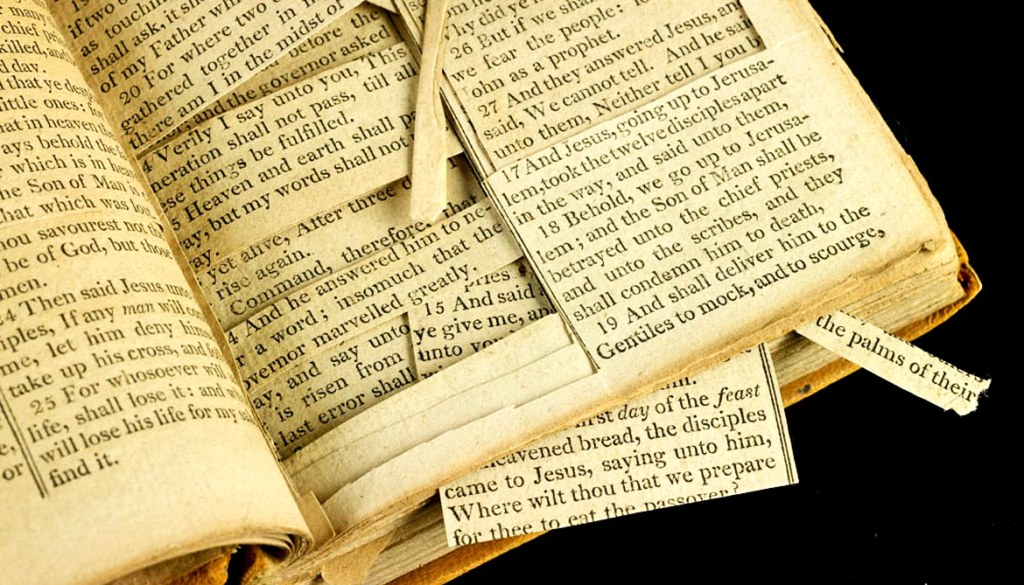
The new physical sciences of Bacon, Galileo and Newton were accepted by the Calvinist Protestants because these sciences were a critique of Medieval Aristotelianism and thus of the Roman Catholicism which based some of its doctrine on the principles of Aristotle’s understanding of nature. The new sciences critiqued the teleology of Aristotle’s science as causing human beings to view the world in a way in which it was not. The theologians criticized Aristotle’s science as a misleading road to “natural theology” that led human beings away from the Divine Revelation in the person of Jesus Christ and the reality of His Crucifixion. The tension between these two views existed within the framers of the American Constitution with Deists such as Jefferson, Washington and Franklin on the one hand and the practicing Protestant Founders on the other. The picture of Jefferson’s Bible illustrates that his Christianity would not sit well with most of today’s Christians in the USA.
How Locke made the Hobbesian view of nature compatible with the English speaking Protestantism of the early days of America is a subject that requires too much detail for this post. Suffice it to say that his doctrine of “comfortable self-preservation” as the highest end for human beings is hardly compatible with any notion of Christianity. The idea of “comfortable self-preservation” became re-worded as “the pursuit of happiness” in the final Declaration of Independence replacing Locke’s original word “property”.
Modern African-Americans have chosen the Rousseauian side of the tension between “natural law”” and “positive law” that was present in America from its beginnings, but the atheism of Rousseau would hardly find a place for the majority of them at the present time. At the heart of the current protests is the cry for the fulfillment of the “social contract” realized in the American Dream for all the citizens of the USA regardless of race.
To try to explore the reality of “systemic racism” and to provide some notes on its origins and its ultimate flowerings, it is necessary to speak of “liberalism”. In liberalism, freedom and reliance on technique are indissolubly linked, such that technology becomes the very ontology of American lives and defines who and what they are. This ontology itself is prior to any “-isms” and determines how those “-isms” are understood and interpreted by the people who hold them up as “ideals”. This ideal of what human beings are is encapsulated in the word “freedom”. This technological world-view is the common horizon that embraces both sides of what is currently understood as “the left” and “the right”. The “theory” and the “practice” within these “-isms” are indistinguishable and this must be understood if one is to gain access to the roots of who, what and how North America has become what and how it is.
The “systemic thinking” is prior to the systems and the institutions which are created from it and we must try, in this particular case, to understand how “racism” has become embedded in the systems and institutions that have been created in North America and that have since come to prominence around the world through the English-speaking and European empires and their victories in past historical wars and in the two great Wars of the 20th century. This is difficult for white people because that systemic thinking, in its commandeering, controlling and dominating stance towards the environment as “object” and in the novelty which it creates, prevents any reflection on its roots because it is primarily whites who have benefited from that thinking and its results and they have come to perceive that they must somehow be given the evolving truth of things. African-Americans wish to be a part of that hope and that truth, and to also benefit from that technological dominance that has made human beings the masters of nature. But the acceptance of the viewing comes at a cost.
The two most important documents relating to the establishment of American society and its institutions are its “Declaration of Independence” and its “Constitution”. The American Constitution begins: “We the People of the United States, in Order to form a more perfect Union, establish Justice, insure domestic Tranquility, provide for the common defence, promote the general Welfare, and secure the Blessings of Liberty to ourselves and our Posterity, do ordain and establish this Constitution for the United States of America.” Clearly, “the People” referred to “ourselves and our Posterity” i.e. the white founders. The African slaves, the Native Peoples, and women were not considered to be “the People”. The desire for “a more perfect Union” indicates the divisiveness present from the very beginnings of what is known as the USA.
The clarification of who gets to be a “person” and who doesn’t was at the core of the establishment of the “systemic racism” that is the bulwark of white societies and their economies. Determining a subservient order for those with darker skin allowed the American founding generation (and the generations after) to define “all men” and “the people” as “white men.” As a result, they guaranteed white men the rights and liberties promised by the Constitution while preserving a thriving economy based on racial oppression. It remains a matter of debate whether or not the American Civil War was due to “economic” factors rather than the freeing of the slaves of the South or whether the freeing of the slaves was itself an “economic factor”. Subsequent American history would suggest the former rather than the latter, and that the War was not undertaken with such “noble” motives as the subsequent mythology provides. It was a war over the price of commodities.
In “The Declaration of Independence”, the attempt to hold together the permanence of “natural law” with the changeableness of “positive law” is clearly in evidence: “”We hold these truths to be self-evident, that all men are created equal, that they are endowed by their Creator with certain inalienable Rights, that among these are Life, Liberty and the pursuit of Happiness.” The ‘men’ who are ‘created equally’ are, of course, the bourgeois landowners and slave owners who framed the Declaration. The “pursuits” were meant to be enjoyed by a “leisure class” founded upon the labour of the slaves.
The key to how the Declaration and the Constitution came to be written was in the replacing of Locke’s concept of “property” with “the pursuit of happiness”. Locke’s original concept of property related to the body: each human being possessed a body through which it undertook “work” and in doing so made “worthless nature” amenable to human needs. If all “men” had a right to property, and primarily the property that was their own bodies, then slave-holding would, prima facie, be “unconstitutional”. White slaveholders and the States that benefited from slave holding would not agree to this, so as the Montpelier Organization notes: “The answer lies in the idea of compromise: the founders compromised their morals (many were recorded as being opposed to slavery), and power (in some cases, states bowed to slaveholding counterparts in order to ensure the Constitution would be ratified), in the name of economics. Slavery, when all was said and done, was both profitable and convenient for many white Americans—and not just in the South.” https://www.montpelier.org/learn/slavery-constitution-lasting-legacy The entry continues: “As lifelong bondage of enslaved African Americans became more financially viable, the indentured servitude of whites (their terms only lasted five to seven years), was phased out. The system proved itself so lucrative that law and legal precedent began to leave future governments leeway for prioritizing economy over morality.” Current events in American politics continue this compromise of morality to economy both with regard to the suppression of African-Americans and to the Covid-19 pandemic.
Two examples from literature illustrate how difficult it is for whites to gain some illumination of self-knowledge to recognize how they have benefited from systemic racism. The Nigerian writer, Chinua Achebe, accused the writer, Joseph Conrad, of being “racist” in his great novella “Heart of Darkness”: https://polonistyka.amu.edu.pl/__data/assets/pdf_file/0007/259954/Chinua-Achebe,-An-Image-of-Africa.-Racism-in-Conrads-Heart-of-Darkness.pdf, and also https://www.newyorker.com/magazine/1995/11/06/the-trouble-with-heart-of-darkness. Today, statues of King Leopold II of Belgium are being torn down because of his imperial racist past. While there is no doubt that Conrad speaks out against, and condemns, this imperial racism in the novella, Achebe points to Conrad’s almost unconscious racism in Conrad’s use of symbols, motifs and metaphors in the novella which de-humanize the Africans that are presented there. A small point in Conrad’s defense, the descriptions Conrad uses are for all human beings, regardless of color, and of the thin veneer that is “civilization” separating us from the brutes; but the Africans are, nevertheless, still portrayed as brutes.
A second example is Mark Twain’s The Adventures of Huckleberry Finn, a source and inspiration for Conrad’s “Heart of Darkness”. Twain’s novel is now the most censored book in North America (although this censoring is done with the best of intentions) as it uses language and terms denigrating African-Americans (the use of the “n-word”, for instance). But the novel, in illustrating Huck’s education and growth, demonstrates the need to overcome what had become “sivilization” as it was understood in the America of Twain’s time (and remains in our time), and that included the recognition of the “humanity” of African-Americans in the character of Jim. The core theme of the book is the search for a ‘higher morality” than that present in the America of his day and our day. Twain’s warning that “Those attempting to find a moral” in his book “would be shot” is part of his effort through his humour. If these two literary geniuses, Conrad and Twain, are to be labelled “racist”, it is difficult to see how we mere mortals can possibly avoid being called the same. It represents the long journey ahead for those of us who must attempt to overcome the “systemic racism” in our views of the world.
Under the future “technology of the helmsman”, the skin color of the “human resources” and “human capital” will be a matter of indifference. The corrosiveness of the nihilism that is at the heart of our technological calculative reasoning embraces both the American “Right” and the American “Left” within a common horizon greater than either. The American “Right”, those who would probably call themselves “Republicans” and the roots of whose thinking reach back to Locke, appear to be longing for some lost “golden age” which they do not specify exactly, though its paraphernalia seems to relate to the “lost cause” of the American Confederacy and its symbols of white supremacy and which is prior to the 20th century’s various migrations to America of people of colour, These Rightists adhere to the freedom of the individual to hold property and for the enforcement of the laws that have currently been institutionalized even though those laws prevent individuals from other races from ever attaining that property and the sense of feeling ownership for those laws created for the community. But both sides do not doubt the central fact of the North American dream which is to be realized in progress through technological advance.
This leads to a number of questions: do not the institutions as they exist and produce those benefits come from the same calculative rationality? are the benefits possible without those stifling institutions? can those institutions exist as participatory democracies since centralization and uniformity are part of the essence of technology? The spontaneity of freedom is made possible through the conquering of the spontaneity of nature. Both share the deeper assumptions that have made technological society possible.
Nevertheless, as I have written elsewhere, at the present time liberalism and its “values” and “ideals” are all we have, and it is our duty to ensure that the institutions and their laws which have been and are being created are directed in such a way that all human beings can enjoy the benefits of the dynamic technology that were originally envisioned in the writings of the philosophers who were the founders of what we call “modernity”.
 Theory of Knowledge: An Alternative Approach