
The Seven Double Letters

4.1 There were formed seven double letters: Beth, Gimel, Daleth, Kaph, Pe, Resh, Tau. Each has two voices, either aspirated or softened. These are the foundations of Life: Peace, Riches, Beauty or Reputation, Wisdom, Fruitfulness, and Power. These are double, because their contraries (transpositions) take part in life: contrary to Life is Death; to Peace, War; to Riches, Poverty; to Beauty or Reputation, Deformity or Disrepute; to Wisdom, Ignorance; to Fruitfulness, Sterility; to Power, Slavery.
Alt. Trans.
The transposition of Wisdom is Folly
The transposition of Wealth is Poverty
The transposition of Seed is Sterility (Desolation)
The transposition of Life is Death
The transposition of Dominance is Subjugation
The transposition of Peace is War
The transposition of Beauty (Grace) is Ugliness
Wescott trans. 4.1. The Seven double letters, Beth, Gimel, Daleth, Kaph, Peh, Resh, and Tau have each two sounds associated with them. They are referred to Life, Peace, Wisdom, Riches, Grace, Fertility and Power. The two sounds of each letter are the hard and the soft−−the aspirated and the softened. They are called Double because each letter presents a contrast or permutation; thus Life and Death; Peace and War; Wisdom and Folly; Riches and Poverty; Grace and Indignation; Fertility and Solitude (sterility and rest?); Power and Servitude.
Commentary on 4.1:
The seven double letters are those letters that have two possible sounds either hard or soft. As “the foundations of Life”, the letters represent the seven vertical lines of the Tree of Life, the seven pillars of Wisdom which are the seven subjects of study within the old classical education. They “run” with a hard sound and “return” with a soft sound. The hard sound of Bet has the sound of b, while the soft has the sound of v. The hard Kaf has the sound of k, the soft, the sound of kh, like the English ch as in “chorus”. The hard Peh is pronounced like a p, while the soft is like an f or ph such as “philosophy” or “Phuket”. The hard sound is indicated by a dot placed in the middle of the letter called a Dagesh. The letter Resh in Hebrew is included in the seven doubles even though it never takes a Dagesh.
The seven doubles are the means to climb the vertical lines of the Tree of Life; they may also be a means of descent. The seven also represent the number of times the phrase “It was good” is mentioned in the Genesis. The seven represent the “contraries” of Life. “Contraries” is often translated as “opposites”, but they are not opposites since they exist in degrees of strength or intensity. I have chosen to translate them as “deprivations” or “deprivals” because they are in need of balance. They represent the ‘need’ and ‘fulfillment’ that are the two faces of Eros and from them derive the polemos or strife, the confrontation that is everyday life.
Another translation is “transposition”. A trans-position is a movement towards or away from something, a change of position or place. This might refer to the change of position required to make hard and soft sounds in speech. In soft speech there is a deprivation of breath, but is this deprivation of breath required to bring the strengths of the qualities of the hard speech into balance or reconciliation? The Strengths are on the right-hand side of the Tree of Life, while the left side is concerned with what is perceived as the “weaker” qualities, the Chakmah qualities of Wisdom and Mercy. Is this a note or a warning on the folly of excess, on the folly of egoistical self-concern and possession? Self-concern is one of the dangers inherent in eros for life requires us to look after our own individual needs.
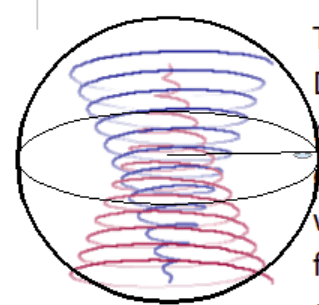
In the six directions of the space, the movement of these transpositions could be up or down, east or west, north or south, and I consider them to be the gyring motions of the paths and Sephirot. Their place within the Tree of Life will determine their nature or character. The condition of Life is “strife” and this “strife” can be eased through “friendship” whether of individuals or nations; and this friendship or harmony is achieved through mediation. These “goods” also indicate the “temptation” that arises in human beings to mistake them for the Good. The Sefer Yetzirah clearly indicates that these “goods” are in Time and Space (this is the meaning of the word “trans-position” i.e., movement and place), while the Good itself is beyond space and time.
In analyzing topos or “place” we require a focus, horizon, and origin (since topos is the origin of our word ‘topic’, the place or site of something) . “Origin” is to be understood as that out of which something comes to appearance, the site of its appearance. Thought begins where “world” emerges: the appearance of things, the engagement with others, the recognition of self. The origin is the “embodied soul”. It is in the encountering of the presence of things as such that a “focus” is given to our thinking: this focus is “wonder”. The place itself is everywhere the Same and this we have associated with Air.
Human being is the being that is always “on the way”: human being is the “quest” that results from the “question”. Our being-in-the-world is already given to us in our encounters with ourselves, with others, and with the things in the places in which they are. We call this “consciousness” or “cognition”.
Truth as “unconcealment” is bound within the horizon in which we are placed: our speaking and acting is revealed as true or false and it is also capable of being true or false. “Understanding” and “meaning” allow only certain things to emerge as meaningful (the limits of the “cubic box”), while others are withdrawn or remain hidden.
Understanding (Binah) finds its ground within a domain or “place” that it has constituted for itself. Nihilism has arisen in the modern age because memory (Chakmah) is disjointed from its own past and questions only arise that are “technical” or “rational” in character. “Consciousness” and “cognition” are closed down so that we exist in a kind of somnambulistic state. Through our need and desire for security, it is the closing off of openness to the possibilities of the future and their questionableness. It realizes itself in our “just do it” slogans so that actions are undertaken without thought.
The being of human beings in the world of Yetzirah (understood as gestell or “framework”, the frame in which we place our picture of the world) is a manner of apprehending the “other” as resource, as thing. In this apprehension of the world as “thing”, what is forgotten is that thinking is a remembering or re-collection and a form of giving thanks to the Giver for that which is given.
Text of the Sefer Yetzirah: 4.2
4.2 These seven double letters point out the dimensions, East, West, height, depth, North, South, with the holy temple in the middle, sustaining all things.
Wescott trans. 4.2. These Seven Double Letters point out seven localities; Above, Below, East, West, North, South, and the Palace of Holiness in the midst of them sustaining all things.
Commentary on 4.2

The seven doubles point out the six directions of space as well as the Holy Temple sustaining all things. These six directions parallel six Sephirot: Netzach > Hod, Tiferet > Yesod, Chesed > Gevurah. These are the directions one must face, or the motion of the head, when attempting to transmit or attain the qualities mentioned in 4:1 and in one’s meditations. The Talmud states: “He who wishes Wisdom, let him face south; he who wishes Wealth, let him face north.” In the temple, the Menorah which is related to wisdom is in the south; the Table indicating wealth was to the north. The Tarot Card of The Magician #1 has a table upon which rests the things from which he makes wealth (swords, cups, pentacles) and this wealth is made from the energy that comes from the upheld ready-to-hand wand (tools and will).
The holy temple in the middle sustaining them all would refer, for a Christian, to the Sacred Heart of Jesus (Love) and would therefore be related to the human heart (Tiferet > Yesod). It could also be the Body of Christ, as the whole of creation is seen as the body of Christ, the Logos. This would indicate the Cross of “the Lamb slain from the foundations of the Earth”. (This is how Christ’s saying should be understood: “It is written, ‘My house is a house of prayer,’ but you have made it a ‘den of thieves.’ ” It is not only referring to a church or synagogue but to the whole of creation.)
The creation as temple could also relate to Eros understood as the “proportional mean”, the balance which holds them all in relation to one another. Tiferet as Beauty, Grace channels the spiritual Light from Keter to all the other parts of the created World, and the proper response to the world is one of Love since it is Love which sustains the whole of the world. (“Where your treasure is, there will your heart be also” Matt: 6: 19-24.) This passage from Matthew deals with not being able to serve two masters i.e., wealth and God. You cannot serve God and Mammon. There are also references to “the eye” as the “lamp of the body”. The eye that is in darkness makes everything dark. Macbeth, for example, has the eye that sees daggers. (This has very important implications for the theoretical viewing of the world: neither Aristotle nor Newton is wrong; they are simply viewing the same world through very different eyes. The word theoria in Greek is “to view” with its root theo meaning “god”).
The spiritual, Keter, and the material, Malkhut, are poised in the balance that is Tiferet in the middle. “The end is in the beginning”. Fullness and Need here are expressed as the desire for the Good, but this desire itself oscillates; Wealth as the fullness of the material world is not sufficient to meet the need of the whole human being. Human beings need truth, beauty and the Good, and their desire for it is what distinguishes them from the other animals for from these needs human beings build a “world”. They are the “perfect imperfect” creatures, the perfect incomplete beings.
Text of the Sefer Yetzirah: 4.3
4.3 These seven double letters He formed, designed, created, and combined into the Stars of the Universe, the days of the week, the orifices of perception in man; and from them he made seven heavens, and seven planets, all from nothingness, and, moreover, he has preferred and blessed the sacred Heptad.
Alt. Trans.
Seven Doubles: BGD KPRT
Seven and not six
Seven and not eight
Examine with them
And probe with them
Make each thing stand on its essence
And make the Creator sit on His base.
Wescott trans. 4.3. These Seven Double Letters He designed, produced, and combined, and formed with them the Planets of this World, the Days of the Week, and the Gates of the soul (the orifices of perception) in Man. From these Seven He hath produced the Seven Heavens, the Seven Earths, the Seven Sabbaths: for this cause He has loved and blessed the number Seven more than all things under Heaven (His Throne).
SUPPLEMENT TO CHAPTER IV
(Found in some modern editions)
He caused and produced Beth, predominant in wisdom, crowned, combined, and formed the Moon in the Universe, the first day of the week, and the right eye, of man.
Gimel, predominant in health, crowned, combined and formed Mars in the Universe, the second day of the week, and the right ear in man.
Daleth, predominant in fertility, crowned, combined, and formed the Sun in the Universe, the third day of the week, and the right nostril in man.
Kaph, predominant in life, crowned, combined, and formed Venus in the Universe, the fourth day of the week, and the left eye of man.
Peh, predominant in power, crowned, combined, and formed Mercury in the Universe, the fifth day of the week, and the left ear in man.
Resh, predominant in peace, crowned, combined, and formed Saturn in the Universe, the sixth day of the week, and the left nostril in man.
Tau, predominant in beauty, crowned, combined and formed Jupiter in the Universe, the seventh day in the week, and the mouth of man.
By these seven letters were also made seven worlds, seven heavens, seven lands, seven seas, seven rivers, seven deserts, seven days (as before), seven weeks from Passover to Pentecost, and every seventh year a jubilee.
Commentary on 4.3:
The creation of the world itself was accomplished in six days, each corresponding to one of the directions in space. The Sabbath or day of rest is the seventh when the perfection of the completion of creation was achieved.
The Sephirot are located at the lower end points of the seven vertical lines of the Tree of Life. The movements within the Sephirot are upwards for human beings, and they indicate a process of decreation. The downward movements are those of the Divine and indicate the process of creation. The seven doubles are associated with the astrological forces of the seven planets, the realms of space and time. The influences of the planets are mediated by angels through the vertical paths associated with the Sephirot.
The “orifices of perception” in human beings are four of the five senses, all related to the head. Touch is not included (why, given the importance of hands to formation and making, the universe of Yetzirah?) How the world is perceived by human beings is determined through the senses and the examining and probing of the things that are in order to “make each thing stand on its essence” i.e., to bring the things into presence, to a stand, in their truth. In doing so, this will allow the Creator to sit on His base or foundation, or will place the Creator on His base in the creation that He has made. World needs human being to bring things to their truth so that the Creator will be made visible as the foundation of all (see the previous section). This is part of the aim or effort of the Sefer Yetzirah, to see the unity in diversity. The God’s appearance or disappearance is the responsibility of human beings.
The Sephirot are emanations only of the realm of the Good, Beauty and Truth; they are separated by the chasm of Necessity. The word “emanation” has the meaning of the Greek parousia, “a being present alongside” or “between”, “a coming to presence”. In Christianity, the word indicates the Second Coming of Christ or Judgement Day, but if Time is circular, Judgement Day is ever-present as well as absent alongside or between the past and the future i.e., in the present, the NOW. “To make the Creator sit on His base” is to bring to presence the truth of the presence, and at the same time, the absence of the Creator in His creation for human beings. This ability to bring to presence the creation and the Creator is what distinguishes human beings from other living beings and from the whole of the creation itself. In the process of de-creation, it signifies the necessity for human beings to become mediaries for God so that through us He may view His creation. We become “God’s spies”. In medieval thought, this was the highest end for human beings.
“Examine with them” refers to the letters themselves i.e., the logoi, whether they be numbers or words. Since the Sephirot are that which gives “spiritual energy”, the dynamis of the Good in the realm of Necessity or that which is not the Good, the text says to “probe” with the letters. The “probing” is to be done through the logos itself in “dialectical discourse”, “dialectical” here meaning “friendly conversation” (which is its original meaning). Some interpretations of the text imply that Malkhut is the “centre point”, but this is clearly not the case: the “Holy Palace” is in the centre of the sphere and that is Tiferet not Malkhut. Malkhut is what we would call the Natural Kingdom, Nature, what the Greeks called phusis. The centre of the individual is “the heart” and the base for the Creator is Yesod (Foundation), but it is the body of the Living God (Tiferet) that sits upon the Foundation from His presence (Yesod) of being in the centre.
The following chart represents the doubles’ relation to the physical universe and to the human body. These later additions to the text of the Sefer Yetzirah suggest a collaboration between the early Hebrews and the Pythagoreans. From the evidence in his Gospel and in his Book of Revelations, St. John the Evangelist was a Pythagorean. (Luke and John are Greeks; Matthew and Mark are Hebrews.) The seven in relation to the body could also represent the chakmas or centres of energy that indicate a Hindu influence present in the writing. The letters in the chart below do not coincide with their Hebrew meanings. Peh, for example, means ‘mouth’, although its connection here with hearing and with Mercury or Hermes as ‘the library of traditional knowledge’ of the past messages of the gods, and of the power of those who possess such knowledge is an appropriate association. Being associated with the left ear would also associate it with the left side of the Tree of Life.
| Letter | Quality | Planet | Day | Part of Body |
|---|---|---|---|---|
| Beth | Wisdom | Moon | Monday | Right eye |
| Gimel | Health | Mars | Tuesday | Right ear |
| Dalet | Seed | Sun | Wednesday | Right nostril |
| Kaf | Life | Venus | Thursday | Left eye |
| Peh | Power | Mercury | Friday | Left ear |
| Resh | Peace | Saturn | Saturday | Left nostril |
| Tav | Beauty | Jupiter | Sunday | Mouth |

If Time is circular, one can see that the mid-point is the combination of the Sun and Venus among the planets, the combination of Seed (fertility) and Life. These combinations and their alignments raise questions: why is not Tau associated with Venus since it is associated with Beauty? How can Saturn, which is associated with Time, be related to Peace? Are we speaking of the peace of Death here? Time is associated with the “strife” that is the essential condition of Life, and Saturn (Chronos) is associated with the god who attempted to eat his own children i.e., Death: Time, which gives them birth and eventually consumes them. I will attempt to answer some of these questions as I proceed through this commentary. (On The Wheel of Fortune card, the movement is counter-clockwise i.e., “the future comes to meet us from behind” in the NOW, again indicating the process of de-creation.)
The rule of the 7 dominates the Foundation of the creation of the world. 7 is 4 + 3: 4 is the number of the physical realm, and 3 the number of the spiritual realm. This may relate to the Seven Seals of the early Kabbalists and to the seven seals that are to be opened on the day of Judgement indicating an end of Time (Book of Revelations). The Sephirot are “eternal”; they are the unchanging middle points of the balance that weigh and transform from fullness to need and from need to fullness. They are the “running and returning” that is the message of God (Mercury, the messenger of the gods, is depicted with wings on his feet) which we perceive as motion, but which is not motion; the motion is within ourselves.
The four universes and their relation to the One (which is a Three) is the foundation of the rule of seven. The universe of Atzilut is beyond the physical realm. This is the realm of Keter, Chakmah, and Binah. The universe of Beriyah or the Universe of the Throne allows the Sephirot to interact with the lower worlds through the three Mothers. The universe of Yetzirah is the world of speech, the logos which bridges the gaps “between” the two universes bringing the spiritual and physical together. The universe of Asiyah or the kingdom of Malkhut is the great temptation towards downward movement.

“Every word emanating from God creates an angel” or the mediator that will deliver that word between worlds, to answer prayers and supplications. (“Human beings do not live by bread alone but from the word that emanates from the mouth of God” Matt: 4.11). There are seven archangels but only three (Gabriel, Michael, Raphael) are mentioned in the Bible itself while the other four come from the tradition (see the diagram of the Tree of Life that opens this commentary). In the Sefer Yetzirah, the angels are created on the 5th day after the stars are created. Laylah, the angel of Fate, was considered the angel of astrological birth (The Star #17). The three archangels were considered “temporary” angels in the text, but this is somewhat bewildering to say the least: are they “temporary” in their appearance and hiddenness, temporary in the realm of the material, or temporary historically, in time? The archangels are related to Chakmah consciousness and thus are associated with the answering of prayers. The battles associated with the archangels and Satan are the battles that occur every day within the human heart and in the world of human beings.
The seven doubles or binaries indicate how letters become words. The dominant letter is placed at the beginning and then the arranging of the other six e.g., if one seeks wisdom, Bet at the beginning and GD KPRT following. For meditation, one focuses on the part of the body associated with the letter. The specific traits are best transposed on the day of the week associated with them.
Text of Sefer Yetzirah 4.4
4.4. From two letters, or forms (stones) He composed two dwellings; from three, six; from four, twenty-four; from five, one hundred and twenty; from six, seven hundred and twenty; from seven, five thousand and forty; and from thence their numbers increase in a manner beyond counting; and are incomprehensible. These seven are Planets of the Universe, the Sun, Venus, Mercury, Moon, Saturn, Jupiter, and Mars; the seven days are the days of creation; and these and the seven gateways of a man, two eyes, two ears, two nostrils and a mouth, through which he perceives by his senses.
Wescott trans. 4.4. Two Letters produce two houses; three form six; four form twenty−four; five form one hundred and twenty; six form seven hundred and twenty; (39)26 seven form five thousand and forty; and beyond this their numbers increase so that the mouth can hardly utter them, nor the ear hear the number of them. So now, behold the Stars of our World, the Planets which are Seven; the Sun, Venus, Mercury, Moon, Saturn, Jupiter and Mars. The Seven are also the Seven Days of Creation; and the Seven Gateways of the Soul of Man−−the two eyes, the two ears, the mouth and the two nostrils. So with the Seven are formed the seven heavens, (41)27 the seven earths, and the seven periods of time; and so has He preferred the number Seven above all things under His Heaven. (42)28
Wescott Notes to 4.4
“This is the special chapter of the Heptad, the powers and properties of the Seven. Here again we have the threefold attribution of the numbers and letters to the Universe, to the Year, and to Man. The supplemental paragraphs have been printed in modern form by Kalisch; they identify the several letters of the Heptad more definitely with the planets, days of the week, human attributes and organs of the senses.”
- These numbers have been a source of difference between the editors and copyists, hardly any two editors concurring. I have given the numbers arising from continual multiplication of the product by each succeeding unit from one to seven. 2×1=2, 2×3=6, 6×4=24, 24×5=120, 120×6=720, 720×7=5040.
- In associating the particular letters to each planet the learned Jesuit Athanasius Kircher allots Beth to the Sun, Gimel to Venus, Daleth to Mercury, Kaph to Luna, Peh to Saturn, Resh to Jupiter, and Tau to Mars. Kalisch in the supplementary paragraphs gives a different attribution; both are wrong, according to clairvoyant investigation. Consult the Tarot symbolism given by Court de Gebelin, Eliphas
- Levi, and my notes to the Isiaic Tablet of Bembo. The true attribution is probably not anywhere printed. The planet names here given are Chaldee words.
- The Seven Heavens and the Seven Earths are printed with errors, and I believe intentional mistakes, in many occult ancient books. Some Hermetic MSS. have the correct names and spelling.
- On the further attribution of these Seven letters, note that Postellus gives: Vita−−mors, Pax−−afflictio, Sapientia−−stultitia, Divitiae (Opus)−−paupertas, Gratia opprobrium, Proles−−sterilitas, Imperium−−servitus.
Pistorius gives: Vita−−mors, Pax−−bellum, Scientia−−ignorantia, Divitiae−−paupertas, Gratia−−abominatio,
Semen (Proles)−−sterilitas, Imperium (Dominatio)−−servitus.
Commentary on 4.4:
| Letter | Quality | Planet | Day | Part of Body |
|---|---|---|---|---|
| Beth | Wisdom | Moon | Monday | Right eye |
| Gimel | Health | Mars | Tuesday | Right ear |
| Dalet | Seed | Sun | Wednesday | Right nostril |
| Kaf | Life | Venus | Thursday | Left eye |
| Peh | Power | Mercury | Friday | Left ear |
| Resh | Peace | Saturn | Saturday | Left nostril |
| Tav | Beauty | Jupiter | Sunday | Mouth |
In the chart above, I have attempted to make some associations between the seven double letters as well as the planets, the days of the week, and the parts of the body that are assigned to them. Again, this is very tentative and with further reflection a truer account may be found in the various relations that are given in the initial Sefer Yetzirah.

 Theory of Knowledge: An Alternative Approach