
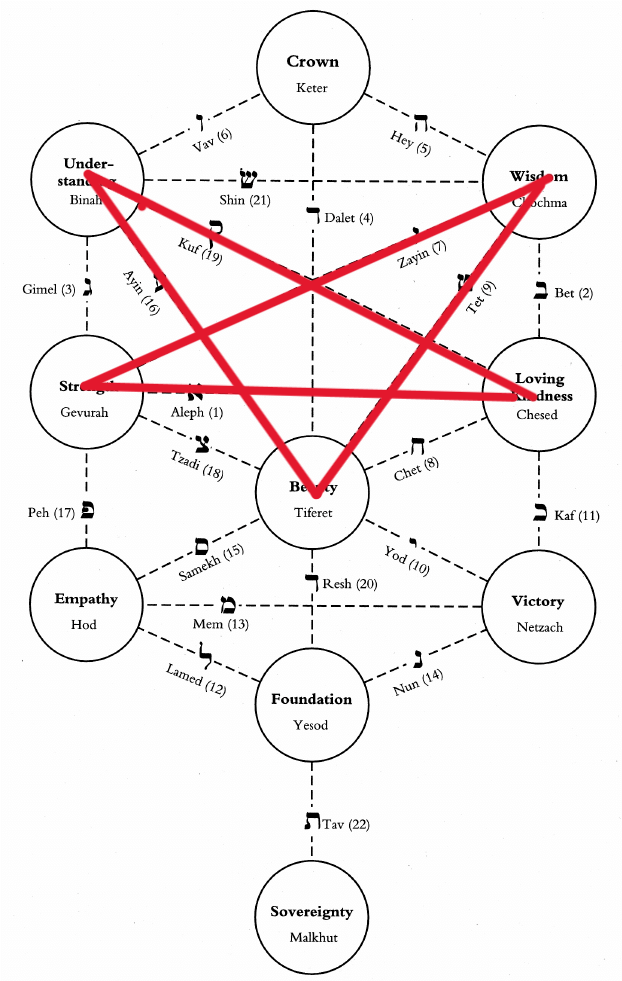
The Paths Emanating From Gevurah
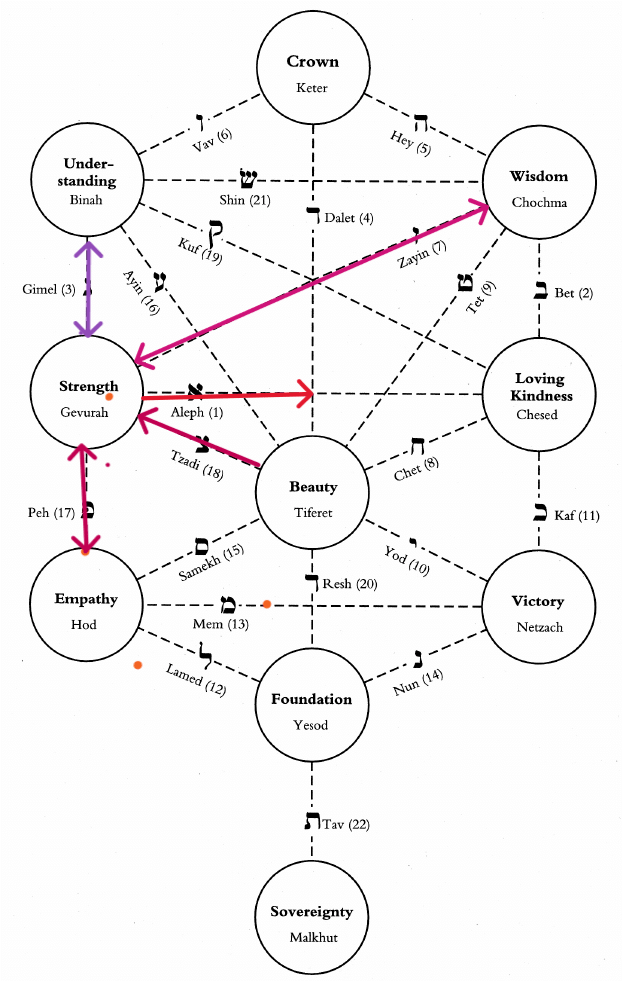
The paths emanating from Gevurah are:
5. The Radical or Root Intelligence:
13. Binah to Gevurah/Gevurah to Binah: Letter Peh. Unity Directing Intelligence (Consciousness) (Sekhel Manhig HaAchdut): It is called this because it is the essence of the Glory. It represents the completion of the true essence of the unified spiritual beings.
20. Tiferet to Gevurah: Letter: Ayin Path 20: Intelligence of Will (Consciousness) (Sekhel HaRatzon): It is called this because it is the structure of all that is formed. Through this state of intelligence (consciousness) one can know the essence of Original Wisdom.
24. Gevurah to Hod (Hod to Gevurah) Letter Kaf. Apparative (Tools) Intelligence (Consciousness) (Sekhel Dimyoni) (Sometimes called The Imaginative Intelligence): It is called this because it provides an appearance for all created apparitions, in a form fitting their stature.
The Fifth Path: The Radical/Root Intelligence
The Fifth Path is called the Radical Intelligence because it is itself the essence equal to the Unity, uniting itself to the BINAH or Intelligence which emanates from the primordial depths of Wisdom or CHOCHMAH.
Alt. Trans. “The fifth path is called the root consciousness because it is the substance of the unity, joining itself to that understanding (Binah) which itself emanates from within the province of primordial wisdom.”
Wescott trans. The Fifth Path is called the Radical Intelligence, because it resembles the Unity, uniting itself to the Binah, or Intelligence which emanates from the Primordial depths of Wisdom or Chokmah.
Case trans. The fifth path (Pachad, Gevurah or Deen, the fifth Sephirah) is called the Radical Intelligence, and it is so called because it is the very substance of Unity, and is within the substance of that Binah which itself emanates from within the depths (literally ”from within the enclosure”) of the Primordial Wisdom.
The fifth path of Radical or Root intelligence is that Understanding (Binah) which comes from how we understand and interpret the Laws of Necessity which emanate from the wisdom or knowledge of the whole (the Unity) that is Chokmah. The emphasis on the path here is on its “resemblance” to the Unity (the Good itself), but it is not the Good itself. It is a ‘shadow’ or an ersatz form of the Good itself. We can see the contrary nature of the translations that are given for this path. The enclosures of Primordial Wisdom are illustrated in the letters Beth, Chet, and Tet, and we have discussed the meanings of these letters already. The understanding and interpretation of Necessity becomes the destiny or Fate of those human beings that have to suffer that understanding and interpretation.
It is required for human beings to distinguish between the Necessary and the Good; not doing so leads them to the darkening of the light and, ultimately, the rejection of the light i.e. to sin. Is the Radical Intelligence lit by the light of Keter, the Sun, or by the reflected light of the Moon? Is it the fire that is Shin that is the light which “enlightens” the Cave that is the enclosure that surrounds Gevurah?
The ‘enclosure’ of Primordial Wisdom we have designated as the letters Chet and Tet, but it could also possibly be Beth, since Beth is the ‘house’ of being. If we paraphrase the words of the path, the Unity of Gevurah is a product or outcome of the Understanding (the substance) that results from our knowledge of the realm of Necessity. This substance of the Unity is what we have called the ‘collective’, ‘the social’ in this writing and the historical knowledge that derives from this collectivity of human beings. This unity is an ersatz or false form of the Unity that is the Divine, and exists on a lower level or plane than the unity that is the Divine i.e., it exists in the ‘depths’ of existence, the gyring outward direction of the Creation. The outward direction of Creation, the ‘away from’ the source of the Creation is the ‘depths’, not the ‘heights’, of Creation.
The Radical Intelligence joins ‘the many’ that comprises any thing into a ‘one’ thing and brings about the particularity of the objects of the world by imposing limits on the unlimited of Chokmah. This is related to the fire of Shin. This imposing of limits is a gathering and assembling into a one which was called logos by the Greeks; it is here that we find a meeting point of the Logos and Necessity. This gathering of the logos is done so that things can be named and is what the Greeks called dianoia. This can only be done in Time. We can find this process occurring in the algorithms of AI in our modern age; they are meant to create enclosures from within the enclosure that is AI itself. The naming of names is a ‘yes’ or ‘no’ response to the naming of the particulars that are brought forth into sight as predicates of the subject that is the unity of the thing. It is Reason as subject that is understood here, and the predicates must suffer from no contradiction and give sufficient reasons for the naming of the subject as such. Our scientific terminology and metaphors are part of this naming.
In the Sefer Yetzirah, the logos is represented by the Sephirot Tiferet. This seems to suggest that if things are named without the assistance of Tiferet then they will be falsely named; and this ‘false naming’ is a covering up of things that are not i.e., it is merely the naming of shadows. This makes it difficult in assigning the proper letter to the paths to and from the Radical or Root Intelligence. This intelligence or consciousness is what has come to be known as the Human Sciences, the politics, the anthropology, the psychology etc. that is gathered from the study of human beings. I have assigned the letter Peh as the path that is present between Gevurah and Binah. Peh is the language of rhetoric or public speech, and AI such as ChatGPT is an example of this ‘public speech’ and the flowering of this speech. It is primarily language as ‘information’. When language is understood as ‘information’, it is language that is ‘measured’, ‘weighed’, and ‘accounted for’ in the site that is human discourse.
Gevurah, the fifth Sephirot, is associated with the emanation of fire from the letter Shin, one of the three Mothers. Kabbalists also associate Gevurah with Mars and Scorpio astrologically, that is, a combination of fire (Mars) and water (Scorpio) which produces earth, materialism. Gevurah is associated with power and will to power and also with strife, as reason understood as the principle of reason is associated with power and will to power and the striving to master Necessity . To paraphrase Plato, only the dead do not have strife or polemos (war). Strife is life itself.
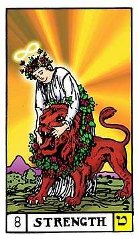
That The Order of the Golden Dawn chooses to associate the Tarot card Strength #8 with this path does not seem to make too much sense. The card Strength seems to represent the virtue of “prudence” or what the Greeks called sophrosyne, and this is a virtue of the individual within the society, the individual within the enclosure of society as is pictorially represented in the letter Peh. The letter Peh shows a Yod inscribed within an enclosing Beth or within any of the other enclosing letters of the Hebrew alphabet. The human soul is enclosed within a body; the human being is enclosed within the social community of which it is a part.
Justice as #8 would seem to appropriately represent the will to power of those societies or collectives that codify their laws in such a way as to demonstrate what is acceptable action by individuals within those societies. These laws become the narratives by which those societies live and which constitute the substance of the institutions within those societies. The “strife” represented is that between the individual and the city or the society, and this strife finds its foundation in the use of language. From our point of view when looking at the Tree of Life, the right side seems to represent individuals while the left side seems to indicate societies or the social and the middle pillar is the interaction between the two and the mediation between the two. It would seem appropriate that Strength be placed on the Middle Pillar since the figure represents proper moral and ethical action.

The fifth path or Radical Intelligence is also associated with fear. One is reminded of the myth of the ring of Gyges from Bk. II of Plato’s Republic where Glaucon, Plato’s brother, asserts that human beings only obey the laws for fear of the consequences of getting caught when one disobeys them. This is why they seek the ‘invisibility’ that ‘anonymity’ brings them. Justice is also related to the name of the fifth path when realized in its highest form. This associates it with the Greek understanding of Justice as dike or that which is “fitting”, “suitable”, “apt”, “fair” as the outcome of the process of making something such as laws or of doing something which is ‘noble’. This active doing is associated with the thymoeides part of the soul. When the table made by the craftsman is fit for the purposes of a table, then the table is “just” i.e., suitable, apt. From this ‘suitability’ for its purpose comes its good. The same thing can be said of laws: when they are fitting, suitable, apt then they are just and some form of goodness is the result and emanates from them.
The narratives that compose capitalist societies, for instance, show a clear discrepancy between ‘white collar’ crime and ‘street crime’. White collar crimes are primarily composed of fraud, deception, etc. and are committed by the elites of those societies. Street crimes are the violent crimes committed in the open and in plain sight. Even though the consequences of white-collar crime may be far more egregious to far more individuals, the perpetrators of those crimes do not receive punishments equal to the punishments given to the perpetrators of street crimes which usually involve a single individual. The institutional narratives of the societies which they compose indicate that justice is not present in those societies and that this injustice is present at the root or foundation of those societies. When the instituting of laws is to the advantage of the lawmaker, then injustice is the result (see the figure of Pausanias and his discussion of eros in Plato’s Symposium).

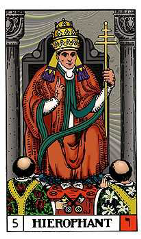
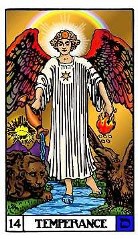
There appear to be a number of similar characteristics between the 5th path and the Temperance#14 card of the Tarot (10 + 4). I would associate the Justice card with the Sephirot Hod and the path of Kaf, while The Hierophant #5 is appropriately associated with The Rooted Intelligence and the path of Peh that leads both to and from it. Temperance may be said to represent the sophrosyne (prudence) and phronesis (wise judgement that comes from experience) that is the proper form of Eros in the thymoeidic part of the soul. The mediatory figure represented in the card assists the logistikon or thoughtful part of the soul in its dealing with the urges and drives of the epithymetikon or appetitive part of the soul.
The Fifth Path is also associated with the creation of Time. Being (creation) and time cannot be separated. This creation is that of Otherness (we sometimes give it the name of ‘Nature’), but “the substance of unity” is still present in it. It is here that one finds all the varieties of the ersatz forms of unity which we find in social collectives. Cliques, cults, sects, political parties, etc., are among the false forms that human beings choose in order to fulfill that absence, that need for completion, that they experience in the strife of their everyday lives. The letter Peh in its shape shows the individual Yod swallowed up by the collective whole. The individual is subject to the ‘enclosures’ that are the narratives that individuals invariably become involved with. AI will represent the whole of this enclosure and be considered ‘wisdom’ in the near future.
Gevurah, or the Radical Intelligence, refers to the “depth” of things, the root or the radix. The radix is the base or foundation of something. The radix of the positional numbering system as is used in the Sefer Yetzirah and the Tarot is 10. In the Radical Intelligence’s path’s emanations and their effects, Understanding and knowledge are brought into a unity with Wisdom (the Unlimited) to bring about the unity necessary to define a thing. A tree, for example, is composed of many parts: branches, leaves, roots, the trunk. These parts are brought together in the intelligence so that we can identify the thing as a tree and name it as such. This unifying thinking we have referred to as dianoia. The unity of the thing, what it is named, is the ‘subject’ or ‘the one’ of the thing, while the parts that make up the thing are its predicates. Both subject and predicates are parts of language, and what we call ‘logic’ or reason is based on, and finds its roots in, language (Logos). The Radical or Root Intelligence is the anti-Logos, for it creates the enclosures that cannot be questioned.
In the Sefer Yetzirah, the infinite number of possibilities and potentialities of the dynamis or “life-force” can be understood through the ten essential emanations of the Sephirot. The essence of the individual thing can be understood or seen through, made transparent, when the Sephirot which reveals it is understood. To make an analogy: AI uses the “infinite number of possibilities and potentialities” that are present in the whole that is the Internet to arrive at its ends or judgements. Of course, the possibilities and potentialities are not infinite but only appear to be so. AI puts language into ‘stone’, and thus kills language or causes it to cease to be a living force by turning language into ‘information’. Ultimately, this killing of language will turn human beings into zombies or golems, and this is the greatest danger of AI to humanity. AI is by its very nature unthinking, and because of this it is anti-logos.

What is missing here, or what is the problem or difficulty here, is the connection or lack of connection, to Tiferet. All of the Sephirot are connected to Tiferet, but the paths themselves do not all pass through Tiferet. The paths are modes of “consciousness” or “intelligence”, “awareness”. There is, currently, a great gap between Love and Intelligence. Without Love, things are viewed from the egoistical “I” of the Self, and the will to power is the channel for that “I” in its empowerment through the principle of reason. The Self becomes the dominant ‘subject’, the ego cogito of the French philosopher Descartes. The channel itself becomes the principle of reason (Shin in the Sefer Yetzirah) which, in turn, becomes a principle of being or Life itself. Things, other beings, are deprived of that essential mercy and kindness which are the foundations of the true sources of knowledge. The Vav acts as a barrier to the mercy and kindness that come to us through Tiferet and Heh, and binds us in the enclosures that are rooted in fear, insecurity, and severity.
Gevurah relates to “might”, “power”, and “fear”, while the “loving kindness” that is the countenance of Chesed is contrary to this outward appearance of Gevurah. Gevurah may be said to represent the State, the Greek polis, the German Volk, the Roman church. It is the collective, the social and its realm. It is the site of the “strife” or polemos that exists between the individual soul and the society or community into which that soul has been born, the strife between the social, the city and human being. It is the world of convention, human “creation” or making. Gevurah is the force that pushes all things that are not similar to itself apart, away from itself. In Gevurah, there is no distinction between “power with” and “power over”; the two go hand-in-hand (i.e., in the technological, there is no essential difference between democracy, communism, and authoritarianism or other fascist forms of government. They are predicates of the subject technology). This separating ultimately suggests intolerance. The temptation and seductive force that is power consolidating itself to itself is contrary to that power that allows beings to be, the power that withdraws so that Otherness can be seen for what it is. Nevertheless, for the individual, we have no choice but to attempt to live well within the communities of which we are members. This living well is living justly.
Gevurah is represented by The Hierophant #5 in the Tarot whose contrary is either The Devil #15 or The Tower #16. This is a crucial point in the Tarot and in the Sefer Yetzirah’s Tree of Life. The succumbing to the Great Beast is the succumbing to the three temptations of Christ: the material temptation of turning stones to bread (i.e. opposing the will of God and not recognizing the limits of Necessity; this can take on many metaphorical forms and is not merely the desire to overcome hunger. We talk about ‘the miracles of modern science’); the social temptation of having power over the kingdoms of the world (desiring or possessing the power of “social recognition” or social prestige, the temptation of the collective); and finally, the individual temptation, suicide (the temptation of God by denying the will of God and by the defying the Law of Necessity and in thinking that “we are our own”).
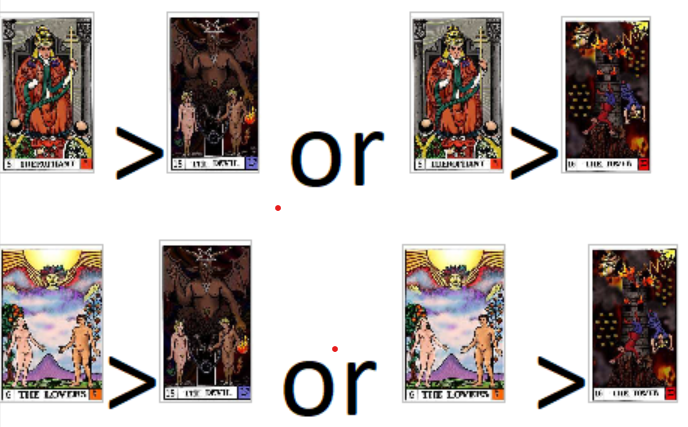
In the Tarot, the symbolism of The Devil mirrors that of The Lovers but is contrary to that of The Lovers: the manacles of The Devil which bind the man and woman to the black cube upon which the Devil roosts are the Tree of Life and the Tree of Knowledge in The Lovers #6. The manacles are attached to the cube of the physical world which is a black cube over which the Devil roosts; no such cube exists in The Lovers card. The Devil is a false or ersatz form of unity to which one becomes bound and loses one’s freedom and one’s individuality. This enchainment is freely chosen.
This is why I would assign #16 to The Devil and #15 to The Tower. The Tower is the lightning bolt of Zeus, or of God, and is the nemesis for the worship of false gods or the worship of power and social prestige. The Tower is the card of revolution, change. In the ascending direction, the worship of The Devil leads to The Tower; in the descending direction, The Tower leads to that revolution which simply replaces itself with The Devil. The cube of The Devil is one possible outcome of the cubes shown in the cards of The High Priestess, The Emperor, and The Chariot or the cards on the right side of The Tree of Life. On the left side, The Empress sits upon a rectangle, The Hierophant’s robes hide and conceal that which he is seated upon, and Justice is shown seated upon a throne. The Hierophant’s “throne” or seat is illustrated in black in the card given here.
The Letter Peh and the 13th Path: The Uniting Intelligence
Path 13. Binah to Gevurah: Unity Directing Intelligence (Consciousness) (Sekhel Manhig HaAchdut): It is called this because it is the essence of the Glory. It represents the completion of the true essence of the unified spiritual beings.
The Thirteenth Path is named the Uniting Intelligence and is so called because it is itself the essence of Glory. It is the Consummation of the Truth of individual spiritual things.
Alt. Trans. ” The thirteenth path is named the uniting consciousness because it is the essence of glory. It represents the completion of the true essence of the unified spiritual beings.”
Wescott trans. The Thirteenth Path is named the Uniting Intelligence, and is so called because it is itself the Essence of Glory. It is the Consummation of the Truth of individual spiritual things.
We spoke in the Third path of the thinking that is termed dianoia, that thinking which unites things that are separated, that thinking which brings things together into a one thing so that the thing can be named. The 13th path from Binah to Gevurah is the bridge between the universe of Asiyah and Beriyah and the universe of Yetzirah. Yetzirah is the world of action, the world of ‘making’, the formation of things which brings about their “consummation” or “perfection”, their completion. These things may be physical things or ethical things, since “glory” refers to the beauty of actions. It is the world of “values”, that which human beings ascribe to things that are of their own doing and their own making. “Values” are what human beings make or determine regarding actions or things; they are not the “good” so we may say that they are an ‘imitation’ or an ersatz form of the good. “Glory” is not the Good. “Values” are what are constructed from the narratives that have been created by the will to power of the collectives in which those values are ‘valued’.

The four causes of Aristotle of which we have spoken about are within both the physical and spiritual realms; that is, they have to do with both ontology and ethics. The actions which human beings take require a dynamis, whether in an active or passive form, a potential or a possibility of being able to come into being or not to come into being. They are expressions of the thymoeidic part of the soul as concrete illustrations of eros. Paul Foster Case considers the Thirteenth Path to belong to the letter Gimel and to be associated with Tiferet; but this cannot be the situation. The letter Gimel refers to “wealth”, the “value” of created things, the multiplicity of created things, the “wealth” of things that is the abundance of Nature, and is associated with the strife human beings experience amidst that multiplicity of things. It is one of the 7 double letters indicating that its understanding can be viewed in two ways (at least).
If we look at the card of The Magician #1, we can see that he is enclosed within an inverted Peh. We may say he is the Peh itself. The ‘making’ of The Magician is that making carried out by the artisans and technicians who happen to compose the powers that be in the societies of which they are members. Peh is the logos of rhetoric, the language of the many directed toward the many and it finds its highest form in the legislating of laws. The “magicians” and technicians are dependent on the people who are their audience. This is contrary to dialectic, the language of the few which is directed to the two or three gathered together.
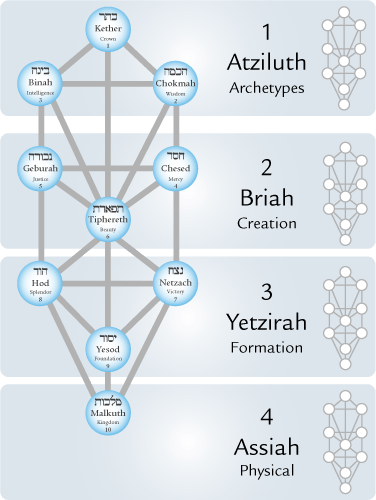
The strife among the created things and urges that arise in human beings is that which needs to be brought into a “friendship” or balance and this is done through the connection between the primal water of the Holy Spirit (Chakmah the undifferentiated pre-conscious), to the fire of Keter through Air (Alef) from which earth (wealth) is created.
We might get an understanding of Binah/Gevurah as Foundation when we think of gravity. Gravity is the most obvious manifestation of the law of Necessity, the limits that are imposed on the unlimited. It is through understanding the laws of Necessity that we are able to traverse the paths from the Beriyah universe to the Yetzirah universe of formation on the inward and upward path. It is the law of Necessity which provides all of that which we call knowledge.
There are clearly errors in the commentaries that place Gevurah as “Justice” and not the sephirot Hod. If the “uniting intelligence” is the essence of “glory”, then it must manifest itself in beauty of some kind since glory’s root is the Beautiful. The beauty of the things made by human beings or in the “glorious” actions that human beings are capable of performing once they have been given the Love that unifies all beings are examples of these. This ‘glory’ is the face that the desire for immortality takes in the thymoeidic realm of the soul. Of course, this is where error can arise. The “glory” that derives from “social prestige” is the second temptation of Christ. (Matthew 4:3) The unity or sense of oneness that one derives from belonging to a clan, country, political party or some other “collective” is a false form of the unity that belongs to “two or three gathered together in my Name”. His Name is Love, not the Law; it is not the power that derives from “social prestige” and recognition. It is no coincidence that insanity or madness is rarely found in individuals but is the norm or the rule in collectives.
The NOW is eternity once the individual has been reconciled to the One which is the heart of all things. This is how one can understand Plato’s statement that “Time is the moving image of eternity”, when eternity is experienced in the NOW. Nature itself is sempiternal: the sempiternal is an image of the eternity of the One. The epithymetikon or appetitive part of the soul experiences the primary desire for immortality through the procreation of children; the thymoeides part of the soul experiences the desire for immortality in the achievement of fame or recognition through the doing of ‘noble actions’. The logistikon or ‘rational’ part of the soul (intelligence) has the direct gnostic experience of immortality when it is directly united to the One through the mediatory power of Love. This places it at odds with the orthodoxy of the piety ruling the faiths of collective religions.
What is one to do practically? One is “to mind one’s own business” and to take care of those things that come to one when they occur: to recognize and distinguish between the Necessary and the Good and to prevent the worst from happening when one cannot assist in bringing about the Good. It is not in our power to bring about the Good; that is in God’s hands which He gives through His grace. But we are capable of producing the contexts and circumstances where the good can occur. The greatest evils occur when we think we can bring about the Good i.e., “the good end justifies any means”.
Peh derives from “and Elohim saw that it was good” (swarming of waters with creatures; of air with fowl) 1:21 These are the “goods” that are not the Good but are sometimes mistaken for the Good. These ‘goods’ are determined by the society of which one is a member through the narratives that those societies put forward, or they are those ‘goods’ that are necessary for our survival as human beings.
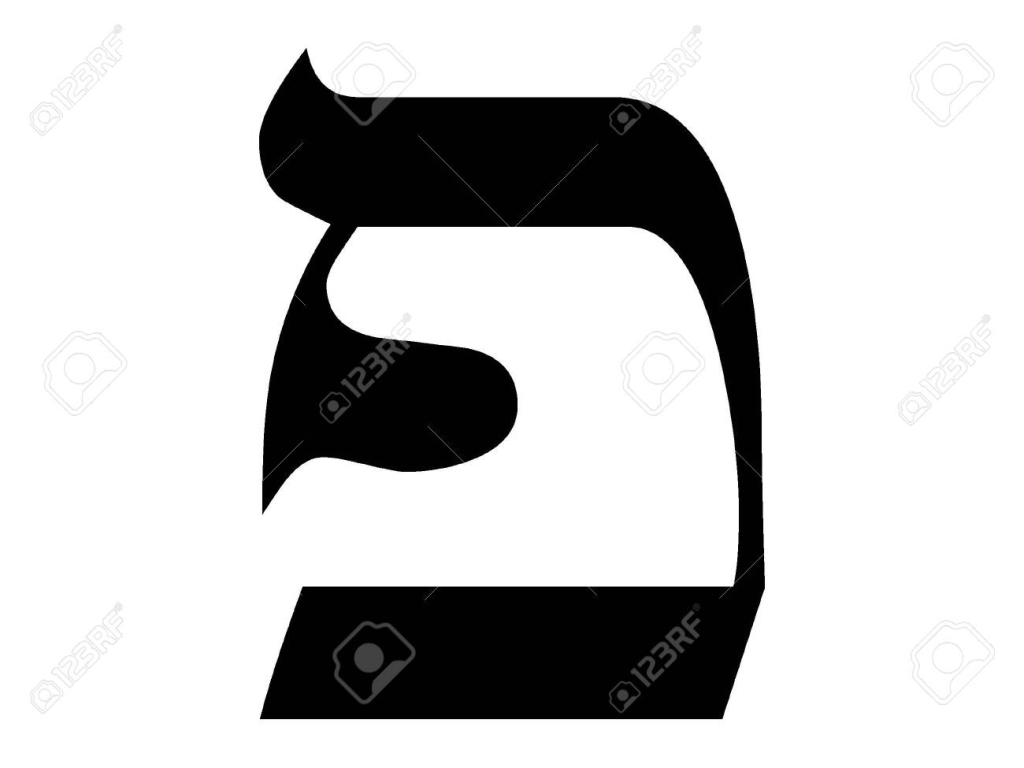
The Hebrew letter Peh means “mouth” and refers to the power of speech and “to consume”. Peh is similar to the letter Kaf in shape, but Peh contains a “tooth”; the letter Shin means ‘tooth’ and teeth assist us in our consumption of things, the grinding and breaking down of things. Shin is primary in the process of decreation in the ascending motion from out of the depths of the Tree of Life. In Kabbalah speech, the logos, is a spiritual power, which can cause good or evil depending on whether it is used falsely or truly. One of the problems with language is that it allows itself to be used so. Our being is determined by what one thinks and how one thinks, and these in turn are determined by how we view the world and how we will view the world. This seeing and thinking, in turn, determine our actions, what our character is and how one is as a being. Since it is in the nature of human beings to reveal truth, i.e., it is what we essentially are, what one speaks has the power to become reality. Lies become realities through false speech. Violent words lead to violent actions. When our speech is not used to reveal truth, we become more inhumane, bestial, violent, and ultimately, insane. The quality of our speech determines the quality of our life’s essence and creative existence. This is why speech and language are so important and so dangerous.
The shape of the Peh is a Khaf with a Yod inside of it or, as suggested above, a Khaf with a Shin inside it, or a Beth with a Yod inside of it. The Shin represents the spiritual spark or the emotional, passionate fire of the soul, contained inside the physical body, the thymoeides of the soul. Kaf is associated with the ‘hand’, so there is a grasping, taking possession of something implied here. The reference seems to be to the world of yetzirah and with our use of equipment and tools, the ready-to-hand. Passionate speech deals with rhetoric; the speech before crowds and assemblies, public discourse. This suggests that the letter Peh signifies the individual (the Yod) enclosed within the crowd, or it could also signify the individual who has chosen to be contained within the enclosure of the material world only, such as is suggested by The Magician #1.
With words and silence we can communicate the essence of our soul and existence. This requires that the inner and outer life match – that the physical existence is fully aligned manifesting the spiritual intentions of the soul within it. Socrates’ prayer to Pan at the end of the dialogue Phaedrus expresses this: “Dear Pan, and all you other gods that dwell in this place, grant that I may become beautiful within, and that such outward things as I have may not war against the spirit within me. May I count him rich who is wise, and as for gold, may I possess only so much of it as a temperate man might bear and carry with him.” This is similar to what it says in the Talmud Baba Metsiah “Don’t say one thing with the mouth and another with the heart.” The Yod is the point in the heart where spiritual awakening begins, what we have been referring to as the logistikon part of the soul. However, the alignment of the physical with the spiritual is no easy task as even someone such as Socrates needs to pray for a balance between them.
The power of the Peh is a double-edged sword. As it says in Proverbs 18:21 “Life and death are in the hands of the tongue.” Because of this, the Peh represents the requirement to govern one’s own nature, to ‘know thyself’ and know when to speak and when to be silent. Routine speech, speech to manipulate, all the distortions of speech must give way to viewing speech as a miracle in order to make the leap beyond this path.
The Letter Kaf and the 24th Path: The Apparative/ Imaginative Intelligence
Path 24. Khaf Gevurah to Hod (Hod to Gevurah) Apparative (Tools) Intelligence (Consciousness) (Sekhel Dimyoni) (Sometimes called The Imaginative Intelligence): It is called this because it provides an appearance for all created apparitions, in a form fitting their stature.
The Twenty-fourth Path is the Imaginative Intelligence, and it is so called because it gives a likeness to all the similitudes, which are created in like manner similar to its harmonious elegancies.
Alt. Trans. “The twenty-fourth path is called the imaginative consciousness because it provides an image to all created things that have an appearance, in a form fitting to each.”
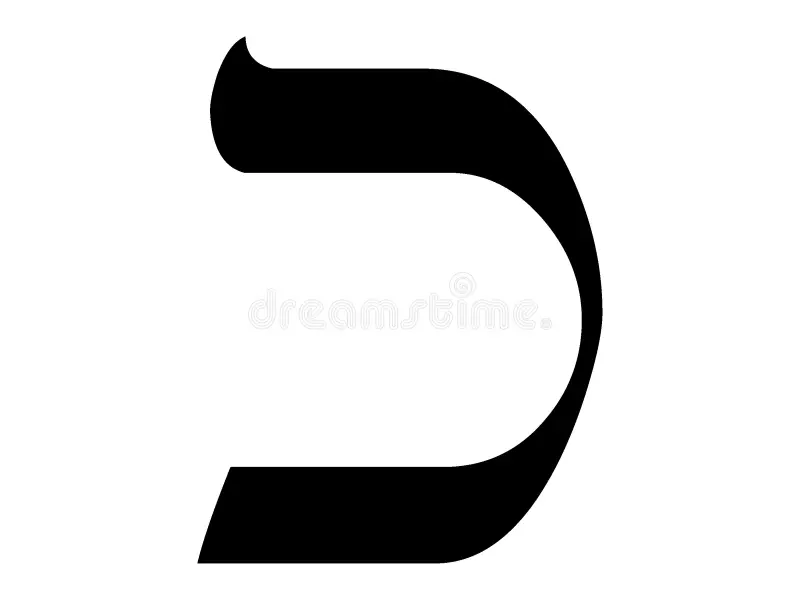
Khaf, the 11th letter of the Hebrew Alphabet, means literally “the cupped palm of the hand”. It is the central letter of the alphabet and thus a mid-point. It is like a cupped, outstretched palm, ready to receive or to take(?). The shape of all containers – a bowl, a cup, a jar, is based on a basic curved shape resembling the curved shape that is the circumference of the sphere that is the creation itself, and Khaf, like the Beth, represents the idea of a container. It is the container in the realm of Yetzirah or Formation. This is its relation to the Mem/Alef crossover path from Chesed to Gevurah and the downward/upward path from Binah to Gevurah. It represents form and it is connected to the other letters of Hebrew alphabet that relate to “container” shapes and are double letters, which suggests that they are capable of the upward or downward motions that are the gyres within the sphere. A house, for example, is a form that contains the goings on of the people inside it; a body is a form which contains the life and energy of the person who possesses it. The forms of the physical world are where the spiritual essence of life is able to manifest, but how they will manifest depends on how the world is understood and seen. This is the significance of the letters Resh and Ayin and how they come to name the letter Khaf and its relation to the ‘firmament’ in Hebrew.
The Khaf is what gives form to the matter; it is an “imaginative” power. Here, imagination must not be confused with ‘fantasy’. It is quite the opposite. It is related to tools and equipment, that which will be used to ‘form’ and ‘shape’ the desired outcome. This giving of form is an external force outside of the thing that is being shaped. It is the force urged by the thymoeidic part of the soul mentioned earlier. It is not the Understanding that is Binah and its giving form to the unlimited realm of Chokmah that is in the world of Beriyah, but is the secondary element of formation found in the world of Yetzirah, the world of “making”, and this is why it is linked from Hod to Gevurah or from Gevurah to Hod. Kaf contains all the possibilities of containing, building, and forming all existence. It is what we refer to as the ‘applied sciences’, with the science being the eidetic power of numbers and words of the logos . It is AB of the Divided Line of Plato outlined in Bk VI of his Republic.
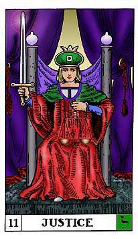
This containing, building, and forming is related to the world experienced as the ready-to-hand, and the emphasis on handling things in order to transform them i.e., the realm of Yetzirah. Kaf is the letter of formation, bending the straight line into a curved shape. This is its association with making things “fit”, “suitable” and it is thus related to Hod and to the Justice card of the Tarot. It also symbolizes the crown of the Torah – Keter כתר (I think this would be better understood as related to the Kingdom of Malkhut? Or is it, as a double, to be viewed as both and thus to be seen as a bridge between the different worlds?)
Khaf is related to will and to will to power. It teaches us that to bend and govern our tendencies or urges, and to shape our character, we must be flexible in the currents of time. It teaches us moulding, sorting, comparing. We bend the matter to the ‘spirit’ and the ‘spirit’ to the matter, constantly connecting the thought of the desired outcome with the action and doing of it. The Khaf also teaches us about what we contain inside ourselves and since it is a double letter, what we contain may be hidden in darkness or dwell in the light.
The letter Kaph derives from “and Elohim saw that it was good” (the two lights in the firmament) 1:18. The Hebrew word for “firmament” is composed of the letters Resh, Khaf, and Ayin and indicates “that which can be seen”, the physical, material thing. This relates Khaf to Path #20 The Intelligence of the Will and to the ‘structure of all that is formed’. Resh means “head”, both as a part of the body and as a leader of a group, and this directs us to the Tarot card of Judgement #20 and to the choice and test that must be experienced at this stage along the journey. Khaf as a container letter holds within it the contents of that knowledge which have become known as ‘historical’ and ‘holy’.
The Letter Ayin and the 20th Path: Intelligence of the Will
Ayin– and Elohim “divided the light from the darkness.” 1:4
Path 20: Tiferet to Gevurah: Intelligence of Will (Consciousness) (Sekhel HaRatzon): It is called this because it is the structure of all that is formed. Through this state of intelligence (consciousness) one can know the essence of Original Wisdom.
The Twentieth Path is the Intelligence of Will, and is so called because it is the means of preparation of all and each created being, and by this intelligence the existence of the Primordial Wisdom becomes known.
Alt. Trans. “The twentieth path is called the consciousness of will because it is the pattern of all that is formed. By this mode of consciousness, one may know the actuality of the primordial wisdom.”
Path 20. Intelligence of Will (Consciousness) (Sekhel HaRatzon): It is called this because it is the structure of all that is formed. Through this state of intelligence (consciousness) one can know the essence of Original Wisdom.
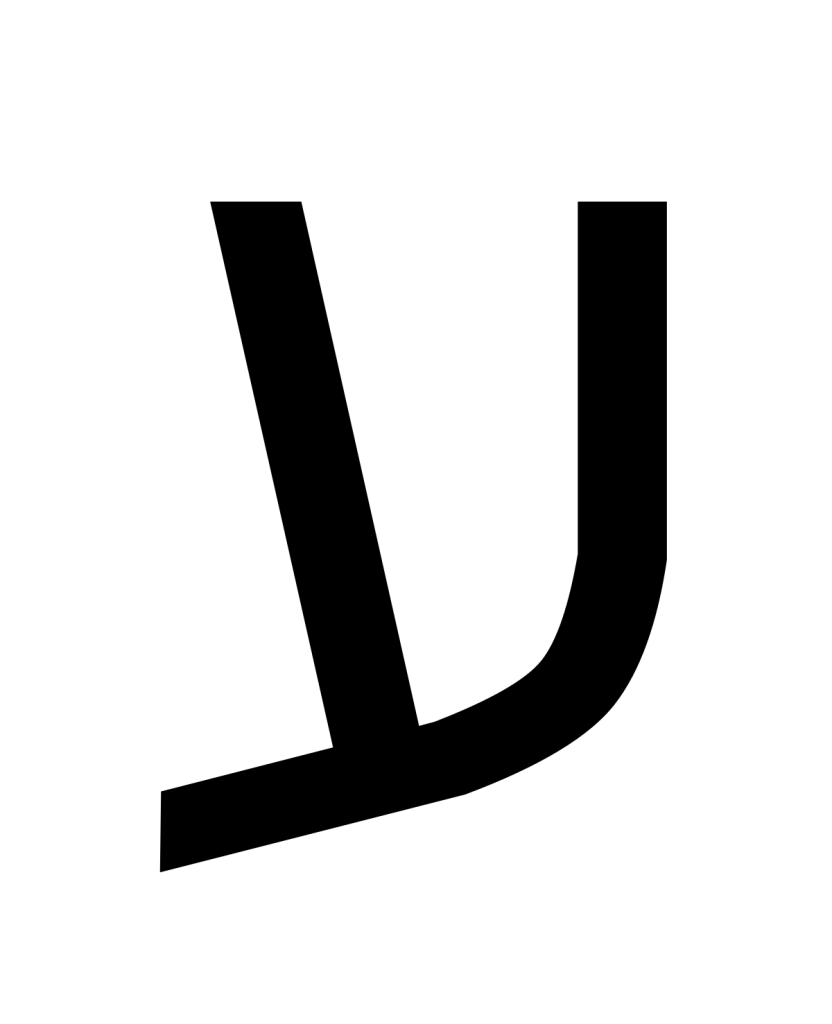
“The structure of all that is formed” is the Law of Necessity and it is through the understanding of the Law of Necessity that one is able to know “the essence of Original Wisdom” or the Sephirot Chakmah. The Seven Pillars of Wisdom correspond to the seven lower Sephirot and each of the themes of the individual Sephirot comprise the area of knowledge that makes up a particular “pillar of Wisdom”.
Our attempts to understand “all that is formed” comprise our ‘theories of the real’, what we call our sciences, how we attempt to view our world. Our Sciences are products of reason and the will, thought and experiment. As was said earlier, Artificial Intelligence is a shadow of the shadows of the things of Necessity. In Plato’s Allegory of the Cave, it would be a second cave and a further distance, at a greater depth, from the light of the Sun, the Good. Its greatest danger is that it is self-contained, and in its appearance of enlarging, it is , in fact, an enclosing of the world within its own sphere, its own ‘bubble’.
The letter Ayin is erroneously said to have the power to unite everything that is separated in creation and this is why it is confused with the structure of the letter Alef which consists of two Yods separated by a Vav. The letter Ayin as the 20th path is related to the letter Peh and path 13 The Unity Directing Intelligence and the letter Vav Path 17 The Intelligence of the Senses.

But is Vav really a true unifier or a barrier, a separator? Literally Vav means “hook” or “peg” and the Hebrew letter is a vertical line ו. The Vav would appear to be a metaphor of the mediation that exists between reason, the logos understood as an extension of the will to power, and the ready-to-hand world about us. The world is seen as the second Cave of the Internet containing the whole and the Vav is that reasoning that unites the things in that Cave to the algorithm based on the principle of reason. This reasoning is tied together with The Sanctifying Intelligence, the intelligence that separates (diaresis), and The Unity Directing Intelligence (dianoia) the intelligence that brings into a unity, that emanates from the Sephirot Binah. This is the Intelligence that is separated from Love.
The Vav is said to represent the Kav, the vertical line extension of the Creator’s perfection into the created world, in order to constantly direct it, guiding the cycle of existence step by step, until eventually the perfect Oneness of the Creator which underlies all of creation is revealed. Vav would thus relate to the Law of Necessity, the Divine Will, ‘the structure of all that is formed’. The Vav would thus be seen as a barrier but also as a way through. Vav is related to the Orr Yashar, the direct light of the Creator, entering the world but in the strife of this world, it appears to act as a barrier to the true Light. This would relate it to Christ who is the direct light of the Divine and would thus associate Vav with Tiferet, the sixth Sephirot and the Beauty of the World. But Vav, being an elemental letter, is capable of only one direction of movement. Is this movement up or down? Is it on the left side or the right side of the Tree of Life? Or is it the line in the middle?
Most commentaries on “The 32 Paths of Wisdom” seem to ignore the discoveries of quantum physics when they discuss the roles that human beings play in relation to Being and the World. Because science no longer deals with what was understood traditionally as Nature, the human will prepares each thing of Nature for the perfection that will come from the ends or purposes that human beings determine or devise that are best for themselves. This is what we call “freedom”, the devising of ends which we think are best for ourselves. We believe in this freedom because we believe that, ultimately, we are ‘our own’ as individuals. We have succumbed to the third temptation of Christ. Freedom is the commandeering and dominating knowing and making that we understand as technology. This dominating knowing and making includes our own bodies. It is also what we understand as ‘artificial intelligence’. What is clear from the Sefer Yetzirah and the traditional religions of the world, both West and East, is that we are not our own but are called to a higher destiny beyond ourselves; however, in our viewing and understanding of our world, we choose the destiny or fate that will befall us. The narratives that we have constructed of our worlds are predicates of the subject technology.
In the world of the will and of will to power, there are some cases where there are created beings that serve no purpose or ends for the will to power of some human beings; that is, they have no “purpose” or future “use” and cannot be brought into being as part of a “standing reserve” of resources, and to these beings no “justice”, no completion nor perfection is due, and that includes some other human beings. This is what has made, and will make in the future, the possibility of genocides.
The Twentieth Path is contrary to this type of thinking, if it is viewed as a duality. The “preparation of all and each created being”, “the pattern of all that is formed”, may be best understood in the German word gestell as it is used by the German philosopher Martin Heidegger. A Gestell is a framework or “method of organization” which allows created things to be and to come to presence for us. It is the primordial algorithm. Heidegger calls it the essence of technology. It is a manner of human being-in-the-world (among other possibilities of human being although it is, by far, the dominant one) and it determines how the created beings are to be viewed. It is a ‘destiny’, a ‘fate’ of Being. While in German Gestell is a noun, Heidegger uses the word in a way that is uncommon by giving Gestell an active role, by viewing gestell as a product of the human will and a product of human action, a human “projection”, “a throwing forth”. This projective throwing forth is rooted in the principle of reason.
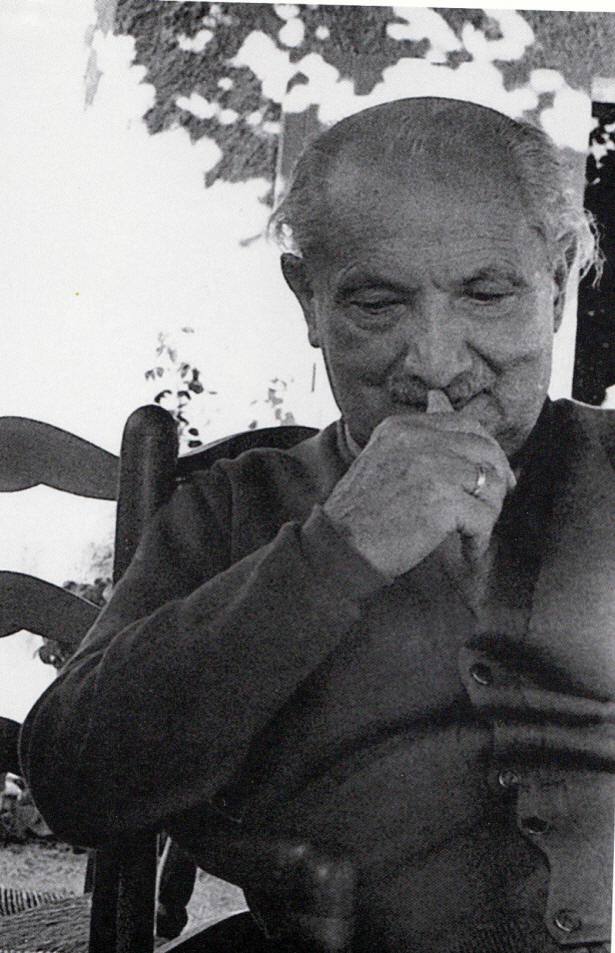
In defining the essence of technology as Gestell, Heidegger indicates that all that has come to presence in the world has been “enframed”. Such enframing or the placing within ‘enclosures’ relates to the manner reality appears or unveils itself in the period of modern technology (by “modern” here is meant post-Renaissance) and people born into this “mode of ordering” are always embedded into the Gestell (enframing) themselves. (As the Canadian philosopher, George Grant said, “What we have done to Nature, we first had to do to our own bodies”.) Thus, what is revealed in the world, what has shown itself as itself (the truth of itself) requires first an Enframing, literally a way to exist or to be in the world, to be able to be seen and understood. Path #20 indicates this knowledge when viewed from one perspective.
In ordinary usage the word gestell would signify simply a display apparatus of some sort, like a book rack, or picture frame; but for Heidegger, Gestell is literally the challenging forth, or performative (dynamis) “gathering together” for the purpose of revealing or presentation i.e., the human will as central to how the world will be unveiled. If applied to science and modern technology, “standing reserve” is active in the case of a river once it generates electricity or the earth if revealed as a coal-mining district, the soil as a mineral deposit, or scenic sites as part of the tourism industry. It is this challenging forth that connects gestell to the human will. It is ‘the hook’ or ‘peg’ that is part of the meaning of the letter Vav which is related to the letter Ayin.
Another way of viewing the 20th path is to see it as “prudence” or the
Strength card as #11 of the Tarot. The essence of technology as outlined by
Heidegger devolves into the nihilism of the pure “will to will”, the need to
will anything since one has no other alternative given the oblivion of
eternity. The desire is for ‘novelty’. The technological way of being-in-the-world is a mirror or mimicking of the “primordial wisdom” that is in the realm of the world of Atzilut since it bestows the ‘values’ on things and these values are related to their
potential uses. This may be seen in the manner of questioning of the thing and how that question will be answered.
The Hebrew letter Ayin means “eye” and correspondingly, the Ayin has to do with vision and bringing forth the light that is hidden, the unveiling or revealing of truth. The Greek philosopher Aristotle begins his Metaphysics with the words: “All men naturally desire to see” for it is through “seeing” that we come to experience the things of the world and to gain knowledge of them. The letter Ayin in Hebrew relates to time and is related to the planet Saturn. It is the 16th letter of the Hebrew alphabet and thus is central to the whole of the 32 paths of wisdom: 16 X 2.
Since time begins with Binah in the Beriyah world of the Sephirot (the third stage in the moment of creation), we can therefore relate Ayin to the left side of the Tree of Life. The strong relationship of the letter with time suggests its relationship to The Tower #16 card of the Tarot (change, revolution) and also with the letter Peh (mouth), and this suggests the interchangeability between The Devil and The Tower (which I have suggested). Ayin is included in a great number of words associated with time in Hebrew (עת – time, שעה – hours, עתיד – future, עבר – past, רגע – moment, עוד – until, עד – eternity) and vision. It indicates the inextricable link between our Being and Time.
The structure of the letter appears to suggest that it is composed of three other letters: Zayin (manacle or sword), Lamed (the study of that which presences), and Yod (the ego, the self, the point). One can perceive that the letter is suggestive of the anti-Logos. The Yod acts as a time indicator in the Hebrew language; the Lamed is associated with study as memory, the study of that which has been written down and has become ‘historical memory’; and Zayin as being manacled or enchained by the manner of seeing and to Time itself (although this could also be seen as the ‘liberating’ sword from the oppression of the ‘manacle’). This would suggest that what we call ‘historical knowledge’ is not a liberating knowledge, although it can be a ‘leading out’ (and we perceive it as such) but it is also a knowledge that manacles and enfolds those who see it as All within itself. As we have already stated, the principle of reason is founded upon will to power, and the current temptations to artificial intelligence are grounded here. The intelligence of the will is the intelligence of the principle of reason and its relation to will to power.
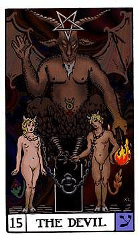
If prophecy is the ‘highest speech’ of the visionary who is able to see the past, present, and pre-dict the future, then the vision suggested by Ayin could be said to be the ‘false vision’ which gives voice to the ‘false discourse’ and the ‘false prophecy’. This false discourse and vision is best captured in The Tower #15 and The Devil #16 cards of the Tarot, and is revealed in the letter Peh of the Hebrew language. The Devil card itself is among the darkest of the Tarot, if not the darkest of the Tarot. The only light present is from the torch in the Beast’s left hand which ignites the tail of the male figure in the illustration; the torch is the passions that ignite the desire and the will. That this torch only touches the male figure suggests the patriarchal nature of what we call ‘historical knowledge’. The torch of The Devil is reminiscent of the fire in Plato’s allegory of the cave which occurs in Bk VII of that dialogue. The Great Beast that is the concrete manifestation of the social occurs in Bk. VI, and I would suggest that these are the Same as what is being shown here on The Tree of Life.
The suggestion is that the figures in the illustration, contrary to the figures in The Lovers illustration, are manacled by their bestiality and by the darkness in which they dwell. They are shown with cloven feet; they have become bestial. The Beast itself stands upon a black cube. This cube is different from the cubes that The High Priestess, The Charioteer, and The Emperor sit upon, and these figures are on the right-hand side of the Tree of Life. On the Beast’s lower abdomen are symbols suggesting that it is the anti-Christ. On its beard is the letter Zayin suggesting its enchainment to Time and to the pleasures and goods that are the products of Time.
Some Hebrew commentators suggest that the pronunciation of the Ayin is also very significant – it is often mispronounced as a silent letter similar to the Aleph; however, Ayin’s correct sound is a guttural throat sound which stimulates the thyroid gland. This mispronunciation also suggests the ‘false discourse’ which gives Ayin the sense of being Aleph, but to think that Ayin is Alef is an error.
Ayin implores us to open our eyes, to see beyond the physical, but in order to do this we require grace. The Ayin requires an other to take us from the dark to the light. The Ayin is ‘the dark boar of the forest’ and the ‘snake’ that hides there from the centre of the Psalms, similar to the beast that dwells at the centre of the labyrinth that is symbolic of the sub-conscious self (Path #7 The Hidden Intelligence). Part of Ayin is the letter Lamed which is the serpent uncoiled and this serpent is the knowledge of which Ayin is composed. The gematria of Ayin is 70 suggesting that the strife associated with the attempt to see properly is associated with Netzach and with The Chariot #7 card of the Tarot.
| Card | Path | Letter | Meaning | Symbol |
| The Hierophant | Path 5. Rooted Intelligence (Consciousness) (Sekhel Nishrash): It is called this because it is the essence of the homogeneous Unity. It is unified in the essence of Understanding, which emanates from the domain of the Original Wisdom. | The ersatz form of unity, seeing unity as a collective. The true unity is not a ‘homogeneous’ unity but a unity of friendship brought about by a mediatory relation. | The combination of Binah, Chokmah, and Gevurah influences. The Church. The universal homogeneous state, the enclosure that is Artificial Intelligence. | |
| Gevurah (Severity)/ Binah (Understanding) Path 13: The Unity Directing Intelligence (Consciousness) (Sekhel Manhig HaAchdut): “It is called this because it is the essence of the Glory. It represents the completion of the true essence of the unified spiritual beings.” | Peh ף or פ | The mouth, the desire to consume and to possess. The rhetoric which responds to the appetites, the passions. The will and the will to power. | Can have a Shin or a Yod contained inside of it. If a Shin then we are referring to the individual soul. If a Yod, then we are looking at the individual enclosed within the collective. | |
| Gevurah (Severity)/ Chesed (Mercy) Path 19. Intelligence of the Mystery of all Spiritual Activities (Consciousness) (Sekhel Sod HaPaulot HaRushniot Kulam): It is called this because of the influx that permeates it from the Highest Blessing and the Supreme Glory. | Shin/Alef ש א Peh ף or פ | Goad, prod, Staff (Aaron’s rod?) | Prod, tongue (Rhetoric? The changing of one’s world view through the persuasion of rhetoric) The letter seems to be in the shape of a snake?? “Snake” is the letter Tet ט | |
| 8. Justice | Gevurah (Severity)/ Hod (Splendour) 24. Apparative (Tools) Intelligence (Consciousness) (Sekhel Dimyoni) (Sometimes called The Imaginative Intelligence): It is called this because it provides an appearance for all created apparitions, in a form fitting their stature. | Khaf כ | The open hand That which is ready to receive and take that which is offered. To take possession of something and have control over it. The making of the world of technology. | The world perceived and understood as the ready-to-hand. Everything has a ‘use’; if it does not, then it can be destroyed. |
| 15: The Devil | Tiferet (Beauty)/ Gevurah (Severity) Path 20. Intelligence of Will (Consciousness) (Sekhel HaRatzon): It is called this because it is the structure of all that is formed. Through this state of intelligence (consciousness) one can know the essence of Original Wisdom. | Ayin ע | Two possible views: the structure of all that is formed can be either the Law of Necessity (the Divine Will) or the principle of reason which determines the being of all that is formed from out of it. The essence of ‘original wisdom’ is the principle of reason becoming a principle of being. | Eye. Corresponds to the manner and being of how things are brought into view. The human imposition of a structure or frame upon the beings that come into being in the world. The “Eye of Sauron” that ultimately strives to enclose the world in darkness. |

 Theory of Knowledge: An Alternative Approach