
The Emanations to and from Malkhut

Path 10. Scintillating Intelligence (Consciousness) (Sekhel MitNotzetz): It is called this because it elevates itself and sits on the throne of Understanding. It shines with the radiance of all the luminaries and it bestows an influx of increase to the Prince of Face(s).
The Tenth Path is the Resplendent Intelligence, because it is exalted above every head, and sits on the throne of BINAH (the Intelligence spoken of in the Third Path). It illuminates the splendor of all lights, and causes a supply of influence to emanate from the Prince of Countenances.
Alt. Trans. “The tenth path is called the resplendent consciousness because it is exalted above every head and sits on the throne of Binah. It is illuminated with the splendour of all the lights and it causes an influence to flow forth from the Prince of Countenances.”
Wescott trans. The Tenth Path is the Resplendent Intelligence, because it is exalted above every head, and sits on the throne of Binah (the Intelligence spoken of in the Third Path). It illuminates the splendour of all the lights, and causes an influence to emanate from the Prince of Countenances (Metatron, the Intelligence of the First Sephira, and the reputed guide of Moses.)
Case trans. The tenth path (the tenth Sephirah, Malkhut) is called the Resplendent intelligence and is so because it is exalted above every head. and sits on the throne of Binah. It illuminates the splendour of all the lights, and causes the flowing forth of influence from the Prince of Countenances.
Genesis 1.10 And Elohim called the dry land Earth, and the gathering together of the waters called He Seas; and Elohim saw that it was good.
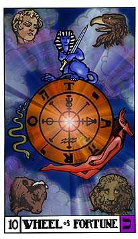
The Tenth and Eleventh paths must be held together and viewed simultaneously for they represent both the presence and absence of the Good that human beings experience in their being. As the Eight path of Hod deals with “artistic consciousness” and the making of things from something else and bringing those things to completion, the Ninth path, Yesod, deals with “scientific consciousness” or “theoretical consciousness”, the principle of reason, the foundation of the design or plan, the “knowing” that allows the things to be brought forth into their truth. The Tenth path deals with the whole of our knowledge and understanding of the created world and combines both the influences of Hod and Yesod with the Sephirot of Malkhut. Malkhut and the tenth path are both an end and a beginning. Malkhut is referred to as ‘Kingdom’.
The “Prince of Countenances”, the Ain Sof, the Sephirot Tiferet (Metatron, an archangel who was reputed to be the guide of Moses in some commentaries) is the “beauty of the world” given to us in its outward appearance, its “countenance”, its “look”, and it is this beauty, this light, “which illuminates all lights” that are present in the “truths” that we discover of our world when we understand the essence of the Sephirot. Truth is One. This brings about the “supply of influence” or Love that emanates from the “Prince of Countenances” which illuminates all things through their beauty. He is Eros. When we refer to the beauty of things, we are not speaking of ‘aesthetics’, for aesthetics refers to objects and the objectification of things and to their viewing as objects. This is a sterile viewing. The experience of the beauty of the world is an erotic experience, for from it we experience the need and the longing for that which we lack which is the perfection with our union with the One.
Malkhut is the root of the central pillar of the Tree of Life and receives the light of Keter through the logos or letter of the Alef as it passes through the Beauty (Tiferet) and Foundation (Yesod) of the created worlds of Beriyah, Yetzirah, and Asiyah. Malkhut is the only Sephirot not directly connected to Tiferet in some way. Nevertheless, it is indirectly connected. This indirect connection is through the ‘reflected light’ of the Moon that derives from the Sun.
Malkhut may be said to stand at or rest upon the boundary or as the boundary between the enumerated worlds of time and space, the throne of Binah (Beriyah, Yetzirah, and Asiyah), and the world prior to, or more primordial than these three, called Atzilut which is composed of Keter, Chalkmah and Binah. Chesed is that world that can be understood through numbers, the sequential world of cause and effect, past, present and future when we are viewing the creation side of the Tree of Life. Chesed and Gevurah represent the two poles that separate the contraries i.e. unity (identity) and difference, absence and presence, deprivation and fulfillment, in fact all ten of the contraries that the Pythagoreans are said to uphold as the nature of the things that are.
The Unity that is present in and is the essence of all things can be understood as the ‘friendship’ between God and His creation. This ‘friendship’ is experienced in the Now of Time, in every waking moment of one’s life. The distance separating God from His creation can be understood as cases of deprivation. They are indicative of the concealment of Truth. There are no true opposites, only cases of deprivation (time) and distance (space). In God’s withdrawal from Creation allowing it to be, the process of creation appears as an “expansion” of ever-widening gyres, and ever-widening expansion of space allowing the place for physical things to come into being. This illusion of “expansion” is mirrored in the narrowing of the gyres in the decreation that brings one closer to the Divine and whose journey is upward on the Tree of Life. Both of these processes occur simultaneously in the NOW.
The decreation of the self, which is a journey of de-gyring down to essence of the Divine, is shown in the principle of self-effacement or humility. It is done through the purification of the fire of Shin. God gives being to us in order that we should give it back to Him. If we compare it to fairy tales, it is like those points in the stories where the characters are tested, initiated, and baptized (Path #25 The Intelligence of Trials) where the acceptance of the gift given is bad or fatal. The character must experience a “death” of some kind and be reborn into a new self. These are referred to as “conversion” and “baptism”. (“Now there was a man of the Pharisees named Nicodemus, a ruler of the Jews. 2 This man came to Jesus by night and said to him, “Rabbi, we know that you are a teacher come from God, for no one can do these signs that you do unless God is with him.” 3 Jesus answered him, “Truly, truly, I say to you, unless one is born again he cannot see the kingdom of God.” 4 Nicodemus said to him, “How can a man be born when he is old? Can he enter a second time into his mother’s womb and be born?” 5 Jesus answered, “Truly, truly, I say to you, unless one is born of water and the Spirit, he cannot enter the kingdom of God. 6 That which is born of the flesh is flesh, and that which is born of the Spirit is spirit. 7 Do not marvel that I said to you, ‘You must be born again.’ 8 The wind blows where it wishes, and you hear its sound, but you do not know where it comes from or where it goes. So it is with everyone who is born of the Spirit.” John 3: 1-8)
The virtue of humility is present in our refusal to accept the gift offered (see the George Herbert poem “Love” spoken about in Chapter Nine). It is captured in the Spanish proverb or saying: “Take what you want (the gift) said God; take it and pay for it”. God allows us to exist outside of Himself and it is for us to make the decision not to do so. This is part of the reason why The Fool #0 is represented along with The Wheel of Fortune #10. The Fool is an indicator of the journey both upward and downward. Humility is the refusal to exist outside of God, and this is why it is among the highest of the virtues. Humility is represented in those letters which can be reshaped into something else; Love can only penetrate where it is ‘soft’ as our myths and fairy tales tell us (Apollodorus in Symposium is described as a ‘softy’). The Fool’s choice is to become The Magician #1 (Will) or the Strength #11 (Love). In choosing to become The Magician #1, the Fool #0 chooses will to power; in choosing to become Strength #11, The Fool chooses mercy and kindness. Both are possible responses to the world.

“The throne of Binah” is the root or foundation of the “sanctifying intelligence” which is the foundation of faith. From this we may understand Simone Weil’s remark: “Faith is the experience that the intelligence is illuminated by Love.” Since science is not able to “measure and weigh” beauty with any precision or exactitude, it removes any concept of beauty or love from its understanding of things and turns things into “objects”. The ‘measuring and weighing’ of things is at the heart of the principle of reason, and the principle of reason is at the heart of power and of will to power.
It is not possible to love an object. When we turn things into objects, Beauty then becomes “in the eye of the beholder”, something subjective; love becomes “blind”, not what it is in fact in its truth: a way of being and of seeing in the world. The removal of our response to the beauty of the outward countenance of things, or rather, the making of this response “subjective”, has resulted in the oblivion of eternity, the loss of the “holy” or sacred, the death of God, and the resulting loss of faith for many human beings. In the justice of our desire for mass learning, mass meaninglessness has been the result. What we have in its place is the sterility of the sciences, the nihilism of the will to will for its own sake (what we call “novelty”), and the devastation that is the wasteland that continues to grow and expand. But for all this, it remains a matter of choice in how one views the world as it is given to us. Beauty is not the enemy of rationality as that rationality is conceived to be in the modern, but is the foundation of that rationality that is our understanding and knowledge of the things that are. That foundation is the Law of Necessity from whence the principle of reason arises. This paradoxical relationship of Necessity and Beauty is the great mystery of Life.
Another name for Malkhut #10 is “The Bride”. This is to indicate that Malkhut includes the human body through the influence of Yesod. Christ says: “I am the Bridegroom and you are the Bride”, and the Bible speaks of “the bride of the Lamb”. Individual religious sects have interpreted this to refer to themselves exclusively i.e., that they are the “chosen ones”, they themselves and only themselves are “the bride of the Lamb” who will be united with the Redeemer and fulfil His covenant. In the Sefer Yetzirah, it is the whole of creation that is the Bride of Christ, including Jerusalem and Israel (although, of course, the Sefer Yetzirah does not refer to the Messiah or Christ directly since it was written before the birth of Christ). The original Sefer Yetzirah as well as the geometry of the Pythagoreans were intimations of Christianity prior to the birth of Christ historically. Christ’s historical birth is but one of many Incarnations of the Divine in history since the Divine is the parousia in the NOW. How these Incarnations have been ‘clothed’ is that which calls for understanding from all human beings.
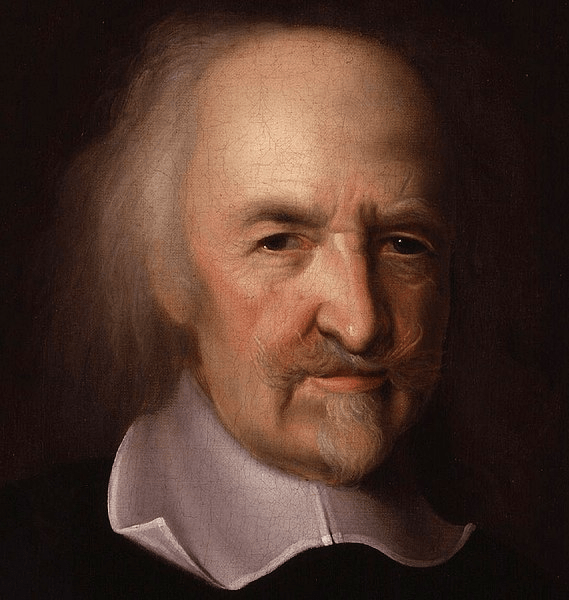
The other face of Malkhut is Leviathan or the beast dwelling in the depths of the seas. As an “embodied soul”, human beings dwell within “the belly of the beast”, and it is through our understanding and knowledge (Binah) that we can extricate ourselves from the beast. But whether or not this extrication occurs is up to the grace of God. The Renaissance English philosopher Thomas Hobbes’ book Leviathan is appropriately titled since it deals with the materiality of the Kingdom of Malkhut; and Hobbes, being an atheist, relies on “laws with teeth in them” (the offspring of Shin) to deal with what he perceives to be the reality of the human condition, that human life is “nasty, brutish and short”.
It is appropriate that the path from Hod to Malkhut, and Malkhut to Hod should have “teeth” as its symbol and The Fool #0 and The Magician #1 as its Tarot cards. The letter Shin means “teeth”, and it is the grinding of teeth that is symbolic of the decreation of the material world necessary to making progress on the upward path of the Tree of Life. Shin is also the goad or prod that urges human beings on their journey to seek their perfection which is their completion. The deprivation of this perfection is the letter Qof which indicates a submission to the bestiality of our human being and the need to choose that which is higher in us.

There are a number of similarities between the Wheel of Fortune card and The World card #21 in the Tarot. The World is signified by the letter Tav ת which means ‘good’; some commentaries have ‘torah’ as its meaning since they understand the Torah as the good. Tav is the last letter of the alphabet and is its completion. The whole is indicated as ‘good’. In The World card, The Wheel has been replaced by a wreath of laurel (?) leaves which signifies victory. The leaves are bound together by three ouroboros. There is a singular ouroboros at the top and two at the bottom. The single ouroboros is the boundary of the realm of Atzilut while the double represent the boundaries of Beriyah and Yetzirah.
The female figure in the centre holds two wands in her hands indicating that she holds both the directions of the life-force in balance, the creative and decreative aspects, the ‘buffets’ and ‘rewards’ of Fortune spoken of earlier, the movements upwards and downwards on the Tree of Life. She has a banner of purple, representing ‘majesty’ or ‘kingship’, moving in the TARO direction (from The Wheel of Fortune) indicating that she has mastery over the influences of the heart, body, mind and soul. The illustrator of the cards has chosen to include the four evangelists in this card as they are presented in The Wheel of Fortune. These are not necessary for the figure herself has achieved the position of being both in Time and out of Time simultaneously and she is capable of the gift of prophecy herself. It is interesting to note that the last letter of torah is Heh meaning ‘jubilation’, while the last letter of tarot is Tav meaning ‘good’. Both indicate a joy in the completion of the journey and both are possible ways of completing the journey.
The Letter Tav and the 30th Path: The General Universal Collective Intelligence
Path 30: Yesod to Malkhut/ Malkhut to Yesod
The Thirtieth Path is the Collecting Intelligence, and is so called because Astrologers deduce from it the judgment of the Stars, and of the celestial signs, and the perfections of their science, according to the rules of their revolutions.
(Alt. Trans.) “The thirtieth path is called the universal consciousness because through it, masters of the heavens derive their judgments of the stars and constellations, and perfect their knowledge of the celestial cycles.”
Path 30. General Intelligence (Consciousness) (Sekhel Kelali): It is called this because it is the means by which the astrologers collect their rules regarding the stars and the constellations, forming the theory that comprises their knowledge of the Ophan-wheels of the spheres.
The Thirtieth Path is associated with the letter Resh in the Western Tree of Case, and the Sephirot Malkhut #10 in the Hebrew Tree. In the W.T., it joins the Sephirot Hod to Yesod, or that which links the Tarot of Justice (historical study) to that of the Hermit, the Foundation, which is the root of the knowledge of that study.
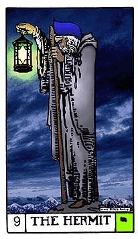
The Law of Necessity rules the realms of Time and Space, and the principle of reason is a result of the Law of Necessity. The path of General Intelligence deals with Space and Time as pre-requisites for the possibility of the things that are. The things that are do not exist outside of these realms, and so Space and Time are the “foundation” (Yesod) for the things that are. Yesod represents Path #9, Pure Intelligence which we have equated with the theoretical viewing of the sciences based as it is on the principle of reason. The Sephirot of The Hermit deals with calculations and reckonings of the movement of the spheres; and from these, predictions can be made, ‘prophesies’ if you like. In the calculation and reckoning, the astrologers, “the masters of the heavens”, are capable of having foreknowledge of the outcomes of things, both in the world at large and within the individual. The Hermit dwells within a dark, sterile world and his knowledge places him “on top” of that world for he can commandeer and manipulate the contents of that world. It corresponds to the study of Physics.
The Law of Necessity is the harsh Justice of the left-hand side of the Tree of Life; it is a Justice without Mercy, and knowledge of it is knowledge without Love or Beauty. Thus, we have the darkness, solitude and coldness represented by The Hermit #9 card. It is apt that the “new human being” created from such knowledge is a golem or “zombie”, for this it the ultimate result of this knowledge when it is not accompanied by the spiritual elements that are love and beauty.
Malkhut deals with the physical, material universe, Asiyah. Here, the world is conceived of as a combination of elemental forces capable of being grasped through calculation. It is the world of objectness and of cause and effect. It is world as text prior to the word, a world of numerical calculations. As Case points out, it is ruled by both Mercury and the Moon, calculation and illusion.
The 30th path deals with astrological knowledge or knowledge of space and time, cause and effect, what we today would call physics. The astrologers or Magi, through their calculations based on the geometry that supplies the division of the sphere into 12 “houses” and the movements of the seven visible planets through those houses, derive pre-dictive knowledge of human beings and beings. Their knowledge is inductive: moving from the particular to the universal. As predictive knowledge, it is the forerunner of what is now called science. Their knowledge is based on a ‘cosmic theology’ through their understanding of the divine circular motions of the luminaries of the heavens.
The mind is perceived as a “secondary organ”, not the ego cogito of Descartes, the supreme subjectum, but the combination of Fire, Water, Air to bring about Earth; the combination of mind and spirit embodied. Fire and Air embodied in Water produces Earth. The “dust” of the Earth was originally conceived as snow in the Sefer Yetzirah. Humas, the root of “humanity”, “human being”, relates to the creation of human beings. Historically, the search for the formula to invent a golem was founded in the various letters and incantations that were made by those who wished to do so. The golem is a being deprived of a soul and also deprived of language. Is the forgetfulness of language a foretelling of how human beings will become golems in a possible future?
Tav derives from “and Elohim saw every thing that He had made, and, behold, it was very good.” 1:31
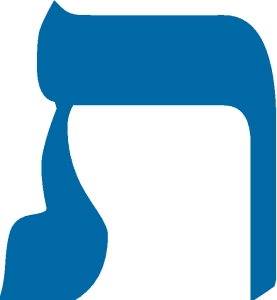
ת Tav is the last letter of the Hebrew Alphabet. Meaning “mark”, “sign”, “omen”, or “seal”, it is the symbol of truth, perfection, and completion. It represents the restoration Tikkun תיקון of all of existence. It is a return to the essence and purpose of one’s life. It represents completion, before beginning again with the original Oneness of the Aleph. Few human beings achieve this goal.
The Tav shows us that the end was set from the beginning, as Tav is the final letter of בראשית Beresheet, “In the Beginning”, the first word of the Torah/Bible. It is the idea that the Creator set in motion all of existence in order to reach a final state of perfection, the fulfillment of all of creation. It is also the completion of Truth אמת Emet.
However, as soon as the Tav is reached, we begin again immediately by going back to the Aleph, the one source of everything. Or in the Tarot, we move from The World #21 to The Fool #0. The end is never really the end, but the beginning of something new.
Tav represents the restoration Tikkun תיקון of all of existence and that is why it is associated with the path of Continuous Intelligence #31 and signifies both an end and a beginning. In the journey up the Tree of Life, it is a return to the essence and purpose of one’s life which is the restoration of the soul to the Divine. The Tav represents completion of the Creation cycle, before beginning again with the original Oneness of the Aleph and beginning the process of Decreation which is primarily the work of Shin. The design of Tav contains both Dalet and Nun, both suggesting endings, beginnings, and transformations. Dalet means either ‘riches’ or ‘poverty’, while Nun relates to ‘deceit’, death, transformation.
The idea that the Creator set in motion all of existence in order that it reach a final state of perfection, the fulfillment of all of creation which will be its cessation brings about the great contradiction of the Sefer Yetzirah. The Tav as the completion of Truth אמת Emet, or the Truth revealed is something to be experienced in the NOW. The Creation is viewed as an evolutionary progress towards perfection rather than being the image of that perfection itself i.e., the ‘moving image of eternity’.
The 32nd path, along with the 30th and 31st paths are the outline or nexus of the realm of Necessity. All created things must “serve” the law of Necessity whether it be seen as the force of gravity or those forces which operate within the realm of social interactions. The Law of Necessity is the Divine Will. The 32nd path is also a warning to those who are unable to distinguish between the Necessary and the Good because those who are unable to do so usually worship power.
The Letter Qof and the 31st Path: The Continuous Perpetual Intelligence

Path 31: Netzach to Malkhut
The Thirty-first Path is the Perpetual Intelligence; and why is it so called? Because it regulates the motions of the Sun and Moon in their proper order, each in an orbit convenient for it.
Alt. Trans. “The thirty-first path is called the perpetual consciousness. Why is it called this? Because it directs the movements of the sun and moon according to their natural order, each in its proper orbit.”
31. Continuous Intelligence (Consciousness) (Sekhel Timidi): Why is it called this? Because it directs the path of the sun and moon according to their laws of nature, each one in its proper orbit.
The Thirty-first Path of Wisdom is represented by the letter Qof and connects Malkhut to Netzach, Kingdom to Victory, or Victory to Kingdom. It emphasizes the animality or the embodiment of the human spirit or soul. The Law of Necessity is that which is permanent or “perpetual” in the laws of Nature amidst the metabole or change that is apparent in the growth and movement of created beings. It is one of the key types of knowledge in the universe of Asiyah. Along with the “serving knowledge” of the 32nd path and the calculative thought and knowledge of the numbers of the principle of reason in the 30th path, it illustrates the manner in which the realm of Necessity is to be understood. In the Hebrew, it refers to “perpetual time”, and we are reminded of Plato’s statement that “Time is the moving image of eternity”. It also seems to indicate the sempiternal world of created things in the manner understood by Aristotle.
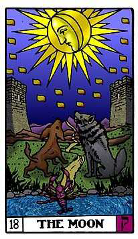
It is Time which directs the movements of sun and moon and gives to us our solar and lunar calendars. Time and Space are the ‘plan’ and components of Necessity and these determine the movements of the planets, the sun, and the moon. From this we may understand what Plato means when he says that “Time is the moving image of eternity”. As a ‘moving image’, Time is subject to change and this relates to its relationship with illusion and shadows. The Sun is the planet of Tiferet; the Moon is the heavenly body associated with Yesod. Here, the Justice of Necessity is seen through the Sun’s light i.e., the Beauty of the world. Qof translates as the ‘back of the head’, that which is hidden: in the Western tree, it connects Netzach to Malkhut. In the Hebrew tree, Qof is that world dominated by the reflected light of the moon and implies a will to power to transform the world in which human beings live. To see what is behind the back of the head requires a mirror.
ק The letter Khof (also spelled Kuf, or Qof) originally meant the back of the head, or the eye of a needle. Khof also means “monkey”. It is the symbol of both the sacred Kedushah קדושה, and the profane – the Klipah קליפה, the peel, cover, or husk which represents the negativities in the world. Khof has to do with the requirement of removing the husk of the superficial to reveal the holiness within. The human body is a “husk” that encircles the part of the divine that is the soul within.
In Hebrew, Khof means monkey, a creature which resembles a human but is purely animalistic, with none of the higher capacities of a human. This indicates the requirement for human beings to overcome their purely animalistic nature and to emulate the image of the Creator, to realize their true spiritual nature beyond just the physical. The Khof is the only letter which extends below the line of the other letters, indicating descent into the lower world, but also the ability to ascend from there. The human body is the ‘cross’ that we all must bear.
Kuf is also הקפה – “circle”, “go around”; and I believe it indicates the beginning of the gyring motion that is necessary for movement within the Tree of Life itself. Khof represents all the cycles of nature, changing seasons, monthly and yearly cycles. It is the constant movement, circulation, and change of life. It could also represent that through the cycles of life that we see – evolution, growth, change, suffering, happiness, life experience – we are constantly worked on in order to evolve and realize our true spiritual nature.
The letter Khof (also spelled Kaf, Kuf, or Qof) originally meant “the back of the head”, or “the eye of a needle”. (“Again I tell you, it is easier for a camel to go through the eye of a needle than for someone who is rich to enter the kingdom of God.” Matthew 19: 24) Khof also means “monkey”. It is said to represent “unholiness”. It is the symbol of both the sacred Kedushah קדושה, and the profane – the Klipah קליפה, the peel, cover, or husk which represents the outward presence of the things that emerge from the khôra, the ‘countenances’ of the outward appearances of things. Khof has to do with the requirement of removing the husk which hides the truth of that which lies within. The outward appearance is this husk.
In Hebrew, Khof means “monkey”, a creature which resembles a human but is purely animalistic, with none of the higher capacities of a human which are related to the logos i.e., language and number. In the Kabballah, this indicates the requirement for a human being to overcome their purely animalistic nature and to emulate the image of the Creator (the Logos) that is their true nature, to realize the true spiritual nature of their being an ‘embodied soul’. It is the essential strife of life. The Khof is the only letter which extends below the line of the other letters, indicating descent into the lower world, but also the ability to ascend from there. As such, it is related to the Sephirot Yesod (Foundation) and to the material world of Malkhut (Kingdom). The revealing of the true essence of what human beings are is in their wresting of truth from the husks of the world that hide it. When human beings cease to reveal truth, they succumb to their bestial, animal natures.
The design of the Kuf is similar to that of the Hei, the fifth letter of the Hebrew alphabet, but while the Hei is said to represent holiness and jubilation, the Kuf represents Klipah, or unholiness and despair. Both letters have three lines, two vertical and one horizontal. These three lines, depicting thought, speech, and action in the Hei, are also represented in the letter Kuf, but its three lines represent unholy thoughts, profane speech and evil actions. These negative qualities are illustrated within the actual form of the Kuf. Its long left leg plunges beneath the letter’s baseline. It represents one who ventures below the acceptable, an individual who violates the circumscribed boundaries of the laws of Necessity (primarily with regard to the social) and, thus, commits hubris for which an eventual nemesis must be paid.
It is also significant that the head of the Kuf is a Reish (in contrast with the Dalet that comprises the Hei). The difference between the Dalet and the Reish is the Yud in the right-hand corner of the Dalet, representing the individual while the Reish represents the collective . The Zohar, one of the principle sources for the medieval interpretations of the Sefer Yetzirah, calls the Kuf and the Reish the letters of falsehood and impurity. This associates the letter with The Moon #18 card of the Tarot. If the Reish represents the choice which has to be made regarding spiritual matters, then the Qof represents a false choice.
When Christ said that “It is easier for a camel to go through the eye of a needle than for someone who is rich to enter the kingdom of God” (Mark: 10:25), He is referring to the difficulty that arises when one forgets to remember that “For where your treasure is, there your heart will be also”, and this is dependent on how one sees the world which, in turn, determines how one will be in the world. Christ follows his statement on the heart with “The eye is the lamp of the body. If your eyes are good, your whole body will be full of light” (Matthew 6: 21-22). This would suggest a connection between Kuf and Ayin.
Kuf is also הקפה – circle, go around, cycle. Khof represents all the cycles of nature, changing seasons, monthly and yearly cycles. It is in the realm of Time. It is the constant movement, circulation, and change of life. Kuf represents the ‘buffets and rewards of Fortune’ which are to be received with equal thanks (as Hamlet says of Horatio in the play, and this represents Horatio’s ability to be ‘just’ and in so doing, his capability of being a ‘friend’). The Kuf could also represent that through the cycles of life that we see – evolution, growth, change, suffering, happiness, life experience – we are constantly worked on in order to evolve and realize our true spiritual nature, the grinding of the teeth that are represented by the letter Shin which decreates that which we are and the suffering that we undergo. The gematria of Kuf is 100 and this aligns it with The Fool, The Wheel of Fortune, and The Magician cards of the Tarot. Because Kuf is associated with beginnings and endings, it is also associated with the Death card. This death can be both spiritual and physical and is significant of the need for conversion, baptism and rebirth.
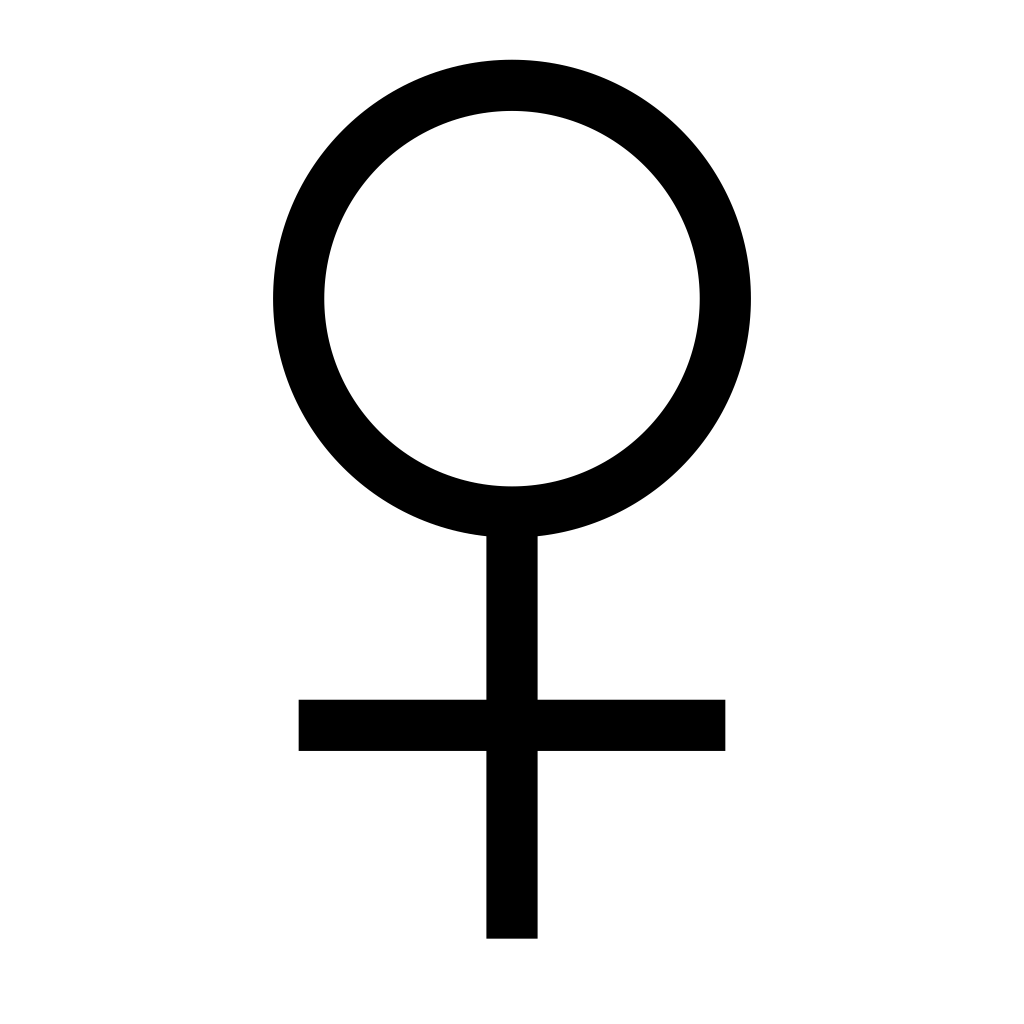
To see ‘the back of the head’ one requires a mirror, and with a mirror all things are seen in reverse. As discussed earlier, the symbol of Venus is a mirror and the danger of mirrors is that they can lead to narcissism. The point of the Shin is the destruction of this narcissism through the purification brought about by fire. Suffering and affliction are symbolized by fire, and the eschatological destruction of the world through fire is symbolic of this. The ‘world’ is the narcissistic ego of the Self that is the barrier to the unification with the Divine One. This may signify that viewing the material world only is a reversal of the true state of affairs i.e., there are realms beyond the material or the world of Asiyah.
The Letter Tzaddi and the 32nd Path: The Administrative, Worshipped, Serving Intelligence
Path 32: Malkhut to Hod
The Thirty-second Path is the Administrative Intelligence, and it is so called because it directs and associates, in all their operations, the seven planets, even all of them in their own due courses.
Alt. Trans. “The thirty-second path is called the serving consciousness because it directs the motion of the seven planets, each in its own proper course.”
The Thirty-Second Path is the Worshipped Intelligence (Consciousness) (Sekhel Ne’evad): It is called this because it is prepared so as to destroy all who engage in the worship of the seven planets.
The Thirty-Second path indicates the difficulties that are present in trying to determine what is the original text of “The Thirty-two Paths of Wisdom”. The first two translations above seem to indicate an awareness of, or consciousness of, the Law of Necessity, but the next translations indicate that this is what is ‘worshipped’ by those who are unable to distinguish the Necessary from the Good.

This is the path proceeding from Malkhut to Hod, from Kingdom to Splendour. Here the Splendour referred to is that which is bestowed by social recognition and prestige, and we would like to consider this ‘justice’, that this prestige and recognition are somehow ‘apt’ or ‘fitting’ and that we are deserving of it. The Tower #15 card illustrated on the left shows the crown of the Kingdom blasted by the thunderbolt of Zeus, and with it the twelve Yods (perhaps representing the 12 houses of the Zodiac or the twelve houses of Israel) and the ten Sephirot of the Tree of Life. The illustrator has chosen the letter Peh to signify this card. In the interpretation offered here, the letter Peh refers to language as rhetoric, the language of assemblies. The lightning bolt is the nemesis which is the judgement of the Divine which is true Justice, and it proceeds from the Sun in the shape of a ladder that indicates the traditional interpretations of the movement along the Tree of Life.
The 32nd path is the outline of the realm of Necessity. All created things must “serve” the law of Necessity whether it be seen as the force of gravity or those forces which operate within the realm of social interactions and institutions. The Law of Necessity is the Divine Will. The 32nd path is also a warning to those who are unable to distinguish between the Necessary and the Good because those who do so usually worship power.
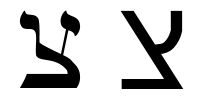
Tzaddi is the 18th letter of the Hebrew alphabet and corresponds to the 32nd path of Wisdom or the Administrative Intelligence. It signifies both “righteousness” and the “hunt”. Its literal meaning is “fish hook” and it is with the hook that one hunts and catches the “fish”, signified by the letter Nun. In Greek mythology, the goddess of the hunt is Artemis. She is also the goddess of the moon. The shape of the Tzaddi is a Nun with a Yod riding on top it. The gematria of Tzaddi is 90 suggesting a connection with Yesod and The Hermit card #9: 9 X 2 is 18, the number of The Moon. The contrary to The Moon is Justice (‘righteousness’) which is card #8 in Tarot. This seems to suggest that the ‘righteous’, the just, can be deceived by the ‘false speech’ and become hooked as a fish is deceived by the bait on the fish hook. There seems to be an alignment between the ‘false knowledge’ that belongs to The Hermit card of the Tarot and the ‘reflected light’ that is The Moon’s as opposed to the direct light of the Sun. The deception, the deceit and fraud, is also related to the ‘hiddenness’ that is an element of Tzaddi and of The Moon.
Tzaddi as ‘fish hook’ indicates the way in which we can become ‘hooked on’ or entrapped by the materialism of created things. ‘Fish’ is a sign of nourishment and fertility. Is Corporeal Intelligence (materialism) the first temptation of Christ : the turning of stones into bread? Is this the reality of what has been understood as ‘materialism’ in the West? This is, metaphorically, the belief at the bottom of the technological worldview.
| Path | Letter | Meaning | Symbol |
| Path 10. Scintillating Intelligence (Consciousness) (Sekhel MitNotzetz): It is called this because it elevates itself and sits on the throne of Understanding (Binah). It shines with the radiance of all the luminaries and it bestows an influx of increase to the Prince of Face(s). | Kingdom. The understanding determines the General Intelligence, the Corporeal Intelligence, the Palpable Intelligence, and the Continuous Intelligence. The world of materialism. | The wheel. Movement of time within space. | |
| Yesod to Malkhut Path 30. General Intelligence (Consciousness) (Sekhel Kelali): It is called this because it is the means by which the astrologers collect their rules regarding the stars and the constellations, forming the theory that comprises their knowledge of the Ophan-wheels of the spheres. | Tav ת | The beginning in the end and the end in the beginning. | The figure holds two wands in the shape of coils indicating she is able to draw energy from both sides of the turning sphere. She is a ‘prophet’. She is the opposite of The Hanged Man who is suspended from Chet. It is the Good which directs the paths of the sun and moon in their orbits according to the Law of Necessity. |
| Path 31: Continuous Intelligence (Consciousness) (Sekhel Timidi): Why is it called this? Because it directs the path of the sun and moon according to their laws of nature, each one in its proper orbit. | Qof ק | “Monkey”, the back of the head, the eye of the needle. | 18 Yods, the collective, society. The camel (Gimel) has an easier time passing through the eye of the needle than a rich person. |
| Path 32. Worshipped Intelligence (Consciousness) (Sekhel Ne’evad): It is called this because it is prepared so as to destroy all who engage in the worship of the seven planets. | Tzaddi צ | The magi or ‘wise men’ form their theories from the principle of reason which is based on, or finds its foundation in, the Law of Necessity. From the principle of reason, the ‘rules’ i.e., the laws, axioms, etc. of the universe are created according to human beings. From these rules, the “Apparative Intelligence” Path 24 can operate. |

 Theory of Knowledge: An Alternative Approach