
Some Notes on Republic, Symposium and Phaedrus and Their Relation to the Texts
Bk VI 505e: “(The Good is) what every soul seeks, the motive of all its actions, whose importance is sensed, but the soul, being at a loss, is unable to completely grasp its essence. Thus, concerning the good, the soul cannot have a firm belief as it has about everything else. This is the reason why the soul lacks other things also, and the usefulness which they may have.”
The Sefer Yetzirah, or Book of Formation appears to rely on the ideas and concepts of Plato, Aristotle, the Stoics, and the geometry and numerology of the Pythagoreans which its writers most likely discovered in the discussions with the Neo-Platonists, Stoics, and the early Hebrew Kabbalists. The Hebrew Kabbalists used this knowledge to understand its own esoteric interpretation of the Torah. Both Plato and the Sefir Yetzirah compare the love of the good which is always in us, to the power of sight; and the revelation of good is compared to “light” or “sunlight”. From this concept of the good as light or sunlight, the metaphorical description of the manner in which the soul is urged to pursue a particular path (such as are described in “the paths of wisdom”) is rooted. We find these metaphorical expressions in the Sephirot Netzach (Splendour) and in the Tarot card The Chariot #7. They refer to what “human excellence” is, what the completion of the human being should be.
Bk VII 518b: “The instruction (education) (of the soul) is not what some declare it to be. For they affirm that knowledge, not being in the soul, they will put it there, as if one might put sight into blind eyes. Whereas the theory which I will expound teaches that the faculty of understanding, and the organs of the faculty, is innate in the soul of each one. But it is as if one were unable to turn one’s eye towards the light, away from the darkness, without turning the whole body. Likewise, it is with the whole soul that one must turn oneself from what is becoming (temporal) until the soul becomes strong enough to endure the contemplation of reality, and all that is most luminous in that reality; which we have already declared to be the good.
The art of the turning around of the soul consists in this, that it is the easiest and most efficient method of bringing someone to turn around. This is quite a different thing from a method for putting sight into the soul, which we know it already has. But that sight is not well-directed, and it does not look where it should. It is this that the soul must find a means to learn.“
Many commentaries on the Sefir Yetzirah equate the soul with the “personal self” or “ego”, the “personality”, the individual, but it is these aspects of human beings that are precisely those that indicate human beings’ “deprivation” or “absence” of the good and are at the root of the “urges” to discover the good or to fulfill those “needs” that human beings constantly feel. What is called “egoism” is a defect of perspective, a defect in the viewing or sight. How an individual views the world, how they perceive the arrangement of the world from the point where they are in time and space, determines for them what they will consider to be the good or evil of things. The murders of the six million that took place during the Shoah or Holocaust during WW2 hardly alters the order of the world as they perceive it, but if a colleague should get a slight raise in pay while they do not, or a fellow receives an “A” when they have been given a “B”, then the order of their world is turned upside down for them! This is not egoism or “love of self” but an indication that human beings as finite beings only apply the idea of a legitimate order to the immediate domains of their hearts.
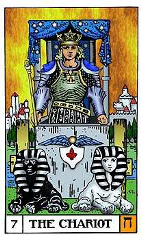
As is indicated in 7th Sephirot Netzach, (and in the Chariot card #7 in the Tarot, as well as in Bk VII of Plato’s Republic), the individual human being has the power of choice of transposing their heart to where their treasure is. (For as Christ said: “Where your treasure is, there will your heart be also”. Matt: 6:21). We see human beings who are absolutely devoted to another human being, to a wife, a child, to a party, to a nation, to whatever collectivity, to no matter which cause. This is not “egoism” or “love of self”. This is part of the erroneous perspective to which both Plato and the Sefer Yetzirah refer. The “treasure” has been misplaced. This is not to say that the things mentioned above are not “good”; it is to say that they are not The Good. The reason why there are only a few saints and philosophers is that ordinary human beings find it impossible to give up a “love of one’s own” for a love of the Good.
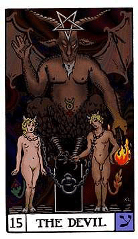
The Great Beast of Bk VI of Republic (or the Devil card which I have numbered #16 of the Tarot) is human society and any collectivity contained within that society. The Beast’s likes and dislikes are studied and assembled into treatises on virtue (human excellence) and morality by the human beings who have charge in caring for him (The Hierophant card #5 in Tarot is the caretaker of the Beast in whatever form he manifests himself). What the Beast approves is good; what it disapproves of is evil. In the tradition, the Beast has been called the Anti-Christ, but we may gather a sense of the Beast’s possible greater impact if we refer to it as “the Anti-Eros”, for there is something definitely anti-erotic in our will to technological mastery of the world, a will that will ultimately lead to the loss of Eros and of something essential to our being as human beings. That which the Beast thinks is just and beautiful are those things that are necessary (the connection between power and force) being incapable of seeing or showing others to what degree the essence of the necessary differs from that of the good. For both Plato and the Sefer Yetzirah, to perceive the true morality requires the intervention of a god:
Bk VI 492e: “For a character (“person”, “individual”) receiving an education contrary to theirs does not, has not, and will not become differently disposed toward virtue, a human character that is, my friend, for the divine, according to the proverb, let’s make an exception to the argument. You should be well aware that, if anything should be saved and becomes such as it ought to be in regimes in this kind of condition, it won’t be bad if you say that a god’s dispensation saved it.”
We all choose for treasure those “values” that have their root in social prestige. The power that is rooted in social prestige is illusion; it is but “shadows”. This is why social prestige is the second temptation of Christ i.e., it is in the hands of the Devil, the Great Beast. (Luke 4:5-8)
“Then the devil took Him up and revealed to Him all the kingdoms of the world in a moment of time. ‘I will give you the glory of these kingdoms and authority over them,’ the devil said, ‘because they are mine to give to anyone I please. I will give it all to you if you will worship me.’ Jesus replied, ‘The Scriptures say, ‘You must worship the LORD your God and serve only Him.’” The root of the second temptation is the desire or “urge” for social prestige. The shadows on the wall of the Cave are provided by the technites who produce them. The technites are the leaders of the social institutions, the caretakers and tenders of the Great Beast.
There is a difference between illusion and convention. Conventions have a reality of a secondary and artificial order in both Plato and the Sefer Yetzirah. It is convention, for example, which provides the “good” of the office of the Presidency of the USA, but it is also convention which results in the error of Capitol being referred to as a “sacred chamber”. There is, of course, nothing “sacred” about it as the corruption, immorality and injustice of its members provide evidence regarding this every day. In all human institutions (indicated in the Sefer Yetzirah under the pillar of Boaz), there are images of the spiritual world of Atzilut and Beriyah but these “representations”, these various types of ‘clothing’ and models, derive their power from the prestige associated with them.
The desire for prestige, whether recognized or not, is at the bottom of most of our “urges”, including those we may have for other human beings. It is the desire for recognition and prestige which is at the heart of religious fundamentalism, political fanaticism such as “nationalist” movements, and the popularity of our social media. This urge in human beings for social prestige is why Plato compared statesmanship to “legislating for a madhouse”.
The beauty that shows forth as social prestige is a false beauty and it is associated with the “kingdom” that is Malkhut in the 10th Sephirot. It is a beauty ruled over by the Devil #16. It is the “reflected light” of the Moon and not the true light of The Sun that is in Tiferet #6. Malkhut is the only Sephirot on the Tree of Life that is not in a relation to or touched by Tiferet. Plato knew that real and perfect Justice must be without social prestige. A person who is persecuted and criminally charged for their loyalty to a cause, to a collectivity, to an idea, or to a faith for national, political or religious reasons, does not undergo a total loss of prestige, and in some cases are transformed into martyrs and heroes for their causes or beliefs. All of these things and events are ruled over by Necessity and illusion.
When the Sefir Yetzirah speaks of the “assimilation” of the individual soul into the Divine Soul, or into the various Sephirot, this assimilation should be understood in a Pythagorean sense i.e., it is an assimilation understood as “resemblance”. We may compare it with two different maps with two different scales wherein the distances are different but the relationships are identical. “Assimilation” is a geometrical term which refers to the identity of relationships, to proportion. Assimilation into the Divine is one of proportion. No proportion is possible between human beings and the Divine except by mediation. The perfectly just man that is Tiferet #6 is the mediator between the “righteous” and the Divine.
The rupture that is present between appearance and reality is the experience of the “absence” or deprivation of the Good or the Divine. Because we are beings in bodies, assimilation to the Divine is prevented or hindered by our choosing of those “treasures” that are false. True vision is only possible through the intervention of the Divine through Grace. We ourselves are incapable of merely “gazing” and not “consuming” that which we gaze upon. It is most difficult for us to give up the common sense ‘love of our own’ for the higher perfection.
In the Sefer Yetzirah, the Sephirot Yesod #9 is the “foundation” for what we refer to as “carnal love”. The desire or urge for reproduction is what is most indestructible in animal life; we call it the “survival of the species”. The desire for eternity (immortality) in us goes first to this error of the material image of eternity. The urge for carnal procreation is aroused by beauty. Today, we have separated sexuality and procreation from the desire for children, the desire for immortality (or what we see as our best and only option for an image of immortality), and we view sexuality as the enjoyment of the pleasure of the moment. This separation of sexuality from procreation places us on an abyss poised above the very gates of hell itself. Correspondingly, spiritual beauty excites a desire or urge for spiritual generation. Thus, love is the source of virtues, understandings, and works of the spirit. (This is its association with the Sephirot Binah.) Love is the source of “world”. However, in the world today there is a great gap separating that thinking where the intelligence is illuminated by love. This gap is shown where reason is that thinking that is supposed to illuminate the world before us. This is the interchange of Logos and Eros.
Symposium 211b – 212b “He who undertakes the contemplation of this beauty has very nearly attained to perfection…he knows at last what beauty is. Do you believe that the life of a man who searches into such a matter, who uses the appropriate organ to contemplate and to unite himself with it, can be mediocre? Consider this, what we have here is the only being who sees the beautiful with that faculty capable of seeing it. To him it will be given to beget, not sham virtues, for he has not laid hold upon a phantom, but real virtues, because he has laid hold on the real. And in creating and nourishing true virtue, it is accorded to him to be the friend of the god; and if ever a man become immortal, that man will become so. In this work it would be difficult for human nature to find a better collaborator than Love.”
In the Sefer Yetzirah as in Plato’s Symposium and Bk VII of Republic (and with card #7 The Chariot in the Tarot), we are dealing with the spiritual marriage of the soul with the beautiful, by the grace of which the soul truly begets virtues, or that which is excellent in human beings. The Beautiful is not a predicate of any thing, nor a category or an attribute. It is subject itself. With Chakmah and Binah, the beautiful “is itself, by itself, with itself” and is thus the parousia which represents two relationships within a unity. The Beautiful is the arche (the first principle), the aitia (that which is responsible for) and telos (the place or site) for the being that is finite i.e., human being.
The Symposium is a dialogue composed of seven parts, each part representing an ascent to a higher level which, ultimately, collapses with the entrance of a drunken Alcibiades, that most passionate and imprudent of human beings. It is a dialogue which is being told for the third time and relies very heavily on Memory as none of those “present” in the dialogue were actually at the symposium or banquet itself. On the second telling, the person receiving the dialogue is Glaucon, Plato’s brother, who also receives from Socrates the dialogue that is present in Bk VII of Republic. Both dialogues are from the time of the 4th century BCE, three centuries prior to what the scholars agree was the time of the writing of the Sefer Yetzirah.
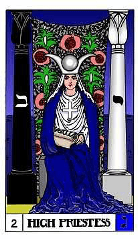
In both Plato and the Sefer Yetzirah, he who contemplates Beauty itself has almost reached the goal. In the allegory of the Cave, the object of contemplation immediately before the Sun is the Moon. Prior to this, the light from the fire of the artisans and the technicians is that through which things are dimly seen. The Moon is the “reflected light” of the Sun; and in the Sefer Yetzirah, it is the “reflected light” of the kingdom of Malkhut. The Sun is the Good; the Moon is associated with the beautiful. Tiferet #6 is the supreme beauty; Netzach is where is found the lower forms of the beautiful. (The Moon: the myth of Osiris, a bull whose horns are the shape of a crescent moon [the High Priestess Tarot card #2, Isis, the bride of Osiris]. Osiris’ body is divided into 14 parts, the number of days separating the full moon from the new moon. Isis gathers and assembles 13 of these, the number of lunar months in the year. Isis = Demeter, Chakmah to Binah, the mother goddess of the Earth. The ascent must go via the Moon.)
Absolute beauty is seen with “supernatural” sight. After a long spiritual preparation (which is the journey through the Tree of Life), one has access to it by a revelation, a “rending of the veil” that is drawn over the beautiful things that come into being and pass away. It is in the Sephirot Netzach that one finds the veil drawn over things. The Love that is supernatural Love allows one to place one’s “treasure” and heart beyond the reach of all evil. No evil does harm to the Good. The order of the stages or paths enumerated by Plato: from sensible beauty to the beauty of souls i.e., moral beauty, the splendour of virtue (note the paths that speak of the “splendour” in “The 32 Paths of Wisdom”). We praise actions that touch us with “That is beautiful” which indicates the relation of the beautiful with the just. Virtue only touches us insofar as it is beautiful. How are these two analogous? i.e., social institutions and necessity; social relations and harmony? The Pythagorean idea of harmony as the union of contraries: the combination of that which limits (Binah) and that which is unlimited (Chakmah). Pythagorean geometry is a method of meditation and prayer.
For Plato, we are capable of seeing the Beautiful Itself here below. It is accessible to the human senses. The beautiful is made manifest to the human senses through the beauty of the world. The beauty of the world is the Divine’s own beauty just as the beauty of the body of a human being is the beauty that belongs to that being. Our “absence” that we experience as human beings is that we are incapable of distinguishing between “gazing upon” and “consuming”, and in our desire to possess through consumption, we commit sin.
*This long excerpt below from Plato’s dialogue Phaedrus shows the process of initiation in the individual soul. From it, one can see the teaching of the Sefer Yetzirah and “The Thirty-two Paths of Wisdom” and their relation to the Tarot.
Phaedrus 246e – 250d Now the great leader in heaven, Zeus, driving a winged chariot, goes first, arranging all things and caring for all things. He is followed by an army of gods and spirits, arrayed in eleven squadrons; Hestia alone remains in the house of the gods. Of the rest, those who are included among the twelve great gods and are accounted leaders, are assigned each to his place in the army.
There are many blessed sights and many ways hither and thither within the heaven, along which the blessed gods go to and fro attending each to his own duties; and whoever wishes, and is able, follows, for jealousy is excluded from the celestial band. But when they go to a feast and a banquet, [247b] they proceed steeply upward to the top of the vault of heaven, where the chariots of the gods, whose well matched horses obey the rein, advance easily, but the others with difficulty; for the horse of evil nature weighs the chariot down, making it heavy and pulling toward the earth the charioteer whose horse is not well trained. There the utmost toil and struggle await the soul.
For those that are called immortal, when they reach the top, [247c] pass outside and take their place on the outer surface of the heaven, and when they have taken their stand, the revolution carries them round and they behold the things outside of the heaven. But the region above the heaven was never worthily sung by any earthly poet, nor will it ever be. It is, however, as I shall tell; for I must dare to speak the truth, especially as truth is my theme. For the colorless, formless, and intangible truly existing essence, with which all true knowledge is concerned, holds this region [247d] and is visible only to the mind, the pilot of the soul.
Now the divine intelligence, since it is nurtured on mind and pure knowledge, and the intelligence of every soul which is capable of receiving that which befits it, rejoices in seeing reality for a space of time and by gazing upon truth is nourished and made happy until the revolution brings it again to the same place. In the revolution it beholds absolute justice, temperance, and knowledge, not such knowledge as has a beginning and varies as it is associated with one [247e] or another of the things we call realities, but that which abides in the real eternal absolute; and in the same way it beholds and feeds upon the other eternal verities, after which, passing down again within the heaven, it goes home, and there the charioteer puts up the horses at the manger and feeds them with ambrosia and then gives them nectar to drink.
Such is the life of the gods; but of the other souls, [248a] that which best follows after the God and is most like him, raises the head of the charioteer up into the outer region and is carried round in the revolution, troubled by the horses and hardly beholding the realities; and another sometimes rises and sometimes sinks, and, because its horses are unruly, it sees some things and fails to see others. The other souls follow after, all yearning for the upper region but unable to reach it, and are carried round beneath, [248b] trampling upon and colliding with one another, each striving to pass its neighbor. So there is the greatest confusion and sweat of rivalry, wherein many are lamed, and many wings are broken through the incompetence of the drivers; and after much toil they all go away without gaining a view of reality, and when they have gone away they feed upon opinion.
But the reason of the great eagerness to see where the plain of truth is, lies in the fact that the fitting pasturage for the best part of the soul is in the meadow there, and the wing [248c] on which the soul is raised up is nourished by this. And this is a law of Destiny, that the soul which follows after God and obtains a view of any of the truths is free from harm until the next period, and if it can always attain this, is always unharmed; but when, through inability to follow, it fails to see, and through some mischance is filled with forgetfulness and evil and grows heavy, and when it has grown heavy, loses its wings and falls to the earth, then it is the law that this soul [248d] shall never pass into any beast at its first birth, but the soul that has seen the most shall enter into the birth of a man who is to be a philosopher or a lover of beauty, or one of a musical or loving nature, and the second soul into that of a lawful king or a warlike ruler, and the third into that of a politician or a man of business or a financier, the fourth into that of a hardworking gymnast or one who will be concerned with the cure of the body, and the fifth [248e] will lead the life of a prophet or some one who conducts mystic rites; to the sixth, a poet or some other imitative artist will be united, to the seventh, a craftsman or a husbandman, to the eighth, a sophist or a demagogue, to the ninth, a tyrant.
Now in all these states, whoever lives justly obtains a better lot, and whoever lives unjustly, a worse. For each soul returns to the place whence it came in ten thousand years; for it does not [249a] regain its wings before that time has elapsed, except the soul of him who has been a guileless philosopher or a philosophical lover; these, when for three successive periods of a thousand years they have chosen such a life, after the third period of a thousand years become winged in the three thousandth year and go their way; but the rest, when they have finished their first life, receive judgment, and after the judgment some go to the places of correction under the earth and pay their penalty, while the others, [249b] made light and raised up into a heavenly place by justice, live in a manner worthy of the life they led in human form. But in the thousandth year both come to draw lots and choose their second life, each choosing whatever it wishes. Then a human soul may pass into the life of a beast, and a soul which was once human, may pass again from a beast into a man. For the soul which has never seen the truth can never pass into human form. For a human being must understand a general conception formed by collecting into a unity [249c] by means of reason the many perceptions of the senses; and this is a recollection of those things which our soul once beheld, when it journeyed with the God and, lifting its vision above the things which we now say exist, rose up into real being. And therefore, it is just that the mind of the philosopher only has wings, for he is always, so far as he is able, in communion through memory with those things the communion with which causes the God to be divine.
Now a man who employs such memories rightly is always being initiated into perfect mysteries and he alone becomes truly perfect; [249d] but since he separates himself from human interests and turns his attention toward the divine, he is rebuked by the vulgar, who consider him mad and do not know that he is inspired.
All my discourse so far has been about the fourth kind of madness, which causes him to be regarded as mad, who, when he sees the beauty on earth, remembering the true beauty, feels his wings growing and longs to stretch them for an upward flight, but cannot do so, and, like a bird, gazes upward and neglects the things below. [249e] My discourse has shown that this is, of all inspirations, the best and of the highest origin to him who has it or who shares in it, and that he who loves the beautiful, partaking in this madness, is called a lover. For, as has been said, every soul of man has by the law of nature beheld the realities, otherwise it would not have entered [250a] into a human being, but it is not easy for all souls to gain from earthly things a recollection of those realities, either for those which had but a brief view of them at that earlier time, or for those which, after falling to earth, were so unfortunate as to be turned toward unrighteousness through some evil communications and to have forgotten the holy sights they once saw. Few then are left which retain an adequate recollection of them; but these when they see here any likeness of the things of that other world, are stricken with amazement and can no longer control themselves; but they do not understand their condition, because they do not clearly perceive.
[250b] Now in the earthly copies of justice and temperance and the other ideas which are precious to souls there is no light, but only a few, approaching the images through the darkling organs of sense, behold in them the nature of that which they imitate, and these few do this with difficulty. But at that former time, they saw beauty shining in brightness, when, with a blessed company—we following in the train of Zeus, and others in that of some other god—they saw the blessed sight and vision and were initiated into that which is rightly called [250c] the most blessed of mysteries, which we celebrated in a state of perfection, when we were without experience of the evils which awaited us in the time to come, being permitted as initiates to the sight of perfect and simple and calm and happy apparitions, which we saw in the pure light, being ourselves pure and not entombed in this which we carry about with us and call the body, in which we are imprisoned like an oyster in its shell.
So much, then, in honor of memory, on account of which I have now spoken at some length, through yearning for the joys of that other time. But beauty, [250d] as I said before, shone in brilliance among those visions; and since we came to earth we have found it shining most clearly through the clearest of our senses; for sight is the sharpest of the physical senses, though wisdom is not seen by it, for wisdom would arouse terrible love, if such a clear image of it were granted as would come through sight, and the same is true of the other lovely realities; but beauty alone has this privilege, and therefore it is most clearly seen [250e] and loveliest.
Now he who is not newly initiated, or has been corrupted, does not quickly rise from this world to that other world and to absolute beauty when he sees its namesake here, and so he does not revere it when he looks upon it, but gives himself up to pleasure and like a beast proceeds to lust and begetting…
I will try to delve deeper into an attempt to understand the two-faced nature of Eros and of the Logos in another writing. To do so will help to distinguish between thought and thinking, to distinguish between rhetoric and dialectic, and so give some further insight into these writings that have come to us through the ages.

 Theory of Knowledge: An Alternative Approach