In the painting of “The Red Dragon and the Beast of the Sea”, the English poet and artist William Blake shows us that the Dragon is the combination of Church and State militancy, the ‘armed prophet’ of political Christianity and the establishment of the theocratic regime. Historically, we may say that this is the Roman Church when it succumbed to the third temptation of Christ and sought control of all the kingdoms of this world, the creation of the universal, homogeneous State. In the Beast’s hands are the sword of secular power and the crozier of religious power. In Blake’s mythology, Urizen, what we understand as ‘human rationality’, finally sinks to this inhuman form as does Milton’s Satan in Blake’s understanding of his Paradise Lost.
According to the Book of Revelations, the Whore of Babylon rides on a beast with seven heads and ten horns. Blake identified the Beast with the Dragon. In another sketch of her, the fumes from her cup drive human beings to hatred and war; as they fight, the Dragon devours them. The Dragon is the anti-Christ or the anti-Logos. The Beast of the Sea is the Leviathan, “King over all the Children of Pride.” The Dragon and the Beast are two different entities. In marginal notes to his reading of the Book of Job, Blake writes that the “cloud barriers shall be scattered” and “the emptied shells of the Sea of Time and Space will be the deliverance from the material body”. (See my commentaries on the Sefer Yetzirah where time and space are viewed as “husks”.)
William Blake
If our sketch of this portrait of evil has brought any of the many outward faces of evil from out of the darkness and into the light, then we should be able to see how the bringing of evil to the light is part of human “consciousness” or “cognition” and is the essence of what “human excellence” is; it is moral or ethical awareness because the world itself is essentially moral and ethical, and to have knowledge of this is to have “self-knowledge”. Blake, with his figure of Urizen, shows how what we understand as ‘rationality’ or what we conceive the essence of modern science to be, is productive of “Newton’s sleep”, a somnambulistic state of being similar to the prisoners in Plato’s allegory of the Cave. All human excellence is an act of rebellion of some sort, and this excellence is to be found in the development of “consciousness” and with it “conscience”. This consciousness and conscience is not to be found in the submission of conformity nor in the donning of the cloak of “intentional ignorance”, the modern version of the wearing of the Ring of Gyges.
“Consciousness” is inseparable from “conscience”. “Consciousness” is present at all times and in various stages of development and degrees for all human beings. “True consciousness” is self-knowledge or “cognition” as Socrates called it; the lack of “consciousness” and the lack of self-knowledge is to be among ‘the dead’, the walking, waking dead. What we call “consciousness” is a somnambulism, a walking with shadows and delusions, or “Newton’s sleep” as the poet Blake referred to it. Newton’s sleep is induced by Urizen.
James Joyce
When we read or hear from the saints, we are surprised at their “consciousness” of their sinfulness for to us they appear to be human beings without sin. This awareness of their sinfulness is their higher state of consciousness. When we read the Irish writer, James Joyce, we can discover how his protagonist Stephen Daedalus carried out his mission of going forth “to forge in the smithy of my soul the uncreated conscious of my race” through the final writing of his Finnegans Wake, a book that requires us to engage in the discovery of the logos as if we, too, lived in a perpetual state of “consciousness” or “wakefulness” and were able to bring about a perpetual state of bringing forth epiphanies rather than living in the “somnambulism” that is modern waking life.
In the modern, the possibility of self-knowledge was gifted a cup of poison by Sigmund Freud with his notion of the id and his depiction of the human personality; and this cup of poison was handed over to Eros. It is not surprising that Freud’s final thinking was focused on Thanatos or the “death instinct”, nor is it that the logos of artificial intelligence is focused on ‘dead language’ or meta-language. In my living in Singapore for 30 years, I was always in amazement at its state of efficiency and I came to realize that this was the result of its attempt to dominate and control eros through technology. Eros is messy, and the technological abhors messiness. The experience of Singapore for many is that it is ‘soulless’, even though there are few, if any, cities that can match it for its effectiveness and efficiency.
When Socrates was admonished by the oracle at Delphi to “know thyself” and was told that he was the wisest of mortals because he knew that he knew nothing, this admonishment was the command and call to begin the journey to “consciousness”. Consciousness gives to us a sense of the reality of being and a sense of the being of reality. What we understand reality to be is crucial for our understanding of ourselves and of our being-in-the-world and our being-with-others in that world. It gives to us our notion of what is good and evil and of what is human excellence. This reality is not to be found in many of the tools and gadgets that technology has brought into being; for technology, like the logos and eros itself, is “two-faced”.
Thinking and self-knowledge are correlated and inseparable, as are “consciousness” and “conscience”. When true thought is not present, there is no self-knowledge. Where there is no self-knowledge, there is no sense of “reality”. Where there is no sense of reality, there is no re-cognition (memory) or knowledge of good and evil, there is no possibility for human excellence or arete. Without a sense of “human excellence”, there is no strife or polemos within the individual soul or mind to resist the temptation to succumb to evil and subsequently to evil actions. One’s “moral compass” is lost.
In this writing, we have attempted to show how the gradual falling away of “consciousness” (call it if you will “attention”, or “contemplation”, or “prayer”, and with it ‘dialectic’) through the dominance of the principle of reason in the technological, causes “conscience” and the “moral compasses” of the human beings associated with this “conscience” to be replaced by “values” which, having no “factual” basis in ‘reality’ according to the reasoning of these sciences since they can only be constructions of the imagination, lack the strength to confront and strive against the needs for “effectiveness” and “efficiency” required by the technological. What is called “critical thinking’ is only the beginning of this journey to “consciousness”.
In the battle between technology and “values”, values will always lose out because technology’s root is power and empowerment. The shallow ‘reality’ of the values which are the products of imagination will always be of less power and strength than the necessity of the values of technology. As was shown in our discussion of Eichmann, technology is indifferent to whether a shipment is of coal or of human beings; both are resources. The “values” of technology are what Being itself, the conjoined faces and forces of the lower eros and logos, has given to human beings.
The question of “what is virtue or human excellence?” is identical with the question of “what is the principle of all value judgements?”; and the discovery of the principle of value judgements has much to do with the gaining of a “consciousness” and recognition of what is evil. We moderns distinguish judgements of “fact” from judgements of “value”. This “fact – value” distinction results in the lack of a “moral compass” so prevalent today among the powerful or among those who possess the potentia of the dynamis (what we call “agency”) for making things happen. Judgements of value require a greater attention, contemplation and thought than those judgements that derive from the regarding of judgements of “fact” i.e. the thinking that is done in the sciences, and thus derive from a thinking that is antithetical to those sciences. Meno’s low understanding of virtue, for example, adheres to the most common understanding of virtue. Adherence to the most common understanding of virtue results in the tyrant as was shown to us from the myth of Er at the conclusion of Republic.
The “fact/value distinction” of the social sciences is a lowering of human “consciousness”. The social sciences are a predicate of the subject technology. Artificial intelligence, the apogee of technology, is the elimination of “consciousness” altogether. This elimination of consciousness is the ultimate goal of the technological. What is the definition of “artificial intelligence” if not the removal of “conscience” from “consciousness” and the replacing of “conscience” and “consciousness” with “rationality” and the “rationality of values”?
Without “consciousness” there is no possibility for human excellence, no possibility of sophrosyne moderation and phronesis wise judgement. Technology’s tools and gadgets lessen those moments that human beings have for those activities which require attention; look at the people around you and their use of handphones in moments when human conversation is possible or might be possible. Look at the loss of the quality of solitude and the use of imagination in our day-to-day lives and the subsequent loss of reading skills and our moments of engagement with the logos. The death of the Russian novel is not hyperbole.
This weakening of the moral compass which was initially intended to point to the good causes the moral compass to decay and become ineffectual since there is no good to point to since it has become a ‘value’, that is, a product of the human imagination, a matter of choice, of chance, of taste. Modern notions of ‘freedom’ are bound up in this illusion of choice and matters of taste, the philosophy of aestheticism. This will eventually produce the ‘happy tyranny’ that is the ultimate outcome of the technological future: the fulfilling of the appetitive consumption and the abdication of the responsibility to think.
Orc Jerusalem
Thoughtlessness and the lack of self-knowledge are characteristics found among those who succumb to the temptations of evil. Reason is not thought as it was understood by Plato. For us, the Self, understood as subject, grounds all that is in being through the principle of reason: nihil est sine ratione “nothing is without (a) reason”. It is this Reason of the Subject which spreads ‘like a fungus’ (in Hannah Arendt’s words) through all that is in being transforming all that is into an object, a problem to be fixed or solved. This was shown to us in the works of William Blake and his mythic figures of Urizen and Orc (whose origin is not from J. R. R. Tolkien as many believe but was originally from Blake. Both Tolkien and Blake were involved in the same task: to create an English mythology, to create a consciousness and conscience for English-speaking peoples. Orc is derived from cor, meaning ‘heart’, and the Orc is the ‘misplaced heart’ of human hatred in Blake’s work). The Reason of science is the two-legged stool upon which our modern world totters.
As was shown in our long discussion of Plato’s Divided Line in Part I, this principle of reason is the essence of technology, the invisible “knowing” combined with the visible “making” to bring forward or “produce” the ready-to-hand things, the artifacts that are the ‘goods’ of our world. These artifacts (including the invisible metaphysics, schema) determine the shadows that are displayed on the walls of our Cave (the Cave is phusis, Nature) in Plato’s allegory. The artifacts and their shadows are produced by the artisans and technicians whose self-ignited ‘fire’ creates the light that casts the shadows of the ‘opinions’ (doxa) that have become the “orthodoxy” of those who rule and those who have power. These opinions rule because they ‘work’ and produce ‘works’. The pre-dictive powers of the sciences is the ‘prophecy’ that we now bow down to. “Prophecy” is the highest human logos, the highest speech. The artifacts of technology are destructive of dialectic. Drugs and other pharmaceuticals, for example, are used to ‘cure’ human beings of the mass meaninglessness which has enveloped their lives through this destruction of dialectic. In their consumption, only the symptoms are briefly overcome; the disease remains unchecked. The ‘drug problem’ is but one manifestation of the human need for meaning in their lives.
The doxa of the artisans and technicians determines the logoi of technology’s apogee - artificial intelligence. Artificial intelligence combines with the ‘consciouslessness’ of cybernetics to eliminate human beings from their interference in the efficiency and effectiveness of the creation of the technological world. The “thinking” which will interfere with this efficiency and effectiveness needs to be eliminated. Technology is, in its very essence, tyrannical.
“Conscience” has been replaced by reason. These doxa of the artisans and technicians are the determiners of the kind of making that will occur, ‘the stamping of becoming with the character of being’. These doxa develop the mass meaninglessness which envelops us and causes our humanity to seep away unless we struggle to hold on to it. We have given some examples of these doxa in our discussions of the ‘fact/value distinction’ and ‘malignant narcissism’ so prevalent in our being-with-others today. They are examples of that nihilism that is the sea in which we swim.
Christian Nationalism and Machiavelli’s “Armed Prophet”
Machiavelli
In this writing I have alluded to the relationship between “Christian nationalism” and the “armed prophet” of Machiavelli. There is a relationship between the ‘malignant narcissism” so prevalent in the world today and of those who believe that they are in sole possession of the truth. Knowing that one does not know is the first step to “consciousness” and to self-knowledge. Believing one already possesses the truth provides the certainty required by the will which is necessary for the establishment of technological values, the values that see themselves beyond good and evil, the will to power.
‘Christian nationalists’ are to be found in a number of countries throughout the world. Even Vladimir Putin of Russia is a self-proclaimed “Christian nationalist”. Christian nationalism may be said to be “fascist theocracy”, with its followers quite satisfied in their blasphemy of placing the Great Beast which shows itself as the “fatherland” or “motherland” and the cult of personality of their leader before the eternal verities of their faith. There is nothing more antithetical to Christian nationalism than the Sermon on the Mount.
Machiavelli’s name is synonymous with deception, treachery, cunning, and deceit, and not without reason. He was, and is, a teacher of evil. Machiavelli compared himself to Christopher Columbus; and like Columbus, he sought to establish a new world order that would replace the ancient order that he had inherited. The old world order that he had inherited was the universality of the Holy Roman Empire, the successor to the Roman Empire of the Caesars. Machiavelli himself was a man without faith.
When it came to the idea of human excellence, Machiavelli wrote: “”Many have imagined republics and principalities that have never been seen or known to exist in truth (e.g. Plato’s Republic, Augustine’s City of God). For it is far from how one lives to how one should live. That he who lets go of what is done for what should be done learns his ruin rather than his preservation” (italics and examples mine).
Machiavelli required the domination of necessity, fortuna, but he did not realize that this transition or jump from the realm of necessity to the realm of freedom (the great revolution of the Renaissance) would be the death of the possibility for human excellence. He knew that it would require new codes and norms. What he did not know was whether or not his new world was inhabitable for human beings. Machiavelli will equate the self-preservation of the Prince with the goal of the preservation of the state for the Prince is the State, the tyrant is the nation or country. The technology of the helmsman will be that which will guide this brave new world in its novel domination of necessity from out of human beings’ freedom and any notion of excellence will be derived from this ‘freedom’.
Machiavelli turns virtú or human excellence on its head by showing that human beings should live according to necessity rather than aspiring to the good of what ‘should be done’. For Machiavelli, self-preservation is the good above all other goods and this self-preservation can only be assured by possessing and maintaining power. For Machiavelli, the self-preservation of the polis or ‘fatherland’ is prior to the self-preservation of the individual. Machiavelli’s virtú is Meno’s second response to Socrates’ question regarding arete virtue or human excellence. Like Meno, his virtú dispenses with any requirement for justice. His Prince is a handbook for wanna’-be dictators or tyrants.
Machiavelli is a kind of step-grandfather of modern-day social science and his thinking has ultimately led to the “fact/value” distinction (the distinction between what ‘is’ and ‘what should be’, between how men in fact do live and any notion of how they should, in fact, live). As has been shown in this writing, an indispensable condition of a scientific analysis of the facts is moral obtuseness. It is the distinction between “consciousness” and “conscience”; and while it does not lead to depravity and evil on its own, it is bound to strengthen the forces of depravity and evil as we have tried to show with the example of the American Psychology Association and Donald Trump.
Machiavelli defines virtues as qualities that are praised by others, eudoxa or ‘good opinions’, such as generosity, compassion, and piety. Machiavelli’s ‘piety’ is merely an early form of ‘gaslighting’. He argues that a prince should always try to appear virtuous, but that acting virtuously for virtue’s sake can prove detrimental to the principality and to the Prince himself. We have shown similar characteristics in our commentary on the Meno. We can say further that, in fact, Machiavelli does not bring to light any political phenomenon of any fundamental importance which was not fully known to the classics. All things will appear in a new light if they are seen for the first time in a dimmed light.
The closing down of the horizon of thinking to only that which is given in the lower portion of the Divided Line from that of the whole only appears as an enlargement of the horizon. It is in fact a great lowering or leveling of horizons. Machiavelli’s silence regarding the soul in his writings reveals the soulless nature of his thinking, its lack of “consciousness” and “conscience”.
Alexander VI
Concurrent with Machiavelli’s life and thinking was the enactment of a Papal Bull known as the “Doctrine of Discovery” by Pope Alexander VI. https://www.gilderlehrman.org/history-resources/spotlight-primary-source/doctrine-discovery-1493 . Alexander VI was the first “armed Pontiff” and he conspicuously lacked any “goodness” according to historians. In Machiavelli’s view, the rule by the priests or a “theocracy” was more tyrannical than any other regime. Priestly government cannot be responsible to a citizen body. For Machiavelli, priestly governments are most easily attained or conquered and ruled without virtue. Has this in fact occurred with Donald Trump and his alliance with the Christian Nationalist movement in the USA?
White supremacy has Christian roots and creates those principalities most easily conquered by a tyrant. The Doctrine of Discovery 1493 was established by a Papal Bull that claimed that European civilization and western Christianity were superior to all other cultures, races, and religions. Its evil rested in its stating that it was God’s will that Spain (beginning with Columbus, and later the rest of Europe would follow) could and should engage in imperial expansionism, the slave trade, and the genocide of the Native Peoples of the North American continent which was “discovered” by Columbus the year before. The doctrine was carried into effect with missionary zeal. The evil, the blasphemy, still so prevalent today among evangelicals and Christian nationalists was to believe that God’s will is scrutable and that the good end justifies any means. The moral parallel to this belief is the teaching of Machiavelli.
“The Doctrine of Discovery” said “…that in our times especially the Catholic faith and the Christian religion be exalted and be everywhere increased and spread, that the health of souls be cared for and that barbarous nations be overthrown and brought to the faith itself.” ”The Doctrine of Discovery” furnished the foundational lie (which was hardly a ‘noble lie’) that America was “discovered” and that its discoverers were the “pioneers” who were ‘nobly innocent’. One example of their “noble innocence” was their leaving behind clothing infected with the smallpox disease for the Native peoples to pick up.
The foundational lie for white North Americans could not be a “noble lie” because there was no “autochthony”, no being and living with the land, the soil, before conscious memory as there was in Europe itself, nor as there was in the Athens of Plato. The best that could be done was the creation of shabby myths regarding freedom such as America presenting itself as “the shining beacon on the hill” and other such nonsense. The North American example illustrated Machiavelli’s original premise that all Principalities began or begin with a great crime.
It is not surprising to find that the current Christian nationalists in the USA have a number of neo-Nazis and their organizations as their members. The movement has no problem accommodating atheists. There is a direct connection between Christian nationalists and authoritarian or totalitarian regimes and this was noted long ago by Machiavelli.
Francis Bacon in his “13th Essay” of 1612 was able to write: “…one of the doctors of Italy, Nicholas Machiavel, had the confidence to put in writing, almost in plain terms, That the Christian faith had given up good men in prey to those who are tyrannical and unjust.” We see a repetition of that history in the world today. The original fear of God was to be replaced by the fear of the “leader”. Such is the reason for the prevalence of “cults of personality” among the far-right today, be it in Russia or the USA. That there are those who believe that Donald Trump is a ‘saviour’ indicates that such madness has been present among human beings since ancient times and is not unique to our time nor to the totalitarian regimes of the early 20th century. What distinguishes ancient tyrannies from modern tyrannies is the presence of technology which makes the tyranny more pervasive and oppressive. The ability to think outside of technology is almost well-nigh impossible, and this is the great strife or polemos in our living in the world today.
A new vision of The Beast From the Sea
Along our journey to try to compile an image for a sketch of a portrait of evil we have noted that evil is associated with death and nihilism. We have noted that evil is anti-life and anti-logos, and we have said that this is revealed in the two-fold, two-faced nature of both Eros and of the Logos. We have noted that “consciousness” and “conscience” involve both the logos and eros, and that life at all times involves a choosing of which of the faces of these two one is looking at; for as we live we find that life is a sowing and a reaping, a giving birth and a dying, a loving and a hating, and so on. Our souls need to discern which is the ‘fullness’ and which is the ‘deprivation’. Although we cannot see the peak of the mountain upon which we climb because it is often obscured by clouds on most occasions, we are able to distinguish a mountain from a molehill and are capable of making moral judgements in doing so. We are capable of knowing when we are ascending and when we are descending.
“Have you never observed in those who are popularly spoken of as bad, but smart men, how keen is the vision of the little soul, how quick it is to discern the things that interest it, a proof that it is not a poor vision which it has, but one forcibly enlisted in the service of evil, so that the sharper its sight the more mischief it accomplishes?” (Republic 518d-519a)
“A man who lies to himself, and believes his own lies becomes unable to recognize truth, either in himself or in anyone else, and he ends up losing respect for himself and for others. When he has no respect for anyone, he can no longer love, and, in order to divert himself, having no love in him, he yields to his impulses, indulges in the lowest forms of pleasure, and behaves in the end like an animal. And it all comes from lying – lying to others and to yourself.”
“The best way to keep a prisoner from escaping is to make sure he never knows he’s in prison.”
“What is hell? I maintain that it is the suffering of being unable to love.”
Fyodor Dostoevsky, The Brothers Karamazov
“What else is misery but the desire and possession of evil?” Plato, Meno 78b
This will probably be the most controversial of any of the four parts of this portrait of evil for it deals with contemporary events, events which have not yet become part of history for their outcomes are still uncertain. The analysis of Trump’s character and his actions that is presented here must be read in the light of what has already been written in the previous sections of this portrait of evil. Those who have specific counter-claims to the points made here are free to post them in the comments section below provided by the blog. Providing specific sources for the evidence to the counter-claims would be useful in properly bringing things to light.
The story of Donald J. Trump is that of the playboy who squandered his father’s fortune and who became an incompetent, vicious clown as the ruler of his people. His story is truly the stuff of myth; and it is a story that has been heard and recorded throughout history on a number of occasions and in various cultures. It is a story which continues to be ongoing.
Trump’s story is that of a “malignant narcissist” who comes to power to represent a regime or polis that has devolved into a mass “malignant narcissism” itself: the soul reflects the regime and the regime reflects the soul. One of the questions which needs to be asked is: what is the relationship between mass malignant narcissism and technology? How and why is mass malignant narcissism a response to the meaninglessness at the heart of the nihilism that is technology? Another question is: how is malignant narcissism a manifestation of evil as a lack of self-knowledge and an acceptance of mass thoughtlessness?
Trump is a playboy who had seen at an early age that he has no possibility in the regime as it currently stands (what could this “possibility” mean since he has achieved the highest position of power in that regime and has been assumed to be ‘sane’ by the mental health professionals within that regime?) and who, because of this, emerges as a demagogue whose nihilism mirrors the mass nihilism present in his followers. It ultimately seeks the destruction of the regime and the order that is brought about by the rule of law which is crucial to the regime’s survival.
Trump is a “true” white American. His malignant narcissism is rooted in his racism: early in his life he denied housing to African Americans because they would lower his property values, and he begins his political career challenging the authenticity of the first Black President of the USA Barack Obama’s birth certificate, for Trump fears that what he is and what he will become has no place in the multi-racial, multi-cultural society that is present-day America. Many of his fellow Americans agree with him, for they too see no reflection of themselves in the regime as it now stands (which one may best describe as ‘totteringly’).
His slogan becomes MAGA: “make America great again”, although the time when America was great is never clearly established, and it appears to have some roots in the time when America was a Confederacy prior to the first Civil War (I say ‘first’ for the followers are looking for a second Civil War). Trump’s story is not unique nor are his methods for securing power, and in examining him we can get more details for our sketch for our portrait of evil.
Trump cannot distinguish between right and wrong actions. He believes that cheating, lying, and “risky behaviour” are not wrongful if the wrongdoer (himself) does not intend to cause harm (in legal language, there is no mens rea) or if no harm results. (This is his defense at a number of his trials.) Trump, like Meno and Eichmann before him, clearly cannot see beyond himself. He is incapable of seeing ‘the big picture’ and this is shown in the errors that his judgement has made both in the past and present. He has no sense of good and evil (unless it is actions done against him where he perceives himself as the ‘victim’) and he does not believe that the laws apply to him for he has no sense of justice for he does not believe he ‘owes’ anything to anybody. He does not ask God for ‘forgiveness’ because he himself is perfect.
One may assert that Trump is unable to distinguish right from wrong because of his “bad upbringing”. Some of his critics say he is unable to make accurate normative judgements because he has been taught the “wrong values”. Trump’s education in the “wrong values” (primarily from his father, Fred Trump, and from his father’s consigliere Roy Cohn) causes him to make inaccurate judgements about the world in which he lives. He has, nevertheless, gained great success in that world and become one of its most powerful people. Because Trump is able to successfully and efficiently function in his society or world indicates that he is not insane or mad, according to most psychiatrists and social scientists today.
People who have been taught the “wrong values” are people suffering from a psychosis where “conscience” and “consciousness” have become separated. They are divided selves. Because their “consciousness” is not of a “real” world, like psychotics they are unable to make accurate judgements about the world in which they in fact do live. They lack what the Greeks called sophrosyne moderation and phronesis wise judgement, essential components of self-knowledge and arete or human excellence, virtue. They are, to paraphrase the psychiatrist R. D. Laing’s assessment, examples of that ‘Insanity (that) is a perfectly rational adjustment to an insane world’.
A study by the U.S. Department of Education in 2020 found that 54% of Americans could not read prose beyond the Grade 5 level; that is the age of an 11 or 12 year old. Trump exhibits many of the characteristics of an ill-bred 11 year old bully who has never been able to go beyond his Oedipal attachments and conflicts and the fears that arise at that age. Indeed, the American political scene at the moment exhibits many of the same characteristics of a primary or middle school playground where bullies and their followers attempt to impose their wills on the majority of the other children. They wish to impose barriers on that ‘open space’ that is the playground through the banning of books and other forms of human discourse.
The American polis’ attachment to the logos is very weak to begin with since it has been primarily formed by the opinions promulgated in the mass social media; and with its lack of attachment to the logos, a weak attachment to what may be called “the real world” has long been established. This is found in their responses to the world of the mass media in which they dwell. They are like the two young fish who do not know “what the hell” water is.
As Hannah Arendt noted in The Origins of Totalitarianism, “In an ever-changing, incomprehensible world the masses had reached the point where they would, at the same time, believe everything and nothing, think that everything was possible and that nothing was true. … Mass propaganda discovered that its audience was ready at all times to believe the worst, no matter how absurd, and did not particularly object to being deceived because it held every statement to be a lie anyhow.” This disbelief in the mass media was greatly exacerbated by the USA media’s coverage of the Iraq war during the period 2003-2011. The press’s failure to do its due diligence with regard to weapons of mass destruction being in the hands of Saddam Hussein (which became the “public” cause for the war rather than the control of the oil fields on behalf of the large multi-national oil conglomerates as the real reason behind the invasion and the ‘war on terror’) made the masses distrust the media to the point indicated by Arendt. Arendt in her quote from 1951 was referring to the regimes of Hitler and Mussolini.
American universities, where thought and the logos should be discussed and taught, chose to model themselves after the German universities of the late 19th and early 20th centuries so that they became “multiversities”, institutions dominated by the teaching of “useful” techne and, in turn, their primary activities became dominated by the money from the vested interests of the multi-national corporations, since research is expensive. In the pursuit of money and power, the original purpose of a ‘uni-versity’ became lost. In fact, the relative education of the German population at the time when Hitler came to power in the 1930s was much higher and stronger than is America’s at present. America has essentially failed in its ‘social contract’, and this is not only revealed by its wealth disparity but also by its lack of concern for the education of its citizens in favour of production and consumption.
Trump, a conman and a showman (qualities so appropriate to a political leader of the 21st century where politics has become the politics of the gutter, the realpolitik, and the glitter of the visual screen), follows a long line of flimflam artists first shown most hilariously by Mark Twain in his characters of the Duke and the Dauphin in Huckleberry Finn. Whether or not Trump’s tarring and feathering is in the cards has still not been decided for, at the time of this writing, he remains the top candidate of the Republican Party for President of the United States once again. How is this possible?
Gaslighting and the Media
Joseph Goebbels
Joseph Goebbels, the Nazi propagandist, was the first to formulate what has become known as the Big Lie, so popular among populist movements in the world today. Goebbels’ Big Lie runs: ““If you tell a lie big enough and keep repeating it, people will eventually come to believe it. The lie can be maintained only for such time as the State can shield the people from the political, economic and/or military consequences of the lie. It thus becomes vitally important for the State to use all of its powers to repress dissent, for the truth is the mortal enemy of the lie, and thus by extension, the truth is the greatest enemy of the State.”
One or many of the components of Trump’s Big Lie are promoted on a daily basis in American media through the sophistic technique known as “gaslighting”. Gaslighting is a technique of rhetoric, a sophism which uses fallacious arguments with the goal of attempting to deceive. While the term has been around since the title of a 1938 play and the movies based on that play, the plots of which involve a man attempting to make his wife believe that she is going insane, the term did not really find roots in English parlance until Donald Trump became a politician and decided to run for the Presidency of the United States i.e. around 2015.
Gaslighting requires both lying and fraud, characteristics of Donald Trump’s entire life both on a personal and social level, and in this specific instance involve the transference of a malignant narcissism from the individual to the nation or tribe/clan . For this transference to happen, the malignant narcissism must already be present in the souls of the individuals so that they may be ‘yoked’ together in an ersatz form of the true dialectic that we have spoken about in Part I of this writing.
Trump has been able to hone in on Americans’ growing sense of “meaninglessness” and nihilism to create an abusive relationship between Americans, their country, and their politics. His followers sense of “victimhood” arises from their sense of “entitlement” which, in turn, breeds a meaninglessness and ressentiment resulting from that meaninglessness and nihilism when that entitlement is not realized. From out of the despair of their meaninglessness, they lash out at that world they believe is the cause of that meaninglessness.
In modern forms of deception and manipulation such as fake news and deepfake, the idea of a deliberate conspiracy to mislead has made gaslighting useful in describing lies that are part of a larger plan such as Trump’s Big Lie regarding the 2020 election. Gaslighting is the form that modern day political rhetoric has taken, but it is also present in many of the interactions that human beings have among themselves both in their private and public spheres. Unlike lying which, before Trump, had tended to be between individuals, and fraud, which tended to involve organizations, gaslighting applies in both personal and political contexts and may be analyzed according to its parts, much like Aristotle analyzed the rhetoric of his day. Today’s gaslighting is a manifestation of what has been called here the antilogos.
The evil of gaslighting can be seen in a number of parallels between private and social political contexts and the transformation of what was once gutter politics into the present malignant narcissism. The first technique of gaslighting is called “countering”: this is when someone questions a person’s memory. “History” is the national memory, the shared opinions that members of a national entity have been given (usually in mythic form) regarding their past. We have already discussed in detail the importance of memory to thinking and to self-knowledge in other sections of this sketching of a portrait of evil.
“Countering” occurs when an authority or perceived “friend”, a person of trust, may say things such as, “Are you sure about that? You have a bad memory,” or “I think you are forgetting what really happened.” In the public sphere, there is an effort to re-write history so that the truth of the facts can be obscured. As Goebbels observed, facts are an enemy of the authoritarian state. Trump has shown many times that he has no knowledge of history whether it be of America or the World. Because he lacks such knowledge, his actions on the world stage are rash on many occasions because of his lack of phronesis or wise judgement.
“Countering” can also take the form of misplaced emphasis such as “The preservation of States’ rights was the main cause of the Civil War” rather than the acknowledged fact that “Slavery was the main cause of the Civil War” and the acknowledged economic benefits and power in competitive relations that followed from the ownership of the labour of slaves. Slavery was also present in Washington D. C. in 1862 prior to The Emancipation Proclamation. The main goal of gaslighting is the destruction of the possibility of “dialectic” and of the logos, the speaking and saying that allows truth to emerge by bringing light to things.
On the political and social level, during and after the 2020 election and throughout his administration, Trump has led a sustained campaign of political gaslighting. Gaslighting as an “elaborate and insidious technique of deception and psychological manipulation” used to “undermine the victim’s confidence in his own ability to distinguish truth from falsehood, right from wrong, or reality from appearance, thereby rendering him psychologically dependent on the gaslighter” allows the malignant narcissism already present in the “victim” to be transferred to that of the “leader”. This is leading to the destruction of democracy in America. (Many of those convicted of crimes committed on January 6, 2021 are now claiming to have been victims of gaslighting.) Trump is supported in his gaslighting efforts by a number of social media outlets. The ultimate goal of the gaslighter is the power to dominate, manipulate and control. Trump has made no secret that he will seek retribution for his perceived wrongs from his perceived enemies should he regain power.
Gaslighting requires the weakness of the sense of self and self-knowledge of the victim of the gaslighting. Trump uses gaslighting to make American voters doubt their memory of his past actions and positions. Trump has been accused of rape by a number of women (and found guilty of the rape of E. Jean Carroll in a civil case in the courts) and has been abusive of women throughout his life. These facts do not affect his followers’ view of him, for to his followers, his victims’ statements are not “facts” even though the notorious “Access Hollywood Tape” has shown the potential for such acts by Trump is highly possible.
Trump refuted basic scientific facts on the effects of Covid, for example, where over 1 million Americans died from the disease while he was President. This number was the highest number in the world, even though America lauds itself on the quality of its healthcare system and its bio-medical research. The distrust of the truth of science is but one facet of rejecting any light that might question the “reality” of Trump’s followers’ world-view. Science, bound within the confines of the corporation and greed for profits, has also been responsible for placing itself in this position.
Trump has led his followers to distrust reliable sources of information on the outcomes of the 2020 election, for example. The ultimate aim is to give himself a monopoly on “truth” which he, in his own malignant narcissism, hopes will ultimately lead to his attainment of authoritarian or dictatorial power. Authoritarian and totalitarian power structures (as we have seen from Joseph Goebbels’s definition of the Big Lie) require a monopoly on a “truth” which is not a truth at all. Again, it is a truth which is the enemy of the logos. Winston Smith, the hero of George Orwell’s 1984 works in the “Ministry of Truth”.
When confronted with the truth, Trump engages in gaslighting. “Withholding” involves someone pretending that they do not understand the conversation, or refusing to listen, to make a person doubt themselves. For example, they might say, “Now you are just confusing me,” or “I do not know what you are talking about,” or “I do not know this person”. An example was shown when Trump, under oath, mistook a photo of E. Jean Carroll for one of his wives even though he claimed “She’s not my type”.
Withholding is done on a massive scale in those media bent on the Big Lie. Withholding requires “intentional ignorance” in both the private and public realms. Putin’s regime in Russia, for example, uses ‘troll factories’ of intelligence agents and thousands of computer-programmed bots to attack the logos and to overload online discourse with anger, noise and misinformation, to defuse any constructive effort at opposing the regime. Genuine discourse is drowned out by conspiracy theories and vitriol, and users disengage and become apathetic. And this apathy is the goal.
The “malignant narcissism” characteristic of Trump and his followers can be found in his trivializing of important matters which are seen by those who he perceives as his political enemies. Trivializing occurs when a person belittles or disregards how someone else feels about certain things. They may accuse them of being “too sensitive” or overreacting in response to valid and reasonable concerns on a private level. The fear of the destruction of democracy in America is seen as ‘over-reacting’ by Trump’s political supporters and the heads of many of America’s largest corporations. The disgust shown by many over Trump’s comparison of himself to Nelson Mandela and to Alexey Navalny, the Russian dissident murdered by Vladimir Putin, has been called ‘over-reacting’ by many of Trump’s followers.
Trivializing was used extensively in Trump’s response to Covid resulting in America, which had one of the top-ranked medical infrastructures in the world, having the highest number of Covid deaths in the world. In a ‘rational world’, such an outcome should not have been possible; but with Trump, one does not dwell in a ‘rational world’. The age of his political rival Joe Biden (when both men are relatively of the same age) and the questioning of Biden’s ‘fitness for office’ based on his age are some of the truly striking examples of the massive gaslighting currently going on in American politics.
In both the public and private spheres, denial is a phenomenon common to those who gaslight. Trump’s denialism has the aspects of a comedy that is a clown show; and while it is funny, its dangerous consequences are ever present. Denial is central to Trump’s playing of the “victim” in his destructive relations with America. Denial involves a person refusing to take responsibility for their actions. They may do this by pretending to forget what happened, saying they did not do it, or blaming their behavior on someone else. Trump’s use of denial reminds us that he is, mentally, a 12 year old child in the body of an old man, and it shows the meeting point of his gaslighting and his malignant narcissism.
In the confrontation with the logos that is to be found in the dialectical or private sphere, the gaslighter may chose the technique of diversion. This also occurs in the public sphere where a politician will attempt to change the topic from a discussion of a controversial subject not conducive to the politician’s views to another topic. “What about-ism” is a common example of diversion. With this technique, a person changes the focus of a discussion by questioning the other person’s credibility. For example, they might say, “That is just nonsense you read on the internet. It is not real.” Grasping what is real is essential to any self-knowledge and the development of a ‘moral compass’. Trump simply has no moral compass that can be discerned. His focus is on “what’s in it for me” and if others should benefit, all well and good.
Gaslighting typically uses stereotyping as one of its techniques. Trump constantly uses negative stereotypes about someone’s gender, race, ethnicity, sexuality, nationality, or age to gaslight them and he seems to have particular problems dealing with powerful women especially if they are of another race. Trump, through his gaslighting, demonstrates that he is primarily a surface phenomenon who has no depth and he has no depth because he lacks arete virtue or human excellence. He appeals to a populace who cannot read beyond the grade 5 level, particularly of white American men who have come to view themselves as “victims”, even though their “victimization” is the outcome of their own previous choices based on their own sense of ‘entitlement’. A great deal of their ressentiment has developed from their loneliness.
Trump and “the Big Lie”: Gaslighting in Operation
How is it possible that an obvious con man and social clown could achieve the highest political office in the USA? Trump has been indicted for his ‘incitement to insurrection’ on January 6, 2021. A copy of the indictment can be found here: https://www.justice.gov/storage/US_v_Trump_23_cr_257.pdf
In looking at the charges brought by a Grand Jury against Trump (contrary to Trump’s insistence that it was Joe Biden who brought the charges against him), we can see how Trump has constructed the current Big Lie in the U.S. and how his Big Lie operates by looking at its constituent parts.
Trump’s Big Lie begins with the lie that fraud changed the outcome of the 2020 election, that Trump “had actually won,” and that the election was “stolen.” (Pages 1 and 40-41 of the indictment) Trump’s claim of a stolen election whose winner was determined by massive fraud was (and continues to be) his overarching lie about the election. The majority of members of his political party believe him, not wanting to face the “reality” that the facts pose to them (for this would be the shame of admitting that they were conned), even though over 60 cases brought before the courts have been thrown out. The indictment asserts that Trump knew as early as November 2020 that his narrative was false – and had been told as much by numerous senior officials in his administration and allies outside the federal government – but he persisted in deploying it including on January 6, 2021 itself. This transference of fraud to his political enemies is part of an overall “strategy” (if one could call it that, for a strategy requires thought and Trump’s transference is entirely emotional).
A second component of the Trump lie was that fake pro-Trump Electoral College electors in seven states were legitimate electors. (Pages 5 and 26) The indictment alleges that Trump and his alleged co-conspirators “organized” the phony slates of electors and then “caused” the slates to be transmitted to Vice President Mike Pence and other government officials to try to get them counted on January 6, the day Congress met to count the electoral votes. Pence refused to accept the phony slate of electors and, for the moment, preserved American democracy by preventing a Constitutional crisis.
A third component of the Trump lie was that the Justice Department had identified significant concerns that may have affected the outcome of the election. (Pages 6 and 27) Attorney General William Barr and other top Justice Department officials had told Trump that his claims of major fraud were simply untrue. The indictment alleges that Trump still sought to have the Justice Department “make knowingly false claims of election fraud to officials in the targeted states through a formal letter under the Acting Attorney General’s signature, thus giving the Defendant’s (Trump’s) lies the backing of the federal government and attempting to improperly influence the targeted states to replace legitimate Biden electors with the Defendant’s.”
A fourth component of the Trump lie was that Pence had the power to reject Biden’s electoral votes. (Pages 6, 32-38) Pence had repeatedly and correctly told Trump that he did not have the constitutional or legal right to send electoral votes back to the states as Trump wanted. The indictment notes that Trump nonetheless repeatedly declared that Pence could do so – first in private conversations and White House meetings, then in tweets on January 5 and January 6, and then in Trump’s January 6 speech in Washington at a rally before the riot – in which Trump, angry at Pence, allegedly inserted the false claim into his prepared text even after his advisors had managed to temporarily get it removed. This led to members of the mob shouting “Hang Mike Pence” as the rioting was going on.
A fifth component of the Big Lie was that “the Vice President and I are in total agreement that the Vice President has the power to act.” (Page 36) The January 6th indictment alleges that the day before the riot, Trump “approved and caused” his campaign to issue a false statement saying Pence agreed with him about having the power to reject electoral votes – even though Trump knew, from a one-on-one meeting with Pence hours prior, that Pence continued to firmly disagree.
A sixth part of the Trump lie was that Georgia had thousands of ballots cast in the names of dead people. (Pages 8 and 16) The indictment notes that Georgia’s top elections official – Secretary of State Brad Raffensperger – a Republican – explained to Trump in a phone call on January 2, 2021 that this claim was false, but that Trump repeated it in his January 6 rally speech anyway. Raffensperger said in the phone call and then in a January 6 letter to Congress that just two potential dead-voter cases had been discovered in the state; Raffensperger said in late 2021 that the total had been updated and stood at four.
A seventh component of Trump’s Big Lie is the lie that Pennsylvania had 205,000 more votes than voters. (Pages 8 and 20) The indictment notes that Trump’s acting attorney general Jeffrey Rosen and acting deputy attorney general Richard Donoghue had both told him that this claim was false, but he kept making it anyway – including in the January 6 rally speech.
An eighth component of the Big Lie is the lie that there had been a suspicious “dump” of votes in Detroit, Michigan. (Pages 9 and 17) The indictment notes that Barr, the attorney general, told Trump on December 1, 2020 that this was false – as CNN and others had noted, supposedly nefarious “dumps” Trump kept talking about were merely ballots being counted and added to the public totals as normal – but that Trump still repeated the false claim in public remarks the next day. Barr wasn’t the only one to try to dissuade Trump from this claim. The indictment also notes that Michigan’s Republican Senate majority leader, Mike Shirkey, had told Trump in an Oval Office meeting on November 20, 2020 that Trump had lost the state “not because of fraud” but because Trump had “underperformed with certain voter populations.”
A ninth component of Trump’s Big Lie was the lie that Nevada had tens of thousands of double votes and other fraud. (Page 9) The indictment notes that Nevada’s top elections official – Secretary of State Barbara Cegavske, also a Republican – had publicly posted a “Facts vs. Myths” document explaining that Nevada judges had rejected such claims.
A tenth component of the Big Lie was the lie that more than 30,000 non-citizens had voted in Arizona. (Pages 9 and 11) The indictment notes that Trump put the number at “over 36,000” in his January 6 speech – even though, the indictment says, his own campaign manager “had explained to him that such claims were false” and Arizona House Speaker Rusty Bowers, a Republican who had supported Trump in the election, “had issued a public statement that there was no evidence of substantial fraud in Arizona.” Since that time, all legal cases brought suggesting voter fraud in Arizona have failed for lack of evidence.
Another component of the Big Lie (the 11th) was the lie that voting machines in swing states had switched votes from Trump to Biden. (Page 9) This is a reference to false conspiracy theories about Dominion Voting Systems machines, which Trump kept repeating long after it was thoroughly debunked by his own administration’s election cybersecurity arm and many others. The indictment says, “The Defendant’s Attorney General, Acting Attorney General, and Acting Deputy Attorney General all had explained to him that this was false, and numerous recounts and audits had confirmed the accuracy of voting machines.” Fox News agreed to a settlement of a fine of $787 million for promoting the Big Lie regarding the voting machines.
A twelfth component of Trump’s Big Lie was the lie that Dominion machines had been involved in “massive election fraud.” (Page 12) The indictment notes that Trump, on Twitter, promoted a lawsuit filed by an alleged co-conspirator, whom CNN had identified as lawyer Sidney Powell, that alleged “massive election fraud” involving Dominion – even though, the indictment says, Trump privately acknowledged to advisors that the claims were “unsupported” and told them Powell sounded “crazy.”
A thirteenth component of the Trump Big Lie was the lie that “a substantial number of non-citizens, non-residents, and dead people had voted fraudulently in Arizona.” (Page 10) The indictment alleges that Trump and an alleged co-conspirator, whom CNN has identified as former Trump lawyer Rudy Giuliani, made these baseless claims on a November 22, 2020 phone call with Bowers; the indictment says Giuliani never provided evidence and eventually said, at a December 1, 2020 meeting with Bowers, “words to the effect of, ‘We don’t have the evidence, but we have lots of theories.”
A fourteenth component of Trump’s Big Lie was the lie that Fulton County, Georgia elections workers had engaged in “ballot stuffing.” (Pages 13 and 14) This is the long-debunked lie – which Trump has continued to repeat in 2023 – that a video had caught two elections workers in Atlanta breaking the law. The workers were simply doing their jobs and, as the indictment notes, they were cleared of wrongdoing by state officials in 2020 – but Trump continued to make the claims even after Raffensperger and Justice Department officials directly and repeatedly told him they were unfounded. Rudy Giuliani who promoted this aspect of the Big Lie has since been fined $148 million dollars for doing so. Trump’s indictment is pending for the same fraudulent claims.
A fifteenth component of the Trump Big Lie was the lie that thousands of out-of-state voters cast ballots in Georgia. (Page 16) The indictment notes that Trump made this claim on his infamous January 2, 2021 call with Raffensperger, whose staff responded that the claim was inaccurate. An official in Raffensberger’s office explained to Trump that the voters in question had authentically moved back to Georgia and legitimately cast ballots.
A sixteenth component was the lie that Raffensperger “was unwilling, or unable,” to address Trump’s Big Lie claims about a “‘ballots under the table’ scam, ballot destruction, out of state ‘voters’, dead voters, and more.” (Page 16) In fact, contrary to this Trump tweet the day after the call, Raffensperger and his staff had addressed and debunked all of these false Trump claims.
A seventeenth component of Trump’s Big Lie was the lie that there was substantial fraud in Wisconsin and that the state had tens of thousands of unlawful votes. (Page 21) Both accusations were false. The indictment notes that Trump made the vague fraud claim in a tweet on December 21, 2020, after the state Supreme Court upheld Biden’s win, and he repeated the more specific claim about tens of thousands of unlawful votes in the January 6 speech.
An eighteenth component of Trump’s Big Lie was the lie that Wisconsin had more votes counted than it had actual voters. (Page 21) This, like Trump’s similar claim about Pennsylvania, was not true. But the indictment alleges that Trump raised the claim in a December 27, 2020 conversation with acting attorney general Rosen and acting deputy attorney general Donoghue, who informed him that it was false.
A nineteenth component of the Trump Big Lie was the lie that the election was “corrupt.” (Page 28) The indictment alleges that when acting attorney general Rosen told Trump on the December 27, 2020 call that the Justice Department couldn’t and wouldn’t change the outcome of the election, Trump responded, “Just say that the election was corrupt and leave the rest to me and the Republican congressmen.” (Deputy attorney general Donoghue noted the reported Trump remark in his handwritten notes, which CNN reported on in 2021 and which were subsequently published by the House committee that investigated the Capitol riot. Trump continues to tell his followers that all of the evidence compiled by the January 6 committee has been “destroyed”. This, of course, is false.)
A twentieth component of the Trump Big Lie is the lie, and one believed by most Republicans, that Trump won every state by hundreds of thousands of votes. (Page 34) The indictment says that, at a January 4, 2021 meeting intended to convince Pence to unlawfully reject Biden’s electoral votes and send them back to swing-state legislatures, Pence took notes describing Trump as saying, “Bottom line-won every state by 100,000s of votes.” This was, obviously, false even if Trump was specifically talking about swing states won by Biden rather than every state in the nation. That Republicans believe in this component of the lie has not been damaged by their subsequent lack of success in the elections following November 2020.
A twenty-first component of the Trump Big Lie is the lie that Pennsylvania “want[s] to recertify.” (Page 38) Trump made this false claim in his January 6 speech. In reality, some Republican state legislators in Pennsylvania had expressed a desire to at least delay the congressional affirmation of Biden’s victory – but the state’s Democratic governor and top elections official, who actually had election certification power in the state, had no desire to recertify Biden’s legitimate win.
Gaslighting and Trump’s Big Lie are inseparable. Throughout history, those in power have often sought to mislead and deceive people, but political gaslighting only meaningfully emerged in a modern, psychological sense under the authoritarian states of the 1930s and 40s. In his novel 1984, George Orwell’s protagonist Winston Smith works at the ‘Ministry of Truth’, rewriting and deleting historical documents to fit the ever-changing party line. The ultimate goal of gaslighting is to create dependency on the abuser. When people are paranoid, angry and distrust all media, the MAGA tribe becomes an anchor of belonging and certainty, and thus the transfer of malignant narcissism is completed.
Trump and the American Collective
“If, then,” I said, “the man resembles the state, must not the same proportion obtain in him, and his soul teem with boundless servility and illiberality, the best and most reasonable parts of it being enslaved, while a small part, the worst and most frenzied, plays the despot?” —Republic Bk. IX 577d
Erich Fromm
In our discussion of the dialogue Meno, we showed how the character of Meno (and the historical Meno) suffered from malignant narcissism, a modern term though the Greeks were thoroughly familiar with its essence. Malignant narcissism, a term coined by the German psychologist Erich Fromm, is a form of narcissistic personality disorder that is highly abusive. Meno, at times in the dialogue, shows his abusive nature. Xenophon in his Anabasis claimed that the historical Meno was an abusive personality. People with this personality supposedly get a sense of satisfaction from hurting others and may manipulate people or lie to gain money, acclaim, and other things they desire, things that were characteristic of the historical Meno according to Xenophon.
Campbell’s Psychiatric Dictionary suggests that malignant narcissism includes traits of narcissistic personality disorder and antisocial personality disorder. Narcissistic personality disorder causes a person to seek constant acclaim and admiration, often by whatever means necessary. It also includes elements of antisocial personality disorder, which causes a person to engage in harmful, and sometimes criminal, behavior. Facts from Trump’s biography show him to have such a social pathology in abundance. HIs entire life has been one of fraud and deceit.
The separation of “consciousness” and “conscience” is clearly evident with a malignant narcissist, whether it be a single individual or the millions that compose a nation. Fromm states that malignant narcissism demonstrates “tendencies which are directed against life, which form the nucleus of severe mental sickness, and which can be said to be the essence of true evil.” (The Heart of Man, p. 27) In our writing here, we are calling this malignant narcissism nihilism. Malignant narcissism, according to Fromm, is a “syndrome of decay”, “the quintessence of evil”; and it is the “root of the most vicious destructiveness and inhumanity.” (Fromm, Ibid) It is to be found in the necrophilous, “the lover of death”. It is one face of the two-faced Eros.
That madness which arises from and is necessitated by the separation of “consciousness” and “conscience” in technologically advanced societies, where technology has achieved its apogee, is a madness which runs deep for it gives the appearance of being based on ‘rationality’. What is artificial intelligence by definition if not rationality without consciousness and conscience? ‘Rationality’ is but one face of the two-faced Logos that we have been speaking about in this writing.
One of the attractions of a man like Trump is that, in his individual malignant narcissism, millions of Americans find their “identities” as projections of their own malignant narcissism, one characteristic of which is their apparent unlimited capacity and willingness to kill or to do violence and destroy. At the time of this writing, this capacity remains merely at the fantasy, wish-fulfillment stage for most, but it is waiting to flourish, perhaps in a second Civil War for the USA. We hear of daily threats of violence from Trump’s supporters when he is challenged in the courts or in the public realm. Trump is not the flower of the tree that has been growing for over a century in what is called “the American right”. He is merely the fertilizer which has brought about that tree’s blooming and flourishing.
In other writings on this blog I have used the metaphor of the American ship of state as being the Titanic. After the Titanic struck an iceberg and was certain of sinking, the gates allowing access for the third-class passengers to the decks where the lifeboats were available were ordered locked, for the authorities on board were aware that there were insufficient lifeboats for all of the passengers on board. This resulted in a disproportionate number of the victims coming from the third-class passengers. At a recent meeting in Davos, Switzerland, a number of American billionaires said that Americans need not fear another Trump presidency. Those billionaires will have access to the lifeboats so they have nothing to fear from a second Trump presidency; the third-class passengers, on the other hand, may have something to think about. This does not change the essential metaphor that I am using that America is the Titanic and it has struck an iceberg and it will inevitably sink. Like the Titanic, the reason for its sinking was in its original design and its overlooking of the real world of facts at its conception.
As the German philosopher Nietzsche once stated: “Technology is the highest form of will to power…the will to stamp becoming with the character of being”. ‘Rationality’ does this stamping. Nietzsche also recognized that this ‘rationality’ was the root of nihilism. The illusion which rationality creates is of a world where the structured, functional growth of life is in operation, but what is in fact occurring is the ‘killing’ of that world through its being turned into ‘object’ and the mass meaninglessness that results from doing so. The turning of the world into object requires the separation of “consciousness” and “conscience”. (This is where I disagree with Fromm for I do not think he has given an adequate consideration as to what technology is in his analysis of malignant narcissism.) The turning of the world into an object must be achieved in order for human beings to have power and dominance over all that is in being and to take possession of all that is in being. It is the desire to turn the organic into the inorganic. To repeat, one cannot love an object.
As was shown in Part III of this writing, Eichmann demonstrated the separation of consciousness from conscience for “he was a man fascinated by bureaucratic order and death. His supreme values were obedience and the proper functioning of the organization. He transported Jews as he would have transported coal. That they were human beings was hardly within the field of his vision, hence even the problem of whether he hated or did not hate his victims is irrelevant.” (Fromm, ibid p. 30-31) The structured, functional growth of life comes at the cost of the killing of Eros. In advanced industrial societies, this “structured functional growth” is the spreading of the “fungus” that is the ubiquity of evil or the banality of evil in Hannah Arendt’s words. Eros is the enemy of the anti-Logos that is the technological.
The phenomenon of narcissism, first developed by Sigmund Freud, illustrates the impact of the separation of consciousness from conscience on both the individual and social planes. Since these concepts deal with human behaviour, we can say that they deal with what “human excellence” or what arete is conceived to be in modern technological societies. Racism and scapegoating, done through the gaslighting of the Big Lie, for example, are necessities for the self-narcissism that projects itself into the national, political, and tribal collectives of modern day America.
The symptoms of narcissistic personality disorder include a lack of empathy for others. Meno, Eichmann and Trump simply do not have the ability that many human beings have of being able to put themselves in someone else’s position. They use relationships primarily as a tool for gaining self-esteem which is ultimately realized in power and recognition. They have little interest in others’ experiences, needs, or feelings since they believe themselves to be superior to others. They crave attention so they often indulge in attention-seeking behavior believing that any publicity is better than no publicity. They have feelings of entitlement or being special. Trump has a habit of walking out of courtrooms before the jury exits, a sign of his contempt for his fellow citizens and for the laws.
A narcissist only cares about himself, only decides on his own welfare, has an inflated sense of his own worth, a deep need for admiration and lack of any feeling for anyone else. He thinks everything is about him; he needs to claim credit for anything “good” and denies responsibility for any failure. Beneath apparent self-confidence — even brashness — is a fragile self-esteem that is threatened by even the slightest criticism. Examples of how these qualities are shown in Trump are daily news in America.
The need for attention and love is also present for people with malignant narcissism. However, how they go about getting this attention tends to be more aggressive, and they show less regard for the rights of others. Trump has been found guilty of sexual abuse and the rape of E. Jean Carroll in the courts. His antisocial personality traits cause him to abuse others willingly, and sometimes happily during his rallies before his adulating fans, for his own pleasure and personal political gain. His defamation of his victims shows all of the characteristics of malignant narcissism.
The phenomenon of mass malignant narcissism can also be found in some of Trump’s evangelical Christian followers who have anointed him as “a child of god” or as “a gift from God” without considering the implications and consequences their blasphemies have for their faith. Trump has not humbly shied away from such comparisons. This blasphemy is part of the syndrome of narcissism, the “syndrome of decay”, that is prevalent in America.
Many sects of evangelical Christianity are nihilistic; the ‘rapture’ is the thousand year old Reich in another form. Regarding malignant narcissism, Fromm states: “It is a madness that tends to grow in the lifetime of the afflicted person. The more he tries to be god, the more he isolates himself from the human race; this isolation makes him more frightened, everybody becomes his enemy, and in order to stand the resulting fright he has to increase his power, his ruthlessness, and his narcissism.” Trump displays his paranoia on a daily basis through his posts on “Truth Social”. We have spoken of this as the Ring of Gyges phenomenon earlier in this writing. If elaborated on, it might explain the need for anonymity and trolling in our mass social media today. In an exact parallel to the Gyges’ myth, Trump was said to have wanted Melania to parade about the pool at Mar-a-Lago in a bikini so that other men could see how beautiful she was.
An example of narcissism can be found in the response of Trump’s lawyer Alina Habba who, when asked whether it was more important to be beautiful or smart, responded: “Beautiful. You can always fake smart.” She is finding that such is not the case. What is common to all forms of narcissism is a lack of interest in the ‘real’, outside world and this real outside world is brought to presence through genuine discourse. There is a lack of interest in real, genuine discourse in the malignant narcissist and this lack of interest is exacerbated by the tools of discourse which technology has created and continues to create. Habba’s response shows the connection of the narcissist with the ‘surface phenomenon’ that is beauty, something we have seen in our discussion of Meno earlier. A woman who has been gifted by chance with natural beauty may look into a mirror and be convinced that that is all that she is; a woman not so gifted when looking in the same mirror knows that that, in fact, is not all that she is.
James Joyce
The bringing of things to light is “consciousness”. The saint is more aware of their sinfulness than any ordinary human being because they are more “conscious” than most human beings. Consciousness and conscience are the same. You cannot have one without the other. Donald Trump has nothing to ask for forgiveness for because he is ‘perfect’. This indicates how far from consciousness the man really is. The Irish writer James Joyce began his artistic mission with the goal “to forge in the smithy of my soul the uncreated conscience of my race”. This led to his writing of Finnegans Wake, a work he spent 17 years in making where the state of human being is one of perpetual epiphany such as the perpetual reading of his circular text and the reader being perpetually engaged in bringing the logos to light.
“Normal” people do not become angry when something they have done or said is criticized, provided the criticism is fair and not made with hostile intent. The narcissistic individual, on the other hand, reacts with intense anger when he is criticized. (We are reminded of Bonhoeffer’s observations on “stupidity” in his letter quoted in Part I of this writing). He tends to feel that the criticism is a hostile attack, since by the very nature of his narcissism he cannot imagine that it is justified. The intensity of his anger can be fully understood only if one considers that the narcissistic person is unrelated to the world, and as a consequence is alone, and hence frightened.
It is this sense of aloneness and fear which is compensated for by his narcissistic self-engrandizement, his braggadocio, his need for lies. If he is the world, there is no world outside which can frighten him; if he is everything, he is not alone; consequently, when his narcissism is wounded he feels threatened in his whole existence. This explains the “stubbornness” of these individuals when one attempts to engage them in conversation; the stakes are of such paramount importance for them, for they are nothing less than that individual’s very existence.. This phenomenon is the ersatz form of that true gnosis that occurs when true thought and thinking achieves its goal.
When the one protection against his paranoia, his “self-identity”, is threatened, the fear emerges for the narcissist and results in intense fury. This fury is all the more intense because nothing can be done to diminish the threat by appropriate action; only the destruction of the critic—or himself—can save him from the threat to his narcissistic security. This is at the root of Trump’s insane “immunity” claim regarding the presidency, the “immunity” claims of the tyrant, and perhaps explains the reactions of his followers to the legal threats that Trump is facing in the American courts. These threats are against their own self-identifies and their very sanity is at stake.
Another component of the illness that is malignant narcissism is paranoia. Paranoia is a way of thinking and evaluating people and situations. It is persistent regardless of external conditions, unrelated to real danger, only connected to perceived danger. It moves along a spectrum from ideation to delusion to psychosis and the degree of paranoia equates with the degree it will interfere with “normal functioning”. Evidence of Trump’s paranoia includes his constant preoccupation with conspiracy theories and constant identification of himself as a “victim”. The malignant narcissist will harm any who defy, criticize or try to hold him responsible. He attacks them verbally and invites others to attack them physically. Trump’s daily musings abound with such threats.
Much has been said and written about Trump’s “fitness for the office of President of the United States”. Trump’s need to find believers and followers, to transform reality so that it fits his narcissism by attacking and attempting to destroy the institutions which prevail in America, and to destroy all his critics, is so intense and so desperate because it is his personal attempt to prevent his own outbreak of insanity. Trump’s ‘sanity’ is a surface phenomenon. Whether or not Trump goes to jail is secondary. If he should go to jail, he would already be a dead man, a mere shell of a man, since his world and his identity in that world would be destroyed. He is relying on nothing less than a second Civil War to prevent this from happening.
Paradoxically, the element of insanity in such leaders as Trump makes them also successful. Their insanity gives them that certainty and freedom from doubt which is so impressive to the average person. Trump really believes he did not lose the 2020 election because he has to believe it. The need to change the world and to win over others to share in one’s ideas and delusions requires also talents and gifts that the average person, psychotic or non-psychotic, lacks. Trump’s talent lies in the effortlessness behind his lying and fraud and his knowledge of the effects of modern mass media, that great tool for the creation of delusion and fraud.
If a person is “great” because of some quality they have, and not because of something they achieve (the quality of being handsome or beautiful as our Alina Habba and Meno examples illustrated), they do not need to be related to anybody or anything; they need not make any effort. Trump began his adult life with a half a billion dollar inheritance. In maintaining the picture of their “greatness”, they remove themselves more and more from reality and they have to resort to deception, illusion and lying in order to be better protected from the danger that their narcissistically constructed ego might be revealed as the product of their empty imaginations.
The malignant narcissism of a Trump is not self-limiting and in consequence it is crudely solipsistic, racist as well as xenophobic. Any examination of Trump’s speeches show these characteristics. A person who has learned to achieve cannot help acknowledging that others have achieved similar things in similar ways—even if his narcissism may persuade him that his own achievement is “greater” than that of others. One who has achieved nothing will find it difficult to appreciate the achievements of others, and thus he will be forced to isolate himself increasingly in narcissistic splendor. As has been shown in the courts, Trump’s “achievements” were based on deceptions, frauds and lies. His belief is that because others willfully participated in these deceptions, this fact makes them “legal”.
Malignant narcissism also includes characteristics of narcissistic personality disorder. Narcissistic personality disorder is a disorder in which a person has an inflated sense of self-importance. Trump’s “I alone can fix it” is an example of such a disorder. Narcissistic personality disorder is found more commonly in men. Symptoms include an excessive need for admiration, disregard for others’ feelings, an inability to handle any criticism, and a sense of entitlement. Treatment involves “talk therapy”, a euphemism for what we have been calling “dialectic” here. (We use the term “euphemism” here, for some may find the obligation to think offensive in these circumstances.)
Tyrants suffer from such a disorder according to Plato. The tyrant is the unhappiest of human beings for Plato for he has lost all sense of “otherness”. The loss of the sense of otherness, as Socrates observed, is the misery that results from desiring evil and obtaining it. Such misery is the inability to love. The inability to love creates the mass meaninglessness which is this misery on the social level. We can also see this disorder in the quotes from Dostoyevsky which begin this writing on Trump. Such a loss is possible for all and, therefore, forgiveness should also be possible for all.
A person with malignant narcissism may harm others to gain attention, feed their sense of superiority, and get what they want. Trump provides examples of these characteristics in abundance. For this reason, a person who is a malignant narcissist may also have traits of antisocial personality disorder. Individuals with this illness disregard or are hostile toward the rights of others; they tend to be aggressive and at times violent; they show a lack of remorse for harming others, a tendency to lie, repeatedly break the law, are chronically irresponsible and are impulsive or reckless in their actions. The biography of Trump and his daily actions provide copious examples of these characteristics.
A person with malignant narcissism may also appear superficially charming. We saw such superficial charm in the character of Meno and our discussion on that dialogue. Trump, too for some, is found to be charming. Malignant narcissists may manipulate people to gain praise through the use of gaslighting or lie about others to depict themselves in a more flattering light. We ask how 74,000,000 Americans could have voted for Trump a second time. Narcissists are sometimes charming. They are plausible, or the grift they use wouldn’t work. They show confidence and creativity as well as arrogance, impulsivity, irritability and diminished judgment. Americans refuse to recognize the evidence which is before their eyes regarding Trump. They forgive his behavior. They rationalize for him because they do not wish to believe he is who he appears to be even though he explicitly shows himself to be what he really is.
People who have a narcissistic personality crave attention and acclaim. They believe they are special and want others to believe this, too. After all, they have been told since they were infants that they are special by the mere fact that they have been born. They do not have to achieve anything and they may feel that they are due this recognition from all of those about them. Their mantels are filled with “certificates of participation” which they have convinced themselves mean more than what they do. As they grow older, they may seek the attention they want through positive strategies, such as getting a good job or being charming; or negative ones, such as lying to others or abusing loved ones.
A man saying he knows “more about ISIS than the generals” and “I alone can fix it” is grandiose to the point of pretension. (Experts on interior decoration might be able to expand on this with regard to Trump’s “Versailles” taste in appointing his residences. He shares more than the flimflam with Twain’s Duke and Dauphin.) His repeated lying reflects his constant need for attention. Lack of empathy is evidenced in the constant violation of the rights of others from grabbing women to grabbing babies from their mothers’ arms. Absolute disregard for others is demonstrated in his constant grifts: tricking others out of their money without remorse or any acknowledgement of the harm he is doing to them. Trump’s insistence that he is entitled to whatever he wishes to possess, such as the nation’s top-secret documents without regard for national security, is another example.
Trump and the Fact/Value Distinction:
The social sciences’ need for the fact/value distinction, rooted in the separation of “consciousness” from “conscience”, prevents them from making judgements on sociopaths or psychopaths since this would require them to judge a person’s moral character or conscience (what we have been calling arete or “human excellence” in this writing), neither of which science can objectively prove the existence of or judge. Such an inability shows a deprivation of “consciousness” in those sciences themselves and is their required moral obtuseness.
When the judgement was made by the psychologist John Gartner that “Trump suffers from malignant narcissism, a diagnosis [that is] far more toxic and dangerous than mere narcissistic personality disorder because it combines narcissism with three other severely pathological components: paranoia, sociopathy, and sadism”, his diagnosis was dismissed by the American Psychology Association. According to Fromm, when combined with paranoia, sociopathy and sadism, this perfect storm of psychopathology defines the ‘quintessence of evil,’ the closest thing psychiatry has to describing “a true human monster.” Such a description of Trump was immediately attacked in “official” psychological circles.
Gartner goes on to describe Trump’s narcissism: (he knows “more about everything than anyone” and “has empathy for no one but himself”); paranoia (“his demonization of the press, minorities, immigrants, and anyone who disagrees with him, are all signs of paranoia”); sociopathy (“a diagnosis that describes people who constantly lie, violate norms and laws, exploit other people, and show no remorse”); and sadism (“He takes gleeful pleasure in harming and humiliating other people. He is undoubtedly the most prolific cyberbully in history.”).
Allen Frances, the chair of the task force that wrote the Diagnostic and Statistical Manual of Mental Disorders IV, wrote in the NY Times: “I wrote the criteria that define this disorder, and Mr. Trump doesn’t meet them. He may be a world-class narcissist, but this doesn’t make him mentally ill, because he does not suffer from the distress and impairment required to diagnose a mental disorder.” (This presumes that because Trump is able to “function” effectively and efficiently in our world, he lives in a “real world” and not the world that he, through his sycophants, have constructed for themselves.) For Mr. Frances, apparently, threats of violence and abusive actions against women, for instance, do not make a human being “mentally ill”; they do not create “distress and impairment” for the abuser and the abused. Mr. Frances continues: “Psychiatric name-calling is a misguided way of countering Mr. Trump’s attack on democracy. He can, and should, be appropriately denounced for his ignorance, incompetence, impulsivity, and pursuit of dictatorial powers.” “In other words, his behavior may be bad, but that does not mean that he’s mentally ill.” I myself can only add that madness can only run deep in a society which holds forth its opposite. The Tarasoff rule, which requires psychiatrists to notify the appropriate authorities and individuals (in this case the American people) of a man who presents a clear and present danger to the them does not apply in Trump’s case evidently. The American Psychiatric Association’s chief funding is from the pharmaceutical industry which was quite supportive of Trump’s anti-Medicare and anti-Medicaid positions. The authoritarian state requires corruption and nepotism.
Trump and the Christian Nationalist Movement
Pope Alexander VI
The Christian evangelical movement strives to make America into a fascistic theocracy which is somewhat ironic since its sworn enemies are those other national theocracies (Iran, China) that have put their own idols in place for their own worshipping, be those idols of a religious or political nature. Religion is what we bow down to or what we look up to, and this is why the virtue of piety is linked to what we have come to understand as human excellence. Piety and virtue arete have always been held together.
Human beings cannot live without some meaning of some kind. Mass meaninglessness seeks for something that will provide it with the sole truth regarding the nature of the things that are and give meaning to those things and to the the worlds in which those things appear. The Christian nationalists seek to turn Christ into an “armed prophet” rather than the failed “unarmed prophet” of the New Testament and in doing so leave their Christianity and the Christ of the New Testament behind them.
The distinction between “armed” and “unarmed” prophets was first noted by the Italian political philosopher Machiavelli in his writings. For Machiavelli, Christ the “unarmed” prophet failed in establishing a kingdom while other “armed” prophets were successful in doing so. The best example was Moses. In Machiavelli’s lifetime, Pope Alexander VI turned the Roman Catholic Church into the “armed prophet”, and the later horrors of the Spanish Inquisition, which began in 1478, could be said to be primarily of his doing. (More will be said about Machiavelli and Pope Alexander VI in the summary comments on these writings.)
That Machiavelli, the first philosopher of power, was evil goes without saying; he himself says as much about himself. The evangelical Christians appear to have forgotten the three temptations or tests of Christ that we spoke about in Part I of our “Sketch”. Where Christ succeeded, they have failed; where Christ failed, they are hoping to succeed.
Thomas Jefferson’s Bible
Christian Nationalism has created a mythological version of American history. It runs roughly as follows: “America was founded as a Christian nation; the founders were traditional Christians; the founding documents are based on Biblical principles; America has a special role to play in history; it has therefore been blessed with enormous power and prosperity; however, those blessings and those missions are endangered by the presence of non-whites, non-Christians, and non-native born people on American soil.” It should not be surprising to see the connections with neo-Nazi movements and the acceptance of those movements by the Christian Nationalists.
Christian Nationalism is powerfully associated with various political positions including: opposition to immigration, abortion, gun control, and mask-wearing and support for punitive policing, mass incarceration, capital punishment, gerrymandering, voter suppression, and—as should be obvious by now—support for Donald Trump.
While American evangelicalism has not been Christian Nationalist per se, its support for Donald Trump has been moving it closer to the desire for a fascistic theocracy. This change has been an evolutionary process over the century for evangelicalism. Donald Trump and American evangelicals have never been natural allies. Trump has owned casinos, flaunted mistresses in the tabloids, and clearly has not read the Bible in his lifetime for when asked to quote his favourite verse he said “It’s too personal” and evaded the question.
In 2016 many people doubted whether Trump could gain the support of evangelicals, whose support he needed. He chose Mike Pence, an evangelical Christian, as his vice-presidential running mate. Eight years later, evangelical support for the former president and current Republican frontrunner is no longer in question, and the Covid 19 pandemic had a lot to do with it. Evangelicals saw the Covid shut down as an attack upon them using “godless science” and leftist philosophies, and they rebelled against it. This process has gradually evolved to where there are now prominent evangelical leaders who have come to believe that Trump is “God’s instrument on Earth.”
Judge Arthur Engoron
Like the Holy Roman Church 500 years before it, many in the evangelical Christian movement have succumbed to the third temptation of Christ. Many of its leaders suffer from the paranoia and sociopathy that characterizes malignant narcissism present in today’s world, and their relationship to Trump is entirely transactional. This has given the appearance of ‘a cult of personality’ surrounding Trump.
The evangelical concerns have become manifest in the ‘culture wars’ that are ongoing in the USA and have intensified since the election of Barack Obama, a black President, in 2008 and Trump’s “descent down the golden escalator” to announce his candidacy for President of the United States in 2015. The lines separating the evangelical movement and white Christian Nationalism have become very blurry indeed. Judge Arthur Engoron’s judgement that Trump’s “lies and lack of remorse border on the pathological” was a conservative assessment of the man’s character, but this characterization apparently does not affect the support given to him by evangelical and Christian nationalist followers.
When Trump’s part in history is finished, it will be hard to look upon the man as a tragic figure rather than as the clown or buffoon of a comedy. (In a survey of professional historians, Trump was voted the worst President in the history of the United States.) The hero of a tragedy must be an essentially good man who, through his own lack of moderation sophrosyne and wise judgement phronesis, his own lack of self-knowledge, misses the mark in his judgements of how things really are and thus brings about his nemesis or “just desserts” which is usually his death.
One is hard-pressed to find aspects of goodness in Trump’s character. Trump is the quintessential “human being as surface phenomenon” and his life has been consistent in this aspect of his character and his actions; it has been one of image and deceit, lack of depth. His capacity for bringing about evil and mischief was demonstrated by his choice to enter politics in the USA. His being elected as leader was an example of technology’s effect on the human soul of human beings. That a fraud and villain could be seen as a model of human excellence says much not only about the situation in the USA but also about the condition of human beings whose being is determined by the technological in the modern age.
Many teachers of Theory of Knowledge begin their programs or courses with Plato’s Allegory of the Cave. Plato’s Allegory is from Bk VII of Republic. To understand Plato’s Allegory, I believe it is necessary to gain an understanding of the Divided Line that Socrates discusses in Bk VI of the dialogue. The Divided Line is the logos (the “word”) that is prior to the praxis (the “deed”) of the Allegory. Understanding the Divided Line will help to answer many of the questions that may arise from any discussion of the Allegory.
In the writings of Plato, the link between learning and “studious effort” is emphasized, and education is a necessity for the citizens of a political community who are in a constant strife against the evil of tyranny, a danger co-eval with living in communities. Learning is a “quest”, a journey, the goal of which is the acquisition of knowledge at some future point in time. This quest is both an individual and communal endeavour. The “quest” is prompted by a “question”, and by the perplexity that is a result of not knowing.
The greatest obstacle to knowledge and to the quest is “ignorance”. The greatest ignorance is thinking that one knows something while not knowing it. Knowledge of knowledge and ignorance is inseparable from knowledge of what is good and what is evil. That which is not known to us is present, though hidden, “within” us and can be brought out by “remembrance” and “re-collection”. Knowledge is a “whole”. Only knowledge as “wholeness” can securely guide our actions so as to make them beneficial and good. Knowledge is arete: “human excellence” or virtue. Knowledge of our ignorance is linked to a knowledge of an all-embracing good on which everything we call good depends. Socrates is aware of the immense distance which separates him from the goal which he wishes to attain: he knows the immense distance which separates the necessary from the Good. He claims expertise only in the knowledge of eros, the ‘neediness’ of human beings, who are the perfect imperfection.
The outline of the quest for knowledge has been given to us in various forms in our myths and narratives. Socrates opens Bk. VII of Republic with the following introduction: “Next then, I said, here is an image to give us an aspect of the essence of our education as well as the lack thereof, which fundamentally concerns our Being as human beings.” We see in this introduction to the parable or allegory of the Cave the necessary connection between education, our being as human beings, and our being-in-the-world. In the telling of this tale, there is no separation of “facts” and “values”, no separation of our being as human beings and our being in communities. They are both, ultimately, inseparable. Ontology, epistemology, and ethics are inseparable.
On any given weekend, we can go to our cinemas and hope to see some example of what the Greeks called arete, “human excellence”, “competence”, or “virtue” in the many heroes on display there. These images or myths are mirrors which throw a reflected light on the conditions and predicaments of our being-in-the-world, our human lives. The monsters in myths are various projections of the human soul (the Minotaur in the labyrinth, for example, as an image of the individual human soul, or the Great Beast of Bk VI of Republic being the image of the ‘collective soul’), and in the unfolding action we hope to see some suggestions and solutions to the predicaments of our lives which are embodied in the agon with these monsters. The action of learning conveys the truth about learning. It is not a “theory of knowledge” or “epistemology” but the very effort to learn, to engage in the quest. It is a way of being-in-the-world. We have called it the desired goal of becoming a ‘life-long learner’; we believe that this is what “human excellence” is. The Divided Line of Plato in Bk. VI of Republic and the allegory of the Cave in Bk. VII are parallel and represent images or eikones of the quest towards knowledge, primarily knowledge of the Good. Both images involve action of some kind and these actions involve the unconcealment of truth at various levels.
In the dialogue Phaedrus, Socrates tells a story regarding the invention of writing. The story is said to be of Egyptian origin and regards the invention of writing by Theuth and the criticism of that invention by Thamus. Thamus’ criticism rests in that he believes writing brings about “forgetfulness” and substitutes external marks for ‘genuine re-collection’ from within the human soul. This lack of re-collection (anamnesis through dianoia) erodes that conversation among friends (dialectic) that leads to truth. Socrates mocks Phaedrus by saying that “today’s young in their sophistication…look less to what is true than to the personality and origin of the speaker”. One could further mock the youth of today and say that with today’s social media, artificial intelligence, and the internet, not even the origin and personality of the “speaker” is questioned as there is a preponderance of anonymity prevalent and a preponderance of referring to the “they” in the “they said…”. This lack of concern for truth on the social or communal level impacts the individual concern for arete or what may be conceived as human excellence on the individual living in the community.
There is an analogy here between Thamus’ criticism of writing in the story of Theuth and the arrival of artificial intelligence today: the destruction of genuine “re-collection” and thought within leads to a lack of self-knowledge which, in turn, destroys the potential for the thoughtful conversation and engagement between “friends”, the dialectic necessary for the attainment of the Good. The “imitated” thought is not a thought, and artificial intelligence is nothing more than “imitated thought”. The beginning sense of wonder is corroded because one thinks one knows what one does not. (The Fool of the Tarot and the ascent of the divided line is parallel to the journey out of the Cave to a vision of the Good and the descent back into the Cave. This image of ascent and descent is represented by the two cones and triangles embodying the square illustrated below. One should reflect on the connection between these figures and Da Vinci’s “Vitruvian Man” provided later in this writing.)
Plato’s discussion of the Divided Line occurs in Bk VI of his Republic. In Bk VI, the emphasis is on the relation between the just and the unjust life and the way of being that is philosophy. It is emphatically ethical for the just life deals with deeds, not with words. The philosophic way of being is erotic by nature. To be erotic is to be “in need”; sexuality is but one manifestation of the erotic, though a very powerful manifestation of this human need. Socrates must chide his interlocutor Glaucon on a number of occasions in this part of the dialogue, for Glaucon is ‘erotic’ and is driven by militaristic and sexual passions and, because of such drives, he has a predilection for politics, for seeking power within the community or polis, from which our word ‘politics’ derives.
Bk VI of Republic emphasizes the relation between the just and the unjust life and the life that is philosophy. The just life is shown by “the love of the learning that discloses (unconceals) the being of what always is and not that of generation and decay.” Those who love truth and hate falsehood are erotic by nature i.e., they are ‘needing’ beings by nature; they feel that something is missing; they feel that they are not ‘whole’. Care and concern develop from this; the love of the whole (the Good) is a great struggle or polemos in its attainment. To love the “part” is to be “channeled off” in another direction. This two-fold or “double” learning is captured in the two types of thinking that are referred to as dianoia and diaresis. This two-fold or “double” possibility of learning is emphasized in the construction of the Divided Line and is illustrated by the different directions of the gyres shown previously.
The philosophic soul in reaching out for knowledge of the whole reaches for knowledge of everything divine and human. It is in need of knowledge of these things, to experience and to be acquainted with these things. The non-philosophic human beings are those who are erotic for the part and not the whole. They are deprived of knowledge of what each thing is because they see by the light of the moon and not the sun (the dialogue of the Republic takes place over night and ends with the rising of the sun in the morning); their light is a reflected and dim light. They have no clear ‘pattern’ in their souls and they lack the experience (phronesis or “wise judgement”) that is tempered with sophrosyne or moderation that they have acquired through suffering or through the experience of need. The philosophic soul has “an understanding endowed with “magnificence” (or “that which is fitting for a great man”) and they are able to “contemplate all time and all being” (486 a). They are “prophets”. The philosophic soul has from youth been both “just and tame” and not “savage and incapable of friendship”. (See the connection to The Chariot card of the Tarot where the two sphinxes, one white and one black representing the mystery of the soul, are in contention or strife (polemos) with each other. The sign over Plato’s academy properly reads that “No one enters unless they are capable of friendship”).
In looking for the philosophic way of being in the world, Socrates concludes: “…let us seek for an understanding endowed by nature with measure and charm, one whose nature grows by itself in such a way as to make it easily led to the idea of each thing that is.” (486 d) The philosophic soul is such by nature i.e., it grows by itself. Is this all souls or only some souls? Are all souls capable of attaining the philosophic way of being? The modern answer to this question has been a “yes”, while the ancient answer appears to be a “no”.
The philosophic soul is “a friend and kinsman of truth, justice, courage, and moderation.”(487 a) The philosophic soul is able to grasp what is always the same in all respects. (B and C in the Divided Line) The distinction between the philosophic soul and its “seeing” is shown by its contrast to the “blind men” who are characterized as: 1. Those who are erotic for the part and not the whole; 2. Deprived of knowledge of what each thing is; 3. See by the light of the moon or by the opinions established by the technites’ fire, the fire of the artists and technicians; 4. Have no clear pattern in the soul; and 5. Lack experience phronesis or “wise judgment” tempered with sophrosyne or moderation.
Socrates uses an eikon (AB of the Divided Line) to indicate the political situation prevalent in most cities or communities. The eikon uses the metaphor of “the ship of state” and the “helmsman” who will steer and direct that ship of state. The rioting sailors on the ship praise and call “skilled” the sailor, the “pilot”, the “knower of the ship’s business”, the man who is clever at figuring out how they will get the power to rule either by persuading or by forcing the shipowner to let them rule. Anyone who is not of this sort and does not have these desires they blame as “useless”. They are driven by their “appetites”, their hunger for the particular (i.e., what Plato described as human beings when living in a democracy. This is the reason Plato places democracy just above tyranny in his ranking of regimes from best to worst, tyranny being the worst, since both of these regimes are ruled by the appetites and not by phronesis and sophrosyne. Democracy’s predilection for capitalism is a predicate of the rule by appetites).
The erotic nature of the philosophic soul “does not lose the keenness of its passionate love nor cease from it before it has grasped the nature itself of each thing which is with the part of thesoul fit to grasp a thing of that sort, and it is the part akin to it (the soul) that is fit. And once near it and coupled with what really is, having begotten intelligence and truth, it knows and lives truly, is nourished and so ceases from its labour pains, but not before.” (490 b) The terminology used here is that of love, procreation and childbirth. The grasping of the ‘real’ is not the taking possession of abstract concepts. With regard to the Divided Line, this is the analogy of B=C: the world of the sensible, the visible “is equal to” the world of the Thought or Thinking: the mathemata or “that which can be learned and that which can be taught.” There is a world which is beyond that which can be learned and that which can be taught. Socrates sees himself as a mid-wife, helping to aid this birthing process that is learning. (Notice that this indicates the descending motion within the cones that were shown in the earlier illustration after a gnostic encounter with the Idea of the Good.)
By examining Plato’s dialogue Meno, we can see the “double” nature of learning as understood in the Greek term anamnesis or “re-collection”. Meno, a Greek from Thessaly history tells us, was an unscrupulous man eager to accumulate wealth and subordinated everything else to that end. He is known to have consciously put aside all accepted norms and rules of conduct; he was perfidious and treacherous, and perfectly confident in his own cunning and ability to manage things to his own profit. He was also notable for being extremely handsome. In coming upon Socrates in one of his visits to Athens, he asks Socrates what Socrates thinks “human excellence” or arete is. Arete is usually translated as “virtue”. Notice the irony present here.
In the Meno dialogue of Plato, Socrates attempts to show how learning is “re-collection” by using one of Meno’s slave boys as an illustration of how learning can come about. In the example given, Socrates’ question to the young slave boy is: “Given the length of the side of a square, how long is the side of a square the area of which is double the area of the given square?” (85d 13 – e 6) As we know (and Meno does not), the given side and the side sought are “incommensurable magnitudes” and the answer in terms of the length of the given side is “impossible” (if post-Cartesian notions and notations are barred). The side can only be drawn and seen as “shown”:
Stage One: (82b9 – a3) The “visible” lines are drawn by Socrates in the dust emphasizing their temporality, their being images, eikones. There are two feet to the side of the “square space”. The square contains 4 square feet. What is the side of the “double square”? The slave boy’s answer: “Double that length.” The boy’s answer is misled by the aspect of “doubleness”. He sees “doubleness” (as we do) as an “expansion” of the initial square rather than a “withdrawal” of that square to allow the “double” to be. We need to keep this “double” aspect in mind when we are considering the seeing and meaning of the Divided Line later on.
Stage Two: When the figure is drawn using the boy’s response (“double that length”), the size of the space is 4 times the size when only the double was wanted. The side wanted will be longer than that of the side in the first square and shorter than that of the one shown in the second square. In this second stage, the boy is perplexed and does not think he knows the right answer of which he is ignorant. Being aware of his own ignorance, the boy gladly takes on the burden of the search since successful completion of the quest will aid in ridding him of his perplexity. Socrates contrasts the slave boy and Meno: when Meno’s second attempt at finding the essence of “human excellence” (arete) failed earlier in the dialogue, Meno’s own words are said to him; but Meno, knowing “no shame” in his “forgetfulness” of himself, resorts to mocking and threatening Socrates. (This resort to violence is characteristic of those lacking in self-knowledge.) One cannot begin the quest to know when one thinks one already knows. The “conversion” of our thinking occurs when one reaches an aporia or “a dead end” and falls into a state of perplexity, becomes aware of one’s own ignorance, and experiences an erotic need for knowledge to be rid of the perplexity. The quest for knowledge results in an “opinion”: a “justified true belief”. The human condition is to dwell within and between the realm of thought and opinion, in the very centre of the Divided Line.
Stage Three: The boy remains in his perplexity and his next answer is “The length will be three feet”. The size then becomes 9 square feet when the boy’s answer is shown to him by Socrates as he draws the figure shown on the left.
Stage Four: Socrates draws the diagonals inside the four squares. Each diagonal cuts each of the squares in half and each diagonal is equal. The space (4 halves of the small squares) is the correct answer. It is the diagonal of the squares that gives the correct answer. The diagonals are “inexpressible lengths” since they are what we call “irrational numbers”. We note that the square drawn by Socrates is the same square that is present in the intersection of two cones and their gyres that were shown previously. The diagonal is the hypotenuse of the right-angled triangle that is formed: a2 + b2 = c2. Pythagoras is said to have offered a sacrifice to the gods upon this discovery for to him it showed the possibility of true, direct encounters with the divine and true possibilities for redemption from the human condition, the movement from thought and opinion to gnosis.
For the Pythagoreans, human beings were considered “irrational numbers”. They believed that this best described that ‘perfect imperfection’ that is human being, that “work” that was “perfect” in its incompleteness. This view was in contrast to the Sophist Protagoras’ statement that “Man is the measure of all things”, for how could something incomplete be the measure of anything. The irrational number (1 + √5)/2 approximately equal to 1.618) was , for the Pythagoreans, a mathematical statement illustrating the relation of the human to the divine. It is the ratio of a line segment cut into two pieces of different lengths such that the ratio of the whole segment to that of the longer segment is equal to the ratio of the longer segment to that of the shorter segment. This is the principle of harmonics on stringed musical instruments, but this principle also operated, the Pythagoreans believed, on the moral/ethical level also. “The music of the spheres” which is the world of these harmonic vibrations and relations provided for the Pythagoreans principles for human action or what the Greeks called sophrosyne, what we understand as ‘moderation’. The Philosopher’s Stone (or Rock), long a subject of myth and narrative, is the human soul itself. A statement attributed to Pythagoras is: “The soul is a number which moves of itself and contains the number 4.” One could also add that the human soul contains the number 3 which was the principle of movement (Time) for it consists of three parts (past, present, and future), thus giving us 4 + 3 = 7, the 4 being the res extensa of material in space. 7 was a sacred number for the Pythagoreans for it was both the ’embodied soul’ of the human being and the ‘Embodied Soul’ of the Divine, the human soul being the mirroring microcosm of the macrocosm.
In terms of present day algebra, letting the length of the shorter segment be one unit and the length of the longer segment be x units gives rise to the equation (x + 1)/x = x/1; this may be rearranged to form the quadratic equation x2 – x – 1 = 0, for which the positive solution is x = (1 + √5)/2) or the golden ratio. If we conceive of the 0 as non-Being, we can conceive of the distinction between modern day algebra and the Greek understanding of number. For the Pythagoreans, the whole is the 1 and the part is some other number than the 1. It should be noted that the Greeks rejected Babylonian (Indian) algebra and algebra in general as being ‘unnatural’ due to its abstractness, and they had a much different conception of number than we have today. (The German philosopher Heidegger in his critique of Plato’s doctrine of the truth and of the Good shown in Bk VII of Republic, for example, deals with the Good as an abstract concept thus performing an exsanguination on the political life and the justice that is shown in the concrete details of Bk VI of Republic. Is this the reason that Heidegger failed to recognize the Great Beast that was Nazi Germany in 1933? and was it this unwillingness to recognize this fact that allowed this philosopher to tragically succumb to that Beast?)
The Pythagoreans and their geometry are not how we look upon mathematics and number today. Our view of number is dominated by algebraic calculation. The Pythagoreans were viewed as a religious cult even in their own day. For them, the practice of geometry was no different than a form of prayer or piety, of contemplation and reflection. The Greek philosopher Aristotle called his former teacher, the Greek philosopher Plato, a “pure Pythagorean”.
This “pure Pythagoreanism” is demonstrated in Plato’s illustration of the Divided Line which is none other than an application of the golden mean or ratio to all the things that are and how we apprehend or behold them. I am going to provide a detailed example from Plato’s Republic because I believe it is crucial to our understanding of the thinking that has occurred in the West.
At Republic, Book VI, 508B-C, Plato makes an analogy between the role of the sun, whose light gives us our vision to see and the visible things to be seen and the role of the Good in that seeing. The sun rules over our vision and the things we see. The eye of seeing must have an element that is “sun-like” in order that the seeing and the light of the sun be commensurate with each other. Vision does not see itself just as hearing does not hear itself. No sensing, no desiring, no willing, no loving, no fearing, no opining, no reasoning can ever make itself its own object. The Good, to which the light of the sun is analogous, rules over our knowledge and the (real) being of the objects of our knowledge (the forms/ eidos), the offspring of the ideas or that which brings the visible things to appearance and, thus, to presence or being and also over the things that the light of the sun gives to vision:
“This, then, you must understand that I meant by the offspring of the good that which the good begot to stand in a proportion with itself: as the good is in the intelligible region with respect to intelligence (DE) and to that which is intellected [CD], so the sun is (light) in the visible world to vision [BC] and what is seen [AB].”
E. The Idea of the Good: Agathon, Gnosis“…what provides the truth to the things known and gives the power to the onewho knows, is the idea of the good. And, as the cause of the knowledge and truth, you can understand it to be a thing known; but, as fair as these two are—knowledge and truth—if you believe that it is something different from them and still fairer than they, your belief will be right.” (508e – 509a)
D. Ideas: Begotten from the Good and are the source of the Good’s presence (parousia) in that which is not the Good. The Good is seen as “the father” whose seeds (ἰδέαι) are given to the receptacle or womb of the mother (space) to bring about the offspring that is the world of AE (time). The realm of AE is the realm of the Necessary. (Dialogue Timaeus 50-52 which occurs the following morning after the night of Republic)
D. Intellection (Noesis): Noesis is often translated by “Mind”, but “Spirit” might be a better translation. Knowledge (γνῶσις, νοούμενα) intellection, the objects of “reason” (Logoi) (νόησις, ἰδέαι, ἐπιστήμην). “Knowledge” is permanent and not subject to change as is “opinion” whether “true” or “false” opinion. Opinions develop from the pre-determined seeing which is the under-standing of the essence of things.
C. Forms (Eide): Begotten from the Ideas (ἰδέαι) . They give presence to things through their “outward appearance” (ousia). There is no-thing without thought; there is no thought without things. Human being is essential for Being. Being needs human being. “And would you also be willing,” I said, “to say that with respect to truth or lack of it, as the opinable is distinguished from the knowable, so the likeness is distinguished from that of which it is the likeness?”
C. Thought (Genus)Dianoia is that thought that unifies into a “one” and determines a thing’s essence. The eidos of a tree, the outward appearance of a tree, is the “treeness”, its essence, in which it participates. We are able to apprehend this outward appearance of the physical thing through the “forms” or eide in which they participate. Understanding, hypothesis (διανόια). The “hypothesis” is the “standing under” of the seeing that is thrown forward, the under-standing, the ground.
B. The physical things that we see/perceive with our senses (ὁρώμενα, ὁμοιωθὲν)
B. Trust, confidence, belief (πίστις) opinion, “justified true beliefs” (δόξα, νοῦν). Opinion is not stable and subject to change. The changing of the opinions that predominate in a community is what is understood as “revolution”. “Then in the other segment put that of which this first is the likeness—the animals around us, and everything that grows, and the whole class of artifacts.”
A. Eikasia Images Eikones: Likenesses, images, shadows, imitations, our vision (ὄψις, ὁμοιωθὲν). The “icons” or images that we form of the things that are. The statues of Dedalus which are said to run away unless they are tied down (opinion). It is the logoi which ‘ties things down’.
A. Imagination (Eikasia): The representational thought which is done in images. Our narratives, myths and that language which forms our collective discourse (rhetoric). Conjectures, images, (εἰκασία). The image of a thing of which the image is an image are things belonging to eikasia. We are “reminded” of the original by the image. “Now, in terms of relative clarity and obscurity, you’ll have one segment in the visible part for images. I mean by images first shadows, then appearances produced in water and in all close-grained, smooth, bright things, and everything of the sort, if you understand.”
Details of the Divided Line
The whole Line may be outlined into five sections: a)The Idea of the Good : to the whole of AE; b) the Idea of the Good : DE; c) DE : CD; d) BC = CD; e) BC : AB. The whole line itself (AE) is the Good’s embrasure of both Being and Becoming. The Good is beyond Being and Becoming (i.e., space and time), and there is an abyss separating the Necessary from the Good. Within the Divided Line, that which is “intellected” (CD) is equal to (or the Same i.e., a One) as that which is illuminated by the light of the sun in the world of vision (BC). Being and Becoming require the being-in-the-world or participation of human beings; B = C. That which is “intellected” (the schema) is that which comes into being or can come into being through imagination and representational thinking, through images (or the assigning of numbers or signs to images as is done in geometry or algebra) or through the logoi or words of narrative and myth as well as rhetoric. This representational thinking in images is what we call “experience”. Every thought and all of our thinking is a product of or “re-collection” (anamnesis) from experience: we have to first experience before we can “re-collect” that which we have experienced. This re-collection is what is referred to as dianoia. This may account for the confusion between the concepts of eidos and ἰδέαιin the interpretations of Plato. The ἰδέαιis number as the Greeks understood them; the eidos is number as we understand them: the two concepts represent the “double” nature of thinking and the distinction between thought and Intellection. The ἰδέαιbegets the eidos and like a father to his offspring, they are akin to each other and yet separate. Intellection is akin to thinking yet separate from thinking.
Eide + logoi + idea: the things seen and heard require a “third”. “Light” is the “third” for seeing as well as what we understand as “air” for hearing. “The outward appearances of the things” + “the light” which “unconceals” them + the idea as that which begets both the outward appearance and the unconcealment. The Sun is an image of the Good in the realm of Becoming because “it gives” lavishly and “yokes together” that which sees and that which can be seen. Neither sight itself nor that in which it comes to be (the “eye”) are the sun itself. The sun is not sight itself but its “cause” (aitia understood as “responsible for”). The sun is the offspring of the Idea of the Good begot in a proportion with itself: The Good = 1 : the Sun the square root of 5/2 (1 + √5)/2). The two together give the Divine Ratio. 508 c. “As the Good is in the intelligible region with respect to intelligence and what is intellected, so the sun is in the visible region with respect to sight and what is seen”. (The Sun = Time; and from it things come to be and pass away. “Time is the moving image of eternity” i.e., the Sun is Time which is the movement of that which is permanent or ‘eternal’, i.e., The Good. “Faith is the experience that the intelligence is illuminated by Love.” Pistis trust or faith is the “experience”, the “contact with reality” that the intelligence realizes when it is given the light of Love or the Good. This truth aletheia is proportional to the truth aletheia which is the unconcealment of things of the senses in the physical realm when revealed by the Sun i.e., the beauty of the world.)
The soul, “when it fixes itself on that which is illuminated by truth” and that which is, “intellects”, knows, and appears to possess intelligence (gnosis). When it fixes itself on that which is mixed with darkness, on coming into being and passing away, it opines and is dimmed. What provides truth to the things known and gives illumination or enlightenment to the one who knows is the Idea of the Good. The Idea of the Good is responsible for (the “cause of”) knowledge and truth. It is responsible for the beautiful and that which makes things beautiful. But the Good itself is beyond these. It is the Good which provides “the truth” to the things known, truth understood as aletheia or unconcealment. As the eye and that which is seen is not the sun, so knowledge and the things known are not the Good itself i.e., those things that are “goods” for us. When Glaucon equates the Good with “pleasure”, Socrates tells him to “Hush” for he is uttering a “blasphemy”. It is clear that what is being spoken about here is a “religious phenomenon”.
In the “double” manner of “seeing”, the soul uses images of the things that are imitated to make “hypothesis”, “to place under” its suppositions; and from this placing under makes its way to a “completion”, an end (telos). This is the world of the scientists and artisans, the technites, the world of “formation”, the “making” and “knowing” that is technology. This is a movement downwards. The movement upwards “makes its way to a beginning”, “a starting point”, a “principle”, a “cause” by means of the eidos and “forms” themselves i.e., it begins from the beauty of the “outward appearances of the things”. Beginning from the assumed hypotheses, the geometers end consistently at the object towards which their investigation was directed. “The other segment of the intelligible” is grasped by “dialectic” (the speeches or dialogues/conversations with others; the discussion among friends; the two or three gathered together). The hypotheses are “steppingstones and springboards” in order to reach the “beginning” which is the whole (the Good). The “argument” that has grasped the good is the argument that depends on that which depends on this beginning: it descends to an end (with the grasping of the good) using the eide throughout “making no use of anything sensed in any way, but using the eide themselves, going through forms to forms, it ends in forms, too.” 512 b (This is the descent described in the allegory of the Cave.)
Using Euclid’s Elements, we can examine the geometry inherent in the Divided Line and come to see how it is related to the notion of the golden ratio. Notice that the Idea of the Good is left out of the calculations conducted here.
“Let the division be made according to the prescription:
(A + B) : (C + D) : : A : B : : C : D.
From (A + B) : (C + D) : : C : D follows (Euclid V, 16)
(1) (A + B) : :C : (C + D) : D. From A :B : : C: D follows (Euclid V. 18)
(2) (A + B) : B : : ( C + D) : D. Therefore (Euclid V, 11)
(3) (A + B) : C : : (A + B) :B and consequently (Euclid V, 9)
4) C= B.
Since C = B, the inequality in length of the “intelligible” and “visible” subsections depends only on the sizes of A (Imagination) and D (Intellection). If, then, A : B : : B : D or A : C : : C : D, A : D is in the duplicate ratio of either A : B or C : D (Euclid V, Def. 9). This expresses in mathematical terms the relation of the power of “dialectic“, the discursive conversations between friends, to the power of eikasia, the individual and collective imaginations of human beings. (To put it in modern terms and our relations to our thought and actions, it is the difference between the face-to-face conversations among friends and the collective conversations of social media chat groups.) If we imagine the Divided Line as two intersecting gyres, we may be able to see how this ‘double’ thinking, learning and seeing is possible. Thinking can be either an ascent into the realm of ideas aided by the beauty of the outward appearances of things (eidos) and the dialectical conversation of friends, or thinking can be a descent into the realm of material things using the imagination (eikasia) and the rational applications of the relations of force (Necessity), our common understanding of thinking.
At the end of Book VI of the Republic (509D-513E), Plato describes the visible world of perceived physical objects and the images we make of them (what we call representational thinking). The sun, he said, not only provides the visibility of the objects, but also generates them and is the source of their growth and nurture. This visible world is what we call Nature, physis, the physical world in which we dwell.
Beyond and within this visible or sensible world lies an intelligible world. The intelligible world is illuminated by “the Good”, just as the visible world is illuminated by the sun. The sun is the image of the Good in this world. The Good provides growth and nurture in the realm of Spirit, or that which is Intellected. For Socrates and Plato, the world is experienced as good, and our experience of life should be one of gratitude. The world is not to be experienced as a “dualism”, for a world without human beings is no longer a “world” and human beings without a world are no longer human beings.
The division of Plato’s Line between Visible and Intelligible appears to be a divide between the Material and the Ideal or the abstract. This appearance became the foundation of most Dualisms, particularly the Cartesian dualism of subject-object which is the foundation of modern knowledge and science. To see it as such a dualism overlooks the fact that the whole is One and the One is the Good. Plato is said to have coined the word “idea” (ἰδέα), using it to show that the outward appearances of things (the Greek word for shape or form εἶδος) are the offspring of the “ideas”, and are akin to the ideas, but they are not the ideas themselves. They are the Same, but not Identical. The word idea derives from the Greek “to have seen”, and this having seen a priori as it were, determines how the things will appear to the eye which is “sun-like” i.e., it shares something in common with the light itself and with the sun itself. This commonality is what we mean by our understanding and experience.
The upper half of the Divided Line is usually called Intelligible as distinguished from the Visible, meaning that it is “seen” and ‘has been seen’ by the mind (510E), by the Greek Nous (νοῦς), rather than by the eye. Whether we translate nous as ‘mind’ or ‘spirit’ has been a topic of controversy in academic circles for many centuries. The translation as ‘mind’ seems to carry a great deal of baggage from our understanding of human beings as the animale rationale.
In modern English, the word “knowledge” derives from “to be cognizant of”, “to be conscious of”, or “to be acquainted with”; the other stems from “to have seen” (See endnote). The first is the cognate of English “know” e.g., Greek gnosis (γνῶσις), meaning knowledge as a direct contact with or an experience of something. For knowledge, the Greeks also used epistέme (ἐπιστήμη), the root for our word epistemology. Gnosis and episteme are two very different concepts: gnosis can be understood as direct contact with, while episteme is more related to the results of “theoretical knowledge” which are abstract and reside in the realm of opinion.
This stem of “to have seen” is what is rooted in the idea of “re-collection” with the associated meanings of “collecting” and “assembling” that are related to the Greek understanding of logos. Logos is commonly translated as “reason” and this has given it its connections to ‘logic’ and ‘logistics’ as the ‘rational’ and ultimately to human beings being defined as the animale rationale, the “rational animal” by the Latins rather than the Greek zoon logon echon, or “that animal that is capable of discursive speech”. Discursive speech, dialectic, and logos in general are not what we understand by “reason” only. “Intellection” as it is understood in Plato’s Divided Line is not merely the principle of cause and effect and the principle of contradiction.
In Republic, Book VI (507C), Plato describes the two classes of things: those that can be seen but not thought, and those that can be thought but not seen. The things that are seen are the many particulars that are the offspring of the eidos, while the “ones” are the ideai which are the offspring of the Good. As one descends from the Good, the clarity of things becomes dimmer until they are finally merely ‘shadows’, deprived of the light of truth because of their greater distance from the Good. As there are many particular examples of human “competence” or “excellence” (arete), there is the one competence or excellence that all of these particular examples participate in. This “one” is the idea and the idea is itself an offspring of the Good, the original One. The idea is the ‘measure’ of the thing and how we come to “measure up” the thing to its idea. (Our notion of ideal derives from this.) It is through this measuring that the thing gets its eidos or its “outward appearance”; and in its appearance, comes to presence and to being for us.
At Republic, Book VI, 508B-C, Plato makes an analogy between the role of the sun, whose light gives us our vision to see (ὄψις) and the visible things to be seen (ὁρώμενα) and the role of the Good (τἀγαθὸν). The sun “rules over” our vision and the things we see since it provides the light which brings the things to ‘unconcealment’ (aletheia or truth). The Good “rules over” our knowledge and the (real) objects of our knowledge (the forms, the ideas) since it provides the truth in this realm:
“This, then, you must understand that I meant by the offspring of the good which the good begot to stand in a proportion with itself: as the good is in the intelligible region to intellection [DE] and the objects of intellection [CD], so is this (the sun) in the visible world to vision [AB] and the objects of vision [BC].” As the sun gives life and being to the physical things of the world, so the Good gives life and being to the sun as well as to the things of the ‘spiritual’ or the realm of the ‘intellect’. That which the Good begot is brought to a stand (comes to permanence) in a proportion with itself. These proportions are present in the triangles of the geometers.
At 509D-510A, Plato describes the line as divided into two sections that are not the same (ἄνισα) length. Most modern versions represent the Intelligible section as larger than the Visible. But there are strong reasons to think that for Plato the Intelligible is to the Visible (with its many concrete particulars) as the one is to the many. The Whole is greater than the parts. The part is not an expansion of the Whole but the withdrawal of the Whole to allow the part to be as separate from itself, or rather, to appear as something separate from itself since the part remains within the Whole. In this separation from the Whole, the part loses that clarity that it has and had in its participation in the Whole. (It is comparable to the square spoken of earlier from the Meno dialogue: the original square withdraws to allow the “double” to be.)
When Plato equates B to C, we can understand that the physical section limits the intelligible section, and vice versa. We cannot have what we understand as ‘experience’ without body, and we cannot have body without intellect. We place the intelligible section above the physical section for the simple reason that the head is above the feet.
Plato then further divides each of the Intelligible and the Visible sections into two. He argues that the new divisions are in the same ratio as the fundamental division. The Whole, not being capable of being ascribed an “image” by a line, is to the entire line itself as the ratio of the Good is to the whole of Creation. The whole of Creation is an “embodied Soul”, just as human being is an “embodied soul” and is a microcosm of the Creation. Just as the Good withdraws to allow Creation to be, Creation withdraws to allow the human being to be.
Later, at 511D-E, Plato summarizes the four sections of the Divided Line:
“You have made a most adequate exposition,” I said. “And, along with me, take these four affections arising in the soul in relation to the four segments: intellection in relation to the highest one, and thought in relation to the second; to the third assign trust, and to the last imagination. Arrange them in a proportion, and believe that as the segments to which they correspond participate in truth, so they participate in clarity.”
We can collect the various terms that Plato has used to describe the components of his Divided Line. Some terms are ontological, describing the contents of the four sections of the Divided Line and of our being-in-the-world; some are epistemological, describing how it is that we know those contents. There is, however, no separation between the two. Notice that there is a distinction between “right opinion” and “knowledge”. Our human condition is to stand between thought and opinion. “Right opinion” is temporary, historical knowledge and thus subject to change, while “knowledge” itself is permanent. The idea of the Good is responsible for all knowledge and truth. Such knowledge is given to us by the geometrical “forms” or the eide which bring forward the outward appearances of the things that give them their presence and for which the light of the sun is necessary. “Knowledge” as episteme and knowledge as gnosis are also distinguished.
By insisting that the ratio or proportion of the division of the visibles (AB:BC) and the division of the intelligibles (CD:DE) are in the same ratio or proportion as the visibles to the intelligibles (AC:CE), Plato has made the section B = C. Plato at one point identifies the contents of these two sections. He says (510B) that in CD the soul is compelled to investigate, by treating as images, the things imitated in the former division (BC):
“Like this: in one part of it a soul, using as images the things that were previously imitated (BC), is compelled to investigate on the basis of hypotheses and makes its way not to a beginning but to an end (AB); while in the other part it makes its way to a beginning that is free from hypotheses (DE); starting out from hypothesis and without the images used in the other part, by means of forms (idea) themselves it makes its inquiry through them.” (CD)
Plato distinguishes two methods here, and it emphasizes the “double” nature of how knowledge is to be sought and how learning is to be carried out. The first (the method of the mathematician or scientist and what determines our dominant method today) starts with assumptions, suppositions or hypotheses (ὑποθέσεων) – Aristotle called them axioms – and proceeds to a conclusion (τελευτήν) which remains dependent on the hypotheses or axioms, which again, are presumed truths. We call this the ‘deductive method” and it results in the obtaining of that knowledge that we call episteme. This obtaining or end result is the descent in the manner of the ‘double’ thinking that we have been speaking about; we descend from the general to the particular. This type of thinking also involves the ‘competence’ in various technai or techniques that are used to bring about a ‘finished work’ that involve some ‘good’ of some type. It is the ‘knowing one’s way about or in something’ that brings about the ‘production’ or ‘making’ of some thing that we, too, call knowledge be it shoemaking and the pair of shoes or the making of artificial intelligence. The end result, the ‘work’, provides some ‘good’ for us in its potential use.
In the second manner, the “dialectician” or philosopher advances from assumptions to a beginning or first principle (ἀρχὴν) that transcends the hypotheses (ἀνυπόθετον), relying on ideas only and progressing systematically through the ideas. The ideas or noeton are products of the ‘mind’ or ‘spirit’(nous) that the mind or spirit is able to apprehend and comprehend due to the intercession of the Good as an intermediary, holding or yoking itself and the soul of the human being in a relationship of kinship or friendship. The ideas are used as stepping stones or springboards in order to advance towards a beginning that is the whole. The ‘step’ or ‘spring’ forward is required to go beyond the kind of thinking that involves a descent. The beginning or first principle is the Good and this is the journey to the Good or the ascent of thinking towards the Good itself. In his Seventh Letter, Plato uses the metaphor of ‘fire catching fire’ to describe this ascent.
Plato claims that the dialectical “method” (and it is questionable what this “method” is exactly), which again must be understood as the conversations between friends, between a learner and teacher for example, is more holistic and capable of reaching a higher form of knowledge (gnosis) than that which is to be achieved through ‘theoretical knowledge’ or episteme. This possibility of gnosis is related to the Pythagorean notion that the eternal soul has “seen” all these truths in past lives (anamnesis) in its journey across the heavens with the chariots of the gods. (Phaedrus 244a – 257 b)
Plato does not identify the Good with material things or with the ideas and forms. Again, these are in the realm of Necessity; Necessity is the paradigm or the divine pattern. The Good is responsible for the creative act that generates the ideas and the forms (identified as “cause” in the Bloom translation of Republic used here). The ideas and the forms are ‘indebted to’ the Good for their being and from them emerge truth, justice, and arete or the virtues of things and beings.
If we put the mathematical statement of the golden ratio or the divine proportion into the illustration (1 + √5)/ 2), the 1 is the Good, or the whole of things, and the “offspring of the Good” (the “production of knowledge” (BC + CD) is the √5 which is then divided by 2 (the whole of creation: Becoming, plus Being, plus the Good or the Divine), then we can comprehend the example of the Divided Line in a Greek rather than a Cartesian manner. Plato is attempting to resolve the problem of the One and the Many here.
The ratio or proportion of the division of the visibles (AB : BC) and the division of the intelligibles (CD : DE) are in the same ratio or proportion as the visibles to the intelligibles (AC : CE). Plato has made B = C, and Plato identifies the contents of these two sections. The philosopher:
“does not lose the keenness of his passionate love nor cease from it before he grasps the nature itself of each thing that is with the part of the soul fit to grasp a thing of that sort; and it is the part akin to it that is fit. And once near it and coupled with what really is, having begotten intelligence and truth, he knows and lives truly, is nourished and so ceases from his labour pains, but not before.” (490 b)
The terminology used is that of love, procreation and childbirth. Socrates ironically refers to himself as a “mid-wife” assisting in the birth of intelligence and truth. The passage quoted above shows the inadequacy of translating the Greek nous as “intellection”, for the concept seems to be much broader than something associated with only the mind or intellect. The soul is a tripartite entity, and in its grasping of the things that are must have a part of itself that is “akin” to that which is being grasped. The various parts of the soul are that which engages in the various aspects of being-in-the-world. This engagement is an erotic one in the sense that human beings ‘need’ this engagement in order to be fully human beings. The separation of thought and practice is not possible or ‘real’. In the Divided Line, the gnosis that comes to presence through nous is beyond thought and what we traditionally understand by thinking.
The city’s outline, or the community in which human beings dwell, should be drawn by the painters who use the divine pattern or paradigm which is revealed by Necessity(500 e). In the social and political realm, the individual must first experience the logoi in order to become balanced in the soul as far as that is possible. This experience, this speech with others, will provide moderation (sophrosyne), justice (recognition of that which is due to other human beings) and proper virtue (phronesis) which is ‘wise judgement’.
Socrates says (510B) that in CD the soul is compelled to investigate by treating as images the things imitated in the former division (BC). In (BC), the things imitated are the ‘shadows’ of the things as they really are. These are the realms of ‘trust’ and ‘belief’ (pistis) and of understanding or how we come to be in our world. Our understanding derives from our experience and it is based on what we call and believe to be “true opinion”, ortho doxa.
There is no “subject/object” separation of realms here, no abstractions or formulae created by the human mind only (the intelligence and that which is intellected), but rather the mathematical description or statement of the beauty of the world. In the Divided Line, one sees three applications of the golden ratio: The Good, the Intelligible, and the Sensible or Visual i.e., the Good in relation to the whole line, The Good in relation to the Intelligible, and the Intelligible in relation to the Visible. (It is from this that I understand the statement of the French philosopher Simone Weil: “Faith is the experience that the intelligence is illuminated by Love.” Love is the light, that which is given to us which illuminates the things of the intelligence and the things of the world, what we “experience”. This illumination is what is called Truth for it reveals and unconceals things. There is a concrete tripartite unity of Goodness, Beauty and Truth. The word ‘faith’ in Weil’s statement could also be rendered by ‘trust’ or pistis.)
The Golden Ratio
This tripartite yoking of the sensible to the intelligible and to the Good corresponds to what Plato says is the tripartite being of the human soul and the tripartite Being of the God who is the Good. The human being in its being is a microcosm of the Whole or of the macrocosm. The unconcealment of the visible world through light conceived as truth (aletheia) is prior to any conception of truth that considers “correspondence” or “agreement” or “correctness” as interpretations of truth. (See William Blake’s lines in “Auguries of Innocence”: “God appears and God is Light/ To those poor souls that dwell in night/ But does the human form display/ To those who dwell in realms of day.”)
The golden ratio occurs in many mathematical contexts today. It is the limit of the ratios of consecutive terms of the Fibonacci number sequence 1, 1, 2, 3, 5, 8, 13…, in which each term beyond the second is the sum of the previous two, and it is also the value of the most basic of continued fractions, namely 1 + 1/(1 + 1/(1 + 1/(1 +⋯. (Encyclopedia Britannica) In modern mathematics, the golden ratio occurs in the description of fractals, figures that exhibit self-similarity and play an important role in the study of chaos and dynamical systems. (Encyclopedia Britannica)
One of the questions raised here is: do we have number after the experience of the physical, objective world or do we have number prior to it and have the physical world because of number? The original meaning of the Greek word mathemata is “what can be learned and what can be taught”. What can be learned and what can be taught are those things that have been brought to presence through language and measured in their form or outward appearance through number. Our understanding of number is what the Greeks called arithmos, “arithmetic”, that which can be counted and that which can be “counted on”. These numbers begin at 4.
The principles of the golden or divine ratio are to be seen in the statue of the Doryphoros seen here. The statue of the Doryphoros, or the Spear Bearer, is around the mid -5th century BCE. Its maker, Polycleitus, wrote that the purpose or end of art was to achieve to kallos, “the beautiful” and to eu (the perfect, the complete, or the good) in the work and of the work. The secret of achieving to kallos and to eu lay in the mastery of symmetria, the perfect “commensurability” of all parts of the statue to one another and to the whole. Some scholars relate the ratios of the statue to the shapes of the letters of the Greek alphabet. We can understand why this would be the case from what has been previously said here. Writing is mimesis, a copying, imaging and ‘playfulness’. There is ‘playfulness’ in the mathematical arts as their figures are images. but because they “imitate”, they are also unreliable.
The Egyptian connection to the geometry of the Pythagoreans is of the utmost importance to Western civilization and also to what we are discussing here. The Pythagorean theorem, a2 + b2 = c2, is the formula whereby two incommensurate things are brought into proportion, relation, or harmony with one another and are thus unified and made the Same i.e., symmetria. What is the incommensurate? Human beings and all else that is not human being are incommensurate. For the Pythagoreans, human beings are irrational numbers. Pi, the circumference of a circle, is an irrational number, and the creation itself is an irrational number because it was viewed as circular or spherical and Pi represents its limit or circumference . The Pythagoreans did not see the earth or the world as “flat”; it was spherical. The human being as an irrational number is a microcosm of the whole of the creation (or what is called Nature) itself.
The meanings of the word “incommensurate” are extremely important here. It is said to be “a false belief or opinion of something or someone; the matter or residue that settles to the bottom of a liquid (the dregs); the state of being isolated, kept apart, or withdrawn into solitude.” An incommensurate is something that does not fit. Pythagorean geometry was the attempt to overcome all of these “incommensurables” in human existence, an attempt to make them fit or to show that they are fitted, to yoke them together. “Fittedness” is what the Greeks understood by “justice”; and the concept of justice was tied in with “fairness” (beauty), what was due to someone or something, what was suitable or apt for that human being or that thing. To render another human being their due was a ‘beautiful’ action. The beginning of this rendering is the initial recognition of the otherness of human beings.
From their geometry, the Pythagoreans were said to have invented music based on the relations of the various notes around a mean i.e., the length of the string and how it is divided into suitable lengths as to allow a harmonic to be heard when it was plucked. This harmony found in music by the Pythagoreans was looked for in all human relations between themselves and the things that are, including other human beings. This harmony was the relation of ‘friendship’ established between two incommensurate entities; in human relations, that which makes us ‘in tune’ with one another. It was a reflection in the microcosm of the ‘music of the spheres’.
When we speak of the “production of knowledge” in the modern sense, we are speaking of technology and the finished products that technology brings forth. “Knowledge’ is the finished or completed ‘work’ that is the result of the “production” that technology ‘brings forth’. Technology comes from two Greek words: Techne, which means ‘knowing’ or ‘knowing one’s way about or in something’ in such a way that one can ‘produce’ knowledge, the ‘work’, and begin the making of something; and logos which is that which makes this knowledge at all possible. We confuse the things or works of technology, the produce of technology, with technology itself. Technology is a way of being in the world. This confusion is not surprising given the origin of the word. The word is not to be found in Greek but comes to be around the mid-15th century.
Leonardo da Vinci was a prolific user of the Divine Proportion in his painting, engineering works, and illustrations. The publication of De Divina Proportione (1509; Of the Divine Proportion), written by the Italian mathematician Luca Pacioli and illustrated by Leonardo is one example. Leonardo Da Vinci’s “Vitruvian Man” is what is called in Greek an eikon from which our word “icon” is derived. The word means “a painting, a sculpture, an image, a drawing, a reflection in a mirror—any likeness.” The Vitruvian Man is intended to be viewed behind the head as a reflection in a mirror. The notes to the drawing are written backwards. The dimensions of the figure are written in ratios: the length of the arms equals the height of the body, etc. so that one gets a square. The arms and legs of the figure are ‘doubled’, one set touching the circumference of the circle (but notice they remain within the boundary of the square), and one set completely bounded within the square. This is a pictorial illustration of Plato’s Divided Line. The circle is AE while the square is AD. The Vitruvian Man is similar to the Greek Doryphoros as the “perfection” is the result of the perfect ratios. The attempt here is nothing short of an attempt to “square the circle!” (See Republic 509e-510a).
“These things themselves that they mold and draw, of which there are shadows and images in water, they now use as images, seeking to see those things themselves, that one can see in no other way than with thought.” (510e)
Since technology rests upon an understanding of the world as object, an understanding of the world as posable, its mathematics are focused on, for the most part, algebraic calculation which turns its objects into disposables. Whatever beauty an object might have is skipped over (since beauty is not calculable, as much as we may try to do so) in order to demand that the object give its reasons for being as it is. The end of technology is power and will to power, and this is why artificial intelligence is the flowering of technology at its height of its realization. It is a great closing down of thinking for it is, ultimately, an anti-logos. Its roots are nihilism. There is no question that there is some beauty involved in technology, but it is a beauty that is more akin to the handsomeness of Meno, an outward beauty that hides the ugliness and disorder of the soul within. It is a terrible beauty, and it may lead to our extinction as a species.
[i] In modern English the word “knowledge” derives from “to be cognizant of”, “to be conscious of”, or “to be acquainted with”; the other stems from “to have seen.” (This can be related to the names of the “paths of wisdom” on the Tree of Life in an interpretation of the Sefer Yetzirah.) The four sections of the Divided Line correspond to the four worlds of the Sefer Yetzirah: 1. Asiyah: the material world and world of physis or Nature; 2.Yetzirah: the world of formation and making; 3. Beriyah: the world of thought; 4. Atzilut: the world of angels and intellection. The four affections arising in the soul and the four segments of the Divided Line: intellection: ideas; thought: eide; the measure of things: trust (pistis); imagination (eikasia) images. The four affections relate to the four stages of the journey out of the Cave in the allegory of the Cave: the four stages of “truth” as ‘unconcealment’ and the greater clarity achieved at each stage.


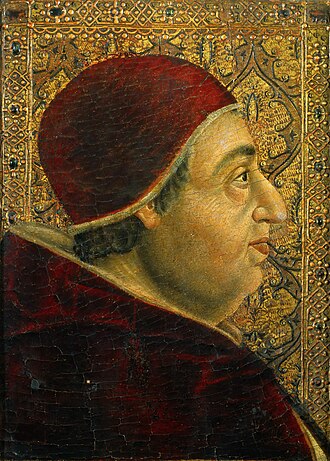








 Theory of Knowledge: An Alternative Approach