Mathematics and Ethics

Technology as Information

We will be discussing how “mathematics” provides the principles for our actions i.e. how mathematics determines our ethics. We shall examine some considerations of the differences between what is called calculative thinking and what is called contemplative thinking. In this examination we will come to a closer understanding our technological being-in-the-world. Mathematics is understood as “what can be learned and what can be taught”.

What we call mathematics is a theoretical viewing of the world which establishes the surety and certainty of the world through calculation. Calculative thinking determines that the things of the world are disposables and are to be used by human beings in their various dispositions. This commandeering challenging of the world and the beings in it is what we have come to call “knowledge”, and is made possible by what we call “knowledge”. This under-standing (i.e. that which “stands under” or grounds) is that upon which all of our actions are based. This surety or certainty that beings are in the way that we say they are through calculation arises through the viewing and use of algebraic calculation in the modern world. Algebraic calculation is a language of signs and numbers. The results of what is and what has been achieved through this calculative thinking are what we have come to determine what knowledge is in our day and what is best to be known and how it is to be known. What is the relationship between these calculations and what we call “information” and how does information relate to ethics?

Ethics are based on what Aristotle called phronesis: our careful deliberation over what best actions will ultimately bring about the best end result. We call this end result our happiness or what Aristotle called our eudaimonia. But how can happiness be the end result of what is, essentially, a hubristic way of viewing and being in the world? What we choose to be through our doings in the worlds of our projections is that which demonstrates our skills, aptitudes, and fitness to bring forth the “work” that is the “product” or outcome of the activities in those worlds whether those outcomes or “goods” be works, services or ideas. It is eros that urges the soul to “hear” that calling from the logos that sets us upon the journey to self-knowledge that allows us to adapt to the inevitable change that is a re-birth that seeks for that which is fitting to the soul.

A Reading of King Lear
We shall reflect on this question of self-knowledge and how the mathematical impacts self-knowledge by examining the passage below from Shakespeare’s King Lear Act V sc. iii.

CORDELIA
We are not the first
Who, with best meaning, have incurr’d the worst.
For thee, oppressed king, am I cast down;
Myself could else out-frown false fortune’s frown.
Shall we not see these daughters and these
sisters?

KING LEAR
No, no, no, no! Come, let’s away to prison:
We two alone will sing like birds i’ the cage:
When thou dost ask me blessing, I’ll kneel down,
And ask of thee forgiveness: so we’ll live,
And pray, and sing, and tell old tales, and laugh
At gilded butterflies, and hear poor rogues
Talk of court news; and we’ll talk with them too,
Who loses and who wins; who’s in, who’s out;
And take upon’s the mystery of things,
As if we were God’s spies: and we’ll wear out,
In a wall’d prison, packs and sects of great ones,
That ebb and flow by the moon.
EDMUND
Take them away.
KING LEAR
Upon such sacrifices, my Cordelia,
The gods themselves throw incense. Have I caught thee?
He that parts us shall bring a brand from heaven,
And fire us hence like foxes. Wipe thine eyes;
The good-years shall devour them, flesh and fell,
Ere they shall make us weep: we’ll see ’em starve
first. Come.

Explication of the Passage from King Lear

To attempt a summary and explication of the whole of the greatest work in the English language is impertinent.  But a brief introduction is necessary to understand the play as it appears in the scene above.

At this point in the play, Lear and Cordelia, supported by French troops, have lost the civil war for Britain to Edmund’s forces. Lear, as King, has been ultimately responsible for this civil war. At the beginning of the play, he has disowned his ‘truthful’ daughter Cordelia and fallen victim to the flattery and machinations of his two eldest daughters, Goneril and Regan. He has divided the kingdom in two giving each sister control of half, the intention being to avert future strife. Lear, at the same time, wishes to retain the appurtenances of a king, the appearances of a king, while retaining none of the responsibility: Lear is satisfied with the appearances rather than the realities of things. It is this satisfaction with the appearance of things that leaves Lear open to the machinations of his two daughters, Goneril and Regan.

Lear’s responsibility is, chiefly, a moral one. Goneril and Regan soon work together to remove from Lear the power and possessions that he once held. Lear becomes an “O”, “a nothing”. In his “nothingness”, Lear becomes mad and rages against the ingratitude shown by his daughters and the injustice that he sees in the nature of things and in the created world as it is.

This scene from Act V above is Lear’s anagnorisis or moment of enlightenment, the moment in tragedies when all tragic heroes recognize the errors of their ways and the consequences of their hubris. These consequences we call nemesis or just desserts.

Lear ends up houseless and homeless and wanders on a heath in the heart of a terrible storm. Lear’s physical, mental and spiritual sufferings soon drive him mad. The storm’s effect is a purification of Lear: Lear removes his clothing to become naked, to reveal human being as a mere ‘bare forked animal’; his ego is destroyed in the madness; he no longer focuses on himself but is able to see the ‘otherness’ of human beings and to feel compassion and pity for them (in the characters of Edgar as Poor Tom and the Fool) because he sees himself and his humanity in them. Edgar, too, has become a ‘nothing’ due to the machinations of his bastard brother Edmund and is a parallel to Lear in the double plot of the play.

Lear has gone from King to nothing and he is ready for re-birth. His ego has blinded him to understanding what his true relationship to his god is: initially he looked upon this god and his power as being something which he, Lear, himself possessed. Lear believed that only he himself possessed this truth. He dismisses the truth-tellers in the play: his Fool and his daughter Cordelia. In Lear’s kingdom, truth is not to be revealed. Only those who flatter are those that are heard.

The play King Lear is a play about the consequences of not knowing who we truly are, as individuals and as a species, as human beings. Lear, focused as he is on his ego, his Self, is willingly duped by machination in the play; he is willingly duped by flattery as this flattery is recognition of his social prestige. His later suffering and madness bring him to a true understanding of his relation to the god and to other human beings, and this relationship is Love expressed through the care and concern that he later shows to Poor Tom and the Fool. Love is, as Plato describes it, “fire catching fire”. It is recognition that in the most important things, all human beings are equal in that all are capable of the capacity for Love. Given the inhumane nature of human action in many cases in the real world, it is not without reason that Love has been described as a homeless, houseless beggar in our mythologies. Our literature sometimes refers to him as Eros.

Many critics suggest that this play is atheistic; Lear has lost his faith in God. The above passage suggests that such is not the case: what Lear has come to understand is his true relationship to his God, the true relationship of all human beings to God. Lear has lost the illusion of what he had once understood as God and what his relationship was to that God. It is this illusion that is the trap cast for those who believe that they are in possession of the truth or that truth is a product of their own creation or doing. Such a belief gives the individual the illusion of power. The God in King Lear is absent: He will not perform some miracle preventing the hangings of Cordelia and the Fool by the Captain later in the play. The essence of human being and of our humanity is to reveal truth. Great catastrophes are the result when we do not do so. In King Lear, the truth is destroyed. Good does not triumph over the evil of human actions in this play and we, too, by our very silence, are made complicit in the deaths of Cordelia and the Fool. In King Lear, human beings are not “beyond good and evil”.

In the play, the god exhibits Himself by His absence. Absence is not non-existence. It is the absence of God in the play that gives reason to those who interpret the play atheistically. One of the many themes of the play is what happens to human beings when they ignore the truth and persecute the truth-tellers. They, too, become subject to machinations and gaslighting. It is the tyrannous element present in all human beings. In their ignorance, they become victims in the struggle for power. When we show our astonishment at the discoveries of the James Webb Space Telescope, we are actually witnessing the withdrawal of the God into hiddenness in order to allow those distant galaxies to be. As Being comes to presence, the God withdraws.
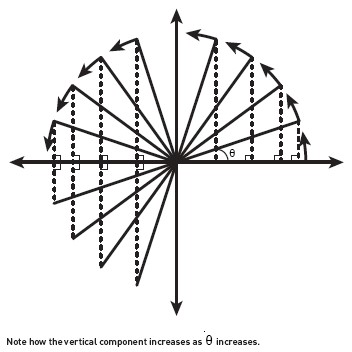
Pythagorean circle
In relation to King Lear, the above should be viewed as a sphere with each of the triangles being wheels within wheels or spheres within spheres.

The play King Lear shows that the purpose of suffering is to allow for the de-creation of our selves, the de-struction of ourselves, our “I”s or egos. We today see no purpose in suffering, particularly the suffering of the innocent. One of the purposes of suffering is the destruction of the ego or self through affliction. This same decreation of the self was behind the geometry of the Pythagoreans. For the Pythagoreans, the study of geometry served an identical purpose: the purification of our selves or souls through a contemplative understanding of the things that are. When we stand on the circumference of the sphere above and are subject to its spinning, we suffer the ups and downs of Fate. We are beings in Time. Being at the centre of the sphere allows us to be free of its spinning. The spinning of the wheel or sphere is Time.

There is a Wheel of Fortune motif that runs throughout King Lear: Fortune is personified in the passage through alliteration ‘false fortune’s frown’ to illustrate that it is, in this case, one of human making: even with the best of intentions one can incur the worst: good does not triumph over evil in this sphere but is subject to the same necessity as are rocks and stones. To decreate one’s Self is to have the Self replaced by an assimilation into the divine; it is to become one of ‘God’s spies’, to see all with God’s eyes and to see all for God. God requires human beings “to see” His creation. His creation is Necessity; and there is a great gap separating the Necessary from the Good. Being requires human beings. When a human being sacrifices the Self, the ego, his most treasured possession, for assimilation in God, “the gods themselves throw incense” upon this sacrifice. We believe our Self to be our most precious possession; the renouncing of this possession is the purpose of our lives, and this renunciation is not pleasant: it is done through suffering. Few people are capable of it. I am not sure that one would want to be the parent of a saint. It is a pain-filled event much as ‘the turning’ in Plato’s allegory of the Cave is a pain-filled event.
Simone Weil
“Suffering (affliction), when it is consented to and accepted and loved, is truly a baptism”

The centre of the sphere is both in time and space and out of time and space. The Self as center here is indifferent to the size of the prison, the size of the circle, the size of the sphere. For Lear, imprisonment will be a liberation, not a restriction. “Suffering (affliction), when it is consented to and accepted and loved, is truly a baptism” (Simone Weil, “The Love of God and Affliction”). This is similar to Hamlet’s praise of Horatio (Act III sc. ii) where Hamlet says:

“…for thou hast been
As one, in suffering all, that suffers nothing,
A man that fortune’s buffets and rewards
Hast ta’en with equal thanks: and blest are those
Whose blood and judgment are so well commingled,
That they are not a pipe for fortune’s finger
To sound what stop she please.”

Horatio has what we may call a ‘balanced soul’: each of its parts does what it is supposed to do. Having this balanced soul is what we understand as “self-knowledge”. This self-knowledge allows one to accept the buffets and rewards of fate with equal thanks. Of course, it is easy for us to be thankful for the goods that we receive from fate. It is not so easy to accept the inevitable afflictions that come with being alive with equal thanks.

Baptism is a spiritual re-birth. It is usually associated with the element of water. The purification of the soul is associated with fire, with alchemy. Love is ‘fire catching fire’. On the heath, Lear experiences both the baptism with water and the purification through fire. The spiritual rebirth for Lear is clear from this passage in Act V sc. iii as well as from Act III onwards in the play where he experiences both a physical and spiritual re-birth. In order to do so, he must lose all that has attached him to his world and his ego must be destroyed. He must, in a real sense, ‘die’ and become a ‘nothing’. This is the purpose for Lear’s nakedness and madness in the play.

The attempted suicide of Gloucester in the play due to his suffering is a counterpoint to this: suicide is a sin against the gods because we falsely believe that our self is our own and of our own making. Gloucester’s realization that this is not the case results in his finding Edgar again and having ‘his heart burst smilingly’. His death is the counterpoint to Lear’s death: Lear’s heart will break due to the depth of his affliction at the loss of his Fool and Cordelia. Death is the inevitable end for us all. Contrary to our view, in the world of Shakespeare some kinds of suffering have a purpose and some suffering simply does not, and human beings are not beyond the good and evil that is present in the suffering that has no purpose or meaning. My saying this is in opposition to that statement recently by a Republican congresswoman who said that death is inevitable in order to justify her voting for the cuts that would be made to healthcare for the poor.

Our “personal knowledge” is our ‘sphere of influence’ on our worlds and on the other human beings who inhabit our worlds. The impact of our spheres of influence will be determined by the amount of self-knowledge we possess, and on the skills, aptitudes, fitness (techne) that we possess for the tasks. Those spheres that we inhabit in our lives should be seen as composed of wheels within wheels with our actions the spokes of the wheels. The spokes are our ‘projections’ and provide support for our spheres. The spokes reach out to the circumferences of the wheels: from the diameter, the right angled triangle cannot exceed that circumference. The sphere created by the circumferences may be large or small; most of our lives are spent in our attempts to enlarge this sphere. The spokes that are the radii of the self are the whorls of a gyre initiated by the soul and projected upon the world that we are in in order to create a world. In the whorl that is the motion within our sphere, we are ’empowered’ to carry out our activities, but the prison of ourselves is still a ‘prison’ beginning with our bodies and our egos which are placated by the social prestige which comes from the fulfillment of our urges and desires. At each stage on the whorl, there is a leaping-off possibility that presents itself through the metaxu or relation of the logos.

We become and are satisfied in being the ‘poor rogues’ and ‘gilded butterflies’ that Lear and Cordelia will chat with. The outer edges of the sphere in its spinning indicate the fates of those who are ruled by Fortune: ‘who loses and who wins; who’s in, who’s out’. It is the fate of all of us who are dominated by the wish for social prestige, recognition. This fate and our desire for this fate is part of the ‘mystery of things’, the mystery of being: to see this we must remain at the centre of the sphere where we are not moved by the wheel’s or the sphere’s spinnings, nor are our desires dominated by the wish for social prestige and recognition.

Lear, through his madness and suffering, has been re-born (see other sections of the play particularly Lear’s awakening when he sees Cordelia as an angel, a mediator, and in the play she is, from the beginning, representative of truth). His self, ego, I, has been destroyed. He becomes a “nothing”. In this scene from Act V, Lear demonstrates the friendship that is the love between two unequal yet equal beings. Lear’s ‘kneeling down’ when asked for his blessing in order to ask for forgiveness is his recognition of this equality. It is no longer the view of the Lear who said “I am a man more sinned against than sinning”, a false view of Lear’s at the moment of its occurrence in the play for it is the view of most of us with regard to our own sufferings. We see ourselves as victims.

It is with a great and terrible irony that after these speeches of Lear’s and Cordelia’s, the following occurs:

EDMUND: Come hither, captain; hark.
Take thou this note. (30)
[Giving a paper] Go follow them to prison:
One step I have advanced thee; if thou dost
As this instructs thee, thou dost make thy way
To noble fortunes: know thou this, that men
Are as the time is: to be tender-minded (35)
Does not become a sword: thy great employment
Will not bear question; either say thou’lt do ‘t,
Or thrive by other means.
CAPTAIN: I’ll do ‘t, my lord.

EDMUND: About it; and write “happy” when thou hast done. (40)
Mark, I say, instantly; and carry it so
As I have set it down.
CAPTAIN: I cannot draw a cart, nor eat dried oats;
If it be man’s work, I’ll do ‘t.

The Captain’s final words are a statement for all of us motivated by social prestige. That Edmund should give the Captain a paper or document instructing him is a particularly ironic note. Human crime or neglect is the cause of most suffering. On the orders of superiors we carry out acts that we believe are “man’s work” i.e. they are not the work of Nature but we ascribe the moral necessity for our actions to Nature: “I cannot draw a cart, nor eat dried oats”. We believe that we are compelled to commit immoral actions because we believe Nature imposes its necessities upon us; and, at times, Nature does indeed do so. We believe such actions to be our ‘duty’. But if we live with a thoughtful recognition that there are simply acts which we cannot and must not do, we are capable of staying within these limits imposed by the order of the world upon our actions.

Such words as the Captain’s have been used by human beings to justify to themselves and to others the reasons for their actions from the committing of petty crimes to genocides. They see their crimes as performing a duty, just “following orders”, or as Adolf Eichmann said: “I was just a scheduler of trains; I didn’t kill anybody”, or as Elon Musk in his destruction of USAID does not see himself as responsible for the possible deaths of 15,000,000 human beings. It is indicative of a loss of a sense of ‘otherness’. It is the Ring of Gyges: the invisibility and anonymity we seek in order to dispel any responsibility for our actions. We allow this committing of crimes to ourselves when it is accompanied by an increase in our ‘good fortunes’.

The root of all crimes is, perhaps, the desire for social prestige whether that is achieved through position, money or recognition. The root of all sin is the denial of the light, the denial of truth, the denial of what is the essence of our humanity. This denial results in our becoming increasingly inhumane and cruel. For the Captain, it is Edmund who will determine what ‘happy’ will become for him by his giving to the Captain ‘noble fortunes’; and the Captain believes it. He does not see his act as “inhumane” but calls it “man’s work”. He will achieve his noble fortunes through the committing of an ignoble act, a heinous act.

One would need to look far across the breadth and depth of English literature to find two more contrasting views of humanity in a work than that which is presented here in these two brief scenes from King Lear. Human beings are capable and culpable of both forms of action: we have an infinite capacity for Love and forgiveness as well as a finite capacity for committing the most heinous crimes; only Love is both beyond and within the circle or sphere, and all human action is done within the sphere (or the realm of Necessity). At bottom, all sin is the sin against the light, or truth.

Contemplation and Calculative Thinking: Living in the Technological World

The passages from King Lear give us an entry to understanding a practical alternative way of being-in-the-world to the current conditioning or ‘hard-wiring’ of our way of being under the technological world-view operating as it does within the principle of reason. This alternative way involves contemplative thinking as opposed to calculative thinking. This contemplative thinking is open to all human beings: it is not a special mental activity. It is an attitude toward things as a whole and a general way of being in the world. It is the attitude that Lear proposes for himself and Cordelia on how they will spend their time in prison: while they will still be in the world, they will not be of the world. While they will be involved with the “poor rogues” and “gilded butterflies”, the world of those rogues and butterflies will not be their world.

What does this mean for us? It suggests that we are in the technological world, but not of this technological world; we are here in body but not in spirit. This is not a Ludditian rejection of technology. We are free in our relation to technology. We avail ourselves of technological things but we place our hearts and souls elsewhere. This detachment involves both a “being-in” and a “withdrawal-from”. Like Lear and Cordelia, we let the things of the technological world go by, but we also let them go on. Like Lear and Cordelia, the detachment is both a “no” to the social and its machinations, but it is also a “yes” to it in that it lets that world go on in their entertaining of it.

What is Calculative Thinking?
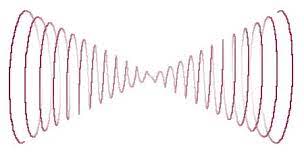
10 spirals should be seen inside of this cone. The spirals are projected to the circumference of the sphere.

The illustrated gyres on the left are an example of our ‘projections’ of our understanding of our being-in-the-world. These projections are a product of Eros expressed as ‘need’. Being is the essence of technology: Eros as time adapts itself to the Logos as “form” (space) and is thus able to “inform” and to be of use in the meeting of those ‘needs’ that are the projections of Eros.

Calculative thinking is how we plan, research, organize, operate and act within our everyday world. This thinking is interested in results and it views things and people as means to an end. It is a viewing that sees human beings as “human resources” or “human capital”. It is our everyday practical attitude towards things. Contemplative thinking is detached from ordinary practical interests. From where does calculative thinking originate?
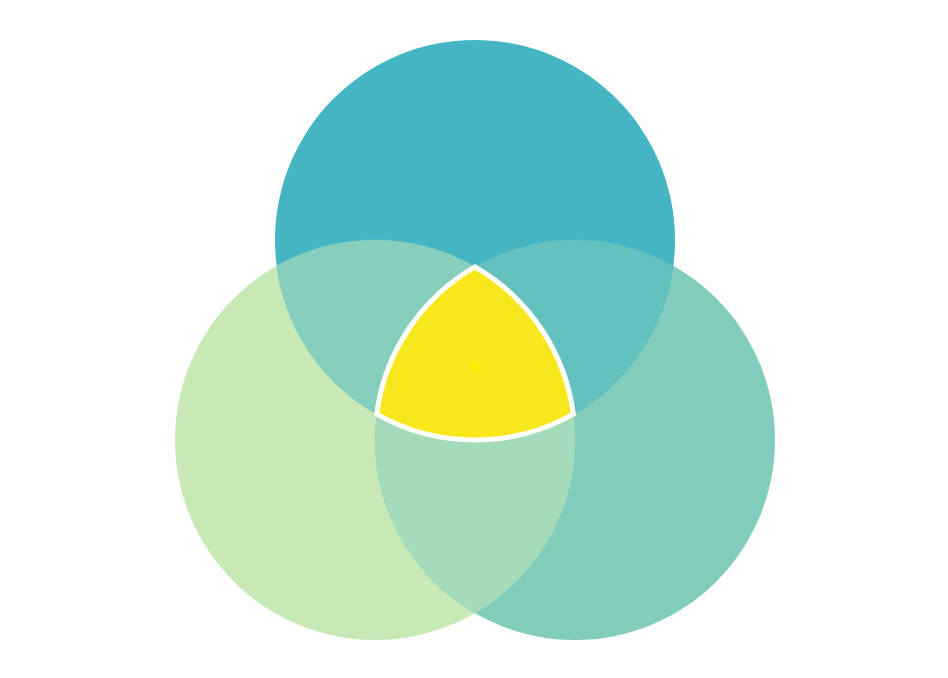
Our “spheres of influence” are in a relation to and occupy the spheres of others

Calculative thinking is illustrated by the spirals or gyres illustrated above. From the centre of the sphere that is our site in our being-in-the-world, we send out or ‘project’ what plans, research, activities we are involved in and these create a world that is itself sphere-shaped. These plans and activities are ‘echoed’ back to us. It is the logos as language and enumeration (mathematics) which establishes those spheres that are the worlds of our experience. These spheres are the worlds of the ‘poor rogues’ and ‘gilded butterflies’ whom Lear and Cordelia will entertain. These spheres are sometimes called “bubbles” today, and various types of human beings may occupy and share the same bubble or sphere or part of a bubble or sphere much like in a Venn diagram. We speak of a “sphere of influence” that we attribute to the powers of various individual human beings. This is the projection that they have over and into the spheres that are projected by others. We measure our freedom by how much of our sphere is truly in our possession and not under the influence of powerful people. The amount of this freedom is determined by the self-knowledge that we may have at any given time.

It is language and enumeration that are the metaxu or media that establish our relation to everything that is and to everything that is not. It is language, with the assistance of eros, which entraps us into seeing presence and the things that presence as “data” and this “data” must then be transformed into a “form” so that it may “inform” and thus become a “resource”. This is why our age is called the Information Age.

The piety that is religion establishes what should be looked up to and what should be bowed down to. Aristotle called or implied that human beings are ‘the religious animal’ in his discussions of piety in both his Politics and his Nichomachean Ethics. In other days, this piety was indicated by that object or site which held the highest point and dominated one’s view. In the West, the highest point was dominated by the spire of the cathedral or the minarets of the mosque from which the imam made his call to prayer. These indicated the way of being of the individuals who lived within those communities. In the East, it was the statue or temple of the Buddha, or it was in the prohibition that no human construction was to be higher than the highest coconut tree within the sphere of site of a Balinese person. These are now not the most dominant points. The most dominant points are the communications towers that are the logistics and infrastructure of our Information Age and these are global in influence.

“Information” develops into the setting in order of everything that presences as “data”, and information establishes itself in the “resources” that result, and rules as “resource” itself. This is the essence of artificial intelligence and it is the danger of artificial intelligence. The algorithm rules and determines the understanding and thinking of the spheres of the individuals whose spheres have been created from that algorithm which are made manifest in their projections. While living within the world of technology, human beings are physically, mentally and spiritually changed by that technology.
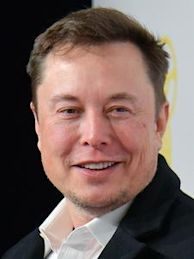
Elon Musk

The danger of the tyranny embedded in technology is obvious: the creators of the algorithm will determine the understanding and thinking as well as the actions of those who are subject to the algorithm. They are the new sophists who use rhetoric as their meta-language. They will pre-determine their spheres and thus their actions. This is the essence of cybernetics, the unlimited mastery of human beings by other human beings. Cybernetics provides a framework, a form which determines the principles of communication (the form that informs and how it informs, similar to the rhetoric of the sophists of ancient days), the control, and the feedback (the algorithm). Cybernetics determines future actions. The term cybernetics originates from the Greek word “kybernētuēs,” meaning “steersman” or “governor”. Cybernetics is political. It deals with the control of the many. One should be reminded of the many analogies Plato makes in his dialogues with regard to ‘the steersman’ or the ‘helmsman’. Cybernetics is the technology of the helmsman or steersman.

What we choose to be in our doings in the worlds of our projections is that which demonstrates our skills, aptitudes, and fitness to bring forth the “work” that is the product or produce of that world be it goods, services or ideas. We feel ‘at home’ in these worlds. This ‘at home-ness’ is what is understood as ‘justice’; our being in those worlds is something we are ‘fitted for’, what is suitable for us. The ‘unbalanced soul’ driven by the desire for power or prestige will seek to occupy all of the space (logos) within the world that the sphere represents. These are those who do not have the skills, aptitude or fitness (the techne) for a world that they have become involved in and so they must use deceit, machinations and lies. Their product will be injustice.

Human beings come to presence as the ‘perfect imperfection’ dominated by Eros as need (Time). In the perduring of their presence, they are the zoon logon echon. Their perdurance is in language (logos): word and enumeration. In their perdurance, human beings adapt and change, but these adaptations and changes are appearances only. They are ‘surface phenomenon’ and are subject to evil, the denial of the good and the denial of the light. The coming to presence of the ‘form’ that ‘informs’ is the algorithm that is the principle of reason. The principle of reason is a principle of Being: it is Eros present as ‘need’ and shows one of his faces.

“Stupidity” is a moral phenomenon, not an intellectual phenomenon. “Intentional ignorance” is the giving over of responsibility for one’s actions, much like the story in the ring of Gyges. There is a parallel between invisibility and anonymity, and this invisibility shows itself in the inability of the individual who believes in the “invisibility” of their anonymity to think or relate to the consequences of their actions. Moral decay and depravity, the lack of self-knowledge that involves the uncertainty of what it means “to be a man”, what is “male excellence”, are all results of the failure to live within the essence of being human by revealing truth. These make the individual less “humane”. These social phenomenon are all connected and rooted in the sin against the light: the failure to bring things to light and the denial of the light.

The essence of technology which presents itself in the appearance of information correspondingly changes the essence of human being by closing down those open regions that are possibilities of freedom for human beings both in thought and action. The various worlds of human beings become closed down because they are limited in possibilities, and reality becomes replaced by fantasy, an empty, unthoughtful wishing that constructs “virtual” worlds. These virtual worlds are essentially nihilistic in nature and mirror the worlds of the rhetoricians and sophists from ancient days. The virtual worlds are the outer reaches of the gyre that has been projected from the central position of the self. The aspirations of those who wish to colonize Mars, for instance, are an example of this nihilism in action. These fantasy worlds are a diminution of the temporal and spatial limitations of necessity or reality, and they accentuate the immediate, the gut reaction. This places the viewer/hearer in the center of the action or the sphere. In the Aristotelian context, pathos or emotion discourages critical analysis fostering an immediacy that endures long enough to inspire one to action (or simply to purchase a product). This is the opposite of Aristotelian phronesis.

The ‘tech bros’ and ‘cybernauts’ are those who have lost all sense of ‘otherness’ and who have come to the conclusion that there are some human beings to whom no justice is due for they are merely ‘resources’ and disposables or they are ‘useless’. That technology as information grounded in the principle of reason is Being itself, then technology will never allow itself to be mastered either positively or negatively by human doing alone. Technology cannot be overcome by human beings for that would mean that human beings have overcome Being i.e. immortality. It is from within the Eros and the Logos that we must look for salvation from the way of being that is technology.
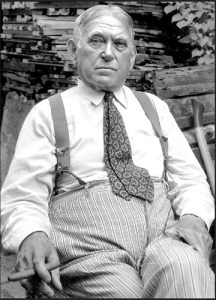
H.L. Mencken-8x6
“No one ever went broke underestimating the intelligence of the American people.”

One type of calculative thinking is that thinking we call ‘machination’. It does not require computers or calculators and it is not necessarily scientific or sophisticated. It would be better understood in the sense of how we call a person “calculating”. When we say this we do not mean that the person is gifted in mathematics. We mean that the person is designing; he uses others to further his own self-interests. Such a person is not sincere: there is an ulterior motive, a self-interested purpose behind all his actions and relations. He is engaged with others only for what he can get out of them. He is an “operator” and his doings are machinations. His being-in-the-world may be said to rest on the saying attributed to H. L. Mencken: “No one ever went broke underestimating the intelligence of the American people.” The ‘calculating’ person seeks empowerment or an increase in the influence of his sphere that has intersected the spheres of others.

Calculative thinking is, then, more of a general outlook on things, a disposition, a ‘way of life’. It is an attitude and approach that the things are there for what we can get out of them. People and things are there for us to exploit. This general outlook is determined by the disclosive looking of technology, how it reveals truth, and its impositional attitude towards things. The transforming of the world that is, our reality, into ‘data’ kills both eros and logos and creates a sterile, homogeneous world from which we flee into the realm of ‘virtual worlds’ which, too, are a product of that same limited imagination that constructed the understanding of that reality that is always before one. Calculative thinking inevitably requires moral obtuseness.

There is no lack of calculative thinking in our world today: never has there been so much planning, so much problem-solving, so much research, so many machinations. TOK itself is a branch and flowering of this calculative thinking. Indeed, what is called critical thinking is but another example of the calculative thinking found in other areas of what is called thinking. But in this calculative thought, human beings are in flight from thinking. The thinking that we are in flight from is contemplative thinking, the essence of which is to reveal truth, the very essence of our being human and the way in which we engage in our ‘humanity’. In this flight, we are very much like Oedipus who, after hearing the omen from the oracle at Delphi and its prophecy, rashly flees in the hope that he can escape his destiny. As with Oedipus we, too, are blind and unable to see in our flight from thinking and in our rash attempts to “change the world”.

What is Contemplative Thinking:

Contemplative thinking, on the other hand, is the attention to what is closest to us. It pays attention to the meaning of things, the significance of things, the essence of things. It does not have a practical interest and does not view things as a means to an end but, much like Lear and Cordelia, dwells on the things for the sake of disclosing what makes them be what they are. It is an engagement which is a disengagement.

Contemplative thinking allows us to take upon ourselves “the mystery of things”, to be “God’s spies” in the two-way “theoretical looking” of Being upon us and of ourselves upon Being. To be “God’s spies” we must remove our own seeing and our own looking, that looking and seeing that we have inherited as our “shared knowledge”, our “perspectivism”, and allow Being to look through us. This seeing and looking through is not a redemption that is easily achieved or bought. The pain-filled ascent in the release from the enchainment within the Cave to the freedom outside of the Cave or Lear’s suffering and de-struction on the heath in the storm are indications of the kinds of exertions that are required. King Lear in his anagnorisis has arrived at the truth of what it means to be, as such, and of his place in that Being. Contemplative thinking is a paying attention to what makes beings be beings at all, but contemplative thinking is not a redemption which can be cheaply bought.

The word “con-templation” indicates that activity which is carried out in a “temple”. It is that which is responsible for a communing with the divine. A common word for it is “prayer”. The temple is where those who gather receive messages from the divine. Our ’embodied souls’ are temples. Lear and Cordelia’s prison is, as such, a “temple” to Lear. Within a temple, one receives auguries. An augury is an omen, a being who bears a divine message which must be heard by those to whom it is spoken. In and through this hearing, one is given to see the essence of things and to “give back” those essences to Being.

Contemplation is the observing of beings just as they exist and attending to their essence. It is a reserved, detached mode of disclosing that expresses itself in gratitude, the giving of thanks: we give thanks to Being for being. This attention is available to all human beings who through their love, like Lear and Cordelia, are open to the otherness of beings without viewing those beings as serving any other purpose than their own being.  For human beings, it is the highest form of action directed by what the essence of human being is, the revealing of truth through the logos. It is arete or virtue, what we understand as ‘human excellence’. As the highest form of human being itself, it must be available to all since it is our very nature as human beings. It is the height of what the Greeks called arete “virtue”, “human excellence” and signifies the height of being human.
What is Called Thinking

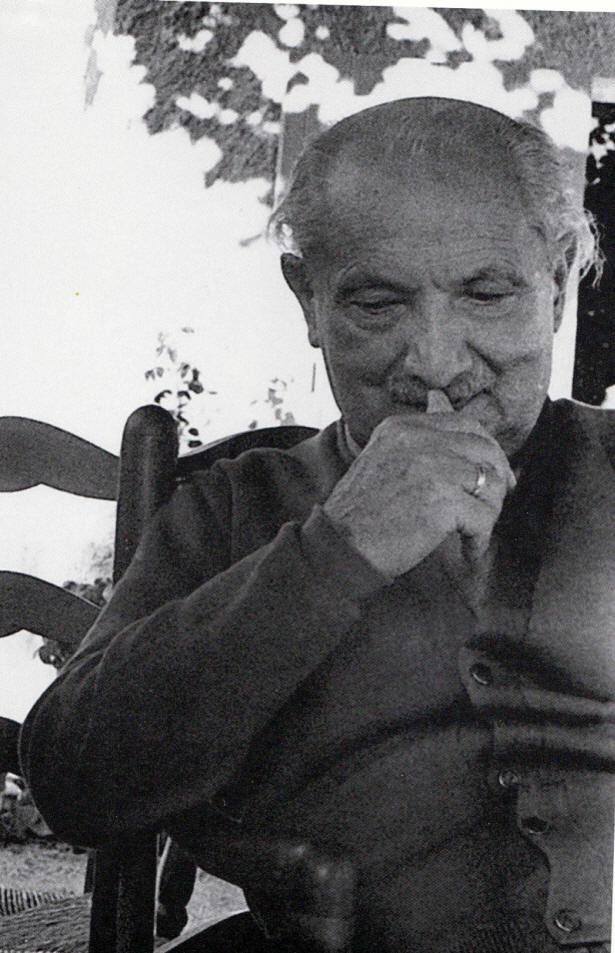
Martin Heidegger

“The answer to the question “What is called thinking?” is, of course, a statement, but not a proposition that could be formed into a sentence with which the question can be put aside as settled…The question cannot be settled, now or ever…Thinking itself is a way. We respond to the way only by remaining underway.” (Heidegger: What is Called Thinking?) 

Aristotle

“Just as it is with bats’ eyes in respect of daylight, so it is with our mental vision in respect of those things which are by nature most apparent.” Aristotle (Metaphysics​ Ch. I, Bk 2, 993b)

“The conditions of the possibility of experience in general are at the same time conditions of the possibility of the objects of experience.” Kant (Critique of Pure Reason, A 158, B 197) (Plato’s Divided Line: B=C)

“There are these two young fish swimming along and they happen to meet an older fish swimming the other way, who nods at them and says ‘morning, boys. How’s the water?’ and the two young fish swim on for a bit, and then eventually one of them looks over at the other and goes ‘what the hell is water?'”- David Foster Wallace. Kenyon. 2005.

Thinking and TOK

TOKQuestion

This writing on Thinking attempts to show how thinking is not so much an “act” or “activity” as it is a way of living or dwelling or, as North Americans would say, “a way of life”, a “lifestyle”. It is a remembering of who we are as human beings and where we belong. It is our struggle to gain self-knowledge and conscious awareness of our being-in-the-world and our being-with-others.

This writing builds on what has been discovered in the reading of Plato’s Allegory of the Cave and attempts to continue on the path to understanding the relationship between “education” and “truth”.

To begin with, thinking is not “having an opinion” or a notion about something. It is not representing or having an idea about something or about some state of affairs. Thinking is not “ratiocination”, developing a chain of premises which lead to a valid conclusion. Lastly, it is not conceptual or systematic. “We come to know what thinking means when we ourselves try to think” (Heidegger).

Thinking involves a questioning and a putting ourselves in question as much as the cherished opinions and doctrines we have inherited through our education or our shared knowledge. Putting in question is not a “method” that proceeds from “doubt” as it was for Descartes. The questioning or inquiring is a “clearing of the path” (and anyone who has had to ‘clear a path’ through dense jungle in this part of the world knows the difficulty of “clearing a path”) with no destination in mind. Questioning and thinking are not a means to an end; they are self-justifying.

But the paths often become “dead-ends”: and our age abhors “dead ends”. The approach to thinking that is thought here is to bring to light what is currently called thinking and to “awaken” a new approach to “what calls for thinking” which is the essence of what you are asked to do in the TOK course.

How is thinking to be distinguished from “method”? What is the relationship between memory as a way of knowing and thinking? Does any “thinking” take place in the areas of knowledge of TOK? Is there room for thinking in TOK i.e. an openness to thinking?

The great work of literature on the relationship between thinking, method and memory is Shakespeare’s Hamlet. Polonius’ observation of Hamlet: “Tho’ this be madness yet there is method in it” could be used as an opening or a way into an analysis of our times. “Rationality” as method may not necessarily be sane…

What is thinking? What Calls for Thinking?

“We all still need an education in thinking, and first of all, before that, knowledge of what being educated and uneducated in thinking means. In this respect Aristotle gives us a hint in Book IV of his Metaphysics (1006a if.): . . – “For it is uneducated not to have an eye for when it is necessary to look for a proof and when this is not necessary.”—Martin Heidegger “The End of Philosophy and the Task of Thinking”

To examine what thinking is and to ask the further question of what calls for thinking, we shall examine what is called thinking and what the philosophers have thought on thinking. We shall try to stay mindful of how the understanding of thinking’s essence and what is called thinking today is a result of the manner in which Plato’s allegory of the cave came to be interpreted, primarily by the Greek philosopher Aristotle. When we are exhorted to think “outside of the box”, the manner of the thinking that we are exhorted towards still remains within the “box” in which thinking has been traditionally framed. This thinking remains an “active doing” upon the objects that present themselves before us.

heidegger

The 20th century’s great philosopher, Martin Heidegger, said: “Most thought-provoking is that we are still not thinking – not even yet, although the state of the world is becoming constantly more thought-provoking.” (What is Called Thinking? 4) For us, thinking is traditionally thought to be “rationality”, “reason”, “judgement”. Heidegger, somewhat provocatively, says: “[M]an today is in flight from thinking.” (Discourse on Thinking 45) Not only do we not think; human beings are actively avoiding thinking.

For Heidegger, all the scientific work today, all the research and development, all the political machinations and posings, even contemporary philosophy, represents a flight from thinking. “[P]art of this flight is that man will neither see nor admit it. Man today will even flatly deny this flight from thinking. He will assert the opposite. He will say – and quite rightly – that there were at no time such far-reaching plans, so many inquiries in so many areas, research carried on as passionately as today. Of course.” (Discourse on Thinking 45)

But for Heidegger, science does not think: and this is its blessing. “This situation is grounded in the fact that science itself does not think, and cannot think – which is its good fortune, here meaning the assurance of its own appointed course.” (What is Called Thinking? 8) What Heidegger is saying is that if science actually thought, we would cease to have science as we know it. And if this should happen, we would no longer have clean toilets, penicillin, and all of the wonderful discoveries of science.

We shall never learn “what is called swimming”, for example, or “what calls for swimming” by reading a book on swimming. Only a leap into the deep end of the pool will tell us what is called swimming and what calls for swimming. The question of “what is called thinking?” can never be answered by proposing a definition of the concept thinking.

Historically, in the West, thought about thinking has been called “logic” which we have associated with “reason as a way of knowing”. This “logic” has received its flowering in the natural and human sciences under the term “logistics” and the preponderance of the algorithms that rule our social media. Logistics, today, is considered the only legitimate form or way of knowing because its results and procedures ensure the construction of the technological world. Logistics is an interesting word in that its use as a noun implies “symbolic logic” (mathematical algebraic calculation) and the conduct of warfare. Its use as mathematical calculation is found in what is called logical positivism which is a new branch of the branch of philosophy that was previously known as empiricism. The thinking here is the thinking expressed as algebraic calculation: only that which can be calculated can be known and is worth knowing.

To elaborate how this has come to be the case would require an analysis of 17th century philosophy and mathematics beyond what we intend in this writing. Suffice it to say that this is part of our inherited shared knowledge that we have received from the philosopher Rene Descartes. It is called Cartesianism.

Calculative Thinking:

Today we think that thought is the mind working to solve problems. We can see this in many of the quotes that are looked to as words of inspiration for young people. Thought is the mind analyzing what the senses bring in and acting upon it. Thought is understanding circumstances or the premises of a situation and reasoning out conclusions, actions to be taken. This is thinking, working through from A to B in a situation. Thoughts are representations of the world (real or not doesn’t matter, only the mind’s action does), or considerations about claims or representations (knowledge issues or questions), and the conclusions that are made. We think we know exactly what thought is because it is what we think we do. And as the animal rationale, the “rational animal”, how is it possible for thinking to be something we can fly from as it is our nature? Any examination of materials for approaching TOK illustrates, rather clearly, that we assume we already know what thinking is, what knowledge is. This is shown in the “to what extent…” beginnings of so many questions that are asked in TOK.

When we use the word ‘thinking’, our thought immediately goes back to a well-known set of definitions that we have learnt in our life or in our studies, what we have inherited from our shared knowledge. To us thinking is a mental activity that helps us to solve problems, to deal with situations, to understand circumstances and, according to this understanding, to take action in order to move forward. Thinking for us also means to have an opinion, to have an impression that something is in a certain way. Thinking means reasoning, the process of reaching certain conclusions through a series of statements. Thinking is “a means of mastery” or control over the ‘problems’ which confront us in our achieving of our ends.

On the special kind of thinking that occurs in science, Heidegger says that it is true that “[s]uch thought remains indispensable. But – it also remains true that it is thinking of a special kind.” (Discourse on Thinking 45) That is, reasoning, rationalization, analysis by concept, logical operation are all part of a particular form of thought, one with presuppositions and operational rules. This is, and has been called, “method”. It is the thinking that you are required to do in order to be successful in the TOK course. It is not, however, a universal way of thought. Nor is it the oldest means of thought; human beings of the past did not approach the world in the manner given by Aristotle, but rather human beings (Aristotle, specifically) had to think in this manner after reaching certain conclusions about the world and human nature. For Aristotle, this view came from his understanding and critique of the Greek philosopher Plato.

The kind of thinking we are probably accustomed to is what Heidegger names “calculative thinking”, and it is the thinking proper to the sciences and economics, which we, belonging to the technological age, mainly — if not solely — employ. Calculative thinking, says Heidegger, “calculates,” “plans and investigates” (1966b, p. 46); it sets goals and wants to obtain them. It “serves specific purposes” (ibid., p. 46); it considers and works out many new and always different possibilities to develop. The apogee of such kind of thinking is Artificial Intelligence.

Despite this productivity of a thinking that “races from one aspect to the next”; despite the richness in thinking activities proper to our age, and testified by the many results obtained; despite our age’s extreme reach in research activities and inquiries in many areas; despite all this, nevertheless, Heidegger states that a “growing thoughtlessness” (1966b, p. 45) is in place and needs to be addressed. This thoughtlessness depends on the fact that man is “in flight from thinking” (ibid., p. 45).

Thoughtlessness”, Heidegger states, “is an uncanny visitor who comes and goes everywhere in today’s world. For nowadays we take in everything in the quickest and cheapest way, only to forget it just as quickly, instantly. Thus one gathering follows on the heels of another. Commemorative celebrations grow poorer and poorer in thought. Commemoration and thoughtlessness are found side by side. (1966b, p. 45)

In the writing on Technology as a Way of Knowing, I have tried to show an example of this by comparing the “making” of the Japanese tea ceremony cup with the ubiquitous Styrofoam cup. The ‘creator’ of the Styrofoam cup, the patent holder, is Dow Chemical, the provider of the funds for Harvard’s “Project Zero”, and they, in turn, provide a number of IB educational institutions with their expertise on “what is called thinking” and are giving the techniques of thinking that will be used in the classrooms of those institutions. What/how are the ends of Dow Chemical, as a corporation, in alignment with the ends of the student learner outcomes as in the IB Learner Profile? How do Dow Chemical’s end contribute to our understanding of what “human excellence” is?

Calculative thinking, despite being of great importance in our technological world, is a thinking “of a special kind.” It deals, in fact, with circumstances that are already given, and which we take into consideration, to carry out projects or to reach goals that we want to achieve. Calculative thinking does not pause to consider the meaning inherent in “everything that is”. It is always on the move, is restless and it “never collects itself” (Heidegger 1966b, p. 46). This fact, paradoxically, hides and shows that humanity is actually “in flight from thinking.” Now, if it is not a question of calculative thinking, then what kind of thinking does Heidegger refer to when he speaks of another way of thinking that might be possible for human beings? And why, if at all, is there a need for it? A possible answer might be that because we have no problem in understanding the importance of calculative thinking, we probably are not so clear about the need, in our existence, for a different kind of thinking.

What Heidegger is saying, however, is something else. His thesis is that “reasoning” is not what thought really is. It is not the essence that defines thought. This is not to say that scientific thought is faulty, as Heidegger reiterates again and again. “The significance of science here (in the modern) is ranked higher here than in the traditional views which see in science merely a phenomenon of human civilization.” (What is Called Thinking? 22) How did science come to have this higher ranking?

Another Way of Thinking: “Poetically Man Dwells…”

Heidegger distinguishes from the traditional concept of thought (what he calls calculative thinking) a second form of thinking, ‘poetic’ thinking (meditative, contemplative thinking). Contrary to what it is commonly thought of, ‘poetic’ thinking is not a kind of thinking that is to be found “floating unaware above reality”, losing touch with reality. Nevertheless, the thinking he is proposing “is worthless for dealing with current business. It profits nothing in carrying out practical affairs.” (Discourse on Thinking 46)

In the “Memorial Address,” Heidegger speaks of two kinds of thinking: the above mentioned “calculative thinking” and “‘poetic’ thinking” (1966b, p. 46). ‘Poetic’ thinking is a kind of thinking man is capable of, it is part of his nature; but nevertheless it is a way of thinking that needs to be awoken. When Heidegger states that man is “in flight from thinking” (1966b, p. 45), he means flight from ‘poetic’ thinking. What distinguishes ‘poetic’ thinking from calculative thinking? What does ‘poetic’ thinking mean? It means to notice, to observe, to ponder, to awaken an awareness of what is actually taking place around us and in us.

‘Poetic’ thinking does not mean being detached from reality or, as Heidegger says,  “floating unaware above reality” (1966b, p. 46). It is also inappropriate to consider it as a useless kind of thinking by stating that it is of no use in practical affairs or in business. These considerations, Heidegger states, are just “excuses” that, if on the one hand appears to legitimize avoiding any engagement with this kind of thinking, on the other hand attests that ‘poetic’ thinking “does not just happen by itself any more than does calculative thinking” (1966b, p. 46-47). ‘Poetic’ thinking requires effort, commitment, determination, care, practice, but at the same time, it must “be able to bide its time, to await as does the farmer, whether the seed will come up and ripen” (Heidegger 1966b, p. 47).

‘Poetic’ thinking does not estrange us from reality. On the contrary, it keeps us extremely focused on our reality, on the essentials of our being, ‘existence’. To enact ‘poetic’ thinking, Heidegger says that we need to:

dwell on what lies close and meditate on what is closest; upon that which concerns us, each one of us, here and now; here, on this patch of home ground; now, in the present hour of history. (1966b, p. 47)

Even though “man is a thinking, that is, a meditating being” we need to train (“educate”) ourselves in the ability to think ‘poetically’, to look at reality, and thus ourselves, in a ‘poetic’ way. The cost of not doing so would be, Heidegger states, to remain a “defenseless and perplexed victim at the mercy of the irresistible superior power of technology” (ibid., p. 52-53). We would be – and today, more so than sixty years ago, when Heidegger gave this speech – victims of “radio and television,” “picture magazines” and “movies”; we would be “chained” to the imaginary world proposed by these mediums, and thus homeless in our own home. It is fairly clear that Heidegger has Plato’s allegory of the Cave in mind here. Heidegger further states:

all that with which modern techniques of communication stimulate, assail, and drive man – all that is already much closer to man today than his fields around his farmstead, closer than the sky over the earth, closer than the change from night to day… (Heidegger 1966b, p. 48)

It is very easy to see how much further from the openness around us we are when we are dwellers in our cities or see ourselves as avatars in virtual worlds on our computers given the pastoral description that Heidegger provides here.

If we view our current thinking in the light of Plato’s Cave, we can see that the risk for humanity in our current approach to thinking is to be uprooted not only from our reality, from our world, but also from ourselves and from our natures as human beings. If we think ‘poetically’, however, we allow ourselves to be aware of the risk implied in the technological age and its usefulness, and we can hence act upon it. We can experience some of the freedom which is spoken about in Plato’s allegory when we are brought out into the Open where the light of the Sun shines and things are shown to us in their own being as they really are.

When we think ‘poetically’ we do not project an idea, planning a goal towards which we move, we do not “run down a one-track course of ideas” (ibid., p. 53). When we think ‘poetically’, we need to “engage ourselves with what at first sight does not go together at all” (ibid, p.53).

In order to understand what this means, think of the comportment (disposition) we have towards technological devices. We recognize that in today’s world technological machineries and devices are indispensable. We need just  think of computers and their usage in daily life activities to be convinced, beyond any doubt, that “we depend on technical devices” (Heidegger 1966b, p.53). By thinking calculatively, we use these machineries and devices at our own convenience; we also let ourselves be challenged by them, so as to develop new devices that would be more suitable for a certain project or more accurate in the carrying out of certain research. (Think of the “madness” regarding the release of Apple’s latest IPhone or IPod.) We even allow our language to be determined by the machines and devices that we use (see Language as a WOK).

If calculative thinking does not think beyond the usefulness of what it engages with, ‘poetic’ thinking, on the other hand, would notice and become aware of the fact that these devices are not just extremely useful to us. It would also notice that they, by being so extremely useful, are at the same time “shackling” us: “suddenly and unaware we find ourselves so firmly shackled to these technical devices that we fall into bondage to them” (ibid., p. 53-54). If human beings, not being aware of this, are in a situation of being chained to their technological devices and tools, then by becoming conscious of this they find themselves in a different relation to them. They become free of them. With this awareness human beings can utilize these instruments just as instruments, being at the same time free to “let go of them at any time” (ibid., p. 54). And this is so because once we acknowledge that their usefulness implies the possibility for us to be chained to them, we deal with them differently; we “deny them the right to dominate us, and so to wrap, confuse, and lay waste our nature” (ibid. p.54). It is a matter of a different comportment (disposition) towards them; it is a different disposition to which Heidegger gives the name “releasement toward things” or “detachment” from the things (ibid, p.54). This “releasement” and “detachment” means an “openness” or “availability” to what-is so as to allow that which is to be present in its mystery and uncertainty. (See Plato’s Cave and the “openness” required to view the beauty of the forms and ideas in their “outward appearance” on the outside of the Cave.)

“Releasement” toward things is an expression of a change in thinking and, similarly to Plato’s prisoners in the Cave, a change in their being in the world. Thinking is not just calculation, but ponders the meaning involved and hidden behind what we are related to and engaged with. This hiddenness, even if it remains obscure, is nevertheless detected – by a meditating thinking – in its presence, a presence that “hides itself.” But, as Heidegger states:

if we explicitly and continuously heed the fact that such hidden meaning touches us everywhere in the world of technology, we stand at once within the realm of that which hides itself from us, and hides itself just in approaching us. That which shows itself and at the same time withdraws is the essential trait of what we call the mystery. I call the comportment which enables us to keep open to the meaning hidden in technology, openness to the mystery. (1966b, p. 55)

“Releasement towards things” and “openness to the mystery” are two aspects of the same disposition, a disposition that allows us to inhabit the world “in a totally different way.” But as we already mentioned, this disposition does not just happen to us. It develops through a “persistent courageous thinking” (ibid., p. 56), which is ‘poetic’ thinking.

The traditional concept of thinking intends thinking as a representing, and therefore as belonging to the context of willing (action). It is still involved with a subjectivism. Subjectivism is “setting up the thinking ‘subject’ as the highest principle of Being, and subordinating everything to the dictates and demands of the subject”. It is what we have come to call “humanism”.

Probably when we hear the word “acting” we immediately relate it to a familiar concept of action, such as the one that thinks of action as that which produces some kind of result, which means that we understand action in terms of cause and effect. To understand what Heidegger means by “higher acting,” we need to refer to the essential meaning that, according to Heidegger, pertains to ‘action’.

In the “Letter on Humanism” (1998b), Heidegger defines the essence of action as “accomplishment”, and he unfolds the meaning of accomplishment as “to unfold something into the fullness of its essence, to lead it forth into this fullness – producere” (1998b, p. 239). “Higher acting” is not, therefore, an undertaking towards a practical doing, but is a ‘higher’ acting as accomplishment, in the sense of leading forth of some thing into the fullness of its essence.

Releasement itself is what makes this available to man. For Heidegger, “higher acting” remains a techne, but it is “making”, a producing or accomplishing, that is more of a poiesis (poetry, for lack of better word) than the cheap, quick making of our production lines. In poiesis, human beings allow something to be in its mystery while at the same time bringing forth of that ‘some thing’ from out of the hiddenness in which it once resided.

Heidegger’s ‘poetic’ thinking is contrasted with the thinking that is present in Aristotle’s four causes: the material cause, the formal cause, the final cause and the sufficient cause.

The conventional view of perception is what is called representational. Representation “places before us what is typical of a tree, of a pitcher, of a bowl . . . as that view into which we look when one thing confronts us in the appearance of a tree, . . .” (Discourse on Thinking 63) Objects are there; they are perceived in both their form and idea (the mathematical as something which can be known).

Heidegger does not think of perception in this manner. Heidegger also includes something called horizon (time), which is, in keeping with the definition, the horizon or limits of that which we perceive (space). Objects are within a horizon, but we do not place them there; rather they “come out of this (openness of the horizon) to meet us.” (Discourse on Thinking 64) For Heidegger, “the Open” that we discussed as outside of Plato’s Cave is that area or realm in which objects can be perceived. Rather than actively search out objects to represent, or passively allowing things to enter into our sense experience, Heidegger believes that we have a sort of “active reception,” where that which is present “comes out to meet us.” The proper state towards that which is perceived is called “unconcealment”; thinking is “in-dwelling in unconcealment to that-which-regions.” (Discourse on Thinking 82) For Heidegger, this thinking is not a “grasping” or an “apprehending” but a “releasement” that allows the thing to be in its being as what it is in the “Openness” of the horizon of its being.

If we think of Heidegger’s “Open” as the region outside of the Cave, we will be close to what Heidegger means by this term (but it should be remembered that for Heidegger, the Cave is our “home”). Whereas Plato emphasizes the “open” as that region outside of the Cave, and thus focuses on “space”, Heidegger’s focus is more on Time as the region where the “Being of beings” is “sighted”. Our conventional thinking is an “active doing” whose purpose is to “change” or to “apprehend” what is in being and to make it a part of our “standing reserve” or as some thing disposable for our use at a later time. Heidegger’s thinking is more related to the Vedanta ananda or “bliss” as being in thinking itself.

What Calls for Thinking:

We cannot properly address the question What Is Called Thinking? without answering the question What Calls For thinking? This distinction between the two questions and the priority given to “what calls for thinking” over “what is called thinking” will be the focus of these discussions on thinking, and this will focus on “rationality” as what has come to be called thinking.

According to Heidegger, one is not thinking if one does not rank the objects of thought in terms of thought-worthiness. This point flies in the face of many contemporary accounts of rationality, for they suggest that one can be thinking well as long as one is following the right method. The emphasis today is on the method of what is called thinking. What one thinks about does not provide the standard for the role on such “ratio-inspired” accounts of thinking (see below for the contrast to legein-inspired or language-inspired models); indeed, critical thinking has come to mean critical whatever method-following thinking instead of critical whatever essential thinking. Heidegger’s point is that such means-end accounts involve and indeed propagate a distortion; a life spent rationally researching the history of administrative memos and emails is not a thoughtful life.  In rationally pursuing anything and everything we are not thinking.

Meta-analysis, meta-cognition, meta-linguistics and all other “meta”-prefixed approaches to thinking remain in the realm of “method” thinking and need to be contrasted with “logos” thinking. This is because these “meta” forms of thinking remain in the realm of the traditional thinking in Western “metaphysics”.

You will notice in many of your classes that you are encouraged to become “inquirers”. This is an attempt to re-introduce philosophy of some kind into the curriculum. The philosopher differs from the chess player, biologist, and politician in that the philosopher’s calling is to think about thinking as such. Moreover, to think philosophically about thinking, is to come to a confrontation with a mode of existing–“being-thoughtful”–and thereby with Being and how you stand in Being.

The Greek experience of thinking was grounded on a link between thinking and Being. This link is present in the earliest Greek thinking and carries over into the works of Plato and Aristotle. With Socrates in particular one catches the notion that built into thinking was a directedness towards order (particularly order within one’s self), goodness, beauty, truth, and Being.  Aristotle’s remarks on God and nature also underline this link. It is more revealing, Aristotle holds, to consider the relation between God and the world in terms of God as idea rather than God as creator or cause. God as idea can explain the striving of natural substances; the acorn seeks to become an oak, and thereby reproduce, and thereby the acorn mimics God’s eternality. In the same way, the human infant is on its way to becoming a thinking being, and so the human’s telos (purpose) is to mimic the highest being’s thinking. Moreover, Aristotle wonders what God would think about, and concludes that thought thinking thought is the only befitting topic for the most divine activity. The philosopher par excellence thus mimics the highest being (God) not only by thinking, but also by thinking about thinking.

What calls for thinking in our time? What is it that you should think about to be “educated”? The present age is the technological age, the age in which brain currents are recorded but the beauty of a tree in bloom is forgotten. What is thought-provoking about our time? Heidegger claims that what is thought-provoking about our time is that we are still not thinking. But what is it about our time that explains why we are still not thinking?

Heidegger diagnoses this age as the time of nihilism. The dominant characteristic of our time, then, is the forgetting or withdrawal of Being, and it is this that explains why we are still not thinking–even as we attempt to mimic intelligence via computer programs or connectionist (social) networks. We call to mind that in the allegory of Plato’s cave, “beauty” and “truth” must be “apprehended” as they will slip into “forgetfulness” or “forgottenness”. Our focus is on a “beauty” that withdraws (the physical appearance; the beauty in the “eye of the beholder”) the beauty that is “subjective” and belongs to the “subject” rather than on the Beauty that presences right before our very eyes in all that is in Being.

We are more distant from Being because the experience of thinking–in our technological age–has been shrunk to that of using a tool to operate within an already-fixed network of ends. This age, in other words, is more thought-provoking because in it ratio has triumphed over legein; thinking has become so severed from the being-thoughtful that the thoughtful being is in danger of being entirely eclipsed. This triumph of ratiocination is discussed further in imagination as a way of knowing.

We are still not thinking–despite Plato’s directive–because we have missed the object and source of thinking—Being, that thinking which occurs in the region of the “Open” outside of the Cave. We will continue to miss this thinking as long as we merely use thinking and do not dwell as thoughtful. All genuine thinking arises from and returns back to thoughtful existence; “thinking” that is not so anchored is homeless “thinking”, e.g., calculating, computing, or even reasoning, or all of the “meta” approaches to thinking that were mentioned earlier. Thoughtful dwelling in the region of the “Open” is the existential ground of thinking; in such a mode we can hear what calls for thought.

The loss of thoughtful dwelling can be “remembered” by looking back to the Greek thinking experience in order to recover that which has been lost in the translation of the Greek legein into the Latin ratio. Legein carries with it two significations that are not preserved by the Latin ratio: thinking as speaking and thinking as gathering. Thinking moved from that which is bound in sense perception as a way of knowing to thinking that thinks in language as a way of knowing is the direction for thought.

Thinking as speaking, as language. Being calls for thinking, i.e., for articulation, and thus to let Being be in language is thinking. William Blake’s Songs of Innocence, for example, houses the carefree Being of playing children. The language of thinking plays a crucial role in the poetry of Blake. That we are not thinking because we are not “mindful” of the language of thinking can be seen in how our technology is taking over the role of language in our being. A full elaboration of this idea is impossible here, but the claim, roughly, is that to be thoughtful is to exist as authentically immersed in language.

To begin, “the language of thinking”… all of these phrases can be taken either in the subjective or objective genitive, and those are possibilities on which we should reflect in our thinking. The phrase, “the idea of God”, for example, can mean “God’s idea” in the subjective genitive and “the idea about God” in the objective genitive. In like manner the phrase “the language of thinking” means “thinking’s language” or “the language found in thinking” in the subjective genitive and “language about thinking” in the objective genitive. The difference, then, is between the language found in thinking generally and the language found in thinking about thinking.

Thinking as gathering. Legein signifies gathering and the gathered. Thinking demands…that we engage ourselves with what at first sight does not go together at all.

Thinking is the gathering of that which calls to be gathered–the modes of our existence and Being as such. Thinking can begin when we hear that which calls for thinking:

Joyful things, too, and beautiful and mysterious and gracious things give us food for thought…if only we do not reject the gift by regarding everything that is joyful, beautiful, and gracious as the kind of thing which should be left to feeling and experience, and kept out of the winds of thought. Only after we have let ourselves become involved with the mysterious and gracious things as those which properly give food for thought, only then can we take thought also of how we should regard the malice of evil. (Heidegger: What is Called Thinking? P. 31)

Thinking, then, is not so much a matter of being an expert or technician in a field–even if the field be philosophy–as it is being responsive to the various ways of being of who we are, and this points to the existential modality or disposition of “being thoughtful” as the ground of thinking.

We may now state some conclusions about thinking:

  1. Those who take as the object of their theories a purely mental activity, “thinking”, are missing the richest part of the phenomenon: being-thoughtful.
  2. Being-thoughtful is not essentially a mental activity; it is rather the encounter with Being (the manifesting of meaning which occurs in the ‘showing’ through the beautiful).
  3. Means-end analyses sever thinking from its existential ground; one can be “means-end” rational and yet not thoughtful (and this is the thinking which occurs in the technological world view of logical positivism).
  4. Receptivity is the distinguishing mark of thoughtful being; the mastering thinking of the human sciences and the natural sciences in their demanding stance towards being and beings do not think; Nietzsche, who stated that what characterizes contemporary science is the victory of scientific method over science, the victory of method over thought.

Thinking and Language:

What is it that is named in “thinking”, “think”, “thought”? The Old English ​thencan, ​​to think, and ​thancian, to thank, are closely related; the Old English noun for thought is thanc ​or thonc–a thought, a grateful thought, and the expression of such a thought; today it survives in the plural “thanks”. ​The “thanc”, that which is thought, the thought implies thanks.

blase-pascal1
Blaise Pascal

Is thinking a giving of thanks? Or do the thanks consist in thinking? What does thinking mean here? “Thought” to us today usually means an idea, a view, an opinion or a notion. Pascal, the French mathematician and contemporary of Descartes, in his journals given to us as Pensees, ​​searched for a type of “thinking of the heart” that was in conscious opposition to the mathematical thinking prevalent in his day. Thought, in the sense of logical-rational representations (concepts), was thought to be a reduction and impoverishment of the word “thinking”. Thinking is the giving of thanks for the lasting gift which is given to us: our essential nature as human beings, which we are gifted through and by thinking for being what we essentially are.

“The gathering of thinking back into what must be thought is what we call the memory”. (Heidegger).

Today, some perceive that the task facing thinking is the overcoming of what is now described as its weaknesses:

  1. Thinking does not bring knowledge as do the sciences;
  2. Thinking does not produce usable practical wisdom;
  3. Thinking solves no cosmic riddles;
  4. Thinking does not endow (or empower) us directly with the power to act.

These observations of thinking’s weaknesses overrate and overtax thinking.

The question “What is called thinking?” can be asked in four ways:

  1. What is designated by the word “thinking”?
  2. What does the prevailing theory of thought, namely logic, understand by thinking?
  3. What are the prerequisites we need to perform thinking rightly?
  4. What is it that commands us to think?

Resources

References:

—— (1966a). Conversation on a Country Path about Thinking. In: Martin Heidegger, Discourse on Thinking. Trans. John M. Anderson and E. Hans Freund. New York: Harper and Row.

—— (1966b). Discourse on Thinking. Trans. John M. Anderson and E. Hans Freund. New York: Harper and Row.

——(1968). What is Called Thinking?. Trans. J. Glenn Gray. New York. Harper and Row.

Theory of Knowledge: An Alternative Approach

Why is an alternative approach necessary?