
The Emanations to and from Hod
Hod and the 8th Path: The Perfect Intelligence

Path 8. Perfect Intelligence (Consciousness) (Sekhel Shalem): It is called this because it is the Original Arrangement. There is no root through which it can be pondered, except through the Chambers of Greatness, which emanate from the essence of its permanence.
The Eighth Path is called Absolute or Perfect, because it is the means of the primordial, which has no root by which it can cleave, nor rest, except in the hidden places Of GEDULAH. Magnificence, which emanate from its own proper essence.
Alt. Trans. ” The eighth path is called the perfect consciousness because it is the plan of the primordial. It has no root where it can abide except in the hidden chambers of majesty (Gedulah) from which its own secret essence emanates.”
Wescott trans. The Eighth Path is called the Absolute or Perfect Intelligence, because it is the means of the primordial, which has no root by which it can cleave, nor rest, except in the hidden places of Gedulah , Magnificence, from which emanates its own proper essence.
Case trans. The eighth path (Hod the eighth Sephirah) is called the Perfect intelligence and it is so called because it is the dwelling-place of the Primordial. It has no root in which it may abide. other than the recesses of Gedulah, whence its essence emanates.

Hod is the Sephirot representing “the perfect intelligence”. As we have previously discussed, “perfect” means “complete”, “finished”, not requiring anything else nor any further action. Hod is represented in the Tarot by the Justice #8 card. Justice is the Law of Necessity or Natural Law as it was understood by the ancients, and this understanding is demonstrated in Path #22 The Faithful Intelligence and its influence on the Hod. The Primordial resides in the Law of Necessity; it was established prior to the Creation itself and determines what Creation would/will become. It is the justice of God’s withdrawal, allowing something to be other than Himself. This is why that which is completed is the ‘dwelling place’ of the Primordial, and its roots are in the Law of Necessity whose essence emanates from Sephirot Chesed.
While Justice is the law of Necessity and is the dwelling-place of the “primordial”, it is also representative of the human making of those things which we find ready-to-hand to us, those things that are ‘apt’ or ‘fitting’ for our uses and needs. The cycle of life found in the things of nature represents its teleology or purpose. The rose in bloom and its casting off of its seed is its natural end, its purpose. For human beings, to seek for the Good and to live well in communities is our “natural end”; it is our essence as human beings. When we fulfil our natural ends, we are ‘just’ and this implies that we are moral and ethical because the whole of Creation itself is moral and ethical.
In crossing over from the Divine to the created world (Gedulah or Chesed), the Divine must cross that abyss that separates the Good from the Necessary. How the Divine does so is one of the mysteries of Faith. The Law of Necessity is itself complete. Its essence rests in the physical world itself and it manifests itself from within the physical world. We find its clearest expression in the law of gravity and in causation itself, what we have interpreted as the principle of reason here, the principle of reason as a principle of being.
What we call “knowledge” in the arts and the sciences is the result of Necessity and our perspectives and understanding of what we call Necessity. Some Kabbalists ascribe The Library of Hermes to the Sephirot Hod, and this is appropriate as it is the Necessary which gives to us all that we can know about the Divine. The Divine itself conceals itself from us. The Library of Hermes is the container of the seven pillars of wisdom. Hermes is the mediator who conveys the logoi or messages of the gods. These messages are contained within his library.
The eight path captures what Plato means when he says: “Time is the moving image of eternity”. In Genesis, this passage is the first mention of God “making”, and “making” belongs to the universe of Yetzirah, which is the universe of making something from some thing. Beriyah is the universe of making something from no thing. Here the making appears to be the formation of space.
The “absolute” or “perfect” intelligence is that intelligence directed towards making or the end or “purpose” of making, to “pro-duce” or “bring forth” that which is apt or fitting or suitable for the desired purpose or end (justice). This production refers to human production, not with natural production since the ends of natural production are pre-determined through the Laws of Necessity.
Human production comes from our understanding of the Laws of Necessity. This human production is one aspect of “justice” as the Greeks understood it. Its highest achievement would be the enacting of just laws, and laws are the actions of human communities or societies (Gevurah). The most perfect law is the Law of Necessity, Natural Law: “Be perfect as your Heavenly Father is perfect, for He causes the rain to fall in equal amounts upon the just and the unjust” Matthew 5:8. This passage describes what we mean by the ‘blindness of justice’. The Law of Necessity is the Divine Will. The Perfect Intelligence is our understanding of the Divine Will, but this is an impossible task and comprises the essence of our journey in Life.
The hidden places “of Gedulah” (Chesed) are those of the physical world. Nature does not ‘lie’; it ‘hides’. The makers take those things which are ready-to-hand, use their knowledge to determine their “hidden” potentialities or possible forms, see a use for which they may be put, and then, through the use of tools, work to bring the “perfect” product into being that they originally had in mind. The end product is “perfect” because it is complete and requires no further work or action. If the end product is complete and serves its purpose, it is “just”, suitable; it is apt for its purpose. The hidden potentialities within things is the dynamis within them, the dynamis of the philosopher Aristotle. The wood of the tree has the potentiality to become a table. In Aristotle’s four causes, all these possibilities must be present for the potential thing to be made. Should one be lacking, then some other end is brought about.
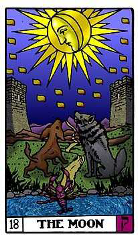
The eighth path is placed within the universe of Yetzirah or Formation among the four universes of the Sepher Yetzirah: Atzilut is the Spiritual universe which is focused on parousia or ‘presence alongside’ or ‘between’ and is the source of the emanations or influences/influx of the Divine through the Sephirot. It is the source of “the primordial plan” that is present in the Beriyah which is focused on the creation of something from no-thing (the created world of Time and Space contained within the boundaries and limits of the Laws of Necessity, what we might see as our ‘theoretical world’); Yetzirah is the formation of something from some thing, human making, what we call technology, the use of our ‘knowing’ that is theoretical (logos) and our ‘making’ of something from some thing through our use of tools; and Asiyah is the shadows of the physical, where things are seen in the reflected light of Malkhut. Our current viewing of the world is dominated by the reflected light of Keter that views the world through the ‘gloom’ of Chokmah which is symbolized by the Moon and represented by the letter Mem. Put another way, everything which is grasped by our natural faculties is hypothetical and is in the realm of opinion.
The eighth Path is the focus of four Sephirot: Gevurah, Tiferet, and Hod; but there is another path involved and that is Malkhut, the path of will to power through the Laws of Necessity. Human beings, through their will to power, try to gain dominance over the Laws of Necessity and the nature that is subjugated to it. This domination increases their freedom. Through the predictive powers of the sciences (which is our understanding of the Laws of Necessity), nature’s spontaneity is controlled and dominated by the technology that is human knowing and making so that human spontaneity or “freedom” may be increased. This power contains the potential for great good or great evil. The greatest danger or evil is the loss of our humanity as “human beings” when the presence of Tiferet is ignored or bypassed. Malkhut is the only Sephirot not touched directly by Tiferet. Does Tiferet’s contrary come to dominate and we become lost in the darkness that is The Devil #16, and we become lost in our simple desire to will to will when we forget the call to kindness and mercy that is part of the essence of Tiferet?
The philosopher Nietzsche says: “Power makes stupid”. Stupidity is not related to the intellect or intelligence. Stupidity relates to the social or the collective sphere where the responsibility of thinking and contemplation, the revealing of truth, is given over to others; and in doing so, no truth can be revealed. With this loss of the revealing of truth comes a subsequent loss in our humanity. We become more bestial, violent, mad. The individual mind is capable of making 1 + 1 into a 2, but the collective mind cannot. “One mind is enough for a thousand hands”, as the German philosopher/poet Goethe said.
The human intellect and its products are entirely moral. One could go further and say that human existence is entirely moral. Social media will produce greater stupidity for it is subject to the same laws of Necessity that rocks and stones are. With this increase in stupidity will come a subsequent loss of language, that language that allows us to become co-creators with God. The Devil or the Great Beast is the realm of the social, the realm of power. Power in the social realm can only come into effect with the existence of others. The collective is like a physical mass or weight, and like all mass is subject to the laws of gravity and Necessity.
Paul Foster Case sees the letter Mem as the link between Gevurah and Hod, but the letter Shin in combination with the double letter Kaf would appear to be more appropriate. It would also require its combining with one of the double letters which are the seven vertical paths of the Tree of Life and which represent both ascent and descent. Mem, one of the three mothers, links East to West, from Netzach to Hod, and may link South to North from Chesed to Netzach, as Mem is the mother letter of the right side of the Tree of Life. Mem signifies water’s movement downwards; Shin signifies fire’s movement upwards. This corresponds to the downward movement of creation and the upward movement of decreation. Decreation is to make something created pass into the uncreated, the purifying fire, unlike destruction which is to make something created pass into nothingness. Nihilists and nihilism are the symptoms of the substitution of destruction for decreation, the anti- Logos for the Logos.

The linking letter from Tiferet to Hod is Lamed meaning “study”. The “perfect intelligence” of the maker in the universe of Yetzirah or Formation is that knowledge which can bring things to completion, the “know how” of the techne, the technician or artisan. “The eye” of Ayin refers to the thinking that is “theoretical”. The techne or artist or craftsperson is knowledgeable of the materials, their potentialities and possibilities for formation, their giving and their resistance to formation. He has “know how”. He is knowledgeable of the eidos or the outward appearance of the thing which he intends to make and the use it will be put to. His dynamis is his knowledge of these things. The work is in another and for another. The architect, for example, must have knowledge of the materials that will be used to build the structure he intends, the form or outward appearance of the structure once it will be finished, and the use to which the structure is finally intended. He himself will not do the work; that will be done by another. The structure is intended for use by another (although the architect could make use of the structure himself.) This kind of knowing and making is the essence of what we call technology.
We need to remember that what is brought into being through technology is not “new”; and while it may be “novel”, it does not come to be out of nothing but comes to be from what was always already there in its essence through what we call the essence of our understanding and knowledge, language, and number, what is called the Ain Sof in the Sefer Yetzirah. The realm of the “perfect consciousness” is the realm of the artist and the craftsperson, the technites of the Greeks. The realm of “pure intelligence” is the realm of the scientist; but both knowing and making, the arts and the sciences, are held together in the unity that we call technology (techne + logos).
The Letter Lamed and the 22nd Path: The Faithful Intelligence
Lamed – and Elohim “created the sea-monsters, creatures that creep, and fowl.” 1:21
Alt. Trans. “The twenty-second path is called the faithful consciousness because, through it, the spiritual powers are increased. All dwellers on earth ‘abide in its shadow.'”
Path 22. Faithful Intelligence (Consciousness) (Sekhel Ne’eman): It is called this because spiritual powers are increased through it, so that they can be close to all those ‘who dwell in their shadow’.
Lamed, the 12th letter of the Hebrew Alphabet, is the symbol of learning and teaching and, thus, expresses what the Greeks called the mathematical. It is translated literally as the word for “learning” or “study” and also for “staff” or “goad”. The shape of Lamed is the ‘uncoiled serpent’, and the serpent is associated with knowledge. Lamed is located at the centre of the Aleph-Beth and represents the heart Lev לב. This is why it is associated with Tiferet, the Heart. In Kabbalah, learning is mostly done with the heart and soul, not just the mind as the mind is a secondary organ. This learning and teaching is illustrated in the statement of Simone Weil: “Faith is the experience that the intelligence is illuminated by Love.” This is why I have associated Lamed with the path of the Faithful Intelligence, the path going from Tiferet to Hod.
Lamed indicates that all learning is the heart of human existence, both spiritual and physical, and that the revealing of truth is part of human nature. When human beings cease to reveal truth, they become more inhumane, bestial, violent, mad. Human being’s course in life is to learn and express i.e., to use those faculties which distinguish human beings from all other animals and beings. Those faculties are our participation in the Logos, the use of language and number. Through the use of language and number we reveal truth and complete our human nature. But this use of language and number is “two-faced”: it can both reveal and conceal at the same time. When the use of the logos becomes centred in the Yod or individual (the Palpable Intelligence of the 27th path), it then becomes will to power or “self-centred”. Does a choice remain for human beings not to live out their being with this view of the logos i.e., is their past viewing of the logos now become their Fate? How does one extricate oneself from this?

Lamed reaches higher than any of the other Hebrew letters, like a lighthouse or tower high in the air. It may thus signify a warning of the hubris that comes to human beings when their pride in their learning causes them to place themselves at the centre of the universe at the expense of all other beings. It is the nemesis that results from such pride. The lightning bolt emanates from the Sun (a symbol of truth and associated with the Sephirot Tiferet) and blasts the crown or symbol of the “kingdom” (Malkhut) that human beings construct from their false use of language and number.
The shape of the Lamed is an undulating movement, (the serpent uncoiled, the Draconis spread across the sky) and the Lamed represents constant organic movement, constant change, the Draconis or Time. It may be said to be the learning that results in revolution, the hard learning of life. But this learning can also be the opportunity for conversion and change in the Self. Lamed is the lightning strike of energy or the lightning bolt of Zeus descending down the two sides of the Tree of Life. The Tower card (which I would suggest is #15 rather than #16) shows ten yods in the form of the Tree of Life on the female side of the tower and twelve yods indicating the twelve houses of the Zodiac, the twelve tribes of the Houses of Israel (again Israel being all creation and the twelve tribes being all the races of human beings) on the male side of the tower. The element of fire predominates in the card and this would suggest its association with the mother letter Shin. The illustrator of the card has chosen to associate the card with Peh, which signifies ‘mouth’, and Peh is one of the seven double letters. Does this signify the potential of speaking truly or falsely regarding things? We can gain some insight into this from Macbeth’s speech:
“Tomorrow, and tomorrow, and tomorrow, / Creeps in this petty pace from day to day, / To the last syllable of recorded time; / And all our yesterdays have lighted fools / The way to dusty death. Out, out, brief candle! / Life’s but a walking shadow, a poor player, / That struts and frets his hour upon the stage, / And then is heard no more. It is a tale / Told by an idiot, full of sound and fury, / Signifying nothing.“
Here we see the false speech of a man who views life from the perspective of having violated life’s principles: he has committed numerous murders in order to satisfy the desires of his own ego. For such a man, learning (especially from history and its ‘lighting’ of human experience in time) makes a human being ‘a walking shadow’ who cannot learn from his suffering and so becomes a nihilist, a destroyer. (Much, much more can be said of this particular speech.)
Lamed teaches us to learn from everything in life so that we may understand what can be learned and what can be taught. The significance of the Yods on The Tower #15 card indicate a learning and teaching that is focused on the ego, and this learning will lead to our downfall, as it does with Macbeth. While we cannot know the will of God in detail, we can learn that the purpose of suffering is the decreation or destruction of the ego. (Shakespeare’s King Lear is the best example of this in English literature). It is through this destruction or decreation that one becomes united with the Divine. After one has governed their bestial tendencies in Khaf and no longer has the blockages of the ego interfering with their vision of the world, they can begin to learn the truth of the true nature and purpose of human learning.
The Letter Mem and the 29th Path: The Corporeal Intelligence
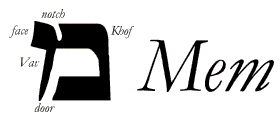
Genesis 1.7 And Elohim made the firmament, and divided the waters which were under the firmament from the waters which were above the firmament; and it was so. 8 And Elohim called the firmament Heaven. And there was evening and there was morning, a second day.
The Twenty-ninth Path is the Corporeal Intelligence, so called because it forms every body which is formed beneath the whole set of worlds and the increment of them.
Alt. Trans. ” The twenty-ninth path is called the corporeal consciousness because it marks out the forms and reproduction of all bodies which are incorporated under every cycle of the heavens.”
Path 29. Physical Intelligence (Consciousness) (Sekhel Mugsham): It is called this because it depicts the growth of all that becomes physical under the system of all the spheres.
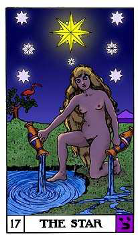
“To mark out” is to assign limits and boundaries to things, to give them a form (eidos) so that they may be understood within the web of Necessity. This is the mental process of the principle of reason and so has been assigned to the letter Shin. This influence of Shin is the realm of Yetzirah or Formation; and as we have stated, it is ruled by the principle of reason. The 29th path seems to indicate Aristotle’s teleology: the telos or end in which things achieve their completion or perfection (Hod). In the Tarot, The Star #17 is another card of completion i.e., Fate, what one is destined to be. What one is destined to be is determined by the choices one makes. The 29th path is the crossover from Netzach to Hod and it indicates a change from the realm of Asiyah, the material realm, to that of Yetzirah or the realm of Formation. The Judgement #20 of the test of Reish has already been determined and the Fate has already been decided.
The paths and the Sefer Yetzirah cannot be viewed from an individual perspective only. The individual is not the whole human being. The human being is an ‘embodied soul’ within a community of embodied souls. In the journey that is life, one can be ‘hooked’ into viewing the world as material only, as the fact-based reality we encounter and confront every day in our day-to-day lives. In the confrontation or strife that is Netzach, one makes the choice of becoming a full human being and going onward, or of being satisfied with materialism and power and of potentially becoming a golem, a ‘soulless’ animated thing. One chooses the darkness, or one chooses the light.
The letter Mem is water mayim מים, the waters of wisdom, knowledge, the Torah as it is referred to by some Hebrew commentators. Representing both waters and manifestation, it is the ability to dive deep into the wisdom, into the depths of Creation. It is said that in every person is the thirst for the words of the Creator which are the waters of life, and this corresponds to Aristotle’s words that “All human beings by nature desire to see”. The open Mem refers to the revealed aspects of God’s will that we understand as Necessity and that are given to us in our study and learning, while the closed Mem refers to the concealed part of the celestial rule that nonetheless guides us and all of existence i.e., the Divine Will. Mem also represents the time necessary for ripening and indicates to us the importance of balanced emotions and of humility, in particular, while we are waiting on God.
Mem corresponds to the number 40 and represents the time necessary for the ripening process that leads to fruition. (40 days for the development of the embryo, 40 years in the desert before reaching the holy land, 40 years development before Moses was prepared to be the leader of Israel, Jesus’ fasting for 40 days before he is tempted by Satan).
The Mem also teaches us about balanced emotions – balancing the watery motions of our feelings and this is how it influences Netzach. And it is about humility – water is the substance that always runs downhill to the lowest place. Fire, on the other hand, always rises.
The Twenty-ninth Path once again illustrates that which has been called the “mathematical” in this writing i.e., that which can be learned and that which can be taught. It is the knowledge or awareness of the physical material of the universe and the forms that are possible for this physical material to take its shape. In the path, this movement is associated with Time.
The “mathematical” would be indicated by the letter Lamed ל or “study”, “the serpent uncoiled” and how this emanates from the Sephirot Tiferet or The Sun. In order for some thing to be learned, it must first be brought to a “stand” or bounded within a horizon so that it may be “de-fined” and a name given to it so that it may be spoken about. The “numerations” weigh and measure things so that they are brought out of their natural state of metabole or change into something that can be known i.e., they are given a “permanence” of some kind, a “stability” of some kind. Numbers are only one example of the “mathematical”. The manner of seeing that results from the “consistency” or reliability of the use of numbers is but one manner of encountering and accounting for the laws of Necessity and the relation of created things to the domains of time and space.

The Twenty-ninth Path also indicates the limits of human reason and intelligence and so is influenced by The High Priestess #2. The ‘stability’ that arises from the collective or social manner of viewing the world comes about as a result of the consistency of the results of calculations or ‘numerations’ that are carried out. The ‘numerations’ are the logoi or speech that is shared among the members of the community. These logoi are grounded in the principle of reason. The Sefir Yetzirah states that Mem, as one of the three Mothers, moves in a horizontal, not a vertical direction. The movement on the paths is a later, Renaissance, addition. Because Alef is the source of all the letters, it is capable of both vertical and horizontal movement. The direction of Mem is back and forth not up and down, unless one considers the three Mothers as both horizontal and vertical and that the three Mothers are the three pillars of the Tree of Life (which is what is considered here). The three Mothers act as vowels in the formation of words and thus must be capable of both horizontal and vertical movements as well as diagonal movements.
There is no “human progress” that occurs on the spiritual level along with the progress achieved on the material level. Morally and ethically human beings, as a whole, have not made any significant progress from their ancestors. This is because the moral and ethical presence of what human beings truly are as human beings has always been present for them to reach out to and grasp. Because human beings lose sight of the chasm which separates the Necessary from the Good, they fail in making true progress. They come to worship power and all of its false idols. This ultimately results in the oblivion of eternity for human beings.
Hod is the terminus of the Pillar of Severity or Form (necessity); Netzach is the terminus of the Pillar of Mercy, the “splendour” of which is the recognition of the Beauty of the world and the beauty of human actions within that world. The middle pillar is the fulcrum providing the “balance”, the “harmony”, the “equilibrium”, the “friendship”, the “covenant” between the Divine and human beings. It is referred to as the Ain Sof by the Kabbalists
The Letter Kaf and the 24th Path: The Imaginative/Apparative Intelligence

The Twenty-fourth Path is the Imaginative Intelligence, and it is so called because it gives a likeness to all the similitudes, which are created in like manner similar to its harmonious
elegancies.
Path 24. Apparative (Tools) Intelligence (Consciousness) (Sekhel
Dimyoni) (Sometimes called The Imaginative Intelligence): It is called this
because it provides an appearance for all created apparitions, in a form
fitting their stature.
Khaf, the 11th letter of the Hebrew Alphabet, means literally the cupped palm of the hand. It is like a cupped, outstretched palm, ready to receive. The shape of all containers – a bowl, a cup, a jar, is based on that basic curved shape, and Khaf represents the idea of a container. It represents form, the outward appearance of a thing. A house is a form that contains the goings on of the people inside it; a body is a form which contains the life and energy of the person. The forms of the physical world are where the spiritual essence of life is contained and is able to manifest itself. The Khaf also teaches us to shape ourselves- to bend the ego and shape our character. This flexible character aligns it with Path #9, The Purifying Intelligence of Yesod. (The Kaf may also be said to refer to the Holy Grail, the container that holds life itself.)
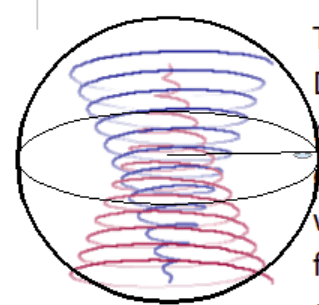
The Khaf is what gives form to the matter, and because of this power is placed on the left side of the Tree of Life. It is also one of the seven double letters and implies movement both up and down on the Tree of Life. It contains all the possibilities of containing, building, and forming all existence, and this relates it to the eidos or the outward appearance of some thing. It is the letter of formation, bending the straight line into a curved shape. It also symbolizes the crown of the Torah – Keter כתר (I think this would be better understood as the Kingdom of Malkhut?) The Khaf could also be understood as an arc which composes the sphere that encompasses or contains the physical world and thus is part of the gyre that crosses the world of Asiyah to the world of Yetzirah. Since the Khaf gives form to some thing and completes that thing, it is appropriate that it is associated with the path from Hod to Gevurah and is related to the Justice card #8 of the Tarot which is related to the “know how” that brings about the completion of some thing made from some thing else.
The Imaginative or Apparative Intelligence that is path 24 relates to that “know how” that is the technological. Technology is the unique coming together of ‘knowing’ and ‘making’, techne and logos, that is founded upon the viewing of the world as ready-to-hand, something disposable. This viewing first requires a ‘system’ or ‘grid’ in which the things are placed as objects; and as we have previously discussed, this viewing is determined by the theoretical understanding established in the Beriyah world under the influence of Binah, the third sephirot. When the things are brought to a stand within the system, it is through the use of tools and equipment that change in the outward appearances of things is brought about, and their shapes are bent so that they will be made useful to meet human ends or purposes. This is why we commonly misconstrue technology as the equipment and tools of technology rather than the viewing which first determines those tools and equipment and the uses of those tools and equipment. This may be said to be the reason why Binah is associated with the pillar of Boaz and with the adjectives of ‘severity’ and ‘contraction’.
In examining the triangles of the paths, the Kaf of Path #24 (The Imaginative/Apparative Intelligence) combines with the Shin of Path #29 (The Corporeal Intelligence) as well as the Ayin of Path #20 (The Intelligence of the Will) and the Lamed of Path #22 (The Faithful Intelligence) to produce what is called the technological viewing of the world. This is also affected by the Vav of Path #17 (The Intelligence of the Senses) and the paths of Peh (The Unity Directing Intelligence) and Kaf (The Imaginative Intelligence) which results from the influence of the path of Lamed from Tiferet to Hod.
The Letter Yod and the 27th Path: The Exciting Palpable Intelligence
The Twenty-seventh Path is the Exciting Intelligence, and it is so called because by it is created the Intellect of all created beings under the highest heaven, and the excitement or motion of them.
Alt. Trans. “The twenty-seventh path is called the exciting consciousness because, through it, is created the life-breath of every created being under the supreme orb, as well as the motion of them all.”
Path 27. Palpable Intelligence (Consciousness) (Sekhel Murgash): It is called this because the intelligence of things created under the entire upper sphere, as well as their sensations, were created through it.
The Twenty-seventh path relates to the creation of human beings, their “ensoulment” and their motion. Here we can see that “soul” is related to “intellect” or “reason” in one translation; it is called the “life-breath” of human beings in another translation, and it is here that a great transformation takes place in the being of human beings. We can relate this “intellect” to the Greek logos or perhaps the Greek nous, but it more closely relates to the Latin understanding and translation of logos as rationale or “reason” rather than the broad Greek understanding of the term.
If we relate this to our understanding of eros, the “exciting consciousness” is the awareness of “need”, and it is this need which compels us to “motion” or action. This awareness of our needs requires us to apply reason to them in order to fulfil them. The use of the word “palpable” in some translations suggests that the sensations spoken of here go beyond the mere ‘seeing’ with the eye only but also include the other senses. We feel the needs of eros ‘palpably’. While sight is given priority in the senses, it is not the only sense of human beings. Equally important, perhaps, is the sensation of hearing.
Motion is related to Time, and here it is related to the concepts of Being and Time. From Netzach to Yesod is experienced the “life-force” of sexuality/propagation, and Time is the coming into being of all beings. With the “exciting intelligence” is experienced the erotic need of the recognition of our incompleteness. The words of this path suggest that the world as a whole is a ‘living being’ and that all created beings have the ‘life-breath’ within them. The purpose of the journey is to get in touch with this life-force. Again, whether this will be experienced as will to power or Love is the choice that the human beings must make, and this choice comes at path 25 The Intelligence of Trials.
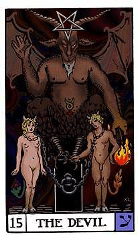
(Our desire for children is the desire for the Incarnation which came into being through Tiferet. The “supreme orb” is the sphere encircling all created things, but there is also an indication that it is the Sun. The tarot card corresponding to this path is The Devil #16 and the letter Ayin ע meaning ‘eye’ is associated with the card. This card stands in contrast to The Lovers card #6. Is the beauty of individual human beings and our desire to possess and consume that beauty (the fruit of the Tree of Knowledge) the trap that is set for us? the “original sin” and its temptation is the desire to consume, to eat that which is beautiful? This cannot be so, but it is so difficult to think around this. Our sexuality is a mirroring of the creative act of the Divine, a widening of the gyres. Is this the reason behind the calling of sexuality ‘sinful’ in so many of the traditional religions? Or is it the very disruptive nature of eros to social order that is the ground of the various taboos against sexuality as it appears in its various forms?)
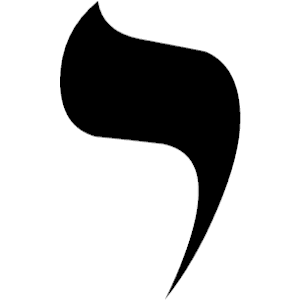
The 10th Hebrew letter Yod is a dot or point. There are a number of contradictory interpretations for the letter Yod, and these contradictions rest in how different interpretations of the nature of the Divine and the nature of human beings have come about. For some, the Yod represents the Creator, the single point from which all of creation emerges, the Unity within multiplicity, but is this not a duplication of the understanding of the letter Alef? The letter Alef is composed of two Yods and a Vav suggesting a Trinity. A singular Yod would place God at an infinite distance from His creation, or conversely, place God within His creation in such a way that He is mistaken for the Necessary and all that occurs within Necessity. The Yod itself is considered the foundation of all foundations, and this is why it is associated with the Sephirot Yesod. But is not this foundation what is being referred to as Necessity here? Is the key to understanding the significance of the Yod that it is the 10th letter of the Hebrew alphabet and thus a new beginning of some kind?
Yod is a symbol of the Holy One, the Creator, since the holy name starts with Yod (YodHehVavHeh). Small in form, the meaning of the Yod is great. According to kabbalistic tradition, all creation came forth from a single point– a point which represents God’s infinite presence inside of the finite world. This interpretation seems to be fine if it is remembered that this single point is infinitely small in relation to the macrocosm about it and that it mirrors the soul in the body in that the soul is an infinitely small point in the microcosm that is the human body.
Yod also represents the idea of Unity within Multiplicity, of one whole that is comprised of parts. Yod as we see is a single point, but its value is 10. It shows us that many grains of sand are used to make one pot, many pages make up one book, many drops of water make up the ocean. There are many parts that comprise the individual human being and all of these parts belong to Necessity, but at centre of the human being is an infinite point that does not belong to Necessity. It belongs to God because it is part of Him. There are many occurrences and experiences in the world, but they all stem from One God, perfect and indivisible.
But if this is the case, how can events and experiences which are clearly deprivals of the Good be attributed to God? One cannot so easily dismiss the Book of Job. The Yod also is said to represent the ten Sefirot (but if this is the case, what is the significance of the Alef and what is the relation between the two? The letter Alef is composed of two Yods and a Vav. It is a ‘trinity’.). In Yod, the multiplicity returns to unity. In the Sephirot Yesod, it can be said that Being is the foundation, the ground/reason. The principle of reason speaks to us as a principle of being from within the Yesod and the Yod itself can be mistakenly understood as this principle of reason only. The Fool #0 stands before the abyss of Being, the world of Asiyah; he/she makes a leap into that abyss. The result becomes The Magician #1: the techne, the “showman” and the resultant theatre that is the world of Yetzirah. Shakespeare understood this when he said: “All the world’s a stage and all the men and women merely players”.
The Yod is an infinite dot, the essence of all life, when it is understood as the ‘soul’ of the individual. As such, it is the foundation of all foundations since it is related to, and brought into a relation to, the Logos, the Word. In it is the power of the spirit to govern and guide the matter of the material world and this is why it is mistaken for empowerment. Everything comes from it and returns to it. The soul is that hidden dot beyond the imagination – formless, the source of all thought, beyond all thoughts, beyond time and space, beyond the representational thinking that is our modern understanding of what knowledge and sensibility are. It is the secret hidden principle of the universe that we cannot perceive, and because of this hiddenness is mistakenly taken for will to power through the principle of reason.
So why then is it related to the Palpable Intelligence or Consciousness here? It is related to the Palpable Intelligence or Consciousness “because the intelligence (consciousness) of things is created (is “made”) under the entire upper sphere, as well as their sensations, were created through it.” Here one can see the connection of the Yod to the Logos understood as Word, as well as the connection of the Yod to the principle of reason as a principle of Being and as will to power. The Palpable Intelligence is also translated as the “Exciting Intelligence” and this demonstrates a connection to eros and to the recognition of need and to the condition of deprival.

If we understand the Logos as Love, we can see how widely variant ways of looking at the world are possible. In literature, psychoanalysts have a field day interpreting the poem “Love” by George Herbert, but their analyses indicate what has become of our understanding of eros and love under the technological. Freud gave to love a cup of poison to drink.
Love
LOVE bade me welcome; yet my soul drew back,
Guilty of dust and sin.
But quick-eyed Love, observing me grow slack
From my first entrance in,
Drew nearer to me, sweetly questioning
If I lack’d anything.
‘A guest,’ I answer’d, ‘worthy to be here:’
Love said, ‘You shall be he.’
‘I, the unkind, ungrateful? Ah, my dear,
I cannot look on Thee.’
Love took my hand and smiling did reply,
‘Who made the eyes but I?’
‘Truth, Lord; but I have marr’d them: let my shame
Go where it doth deserve.’
‘And know you not,’ says Love, ‘Who bore the blame?’
‘My dear, then I will serve.’
‘You must sit down,’ says Love, ‘and taste my meat.’
So I did sit and eat.
From what is being written here in this analysis of “The Thirty-two Paths of Wisdom” about the two-faced nature of Logos and Eros, one can get a vastly different understanding of this poem and the encounter with Love. This difference is the essence of the thinking that occurs within the realms of Beriyah and Yetzirah and how they diverge. A psychoanalytic reading of this poem will achieve the same effect as the viewing of Van Gogh’s “Sunflowers” with knowledge of the chemical composition of his yellow paint. It will be interesting but yet will tell you nothing of the reality of the truth that is present in the object before one.
The Letter Tzaddi and the 32nd Path: The Administrative Serving Intelligence
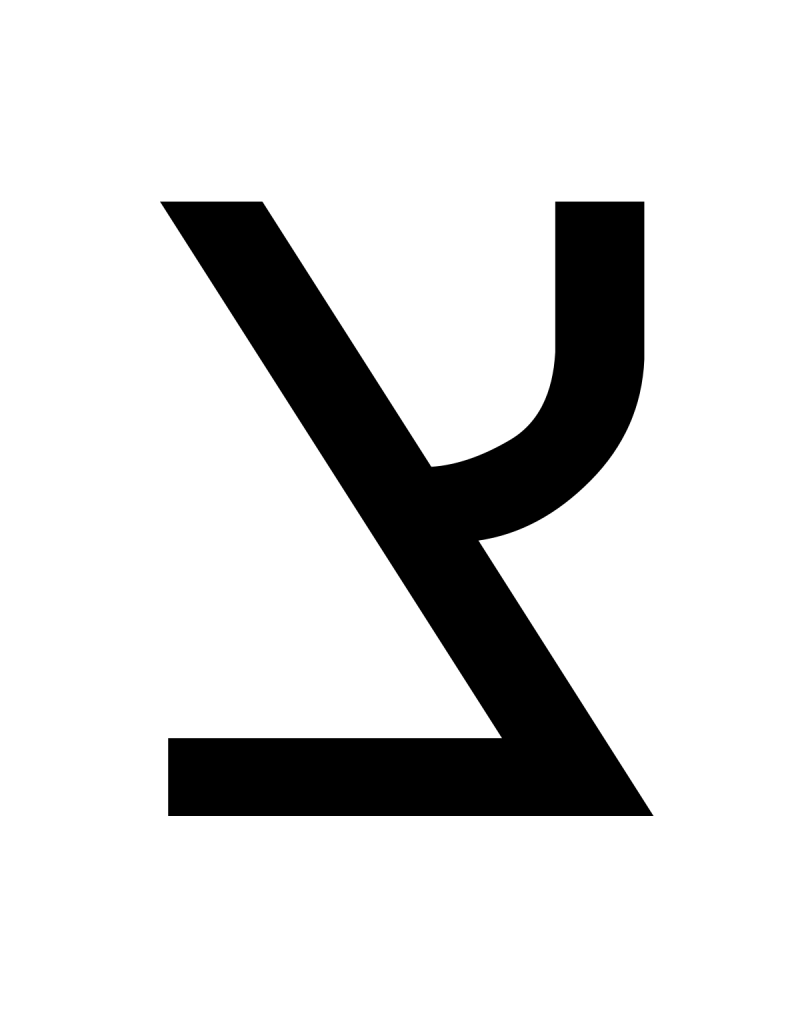
The Thirty-second Path is the Administrative Intelligence, and it is so called because it directs and associates, in all their operations, the seven planets, even all of them in their own due courses.
Alt. Trans. “The thirty-second path is called the serving consciousness because it directs the motion of the seven planets, each in its own proper course.”
The Thirty-Second Path is the Worshipped Intelligence (Consciousness) (Sekhel Ne’evad): It is called this because it is prepared so as to destroy all who engage in the worship of the seven planets.
The 32nd path has a variety of translations each of which offers possible insights into its contents and meanings. That which directs the seven planets is the Law of Necessity, and through its direction, we are given Time. The students of the movements of the planets are the Magi or astrologers, and The Magician #1 derives his name from them. The danger, of course, is that through the predictions of the Magi, Necessity itself will become “worshipped” and the followers cease to distinguish the gulf that exists between the Necessary and the Good. There could also be an allusion here to the Roman religion which worshipped the planets as gods and because of this worship, the one God of the Hebrews would eventually ‘destroy’ them (which is what ultimately occurred).
What the 32nd path indicates is that in the kingdom of Malkhut, it is the law of Necessity which rules; and when The Fool makes his/her leap into the abyss of being, he or she is immediately faced with a choice of being a follower of others or someone who sets out on their own path. It appears that this choice is represented by the choosing of the path of the Tzadik, the 32nd path, or the path of the Tav to Yesod, the 30th path.
As the element of water represented by Mem is present throughout the downward movement on the Tree of Life, the element of fire represented by Shin is present throughout the upward movement. The element of fire refines and purifies things and is called alchemy in the course of history. The purification is the search for the ‘philosopher’s stone’ which is a metaphor for the ‘soul’. The alchemical process is the baptism that follows the ‘conversion’ of the initiate, and this conversion occurs immediately when confronted by the paths of Tzaddi and of Tav. This is why there is the connection within the Sephirot Malkhut between The Fool #0, The Wheel of Fortune #10, and Judgement #20 cards of the Tarot. The choice facing The Fool is path 25 The Intelligence of Trials, and the result is either a conversion and baptism or being caught like a fish in the ‘fish hook’ that is the meaning of the letter Tzaddi.
Tzaddi is the 18th letter of the Hebrew alphabet. It signifies both “righteousness” and the “hunt”. Its literal meaning is “fish hook” and it is with the hook that one catches the “fish”, signified by the letter Nun. Fishing is a hunting activity, and is here a metaphor for religious proselytizing.
In Greek mythology, the goddess of the hunt is Artemis. She is also the goddess of the moon. The shape of the Tzaddi is a Nun with a Yod riding on top of it, indicating the individual as a ‘fish’ or as a distinct person. The gematria of Tzaddi is 90 suggesting a connection with The Hermit card #9 of the Tarot: 9 X 2 is 18, The Moon. The contrary to the Moon is Justice (‘righteousness’) which is card #8 in Tarot. This seems to suggest that the righteous can be deceived by the ‘false speech’ and become ‘hooked’, as a fish is deceived by the fish hook. “Righteous” means “just”, but here it seems to indicate the justice that is the product of the society or culture that produces it. There seems to be an alignment between the ‘false knowledge’ that belongs to The Hermit card of the Tarot and the ‘reflected light’ that is The Moon’s as opposed to the direct light of the Sun. The deception, the deceit and fraud, is also related to the ‘hiddenness’ that is an element of Tzaddi.

The Tzaddi represents the Tsaddik, the person who is just; but this justice is bereft of mercy, it appears. They may be the leaders of their generation be they politicians, teachers, priests or other religious figures. They are the ‘hooks’ that hook the ‘fish’, their followers. Tzaddi belongs to the left side of the Tree of Life for it deals with societies and leaders. The true Tzaddik strives to reveal truth, loving justice and mercy, able to recognize their weaknesses and strengths, and thus have self-knowledge. This self-knowledge can only come in choosing the paths of the Tav and the Reish.
The shape of Tzaddi appears to be a combination of the letters Lamed, Yod and Zayin. One can understand the significance of this combination if one considers that Lamed is ‘study’, Yod is the individual, and Zayin is either the ‘sword’ or the ‘manacle’. The Zayin can be either a sword of liberation or a manacle of entrapment or enslavement. The individual is faced with a choice once they have made the leap into being.
| Path | Letter | Meaning | Symbol |
| Path 8: Perfect Intelligence (Consciousness) (Sekhel Shalem): It is called this because it is the Original Arrangement. There is no root through which it can be pondered, except through the Chambers of Greatness, which emanate from the essence of its permanence. | The knowing and making that brings about the completion of some thing. “Know how…” This thing may be corporeal or it may be some ‘value’ that human beings ‘create’ at this stage. Original arrangement: Necessity. The Chambers of Greatness: Malkhut. | The scales | |
| Hod to Gevurah Path 24. Apparative (Tools) Intelligence (Consciousness) (Sekhel Dimyoni) (Sometimes called The Imaginative Intelligence): It is called this because it provides an appearance for all created apparitions, in a form fitting their stature. | Khaf כ | Hand; taking possession of something. The viewing of the world as ready-to-hand turns the world into objects and those objects are ‘disposable’ according to the human will. | The form of the outward appearance of things is a ‘shadow’ or an ‘apparition’ of the thing. It is not the essence of the thing. The divine essence shows forth and hides simultaneously. We can become lost in the outward appearance of things. |
| Hod to Tiferet Path 22. Faithful Intelligence (Consciousness) (Sekhel Ne’eman): It is called this because spiritual powers are increased through it, so that they can be close to all those ‘who dwell in their shadow’. | Lamed ל “study”, “learning” The Library of Hermes | The Library of Hermes is composed of the texts of the world. The texts of the world are composed of that which is understood regarding the Laws of Necessity. It is what we call ‘education’; ‘historical knowledge’. | The Tower of Babel. The writings of all nations regarding their interpretations of the Laws of Necessity and the Divine Will. Lamed as the ‘uncoiled serpent’, what we call knowledge and ‘study’. |
| Hod to Yesod 27. Palpable Intelligence (Consciousness) (Sekhel Murgash): It is called this because the intelligence of things created under the entire upper sphere, as well as their sensations, were created through it. | Yod י | That ‘seeing’ that brings the things of the world into appearance in a manner in which they may be understood and spoken about. Crucial distinction between the principle of reason as being or Logos not understood as ratio, rationale. | Arm. The extension that grasps. The ego. The physical body as a vehicle by means of which the soul extends itself beyond the limitations of the body to the created world that is ready-to-hand. |
| Hod/Netzach Path 29. Physical Intelligence (Consciousness) (Sekhel Mugsham): It is called this because it depicts the growth of all that becomes physical under the system of all the spheres. | Shin/Mem/Alef מ/א/ש | The Physical intelligence dominated by Mem in the crossover from Hod to Netzach or Netzach to Hod. It is shaped by how the Palpable Intelligence has come to be interpreted. | Fate, destiny, how one’s being in the world is determined. “Matter is our infallible judge.” The fate of the end of being a full human being or something less than that. |
| Hod to Malkhut Path 32. Worshipped Intelligence (Consciousness) (Sekhel Ne’evad): It is called this because it is prepared so as to destroy all who engage in the worship of the seven planets. | Tzaddi צ | Fish hook. The Fool is the ‘fish’ and it is The Magician who is trying to ‘hook’ him. The Magician is a proselytizer of any collective looking for adherents or followers. | The Tzadik receives his view of justice from the society or world of which he/she is a part. Here it is a descent from Hod to Malkhut and is part of the world of Asiyah. The Magician is the possessor of the knowledge that is believed to be the truth and The Fool may become a follower of this ‘truth’. |


 Theory of Knowledge: An Alternative Approach