A Commentary on the Sefer Yetzirah: Chapter 4

The Seven Double Letters

4.1 There were formed seven double letters: Beth, Gimel, Daleth, Kaph, Pe, Resh, Tau. Each has two voices, either aspirated or softened. These are the foundations of Life: Peace, Riches, Beauty or Reputation, Wisdom, Fruitfulness, and Power. These are double, because their contraries (transpositions) take part in life: contrary to Life is Death; to Peace, War; to Riches, Poverty; to Beauty or Reputation, Deformity or Disrepute; to Wisdom, Ignorance; to Fruitfulness, Sterility; to Power, Slavery.

Alt. Trans.
The transposition of Wisdom is Folly
The transposition of Wealth is Poverty
The transposition of Seed is Sterility (Desolation)
The transposition of Life is Death
The transposition of Dominance is Subjugation
The transposition of Peace is War
The transposition of Beauty (Grace) is Ugliness

Wescott trans. 4.1. The Seven double letters, Beth, Gimel, Daleth, Kaph, Peh, Resh, and Tau have each two sounds associated with them. They are referred to Life, Peace, Wisdom, Riches, Grace, Fertility and Power. The two sounds of each letter are the hard and the soft−−the aspirated and the softened. They are called Double because each letter presents a contrast or permutation; thus Life and Death; Peace and War; Wisdom and Folly; Riches and Poverty; Grace and Indignation; Fertility and Solitude (sterility and rest?); Power and Servitude.

Commentary on 4.1:

The seven double letters are those letters that have two possible sounds either hard or soft. As “the foundations of Life”, the letters represent the seven vertical lines of the Tree of Life, the seven pillars of Wisdom which are the seven subjects of study within the old classical education. They “run” with a hard sound and “return” with a soft sound. The hard sound of Bet has the sound of b, while the soft has the sound of v. The hard Kaf has the sound of k, the soft, the sound of kh, like the English ch as in “chorus”. The hard Peh is pronounced like a p, while the soft is like an f or ph such as “philosophy” or “Phuket”. The hard sound is indicated by a dot placed in the middle of the letter called a Dagesh. The letter Resh in Hebrew is included in the seven doubles even though it never takes a Dagesh.
The seven doubles are the means to climb the vertical lines of the Tree of Life; they may also be a means of descent. The seven also represent the number of times the phrase “It was good” is mentioned in the Genesis. The seven represent the “contraries” of Life. “Contraries” is often translated as “opposites”, but they are not opposites since they exist in degrees of strength or intensity. I have chosen to translate them as “deprivations” or “deprivals” because they are in need of balance. They represent the ‘need’ and ‘fulfillment’ that are the two faces of Eros and from them derive the polemos or strife, the confrontation that is everyday life.

Another translation is “transposition”. A trans-position is a movement towards or away from something, a change of position or place. This might refer to the change of position required to make hard and soft sounds in speech. In soft speech there is a deprivation of breath, but is this deprivation of breath required to bring the strengths of the qualities of the hard speech into balance or reconciliation? The Strengths are on the right-hand side of the Tree of Life, while the left side is concerned with what is perceived as the “weaker” qualities, the Chakmah qualities of Wisdom and Mercy. Is this a note or a warning on the folly of excess, on the folly of egoistical self-concern and possession? Self-concern is one of the dangers inherent in eros for life requires us to look after our own individual needs.
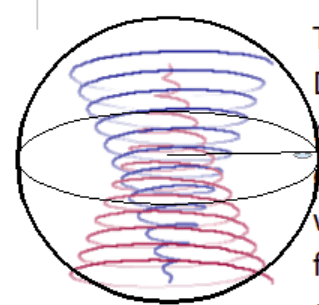
In the six directions of the space, the movement of these transpositions could be up or down, east or west, north or south, and I consider them to be the gyring motions of the paths and Sephirot. Their place within the Tree of Life will determine their nature or character. The condition of Life is “strife” and this “strife” can be eased through “friendship” whether of individuals or nations; and this friendship or harmony is achieved through mediation. These “goods” also indicate the “temptation” that arises in human beings to mistake them for the Good. The Sefer Yetzirah clearly indicates that these “goods” are in Time and Space (this is the meaning of the word “trans-position” i.e., movement and place), while the Good itself is beyond space and time.

In analyzing topos or “place” we require a focus, horizon, and origin (since topos is the origin of our word ‘topic’, the place or site of something) . “Origin” is to be understood as that out of which something comes to appearance, the site of its appearance. Thought begins where “world” emerges: the appearance of things, the engagement with others, the recognition of self. The origin is the “embodied soul”. It is in the encountering of the presence of things as such that a “focus” is given to our thinking: this focus is “wonder”. The place itself is everywhere the Same and this we have associated with Air.

Human being is the being that is always “on the way”: human being is the “quest” that results from the “question”. Our being-in-the-world is already given to us in our encounters with ourselves, with others, and with the things in the places in which they are. We call this “consciousness” or “cognition”.

Truth as “unconcealment” is bound within the horizon in which we are placed: our speaking and acting is revealed as true or false and it is also capable of being true or false. “Understanding” and “meaning” allow only certain things to emerge as meaningful (the limits of the “cubic box”), while others are withdrawn or remain hidden.

Understanding (Binah) finds its ground within a domain or “place” that it has constituted for itself. Nihilism has arisen in the modern age because memory (Chakmah) is disjointed from its own past and questions only arise that are “technical” or “rational” in character. “Consciousness” and “cognition” are closed down so that we exist in a kind of somnambulistic state. Through our need and desire for security, it is the closing off of openness to the possibilities of the future and their questionableness. It realizes itself in our “just do it” slogans so that actions are undertaken without thought.

The being of human beings in the world of Yetzirah (understood as gestell or “framework”, the frame in which we place our picture of the world) is a manner of apprehending the “other” as resource, as thing. In this apprehension of the world as “thing”, what is forgotten is that thinking is a remembering or re-collection and a form of giving thanks to the Giver for that which is given.

Text of the Sefer Yetzirah: 4.2

4.2 These seven double letters point out the dimensions, East, West, height, depth, North, South, with the holy temple in the middle, sustaining all things.

Wescott trans. 4.2. These Seven Double Letters point out seven localities; Above, Below, East, West, North, South, and the Palace of Holiness in the midst of them sustaining all things.

Commentary on 4.2

The seven doubles point out the six directions of space as well as the Holy Temple sustaining all things. These six directions parallel six Sephirot: Netzach > Hod, Tiferet > Yesod, Chesed > Gevurah. These are the directions one must face, or the motion of the head, when attempting to transmit or attain the qualities mentioned in 4:1 and in one’s meditations. The Talmud states: “He who wishes Wisdom, let him face south; he who wishes Wealth, let him face north.” In the temple, the Menorah which is related to wisdom is in the south; the Table indicating wealth was to the north. The Tarot Card of The Magician #1 has a table upon which rests the things from which he makes wealth (swords, cups, pentacles) and this wealth is made from the energy that comes from the upheld ready-to-hand wand (tools and will).

The holy temple in the middle sustaining them all would refer, for a Christian, to the Sacred Heart of Jesus (Love) and would therefore be related to the human heart (Tiferet > Yesod). It could also be the Body of Christ, as the whole of creation is seen as the body of Christ, the Logos. This would indicate the Cross of “the Lamb slain from the foundations of the Earth”. (This is how Christ’s saying should be understood: “It is written, ‘My house is a house of prayer,’ but you have made it a ‘den of thieves.’ ” It is not only referring to a church or synagogue but to the whole of creation.)

The creation as temple could also relate to Eros understood as the “proportional mean”, the balance which holds them all in relation to one another. Tiferet as Beauty, Grace channels the spiritual Light from Keter to all the other parts of the created World, and the proper response to the world is one of Love since it is Love which sustains the whole of the world. (“Where your treasure is, there will your heart be also” Matt: 6: 19-24.) This passage from Matthew deals with not being able to serve two masters i.e., wealth and God. You cannot serve God and Mammon. There are also references to “the eye” as the “lamp of the body”. The eye that is in darkness makes everything dark. Macbeth, for example, has the eye that sees daggers. (This has very important implications for the theoretical viewing of the world: neither Aristotle nor Newton is wrong; they are simply viewing the same world through very different eyes. The word theoria in Greek is “to view” with its root theo meaning “god”).

The spiritual, Keter, and the material, Malkhut, are poised in the balance that is Tiferet in the middle. “The end is in the beginning”. Fullness and Need here are expressed as the desire for the Good, but this desire itself oscillates; Wealth as the fullness of the material world is not sufficient to meet the need of the whole human being. Human beings need truth, beauty and the Good, and their desire for it is what distinguishes them from the other animals for from these needs human beings build a “world”. They are the “perfect imperfect” creatures, the perfect incomplete beings.

Text of the Sefer Yetzirah: 4.3

4.3 These seven double letters He formed, designed, created, and combined into the Stars of the Universe, the days of the week, the orifices of perception in man; and from them he made seven heavens, and seven planets, all from nothingness, and, moreover, he has preferred and blessed the sacred Heptad.

Alt. Trans.
Seven Doubles: BGD KPRT
Seven and not six
Seven and not eight
Examine with them
And probe with them
Make each thing stand on its essence
And make the Creator sit on His base.


Wescott trans. 4.3. These Seven Double Letters He designed, produced, and combined, and formed with them the Planets of this World, the Days of the Week, and the Gates of the soul (the orifices of perception) in Man. From these Seven He hath produced the Seven Heavens, the Seven Earths, the Seven Sabbaths: for this cause He has loved and blessed the number Seven more than all things under Heaven (His Throne).

SUPPLEMENT TO CHAPTER IV
(Found in some modern editions)

He caused and produced Beth, predominant in wisdom, crowned, combined, and formed the Moon in the Universe, the first day of the week, and the right eye, of man.
Gimel, predominant in health, crowned, combined and formed Mars in the Universe, the second day of the week, and the right ear in man.
Daleth, predominant in fertility, crowned, combined, and formed the Sun in the Universe, the third day of the week, and the right nostril in man.
Kaph, predominant in life, crowned, combined, and formed Venus in the Universe, the fourth day of the week, and the left eye of man.
Peh, predominant in power, crowned, combined, and formed Mercury in the Universe, the fifth day of the week, and the left ear in man.
Resh, predominant in peace, crowned, combined, and formed Saturn in the Universe, the sixth day of the week, and the left nostril in man.

Tau, predominant in beauty, crowned, combined and formed Jupiter in the Universe, the seventh day in the week, and the mouth of man.
By these seven letters were also made seven worlds, seven heavens, seven lands, seven seas, seven rivers, seven deserts, seven days (as before), seven weeks from Passover to Pentecost, and every seventh year a jubilee
.

Commentary on 4.3:

The creation of the world itself was accomplished in six days, each corresponding to one of the directions in space. The Sabbath or day of rest is the seventh when the perfection of the completion of creation was achieved.

The Sephirot are located at the lower end points of the seven vertical lines of the Tree of Life. The movements within the Sephirot are upwards for human beings, and they indicate a process of decreation. The downward movements are those of the Divine and indicate the process of creation. The seven doubles are associated with the astrological forces of the seven planets, the realms of space and time. The influences of the planets are mediated by angels through the vertical paths associated with the Sephirot.

The “orifices of perception” in human beings are four of the five senses, all related to the head. Touch is not included (why, given the importance of hands to formation and making, the universe of Yetzirah?) How the world is perceived by human beings is determined through the senses and the examining and probing of the things that are in order to “make each thing stand on its essence” i.e., to bring the things into presence, to a stand, in their truth. In doing so, this will allow the Creator to sit on His base or foundation, or will place the Creator on His base in the creation that He has made. World needs human being to bring things to their truth so that the Creator will be made visible as the foundation of all (see the previous section). This is part of the aim or effort of the Sefer Yetzirah, to see the unity in diversity. The God’s appearance or disappearance is the responsibility of human beings.

The Sephirot are emanations only of the realm of the Good, Beauty and Truth; they are separated by the chasm of Necessity. The word “emanation” has the meaning of the Greek parousia, “a being present alongside” or “between”, “a coming to presence”. In Christianity, the word indicates the Second Coming of Christ or Judgement Day, but if Time is circular, Judgement Day is ever-present as well as absent alongside or between the past and the future i.e., in the present, the NOW. “To make the Creator sit on His base” is to bring to presence the truth of the presence, and at the same time, the absence of the Creator in His creation for human beings. This ability to bring to presence the creation and the Creator is what distinguishes human beings from other living beings and from the whole of the creation itself. In the process of de-creation, it signifies the necessity for human beings to become mediaries for God so that through us He may view His creation. We become “God’s spies”. In medieval thought, this was the highest end for human beings.

“Examine with them” refers to the letters themselves i.e., the logoi, whether they be numbers or words. Since the Sephirot are that which gives “spiritual energy”, the dynamis of the Good in the realm of Necessity or that which is not the Good, the text says to “probe” with the letters. The “probing” is to be done through the logos itself in “dialectical discourse”, “dialectical” here meaning “friendly conversation” (which is its original meaning). Some interpretations of the text imply that Malkhut is the “centre point”, but this is clearly not the case: the “Holy Palace” is in the centre of the sphere and that is Tiferet not Malkhut. Malkhut is what we would call the Natural Kingdom, Nature, what the Greeks called phusis. The centre of the individual is “the heart” and the base for the Creator is Yesod (Foundation), but it is the body of the Living God (Tiferet) that sits upon the Foundation from His presence (Yesod) of being in the centre.

The following chart represents the doubles’ relation to the physical universe and to the human body. These later additions to the text of the Sefer Yetzirah suggest a collaboration between the early Hebrews and the Pythagoreans. From the evidence in his Gospel and in his Book of Revelations, St. John the Evangelist was a Pythagorean. (Luke and John are Greeks; Matthew and Mark are Hebrews.) The seven in relation to the body could also represent the chakmas or centres of energy that indicate a Hindu influence present in the writing. The letters in the chart below do not coincide with their Hebrew meanings. Peh, for example, means ‘mouth’, although its connection here with hearing and with Mercury or Hermes as ‘the library of traditional knowledge’ of the past messages of the gods, and of the power of those who possess such knowledge is an appropriate association. Being associated with the left ear would also associate it with the left side of the Tree of Life.

LetterQuality PlanetDayPart of Body
BethWisdomMoonMondayRight eye
Gimel HealthMarsTuesdayRight ear
DaletSeedSunWednesdayRight nostril
KafLifeVenusThursdayLeft eye
PehPower MercuryFridayLeft ear
ReshPeaceSaturnSaturdayLeft nostril
TavBeautyJupiterSundayMouth

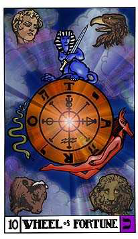
If Time is circular, one can see that the mid-point is the combination of the Sun and Venus among the planets, the combination of Seed (fertility) and Life. These combinations and their alignments raise questions: why is not Tau associated with Venus since it is associated with Beauty? How can Saturn, which is associated with Time, be related to Peace? Are we speaking of the peace of Death here? Time is associated with the “strife” that is the essential condition of Life, and Saturn (Chronos) is associated with the god who attempted to eat his own children i.e., Death: Time, which gives them birth and eventually consumes them. I will attempt to answer some of these questions as I proceed through this commentary. (On The Wheel of Fortune card, the movement is counter-clockwise i.e., “the future comes to meet us from behind” in the NOW, again indicating the process of de-creation.)

The rule of the 7 dominates the Foundation of the creation of the world. 7 is 4 + 3: 4 is the number of the physical realm, and 3 the number of the spiritual realm. This may relate to the Seven Seals of the early Kabbalists and to the seven seals that are to be opened on the day of Judgement indicating an end of Time (Book of Revelations). The Sephirot are “eternal”; they are the unchanging middle points of the balance that weigh and transform from fullness to need and from need to fullness. They are the “running and returning” that is the message of God (Mercury, the messenger of the gods, is depicted with wings on his feet) which we perceive as motion, but which is not motion; the motion is within ourselves.

The four universes and their relation to the One (which is a Three) is the foundation of the rule of seven. The universe of Atzilut is beyond the physical realm. This is the realm of Keter, Chakmah, and Binah. The universe of Beriyah or the Universe of the Throne allows the Sephirot to interact with the lower worlds through the three Mothers. The universe of Yetzirah is the world of speech, the logos which bridges the gaps “between” the two universes bringing the spiritual and physical together. The universe of Asiyah or the kingdom of Malkhut is the great temptation towards downward movement.

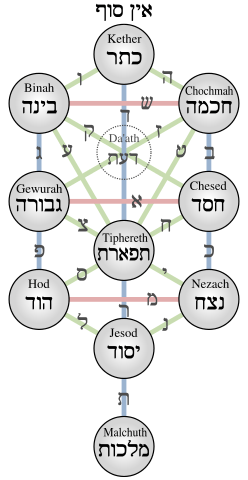
“Every word emanating from God creates an angel” or the mediator that will deliver that word between worlds, to answer prayers and supplications. (“Human beings do not live by bread alone but from the word that emanates from the mouth of God” Matt: 4.11). There are seven archangels but only three (Gabriel, Michael, Raphael) are mentioned in the Bible itself while the other four come from the tradition (see the diagram of the Tree of Life that opens this commentary). In the Sefer Yetzirah, the angels are created on the 5th day after the stars are created. Laylah, the angel of Fate, was considered the angel of astrological birth (The Star #17). The three archangels were considered “temporary” angels in the text, but this is somewhat bewildering to say the least: are they “temporary” in their appearance and hiddenness, temporary in the realm of the material, or temporary historically, in time? The archangels are related to Chakmah consciousness and thus are associated with the answering of prayers. The battles associated with the archangels and Satan are the battles that occur every day within the human heart and in the world of human beings.

The seven doubles or binaries indicate how letters become words. The dominant letter is placed at the beginning and then the arranging of the other six e.g., if one seeks wisdom, Bet at the beginning and GD KPRT following. For meditation, one focuses on the part of the body associated with the letter. The specific traits are best transposed on the day of the week associated with them.

Text of Sefer Yetzirah 4.4

4.4. From two letters, or forms (stones) He composed two dwellings; from three, six; from four, twenty-four; from five, one hundred and twenty; from six, seven hundred and twenty; from seven, five thousand and forty; and from thence their numbers increase in a manner beyond counting; and are incomprehensible. These seven are Planets of the Universe, the Sun, Venus, Mercury, Moon, Saturn, Jupiter, and Mars; the seven days are the days of creation; and these and the seven gateways of a man, two eyes, two ears, two nostrils and a mouth, through which he perceives by his senses.


Wescott trans. 4.4. Two Letters produce two houses; three form six; four form twenty−four; five form one hundred and twenty; six form seven hundred and twenty; (39)26 seven form five thousand and forty; and beyond this their numbers increase so that the mouth can hardly utter them, nor the ear hear the number of them. So now, behold the Stars of our World, the Planets which are Seven; the Sun, Venus, Mercury, Moon, Saturn, Jupiter and Mars. The Seven are also the Seven Days of Creation; and the Seven Gateways of the Soul of Man−−the two eyes, the two ears, the mouth and the two nostrils. So with the Seven are formed the seven heavens, (41)27 the seven earths, and the seven periods of time; and so has He preferred the number Seven above all things under His Heaven. (42)28

Wescott Notes to 4.4

“This is the special chapter of the Heptad, the powers and properties of the Seven. Here again we have the threefold attribution of the numbers and letters to the Universe, to the Year, and to Man. The supplemental paragraphs have been printed in modern form by Kalisch; they identify the several letters of the Heptad more definitely with the planets, days of the week, human attributes and organs of the senses.”

  1. These numbers have been a source of difference between the editors and copyists, hardly any two editors concurring. I have given the numbers arising from continual multiplication of the product by each succeeding unit from one to seven. 2×1=2, 2×3=6, 6×4=24, 24×5=120, 120×6=720, 720×7=5040.
  2. In associating the particular letters to each planet the learned Jesuit Athanasius Kircher allots Beth to the Sun, Gimel to Venus, Daleth to Mercury, Kaph to Luna, Peh to Saturn, Resh to Jupiter, and Tau to Mars. Kalisch in the supplementary paragraphs gives a different attribution; both are wrong, according to clairvoyant investigation. Consult the Tarot symbolism given by Court de Gebelin, Eliphas
  3. Levi, and my notes to the Isiaic Tablet of Bembo. The true attribution is probably not anywhere printed. The planet names here given are Chaldee words.
  4. The Seven Heavens and the Seven Earths are printed with errors, and I believe intentional mistakes, in many occult ancient books. Some Hermetic MSS. have the correct names and spelling.
  5. On the further attribution of these Seven letters, note that Postellus gives: Vita−−mors, Pax−−afflictio, Sapientia−−stultitia, Divitiae (Opus)−−paupertas, Gratia opprobrium, Proles−−sterilitas, Imperium−−servitus.
    Pistorius gives: Vita−−mors, Pax−−bellum, Scientia−−ignorantia, Divitiae−−paupertas, Gratia−−abominatio,
    Semen (Proles)−−sterilitas, Imperium (Dominatio)−−servitus.

Commentary on 4.4:

LetterQuality PlanetDayPart of Body
BethWisdomMoonMondayRight eye
Gimel HealthMarsTuesdayRight ear
DaletSeedSunWednesdayRight nostril
KafLifeVenusThursdayLeft eye
PehPower MercuryFridayLeft ear
ReshPeaceSaturnSaturdayLeft nostril
TavBeautyJupiterSundayMouth
Hebrew Letters and their assignments

In the chart above, I have attempted to make some associations between the seven double letters as well as the planets, the days of the week, and the parts of the body that are assigned to them. Again, this is very tentative and with further reflection a truer account may be found in the various relations that are given in the initial Sefer Yetzirah.
A Commentary on the Sefer Yetzirah: Chapter 2

Text:

2.1 The foundations are the twenty-two letters, three mothers, seven doubles, and twelve single letters. Three mothers, namely A, M, SH, these are Air, Water, and Fire: Mute (Hums) as Water, Hissing as Fire, and Air of a spiritual type, is as the tongue of a balance standing erect between them pointing out the equilibrium which exists.

Alt. Trans.: Twenty-two foundation letters, Three Mothers, Seven Doubles, And Twelve elementals: The three Mothers are Alef, Mem, Shin. Their foundation is A pan of merit (fullness) A pan of liability (need) And the tongue of decree deciding between them.(mediation)

Three Mothers: Alef, Mem, Shin: Mem hums, Shin hisses And Alef is the Breath of air deciding between them.

Wescott Trans. 2.1. The twenty−two sounds and letters are the Foundation of all things. Three mothers, seven doubles and twelve simples. The Three Mothers are Aleph, Mem and Shin, they are Air, Water and Fire. Water is silent, Fire is sibilant, and Air derived from the Spirit is as the tongue of a balance standing between these contraries which are in equilibrium, reconciling and mediating between them.

Commentary on 2.1

The foundations of the created world are revealed through the 22 letters of the Hebrew alphabet by means of the 10 Sephirot. The image created is one of a balance, a scale, the symbol of Justice. The Tree of Life itself is a symbol of this. The Three Mothers represent the three columns into which the Sephirot are divided and come to constitute the three pillars of the Tree of Life. Boaz is the pillar of Mem (water), Jakim is the pillar of Shin (fire) and Keter is the breath (air) or Spirit (the Logos) which judges between them. Water moves downward; fire rises. The movement, as we perceive it, is clockwise.

The ‘tongue of balance’ or the ‘tongue of decree’ is a metaphor for the Logos. The function of the Logos is as a reconciler and mediator. It is the ‘speaking silence’ that is the Beauty of the World, as well as the Law of decree that is Necessity. It is the Torah and the Ain Sof.

Blake Illustration for The Book of Job: Job’s Bad Dreams

The Scale here is the Law of Necessity, the law which rules over all created things. It is the schema or plan which creation and created things must follow. It is the Divine Will. The justice of the law of Necessity is one of the most difficult things for human beings to comprehend. It raises questions such as: if God is all Good, why does He allow the innocent to suffer? Why does He allow the wicked to prosper? The evil Demiourgos of the Gnostics and the questions of the “Book of Job” come to mind. (“The Book of Job” is originally in Greek with God’s answers to Job written in Hebrew. Needless to say, God’s answers to Job are not “psychologically satisfying” to the suffering human being who is crying out for justice!)

Examples of the Sternness of Necessity are all about us, while examples of Mercy can sometimes be hard to find. The “hissing” of Fire is caused by water’s contact with it. The implication is that mercy, love, and charity are always present and there is strife between the elements of water and fire which is mediated by air (“of a spiritual type”, which means that it is ‘no-thing’). This is one of the bridges between the spiritual and the physical. The emphasis is on holding things in harmony and of the reconciliation between them. It is through the meeting of fire and water that earth is formed.

Shin and Mem also denote the name “Shem”. Shem is one of the sons of Noah who participated in Noah’s spiritual experience, his direct contact with God. Some Kabbalists give the writing of the Sefer Yetzirah to Shem who taught it to Abraham (which is close to how the Sefer Yetzirah is being understood here if the non-Hebrew influences are taken into account within the final Hebrew text). The word “Shem” designates “name”, to name things. It is through the “naming” of things that things are brought to presence and are revealed. It is through “names” that we can grasp the spiritual essence of a person or object, if by “names” we mean the logos.

The pronunciation of the letters is also said to be a valuable meditation technique similar to the word “Om”, for instance, or the Gregorian chants of medieval Christians. Meditation is thought, contemplation, attention, prayer and it is distinguished from the thinking that is involved in the realm of yetzirah or the realm of knowing and making, the world of ‘formation’.

If we compare what is said here to Plato, the Sephirot are the Ideas which are limited to 10 and which beget all numbers and all enumeration. The Ideas beget the eidos or the outward appearances of things that brings things to a stand and give us “understanding”. Understanding is formed from the middle pillar of Keter, the logos, which is the air or “spiritual breath” that speaks the “judgement” of what things are. The logos is composed of number and speech and these are seen as identical. From the logos is physical creation identified and made.

Text 2.2:

2.2 He hath formed, weighed, transmuted, composed, and created with these twenty-two letters every living being, and every soul yet uncreated.

Alt. Trans.

Twenty-two Foundation letters: He engraved them. He carved them, He permuted them, He weighed them, He transformed them, And with them, He depicted all that was formed and all that would be formed.

Wescott Trans. 2.2. He hath formed, weighed, and composed with these twenty−two letters every created thing, and the form of everything which shall hereafter be.

Commentary on 2.2:

“He engraved them”: the letters are written on a tabula rasa a blank slate, no-thingness. They are “carved” out and separated (things that are given form and separated, the process of thinking known as diaresis to the Greeks). The letters are “permuted” or “arranged” so that words are formed. The words give names to things so that they are “weighed”, measured, and defined i.e., judged. Once measured, they can be ‘transformed’. The outward appearance of a thing was what Plato called the eidos of the thing, the ‘form’ of the thing, what allows a thing to be “measured”, “weighed” and “composed” . The Forms and Ideas of Plato are distinctive concepts, not identical or the same as is commonly understood. The Forms are the emanations of the Ideas and begot from the Ideas.

From the letters, all that was formed and all that will be formed was always already there. The things that are formed are “depicted”, “from the picture”, given an outward appearance (eidos in Greek), so that the things can be seen in images and pictures (as well as the letters themselves) and thus could be visualized so that understanding and knowledge could take place. The emphasis is on seeing or viewing. Prior to the seeing, a form must first be in place and this shape must be accompanied by colour or the light. This form is a product of the logos and can be understood through the geometry of the ancients. Geometry deals with space; weighing and composing deal with place and with Time. Place is understood as topos in Greek, and it is the site of human beings’ making in their various worlds.

Text 2.3:

2.3 Twenty-two letters are formed by the voice, impressed on the air, and audibly uttered in five situations (places): in the throat, guttural sounds (Alef, Chet, Heh, Eyin); in the palate, palatals (Gimel, Yud, Kaf, Kuf); by the tongue, linguals (Dalet, Tet, Lamed, Nun, Tav); through the teeth, dentals (Zayin, Samekh, Shin, Resh, Tzadi); and by the lips, labial sounds (Bet, Vav, Mem, Peh).

Wescott trans. 2.3. These twenty−two sounds or letters are formed by the voice, impressed on the air, and audibly modified in five places; in the throat, in the mouth, by the tongue, through the teeth, and by the lips. (31)[1]


[1]31. This is the modern classification of the letters into guttural, palatal, lingual, dental and labial sounds.

Commentary on 2.3:

Here the passage speaks of oral communication, voice, speech. The movement is from inner to outer, from hidden within the throat, to revealing upon the lips, the audible. Voice is the third action that is mentioned following the creation of the whole (the One God) and the formation of letters (the Logos). The Voice gives rise to creation itself.

The Sefer Yetzirah speaks of five Loves: Keter, Chakmah, Chesed, Tiferet, and Netzach which represent “fullness” as I understand it. The other column represents the five Judgements: Binah, Gevurah, Hod, Yesod, and Malkhut which I call “needs”, but the use of the word “judgement” here indicates the essence of the principle of reason and its site of truth. One could understand “judgement” as “outcome” or “end”. The judgements are sometimes called “Strengths” which can be seen as force or power, the bringing into reality or completion of those urges which we experience in everyday life, those desires which are related to ‘will’, or the potentiality and possibility related to Aristotle’s dynamis brought to completion as energeia or “work”, “works”. This may be related to the natural desire to overcome needs. The desire, the aspiration of thought, and its fulfillment is a “movement” and indicates the combination of being and time.

When inscribed within a sphere and the sphere is then rotated clockwise, fullness is the result. When the sphere is rotated counter-clockwise, evil or need is the result. The Wheel of Fortune #10 is not to be conceived as a two-dimensional circle but rather as a sphere. The following chart relates to the Sephirot’s relation to their position in space within the sphere:

Keter – Malkhut          Good -Evil                 Ethical

Chakmah – Binah             Past-Future              Time

Chesed – Gevurah            South-North             Space

Tiferet – Yesod                  Up-Down                  Space

Netzach – Hod                  East-West                 Space

Text 2.4:

2.4 These twenty-two letters, the foundations, He arranged as on a sphere, with two hundred and thirty-one modes of entrance. If the sphere be rotated forward, good is implied, if in a retrograde manner evil is intended.

Alt. Trans. Twenty-two foundation letters: He placed them in a sphere Like a wall with 231 Gates. The sphere oscillates back and forth. A sign for this is; There is nothing in good higher than Delight There is nothing evil lower than Plague.

Wescott trans. 2.4. These twenty−two letters, which are the foundation of all things, He arranged as upon a sphere with two hundred and thirty−one gates, and the sphere may be rotated forward or backward, whether for good or for evil; from the good comes true pleasure, from evil nought but torment.

The first chapter of the Sefer Yetzirah speaks of the spiritual realm, the ruler of which is “the heart”.  The heart acts like a general in battle in dealing with the strife that is created between the different urges and desires created by the “will” or eros that is the condition of the embodied soul of human beings. The “heart” can act out of “fullness” or “need”. The heart is the Sephirot Tiferet. The human form is a microcosm of the macrocosm that is the created world. One is reminded of the words of the English poet William Blake from his poem “Auguries of Innocence”: “God appears and God is light/ To those poor souls that dwell in night/ But does a human form display/ To those who dwell in realms of day.”

The second chapter of the Sefer Yetzirah deals with Space and Time. In space and time we deal with contraries, the deprivations of the qualities from each other. The sphere is said to oscillate back and forth: fullness and need oscillate within time and the movement is cyclical. Time is cyclical in the Sefer Yetzirah, not linear i.e., going from past to present to future, although this appearance is given in the movement from Chakmah to Binah where the past of Chakmah moves through the present of Keter to the future that is Binah. Oscillation is movement in place. These movements can be illustrated by the motions of a gyre.

The circumference of the circle/sphere is “like a wall” with 231 gates. The mathematical formula for this is: n (n – 1) / 2; 231 = 22 x 21 / 2 gates. The “wall” is the limit imposed on the unlimited, on Necessity. All of our arts and sciences develop from how we know, understand, and deal with Necessity. There are 22 points within the the sphere and the things of the world are brought to appearance within/on the circumference (the horizon). 3 points;   4 points=6 lines;   5 points=10

The number of lines that can connect the 22 letters is 231 which are the paths (letters) and gates of the Sephirot. Two letters can be combined in 231 ways. Each of the combinations is also a triangle: two letters plus the third that is part of “the wall”, one of the mother letters. The 0 is not a number, per se, but a placement indicator. The Egyptians and the Greeks rejected the concept of 0, so a 10 is not a 1 + 0, but a placement that allows the cyclical movement of the numbers to take place. (Knowledge of binomial and binary combinations would be useful here since this is the mathematical language of computers.) In this case, the number and the letter are interchangeable. One can have a  08 as well as an 80. They are not references to quantity but to quality i.e., they are not subjects (nouns), but predicates (adjectives, adverbs).

As has already been indicated, one cannot have number without space since number deals with quantity, and number must have an Other besides the One. The One itself is beyond the second one composed of the triune of Keter, Chakmah, and Binah, which constitute both space and time and these are contained within the sphere of Creation: their end is their beginning so the 1 is in the 10 and the 10 is in the 1. Time gives being to beings in space, and this Time is the moving image of the eternity of the One in its essence. Time is the dynamis (possibility and potentiality) and the kinesis (movement, action) of Life itself.

In the legend of the formation of the Golem, one is to proceed around the circle of the sphere chanting the letters from Alef to Tav; to unmake the Golem, one reverses the direction from Tav to Alef. (There is a correspondence here between the ‘creation’ and the decreation of the human being). The Golem appears to be not only the making of a soulless human being or other animal (since only God can give “soul” to beings since “soul” is eternal like Himself and part of Himself), but also the making of any made thing accomplished through the numbers and the letters.

The Golem would be a general term for the artifacts of man which do not have their origin in Nature: genetic splicing is but one manner of accomplishing the making of a “Golem”; Artificial Intelligence would be another. Cybernetics is but another synonym for the making of the Golem. The Golem appears to be something akin to the voodoo doll or the Orcs and Gollum of Tolkien, yet at the same time the Golem might suggest that through meditation one is able to visualize the “perfect human being”, the beings that are the perfection seen in Greek statues or Da Vinci’s “Vitruvian Man”. Human beings in their being are the perfect imperfection. (The Golem reminds one of the condition of the prisoners of Plato’s Cave being “unconscious” and “soulless”.)

A Christian might see a vision of God as Christ i.e., in the form of man. The goal of the whole of the Sefer Yetzirah is the formation of the “spiritual Golem”. I would suggest that it is rather the attainment of the revelation of the Mediator (Christ) as body or the bringing of the Mediator (Christ) into actual presence or parousia. This is done through the “fullness” and “need” that is Eros. This presents us with a problem, however, if we are Christians. One does not go in search of Christ but rather prepares oneself to be found and received by Him. The sheep does not go in search of the Shepherd; it is the Shepherd’s task to find the sheep. The sheep bleats in order to be found. The bride (the embodied soul, Psyche) prepares herself in order to be received by the bridegroom (the Divine, Eros).

What is confusing about the Sefer Yetzirah is whether there are three or ten Mothers as to their relation to the Hebrew alphabet. The Mothers are the connectors between the paths: two columns, 231 gates. Mem and Shin connect Chakmah and Binah (Alef), Mem and Alef connect Gevurah and Chesed (Shin), and Alef and Shin connect Hod and Yesod (Mem). These crossroads are the points of separation of the three worlds of Asiyah, Yetzirah, and Beriyah. A rebirth, conversion, and a baptism is required to access these different realms. These rebirths are of the “water and of the Spirit”, of the “fire and of the water” or of the Logos (Breath) and of the spirit.

Some Kabbalists include an eleventh Sephirot named Da’at in their composition of the Tree of Life. Da’at is sometimes called “the Void”, but Da’at appears to be the web of Necessity itself, the limit or law which rules over all created things. What we call “knowledge” derives from our understanding of these limits whether in the physical or psychological realms. The two columns of Jakim and Boaz are comprised of these eleven Sephirot twice over i.e., the twenty-two letters of the Hebrew alphabet. The first eleven are said to represent the “front” (the face, the look, the outward appearance of things, what Plato called the eidos). The second eleven are the “back”, the contraries or the deprivations of things. (This would coincide with Eros as two-faced, looking in different directions and in his representation as Fullness and Need). The name “Israel” itself signifies the whole of created things, not what we understand as the state of Israel today.

When the Sefer Yetzirah states that “there is nothing in Good higher than delight”, this can be understood in a similar fashion to the Greek word eudaimonia or “good spirits”, what we understand as “happiness”. The deprivation of happiness is affliction, what is referred to as “plague” in the text of the Sefer Yetzirah. In Hebrew, the word for “delight” is oneg; the word for affliction or “plague” is nega. One obtains the words by rotating the letters back to front.

Simone Weil Spain

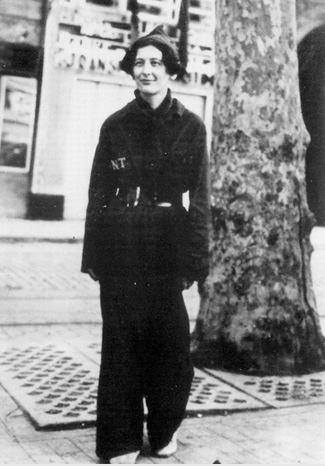
The sphere of creation is oscillating, rotating. One must be within the sphere, at the centre, to be unmoved by its oscillations or rotations, and Tiferet is the centre of this sphere, both the height and depth. From the centre, inside, there are no directions, no contraries. Only when one is off-centre, outside, is this perception possible and one is subject to the oscillations or turnings of the wheels upon wheels that are within the sphere itself. (King Lear Act 5 sc. iii and Act 4 sc. vii “But I am bound upon a wheel of fire,/ That mine own tears do scald like molten lead”.). Along the journey, the “dark night of the soul” as experienced by the saints occurs the closer one gets to Keter. They report that there is a complete disconnect with God (Christ’s “Father, why have you forgotten me?”, St. John of the Cross, Simone Weil). Following the dark night, the revelation is received. The dark night would occur at the third crossroads on the upward motion and the first crossroads on the descending motion on the Tree of Life.

Text 2.5:

2.5 For He indeed showed the mode of combination of the letters, each with each, Aleph with all, and all with Aleph. Thus, in combining all together in pairs are produced these two hundred and thirty-one gates of knowledge. And from Nothingness did He make something, and all forms of speech and every created thing, and from the empty void He made the solid earth, and from the non-existent He brought forth Life. He hewed, as it were, immense columns or colossal pillars, out of the intangible air, and from the empty space. And this is the impress of the whole, twenty-one letters, all from one, the Aleph.

Wescott trans. 2.5. For He shewed the combination of these letters, each with the other; Aleph with all, and all with Aleph; Beth with all, and all with Beth. Thus in combining all together in pairs are produced the two hundred and thirty−one gates of knowledge. (32)[1]

See the notes to the Wescott translation below.

Wescott trans. 2. 6. And from the non−existent (33)[2] He made Something; and all forms of speech and everything that has been produced; from the empty void He made the material world, and from the inert earth He brought forth everything that hath life. He hewed, as it were, vast columns out of the intangible air, and by the power of His Name made every creature and everything that is; and the production of all things from the twenty−two letters is the proof that they are all but parts of one living body. (34)[3]


[1]32. The 231 Gates. The number 242 is obtained by adding together all the numbers from 1 to 22. The Hebrew letters can he placed in pairs in 242 different positions: thus ab, ag, ad, up to at; then ba, bb, bg, bd, up to bt, and so on to ts, tt: this is in direct order only, without reversal. For the reason why eleven are deducted, and the number 231 specified, see the Table and Note 15 in the edition of Postellus.

[2]33. Non−existent; the word is AIN, nothingness. Ain precedes Ain Suph, boundlessness; and Ain Suph Aur, Boundless Light.

[3]34. Body; the word is GUP, usually applied to the animal material body, but here means “one whole.”

Commentary on 2.5:

Passage 2.5 is a summary of all that has been said up to now in the Sefer Yetzirah. The combining together of the pairs of letters produce the 231 gates of knowledge, but all are from the one Alef. The formula for the combinations is n (n – 1) / 2. Within Alef are the three elements of air, fire and water indicating the Pythagorean understanding of numbers as a triune (and the One God as a Trinity). The physical universe, earth, substance, is created from these three elements. “The void” is Chakmah or the unlimited, space without definable limits; it is of the element water. It is no-thing. To make no-thing into some-thing requires the imposition of language and number so that they can be measured and weighed and then named, “the shape of water”. This shaping is called the Beriyah level of the Universe, the creation of something from nothing (Atzilut, Yetzirah, and Asiyah being the other three). Binah and the Beriyah level of creation are simultaneous. “From non-existence (“no-thing”) He brought forth Life” as well as Language, and both occur simultaneously.

“He carved (hewed) immense columns or colossal pillars”: “Wisdom has built its house; it has carved its seven pillars” (Proverbs 9:1) The great pillars of Wisdom are the seven subjects of education, and hence Understanding: grammar, logic, rhetoric (Language), arithmetic, music, geometry, and astronomy (Number). Wisdom is realized through the study of the 7 subjects. The 7 pillars are also said to correspond to the lower 7 Sephirot of created things. The 7 days of the week are the “light of the world”, the reflected light of Malkhut (Time) from the primary light of the Sun of Tiferet. The 7 doubles of the alphabet are the vertical lines of the Tree of Life derived from the three Mothers. The three Mothers are associated with the past, Time. Together they spell out the word “last night”. Understanding is the shared knowledge that we would deem “historical knowledge”, and it is comprised of the 7 pillars of Wisdom; it comes from the past and is part of the communities of which we are members.

The illustration on the left indicates the horizontal lines of Alef, Mem, and Shin. The movement is from right to left on the Tree: from Chakmah to Binah (Shin), from Chesed to Gevurah(Alef) , from Netzach to Hod (Mem).

The One Name of God is YHVH: tetra (four), gramma (letters) or Tetragrammaton.  The whole of language and number is said to develop from the combinations made through this name. The name invokes the shape of Alef: two Yods with a Vav as a diagonal barrier between them.

In the passage, the initiate “foresees, transforms and makes”. To “foresee” is to “pre-dict”; to “transform” is to change in order to “make” – pro-duction. The forming and making in the realm of Yetzirah and Asiyah is what we understand as the “technological”, the “knowing” and “making”. What is implied in human making is that the human bringing into being of things is that those things were always already there and that the human being merely reveals that which is part of “every thing that will ever come into being”. The Balinese, for example, celebrate their Honda motorcycles as ‘a gift from the god’. Honda did not ‘create’ the motorcycles; they were always already there and Honda merely revealed them and made them.

Human beings make from “another”; Nature makes from itself. The human being does not create; he “makes” from the seeing (foreseeing, pre-diction), the arranging (transforming), and the production or bringing forth into being or revealing that which was always there. (From this one could say that J. R. R. Tolkien is literally correct in saying that technology is “black magic”! In the past, permission was required from on High to make an actual physical Golem, but that does not seem to have stopped modern day scientists. Note the similarities of the words Golem and Tolkien’s Gollum. The ‘eye of Sauron’ and the techne of Saruman would appear to be the seeing that is the technological.)

Theory of Knowledge: An Alternative Approach

Why is an alternative approach necessary?