
Introduction

“Faith is the experience that the intelligence is illuminated by Love.”- Simone Weil
This following commentary on “The 32 Paths of Wisdom” will attempt to show how the statement of Simone Weil is true in a manner understood by the Kabbalists. The text of “The Thirty-two Paths of Wisdom” provided here is a consolidation of translations from the Hebrew by a number of English and Hebrew scholars and mystics. The Sefir Yetzirah and “The 32 Paths of Wisdom” are philosophical texts; that is, they are written in the language of “poetic prophecy”: the philosophers speak as prophets through poetry. They are attempts to make manifest the paths available to one (netivot) when one sets off on the quest for the Good or knowledge of the Good. “Paths” (one might also refer to them as streams or channels) are paths of thought, meditation, and prayer but they are also paths of action. According to Plato, the human soul is composed of three parts: appetitive, spirited, and logos.
In the Tarot, The World #21 is “the good”, or the completion of the letters of the Hebrew alphabet, the whole, with the letter Tav. It is the achievement of wisdom. At the same time, it combines with the letters Alef and Shin to indicate The Fool #0, and thus a new beginning, a return from the world where knowledge of the whole has been illuminated for the individual.
The Text of “The 32 Paths of Wisdom”:
Below is one translation of the text of “The 32 Paths of Wisdom”. I have provided others for comparison and contrast throughout this commentary. The word “intelligence” is highly problematical in the translation for “intelligence” has been understood as that calculative rationality which gives knowledge of outcomes (prophecy) in the history of the West. It is the world of the I.Q. test and applied sciences and this is but one face of the logos or logistikon that is the “intelligence” in the text and in the works of Plato and Aristotle.
In the interpretation of the “The Thirty-two Paths of Wisdom” offered here, the “intelligence” or logistikon is to be understood as that infinitesimal point of reality in human beings that is beyond the realm of Necessity (Time and Space), that which is beyond the appetitive and “spirited” parts of what was once understood as the “soul” and what may be understood here as a combination of the Greek terms psyche, logos and eros. Plato divided the soul into three parts: the logistikon (intelligence, “reason”, “consciousness”), the thymoeides (spiritedness, which houses anger, as well as other spirited emotions), and the epithymetikon (appetite or desire, which houses the desire for physical pleasures). Each of the three parts of the soul were channeled by eros as desire expressed as “fullness” or “deprivation”. Eros is the child of Penia (need, deprivation) and Poros (skill or resourcefulness, fullness) and these qualities are manifest throughout the journey along the thirty-two paths of wisdom.
The Text
1. Mystical Intelligence (Consciousness) (Sekhel Mufla): This is the Light that was originally conceived, and it is the First Glory (“Let there be light”). No creature can attain its excellence.
2. Radiant Intelligence (Consciousness) (Sekhel Maz’hir): This is the Crown of creation and the radiance of the homogeneous unity that “exalts itself above all as the Head”. The Masters of the Kabbalah call it the “Second Glory”.
3. Sanctified Intelligence (Consciousness) (Sekhel MeKudash): This is the foundation of the Original Wisdom and it is called “Faithful Faith”. Its roots are AMeN. It is the Father of Faith, and from its power faith emerges.
4. Settled Intelligence (Consciousness) (Sekhel Kavua): It is called this because all the spiritual powers emanate from it as the (most) ethereal of emanations. One emanates from the Other by the power of the Original Emanator, may He be Blessed.
5. Rooted Intelligence (Consciousness) (Sekhel Nishrash): It is called this because it is the essence of the homogeneous Unity. It is unified in the essence of Understanding, which emanates from the domain of the Original Wisdom.
6. Transcendental Influx Intelligence (Consciousness) (Sekhel Shifa Nivdal): It is called this because through it the influx of Emanation (Atziluth) increases itself. It bestows this influx on all blessings, which unify themselves in its essence.
7. Hidden Intelligence (Consciousness) (Sekhel Nistar): It is called this because it is the radiance that illuminates the transcendental powers that are seen with the mind’s eye and with the reverie of Faith.
8. Perfect Intelligence (Consciousness) (Sekhel Shalem): It is called this because it is the Original Arrangement. There is no root through which it can be pondered, except through the Chambers of Greatness, which emanate from the essence of its permanence.
9. Pure Intelligence (Consciousness) (Sekhel Tahor): It is called this because it purifies the Sephirot. It tests the degree of their structure and the inner essence of their unity, making it glow. They are then unified, without any cutoff or separation.
10. Scintillating Intelligence (Consciousness) (Sekhel MitNotzetz): It is called this because it elevates itself and sits on the throne of Understanding. It shines with the radiance of all the luminaries and it bestows an influx of increase to the Prince of Face(s).
11. Glaring Intelligence (Consciousness) (Sekhel MeTzuchtzach): It is called this because it is the essence of the veil which is ordered in the arrangement of the system. It indicates the arrangement of the paths (netivot) whereby one can stand before the Cause of causes.
12. Glowing Intelligence (Consciousness) (Sekhel Bahir): It is called this because it is the essence of the Ophan-wheel of Greatness. It is called the Visualizer (Chazchazit), the place that gives rise to the vision that the Seers perceive in an apparition.
13. Unity Directing Intelligence (Consciousness) (Sekhel Manhig HaAchdut): It is called this because it is the essence of the Glory. It represents the completion of the true essence of the unified spiritual beings.
14. Illuminating Intelligence (Consciousness) (Sekhel Meir): It is called this because it is the essence of the speaking silence (Chashmal). It gives instructions regarding the mystery of the holy secrets and their structure.
15. Stabilizing Intelligence (Consciousness) (Sekhel Ma’amid): It is called this because it stabilizes the essence of creation in the “Glooms of Purity”. The masters of the theory said this is ‘the Gloom at Sinai’. This is the meaning of “Gloom is its cocoon”. (Job 35.9)
16. Enduring Intelligence (Consciousness) (Sekhel Nitzchi): It is called this because it is the Delight of the Glory (Eden). As it is, there is no Glory lower than it. It is called the Garden of Eden, which is prepared for the (reward of) the saints.
17. Intelligence of the Senses (Consciousness) (Sekhel HaHergesh): This is prepared for the Faithful saints so that they may be able to clothe themselves in the spirit of holiness. In the arrangement of the supernal entities, it is called the Foundation of Beauty (Yesod HaTiferet).
18. Intelligence of the House of Influx (Consciousness) (Sekhel Bet HaShefa): By probing with it, a secret mystery (Raz) and an allusion are transmitted to those who ‘dwell in its shadow’ and bind themselves to probing its substance from the Cause of Causes.
19. Intelligence of the Mystery of all Spiritual Activities (Consciousness) (Sekhel Sod HaPaulot HaRushniot Kulam): It is called this because of the influx that permeates it from the Highest Blessing and the Supreme Glory.
20. Intelligence of Will (Consciousness) (Sekhel HaRatzon): It is called this because it is the structure of all that is formed. Through this state of intelligence (consciousness) one can know the essence of Original Wisdom.
21. Desired and Sought Intelligence (Consciousness) (Sekhel HaChafutz VeHaMevukash): It is called this because it receives the divine Influx so as to bestow its blessing to all things that exist.
22. Faithful Intelligence (Consciousness) (Sekhel Ne’eman): It is called this because spiritual powers are increased through it, so that they can be close to all those ‘who dwell in their shadow’.
23. Sustaining Intelligence (Consciousness) (Sekhel Kayam): It is called this because it is the sustaining power for all the Sephirot.
24. Apparative (Tools) Intelligence (Consciousness) (Sekhel Dimyoni): It is called this because it provides an appearance for all created apparitions, in a form fitting their stature.
25. Testing Intelligence (Consciousness) (Sekhel Nisyoni): It is called this because it is the original temptation by which God tests all of His saints.
26. Renewing Intelligence (Consciousness) (Sekhel MeChudash): It is called this because it is the means through which the Blessed Holy One brings about all new things which are brought into being in His Creation.
27. Palpable Intelligence (Consciousness) (Sekhel Murgash): It is called this because the intelligence of things created under the entire upper sphere, as well as their sensations, were created through it.
28. Natural Intelligence (Consciousness) (Sekhel Mutba): It is called this because the nature of all that exists under the sphere of the sun was completed through it.
29. Physical Intelligence (Consciousness) (Sekhel Mugsham): It is called this because it depicts the growth of all that becomes physical under the system of all the spheres.
30. General Intelligence (Consciousness) (Sekhel Kelali): It is called this because it is the means by which the astrologers collect their rules regarding the stars and the constellations, forming the theory that comprises their knowledge of the Ophan-wheels of the spheres.
31. Continuous Intelligence (Consciousness) (Sekhel Timidi): Why is it called this? Because it directs the path of the sun and moon according to their laws of nature, each one in its proper orbit.
32. Worshipped Intelligence (Consciousness) (Sekhel Ne’evad): It is called this because it is prepared so as to destroy all who engage in the worship of the seven planets.
Commentary
Human beings are the “needing” animals. We are “perfect” in our “imperfection”. What makes us human and distinguishes us from other animals is our recognition that we experience both the absence and presence of the Good in our lives simultaneously. This experienced absence, the need of eros, sends us on a quest for its fulfillment so that its presence within ourselves will bring about a completion, a perfection and, thus, happiness. This questing is, partly, a revealing of the truth of things, and this revealing is part of our nature as human beings. We are not fully human when we do not carry out this quest, when we do not reveal truth. This quest is not based on a “why” that is looking for an answer in a “because”, although this is the foundation for our quests in science and in other areas of our lives. Outward manifestations of this quest can come in all forms, from the asceticism of the yogi to the slum mother who cares for her child.
At the heart of our common understanding of the Tree of Life is the document entitled “The 32 Paths of Wisdom”. Usually, this document accompanies the English editions of the Sepher Yetzirah and is seen as an explanation or clarification of the Sefer Yetzirah. However, the concept of 32 Paths of Wisdom themselves stems not from the Sefer Yetzirah, but from the Torah, the Book of Genesis, Chapter One, according to one Hebrew scholar. Furthermore, the document “The 32 Paths of Wisdom” comes to us from the late 13th Century, C.E. — centuries before the visual image of the Tree of Life was introduced and given as a representation of the Tree of Life. The Tree of Life itself is a visual representation of the ideas written about in the text of the Sefer Yetzirah itself, a text written in the year 1 or 2 BCE. Interpretations of the Sefer Yetzirah through the Tree of Life (what we understand as Kabballah) are predominantly medieval Hebrew and Christian understandings of that text.
Below, the text is in bold and the commentary is written in regular text. I have tried to make comparisons and contrasts between what is called “The Hebrew Tree of Life” which is based more closely on the paths outlined in the S.Y. (which will be used to refer to the Sefer Yetzirah itself hereafter) and in the text of “The 32 Paths of Wisdom”, and the modern interpretations of those paths which is sometimes referred to as the “Western interpretation” of those paths. Since a proper hermeneutical examination requires one to get closer to the “original sources”, many of the points which I make will be based on an understanding of Nature prior to that which occurs in the discoveries of modern science i.e., Newtonian physics.
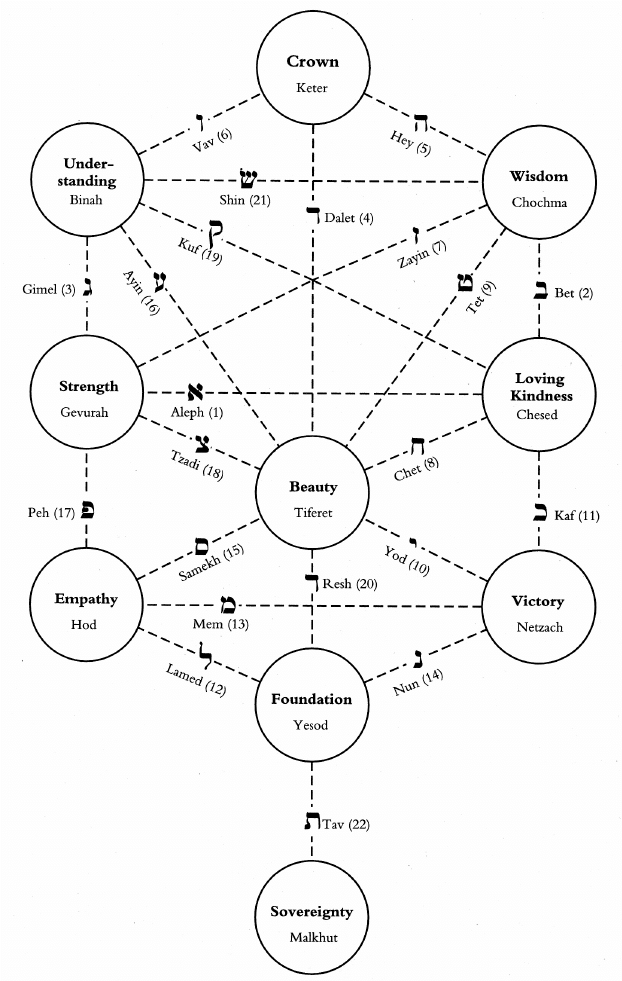
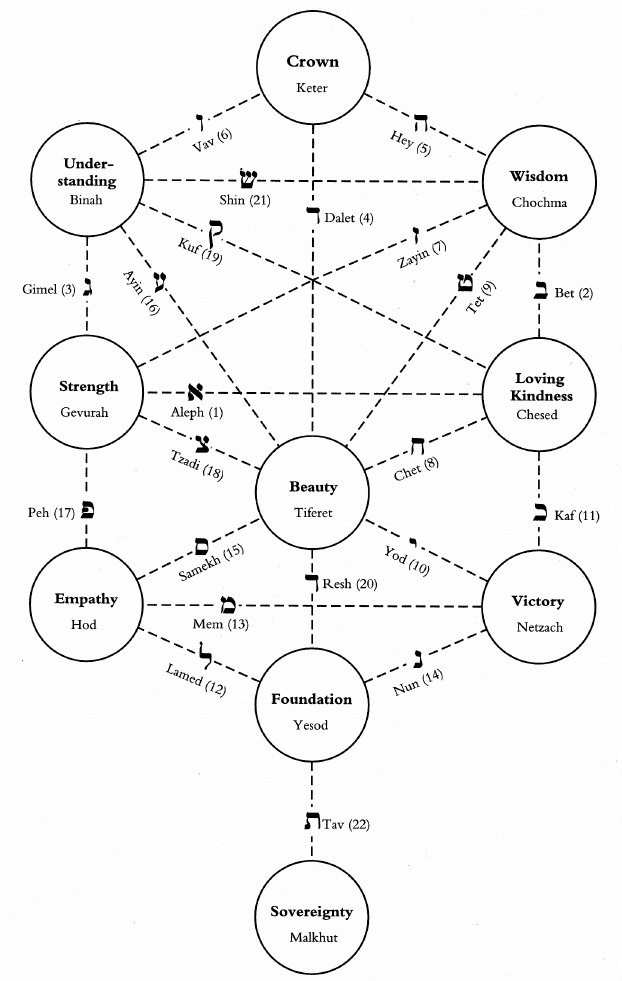
The illustration of the Tree of Life from Aleister Crowley attempts to understand the Tree of Life and the 32 paths of Wisdom from a “modern” point of view. It attempts to consider the modern discoveries of the solar system and place them onto the Tree of Life which itself is founded upon only those heavenly bodies which are visible to the human eye. The arbitrariness of such inclusions into the concept of the Tree of Life and the 32 paths is shown by the fact that Pluto, for example, is no longer considered a planet by the Astro-physicists.
In interpreting the Tree of Life, it should be remembered that the Sefer Yetzirah was written before the discoveries of modern science and that its view of Nature is different from that which is held in the modern sciences and so it holds different “truths” or revelations than those of modern science. These differences should be obvious to any careful reader. Commentaries that attempt to take into account the discoveries of modern science fail to see the difference between the principle of reason which rules the theory and method of modern science and how modern science approaches the world and the things in it. The meditation and prayer suggested by the texts of the Sefer Yetzirah and “The 32 Paths of Wisdom” as ways of “intelligence” and “consciousness” and as a way of unveiling the truth of being and of the Divine show a different type of logos than that which is present in modern science
According to the Jewish tradition, the concept of the 32 Paths of Wisdom is derived from the 32 times that the name “Elohim” is mentioned in Genesis, Chapter One and it corresponds to the 10 Sephirot and the 22 letters of the Hebrew alphabet:
Genesis Chapter 1 בְּרֵאשִׁית
| א Alef | בְּרֵאשִׁית , בָּרָא אֱלֹהִים , אֵת הַשָּׁמַיִם , וְאֵת הָאָרֶץ | 1 In the beginning Elohim created the heaven and the earth. |
| ב Bet | וְהָאָרֶץ , הָיְתָה תֹהוּ וָבֹהוּ , וְחֹשֶׁךְ , עַל – פְּנֵי תְהוֹם ; וְרוּחַ אֱלֹהִים , מְרַחֶפֶת עַל-פְּנֵי הַמָּיִם . | 2 Now the earth was unformed and void, and darkness was upon the face of the deep; and the spirit of Elohim hovered over the face of the waters. |
| ג Gimel | וַיֹּאמֶר אֱלֹהִים, יְהִי אוֹר; וַיְהִי-אוֹר | 3 And Elohim said: ‘Let there be light.’ And there was light. |
| ד Dalet | וַיַּרְא אֱלֹהִים אֶת-הָאוֹר, כִּי-טוֹב; וַיַּבְדֵּל אֱלֹהִים,בֵּין הָאוֹר וּבֵין הַחֹשֶׁךְ. | 4 And Elohim saw the light, that it was good; and Elohim divided the light from the darkness. |
| ה Heh | וַיִּקְרָא אֱלֹהִים לָאוֹר יוֹם, וְלַחֹשֶׁךְ קָרָא לָיְלָה;וַיְהִי-עֶרֶב וַיְהִי-בֹקֶר, יוֹם אֶחָד. | 5 And Elohim called the light Day, and the darkness He called Night. And there was evening and there was morning, one day. {P} |
| ו Vav | וַיֹּאמֶר אֱלֹהִים, יְהִי רָקִיעַ בְּתוֹךְ הַמָּיִם, וִיהִימַבְדִּיל, בֵּין מַיִם לָמָיִם. | 6 And Elohim said: ‘Let there be a firmament in the midst of the waters, and let it divide the waters from the waters.’ |
| ז Zayin | וַיַּעַשׂ אֱלֹהִים, אֶת-הָרָקִיעַ, וַיַּבְדֵּל בֵּין הַמַּיִם אֲשֶׁרמִתַּחַת לָרָקִיעַ, וּבֵין הַמַּיִם אֲשֶׁר מֵעַל לָרָקִיעַ;וַיְהִי-כֵן. | 7 And Elohim made the firmament, and divided the waters which were under the firmament from the waters which were above the firmament; and it was so. |
| ח Chet | וַיִּקְרָא אֱלֹהִים לָרָקִיעַ, שָׁמָיִם; וַיְהִי-עֶרֶבוַיְהִי-בֹקֶר, יוֹם שֵׁנִי. | 8 And Elohim called the firmament Heaven. And there was evening and there was morning, a second day. {P} |
| ט Tet | וַיֹּאמֶר אֱלֹהִים, יִקָּווּ הַמַּיִם מִתַּחַת הַשָּׁמַיִםאֶל-מָקוֹם אֶחָד, וְתֵרָאֶה, הַיַּבָּשָׁה; וַיְהִי-כֵן. | 9 And Elohim said: ‘Let the waters under the heaven be gathered together unto one place, and let the dry land appear.’ And it was so. |
| י Yud | וַיִּקְרָא אֱלֹהִים לַיַּבָּשָׁה אֶרֶץ, וּלְמִקְוֵה הַמַּיִם קָרָאיַמִּים; וַיַּרְא אֱלֹהִים, כִּי-טוֹב. | 10 And Elohim called the dry land Earth, and the gathering together of the waters called He Seas; and Elohim saw that it was good. |
| כ Kaf יא | וַיֹּאמֶר אֱלֹהִים, תַּדְשֵׁא הָאָרֶץ דֶּשֶׁא עֵשֶׂב מַזְרִיעַזֶרַע, עֵץ פְּרִי עֹשֶׂה פְּרִי לְמִינוֹ, אֲשֶׁר זַרְעוֹ-בוֹעַל-הָאָרֶץ; וַיְהִי-כֵן. | 11 And Elohim said: ‘Let the earth put forth grass, herb yielding seed, and fruit-tree bearing fruit after its kind, wherein is the seed thereof, upon the earth.’ And it was so. |
| ל Lamed יב | וַתּוֹצֵא הָאָרֶץ דֶּשֶׁא עֵשֶׂב מַזְרִיעַ זֶרַע, לְמִינֵהוּ, וְעֵץעֹשֶׂה-פְּרִי אֲשֶׁר זַרְעוֹ-בוֹ, לְמִינֵהוּ; וַיַּרְא אֱלֹהִים,כִּי-טוֹב. | 12 And the earth brought forth grass, herb yielding seed after its kind, and tree bearing fruit, wherein is the seed thereof, after its kind; and Elohim saw that it was good. |
| מ Mem יג | וַיְהִי-עֶרֶב וַיְהִי-בֹקֶר, יוֹם שְׁלִישִׁי. | 13 And there was evening and there was morning, a third day. {P} |
| נ Nun יד | וַיֹּאמֶר אֱלֹהִים , יְהִי מְאֹרֹת בִּרְקִיעַ הַשָּׁמַיִם ,לְהַבְדִּיל , בֵּין הַיּוֹם וּבֵין הַלָּיְלָה; וְהָיוּ לְאֹתֹתלְהַבְדִּיל , בֵּין הַיּוֹם וּבֵין הַלָּיְלָה; וְהָיוּ לְאֹתֹת | 14 And Elohim said: ‘Let there be lights in the firmament of the heaven to divide the day from the night; and let them be for signs, and for seasons, and for days and years; |
| ס Samekh טו | וְהָיוּ לִמְאוֹרֹת בִּרְקִיעַ הַשָּׁמַיִם, לְהָאִיר עַל-הָאָרֶץ;וַיְהִי-כֵן. | 15 and let them be for lights in the firmament of the heaven to give light upon the earth.’ And it was so. |
| ע Eyin טז | וַיַּעַשׂ אֱלֹהִים, אֶת-שְׁנֵי הַמְּאֹרֹת הַגְּדֹלִים:אֶת-הַמָּאוֹר הַגָּדֹל, לְמֶמְשֶׁלֶת הַיּוֹם, וְאֶת-הַמָּאוֹר הַקָּטֹןלְמֶמְשֶׁלֶת הַלַּיְלָה, וְאֵת הַכּוֹכָבִים. | 16 And Elohim made the two great lights: the greater light to rule the day, and the lesser light to rule the night; and the stars. |
| פ Pef יז | וַיִּתֵּן אֹתָם אֱלֹהִים, בִּרְקִיעַ הַשָּׁמָיִם, לְהָאִיר,עַל-הָאָרֶץ. | 17 And Elohim set them in the firmament of the heaven to give light upon the earth, |
| צ Tzaddi יח | וְלִמְשֹׁל, בַּיּוֹם וּבַלַּיְלָה, וּלְהַבְדִּיל, בֵּין הָאוֹר וּבֵיןהַחֹשֶׁךְ; וַיַּרְא אֱלֹהִים, כִּי-טוֹב. | 18 and to rule over the day and over the night, and to divide the light from the darkness; and Elohim saw that it was good. |
| ק Kaf יט | וַיְהִי-עֶרֶב וַיְהִי-בֹקֶר, יוֹם רְבִיעִי. | 19 And there was evening and there was morning, a fourth day. {P} |
| ר Resh כ | וַיֹּאמֶר אֱלֹהִים–יִשְׁרְצוּ הַמַּיִם, שֶׁרֶץ נֶפֶשׁ חַיָּה; וְעוֹףיְעוֹפֵף עַל-הָאָרֶץ, עַל-פְּנֵי רְקִיעַ הַשָּׁמָיִם. | 20 And Elohim said: ‘Let the waters swarm with swarms of living creatures, and let fowl fly above the earth in the open firmament of heaven.’ |
| ש Shin כא | וַיִּבְרָא אֱלֹהִים, אֶת-הַתַּנִּינִם הַגְּדֹלִים; וְאֵתכָּל-נֶפֶוְאֵת כָּל-עוֹף כָּנָף לְמִינֵהוּ, וַיַּרְא אֱלֹהִים, כִּי-טוֹב.שׁ הַחַיָּה הָרֹמֶשֶׂת אֲשֶׁר שָׁרְצוּ הַמַּיִם לְמִינֵהֶם, | 21 And Elohim created the great sea-monsters, and every living creature that creepeth, wherewith the waters swarmed, after its kind, and every winged fowl after its kind; and Elohim saw that it was good. |
| ת Tav כב | וַיְבָרֶךְ אֹתָם אֱלֹהִים, לֵאמֹר: פְּרוּ וּרְבוּ, וּמִלְאוּאֶת-הַמַּיִם בַּיַּמִּים, וְהָעוֹף, יִרֶב בָּאָרֶץ. | 22 And Elohim blessed them, saying: ‘Be fruitful, and multiply, and fill the waters in the seas, and let fowl multiply in the earth.’ |
| כג | וַיְהִי-עֶרֶב וַיְהִי-בֹקֶר, יוֹם חֲמִישִׁי. | 23 And there was evening and there was morning, a fifth day. {P} |
| כד | וַיֹּאמֶר אֱלֹהִים, תּוֹצֵא הָאָרֶץ נֶפֶשׁ חַיָּה לְמִינָהּבְּהֵמָה וָרֶמֶשׂ וְחַיְתוֹ-אֶרֶץ, לְמִינָהּ; וַיְהִי-כֵן. | 24 And Elohim said: ‘Let the earth bring forth the living creature after its kind, cattle, and creeping thing, and beast of the earth after its kind.’ And it was so. |
| כה | וַיַּעַשׂ אֱלֹהִים אֶת-חַיַּת הָאָרֶץ לְמִינָהּוַיַּעַשׂ אֱלֹהִים אֶת-חַיַּת הָאָרֶץ לְמִינָהּוַיַּרְא אֱלֹהִים, כִּי-טוֹב. | 25 And Elohim made the beast of the earth after its kind, and the cattle after their kind, and every thing that creepeth upon the ground after its kind; and God saw that it was good. |
| כו | וַיֹּאמֶר אֱלֹהִים, נַעֲשֶׂה אָדָם בְּצַלְמֵנוּ כִּדְמוּתֵנוּ;וְיִרְדּוּ בִדְגַת הַיָּם וּבְעוֹף הַשָּׁמַיִם, וּבַבְּהֵמָהוּבְכָל-הָאָרֶץ, וּבְכָל-הָרֶמֶשׂ, הָרֹמֵשׂ עַל-הָאָרֶץ. | 26 And Elohim said: ‘Let us make man in our image, after our likeness; and let them have dominion over the fish of the sea, and over the fowl of the air, and over the cattle, and over all the earth, and over every creeping thing that creepeth upon the earth.’ |
| כז | וַיִּבְרָא אֱלֹהִים אֶת-הָאָדָם בְּצַלְמוֹ, בְּצֶלֶם אֱלֹהִיםבָּרָא אֹתוֹ: זָכָר וּנְקֵבָה, בָּרָא אֹתָם. | 27 And Elohim created man in His own image, in the image of Elohim created He him; male and female created He them. |
| כח | וַיְבָרֶךְ אֹתָם, אֱלֹהִים, וַיֹּאמֶר לָהֶם אֱלֹהִים פְּרוּוּרְבוּ וּמִלְאוּ אֶת-הָאָרֶץ, וְכִבְשֻׁהָ; וּרְדוּ בִּדְגַת הַיָּם,וּבְעוֹף הַשָּׁמַיִם, וּבְכָל-חַיָּה, הָרֹמֶשֶׂת עַל-הָאָרֶץ. | 28 And Elohim blessed them; and Elohim said unto them: ‘Be fruitful, and multiply, and replenish the earth, and subdue it; and have dominion over the fish of the sea, and over the fowl of the air, and over every living thing that creepeth upon the earth.’ |
| כט | וַיֹּאמֶזֶרַע אֲשֶׁר עַל-פְּנֵי כָל-הָאָרֶץ, וְאֶת-כָּל-הָעֵץ אֲשֶׁר-בּוֹר אֱלֹהִים, הִנֵּה נָתַתִּי לָכֶם אֶת-כָּל-עֵשֶׂב זֹרֵעַפְרִי-עֵץ, זֹרֵעַ זָרַע: לָכֶם יִהְיֶה, לְאָכְלָה. | 29 And Elohim said: ‘Behold, I have given you every herb yielding seed, which is upon the face of all the earth, and every tree, in which is the fruit of a tree yielding seed–to you it shall be for food; |
| ל | וּלְכָל-חַיַּת הָאָרֶץ וּלְכָל-עוֹף הַשָּׁמַיִם וּלְכֹל רוֹמֵשׂעַל-הָאָרֶץ, אֲשֶׁר-בּוֹ נֶפֶשׁ חַיָּה, אֶת-כָּל-יֶרֶק עֵשֶׂב,לְאָכְלָה; וַיְהִי-כֵן. | 30 and to every beast of the earth, and to every fowl of the air, and to every thing that creepeth upon the earth, wherein there is a living soul, [I have given] every green herb for food.’ And it was so. |
| לא | וַיַּרְא אֱלֹהִים אֶת-כָּל-אֲשֶׁר עָשָׂה, וְהִנֵּה-טוֹב מְאֹד;וַיְהִי-עֶרֶב וַיְהִי-בֹקֶר, יוֹם הַשִּׁשִּׁי. | 31 And Elohim saw every thing that He had made, and, behold, it was very good. And there was evening and there was morning, the sixth day. {P} |
Sephiroth: “Elohim said”: The connection of the Sephirot to the Logos
Keter: “In the beginning Elohim created the heavens and the earth.” 1:1 (“said” is implied here)
This implies that the creation is an “expansion of God” rather than a “withdrawal” of God. The editorial note “To say” implies an empowering of the Self, a going beyond the Self. Perhaps a better understanding might come from the idea that “God thought” and from this “thought”, understood as Love, creation came to be. Alef is the letter that contains all the other letters. Language and number as the Logos always were.
Chokmah: Elohim said “Let there be light” 1:3
“Waters” are associated with darkness and with “the depths”. They are also associated with the Mother letter Mem. The darkness of the waters of Mem requires the light from the fire of Keter.
Binah: Elohim said “Let there be a firmament . . . let it divide . . .” 1:6
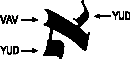
The “firmament” divides the limited (that which is “measured”, the content of “rationality”) from the unlimited (water). It establishes the limits and boundaries to things. It is the law of Necessity. It gives shapes to water. It is the establishment of space and time. Is it here that the Sephirot are created? Or were the Sephirot always there? I ascribe the letter Vav to the idea of ‘firmament’. In the letter Alef א, two Yods are separated by a Vav. The Yod above the Vav is the Divine Self, while the Yod below the Vav is the Divine Self as it is manifested in the created world. The Yod that is the individual Self or ego of human beings is contained within the Divine Self or soul of the created world. As the Yod that is the Divine Self is composed of three parts so, too, is the yod of the individual being or soul composed of three parts.
Gedulah/Chesed: Elohim said “Let the waters be gathered . . . let dry land appear . . .” 1:9
With the establishment of space and time, material things can appear (dry land). With material things comes number. Water and fire combine with air to produce earth. Material things can be measured by their “weight” or “intensity”.
Gevurah: Elohim said “Let the earth put forth grass . . . etc.” 1:11
The establishment of the dynamis of Nature, the potentiality or possibility, the Life-Force. The law of Necessity is determined or, rather, comes to manifestation to limit what is potential or possible.
Tiferet: Elohim said “Let there be lights in the firmament . . .” 1:14
The “lights in the firmament” is the establishment of time. There is an association with fire here, but all four elements are involved. With the two lights, the Sun and the Moon, come the two faces of Logos and Eros which manifest themselves in the sephirot Tiferet.
Netzach: Elohim said “Let the waters swarm . . . let fowl fly . . .” 1:20
The “animation” of life is present through all the elements, the worlds of the World. Life is associated with “spirit” and “soul”. This animation is one face of the two-faced Eros.
Hod: Elohim said “Let the earth bring forth living creatures . . .” 1:24
The distinction between “bringing forth” out of itself and the bringing forth in another, from another, and for another. This “procreation” was what the Greeks called poiesis and what we understand as “poetry”. Here in the Sefer Yetzirah, this is the distinction between the worlds of Beriyah and that of Yetzirah. This “bringing forth” can be either the procreation of beings by Nature or what we understand as creativity and imagination, the “bringing forth” by convention, what we call “the production of knowledge”. Both are possibilities of eros.
Yesod: Elohim said “Let us make man . . .” 1:26
It is interesting that the plural is used here in the making of man. Elohim is seen as a plural throughout, but this must be seen as the Trinity, just as we must view Eros as a trinity of forces involving the physical, “spirited” and logos.
Malkhut: Elohim said “Be fruitful and multiply . . .” 1:28
Malkhut is the physical universe. It is the only sephirot not connected to Tiferet.
Three Mothers: “Elohim made:”
- Aleph — Elohim made “the Firmament and divided the waters . . .” 1:7 The “Firmament” is the letter Vav, the boundary that separates the waters of the heavens from those of the earth. Again the process here is one of withdrawal, not expansion. The heavens and the earth are Space which is prior to Time.
- Mem — Elohim made “the two great lights . . . and the stars.” 1:16 The two great lights are the Sun and Moon from which Time is able to be seen.
- Shin — “the beasts of the earth after its kind . . .” 1:25 The created beings are brought forth through Time.
Seven Doubles: “Elohim saw:
- Beth — Elohim saw “the light, that it was good.” 1:4
- Gimel — Elohim saw “that it was good.” (the separation of dry land and waters) 1:10
- Daleth — Elohim saw” that it was good” (the earth bringing forth grass, etc.) 1:12
- Kaph — Elohim saw that it was good” (the two lights in the firmament) 1:18
- Peh — Elohim saw “that it was good” (swarming of waters with creatures; of air with fowl) 1:21
- Resh — Elohim saw “that it was good” (the beasts of the earth) 1:25
- Tav — Elohim saw “every thing that He had made, and, behold, it was very good.” 1:31
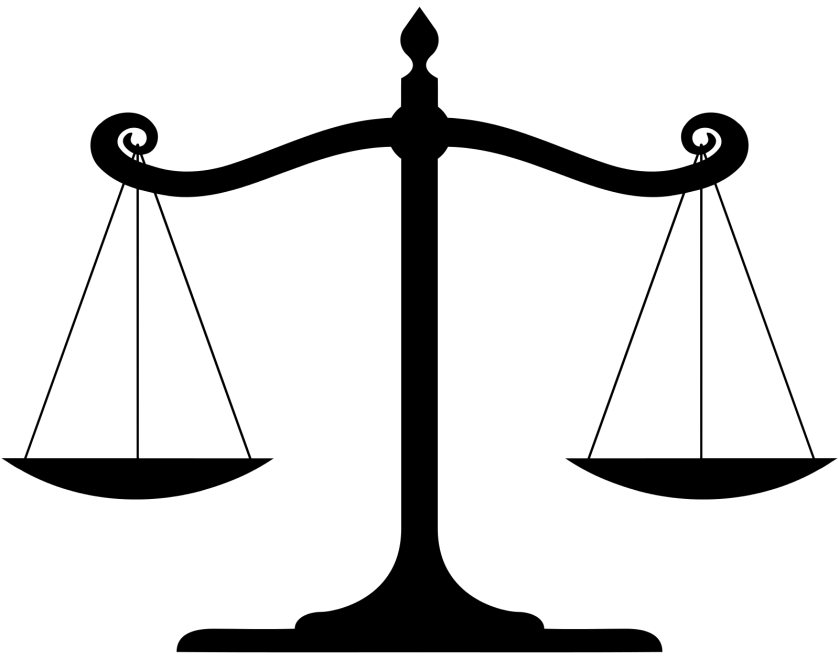
The seven double letters emphasize “seeing” and that through sight we experience that which we believe to be good. This seeing is of a “double” nature i.e. there is more than one possible way. The seven double letters comprise the three pillars of the Tree of Life, the foundations for the Tree of Life: the pillar of Jakim, the Pillar of Mercy, to the right when viewing the Tree of Life; the pillar of Keter in the centre running through Tiferet to Yesod to Malkhut, the Pillar of Balance and Judgement; and the pillar of Boaz to the left, the Pillar of Severity. These three pillars signify how the Logos and Eros will manifest themselves in the worlds in which they are experienced.
Elementals: “Elohim…–“
- Heh –Elohim “hovered over the face of the waters.” 1:2
- Vav — Elohim “divided the light from the darkness.” 1:4
- Zayin –Elohim “called the light Day, and darkness Night.” 1:5
- Cheth –Elohim “called the firmament Heaven.” 1:8
- Teth –Elohim “called the dry land, Earth . . . and the waters, Seas.” 1:10
- Yod –Elohim “set them [the two lights] in the firmament of the heaven” 1:17
- Lamed –Elohim “created the sea-monsters, creatures that creep, and fowl.” 1:21
- Nun –Elohim “blessed them [sea-monsters, creepers, and fowl] . . .” 1:22
- Samekh –Elohim “created man in His own image.” 1:27
- Ayin –Elohim “created He him; male and female created He them.” 1:27
- Tzaddi –Elohim “blessed them [male and female].” 1:28
- Qof — Elohim “said: I have given you all . . .” 1:29*
* There are two exceptions to this: The first is Gen. 1:1, and Sephirot 1/Keter, wherein “Elohim said” is assumed. The second is Gen. 1:29, and Elemental 12/Qoph, wherein the focus is shifted from the “Elohim said”, to the “I have given you all . . .” The Qof is the manifestation of the physical world.
The actions of the Elohim are in 4 groups of three: 1. hovering, dividing and setting; 2. creating; 3. blessing; 4. calling and saying. These actions parallel our own thinking and making process. We human beings in our making mirror the creating of the Elohim. Human beings do not create; we make or “procreate”. The Elohim creates.
The Paths emanating from Keter:A Discussion of the letters alef and Beth
1. Mystical Intelligence (Consciousness) (Sekhel Mufla): This is the Light that was originally conceived, and it is the First Glory (“Let there be light”). No creature can attain its excellence.
The First Path is called the Admirable or the Concealed Intelligence (The Highest Crown) – for it is the Light giving the power of comprehension of that First Principle which has no beginning, and it is the Primal Glory, for no created being can attain to its essence.
Alt. Trans. -“The first path is called the mystical consciousness, the highest crown (Keter). It is the light of the primordial principle which has no beginning; and it is the primal glory. No created being can attain to its essence.”
Wescott Trans. (These paragraphs are very obscure in meaning, and the Hebrew text is probably very corrupt.) This is Wescott’s comment.
The First Path is called the Admirable or the Hidden Intelligence (the Highest Crown): for it is the Light giving the power of comprehension of that First Principle which has no beginning; and it is the Primal Glory, for no created being can attain to its essence.
Keter: Sephirah #1 Alef “ox”
Genesis 1.1 In the beginning Elohim created the heaven and the earth.
The first path is Keter, called here “the Highest Crown”. Light originates from fire and fire requires air. Commentators speak of the “comprehension of that First Principle which has no beginning”; this is the Uncaused Cause of the philosopher Aristotle, the sempiternal nature of Time as “the moving image of eternity” of Plato. I would suggest that the first principle is the Good, following Plato. This sempiternal nature of creation suggests that the creation itself is a withdrawal not an expansion as is commonly understood. What is and what will be always was. It is the Good which gives the Light to all things. It is the principle Emanator among the Sephirot and is associated with Eros and with Truth.
The Bible and Genesis do not begin with an Alef, but with a Bet: “In the beginning…” The path that creation takes is first through Tiferet, the Beauty of the World (Eros and the Logos), then to Yesod, the Foundation of the Earth, and then to Malkhut, the Kingdom of Nature or the physical world before us. In taking this path, it must first cross the line of Mem and Shin from Chakmah to Binah, through Space and Time respectively.
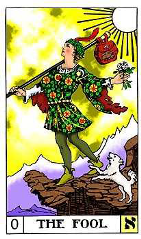
Aleph or (Alef) is the first letter of the Hebrew alphabet and signifies either the number one or the concept of zero or “no-thing” and would correspond to either The Fool #0 of the Tarot in the world of Beriyah, or the Magician #1 in the worlds of Yetzirah and Asiyah in the Tarot and the Sefer Yetzirah. The first path is a knowledge of, or awareness of, or an acquaintance with, the existence of the One and a comprehension both of the Law of Necessity (the “system” identified in the paths) and an awareness of that which is the First Principle of the One and which separates the creation from the One. Awareness of the One is consciousness of the Good. The Good, being beyond Being, is not knowable in itself as the “Admirable Intelligence” indicates but one may, nevertheless, be “conscious” of it. The Good gives that light that is Truth which illuminates all the things that are. Without such light, human beings would not be able to reveal the things that are in their truth and would be mere beasts.
Aleph represents the creation of something from nothing. In the Sefer Yetzirah, this indicates that it is of the world of Beriyah. It is the essential symbol of beginnings (suggesting The Fool #0) and the ultimate reality that cannot be talked about because it is timeless, spaceless, and yet present everywhere; it is represented by the element of air and as that ‘firmament’ that separates the waters of the heavens from those of the earth. It is the One that cannot be divided, representing a perfection or completion beyond human comprehension. This is the world of Atzilut, the world of the Ain (no-thing), Ain Soph (infinite), and the Ain Soph Aur (the manifested Whole). I have been referring to this world as the Good in this writing. This sempiternal nature of creation suggests that the creation itself is a withdrawal not an expansion as it is commonly understood. The more God withdraws, the wider the gyre. (One may see an analogy to this in the recent discoveries of the James Webb Space Telescope (JWST). The further we probe into the origins of the universe, the further the universe withdraws from us.)
Aleph suggests the wonder that arises from beginnings, the sense of the quest-ion that begins the “quest” or the journey. On this journey, there is a “Master” or ruler and “teacher”: this Master/Teacher is the Law of Necessity (the Divine Will or Torah). Necessity brings suffering; the purpose of suffering is to teach, to decreate the ego and to destroy the illusion and importance of the individual self. As the Greeks understood, the “mathematical” is that which can be learned and that which can be taught, and the mathematical is what is used to comprehend the Laws of Necessity. This is why we associate the ‘mathematical’ with numbers, but it is a greater concept than that and numbers are only one example of the mathematical. This may be one of the reasons why the ideas and the Sephirot are comprehended as numbers.
What is and what will be always was. It is the Good which gives the Light to all things, and this is why it is analogous to and symbolized by the Sun. One cannot attain to the Good itself for it is beyond Being, but one can attain to the Light which finds its source in the Good and it is available to everyone. That which is most important and most needed is available to everyone.
One must know the limits before one can know of or can be aware of that which is beyond the limits. This “awareness” or “intelligence” is what is known as the principle of reason (nihil est sine ratione) “nothing is without (a) reason”. The principle of reason includes within itself the principle of contradiction and the principle of causation. These principles are the Sefer Yetzirah’s roots in the philosophy of Aristotle. They are but one side of the face of the two-faced Logos.
Using the concept of zero suggests that Alef signifies no-thing, the Ain, and is not to be comprehended by either numbers or words since numbers and words come into being with the creation of “things” and of Time and Space; but both Time and Space, numbers and words, are with the One from the beginning, and this is a very important point to keep in mind. The Logos is part of the One that is a Three.

The path from Keter leads to the sephirot Tiferet #6. A number of commentaries place Da’at or the Void as the missing 11th Sephirot between Keter and Tiferet. I would suggest that the concept of Da’at is one aspect of the “two faces” or “countenances” in which Tiferet shows itself; and in this particular instance, it is as a contrary to the Sun. In the interpretation offered here, Da’at is actually the Logos or the Word from which Creation or the physical world is initiated. The Sefer Yetzirah is quite emphatic that the sephirot are 10 and not 11. The Da’at or Void is the Cross of the “Lamb slain from the foundation of the earth”, the Cross of Christ, the cross created when the paths of Alef, Mem and Shin meet with the downward movement of the path from Keter. The Cross is the whole of material Creation (the Divine Soul), and at the same time the body that encompasses our “embodied souls”. It is the macrocosm and the microcosm. Our bodies are our “crosses”, and this is what Christ meant when He said: “Take up your cross and follow me”. We experience the creation through our bodies.
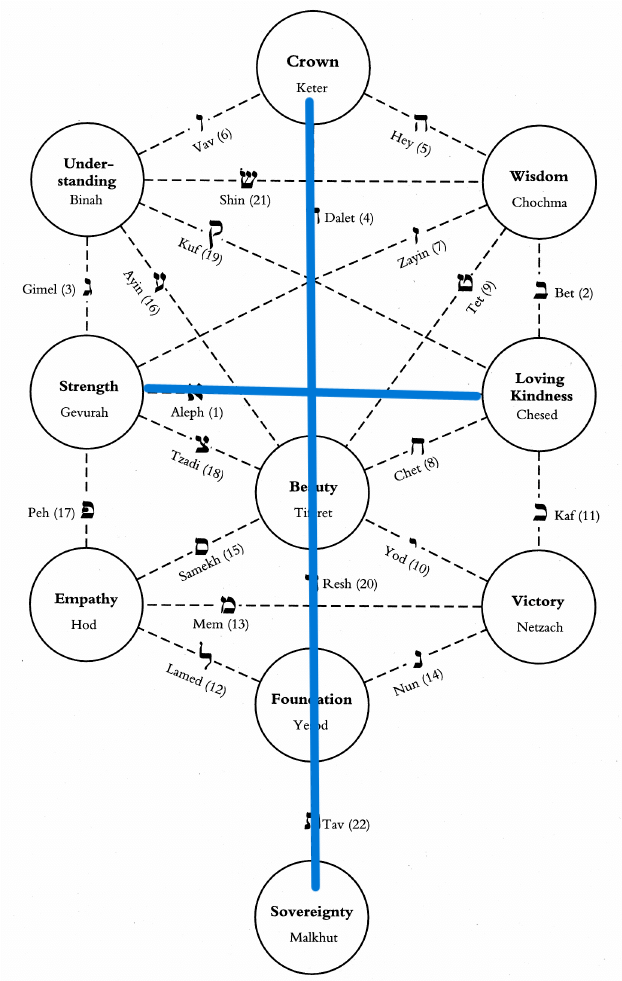
Alef is the source of all the letters and, therefore, is the source of all created beings. The symbol of Alef is the “ox”, the beast of burden, indicating that the creation of the world is “work” and “a work”. This connects Keter to Malkhut, the physical universe, which is the world of action and doing, the world of work. The “ox” is also the most prized animal and therefore the most prized sacrificial animal: “the Lamb slain from the foundation of the earth” is analogous to this. The creation itself is a “sacrifice” on God’s part. The denial or decreation of ourselves is the sacrifice required on our part. The ego is our most prized possession. The giving up or giving over of this ego is our greatest sacrifice. This decreation is much more easily said than done.
When Keter meets with Tiferet through the path of Alef at the centre of the Tree of Life, the Tree of Life may be said to branch off into two directions. The crossover of the Mother letter Alef from Chesed (Loving Kindness) to Gevurah (Force, Strength, Power) through Tiferet, gives us the two faces of both the Logos and of Eros. Chesed may be said to represent Nature or Creation in one of its faces (water), while Gevurah may be said to represent Convention or that which is made by humans (fire). The Greeks distinguished this as Nomos (Convention) and Ananke or the primordial understanding of Necessity. The letter Alef is the very centre of Tiferet and it joins the Tavs (the last letter of the alphabet) that begin and end the word itself. While the illustration places Tiferet below the crossover point, it is in fact at the centre of that crossover joining together the waters of the necessary and the fires of the conventional. Tiferet was prior to the being of both Chesed and Gevurah. This crossover point is that site where the worlds of Beriyah and Yetzirah are connected (the mind and the will, the emotions and the heart). Tiferet is also related to the Sun, as well as the covenant of the spiritual or voice. When Alef meets Yesod, we have the second covenant of the flesh or circumcision.
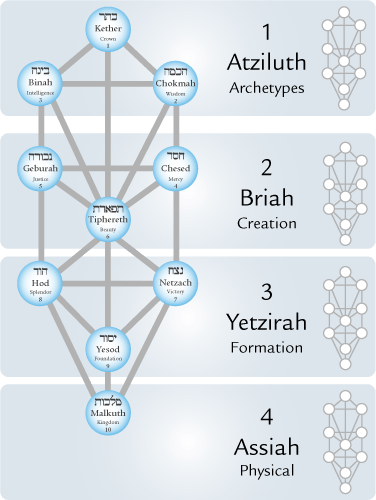
Keter is the first Sephirot. It is that Light which is at the centre, the still point, of that motion of the spheres that compose the created worlds (World). In the Sefir Yetzirah, there are four universes or worlds, so also there are four possible manners in which the paths work since they occur simultaneously and concurrently. The four universes or worlds of the Sefir Yetzirah are: Atzilut (the Archetypal/Spiritual world, the world of the Ideas of Plato, the world of Being, the world of the Sephirot themselves), Beriyah (the Creative world, the world of the apprehension of the web of Necessity, the theoretical world), Yetzirah (the Formative world, the human application of the theoretical world of knowing and making based on reason), and Asiyah (the world of action and manifestation, what we would call the material or physical world, the world of work, and also the ethical/moral world). Every one of the 32 paths acts in four ways within each of these worlds and manifests the qualities of these worlds. The challenge is to understand how each of the paths acts within the four different worlds and how their actions are to be differentiated. These interactions are not discussed in this text, but I will attempt to illustrate them in a further writing on the relation of the Logos to Eros.
The Keter point of light is also the Soul of the world and of every human being (see the works of Carl Jung and the archetypes of the Anima Mundi or World Soul). This combination of fire and air in human beings is what makes possible our unity with the One Soul through various possible mediations in our everyday experiences of the things of the world. As we will see later, it is through the Beauty of the world that this mediation function occurs.
The human relationship to the Divine is experienced as “absence”. It is analogous to living in a foreign country and experiencing “culture shock” or “homesickness”. Humans live within the ground of the logos as representational ratio; this is their ground or foundation (Yesod). It is but one side of the face of the Logos and of Eros. The principle of reason, for example, is a statement about beings, insofar as there are beings. It speaks about beings and not about reason. How does the principle of reason become the foundation as the guiding principle for making statements about things? Thinking is both a “hearing” and a “seeing”. What we “hear” and “see” are already attuned to what the ear and the eye will be “allowed” to hear and see.
The ”Admirable” adjective used in the original Hebrew of the first Path refers to the “Prince of Peace”, the “Prince of the Face”; however, this Prince is “concealed” to us and from us. He is “hidden”. The word “admirable” suggests what we understand by “nobility”, the outward splendour of something or someone, what is understood as “glory” in the Sefer Yetzirah. The Light of Keter itself, though, is “living conscious light”. There is a paradox here, and this paradox presents to us the mystery of life.
The word “Glory” refers to “weight” in the original Hebrew and this would suggest an association with number but also an association with “value” and of a hierarchy, i.e., “weighty things”. Number is not possible without created things. This suggests that number, like language itself, was always already there. The understanding of the essence of number and language is something beyond human beings. Our modern belief that we understand the essence of language and number as shown in our algorithms and ‘artificial intelligence’ shows that we are in a very great danger with regard to our humanity and our human being in the world. Nevertheless, just as our belief in numbers and language permeates our lives so, too, does the presence of that Light which has given these gifts to us. Number and language are what the Greeks referred to as the Logos, and the Logos is here referred to as the Christ. In the commentary here, I have referred to our current understanding of language and number as the anti-Logos or the anti-Christ and I will try to show how I understand this.
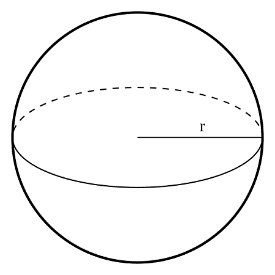
Aleph indicates the Oneness and Unity of the Creator; but as the shape of the letter suggests, this Oneness is a 1 + 1 +1, a One composed of Three. The three parts of the letter are two Yods and one Vav. One must see the three parts of the Alef as enclosed within a sphere, and as the illustration here suggests they reach out to the circumference of the sphere. The diagonal Vav separates the two Yods which are two points, the Divine Soul and the Soul of Creation as well as the soul of the created human being, for it is only human beings who are capable of the language as it is understood as both word and number in the Sefer Yetzirah. This diagonal of the Vav suggests that the creation is a barrier but also a way through, a door or gateway perhaps (the letter Dalet meaning “door” emanating from Chesed). It hints that beyond the illusion of separation and duality is underlying Oneness – that nothing is separate and the Creator is the source of everything. The letters that are associated with the diagonal paths on the Tree of Life (the twelve elemental letters) act in much the same manner, serving as either barriers or ways, channels or streams through to the next level on the way up or down on the Tree of Life. It is the eros which determines the direction.
As mentioned, the shape of the Aleph is two Yods י, one above and one below, with a diagonal line, the Vav ו, between them, representing the higher world and the lower world, with the Vav separating and connecting the two.
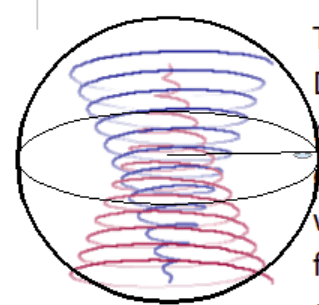
From the Sephirot Keter, four letters and four paths emanate: Alef, Mem, Shin and Beth. Alef corresponds to path #1, the “Mystical or Wondrous Intelligence”. Mem is the “Radiant Intelligence” or path #2 of Chokmah. Shin is the “Sanctified Intelligence” of Binah, Path #3; and when Alef connects to Beth, we have path #11 or the “Scintillating Intelligence” (3 + 8). These four paths illustrate the downward movement of the Creation from the Divine as the Divine withdraws in order to allow Creation to be.
The Divine One is illustrated by the mother letters of Alef, Mem, and Shin, while the 11th path is a combined potentiality for upward and downward movement, these motions being reconciled by Alef. Mem as water is responsible for the downward motion; Shin as fire is responsible for upward movement. The downward movement is a widening gyre from the #1 of Keter to the #10 of Malkhut indicated by the blue gyre. The upward movement is a narrowing gyre from #10 Malkhut to #1 Keter indicated by the red gyre.
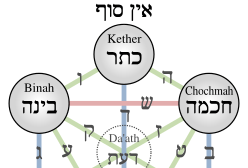
The path of Mem, the realm of Space, is the crossover from Chokmah (Wisdom) to Binah (Understanding) and this path ceases at the point where it meets the downward path of Alef to Tiferet. (In the illustration, the Shin is placed on the wrong side of the path from Chokmah to Binah. It should be a Mem here while the Shin should be placed on the side coming from Binah. They meet at the path of Beth “in the beginning”). Likewise, the path of Shin crosses from Binah to the point where it meets the Alef to the Tiferet downward path. These paths form the initial cross of the whole of Creation. Our bodies, too, are “crosses”, the cross that we must “pick up” and follow Christ (if we are Christians Matthew 16: 24-26).
With the contrary movements are contrary paths or mirrored paths. The contrary of path #1, the “Wondrous Intelligence” or “Mystical Intelligence”, is the “Worshipped Intelligence” or “Administrative Intelligence” path #32. This type of “consciousness” is that which is given to one through the opinions of others and their interpretations of the things that are. The contrary to the “Radiant Intelligence” is path #31 or “Continuous Intelligence”, and the contrary to the “Sanctified Intelligence” path #3 is path #30 or the “General Intelligence”. The movement throughout the Tree of Life is circular or spherical and, as has been suggested, the movement is in the form of widening or narrowing gyres.
One cannot attain to the Good itself for it is beyond Being, but one can attain to the Light which finds its source in the Good. The path from Keter leads to the sephirot Tiferet #6, Beauty. Alef is the source of all the letters and, therefore, is the source of all created beings, all things that come into being. Its mirrored image is the Sun. The symbol of Alef is the “ox”, the beast of burden, indicating that the creation of the world is “work” and “a work”. This connects Keter to Malkhut, the physical universe, which is the world of action and doing, the world of work. The “ox” is also the sacrificial animal: “the Lamb slain from the foundation of the earth”. The creation itself is a “sacrifice” on God’s part. The denial of ourselves is the sacrifice required on our part when we wish to attain to the truth of Being.
We can understand the four worlds or universes if we think of them in terms of Aristotle’s understanding of causation. For Aristotle, the word “cause” does not mean simply that which brings about such and such a result. For Aristotle causation was an “exchange”, a relation, and meant “that which is responsible for” or that to which something else is “obliged” or “indebted”. The emanation of the odour of the rose is indebted to the presence of the rose. The rose is “responsible” for the odour.
The four causes of Aristotle are: 1. The material cause or hyle corresponding to the world of Asiyah; 2. The formative cause or eidos, the outward appearance of the things corresponding to the world of Yetzirah, the world of models and plans established so that they are seen and thus brought forth; 3. The end, purpose or use for which the thing is to be made, the telos corresponding to the world of Beriyah; this end is actually the first in that it is the structure or frame (the “system”) or ground upon which the outward form will be placed; 4. The maker, who through his “work”, “pro-duces” or brings forth the thing into being corresponding to the world of Atzilut but only in a mirroring way, for the things of Nature are produced from themselves while the works of human beings are produced in another or from another. The work of Nature is “procreation”, while the work of human being is “making”.

Using a table as an example: the hyle is wood. The maker must have some knowledge of the nature of “wood” and its potentialities to be a table. The maker must have foreknowledge of how the table will appear: will it have legs? what will be its size? etc. The third is that the maker must have knowledge of the end use of the table: will it be an altar? a dinner table? a work table? The maker must have the possibility or potentiality to make the table; some skill or craft is involved in the making of the table. This possibility or potentiality is what Aristotle called dynamis. The possibility or potentiality could be either active or passive: the maker could carry out the work and make a table or let someone else do it, but this dynamis is present in all four causes and in all four worlds. The wood must have the dynamis or potential to allow itself to be formed into a table; the table’s form must be present in the wood to begin with; and the end of the table, its use, must be present before the work can be done to bring it about.
I will be writing about Plato’s divided line from Book VI of his Republic and how it is related to both the Sefir Yetzirah’s four universes or worlds, Aristotle’s four causes, and to the geometry of the Pythagoreans where a number of similar points are made at a future time. I will also be discussing the two faces of both Logos and Eros as it relates to what is attempting to be said here with a discussion of Plato’s Symposium and his Allegory of the Cave.
The Keter point of light is also the Soul of the world and of every human being (see the work of Carl Jung and the archetypes of the Anima Mundi or World Soul). This combination of fire and air in human beings is what makes possible our unity with the One Soul through various possible mediations in our everyday experiences of the things of the world, a mediation which is the work of eros. It is Eros and its affects that bring forth the reasoning as to why the world of yetzirah is called the daemonic world. As we will see later, it is through the Beauty of the world that this mediation or experience can take place. This beauty of the world is but one face of Eros. Tiferet is the site of all possible experiences of the world for it comprises both faces of Eros and of the Logos.
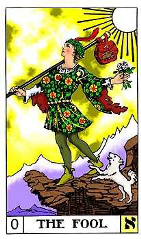
Keter is the point from which emanate three paths or channels or streams: the first is the letter Alef and is associated in the Tarot with The Fool #0 (the beginning of the adventure or quest). It is said in the Sefer Yetzirah that all the letters of the alphabet are contained in Alef, just as all potentialities and possibilities for human beings are contained in The Fool #0 and The Magician #1. Alef as language itself makes manifest the potentialities and possibilities of the second Sefirot, Chakmah which, mistakenly, has the letter Beth assigned to it, shown in the card of The High Priestess #2, and this activates the third Sephirot of Binah, which is shown in the tarot card The Empress #3. The third emanation of Keter goes through the letter Alef and finds its realization in the Sephirot of Tiferet #6 or Beauty, symbolized in the Tarot by The Lovers #6 (although Paul Foster Case places the High Priestess here).
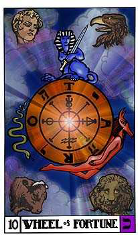
The association of the cards with the paths depends on the direction that one is viewing (or living) the motion of the sphere. The direction of the viewing will determine whether one sees the Wheel as Tora (the Law) or Taro (the Way). The three Mother letters of Alef, Mem, Shin establish the vertical and horizontal structures or foundations of the Tree of Life. Alef is the central pillar and is associated with Air; Mem is the pillar known as Jakim on the right and is associated with water and Mercy; Shin is associated with fire and Severity and is associated with the pillar of Boaz on the left. They also provide the horizontal paths or streams and indicate the “fullness” and deprivation or need of the qualities indicated.
The emanations of Keter and of the other Sephirot are not chronological and sequential but simultaneous, and these emanations carry with them their contraries, so The Fool as present in Keter is also present in #10 Malkhut. The Tarot of P. F. Case places The Fool at Keter because the Tree of Life is both “a beginning and an end” in its circular revolutions through the sphere of that which is the created World. Case calls these movements “spirals”, or we might consider them the “widening gyres” of W.B. Yeats which I have attempted to do here. Keter is at the centre point of the sphere, while Malkhut may be said to be the circumference of the sphere.
As mentioned in the commentary, the creation of the world is a withdrawal not an expansion. It is a “giving”, not an “empowering” or “empowerment”, not an “expansion” of God as is indicated in Gen. 1:31. In His creation, God gives to us the example for our spiritual selves: a withdrawal and a letting be of that Otherness that is not ourselves, but also a withdrawal from that which is ourselves. Since power or force is the root of all evil, the denial of this power once it is present and possible for us is the goal of meditation, prayer, or thought. Again, this is not easily done.
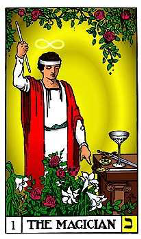
The Magician #1 is clearly a card where this generating and grasping of power is signified. Both the Light of Keter and the Reflected Light of Malkhut are present for The Magician. The number 10 combines both The Magician and The Fool together (1 + 0), and combined together they make The Wheel of Fortune, #10. To put it another way, God in His creating is a movement down, while the making of human beings is a movement up, and this making is demonstrated in The Magician card. On the table beside The Magician are the four suits of the Tarot Minor Arcana: swords (air), cups (water), wands (fire), and pentacles (earth). These four elements represent the ready-to-hand things that The Magician uses in his formation and making of things in the world of Yetzirah. The formation and making of things is the world of power. A mirrored letter Beth encircles the Magician.
The physics of modern science is the pure theory which, in its viewing, sets nature up to show itself as a coherence of forces calculable in advance. Theory stems from the Greek word theorein whose noun is theoria with its meaning being the result of the unification of thea and horao. Thea, connected to theatre, is the external appearance in which something offers itself. For Plato, having seen this “theatrical” or “showing” aspect of the outward appearances of the things through the eidos, is to know. This kind of knowledge is called epi-steme by the Greeks. Horao means to “look at something attentively”. So, “theorein is thean horan” i.e., to look attentively at the external appearance through which something manifests itself.
From these concepts, one can see The Magician as the “stage manager” or the master of the outward appearances of things; he can reveal either truth or illusion. One can also see a connection to the 30th and 31st paths, the “Universal/General” and “Perpetual/Continuous” paths, of the Tree of Life which connect Malkhut to world of Yetzirah or “formation”. The ”universal path” suggests acquaintance with or intelligence of the theoretical viewing of the web of Necessity while the “perpetual” path is Necessity itself indicating its sempiternal character. These paths relate to the theoretical and inductive ways of viewing the world. More will be said on this later.
The Romans translated theorein by contemplari, theoria by contemplatio. Contemplari means “to partition something off into a separate sector and enclose it therein”, to set up boundaries and limits. We have spoken of this kind of thinking/seeing as diaresis earlier in our commentary on the Sefer Yetzirah. The Latin templum is the equivalent of Greek temenos, which has an origin entirely different from theorein, as temnein means to divide. The Latin templum originally refers to a sector carved out of the sky which diviners used to make their prophecies based on the behaviours and habits of birds (the Worshipped/Administrative Intelligence). It is also the partitioning of space into the 12 houses of the Zodiac. This Latin influence corresponds to the writing of the Sefer Yetzirah around the 1st century BCE, but astrology itself was a product of the Pythagoreans and pre-dates this Latin influence. The use of the Tarot is but another example of the attempt to control Necessity.
The actions and activities of The Magician correspond to an “entrapment” and a “gathering together” that is a “refining” of the real. To strive after something means “to work one’s way toward something, to pursue it, to entrap it in order to secure it”. These activities are associated with the universe of Asiyah and the Sephirot #10 Malkhut. This is what we call “work”, and the activity of work produces “a work”. Modern science claims to wish to grasp the real in its purity. In reality, in its grasping, it entraps it and refines it. The real is “what presences as self- exhibiting”. Modern science sets up the real and captures it in its objectness. In this way, the real becomes surveyable. We can see from this the circular or spherical nature of thinking itself and of the Tree of Life. This presents the problem of seeing the world and wishing to change it or seeing the world and wishing to contemplate it in its Beauty.
| Card | Path | Letter | Meaning | Symbol |
| 0: The Fool? Or 10: The Wheel? Or 20: The Judgement? | Keter (Crown)/ Chokmah (Wisdom | Alef | Ox (the yoking together; the uniting; the bringing into a relationship of harmony) | The Fire or Primal Energy or Dynamis (possibility/potentiality). The possibility of “world” |
| 1: The Magician? Or 11: Strength | Keter (Crown)/ Binah (Understanding) | Beth | House (Formation); the arrangement of things | Temple, Attention, Contemplation, Prayer The topos or place where world can occur |
| 2: The High Priestess? Or 12: The Hanged Man | Keter/ Tiferet (Beauty) | Gimel | Camel | Lifting up, the Unlimited (education or the “leading out”) The Incarnation as the destiny for human beings or of human beings |


 Theory of Knowledge: An Alternative Approach