
The Paths Emanating From Chokmah
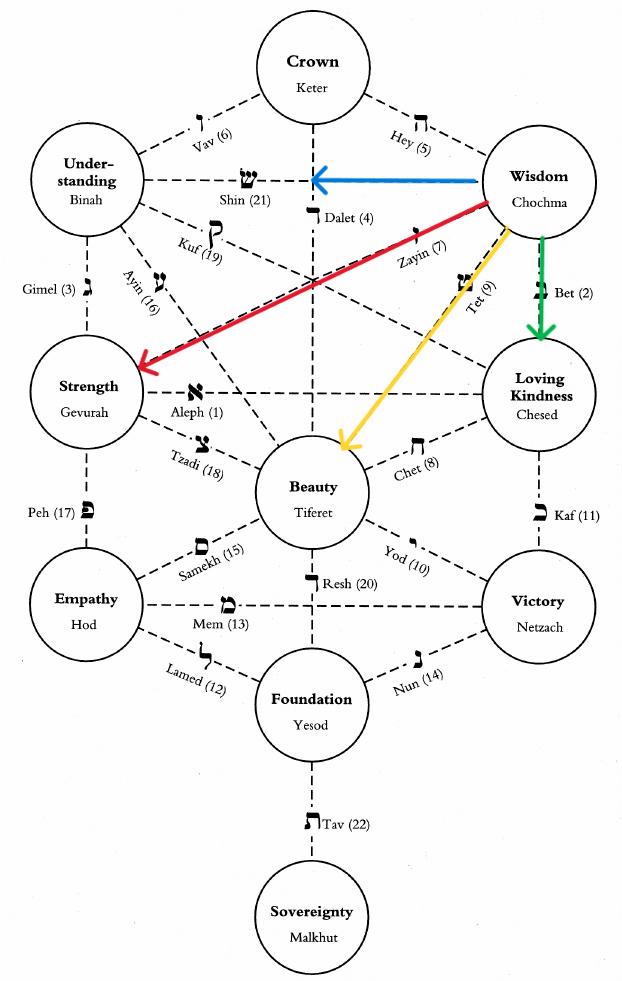
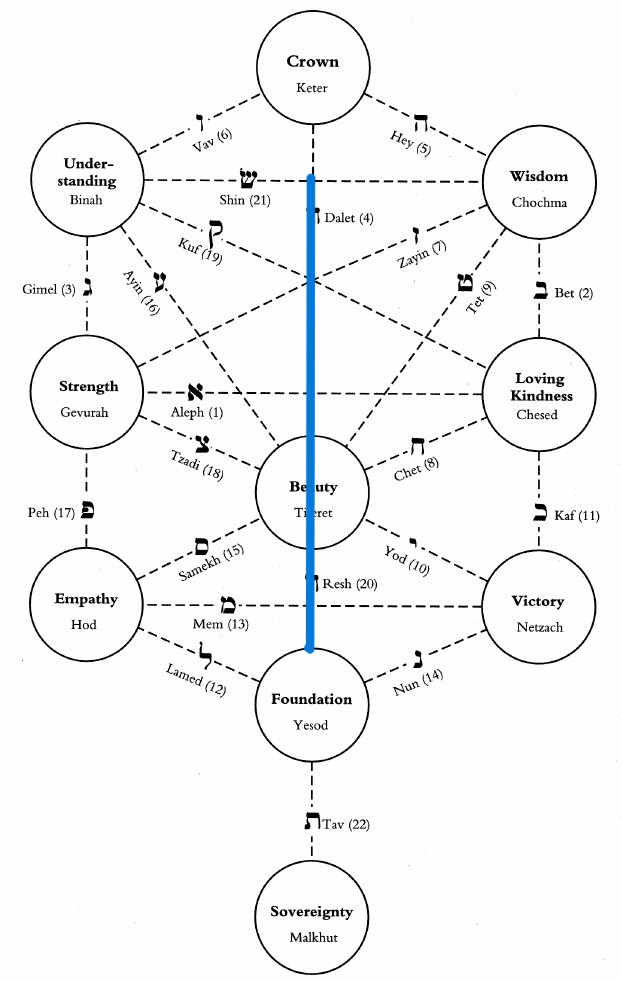
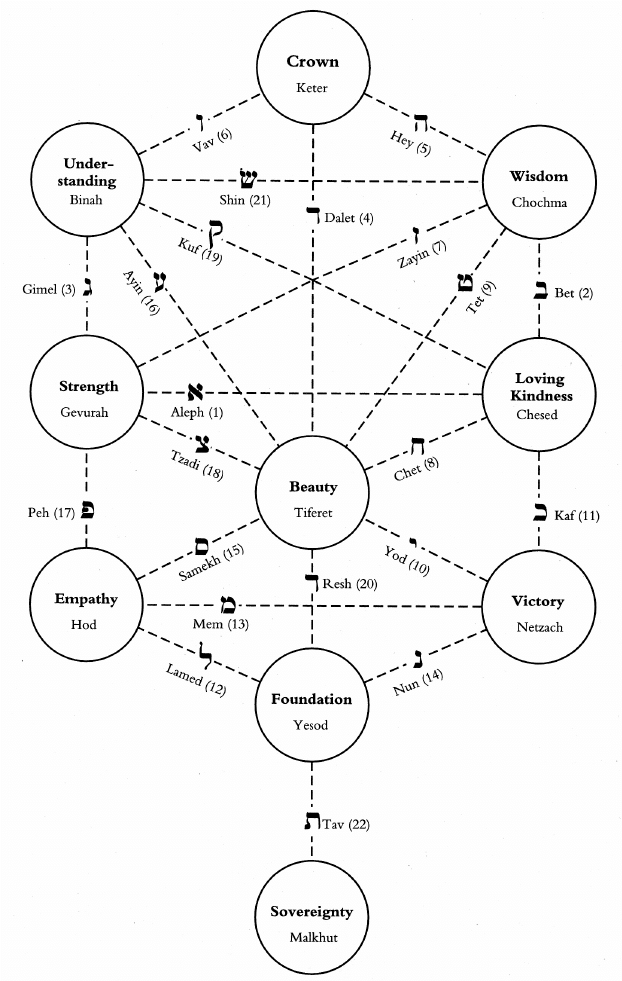
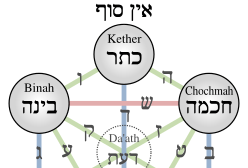
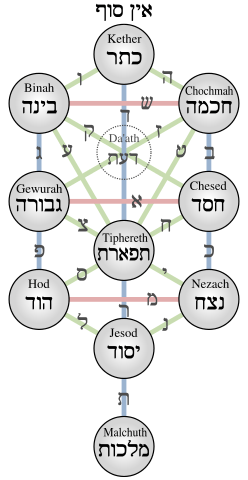
There are five paths emanating from Chokmah:
- The Radiant Intelligence #2 (Chokmah itself)
- The Illuminating Intelligence #14 Chokmah > Binah (with an emphasis on Mem) Blue
- The Intelligence of Transparency #12 (The Glowing Intelligence) Chokmah > Chesed Letter: Gimel ג Green
- The Enduring Intelligence #16 Chokmah > Tiferet Letter: Heh ה Yellow
- Intelligence (Consciousness) of the House of Influence #18 Chokmah > Gevurah Letter: Chet ח Red
A variety of paths extend from Chokmah which has been designated The Illuminating or Radiant Intelligence (Consciousness) #2 in this commentary. If the sephirot themselves are “paths”, then they are primary in importance relative to the secondary paths which emanate from them. The sephirot themselves are not in motion since they are “eternal”, and motion is Time. The sephirot themselves would be not so much “paths” as “destinations”. Whether or not the paths themselves are in motion or not is a very perplexing question. Since the paths are “private” paths (netivot), how they will be experienced and traversed is an individual matter; but the Sephirot themselves cannot be private paths nor can they be seen as ‘individual’ in any way. The Sephirot are more akin to archetypes, and the illumination of their paths and meanings is shown to us through our art and literature.
Truth is not “subjective”, nor does it belong to the single individual. The Light of Keter is not an individual light but is present for all to behold. How it will be beheld is another matter, and how it will illuminate the things of the world is not an individual matter. Truth is one. If beauty is in the eye of the beholder, what then do we mean by “beholding”? What is the manner in which this “beholding” has, is, and will take place? At the same time, the source of Keter’s light is beyond human understanding and is in and of the world of Atzilut, which in itself is beyond both Time and Space.
The images of the Tarot are those of the symbols (the images generated by the paths taken) and the archetypes (the representations of the Sephirot) that meet in them and consolidate the various paths in them. The whole journey of the Tarot may be said to mirror the “the hero’s journey” in the way its story unfolds for the individual; and a reading through the use of the cards is the bringing to light that individual’s journey. The individual’s experience may be said to be ‘subjective’, but its meaning is not nor is it confined to the individual ego. Our human being in the world is a being-with-others and our being-with-the-Other (World). How we interpret and understand others and the Other will in turn determine the manner of our being-with-others in our various world(s) i.e. our politics, our ethics, and our loves. (“Where your treasure is, there will your heart be also”. Matthew 6: 21)
Alef provides the illumination to the gloom of Chokmah through the influence of Tiferet, and this illumination is “reflected” by Chokmah to the other seven Sephirot below the primary triangle that is Keter, Chalkmah, and Binah. This illumination is rightly associated with the Moon, since Keter is associated with the Sun and the Moon reflects the Sun’s light, just as water reflects the light of both sun and moon. Chokmah is associated with Mem, water, and this Alef/Mem combination meets with Shin along the first horizontal path of the Tree of Life, crossing over the path of Alef to Tiferet. This crossing over brings about the occurrence of the Creation which results from the production (understood as a ‘bringing-forth’, a poiesis, a ‘procreation’) of the Logos (the Word) which is the meeting point of Alef, Mem and Shin on that first horizontal path (the Cause of Causes). From this meeting, the letters and numbers are manifested and produced and we have the AlefBeth or alphabet. This crossover path can be the first or final re-birth of the individual soul, the first when on the descent i.e. birth, the final when on the ascent i.e. a “death”.
Chokmah or path #2 is associated with the Illuminating or Radiant Intelligence. This is discussed in greater detail in the paths emanating from Keter. The influence of this Radiant or Illuminating Intelligence #2 must be kept in mind when interpreting the paths that emanate from Chakmah.
The Second Path: The Illuminating Intelligence
2. Radiant Intelligence (Consciousness) (Sekhel Maz’hir): This is the Crown of creation and the radiance of the homogeneous unity that “exalts itself above all as the Head”. The Masters of the Kabbalah call it the “Second Glory”.
The Second Path is that of the Illuminating Intelligence. It is the Crown of Creation, the Splendour of the Unity, equalling it, and it is exalted above every head, and named by the Kabbalists the Second Glory.
Alt. Trans. “The second path is that of the illuminating consciousness. It is the crown (Keter) of creation (Beriyah), the splendour of the unity, like unto that which “exalts itself as the head over all.” The masters of kabbalah call it the second glory.”
Wescott trans. The Second Path is that of the Illuminating Intelligence: it is the Crown of Creation, the Splendour of the Unity, equalling it, and it is exalted above every head, and named by the Kabalists the Second Glory.
Case trans. The second path (Chokmah, the second Sephirah) is called the Illuminating Intelligence, and it is the Crown of Creation, and the Splendour of Unity, to which it is the most nearly approximate. In the mouths of the Masters of the Qabalah it is called the Second Glory.
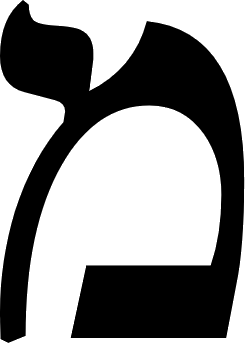
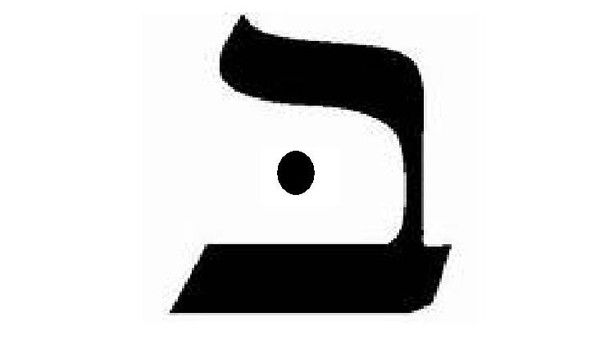
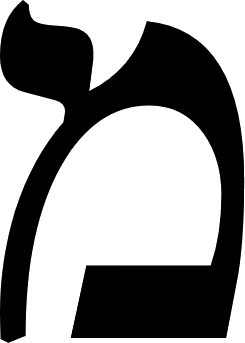
The letter Mem is water mayim מים, the waters of wisdom, knowledge, the Torah, and is thus associated with education and learning at times. It is the middle letter of the Hebrew alphabet. When representing both the waters and manifestation, it requires the illumination from the Light of Keter or the illumination that comes from the fire that is Shin. Otherwise, it is transparent. The meeting point of Mem, Alef, and Shin is the point of the Logos, the Word, and it is said that in every person is the thirst or need for the words of the Creator, which are the waters of life, what Plato called the logistikon in his tripartite view of the soul. Without such a thirst (eros), human beings are not fully human. This thirst is the revealing of truth through the logos.
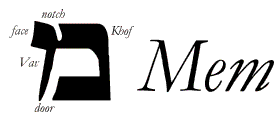
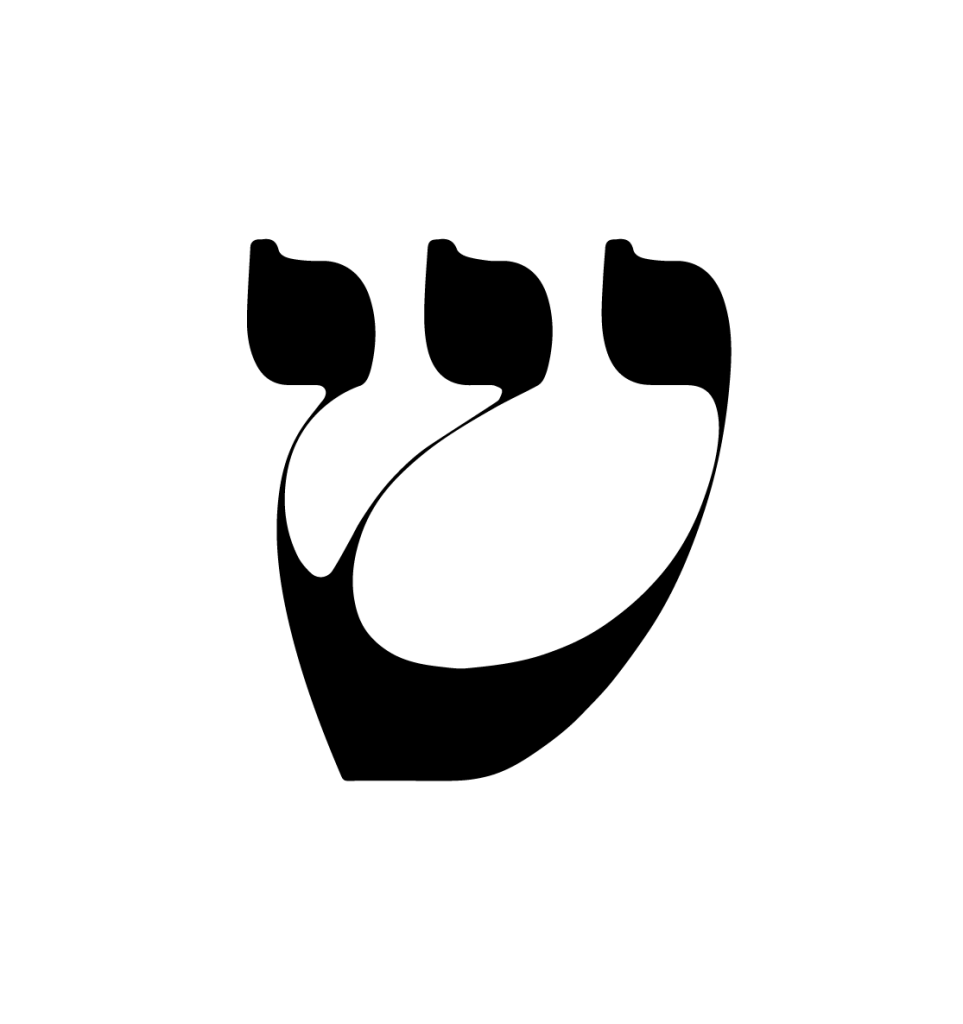
The open Mem (shown above) refers to the revealed aspects of the Divine such as the Beauty of the World, while the closed Mem ם refers to the concealed part of the Laws of Necessity that nonetheless guide us and all of existence. The open Mem is that which allows the Word to penetrate the soul. In these writings, it is the distinction between Thought and thought, or Love and will, the two faces of Eros. How we understand and interpret the logos will determine how we will view our worlds.
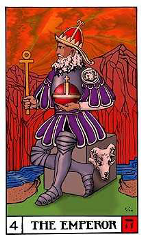
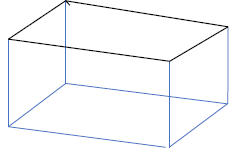
The High Priestess #2, The Emperor #4, and The Devil #16 cards of the Tarot are set upon closed Mems which are cubic in shape. Mem, when influenced by Shin, represents our urges and our will (the thymoeides part of the soul), and it also represents the time necessary for ripening. It is a representation of the lower form of eros. It indicates to us the importance and need of balanced emotions and of the humility that are aspects of the pillar of Jakim when influenced by Tiferet or Love. These balanced emotions are what are called phronesis (wise judgement) and sophrosyne (moderation, prudence) here. In the past, such dispositions were called “human virtue” or “human excellence”. Today, we seem to have lost any notion of what “human excellence” means although it vaguely remains close to us.

Mem is the manifest symbol of the Holy Spirit which sometimes appears as a “dove of peace” or as “tongues of fire” indicating prophetic speech. Being “exalted above every head” indicates its relationship to Space and to its downward movement; it is associated with the heavens. The closed Mem is indicative of that thinking which drives the technological, whose apogee is to be found in artificial intelligence where a uniform meta-language is the goal i.e. a false reversal of the true speech.
Mem corresponds to the number 40 and represents the time necessary for the ripening process that leads to fruition. (40 days for the development of the embryo, 40 years in the desert before reaching the holy land, 40 years development before Moses was prepared to be the leader of Israel, the 40 days that Christ fasted in the desert before he was tempted by Satan). These will be discussed in more detail when we speak of the paths emanating from Chokmah. The 40 days are symbolic of Memory and of recollection, what Plato referred to as anamnesis.
The Mem also teaches us about the will and balanced emotions – balancing the watery motions of our feelings, giving them shape. And it is about humility – water is the substance that always runs downhill to the lowest place. Fire, on the other hand, always rises.
The Second Path also illustrates that which has been called the “mathematical” in this writing i.e., “that which can be learned and that which can be taught”. It appears that the Sefer Yetzirah indicates the Whole is that which can be learned and that which can be taught i.e., it is infinite potentiality and possibility. The “mathematical” would be indicated by the letter Lamed ל or “study”, “the serpent uncoiled”. What can be learned or what can be taught are the 7 Pillars of Wisdom or the areas of knowledge, the subjects that are studied.
In order for some thing to be learned, it must first be brought to a “stand” or bounded within a horizon so that it may be “de-fined” and a name given to it so that it may be spoken about. This is path #4 The Measuring, Arresting and Receptive Intelligence which will be discussed in Chapter 4 under Chesed. The “numerations” weigh and measure things so that they are brought out of their natural state of metabole or change into something that can be known i.e., they are given a “permanence” of some kind, a “stability” of some kind. Through the ‘measuring’ of the logos, they are ‘arrested’ and brought to a ‘stand’ and then are able to be ‘received’ by the senses. This is, in essence, what we mean by “beholding”: the “holding” is done through the “arresting” which brings them into “being” i.e. be-holding. Numbers are only one example of the “mathematical”. The manner of seeing that results from the “consistency” or reliability of the use of numbers is but one manner of accounting for the laws of Necessity and the relation of created things to the domains of time and space.
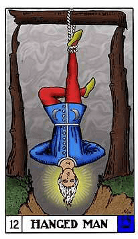
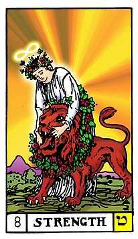
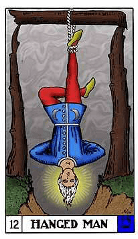
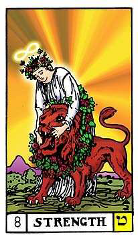
The Second Path also indicates the limits of human reason and intelligence and so gives us an awareness of, or consciousness of, the Mystical Intelligence #1. This suggests the limits of our knowledge in the realm or world of Beriyah. Our limited reason and intelligence puts us in a position of suspension (The Hanged Man #12), waiting on God to descend and offer to us His Grace which is received in the card of Strength #11 in the ascent.
The ultimate flowering of the principle of reason which is being described here is artificial intelligence which is a complete self-contained, self-enclosed world based on the principle of reason. This is the closed Mem. I have tried to give a metaphor for this enclosed world by assigning the letters Chet and Tet to it as offspring of the closed Mem.

Historically, after Descartes, humans are experienced as an “I” that relates to the world such that it renders this world to itself in the form of connections (relations) correctly established between its representations or judgements and thus sets itself over against this world, and the world becomes understood as “object”. The world itself has no meaning of its own; the human mind gives it its meaning. The subject-predicate and the reasons for their connections must be rendered back to the representing “I”. This reason is a ratio, an account given to the judging “I” regarding the thing. The account must not contradict itself and must render sufficient reasons for the thing being as it is. This is the logos as ‘logic’. When the reasons have been rendered, the thing comes to a stand as an object, an object for a representing subject. The completeness of the reasons to be rendered is the ‘perfection’ of the thing’s stand as an object as firmly established for human cognition or consciousness. The “account” means that all can rely on the account rendered. Everything “counts” as existing only as a calculable object for cognition.
We could say that this world of artificial intelligence creates a state of suspension represented by The Hanged Man #12 who is suspended between the realms of the physical and the spiritual (or the invisible) and he expresses the limits placed on the theoretical knowledge that derive from the principle of reason. He is depicted as suspended from the letter Chet ח meaning ‘enclosure’ in the Tarot deck illustrated here. This enclosure is also represented by the cube.
The letter assigned to The Hanged Man by the illustrator of the Tarot here is Tet ט meaning ‘snake’, and this also suggests the limits that are placed on human knowledge when it is tied to material things. The traditional reason why the snake has been considered as evil in the West is because he is tied to the earth. He is the opposite of the Eastern dragon who is capable of flight and of fire and is considered a symbol of good; a dragon is, literally, the serpent that flies. The serpent is a symbol of the lower eros that has attached the soul to the material things of the world giving special emphasis to the epithymetikon or the physical part of the soul.
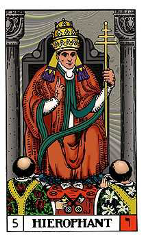
The ‘stability’ established by the principle of reason that arises from the collective or social manner/opinion of viewing the world comes about as a result of the consistency of the results of the calculations or ‘numerations’ that are carried out. This is what is considered ‘knowledge’ and would indicate a connection between The Hanged Man #12 and The Hierophant #5. The ‘numerations’ are the logoi or speech that is shared among the members of the community. I am suggesting here that the path, “The Intelligence of the House of Influx”, is represented by the letter Chet ח.
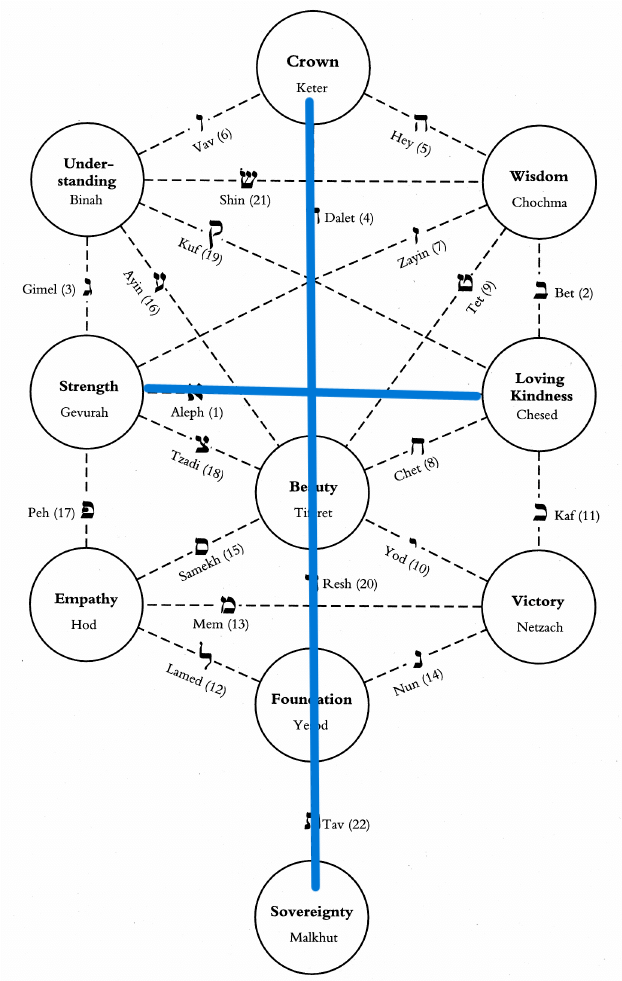
Because Alef is the source of all the letters, it is capable of both vertical and horizontal movement along the Tree of Life. The direction of Mem is back and forth and down, unless one considers the three Mothers as both horizontal and vertical and that the three Mothers are the three pillars of the Tree of Life (which is what is considered here). The three Mothers act as vowels in the formation of words and thus must be capable of both horizontal, vertical and diagonal movements and relations. Their impact will be seen in how the experience of the path unfolds.
Paul F. Case in his study of the 32 paths sees the paths as that which will lead the human community to a better universal, homogeneous State, the belief in progress. The Illuminati of the paths are those who believe themselves to be the new Übermensch, the Nietzschean “overman”, the next step in the human evolutionary chain. But they are nothing more than those who are expressing a desire to be the “helmsmen” whose use of cybernetics is the core of their power, the goal of which is the unlimited mastery of human beings by other human beings. Such will be the outcomes of artificial intelligence. Technology is inherently tyrannous.
Such progressive hopes as those of Case ignore the lessons of the Sefer Yetzirah regarding the nature of force and power. There is no “human progress” that occurs on the spiritual level along with the progress achieved on the material level. “Novelty” is not progress. The “progress” achieved on the material level is the result of the human will to power, and historical evidence seems to suggest that with the advance of technological power comes a greater increase in human bestiality, violence and destruction through the corollary decrease in human beings’ “humanity”. This was something seen by the poet William Blake in his mythology.
Morally and ethically, human beings, as a whole, have not made any significant progress from their ancestors. This is because the moral and ethical presence of what human beings truly are as human beings has always been present for them to reach out to and grasp. Because human beings lose sight of the chasm which separates the Necessary from the Good, they fail in making true progress. They come to worship power and all of its false idols. This ultimately results in the oblivion of eternity for human beings. The lower eros comes to dominate and the soul is dragged down to satisfaction of its appetitive part.
Since the end of technology is the control of Chance and Necessity to enhance human freedom, the increase in technology’s power is a devolution of the morality of human beings. It is a curious paradox of Life that as we become increasingly “technological” in our activities and pride ourselves in the knowledge that we have achieved, we become increasingly bestial i.e., technology, based as it is on the principle of reason, leads to our further bestiality, not spirituality. This may have to do with the fact that technology is ultimately destructive of the Logos (and of the higher Eros that accompanies the Logos), of that “consciousness” or “intelligence” which distinguishes human beings from other creatures. But what true way of life is to be found that is not an enemy of reason?
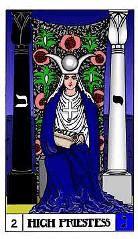
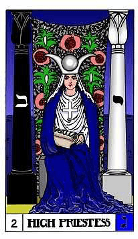
The letter Mem is water (mayim מים,) the waters of wisdom, knowledge, and is related to The High Priestess #2 card of the Tarot. Mem’s open format represents esoteric wisdom, wisdom available to the few, while the closed format represents exoteric wisdom or the wisdom allotted to the many. This is shown by the Priestess holding a scroll with the word “Tora” inscribed on it. The revealed letters are the exoteric wisdom of the Torah, while the missing “h” (Heh) represents the esoteric qualities of the writing suggesting that ‘jubilation’ is to be found in the esoteric elements of the Torah rather than the exoteric elements. This esoteric element derives from the influence of Tiferet on Chakmah, the path that is suggested by the letter Heh.
The Path of Heh: The Stabilizing Intelligence
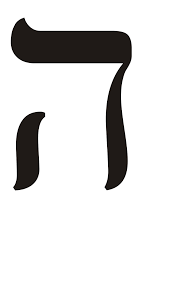
The letter Heh is associated with the number 5 and with ‘jubilation’. The path of the letter Heh is associated with Tiferet and Chokmah and it is “The Stabilizing Intelligence or Consciousness”. It is the root of Faith grounded in Love (Tiferet). It is the illuminating intelligence that is gifted by Love. There are two Hehs in the name of God: Ja Heh Vav Heh.

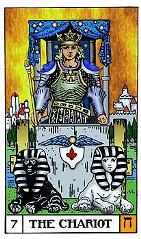
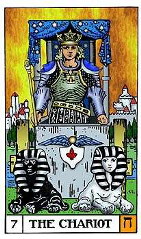
On the pillar of Jakim behind the Priestess is a Yod signifying the individual, while on the pillar of Boaz is a Beth signifying the “house” of the collective, the society, the city, the whole of creation itself. There is an element of the ‘hidden’ in our understanding of the letter Mem while, paradoxically, it suggests the transparent element of water. On the curtain behind The High Priestess are seven pomegranates in the shape of the lower Sephirot. Pomegranates are symbols of resurrection, eternal life and are significant of the victory of the soul over evil. This evokes The High Priestess’ connection with The Chariot #7 of the Tarot.
Associated with water, the influence of Mem flows downward in the Tree of Life, as the element of fire, Shin, rises upward. Mem is associated with the receptacle of Space into which the creation is received and contained and, metaphorically, the space into which words are created from the other letters. The downward movement of water also suggests gravity, the most elemental sign of the Law of Necessity, and the ‘plan’ of the Divine Will according to which all creation must succumb and submit. The third temptation of Christ is the test of our desire to ‘defy gravity’, but in doing so, to defy Necessity or the will of God itself.

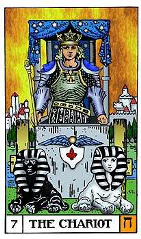
Mem represents both water and manifestation, but it cannot manifest itself until God speaks ‘Let there be light’. It is said that in every person is the thirst for the words of the Creator, which are the waters of life and light is the life itself. The open Mem refers to the revealed aspects of God’s will as the Law of Necessity, while the closed Mem refers to the concealed part of the celestial rule that nonetheless guides us and all of existence. For the Hebrews, this also relates to the Torah. Mem also represents the time necessary for ripening when it is accompanied by fire (Binah and The Empress card #3) and indicates to us the importance of balanced emotions and of humility when it is connected to Netzach, the Sephirot associated with the embodied soul and The Chariot #7 of Tarot.
Mem corresponds to the number 40 and represents the time necessary for the ripening process that leads to fruition. Christ is said to have fasted in the desert for 40 days and nights following which He was tempted by Satan with the three temptations or tests: turning stones into bread; to be given all the power in the world; and the choice of suicide. All human beings ultimately face these three temptations or tests throughout their lives. The power to turn stones into bread, the desire for recognition and the power of social prestige, and the power of suicide where we must choose whether we are our own or belong to God and must not tempt God become present for us at one time or another in our lives. Suicide is a sin because it is a temptation of God.
Path 12: The Intelligence of Transparency
12. Glowing Intelligence (Consciousness) (Sekhel Bahir): It is called this because it is the essence of the Ophan-wheel of Greatness. It is called the Visualizer (Chazchazit), the place that gives rise to the vision that the Seers perceive in an apparition.
The Twelfth Path is the Intelligence of Transparency, because it is that species of Magnificence called CHAZCHAZIT, which is named the place whence issues the vision of those seeing in apparitions. (That is, the prophecies by seers in a vision.)
Alt. Trans. “The twelfth path is called the transparent consciousness because it is the substance of that phase of majesty (Gedulah) which is called revelation (khazkhazit). It is the source of prophesies that seers behold in visions.”
Wescott trans. The Twelfth Path is the Intelligence of Transparency, because it is that species of Magnificence called Khazkhazit, the place whence issues the vision of those seeing in apparitions. (That is the prophecies by seers in a vision.)
Case trans. The twelfth path (Beth, joining Keter to Binah) is called the Intelligence of Transparency because it is the image of that phase of Gedulah literally (“of that wheeling of Gedulah”) which is called Khazkhazit, the source of vision in those who behold apparitions.
The Letter Gimel and the 12th Path
The 12th path is said to come from the verse of Genesis cited below:
Genesis 1. 12 And the earth brought forth grass, herb yielding seed after its kind, and tree bearing fruit, wherein is the seed thereof, after its kind; and Elohim saw that it was good.
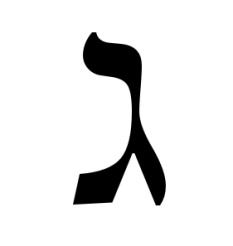
The 12th path proceeds from Chalkmah to Chesed and it is indicated by the letter Gimel. If the 11th path is concerned with the veil or hiddenness that is present before the Cause of Causes (the Good), then, presumably, one must have prior knowledge of what causation is in order to recognize that the Good itself, the Uncaused Cause, is hidden from our knowledge and must be experienced through faith alone. One cannot stand before the countenance of the Prince of Faces and not ‘die’ i.e., remain the individual that they are. The ‘dying’ can be either a metaphorical or a literal death. The individual can be consumed by the One itself and thus return to the One or the individual no longer exists as an ‘individual’, which seems to sometimes be the case with the saints or extraordinary persons. The 11th path is concerned with the veil that is drawn between God and His creation through His creation. The 12th path concerns itself with the “apparitions” that result from that veiling.
The particulars of Binah make being more overt for us; we see the world in its particulars. As these particulars reveal themselves in the coming-to-be of things, the more God withdraws or hides in order to allow those particular beings to be by their coming to presence before us. The ‘limiting’ of Binah through the Logos is not a “cutting off” of something but the establishment of the site wherein and from where something commences and emerges as that which it is. It is a ‘procreative site’. This is what “The Sanctifying Intelligence” Path #3 means (and this will be discussed in the next chapter). Through the Logos’ relation to the Space that is Chokmah and Time that is Binah the a priori conditions for possibility and potentiality are given in the making-possible of that on the basis of which beings as such and as a whole are determined for human beings. This is the sephirot Chesed.
The 12th path, “The Intelligence of Transparency”, is that part of the process of thought that creates the images of representational thinking through the individual human being. It links Chokmah to Chesed. It is the ‘clothing’ which provides the outward appearance of things in their emergence but yet hides the essence of those things. The spiritual essence of things is “wrapped” or “assembled” so as to make them ‘present’ before us as a sum of their parts. It is called the ‘revelation’ in one of the translations above. It could also be called an ‘epiphany’.
It should be noted that ‘apparitions’ are ‘shadows’, the outward appearance of a thing, not its essence. To see the thing’s apparition is to see it in the NOW. To make a pre-diction is to speak before the actual appearance of the thing/event/situation from the appearance of the thing as an ‘apparition’. To do so is to speak in ‘prophecy’, which is directed toward the Future. A ‘prophecy’ has past, present and future contained within it.
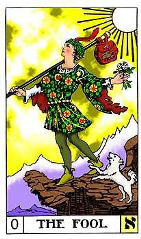
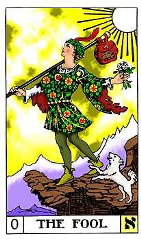
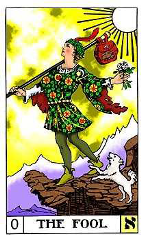
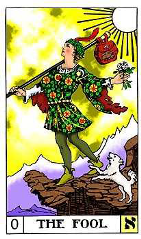
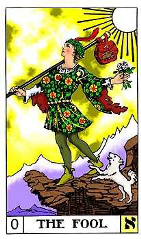
The past is the Memory element of Chakmah, the looking back of The Fool as he proceeds with his leap; the present is the ‘revelation’ of the physical creation through the senses; and the future is the outcome of the said ‘visions’. It is the manner in which one perceives the visions that is most important. This process is at the root of what we call scientific and artistic ‘seeing’. (This is shown most clearly in Bk VII of Plato’s Republic where those who are able to make predictions about what shadows will pass by next are those who are most ‘honoured’ in the society.) What we have here is the initiation of the possibility of both nature and freedom, nature being that constraint given by the Law of Necessity and freedom being the empowerment of the mind through the principle of reason as will to power.
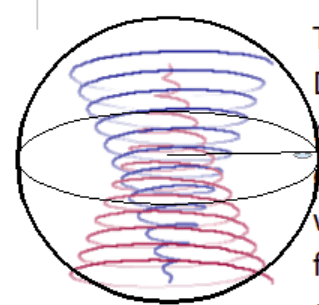
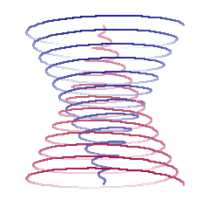
The translations provided of the 12th path indicate a number of possibilities for interpretation. In the Case translation, we are given the idea that 12th path is the site where one can apprehend that Gedulah or Chesed which is the spiraling motion of the gyre (“that wheeling of Gedulah”) which is the source of the vision of those who behold the “apparitions” of “prophecies”. This beholding is how one views the world of Becoming. Some connections to the whirling dervishes of the Sufis may be made here, I think. The dervishes gyres are not an expansion but a focus on the point of spirituality.
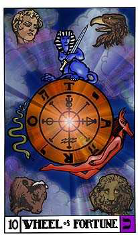
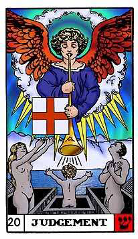
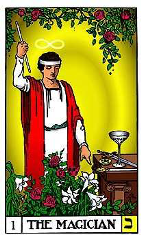
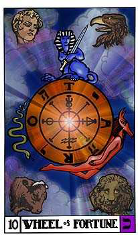
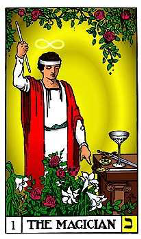
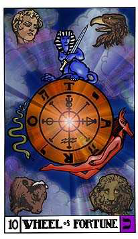
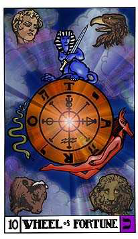
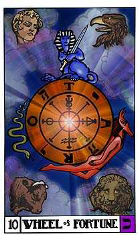
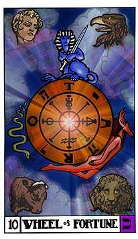
In the alignment of the Hebrew letters to the paths and to the Tarot, there seems to be some confusion with regard to the eleventh and twelfth paths. It would appear to me that The Fool is poised prior to the “fall into the abyss” that will become his or her journey and so stands at the top point of the Wheel of Fortune (#10) which represents the sephirot Malkhut. The Fool’s journey will be a journey upward, an ascent. The Magician (#1) occupies the ascent position since he is associated with the fire of Shin and the element of air from Alef which, in turn, are associated with the human will. The Strength card occupies the descent position, but here the descent is on the part of God to deliver His grace to the figure of Strength who has completed the journey and receives the gift from the Divine. To align these with the Tarot, the Magician #1, the Strength #11, and The World #21 belong together, while The Fool #0, The Wheel of Fortune #10, and the Judgement #20 are also aligned. The choice of The Fool as he makes his leap into the abyss of being is represented by Path #25 “The Intelligence of Trials” (Temptations) and the Judgement #20 card.
If we consider the Sephirot themselves to be paths, the twelfth path seems to refer to the emanations of Chakmah, which appropriately belong to The High Priestess (#2). The artist makes use of the influence of the archetypes of the unconscious and gives them shape and form in order to produce a work. The archetypes have always been present prior to the artist’s being. They are the “apparitions” of the visions that the artist sees; they are ‘shadows’, things without substance, for the things themselves belong to the future. The “visions” are the things seen by the prophets and they are symbolic of the predictive speech of the prophets i.e., the “highest speech”. In our society today, science holds this highest honour for it, too, is “predictive speech” since it can pronounce on the outcomes of various events with some certainty.
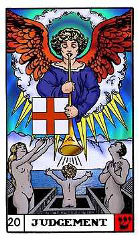
In this state, the artist is The Hanged Man #12, that stage prior to the process of “making” the thing, the stage prior to taking action, the “work” to be done. In the ascent direction, this would be the path leading from Malkhut to Hod or the completion of the thing, what was referred to as Justice previously and is rendered by The Judgement card #20. (This is the significance of the titles of the three great works of Kant: The Critique of Pure Reason, The Critique of Practical Reason, and The Critique of Judgement.) The words and numbers the artist needs are already present for him. His path is on the descent, since he is in the process of creation. The desire of human beings to create art and to procreate their species is the longing for the Incarnation. It is the urge given to us by Eros.
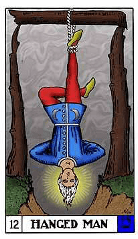
This descent that is creation is illustrated by the fact that the figure in The Hanged Man #12 hangs upside down within the ‘enclosure’ represented by the letter Chet and which is Path #18 from Chokmah to Gevurah. This suggests that there is something askew with his seeing of things.
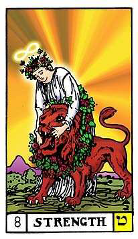
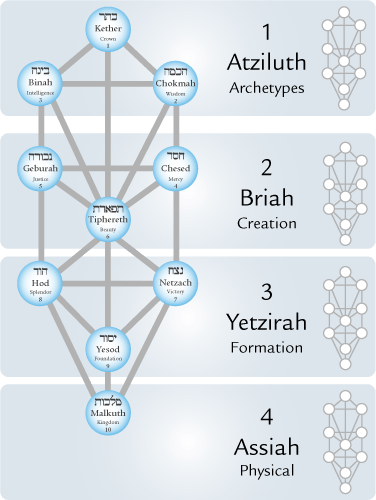
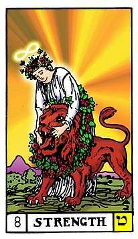
What is askew is that the path that he is on is not influenced by Tiferet. The woman figure of the Strength card, on the other hand, is “prudence” who embodies the Greek idea of sophrosyne or “nothing too much, nothing too little”. She is on the ascent viewing of the Tree of Life as she is concerned with the quality of things, the inner essence of things. The Magician #1 is concerned with those things that come to be through human making, while Strength #11 is concerned with those things that come to be through the Grace of God. It is here a matter of the viewing: whether one sees “as through a glass darkly”, which I believe is the essence of the viewing of The Magician #1, or whether one sees “face-to-face” the true essence of the things that are, which I believe is the essence of the viewing that is illustrated in the Strength card #11. The Strength is one of the bridges between the world of Yetzirah, the world of The Magician, and that of Beriyah (or between the world of Asiyah and that of Yetzirah?). Strength has the elements of the world of Atzilut as is shown in the light of the colour yellow being either the Sun or the Light of Keter.
The Life-force or the dynamis is what the Greeks understood as metabole or change, motion. All of us experience the whirling, swirling motion of Life as it realizes itself in Time. In terms of the Kabbalah, this is the influence of Keter. The “perception” of an “apparition” or a “vision” is that of the outward appearances of things. These are but the “shades” or “shadows” of things in the ascent. Again, the paths of ascension see the things in the “reflected light” of Malkhut, not in the true light of Keter. It is not until they pass through Tiferet that the perceptions of things are no longer that of shadows but of the true essence of the things. While the closest we have to our understanding of the “spiritual” is “energy” the spiritual is, of course, more than that. We align energy with power, force and will.
The Hebrew word translated as “revelation” here is khazkhazit which could also be understood as a “mirror” or a “gazing glass”. A mirror reflects things in reverse, and this could also account for the reversed position in The Hanged Man #12 card. This would seem to suggest a “lunar” influence or the influence of a “reflected light” and, indeed, a self-revelation. This is illustrated in The High Priestess #2 in the descending direction of the Tree of Life (if the descent begins at 10 + 2 = 12). This is the veil separating the Asiyah world and the Yetzirah world in the ascent, and the Beriyah world and Yetzirah world on the descent. The Beriyah world may be said to be the theoretical realm of the mind (the “pure reason” of Immanuel Kant) while the Yetzirah world is the realm in which the “formation” from the theoretical takes place (the “practical reason” of Kant). The suggestion here is that the outer world will take on the appearance that is given to it by the inner world of the mind for it is here that the formative seeing takes place. This is the site of the formative thinking where the making-possible of beings is determined for us.
The “revelation” here is the concrete, factual world of Yetzirah or “formation” and the “majesty” (Kingdom) that is the created world or Nature. To be “transparent” is to be able “to see through” or perhaps “to see by the means of…” One is reminded of the words of St. Paul: “For now we see as through a glass, darkly, but there we will see face to face.” (1 Corinthians 13:12) “Now I know in part; but then shall I know even as also I am known.” The “knowing in part” is represented by The Hanged Man #12, while the knowing “even as also I am known” is that of the Strength card #11. This passage is an indication that all human beings are “one”. Knowing this allows one to be capable of Mercy, Compassion and Loving Kindness which is indicated by the Sephirot Chesed, but this is only achieved through the prior influence of Tiferet.

After Beth establishes the existence of the duality of two different types of being identified as Space and that which encloses Space and is beyond Space i.e., Time, through the presence of the Logos, Gimel arises to resolve and harmonize these two different types of Being through Time. The imposition of limits on the unlimited suggests that both Space and Time are one and the same, and that the imposition of limits is not a “cutting off” but the site wherein and from where being emerges and commences as that which it is, what we have come to call Nature. This ties in with the idea of Creation as a withdrawal rather than an expansion as is commonly believed. We conceive of Time as linear and that as we grow older, we “expand” in terms of our lives and their experiences. But this expansion is, in reality, a withdrawal of the One to give the “open space” that allows those experiences and our lives to be. (The following statement from the Bible indicates this: “He said: “I tell you the truth, unless you change and become like little children, you will never enter the kingdom of heaven. Therefore, whoever humbles himself like this child is the greatest in the kingdom of heaven.” Matt: 18:3. This humility is further in evidence in the letter Dalet.)
Gimel links and balances the Aleph and Beth, between Space and Time by providing limits to the unlimited and, in this provision of limits, allows the particular things to be. This associates the letter Gimel with the third path of the “sanctifying intelligence” that is related to Shin and to Binah, but this association is a mirrored association. All particular beings are “holy”, and it is knowledge of their particular “holiness”, their hidden truth, that is the ‘sanctifying intelligence’ which, through its unveiling of this hidden truth, provides the foundation of Trust which in turn establishes the Faith that is rooted in Love (Tiferet).
Our modern view of the world is one of doubt: we begin by doubting everything and arrive at our truths through questioning and examining things as objects and by challenging them to give us their reasons for being as they are. This examining and challenging is associated with reason and the will. This is done through our application of the mathematical project or projection. While this initial doubting is necessary in the quest, it must be enclosed within the broader embrasure of Trust.
Gimel is a letter of constant transformation, change and motion, and translates literally as “camel”, an animal we associate with its ability to retain water while being in motion. The transformation, change, and motion relates to both the elements of fire and to Shin as well as to water and Mem. This is its connection with the 14th path, “The Illuminating Intelligence”. Gimel includes the contraries of both giving and receiving, reward and punishment, fire and water, creating balance and motion between these contraries. This would seem to be a contradiction of the constancy of Faith and Trust, but Gimel relates more to how we relate to change and motion and the experiences of our lives, that is, that they must be experienced with Faith and Trust i.e., Love.

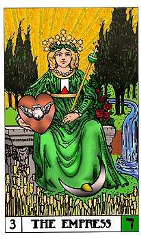
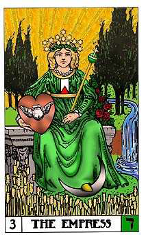
Gimel resolves the giver and receiver (Aleph and Beth), so it represents giving and receiving. The Creation is the gift of God; we are the ones who receive this gift. In the company of the influx of Tiferet into Chokmah and Chesed, it represents kindness and cultivation, the organic nurturance that causes things to grow (Hebrew Gamol גמול means to nourish until ripe, גמילה – weaning child, ripening fruit ) and refers to the ‘life-force’ that is present in Nature and created things, the procreative force (eros). This life-force is the combination of Mem and Shin. This is why it is associated with The Empress card #3 of the Tarot here.
This life-force can be mistaken for Will and will to power. The West has always been of the view that Nature’s “scarcity” must be attacked and overcome. The view of the Sepher Yetzirah is that Nature is an example of the over-abundance of God and that is why Chesed is sometimes referred to as “The Intelligence of the Over-Abundance” (Path #4). For the philosopher Nietzsche, will to power is “the stamping (marking) of becoming with the character of being”. This stamping or marking is the done through the principle of reason understood as giving permanence to the chaotic change and movement that is Becoming.
Gimel גמול also means “giving”, and the leg of the Gimel is said to represent the rich man running to give charity to the poor (represented by the 4th letter Dalet, the path from Chesed to Netzach). This metaphor signifies the Creator’s eternal presence and benevolence to all creation, manifested with abundant life and prosperity (the life-force), but also the movement of the Creator to give Grace across the expanse that is the realm of Necessity. It seems to suggest that as the Creator further withdrew into and from His Creation, those further points of the Creation were deprived of the presence of God to a greater degree. This is the widening of the gyres at their outer reaches. The giving and receiving aspects of the letter Gimel also illustrate that the World itself is ‘moral’ and ethical in its being.
The Gimel also represents reward and punishment. The word גמול represents the giving of both reward and punishment. The laws of the created world are two-fold: Natural Law and Conventional Law. Natural Law is the permanent law of the realm of Necessity; Conventional Law is the law instituted by human beings which is constantly in motion and subject to change. Both types of Law are based on the rule of Judgment – blessings are able to flow to those who act justly and they do so through the Light, while wrongdoing or sin blocks the receipt of goodness and abundance, or what we mean by grace. It is important to recognize that in the Sefer Yetzirah, the whole of creation is seen as ethical. In the prayer of the Our Father of Christians, we ask the Lord “to forgive us our debts as we forgive our debtors”. This suggests that in the matter of ethics and morals we shall be repaid in the coin of the realm in which we choose to operate, “who lives by the sword, dies by the sword”, for instance, or “render to Caesar the things that are Caesar’s”. This accounts for Gimel being one of the double letters i.e., working both ways.
Another meaning of Gimel is a “bridge” and this would suggest that it provides that cross-over point between the realm of the unlimited (water), Mem, and the realm of the limited (in this case, what we call earth). It is the combination of water and fire that originates earth. It is the Wisdom of Chakmah seen in the “Radiant Intelligence” (Path #2) combined with the “Sanctifying Intelligence” (Path #3) that creates “The Unifying Directing Intelligence” (Path #13). (The Fibonacci sequence of numbers?)
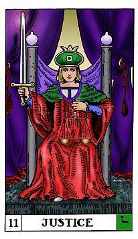
In the Tarot, some decks show the Strength as #8 while Justice is shown as #11. This may be because Gimel is a ‘double letter’ and is one of the 7 double letters representing 7 vertical paths on the Tree of Life. The other double letters are: Beth, Dalet, Kaf, Peh, Resh, and Tav. Each of the double letters and their assignments represent an ambiguity in how they and their associated cards are to be interpreted. Perhaps it may be understood by whether we are looking at an ascent of the Tree of Life or a descent down the Tree of Life. (Is the ascent the cards interpreted in their upright position, a looking upward, and the descent, a looking downwards, the reversal interpretations of the cards? a fullness and a deprival?)
The 14th Path: The Illuminating Intelligence
14. Illuminating Intelligence (Consciousness) (Sekhel Meir): It is called this because it is the essence of the speaking silence (Chashmal). It gives instructions regarding the mystery of the holy secrets and their structure.
The Fourteenth Path is the Illuminating Intelligence, and is so called because it is itself that CHASHMAL which is the founder of the concealed and fundamental ideas of holiness and of their stages of preparation.
Alt. Trans. “The fourteenth path is called the luminous consciousness because it is the essence of the Chashmal [“speaking silence”] which is the instructor in the secret foundations of holiness and their stages of preparation.”
Wescott trans. The Fourteenth Path is the Illuminating Intelligence and is so called because it is that Chashmal which is the founder of the concealed and fundamental ideas of holiness and of their stages of preparation.
Case trans. The fourteenth path (Dalet joining Chokmah to Binah) is called the Luminous Intelligence, because it is the essence of that Chashmal which is the instructor in the secret foundations of holiness and perfection.
Mem (Alef) Shin Path 14: The Illuminating Intellect: “Illuminating Intelligence (Consciousness) (Sekhel Meir): It is called this because it is the essence of the speaking silence (Chashmal). It gives instructions regarding the mystery of the holy secrets and their structure.”
Mem (Alef) Shin — “and Elohim hovered over the face of the waters.” 1:2
Path 14: The Illuminating Intelligence

Path 14, “The Illuminating Intelligence”, is related to the “Radiant Intelligence” Path #2 and the “Sanctifying Intelligence” Path #3 that is the crossover path of Chakmah to Binah on the descent, and from Binah to Chakmah on the ascent.. The “illumination” or “that which brings to presence” is either the light from Keter through Alef in its descent to Tiferet, or the light of the fire of Shin as it crosses over from Binah to Chokmah. Shin relates to reason and the head (the logistikon of the tripartite soul), while Alef relates to love and the heart (the thymoeides or spiritedness, which houses anger, as well as other spirited emotions such as care and concern), which is why Alef’s first descent is to Tiferet and not to Chakmah. Both possibilities are present. The third part of the soul is the epithymetikon (appetite or desire, which houses the desire for physical pleasures). Each of these divisions of the soul is driven by eros in either a higher or lower form, the higher leading to an ascent and the lower leading to a descent.
These differing ways of viewing the world determine how the physical beings of Chesed will come to be understood and determined for us. Both forms of light are present for us to illuminate the various worlds in which we live, and this illumination is our understanding of that world. Elohim’s ‘hovering over the face of the waters’ is the beauty of the outward appearance of things, and it is an indication of how we should be in the world i.e., contemplating the things of the world as presence-at-hand, ‘hovering over’ and before them, not attached to them.
The illuminating intelligence gives to its receiver the ability to ‘unveil’ the hidden holy secrets of the Divine essence of things i.e., to reveal Truth. It is a “method” or “methodology”. The covenant of God shown in the beauty of the world gives the instructions that the revelation of Truth is to be done through Love, through the imitation of God Himself, by a withdrawal and contemplation of the things that are. It appears that we have made a great error in considering ourselves as human beings to be co-creators with God for, historically, this has led us to believe that we can dispense with God and can rely on our own will to power for our own empowerment or expansion. We are in the position that we can view the world and wish to change it or we can view the world and accept it as it is (the meaning of “Amen”.) We have historically referred to this period in our history as The Age of Humanism which occurs roughly at the same time as the writing of the text of “The Thirty-Two Paths of Wisdom”, so we can say that the text is a post-medieval text.
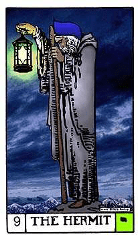
The Fourteenth Path, “The Illuminating Intelligence”, can also be understood as the intelligence derived from the borrowed light of Malkhut. It is the “intelligence” or “consciousness” present in the cave of Plato’s allegory. In the Cave, there are two sources of light present: the light of the Sun from outside of the Cave which is dimly present (which we are calling here the Light of Keter); and the light of the fire made by the technites to show the shadows of the things that are upon the walls of the Cave to the prisoners within the Cave. The knowledge that human beings take pride in is of their own ability to understand and make things. It is a knowledge that “conceals” the true essence of the sacred or the truth of things, and deters one from understanding the sacred or even acknowledging the sacred. It is a “false light” because it is primarily a human-made light (like the fire inside of the Cave of Plato, like the light inside The Hermit’s lamp in the Tarot card). Human beings, through the power of their “formative” thinking, can close themselves off from the true essence of things. This kind of thinking is representative of those who have chosen to remain satisfied with the “shadows” of the things that are rather than seek for the “holiness” of their true essence. It is here that sin primarily occurs for we are tempted to follow the false light believing that the outcomes of the journey by the light of it will result in the “goods” that become our ultimate goal. As has been mentioned previously, the root of all sin is the sin against the Light which manifests itself in the desire for power.
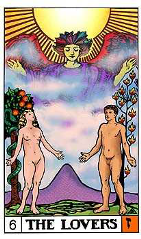
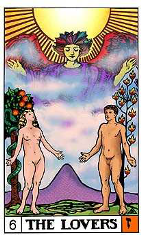
This sin against the light is the mistaking of what is the Law of Necessity for the Good. The borrowed light of Malkhut illuminates the world of Necessity, the world of Time and Space, of seasons, years and days, and the ‘firmament’ that is the realm of space or the heavens. There are two primary luminaries in the heavens and they are the Sun and Moon. It appears that one may follow the illumination provided by the Sun (Tiferet) or one may follow the illumination provided by the Moon (Chakmah), and these are represented by The Lovers #6 and The High Priestess #2 respectively in the Tarot.
“Holy” means “perfect, pure”, “set apart from defilement.” The Hebrew word means “separate”, and this designates the chasm separating the Divine from creation, Love from Intelligence. The “speaking silence” is much like the word Aum or Om: it begins in “openness”, goes into “hiddenness”, begins with an “in-spiring of breath” and ends in silence. Music is analogous to it, but all forms of hearing are related to it. The translation of Chashmal is “brilliant flame” (fire) which, combined with air and water, produces earth. From this, or prior to this, the Law of Necessity determines the form of everything, be it “potential” (dynamis) or “actual” (energeia). All of what we call knowledge is rooted in and descends from our understanding of the Law of Necessity. The Kabbalistic speech (logos) employs the Law of Necessity; all our actions reflect the laws of Necessity. Only the infinite iota of the soul that is part of the Divine (Yod) is that which is not touched by the Law of Necessity.
The Sixteenth Path: The Triumphal or Eternal Intelligence (Consciousness)
The Sixteenth Path is the Triumphal or Eternal Intelligence, so called because it is the pleasure of the Glory, beyond which is no other Glory like to it, and it is called also the Paradise prepared for the Righteous.
Alt. Trans. ” The sixteenth path is called the eternal consciousness because it is the pleasure of that glory beyond which is no glory like unto it. It is also called the garden of pleasure (Eden), which is prepared for the compassionate (Khasidim).”
Wescott trans. The Sixteenth Path is the Triumphal or Eternal Intelligence, so called because it is the pleasure of the Glory, beyond which is no other Glory like to it, and it is called also the Paradise prepared for the Righteous.
Case trans. The sixteenth path (Vav joining Chokmah to Chesed) is called the Triumphant and Eternal Intelligence, and is so called because it is the delight of glory, the glory of Ain, the No-Thing, veiling the name of Him, the Fortunate One, and it is called also the Garden of Eden, prepared for the compassionate.
Chakmah to Tiferet: Path 16. Enduring Intelligence (Consciousness) (Sekhel Nitzchi): It is called this because it is the Delight of the Glory (Eden). As it is, there is no Glory lower than it. It is called the Garden of Eden, which is prepared for the (reward of) the saints.
The Letter Heh and the 16th Path:
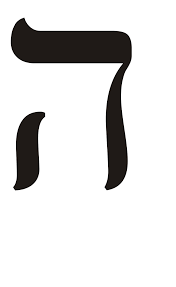
The Hebrew letter Heh, or Hey (האות ה), is the 5th Letter of the Hebrew Alphabet. It also represents the number five. There is a special significance of the letter Heh in Judaism: It appears twice in the Hebrew name of God (יהוה) Yah Heh Vav Heh. (5 x 2 = 10 + 5 = 15)
The 16th path emanates from Chakmah to Tiferet, and contains a number of interesting ideas, particularly in Case’s translation of the text. The first idea that we should pick up here is that the Creation itself is Paradise i.e., the here and the NOW is the paradise prepared for the “compassionate” and for the “righteous”, the “just”, and is not some dwelling place that is to be expected or hoped for after death.
In the various translations, ‘compassion’ and ‘righteous’ are similar or synonymous. This indicates that justice is to be found in our compassionate response to Creation and to the beings within it. This mirrors God’s disposition towards His Creation. What is being said here is that the Garden of Eden is present before us if we are compassionate and act righteously towards it. To act righteously is to render to each being its due or what is owed to it. The Garden of Eden is not something such as a reward for being compassionate: the disposition will create the reward of the Garden of Eden itself. The world before us ‘veils’ or ‘hides’ the name of Him, the Ain, and it does so through its Beauty. The Beauty of the World is but a souvenir of the Good, not the Good itself. Nevertheless, it is the covenant of God with His Creation and all the beings who dwell therein.
This path is represented by the “jubilation” that comes from the awareness of and contemplation of the Divine covenant that is given to us in the Beauty of the world. With the letter Heh we are asked to “Behold”, “to look and see”. Heh goes beyond the mere diaretic knowledge and awareness of Binah and the diaretic knowledge that particularizes the unlimited content of Chakmah in that it sets up distinctions, limitations, horizons, and boundaries so that things may come to appearance and be de-fined as such. Heh is the “fire catching fire” in that the individual soul is enraptured by the physical beauty of the world and is thus led up to the spiritual. This is the operation of the higher Eros.

Hei or Heh represents divine revelation or truth, the breath of the Creator (Psalm 33:6 – By the word of the LORD the heavens were made, and by the breath of his mouth all their host.) The world or worlds (heavens) were created with the utterance of the Hei. It has three literal meanings: “here is” or presence; “to be disturbed” or “to be made to wonder”, “to be confused” (the Greek word here is phrike, what we mean by being ‘freaked out’); and “Behold” or “to look and see”. The word also suggests “jubilation” or the joy upon seeing a revelation, an epiphany, of the beauty of the world and the things within it. The proper response to life is Love and to behold the world with love. Through this beholding, one will dwell in the Paradise that is the NOW.
Heh represents the gift of life and creates the verb of being (היה Haya – being). Its symbolic meaning of jubilation is the proper response to the gift of life. It is divinity, the spiritual life that comes about through the first four letters: 1 + 2 + 3 + 4 = 10. It represents the life essence in all creation, the dynamis of the Greek philosopher Aristotle. It symbolizes the effortlessness of the world and is the symbol of divinity, gentility, and specificity which indicates the three levels of Creation upon which it rests. It contains within it the freedom of choice.
Hei is one of the letters of the Holy Name (Yod Heh Vav Heh), giving it a special significance within the Aleph-Beth. Heh moves upward from Tiferet to Chokmah, and its meaning as “confusion”, “wonder”, “being disturbed” is comparable to the experiences of the prisoners in Plato’s allegory of the Cave in which they are confused by the influx of light they receive at each step of their emergence from the Cave. The prisoner is released from their chains and in a complete turning of the body (primarily the head, but the whole body must follow i.e., a conversion must take place) they are made to see that the ‘shadows’ that they once took for the ‘real’ are only shadows produced by the fire in the cave that is attended to by the technites or the artisans and technicians who are the rulers of the time. There is an emphasis on ‘seeing’ and in the manner of seeing. Heh suggests a correctness in the manner of seeing that is not present in the path of Vav which represents path #17 “The Intelligence of the Senses”.
Ya Heh begins the letters of the Holy Name: “I am”. Ya Heh Vav Heh is the complete name and includes the letters Yod, Alef, Heh, Men, Vav, and Heh repeated. The repeated Hehs represent the duality of the Divine and the Creation.
Path 18: Consciousness of the House of Influence: The Letter Chet
The Eighteenth Path is called the House of Influence (by the greatness of whose abundance the influx of good things upon created beings is increased), and from the midst of the investigation, the arcana and hidden senses are drawn forth, which dwell in its shade and which cling to it, from the cause of all causes.
Alt. Trans. “The eighteenth path is called the consciousness of the house of influence. From its inmost centre flow the Arcanum and veiled ideas, which “abide in its shadow”; thus, is there union with the inmost substance of the cause of causes.”
Wescott trans. The Eighteenth Path is called the Intelligence of the House of Influence (by the greatness of whose abundance the influx of good things upon created beings is increased), and from its midst the arcana and hidden senses are drawn forth, which dwell in its shade and which cling to it, from the Cause of all causes.
Case trans. The eighteenth path (Chet, joining Binah to Gevurah) is called the Intelligence of the House of Influence; and from the interior walls of its perfections the arcana flow down with the hidden meanings concealed in their shadow, and therefrom is union with the innermost reality of the Most High.
Chet: Chakmah to Gevurah Path 18. Intelligence of the House of Influx (Consciousness) (Sekhel Bet HaShefa): By probing with it, a secret mystery (Raz) and an allusion are transmitted to those who ‘dwell in its shadow’ and bind themselves to probing its substance from the Cause of Causes.
Genesis 1.4 And Elohim saw the light, that it was good; and Elohim divided the light from the darkness. 5 And Elohim called the light Day, and the darkness He called Night. And there was evening and there was morning, one day.
The Letter Chet and the 18th Path

The 18th path joins Chokmah to Gevurah and it is the letter Chet which makes this conjunction or relation. In the text of “The 32 Paths of Wisdom”, the House of Influence is singular, though I think we can say that there are a number of worlds that make up a number of houses of influence. There is clearly a duality spoken of in the text: “the arcana and hidden senses are drawn forth” and “dwell in its shade” suggests the realm of becoming, while the truth itself remains hidden which is the union with the Cause of Causes. The letter Chet is an ‘enclosure’ and in the Tarot illustrated here, The Hanged Man #12 is held in suspension from this letter.
Nature does not lie, it hides. The outward appearance of things which the Greeks referred to as the eidos, both reveals and conceals, and here the outward appearance ‘hides’ the reality of the kind of union that is present at the core. This showing forth of the ‘goodness’ of things can seduce the mind and soul of the human being into believing that the outward appearance is, in fact, the truth of the thing. “The Intelligence of the House of Influence” interacts with “The Rooted Intelligence” of Gevurah and “The Sanctifying Intelligence” of Binah to make things ‘holy’ which, in fact, might not be ‘holy’. While the abundance of the world shows forth many ‘goods’, they are not the Good.
Chet is the letter of life חיים. It represents infinite possibilities or the making-possible of that on the basis of which beings as such and as a whole are determined for us. It is undifferentiated substance and energy, containing all the possibilities that could come into being (i.e., it is what is designated as Will to Power here).
We have already indicated that the Logos determines all that is and all that is possible, so Chet is not influenced by the Sephirot Tiferet to any great degree but it passes through the Logos and requires the Logos. It is one aspect of the life-force. As such, it indicates an influence from Chakmah and to The High Priestess #2 card. Chet indicates the illusion of the ability of the human being to rise and go beyond nature (what we understand as our ‘freedom’ encapsulated in our notions of ‘transcendental thought’); but whether this rising beyond is done through the will and the domination and control of nature, or through submission to the Divine Will of Necessity is the matter of choice for the individual human being.

As has been noted, all the Sephirot with the exception of Malkhut are connected to Tiferet in some way. The letter Chet, according to some Hebrew readings, is related to the Neshama, the soul, and thus would relate to the ‘embodied soul’. The body is the “enclosure” of the soul; the physical world is the ‘enclosure’ of the Divine Soul, and yet is at the same time enclosed by the Divine. Chet also represents the power of choice which is given to the soul, as well as the qualities of charm and grace חן . Whether this charm and grace is genuine or a deception is a matter of choice for human beings.
Chet is like a revolving gateway or doorway, and represents the gyring power of Shin which directs the soul to enter a higher level beyond time, to enter the mysteries of one’s soul, and then return to worldly consciousness. The ancient form of the letter looks like a ladder indicating the ability to go above and beyond limitations. But herein lies the danger. It is not given to human beings to ‘rise up’ in this way i.e., through the use of the will, and this is shown most clearly in The Tower #16 of the Tarot. The ‘rising up’ of human beings could be analogous to an ‘expansion’ and the end or purpose for human beings is to be realized in a ‘diminution’ or decreation.
As the letter with the numerical value of 8, Chet also signifies transcending nature, as represented by the 7 days of creation. This gives the illusion of a transcendence of Time. We can ‘transcend’ Time through Memory, but it is not a true transcendence of time. It is merely the appearance of transcending Time. In this way, Chet is associated with Chokmah and Gevurah; and as an elemental letter, it indicates a diagonal path in its relation to these Sephirot. We can transcend something by knowing the essence of the thing, but this knowing is not a domination and control of the thing but a letting be of the thing as it is. We may perceive the thing as presence-at-hand in which it is merely contemplated or we can perceive the thing as ready-to-hand and disposable for whatever use we may wish to make of it.
It is the essence of the human being to “break through” nature to spiritual realization, but this is not done through the use of Will nor through the transcendental knowledge of the principle of reason. It is done through the revealing of Truth, and this is only partially accomplished in the achievements of our technology based as they are on the principle of reason. Nature does not lie; it hides. Truth may be revealed through reason but this is not the only way, and reason’s revelation of nature is only a partial revelation. This is shown in the path of Tet which crosses over the path of Chet from Binah to Chesed.

Chet is also in the word for prophecy hazon חזון, and wisdom hochmah חוכמה. In The Hanged Man #12, the figure is suspended from a letter Chet formed from wood. His upside down hanging suggests life in suspension, waiting. On the other hand, it could also suggest entrapment and an incorrect viewing of the world in which he is suspended since he is hanging upside down, and it is by this viewing that his suspension is made possible. Is this incorrect viewing a result of the historical knowledge that he/she has come to possess? The figure in the illustration of The Hanged Man does not appear to be in distress. He is waiting on an Other for either Grace or direction.
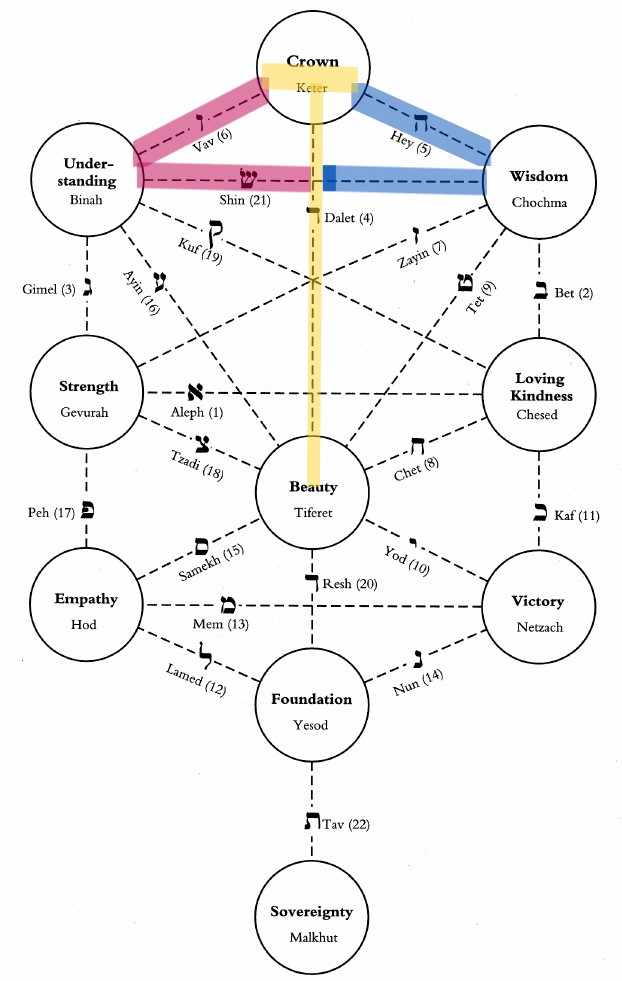



























 Theory of Knowledge: An Alternative Approach