

Donald Trump and the USA

“Have you never observed in those who are popularly spoken of as bad, but smart men, how keen is the vision of the little soul, how quick it is to discern the things that interest it, a proof that it is not a poor vision which it has, but one forcibly enlisted in the service of evil, so that the sharper its sight the more mischief it accomplishes?” (Republic 518d-519a)
“A man who lies to himself, and believes his own lies becomes unable to recognize truth, either in himself or in anyone else, and he ends up losing respect for himself and for others. When he has no respect for anyone, he can no longer love, and, in order to divert himself, having no love in him, he yields to his impulses, indulges in the lowest forms of pleasure, and behaves in the end like an animal. And it all comes from lying – lying to others and to yourself.”
“The best way to keep a prisoner from escaping is to make sure he never knows he’s in prison.”
“What is hell? I maintain that it is the suffering of being unable to love.”
Fyodor Dostoevsky, The Brothers Karamazov
“What else is misery but the desire and possession of evil?” Plato, Meno 78b
This will probably be the most controversial of any of the four parts of this portrait of evil for it deals with contemporary events, events which have not yet become part of history for their outcomes are still uncertain. The analysis of Trump’s character and his actions that is presented here must be read in the light of what has already been written in the previous sections of this portrait of evil. Those who have specific counter-claims to the points made here are free to post them in the comments section below provided by the blog. Providing specific sources for the evidence to the counter-claims would be useful in properly bringing things to light.
The story of Donald J. Trump is that of the playboy who squandered his father’s fortune and who became an incompetent, vicious clown as the ruler of his people. His story is truly the stuff of myth; and it is a story that has been heard and recorded throughout history on a number of occasions and in various cultures. It is a story which continues to be ongoing.
Trump’s story is that of a “malignant narcissist” who comes to power to represent a regime or polis that has devolved into a mass “malignant narcissism” itself: the soul reflects the regime and the regime reflects the soul. One of the questions which needs to be asked is: what is the relationship between mass malignant narcissism and technology? How and why is mass malignant narcissism a response to the meaninglessness at the heart of the nihilism that is technology? Another question is: how is malignant narcissism a manifestation of evil as a lack of self-knowledge and an acceptance of mass thoughtlessness?
Trump is a playboy who had seen at an early age that he has no possibility in the regime as it currently stands (what could this “possibility” mean since he has achieved the highest position of power in that regime and has been assumed to be ‘sane’ by the mental health professionals within that regime?) and who, because of this, emerges as a demagogue whose nihilism mirrors the mass nihilism present in his followers. It ultimately seeks the destruction of the regime and the order that is brought about by the rule of law which is crucial to the regime’s survival.
Trump is a “true” white American. His malignant narcissism is rooted in his racism: early in his life he denied housing to African Americans because they would lower his property values, and he begins his political career challenging the authenticity of the first Black President of the USA Barack Obama’s birth certificate, for Trump fears that what he is and what he will become has no place in the multi-racial, multi-cultural society that is present-day America. Many of his fellow Americans agree with him, for they too see no reflection of themselves in the regime as it now stands (which one may best describe as ‘totteringly’).
His slogan becomes MAGA: “make America great again”, although the time when America was great is never clearly established, and it appears to have some roots in the time when America was a Confederacy prior to the first Civil War (I say ‘first’ for the followers are looking for a second Civil War). Trump’s story is not unique nor are his methods for securing power, and in examining him we can get more details for our sketch for our portrait of evil.
Trump cannot distinguish between right and wrong actions. He believes that cheating, lying, and “risky behaviour” are not wrongful if the wrongdoer (himself) does not intend to cause harm (in legal language, there is no mens rea) or if no harm results. (This is his defense at a number of his trials.) Trump, like Meno and Eichmann before him, clearly cannot see beyond himself. He is incapable of seeing ‘the big picture’ and this is shown in the errors that his judgement has made both in the past and present. He has no sense of good and evil (unless it is actions done against him where he perceives himself as the ‘victim’) and he does not believe that the laws apply to him for he has no sense of justice for he does not believe he ‘owes’ anything to anybody. He does not ask God for ‘forgiveness’ because he himself is perfect.
One may assert that Trump is unable to distinguish right from wrong because of his “bad upbringing”. Some of his critics say he is unable to make accurate normative judgements because he has been taught the “wrong values”. Trump’s education in the “wrong values” (primarily from his father, Fred Trump, and from his father’s consigliere Roy Cohn) causes him to make inaccurate judgements about the world in which he lives. He has, nevertheless, gained great success in that world and become one of its most powerful people. Because Trump is able to successfully and efficiently function in his society or world indicates that he is not insane or mad, according to most psychiatrists and social scientists today.
People who have been taught the “wrong values” are people suffering from a psychosis where “conscience” and “consciousness” have become separated. They are divided selves. Because their “consciousness” is not of a “real” world, like psychotics they are unable to make accurate judgements about the world in which they in fact do live. They lack what the Greeks called sophrosyne moderation and phronesis wise judgement, essential components of self-knowledge and arete or human excellence, virtue. They are, to paraphrase the psychiatrist R. D. Laing’s assessment, examples of that ‘Insanity (that) is a perfectly rational adjustment to an insane world’.
A study by the U.S. Department of Education in 2020 found that 54% of Americans could not read prose beyond the Grade 5 level; that is the age of an 11 or 12 year old. Trump exhibits many of the characteristics of an ill-bred 11 year old bully who has never been able to go beyond his Oedipal attachments and conflicts and the fears that arise at that age. Indeed, the American political scene at the moment exhibits many of the same characteristics of a primary or middle school playground where bullies and their followers attempt to impose their wills on the majority of the other children. They wish to impose barriers on that ‘open space’ that is the playground through the banning of books and other forms of human discourse.
The American polis’ attachment to the logos is very weak to begin with since it has been primarily formed by the opinions promulgated in the mass social media; and with its lack of attachment to the logos, a weak attachment to what may be called “the real world” has long been established. This is found in their responses to the world of the mass media in which they dwell. They are like the two young fish who do not know “what the hell” water is.
As Hannah Arendt noted in The Origins of Totalitarianism, “In an ever-changing, incomprehensible world the masses had reached the point where they would, at the same time, believe everything and nothing, think that everything was possible and that nothing was true. … Mass propaganda discovered that its audience was ready at all times to believe the worst, no matter how absurd, and did not particularly object to being deceived because it held every statement to be a lie anyhow.” This disbelief in the mass media was greatly exacerbated by the USA media’s coverage of the Iraq war during the period 2003-2011. The press’s failure to do its due diligence with regard to weapons of mass destruction being in the hands of Saddam Hussein (which became the “public” cause for the war rather than the control of the oil fields on behalf of the large multi-national oil conglomerates as the real reason behind the invasion and the ‘war on terror’) made the masses distrust the media to the point indicated by Arendt. Arendt in her quote from 1951 was referring to the regimes of Hitler and Mussolini.
American universities, where thought and the logos should be discussed and taught, chose to model themselves after the German universities of the late 19th and early 20th centuries so that they became “multiversities”, institutions dominated by the teaching of “useful” techne and, in turn, their primary activities became dominated by the money from the vested interests of the multi-national corporations, since research is expensive. In the pursuit of money and power, the original purpose of a ‘uni-versity’ became lost. In fact, the relative education of the German population at the time when Hitler came to power in the 1930s was much higher and stronger than is America’s at present. America has essentially failed in its ‘social contract’, and this is not only revealed by its wealth disparity but also by its lack of concern for the education of its citizens in favour of production and consumption.
Trump, a conman and a showman (qualities so appropriate to a political leader of the 21st century where politics has become the politics of the gutter, the realpolitik, and the glitter of the visual screen), follows a long line of flimflam artists first shown most hilariously by Mark Twain in his characters of the Duke and the Dauphin in Huckleberry Finn. Whether or not Trump’s tarring and feathering is in the cards has still not been decided for, at the time of this writing, he remains the top candidate of the Republican Party for President of the United States once again. How is this possible?
Gaslighting and the Media

Joseph Goebbels, the Nazi propagandist, was the first to formulate what has become known as the Big Lie, so popular among populist movements in the world today. Goebbels’ Big Lie runs: ““If you tell a lie big enough and keep repeating it, people will eventually come to believe it. The lie can be maintained only for such time as the State can shield the people from the political, economic and/or military consequences of the lie. It thus becomes vitally important for the State to use all of its powers to repress dissent, for the truth is the mortal enemy of the lie, and thus by extension, the truth is the greatest enemy of the State.”
One or many of the components of Trump’s Big Lie are promoted on a daily basis in American media through the sophistic technique known as “gaslighting”. Gaslighting is a technique of rhetoric, a sophism which uses fallacious arguments with the goal of attempting to deceive. While the term has been around since the title of a 1938 play and the movies based on that play, the plots of which involve a man attempting to make his wife believe that she is going insane, the term did not really find roots in English parlance until Donald Trump became a politician and decided to run for the Presidency of the United States i.e. around 2015.
Gaslighting requires both lying and fraud, characteristics of Donald Trump’s entire life both on a personal and social level, and in this specific instance involve the transference of a malignant narcissism from the individual to the nation or tribe/clan . For this transference to happen, the malignant narcissism must already be present in the souls of the individuals so that they may be ‘yoked’ together in an ersatz form of the true dialectic that we have spoken about in Part I of this writing.
Trump has been able to hone in on Americans’ growing sense of “meaninglessness” and nihilism to create an abusive relationship between Americans, their country, and their politics. His followers sense of “victimhood” arises from their sense of “entitlement” which, in turn, breeds a meaninglessness and ressentiment resulting from that meaninglessness and nihilism when that entitlement is not realized. From out of the despair of their meaninglessness, they lash out at that world they believe is the cause of that meaninglessness.
In modern forms of deception and manipulation such as fake news and deepfake, the idea of a deliberate conspiracy to mislead has made gaslighting useful in describing lies that are part of a larger plan such as Trump’s Big Lie regarding the 2020 election. Gaslighting is the form that modern day political rhetoric has taken, but it is also present in many of the interactions that human beings have among themselves both in their private and public spheres. Unlike lying which, before Trump, had tended to be between individuals, and fraud, which tended to involve organizations, gaslighting applies in both personal and political contexts and may be analyzed according to its parts, much like Aristotle analyzed the rhetoric of his day. Today’s gaslighting is a manifestation of what has been called here the antilogos.
The evil of gaslighting can be seen in a number of parallels between private and social political contexts and the transformation of what was once gutter politics into the present malignant narcissism. The first technique of gaslighting is called “countering”: this is when someone questions a person’s memory. “History” is the national memory, the shared opinions that members of a national entity have been given (usually in mythic form) regarding their past. We have already discussed in detail the importance of memory to thinking and to self-knowledge in other sections of this sketching of a portrait of evil.
“Countering” occurs when an authority or perceived “friend”, a person of trust, may say things such as, “Are you sure about that? You have a bad memory,” or “I think you are forgetting what really happened.” In the public sphere, there is an effort to re-write history so that the truth of the facts can be obscured. As Goebbels observed, facts are an enemy of the authoritarian state. Trump has shown many times that he has no knowledge of history whether it be of America or the World. Because he lacks such knowledge, his actions on the world stage are rash on many occasions because of his lack of phronesis or wise judgement.
“Countering” can also take the form of misplaced emphasis such as “The preservation of States’ rights was the main cause of the Civil War” rather than the acknowledged fact that “Slavery was the main cause of the Civil War” and the acknowledged economic benefits and power in competitive relations that followed from the ownership of the labour of slaves. Slavery was also present in Washington D. C. in 1862 prior to The Emancipation Proclamation. The main goal of gaslighting is the destruction of the possibility of “dialectic” and of the logos, the speaking and saying that allows truth to emerge by bringing light to things.
On the political and social level, during and after the 2020 election and throughout his administration, Trump has led a sustained campaign of political gaslighting. Gaslighting as an “elaborate and insidious technique of deception and psychological manipulation” used to “undermine the victim’s confidence in his own ability to distinguish truth from falsehood, right from wrong, or reality from appearance, thereby rendering him psychologically dependent on the gaslighter” allows the malignant narcissism already present in the “victim” to be transferred to that of the “leader”. This is leading to the destruction of democracy in America. (Many of those convicted of crimes committed on January 6, 2021 are now claiming to have been victims of gaslighting.) Trump is supported in his gaslighting efforts by a number of social media outlets. The ultimate goal of the gaslighter is the power to dominate, manipulate and control. Trump has made no secret that he will seek retribution for his perceived wrongs from his perceived enemies should he regain power.
Gaslighting requires the weakness of the sense of self and self-knowledge of the victim of the gaslighting. Trump uses gaslighting to make American voters doubt their memory of his past actions and positions. Trump has been accused of rape by a number of women (and found guilty of the rape of E. Jean Carroll in a civil case in the courts) and has been abusive of women throughout his life. These facts do not affect his followers’ view of him, for to his followers, his victims’ statements are not “facts” even though the notorious “Access Hollywood Tape” has shown the potential for such acts by Trump is highly possible.
Trump refuted basic scientific facts on the effects of Covid, for example, where over 1 million Americans died from the disease while he was President. This number was the highest number in the world, even though America lauds itself on the quality of its healthcare system and its bio-medical research. The distrust of the truth of science is but one facet of rejecting any light that might question the “reality” of Trump’s followers’ world-view. Science, bound within the confines of the corporation and greed for profits, has also been responsible for placing itself in this position.
Trump has led his followers to distrust reliable sources of information on the outcomes of the 2020 election, for example. The ultimate aim is to give himself a monopoly on “truth” which he, in his own malignant narcissism, hopes will ultimately lead to his attainment of authoritarian or dictatorial power. Authoritarian and totalitarian power structures (as we have seen from Joseph Goebbels’s definition of the Big Lie) require a monopoly on a “truth” which is not a truth at all. Again, it is a truth which is the enemy of the logos. Winston Smith, the hero of George Orwell’s 1984 works in the “Ministry of Truth”.
When confronted with the truth, Trump engages in gaslighting. “Withholding” involves someone pretending that they do not understand the conversation, or refusing to listen, to make a person doubt themselves. For example, they might say, “Now you are just confusing me,” or “I do not know what you are talking about,” or “I do not know this person”. An example was shown when Trump, under oath, mistook a photo of E. Jean Carroll for one of his wives even though he claimed “She’s not my type”.
Withholding is done on a massive scale in those media bent on the Big Lie. Withholding requires “intentional ignorance” in both the private and public realms. Putin’s regime in Russia, for example, uses ‘troll factories’ of intelligence agents and thousands of computer-programmed bots to attack the logos and to overload online discourse with anger, noise and misinformation, to defuse any constructive effort at opposing the regime. Genuine discourse is drowned out by conspiracy theories and vitriol, and users disengage and become apathetic. And this apathy is the goal.
The “malignant narcissism” characteristic of Trump and his followers can be found in his trivializing of important matters which are seen by those who he perceives as his political enemies. Trivializing occurs when a person belittles or disregards how someone else feels about certain things. They may accuse them of being “too sensitive” or overreacting in response to valid and reasonable concerns on a private level. The fear of the destruction of democracy in America is seen as ‘over-reacting’ by Trump’s political supporters and the heads of many of America’s largest corporations. The disgust shown by many over Trump’s comparison of himself to Nelson Mandela and to Alexey Navalny, the Russian dissident murdered by Vladimir Putin, has been called ‘over-reacting’ by many of Trump’s followers.
Trivializing was used extensively in Trump’s response to Covid resulting in America, which had one of the top-ranked medical infrastructures in the world, having the highest number of Covid deaths in the world. In a ‘rational world’, such an outcome should not have been possible; but with Trump, one does not dwell in a ‘rational world’. The age of his political rival Joe Biden (when both men are relatively of the same age) and the questioning of Biden’s ‘fitness for office’ based on his age are some of the truly striking examples of the massive gaslighting currently going on in American politics.
In both the public and private spheres, denial is a phenomenon common to those who gaslight. Trump’s denialism has the aspects of a comedy that is a clown show; and while it is funny, its dangerous consequences are ever present. Denial is central to Trump’s playing of the “victim” in his destructive relations with America. Denial involves a person refusing to take responsibility for their actions. They may do this by pretending to forget what happened, saying they did not do it, or blaming their behavior on someone else. Trump’s use of denial reminds us that he is, mentally, a 12 year old child in the body of an old man, and it shows the meeting point of his gaslighting and his malignant narcissism.
In the confrontation with the logos that is to be found in the dialectical or private sphere, the gaslighter may chose the technique of diversion. This also occurs in the public sphere where a politician will attempt to change the topic from a discussion of a controversial subject not conducive to the politician’s views to another topic. “What about-ism” is a common example of diversion. With this technique, a person changes the focus of a discussion by questioning the other person’s credibility. For example, they might say, “That is just nonsense you read on the internet. It is not real.” Grasping what is real is essential to any self-knowledge and the development of a ‘moral compass’. Trump simply has no moral compass that can be discerned. His focus is on “what’s in it for me” and if others should benefit, all well and good.
Gaslighting typically uses stereotyping as one of its techniques. Trump constantly uses negative stereotypes about someone’s gender, race, ethnicity, sexuality, nationality, or age to gaslight them and he seems to have particular problems dealing with powerful women especially if they are of another race. Trump, through his gaslighting, demonstrates that he is primarily a surface phenomenon who has no depth and he has no depth because he lacks arete virtue or human excellence. He appeals to a populace who cannot read beyond the grade 5 level, particularly of white American men who have come to view themselves as “victims”, even though their “victimization” is the outcome of their own previous choices based on their own sense of ‘entitlement’. A great deal of their ressentiment has developed from their loneliness.
Trump and “the Big Lie”: Gaslighting in Operation
How is it possible that an obvious con man and social clown could achieve the highest political office in the USA? Trump has been indicted for his ‘incitement to insurrection’ on January 6, 2021. A copy of the indictment can be found here: https://www.justice.gov/storage/US_v_Trump_23_cr_257.pdf
In looking at the charges brought by a Grand Jury against Trump (contrary to Trump’s insistence that it was Joe Biden who brought the charges against him), we can see how Trump has constructed the current Big Lie in the U.S. and how his Big Lie operates by looking at its constituent parts.
Trump’s Big Lie begins with the lie that fraud changed the outcome of the 2020 election, that Trump “had actually won,” and that the election was “stolen.” (Pages 1 and 40-41 of the indictment) Trump’s claim of a stolen election whose winner was determined by massive fraud was (and continues to be) his overarching lie about the election. The majority of members of his political party believe him, not wanting to face the “reality” that the facts pose to them (for this would be the shame of admitting that they were conned), even though over 60 cases brought before the courts have been thrown out. The indictment asserts that Trump knew as early as November 2020 that his narrative was false – and had been told as much by numerous senior officials in his administration and allies outside the federal government – but he persisted in deploying it including on January 6, 2021 itself. This transference of fraud to his political enemies is part of an overall “strategy” (if one could call it that, for a strategy requires thought and Trump’s transference is entirely emotional).
A second component of the Trump lie was that fake pro-Trump Electoral College electors in seven states were legitimate electors. (Pages 5 and 26) The indictment alleges that Trump and his alleged co-conspirators “organized” the phony slates of electors and then “caused” the slates to be transmitted to Vice President Mike Pence and other government officials to try to get them counted on January 6, the day Congress met to count the electoral votes. Pence refused to accept the phony slate of electors and, for the moment, preserved American democracy by preventing a Constitutional crisis.
A third component of the Trump lie was that the Justice Department had identified significant concerns that may have affected the outcome of the election. (Pages 6 and 27) Attorney General William Barr and other top Justice Department officials had told Trump that his claims of major fraud were simply untrue. The indictment alleges that Trump still sought to have the Justice Department “make knowingly false claims of election fraud to officials in the targeted states through a formal letter under the Acting Attorney General’s signature, thus giving the Defendant’s (Trump’s) lies the backing of the federal government and attempting to improperly influence the targeted states to replace legitimate Biden electors with the Defendant’s.”
A fourth component of the Trump lie was that Pence had the power to reject Biden’s electoral votes. (Pages 6, 32-38) Pence had repeatedly and correctly told Trump that he did not have the constitutional or legal right to send electoral votes back to the states as Trump wanted. The indictment notes that Trump nonetheless repeatedly declared that Pence could do so – first in private conversations and White House meetings, then in tweets on January 5 and January 6, and then in Trump’s January 6 speech in Washington at a rally before the riot – in which Trump, angry at Pence, allegedly inserted the false claim into his prepared text even after his advisors had managed to temporarily get it removed. This led to members of the mob shouting “Hang Mike Pence” as the rioting was going on.
A fifth component of the Big Lie was that “the Vice President and I are in total agreement that the Vice President has the power to act.” (Page 36) The January 6th indictment alleges that the day before the riot, Trump “approved and caused” his campaign to issue a false statement saying Pence agreed with him about having the power to reject electoral votes – even though Trump knew, from a one-on-one meeting with Pence hours prior, that Pence continued to firmly disagree.
A sixth part of the Trump lie was that Georgia had thousands of ballots cast in the names of dead people. (Pages 8 and 16) The indictment notes that Georgia’s top elections official – Secretary of State Brad Raffensperger – a Republican – explained to Trump in a phone call on January 2, 2021 that this claim was false, but that Trump repeated it in his January 6 rally speech anyway. Raffensperger said in the phone call and then in a January 6 letter to Congress that just two potential dead-voter cases had been discovered in the state; Raffensperger said in late 2021 that the total had been updated and stood at four.
A seventh component of Trump’s Big Lie is the lie that Pennsylvania had 205,000 more votes than voters. (Pages 8 and 20) The indictment notes that Trump’s acting attorney general Jeffrey Rosen and acting deputy attorney general Richard Donoghue had both told him that this claim was false, but he kept making it anyway – including in the January 6 rally speech.
An eighth component of the Big Lie is the lie that there had been a suspicious “dump” of votes in Detroit, Michigan. (Pages 9 and 17) The indictment notes that Barr, the attorney general, told Trump on December 1, 2020 that this was false – as CNN and others had noted, supposedly nefarious “dumps” Trump kept talking about were merely ballots being counted and added to the public totals as normal – but that Trump still repeated the false claim in public remarks the next day. Barr wasn’t the only one to try to dissuade Trump from this claim. The indictment also notes that Michigan’s Republican Senate majority leader, Mike Shirkey, had told Trump in an Oval Office meeting on November 20, 2020 that Trump had lost the state “not because of fraud” but because Trump had “underperformed with certain voter populations.”
A ninth component of Trump’s Big Lie was the lie that Nevada had tens of thousands of double votes and other fraud. (Page 9) The indictment notes that Nevada’s top elections official – Secretary of State Barbara Cegavske, also a Republican – had publicly posted a “Facts vs. Myths” document explaining that Nevada judges had rejected such claims.
A tenth component of the Big Lie was the lie that more than 30,000 non-citizens had voted in Arizona. (Pages 9 and 11) The indictment notes that Trump put the number at “over 36,000” in his January 6 speech – even though, the indictment says, his own campaign manager “had explained to him that such claims were false” and Arizona House Speaker Rusty Bowers, a Republican who had supported Trump in the election, “had issued a public statement that there was no evidence of substantial fraud in Arizona.” Since that time, all legal cases brought suggesting voter fraud in Arizona have failed for lack of evidence.
Another component of the Big Lie (the 11th) was the lie that voting machines in swing states had switched votes from Trump to Biden. (Page 9) This is a reference to false conspiracy theories about Dominion Voting Systems machines, which Trump kept repeating long after it was thoroughly debunked by his own administration’s election cybersecurity arm and many others. The indictment says, “The Defendant’s Attorney General, Acting Attorney General, and Acting Deputy Attorney General all had explained to him that this was false, and numerous recounts and audits had confirmed the accuracy of voting machines.” Fox News agreed to a settlement of a fine of $787 million for promoting the Big Lie regarding the voting machines.
A twelfth component of Trump’s Big Lie was the lie that Dominion machines had been involved in “massive election fraud.” (Page 12) The indictment notes that Trump, on Twitter, promoted a lawsuit filed by an alleged co-conspirator, whom CNN had identified as lawyer Sidney Powell, that alleged “massive election fraud” involving Dominion – even though, the indictment says, Trump privately acknowledged to advisors that the claims were “unsupported” and told them Powell sounded “crazy.”
A thirteenth component of the Trump Big Lie was the lie that “a substantial number of non-citizens, non-residents, and dead people had voted fraudulently in Arizona.” (Page 10) The indictment alleges that Trump and an alleged co-conspirator, whom CNN has identified as former Trump lawyer Rudy Giuliani, made these baseless claims on a November 22, 2020 phone call with Bowers; the indictment says Giuliani never provided evidence and eventually said, at a December 1, 2020 meeting with Bowers, “words to the effect of, ‘We don’t have the evidence, but we have lots of theories.”
A fourteenth component of Trump’s Big Lie was the lie that Fulton County, Georgia elections workers had engaged in “ballot stuffing.” (Pages 13 and 14) This is the long-debunked lie – which Trump has continued to repeat in 2023 – that a video had caught two elections workers in Atlanta breaking the law. The workers were simply doing their jobs and, as the indictment notes, they were cleared of wrongdoing by state officials in 2020 – but Trump continued to make the claims even after Raffensperger and Justice Department officials directly and repeatedly told him they were unfounded. Rudy Giuliani who promoted this aspect of the Big Lie has since been fined $148 million dollars for doing so. Trump’s indictment is pending for the same fraudulent claims.
A fifteenth component of the Trump Big Lie was the lie that thousands of out-of-state voters cast ballots in Georgia. (Page 16) The indictment notes that Trump made this claim on his infamous January 2, 2021 call with Raffensperger, whose staff responded that the claim was inaccurate. An official in Raffensberger’s office explained to Trump that the voters in question had authentically moved back to Georgia and legitimately cast ballots.
A sixteenth component was the lie that Raffensperger “was unwilling, or unable,” to address Trump’s Big Lie claims about a “‘ballots under the table’ scam, ballot destruction, out of state ‘voters’, dead voters, and more.” (Page 16) In fact, contrary to this Trump tweet the day after the call, Raffensperger and his staff had addressed and debunked all of these false Trump claims.
A seventeenth component of Trump’s Big Lie was the lie that there was substantial fraud in Wisconsin and that the state had tens of thousands of unlawful votes. (Page 21) Both accusations were false. The indictment notes that Trump made the vague fraud claim in a tweet on December 21, 2020, after the state Supreme Court upheld Biden’s win, and he repeated the more specific claim about tens of thousands of unlawful votes in the January 6 speech.
An eighteenth component of Trump’s Big Lie was the lie that Wisconsin had more votes counted than it had actual voters. (Page 21) This, like Trump’s similar claim about Pennsylvania, was not true. But the indictment alleges that Trump raised the claim in a December 27, 2020 conversation with acting attorney general Rosen and acting deputy attorney general Donoghue, who informed him that it was false.
A nineteenth component of the Trump Big Lie was the lie that the election was “corrupt.” (Page 28) The indictment alleges that when acting attorney general Rosen told Trump on the December 27, 2020 call that the Justice Department couldn’t and wouldn’t change the outcome of the election, Trump responded, “Just say that the election was corrupt and leave the rest to me and the Republican congressmen.” (Deputy attorney general Donoghue noted the reported Trump remark in his handwritten notes, which CNN reported on in 2021 and which were subsequently published by the House committee that investigated the Capitol riot. Trump continues to tell his followers that all of the evidence compiled by the January 6 committee has been “destroyed”. This, of course, is false.)
A twentieth component of the Trump Big Lie is the lie, and one believed by most Republicans, that Trump won every state by hundreds of thousands of votes. (Page 34) The indictment says that, at a January 4, 2021 meeting intended to convince Pence to unlawfully reject Biden’s electoral votes and send them back to swing-state legislatures, Pence took notes describing Trump as saying, “Bottom line-won every state by 100,000s of votes.” This was, obviously, false even if Trump was specifically talking about swing states won by Biden rather than every state in the nation. That Republicans believe in this component of the lie has not been damaged by their subsequent lack of success in the elections following November 2020.
A twenty-first component of the Trump Big Lie is the lie that Pennsylvania “want[s] to recertify.” (Page 38) Trump made this false claim in his January 6 speech. In reality, some Republican state legislators in Pennsylvania had expressed a desire to at least delay the congressional affirmation of Biden’s victory – but the state’s Democratic governor and top elections official, who actually had election certification power in the state, had no desire to recertify Biden’s legitimate win.
Gaslighting and Trump’s Big Lie are inseparable. Throughout history, those in power have often sought to mislead and deceive people, but political gaslighting only meaningfully emerged in a modern, psychological sense under the authoritarian states of the 1930s and 40s. In his novel 1984, George Orwell’s protagonist Winston Smith works at the ‘Ministry of Truth’, rewriting and deleting historical documents to fit the ever-changing party line. The ultimate goal of gaslighting is to create dependency on the abuser. When people are paranoid, angry and distrust all media, the MAGA tribe becomes an anchor of belonging and certainty, and thus the transfer of malignant narcissism is completed.
Trump and the American Collective
“If, then,” I said, “the man resembles the state, must not the same proportion obtain in him, and his soul teem with boundless servility and illiberality, the best and most reasonable parts of it being enslaved, while a small part, the worst and most frenzied, plays the despot?” —Republic Bk. IX 577d

In our discussion of the dialogue Meno, we showed how the character of Meno (and the historical Meno) suffered from malignant narcissism, a modern term though the Greeks were thoroughly familiar with its essence. Malignant narcissism, a term coined by the German psychologist Erich Fromm, is a form of narcissistic personality disorder that is highly abusive. Meno, at times in the dialogue, shows his abusive nature. Xenophon in his Anabasis claimed that the historical Meno was an abusive personality. People with this personality supposedly get a sense of satisfaction from hurting others and may manipulate people or lie to gain money, acclaim, and other things they desire, things that were characteristic of the historical Meno according to Xenophon.
Campbell’s Psychiatric Dictionary suggests that malignant narcissism includes traits of narcissistic personality disorder and antisocial personality disorder. Narcissistic personality disorder causes a person to seek constant acclaim and admiration, often by whatever means necessary. It also includes elements of antisocial personality disorder, which causes a person to engage in harmful, and sometimes criminal, behavior. Facts from Trump’s biography show him to have such a social pathology in abundance. HIs entire life has been one of fraud and deceit.
The separation of “consciousness” and “conscience” is clearly evident with a malignant narcissist, whether it be a single individual or the millions that compose a nation. Fromm states that malignant narcissism demonstrates “tendencies which are directed against life, which form the nucleus of severe mental sickness, and which can be said to be the essence of true evil.” (The Heart of Man, p. 27) In our writing here, we are calling this malignant narcissism nihilism. Malignant narcissism, according to Fromm, is a “syndrome of decay”, “the quintessence of evil”; and it is the “root of the most vicious destructiveness and inhumanity.” (Fromm, Ibid) It is to be found in the necrophilous, “the lover of death”. It is one face of the two-faced Eros.
That madness which arises from and is necessitated by the separation of “consciousness” and “conscience” in technologically advanced societies, where technology has achieved its apogee, is a madness which runs deep for it gives the appearance of being based on ‘rationality’. What is artificial intelligence by definition if not rationality without consciousness and conscience? ‘Rationality’ is but one face of the two-faced Logos that we have been speaking about in this writing.
One of the attractions of a man like Trump is that, in his individual malignant narcissism, millions of Americans find their “identities” as projections of their own malignant narcissism, one characteristic of which is their apparent unlimited capacity and willingness to kill or to do violence and destroy. At the time of this writing, this capacity remains merely at the fantasy, wish-fulfillment stage for most, but it is waiting to flourish, perhaps in a second Civil War for the USA. We hear of daily threats of violence from Trump’s supporters when he is challenged in the courts or in the public realm. Trump is not the flower of the tree that has been growing for over a century in what is called “the American right”. He is merely the fertilizer which has brought about that tree’s blooming and flourishing.
In other writings on this blog I have used the metaphor of the American ship of state as being the Titanic. After the Titanic struck an iceberg and was certain of sinking, the gates allowing access for the third-class passengers to the decks where the lifeboats were available were ordered locked, for the authorities on board were aware that there were insufficient lifeboats for all of the passengers on board. This resulted in a disproportionate number of the victims coming from the third-class passengers. At a recent meeting in Davos, Switzerland, a number of American billionaires said that Americans need not fear another Trump presidency. Those billionaires will have access to the lifeboats so they have nothing to fear from a second Trump presidency; the third-class passengers, on the other hand, may have something to think about. This does not change the essential metaphor that I am using that America is the Titanic and it has struck an iceberg and it will inevitably sink. Like the Titanic, the reason for its sinking was in its original design and its overlooking of the real world of facts at its conception.
As the German philosopher Nietzsche once stated: “Technology is the highest form of will to power…the will to stamp becoming with the character of being”. ‘Rationality’ does this stamping. Nietzsche also recognized that this ‘rationality’ was the root of nihilism. The illusion which rationality creates is of a world where the structured, functional growth of life is in operation, but what is in fact occurring is the ‘killing’ of that world through its being turned into ‘object’ and the mass meaninglessness that results from doing so. The turning of the world into object requires the separation of “consciousness” and “conscience”. (This is where I disagree with Fromm for I do not think he has given an adequate consideration as to what technology is in his analysis of malignant narcissism.) The turning of the world into an object must be achieved in order for human beings to have power and dominance over all that is in being and to take possession of all that is in being. It is the desire to turn the organic into the inorganic. To repeat, one cannot love an object.
As was shown in Part III of this writing, Eichmann demonstrated the separation of consciousness from conscience for “he was a man fascinated by bureaucratic order and death. His supreme values were obedience and the proper functioning of the organization. He transported Jews as he would have transported coal. That they were human beings was hardly within the field of his vision, hence even the problem of whether he hated or did not hate his victims is irrelevant.” (Fromm, ibid p. 30-31) The structured, functional growth of life comes at the cost of the killing of Eros. In advanced industrial societies, this “structured functional growth” is the spreading of the “fungus” that is the ubiquity of evil or the banality of evil in Hannah Arendt’s words. Eros is the enemy of the anti-Logos that is the technological.
The phenomenon of narcissism, first developed by Sigmund Freud, illustrates the impact of the separation of consciousness from conscience on both the individual and social planes. Since these concepts deal with human behaviour, we can say that they deal with what “human excellence” or what arete is conceived to be in modern technological societies. Racism and scapegoating, done through the gaslighting of the Big Lie, for example, are necessities for the self-narcissism that projects itself into the national, political, and tribal collectives of modern day America.
The symptoms of narcissistic personality disorder include a lack of empathy for others. Meno, Eichmann and Trump simply do not have the ability that many human beings have of being able to put themselves in someone else’s position. They use relationships primarily as a tool for gaining self-esteem which is ultimately realized in power and recognition. They have little interest in others’ experiences, needs, or feelings since they believe themselves to be superior to others. They crave attention so they often indulge in attention-seeking behavior believing that any publicity is better than no publicity. They have feelings of entitlement or being special. Trump has a habit of walking out of courtrooms before the jury exits, a sign of his contempt for his fellow citizens and for the laws.
A narcissist only cares about himself, only decides on his own welfare, has an inflated sense of his own worth, a deep need for admiration and lack of any feeling for anyone else. He thinks everything is about him; he needs to claim credit for anything “good” and denies responsibility for any failure. Beneath apparent self-confidence — even brashness — is a fragile self-esteem that is threatened by even the slightest criticism. Examples of how these qualities are shown in Trump are daily news in America.
The need for attention and love is also present for people with malignant narcissism. However, how they go about getting this attention tends to be more aggressive, and they show less regard for the rights of others. Trump has been found guilty of sexual abuse and the rape of E. Jean Carroll in the courts. His antisocial personality traits cause him to abuse others willingly, and sometimes happily during his rallies before his adulating fans, for his own pleasure and personal political gain. His defamation of his victims shows all of the characteristics of malignant narcissism.
The phenomenon of mass malignant narcissism can also be found in some of Trump’s evangelical Christian followers who have anointed him as “a child of god” or as “a gift from God” without considering the implications and consequences their blasphemies have for their faith. Trump has not humbly shied away from such comparisons. This blasphemy is part of the syndrome of narcissism, the “syndrome of decay”, that is prevalent in America.
Many sects of evangelical Christianity are nihilistic; the ‘rapture’ is the thousand year old Reich in another form. Regarding malignant narcissism, Fromm states: “It is a madness that tends to grow in the lifetime of the afflicted person. The more he tries to be god, the more he isolates himself from the human race; this isolation makes him more frightened, everybody becomes his enemy, and in order to stand the resulting fright he has to increase his power, his ruthlessness, and his narcissism.” Trump displays his paranoia on a daily basis through his posts on “Truth Social”. We have spoken of this as the Ring of Gyges phenomenon earlier in this writing. If elaborated on, it might explain the need for anonymity and trolling in our mass social media today. In an exact parallel to the Gyges’ myth, Trump was said to have wanted Melania to parade about the pool at Mar-a-Lago in a bikini so that other men could see how beautiful she was.
An example of narcissism can be found in the response of Trump’s lawyer Alina Habba who, when asked whether it was more important to be beautiful or smart, responded: “Beautiful. You can always fake smart.” She is finding that such is not the case. What is common to all forms of narcissism is a lack of interest in the ‘real’, outside world and this real outside world is brought to presence through genuine discourse. There is a lack of interest in real, genuine discourse in the malignant narcissist and this lack of interest is exacerbated by the tools of discourse which technology has created and continues to create. Habba’s response shows the connection of the narcissist with the ‘surface phenomenon’ that is beauty, something we have seen in our discussion of Meno earlier. A woman who has been gifted by chance with natural beauty may look into a mirror and be convinced that that is all that she is; a woman not so gifted when looking in the same mirror knows that that, in fact, is not all that she is.

The bringing of things to light is “consciousness”. The saint is more aware of their sinfulness than any ordinary human being because they are more “conscious” than most human beings. Consciousness and conscience are the same. You cannot have one without the other. Donald Trump has nothing to ask for forgiveness for because he is ‘perfect’. This indicates how far from consciousness the man really is. The Irish writer James Joyce began his artistic mission with the goal “to forge in the smithy of my soul the uncreated conscience of my race”. This led to his writing of Finnegans Wake, a work he spent 17 years in making where the state of human being is one of perpetual epiphany such as the perpetual reading of his circular text and the reader being perpetually engaged in bringing the logos to light.
“Normal” people do not become angry when something they have done or
said is criticized, provided the criticism is fair and not made with hostile intent. The narcissistic individual, on the other hand, reacts with intense anger when he is criticized. (We are reminded of Bonhoeffer’s observations on “stupidity” in his letter quoted in Part I of this writing). He tends to feel that the criticism is a hostile attack, since by the very nature of his narcissism he cannot imagine that it is justified. The intensity of his anger can be fully understood only if one considers that the narcissistic person is unrelated to the world, and as a consequence is alone, and hence frightened.
It is this sense of aloneness and fear which is compensated for by his narcissistic self-engrandizement, his braggadocio, his need for lies. If he is the world, there is no world outside which can frighten him; if he is everything, he is not alone; consequently, when his narcissism is wounded he feels threatened in his whole existence. This explains the “stubbornness” of these individuals when one attempts to engage them in conversation; the stakes are of such paramount importance for them, for they are nothing less than that individual’s very existence.. This phenomenon is the ersatz form of that true gnosis that occurs when true thought and thinking achieves its goal.
When the one protection against his paranoia, his “self-identity”, is threatened, the fear emerges for the narcissist and results in intense fury. This fury is all the more intense because nothing can be done to diminish the threat by appropriate action; only the destruction of the critic—or himself—can save him from the threat to his narcissistic security. This is at the root of Trump’s insane “immunity” claim regarding the presidency, the “immunity” claims of the tyrant, and perhaps explains the reactions of his followers to the legal threats that Trump is facing in the American courts. These threats are against their own self-identifies and their very sanity is at stake.
Another component of the illness that is malignant narcissism is paranoia. Paranoia is a way of thinking and evaluating people and situations. It is persistent regardless of external conditions, unrelated to real danger, only connected to perceived danger. It moves along a spectrum from ideation to delusion to psychosis and the degree of paranoia equates with the degree it will interfere with “normal functioning”. Evidence of Trump’s paranoia includes his constant preoccupation with conspiracy theories and constant identification of himself as a “victim”. The malignant narcissist will harm any who defy, criticize or try to hold him responsible. He attacks them verbally and invites others to attack them physically. Trump’s daily musings abound with such threats.
Much has been said and written about Trump’s “fitness for the office of President of the United States”. Trump’s need to find believers and followers, to transform reality so that it fits his narcissism by attacking and attempting to destroy the institutions which prevail in America, and to destroy all his critics, is so intense and so desperate because it is his personal attempt to prevent his own outbreak of insanity. Trump’s ‘sanity’ is a surface phenomenon. Whether or not Trump goes to jail is secondary. If he should go to jail, he would already be a dead man, a mere shell of a man, since his world and his identity in that world would be destroyed. He is relying on nothing less than a second Civil War to prevent this from happening.
Paradoxically, the element of insanity in such leaders as Trump makes them also successful. Their insanity gives them that certainty and freedom from doubt which is so impressive to the average person. Trump really believes he did not lose the 2020 election because he has to believe it. The need to change the world and to win over others to share in one’s ideas and delusions requires also talents and gifts that the average person, psychotic or non-psychotic, lacks. Trump’s talent lies in the effortlessness behind his lying and fraud and his knowledge of the effects of modern mass media, that great tool for the creation of delusion and fraud.
If a person is “great” because of some quality they have, and not because of something they achieve (the quality of being handsome or beautiful as our Alina Habba and Meno examples illustrated), they do not need to be related to anybody or anything; they need not make any effort. Trump began his adult life with a half a billion dollar inheritance. In maintaining the picture of their “greatness”, they remove themselves more and more from reality and they have to resort to deception, illusion and lying in order to be better protected from the danger that their narcissistically constructed ego might be revealed as the product of their empty imaginations.
The malignant narcissism of a Trump is not self-limiting and in consequence it is crudely solipsistic, racist as well as xenophobic. Any examination of Trump’s speeches show these characteristics. A person who has learned to achieve cannot help acknowledging that others have achieved similar things in similar ways—even if his narcissism may persuade him that his own achievement is “greater” than that of others. One who has achieved nothing will find it difficult to appreciate the achievements of others, and thus he will be forced to isolate himself increasingly in narcissistic splendor. As has been shown in the courts, Trump’s “achievements” were based on deceptions, frauds and lies. His belief is that because others willfully participated in these deceptions, this fact makes them “legal”.
Malignant narcissism also includes characteristics of narcissistic personality disorder. Narcissistic personality disorder is a disorder in which a person has an inflated sense of self-importance. Trump’s “I alone can fix it” is an example of such a disorder. Narcissistic personality disorder is found more commonly in men. Symptoms include an excessive need for admiration, disregard for others’ feelings, an inability to handle any criticism, and a sense of entitlement. Treatment involves “talk therapy”, a euphemism for what we have been calling “dialectic” here. (We use the term “euphemism” here, for some may find the obligation to think offensive in these circumstances.)
Tyrants suffer from such a disorder according to Plato. The tyrant is the unhappiest of human beings for Plato for he has lost all sense of “otherness”. The loss of the sense of otherness, as Socrates observed, is the misery that results from desiring evil and obtaining it. Such misery is the inability to love. The inability to love creates the mass meaninglessness which is this misery on the social level. We can also see this disorder in the quotes from Dostoyevsky which begin this writing on Trump. Such a loss is possible for all and, therefore, forgiveness should also be possible for all.
A person with malignant narcissism may harm others to gain attention, feed their sense of superiority, and get what they want. Trump provides examples of these characteristics in abundance. For this reason, a person who is a malignant narcissist may also have traits of antisocial personality disorder. Individuals with this illness disregard or are hostile toward the rights of others; they tend to be aggressive and at times violent; they show a lack of remorse for harming others, a tendency to lie, repeatedly break the law, are chronically irresponsible and are impulsive or reckless in their actions. The biography of Trump and his daily actions provide copious examples of these characteristics.
A person with malignant narcissism may also appear superficially charming. We saw such superficial charm in the character of Meno and our discussion on that dialogue. Trump, too for some, is found to be charming. Malignant narcissists may manipulate people to gain praise through the use of gaslighting or lie about others to depict themselves in a more flattering light. We ask how 74,000,000 Americans could have voted for Trump a second time. Narcissists are sometimes charming. They are plausible, or the grift they use wouldn’t work. They show confidence and creativity as well as arrogance, impulsivity, irritability and diminished judgment. Americans refuse to recognize the evidence which is before their eyes regarding Trump. They forgive his behavior. They rationalize for him because they do not wish to believe he is who he appears to be even though he explicitly shows himself to be what he really is.
People who have a narcissistic personality crave attention and acclaim. They believe they are special and want others to believe this, too. After all, they have been told since they were infants that they are special by the mere fact that they have been born. They do not have to achieve anything and they may feel that they are due this recognition from all of those about them. Their mantels are filled with “certificates of participation” which they have convinced themselves mean more than what they do. As they grow older, they may seek the attention they want through positive strategies, such as getting a good job or being charming; or negative ones, such as lying to others or abusing loved ones.
A man saying he knows “more about ISIS than the generals” and “I alone can fix it” is grandiose to the point of pretension. (Experts on interior decoration might be able to expand on this with regard to Trump’s “Versailles” taste in appointing his residences. He shares more than the flimflam with Twain’s Duke and Dauphin.) His repeated lying reflects his constant need for attention. Lack of empathy is evidenced in the constant violation of the rights of others from grabbing women to grabbing babies from their mothers’ arms. Absolute disregard for others is demonstrated in his constant grifts: tricking others out of their money without remorse or any acknowledgement of the harm he is doing to them. Trump’s insistence that he is entitled to whatever he wishes to possess, such as the nation’s top-secret documents without regard for national security, is another example.
Trump and the Fact/Value Distinction:
The social sciences’ need for the fact/value distinction, rooted in the separation of “consciousness” from “conscience”, prevents them from making judgements on sociopaths or psychopaths since this would require them to judge a person’s moral character or conscience (what we have been calling arete or “human excellence” in this writing), neither of which science can objectively prove the existence of or judge. Such an inability shows a deprivation of “consciousness” in those sciences themselves and is their required moral obtuseness.
When the judgement was made by the psychologist John Gartner that “Trump suffers from malignant narcissism, a diagnosis [that is] far more toxic and dangerous than mere narcissistic personality disorder because it combines narcissism with three other severely pathological components: paranoia, sociopathy, and sadism”, his diagnosis was dismissed by the American Psychology Association. According to Fromm, when combined with paranoia, sociopathy and sadism, this perfect storm of psychopathology defines the ‘quintessence of evil,’ the closest thing psychiatry has to describing “a true human monster.” Such a description of Trump was immediately attacked in “official” psychological circles.
Gartner goes on to describe Trump’s narcissism: (he knows “more about everything than anyone” and “has empathy for no one but himself”); paranoia (“his demonization of the press, minorities, immigrants, and anyone who disagrees with him, are all signs of paranoia”); sociopathy (“a diagnosis that describes people who constantly lie, violate norms and laws, exploit other people, and show no remorse”); and sadism (“He takes gleeful pleasure in harming and humiliating other people. He is undoubtedly the most prolific cyberbully in history.”).
Allen Frances, the chair of the task force that wrote the Diagnostic and Statistical Manual of Mental Disorders IV, wrote in the NY Times: “I wrote the criteria that define this disorder, and Mr. Trump doesn’t meet them. He may be a world-class narcissist, but this doesn’t make him mentally ill, because he does not suffer from the distress and impairment required to diagnose a mental disorder.” (This presumes that because Trump is able to “function” effectively and efficiently in our world, he lives in a “real world” and not the world that he, through his sycophants, have constructed for themselves.) For Mr. Frances, apparently, threats of violence and abusive actions against women, for instance, do not make a human being “mentally ill”; they do not create “distress and impairment” for the abuser and the abused. Mr. Frances continues: “Psychiatric name-calling is a misguided way of countering Mr. Trump’s attack on democracy. He can, and should, be appropriately denounced for his ignorance, incompetence, impulsivity, and pursuit of dictatorial powers.” “In other words, his behavior may be bad, but that does not mean that he’s mentally ill.” I myself can only add that madness can only run deep in a society which holds forth its opposite. The Tarasoff rule, which requires psychiatrists to notify the appropriate authorities and individuals (in this case the American people) of a man who presents a clear and present danger to the them does not apply in Trump’s case evidently. The American Psychiatric Association’s chief funding is from the pharmaceutical industry which was quite supportive of Trump’s anti-Medicare and anti-Medicaid positions. The authoritarian state requires corruption and nepotism.
Trump and the Christian Nationalist Movement
The Christian evangelical movement strives to make America into a fascistic theocracy which is somewhat ironic since its sworn enemies are those other national theocracies (Iran, China) that have put their own idols in place for their own worshipping, be those idols of a religious or political nature. Religion is what we bow down to or what we look up to, and this is why the virtue of piety is linked to what we have come to understand as human excellence. Piety and virtue arete have always been held together.
Human beings cannot live without some meaning of some kind. Mass meaninglessness seeks for something that will provide it with the sole truth regarding the nature of the things that are and give meaning to those things and to the the worlds in which those things appear. The Christian nationalists seek to turn Christ into an “armed prophet” rather than the failed “unarmed prophet” of the New Testament and in doing so leave their Christianity and the Christ of the New Testament behind them.
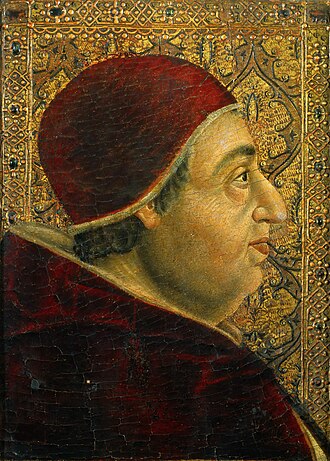
The distinction between “armed” and “unarmed” prophets was first noted by the Italian political philosopher Machiavelli in his writings. For Machiavelli, Christ the “unarmed” prophet failed in establishing a kingdom while other “armed” prophets were successful in doing so. The best example was Moses. In Machiavelli’s lifetime, Pope Alexander VI turned the Roman Catholic Church into the “armed prophet”, and the later horrors of the Spanish Inquisition, which began in 1478, could be said to be primarily of his doing. (More will be said about Machiavelli and Pope Alexander VI in the summary comments on these writings.)
That Machiavelli, the first philosopher of power, was evil goes without saying; he himself says as much about himself. The evangelical Christians appear to have forgotten the three temptations or tests of Christ that we spoke about in Part I of our “Sketch”. Where Christ succeeded, they have failed; where Christ failed, they are hoping to succeed.
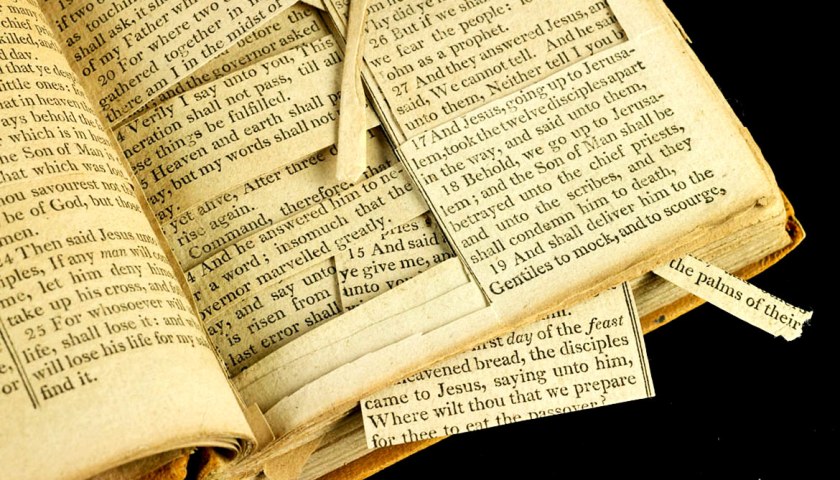
Christian Nationalism has created a mythological version of American history. It runs roughly as follows: “America was founded as a Christian nation; the founders were traditional Christians; the founding documents are based on Biblical principles; America has a special role to play in history; it has therefore been blessed with enormous power and prosperity; however, those blessings and those missions are endangered by the presence of non-whites, non-Christians, and non-native born people on American soil.” It should not be surprising to see the connections with neo-Nazi movements and the acceptance of those movements by the Christian Nationalists.
Christian Nationalism is powerfully associated with various political positions including: opposition to immigration, abortion, gun control, and mask-wearing and support for punitive policing, mass incarceration, capital punishment, gerrymandering, voter suppression, and—as should be obvious by now—support for Donald Trump.
While American evangelicalism has not been Christian Nationalist per se, its support for Donald Trump has been moving it closer to the desire for a fascistic theocracy. This change has been an evolutionary process over the century for evangelicalism. Donald Trump and American evangelicals have never been natural allies. Trump has owned casinos, flaunted mistresses in the tabloids, and clearly has not read the Bible in his lifetime for when asked to quote his favourite verse he said “It’s too personal” and evaded the question.
In 2016 many people doubted whether Trump could gain the support of evangelicals, whose support he needed. He chose Mike Pence, an evangelical Christian, as his vice-presidential running mate. Eight years later, evangelical support for the former president and current Republican frontrunner is no longer in question, and the Covid 19 pandemic had a lot to do with it. Evangelicals saw the Covid shut down as an attack upon them using “godless science” and leftist philosophies, and they rebelled against it. This process has gradually evolved to where there are now prominent evangelical leaders who have come to believe that Trump is “God’s instrument on Earth.”
Like the Holy Roman Church 500 years before it, many in the evangelical Christian movement have succumbed to the third temptation of Christ. Many of its leaders suffer from the paranoia and sociopathy that characterizes malignant narcissism present in today’s world, and their relationship to Trump is entirely transactional. This has given the appearance of ‘a cult of personality’ surrounding Trump.
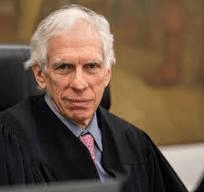
The evangelical concerns have become manifest in the ‘culture wars’ that are ongoing in the USA and have intensified since the election of Barack Obama, a black President, in 2008 and Trump’s “descent down the golden escalator” to announce his candidacy for President of the United States in 2015. The lines separating the evangelical movement and white Christian Nationalism have become very blurry indeed. Judge Arthur Engoron’s judgement that Trump’s “lies and lack of remorse border on the pathological” was a conservative assessment of the man’s character, but this characterization apparently does not affect the support given to him by evangelical and Christian nationalist followers.
When Trump’s part in history is finished, it will be hard to look upon the man as a tragic figure rather than as the clown or buffoon of a comedy. (In a survey of professional historians, Trump was voted the worst President in the history of the United States.) The hero of a tragedy must be an essentially good man who, through his own lack of moderation sophrosyne and wise judgement phronesis, his own lack of self-knowledge, misses the mark in his judgements of how things really are and thus brings about his nemesis or “just desserts” which is usually his death.
One is hard-pressed to find aspects of goodness in Trump’s character. Trump is the quintessential “human being as surface phenomenon” and his life has been consistent in this aspect of his character and his actions; it has been one of image and deceit, lack of depth. His capacity for bringing about evil and mischief was demonstrated by his choice to enter politics in the USA. His being elected as leader was an example of technology’s effect on the human soul of human beings. That a fraud and villain could be seen as a model of human excellence says much not only about the situation in the USA but also about the condition of human beings whose being is determined by the technological in the modern age.
 Theory of Knowledge: An Alternative Approach