The November 2024 TOK Essay Prescribed Titles

A few notes of warning and guidance before we begin:

The TOK essay provides you with an opportunity to become engaged in thinking and reflection. What are outlined below are strategies and suggestions, questions and possible responses only, for deconstructing the TOK titles as they have been given. They should be used alongside the discussions that you will carry out with your peers and teachers during the process of constructing your essay.

The notes here are intended to guide you towards a thoughtful, personal response to the prescribed titles posed.  They are not to be considered as the answer and they should only be used to help provide you with another perspective to the ones given to you in the titles and from your own TOK class discussions. You need to remember that most of your examiners have been educated in the logical positivist schools of Anglo-America and this education pre-determines their predilection to view the world as they do and to understand the concepts as they do. The TOK course itself is a product of this logical positivism.

There is no substitute for your own personal thought and reflection, and these notes are not intended as a cut and paste substitute to the hard work that thinking requires. Some of the comments on one title may be useful to you in the approach you are taking in the title that you have personally chosen, so it may be useful to read all the comments and give them some reflection.

My experience has been that candidates whose examples match those to be found on TOK “help” sites (and this is another of those TOK help sites) struggle to demonstrate a mastery of the knowledge claims and knowledge questions contained in the examples.  The best essays carry a trace of a struggle that is the journey on the path to thinking. Many examiners state that in the very best essays they read, they can visualize the individual who has thought through them sitting opposite to them. To reflect this struggle in your essay is your goal.

Remember to include sufficient TOK content in your essay. When you have completed your essay, ask yourself if it could have been written by someone who had not participated in the TOK course (such as Chat GPI, for instance). If the answer to that question is “yes”, then you do not have sufficient TOK content in your essay. Personal and shared knowledge, the knowledge framework, the ways of knowing and the areas of knowledge are terms that will be useful to you in your discussions.

Here is a link to a PowerPoint that contains recommendations and a flow chart outlining the steps to writing a TOK essay. Some of you may need to get your network administrator to make a few tweaks in order for you to access it. Comments, observations and discussions are most welcome. Contact me at butler.rick1952@gmail.com or directly through this website.

https://drive.google.com/open?id=0B-8nWwYRUyV6bDdXZ01POFFqVlU

sine qua non: the opinions expressed here are entirely my own and do not represent any organization or collective of any kind. Now to business…

The Titles

1. Does our responsibility to acquire knowledge vary according to the area of knowledge? Discuss with reference to history and one other area of knowledge.

Title #1 has four key concepts involved in it: 1. responsibility; 2. to acquire, acquiring; to take possession of; 3. knowledge; 4. vary. You are asked to relate these four key concepts to history and one other area of knowledge.

Aristotle

When we say that we have a responsibility to acquire knowledge to ensure that we construct an accurate record of the past we ask ourselves “why?”. What is the end of an “accurate” account of the past whether it be our own or that of others? For what end is it our responsibility to know our History and learn from the past? Why do we not allow ourselves to remain ‘intentionally ignorant’ of the past if its learning is not convenient for us in the present?

“Responsibility” is inherently an ethical concept for it involves a being-with-others and a sense of otherness itself, something beyond ourselves. It implies a directive for ‘right’ action, an “I should do this” as the ‘ability’ to ‘respond’. The ability to respond was called dynamis by the ancient Greek philosopher Aristotle. The ability to respond with moderation and wise judgement is what was known as ‘virtue’ to the ancients, what we understand as ‘human excellence’ today. The ability to respond involves the deeper question of justice since the sense of responsibility derives from the sense of a ‘debt owed’ to someone or something. To whom? to what? for what end?

At the moment, many of you are probably experiencing the “responsibility” to acquire knowledge from the “debt” you feel you owe to your parents for making your education possible. It is ‘right’ that you should do your best in your studies and take actions that will contribute toward that end. You have a ‘duty’ because you are ‘indebted’ to your parents. Or you may feel no sense of ‘indebtedness’ to anyone or anything. Or you may feel an indebtedness to yourself in that you do not want to be perceived as a moron and wish to achieve some social prestige through attempting to be the best that you can be in your studies. This desire is from our relations in our being-with-others. Stupidity is a moral phenomenon, not an intellectual one, and this is the essence of this question.

If stupidity is a moral phenomenon, then human beings have an obligation to acquire and take possession of knowledge. An obligation is a course of action that someone is required to take, whether that action be due to the legal or moral consequences or constraints inherent in the outcomes of the action or the not taking action. An obligation is an act of making oneself responsible for doing something. Human beings are under an obligation to think; we are not fully human if we do not do so. Obligations are constraints; they limit freedom. The obligation to think as the essence of human being is contrary to the notion that the essence of human being is freedom. Truth itself and its revealing is a constraint upon our freedom.

Those who are limited and intolerant in their thinking view knowledge of their History as limited by “subjectivity” and that it is only composed of the opinions that have become the “collective memory” of the society of which, by chance, they happen to be a member. Because of these subjective elements, they find that it is not essential to acquire knowledge of their past in order to build what they hope will be a “successful” future; self-knowledge is not essential to their happiness nor to their success. This is the ‘ignorance is bliss’ position where they believe their own empowerment will be the foundation of their future happiness; and their own goals and principles are decidedly short-term and entirely mutable depending upon the circumstances in which they find themselves. The lack of self-knowledge and the lack of a moral compass are one and the same thing.

As there are various types of human beings and various ways of thinking, there are also various areas of knowledge. In the IB, they have been identified as six areas of knowledge with further sub-divisions within each i.e. the Natural Sciences are sub-divided into Physics, Chemistry, and Biology. The ancients called these areas of knowledge the Seven Pillars of Wisdom for they made up a ‘knowledge of the whole’; wisdom is knowledge of the whole. The ancients arranged these pillars in a hierarchy; and while we do not speak of a hierarchy, it is easy to see that we hold knowledge in the sciences and mathematics and their applications as the most important areas of study in what we call the acquisition of knowledge today. Any analysis of IB enrollment statistics will demonstrate this.

The sense of “responsibility” for acquiring knowledge in the sciences may be based on the belief that such knowledge will contribute to the continual development of human beings and continue to lead them toward “human excellence” or what the ancients once called ‘virtue’. It is an interesting irony in the history of the West that what was once considered the ‘masculinity’ of a man became the ‘chastity’ of a woman. This belief developed in that period of History known as the Renaissance. It is one of the foundations of what we call “humanism”, and from it flowered that way of being-in-the-world that we call “technology”. The relief of human beings’ estate through technology was a key to an understanding of justice. We felt, and still feel, an obligation and a responsibility to be just.

Our being-with-others is what is studied in the area of knowledge we call the Human Sciences. The Human Sciences, however, are unable to give us an account of what is the best manner or way of our being-with-others. This is due to the fact/value distinction that dominates their theoretical viewing of the world. They are incapable of answering this question, the ancient question of “what is the good life and how do you lead it?” since our sense of responsibility or duty is a ‘value’ that we have chosen or created and it has no ‘reality’ or validity in the world of ‘facts’. One manner of living or choice is equal to another; we call them ‘lifestyles’. The concept of ‘lifestyles’ is from the German philosopher Nietzsche. A pre-requisite for knowledge and success in the Human Sciences is moral obtuseness.

History is an account or narrative, the collective memory, of the significant actions that other human beings have taken and that have occurred over time in our being-with-others. It is more properly called ‘historiography’ (written history) as opposed to an understanding of ‘time as history’. The outcomes of those past actions have contributed to how we have come to understand and interpret, to have acquired and taken possession of, the meaning of those past actions and how they have impacted our understanding of ourselves. For example, who cannot be grateful for the stupidity of the Nazis which led them to understand Einstein’s and Heisenberg’s physics as ‘Jewish science’ and prevented them from funding research into the building of atomic weapons during WWII? Such stupidity was providential in that it prevented the Nazis from taking the ‘responsibility to acquire knowledge’ and it also prevented them from acquiring world domination.

Both History and the Human Sciences today are determined in their seeing by the ‘fact/value’ distinction where statements of fact regarding human actions are distinct from the ‘values’ that are the result of those actions. “Values” are what are subjective. In this perception, they are driven by what has been chosen to be the most highly ‘valued’ form of ‘knowledge’ which is to be found in the objective stance of the Natural Sciences. My statement above regarding the Nazis is a ‘value judgement’, a subjective statement. That I approve that it was good that the Nazis did not achieve world domination is a value judgement.

With the introduction of the word ‘good’ a whole host of other questions arise. For some, the fact that the Nazis didn’t achieve world domination was not a good end. A Europe in ruins was a better end than a Europe re-built from the ashes of those ruins. Similar thoughts are prevalent among many in today’s world. Social scientists in the USA prevent themselves from commenting upon the character of a man like Donald Trump since such comments would not be ‘professional’ but only ‘value judgements’. To have such a mentally disturbed man be their leader and their inability to warn against such outcomes reflects the madness that is deep within American society and the Social Sciences themselves.

The responsibility of acquiring knowledge is dependent upon what good end will result from our acquisition of that knowledge i.e. how will that knowledge contribute to our eudaemonia or happiness?. The type of end depends on the type of knowledge that is to be gained and applied. If I wish to make use of a banking app to do my banking then I have a ‘responsibility’ to learn how to make use of that app through becoming familiar with the knowledge of the procedures involved. The procedures and the theory are already embedded in the app i.e. the end is already embedded in the app. There is no choice involved other than the wish to make use of the app. There are many who will remain intentionally ignorant if the acquisition of whatever form knowledge may appear in does not contribute to their empowerment in some way for we equate empowerment with ‘happiness’.

In other writings on this blog, I have suggested that the lack of a moral compass so prevalent in today’s world, where there is no responsibility to acquire any knowledge other than that which allows one to seize and maintain power, is a primary result of the fact/value distinction, that beholding which is prevalent in the Human Sciences and History. Since domination and control is at the very heart of the stance of the physical sciences and these areas of knowledge wish to mirror those sciences, this should not be surprising. When good becomes a ‘value’ and ‘beauty is in the eye of the beholder’, then the outcome is not one of ‘universal tolerance’ but one of command and control, authoritarianism and fascism. Whether one is on the left or the right in their political thinking is irrelevant to this ultimate outcome.

Margaret Atwood

The Canadian writer Margaret Atwood once said that ‘all writing is political’. The desire to write down something is a desire that it be communicated to others at some point in time. Even a personal diary is a communication to a future ‘different person’ than the one producing the work of the diary in the present. It is an aid to memory. History is an aid to Memory, and contributes to our self-knowledge. The keeping of a diary may be said to be a first step on the journey to self-knowledge. This desire for self-knowledge is a recognition of the responsibility or ‘debt owed’ to oneself and others with regard to the compulsion we feel of the need to be fully human. This compulsion is our desire to seek ‘completeness’ and ‘perfection’ as a human being, which is not possible as we are the ‘perfect imperfection’ in our natures.

In other writings on this blog I have attempted to show that the key difficulty in receiving the beauty of the world today is that such a teaching and learning is rooted in the act of looking at the world as it is while the dominant sciences are rooted in the desire to change it. Our sense of ‘responsibility’ hinges on this dilemma. We cannot know or love an object or resource. In our research to learn the historical sources of the objects of the Arts around us, this study is merely for “aesthetic” purposes and enjoyment, not the fulfilment of a responsibility of having these works teach us about the beauty of the world or any notion of justice. We can learn about the past in such study; we cannot learn from the past. In other writings I have called this the two-faced nature of Eros.

2. In the production of knowledge, is ingenuity always needed but never enough? Discuss with reference to mathematics and one other area of knowledge.

The ‘production of knowledge’ are the ‘works’ that are the results of our ‘work’, the “produce” of our human making which mirrors the “produce” of Nature’s making. The production of knowledge is the products of our minds and hands. “Ingenuity” is a synonym for ‘novelty’, the ‘new’, the ‘creative’ which is an element brought to bear by the clever in our societies. To say that we are overwhelmed by the ‘novelty’ of technology today would be something of an understatement. We just begin to master all of the possibilities of our iPhones when another model is introduced.

But the corollary of all this novelty and ingenuity is an ever-increasing sense of mass meaninglessness, for we fail to find any real purpose for our novelty except that novelty as an end in itself.

The work that precedes the bringing forth of the ‘work’ is what is called ‘research’ in common parlance. This ‘research’ is conducted in multiversities and corporations throughout the globe. The “ingenuity” or “novelty” of the research is driven by the ‘vested interest’ that the individual, along with the institution, has in the outcomes of the research. In the past, research in History for example was a waiting upon the past so that we might find in it truths which might help us to think and live in the present. With the dominion of the fact/value distinction, such an end becomes lost; and with it, what we call our ‘moral compass’ becomes lost. Why?

All societies are dominated by a particular account of knowledge and this account lies in the relation between a particular aspiration of thought (the mind) and the effective conditions for its realization (the work of the hands): the work and its work. The work is knowledge, ‘the word made flesh’ so to speak. Our tools are an extension of our hands. We find the archetype and paradigm of thought and what we call thinking and, by extension, what we call knowledge in modern physics. Modern physics is the mathematical project. To pro-ject is ‘to throw forward’. The aspiration of our ‘throwing forward’ is ’empowerment’. In this throwing forward, some violence is done.

Our account is that we reach knowledge when we represent things to ourselves as objects, summonsing them before us so that they will give us their reasons for being as they are. To do so requires well defined procedures. This is what we call research. What we think knowledge is is this research for it is an essential effective condition for the realization or pro-duction of any knowledge. The work is the bringing forth or production of such knowledge bringing it to its completion. The bringing forth to completion was what was understood as ‘justice’ by the ancients. That which is brought forward is somehow ‘fitting’ for its purpose, its end. Justice is ‘fittedness’. In the technological society, the ingenuity behind the bringing forth has come to be an end in itself.

There are boundless examples of the varieties of ‘ingenuity’ that go into the research conducted in the sciences and the humanities. We live and breathe this novelty in our day-to-day lives. The calculus involved in mathematics results in the many apps brought forth to assist us in our use of our technological tools: the tools are the predicates of the technology and come to be through that technology; they are not technology itself in its essence.

The ‘knowing and making’ that is the word technology shows itself in the humanities in a dizzying number of theses with ingenious perspectives on the meaning of Beowulf (although any number of other examples could just as easily be found). The problem in the humanities is that when the work being examined is laid before us as object and our research is based on a review and critique of its historical sources, that work becomes dead for us. We can learn about the past; we cannot learn from the past: we can learn about the play King Lear, but we cannot learn from the play King Lear. The commandeering stance with regard to the past, which is necessary to research, kills the past as teacher and no amount of ingenuity will overcome this. If beauty is in the eye of the beholder, that which is beautiful is represented to a commandeering subject from a position of its own command and, thus, we cannot learn anything from the beautiful or that which makes it beautiful. The world as it is presented to us in the sciences has no place for the word ‘love’.

Most often, ‘ingenuity’ reveals itself in the paradigm shifts that occur in the histories of our areas of knowledge. A paradigm shift is not only a new way of thinking but a new way of viewing the world in which we live. The most dominant manner in which our world is viewed today is the ‘mathematical projection’. The ‘ingenuity’ within this world-projection is what we call by the cliche ‘thinking outside of the box.’ The history behind this viewing of the world is ‘ingenuity’ itself.
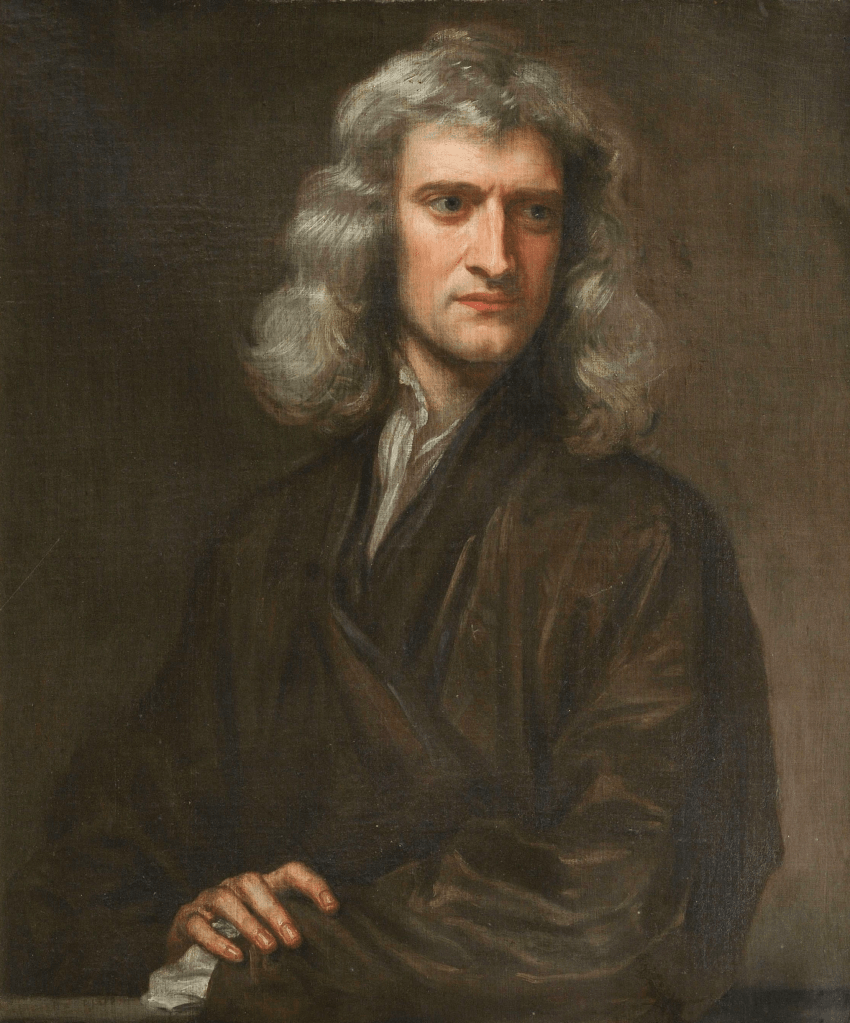
The mathematical projection and the ingenuity involved in it does not occur out of nowhere or out of nothing. Newton’s “First Law of Motion”, for instance, is a statement about the mathematical projection the visions of which first began to emerge long before his Principia Mathematica. Newton’s First Law states that “an object will remain at rest or in uniform motion in a straight line unless acted upon by an external force”. It may be seen as a statement about inertia, that objects will remain in their state of motion unless a force acts to change that motion.

But, of course, there is no such object or body and no experiment could help us to bring to view such a body. This is the ‘ingenuity’ in its view. The law speaks of a thing that does not exist and demands a fundamental representation of things that contradicts our ordinary common sense and our ordinary everyday experience. The mathematical projection of a thing is based on the determination of things that is not derived from our experience of things. This fundamental conception of things is not arbitrary nor self-evident. It required a “paradigm shift” in the manner of our approach to things along with a new manner of thinking. This is true ‘ingenuity’.

Galileo, for instance, provides the decisive insight that all bodies fall equally fast, and that differences in the time of the fall derive from the resistance of the air and not from the inner natures of the bodies themselves or because of their corresponding relation to their particular place (contrary to how the world was understood by Aristotle and the Medievals). The particular, specific qualities of the thing, so crucial to Aristotle, become a matter of indifference to Galileo.

Galileo’s insistence on the truth of his propositions saw him excommunicated from the Church and exiled from Pisa. Both Galileo and his opponents saw the same “fact”, the falling body, but they interpreted the same fact differently and made the same event visible to themselves in different ways. What the “falling body” was as a body, and what its motion was, were understood and interpreted differently. None denied the existence of the “falling body” as that which was under discussion, nor propounded some kind of “alternative fact” here. Galileo’s ingenuity consisted in his ability to view things in a very different way.

In Galileo, the mathematical becomes a “projection” of the determination of the thingness of things which skips over the things in their particularity. The project or projection first opens a domain, an area of knowledge, where the things i.e. facts, show themselves. What and how things or facts are to be understood and evaluated beforehand is what the Greeks termed axiomata i.e. the anticipating determinations and assertions in the project, what we would call the “self-evident”, the axioms. This self-evident, axiomatic viewing requires that things themselves lose any virtues that they may have in their particularity.

The mathematical projection provides the framework, the picture, that is the lens through which the world is viewed. Ingenuity is only acknowledged within this framework for knowledge production since outcomes must be reported in the language of mathematics. Ingenuity or novelty whether in an artistic process or the scientific method involves the discovering of innovative ways of devising experiments or utilizing clever analogies to explain complex concepts within these AOKs. Those who succeed in doing so are given Nobel Prizes as the result of their efforts.

3. How might it benefit an area of knowledge to sever ties with its past? Discuss with reference to two areas of knowledge.
Guernica

Does Title #3 present a silly suggestion that it is possible for an area of knowledge “to sever its ties with its past” and that this severing may somehow be beneficial to it? is it possible for knowledge to occur in a vacuum? The fact that it is an “area of knowledge” implies that it has a past whose ‘picture’ has already been established for it. What we come to call ‘new knowledge’ is the change in perspective on the viewing of that which is permanently there. (See the Galileo example in Title #2.) Is this change of viewing what is meant by ‘severing’ here? Are we talking of paradigm shifts here? It should not be forgotten that everything will appear in a new light when that light is dimmed.

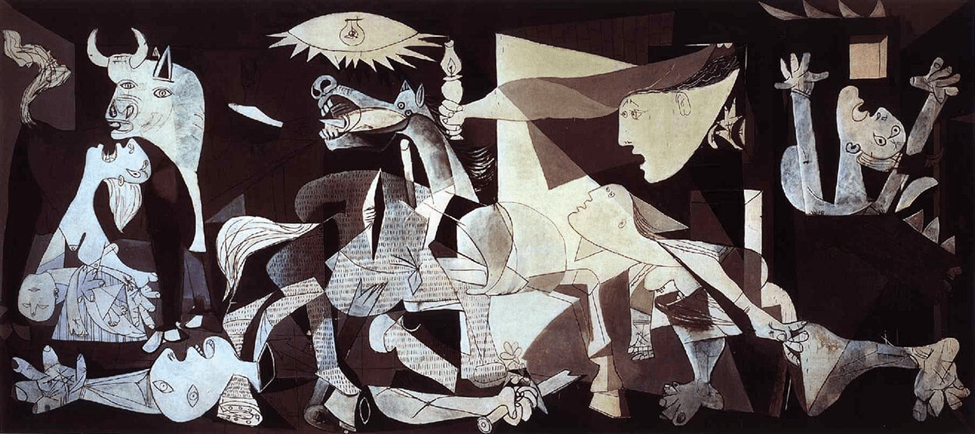
Much of what is said regarding Mathematics and the Natural Sciences in Title #2 would then be applicable here. Is Picasso’s cubism a severing of his ties with Art’s past? Does it not bring along with it the traditional viewing of three dimensional space and provide a new fourth dimension? Picasso’s theme of war in his Guernica has not changed. His viewing of a specific example of what war is presents a unique and horrible view of this ever-permanent subject. As human beings we live within a world which in itself does not change; our perspectives on it change, but the world itself does not. That we can now destroy other human beings with nuclear weapons does not change the permanent theme of our destruction of other beings. The lack of clarity in this question would cause me to avoid it or to question the lack of clarity itself.

The historian Thucydides believed that there was something essential in the nature of human beings, an essence, that was not subject to change. He also believed that the same was the case with regard to war and its causes. Modern historians do not believe there are such things as “essences” and so view the world in a very different way. Is such a different viewing a ‘severing’ of the ties with Thucydides? Or does it ultimately bring the modern historian finally into the position where Thucydides began his work? While we may desire to sever the ties with the past in our pro-duction of knowledge (is this due to our desire for novelty and ingenuity?) such a severing may not be possible if one is to continue pursuing the truth of things. Things will always appear different when they are viewed in a ‘new light’ even though that light may be dimmer.

Is modern atomic physics a ‘severing’ of its ties to the Newtonian physics of the past or the superstructure built upon the findings of those physics? Einstein is considered to be a completion of Newtonian physics while quantum physics is considered to be a more radical ‘severing’ of the viewing that had occurred in what is called classical physics. In the case of modern physics, this severing is due to its unique findings regarding the concepts of time and space and the object that is viewed with regard to the production of knowledge.

The rigor of mathematical physical science is exactitude. This has always been the case with science. Science cannot proceed randomly; it cannot sever its ties in its methodology, a methodology that has its roots in the past. All events, if they are at all to enter into representations as events of nature, must be defined beforehand as spatio-temporal magnitudes of motion. Motion is time. Such defining is accomplished through measuring, with the help of number and calculation. Mathematical research into nature is not exact because it calculates with precision; it must calculate in this way because of the adherence to its object-sphere (the objects which it investigates) has the character of exactitude and that exactitude is the mathematics itself.  

In contrast the Group 3 subjects, the Human Sciences, must be inexact in order to remain rigorous.  A living thing can be grasped as a mass in motion, but then it is no longer apprehended as living. The projecting and securing of the object of study in the human sciences is of another kind and is much more difficult to execute than is the achieving of rigor in the “exact sciences” of the Group 4 subjects. This is why statistics are used as the form of the disclosure of the conclusions that have been reached in the Human Sciences. In some investigations, the matrix mathematics of quantum physics is sometimes used to try to gain a precision into the analysis of the phenomenon under study with, usually, disastrous results. Such was the case in the economic recession of 2008. This is due to the fact that the domains of physics and of the human sciences are radically different.

The applications of the discoveries of modern physics have realized the new “ages” in which we live, the Atomic Age and the Information Age. As with all new “ages” in human history, something is gained but something is also lost. The highest point to which we look up to in our communities is no longer the church steeple or the statue of the Buddha; it is the ubiquitous communications towers sending the signals of our information to each other across the globe. When Galileo skipped over the viewing of the particular thing in its uniqueness in his effort to view the world mathematically, what was skipped over was a looking at the world as it is. This gave to human beings the difficulty, the deprival, of receiving the beauty of the world as it is. The removal of the love of and for the beauty of the world as it is was replaced by the desire to change it through domination and control.

As with all the things which human beings make, their viewing and their making is a double-edged sword: we are easily lulled into an appreciation of the benefits brought about by their realization at the cost of an inability to view how in fact we may be deprived by their realization. What deprivals are we witnessing in the discoveries of our new communications apparatus? What are the benefits resulting from mass meaninglessness and our understanding of knowledge as “information”? We can all see the benefits of artificial intelligence, but what deprivals are we experiencing with the arrival of this new technology?

4. To what extent do you agree that there is no significant difference between hypothesis and speculation? Discuss with reference to the human sciences and one other area of knowledge.

The English word hypothesis comes from the ancient Greek word ὑπόθεσις hypothesis whose literal or etymological sense is a “putting or placing under” and hence a providing of a foundation or basis for an assertion, claim or an action. Such a provision of foundations will be based on the historical knowledge that one has received and possesses with regard to the domain or area of knowledge that is under investigation.

“Speculation”, on the other hand, is the forming of a theory or conjecture without firm evidence. An hypothesis is ‘justified opinion’, while speculation is ‘unjustified opinion’. The word ‘speculation’ is usually associated with economics and is based on those judgements made by individuals which involve a substantial amount of risk since evidence is not available as to the ultimate outcome of the action that will be taken by an individual in their desire for gain in wealth and, subsequently, power. An hypothesis, on the other hand, depending on the domain or area of knowledge in which it is asserted, usually has historical findings to ground it. It is grounded in the principle of reason and looks for exactitude and certitude in its outcomes. The element of chance in speculation suggests that the opinion, claim or assertion is not fully grounded in the principle of reason. A current example would be investors placing their money in the DJT stock on Wall Street. There is an irrationality about it.

“Speculation” is sometimes based on ‘a gut feeling’. It is sometimes preceded by a “they said….” without any mention of who the ‘they’ are who have done the ‘saying’ and whether these ‘they’ are reliable or not in their speaking. There is a lack of surety, certainty in the grounds of the assertion because the assertion is not based on the principle of reason as no evidence or sufficient reasons are provided to justify the claim.

While both speculation and hypothesis are based on ‘theories’, an hypothesis is formed from a “theory” and a theory is a way of viewing the world from which develops an understanding of that world. The principle of reason provides the grounds or foundations for the ‘saying’. Theories or views (understandings) may produce true or false opinions. Our views of the world are based upon opinions, opinions that may or may not be justified. We cannot, for example, believe the assertion that Californian wildfires are caused by Jewish space lasers because sufficient reasons cannot be provided for the making of such an assertion. Such an assertion is mere speculation, and it is ‘risky’ due to its political implications in our being-with-others. An hypothesis requires evidence from experiment or experience that will provide sufficient reasons for the assertion contained in the hypothesis.

In both experience and experiment, a sufficient reason is sometimes described as the correspondence of every single thing that is needed for the occurrence of an effect (i.e. that the so-called necessary conditions are present for such an effect to occur). In the wildfires/Jewish space lasers example, there is no sufficient correspondence present between the effect and its possible cause. What is lacking is the ‘truth’ of the event: there are insufficient reasons for the correspondence theory of truth to apply. With speculation, nothing is ‘brought to light’ because no light is present.

We could, perhaps, also apply such a view to the indeterminacy principle of Heisenberg as long as randomness is incorporated in the preconditions that are mathematically included in the calculus. Such events occur at the sub-atomic level but they do not occur in our encounters with the objects that are present in our real experience of things. In our experience, the principles of Newton’s classical physics still apply. These conditions and their sufficient reasons do not apply at the sub-atomic level.

When we are asked ‘to what extent’, we are being asked for a calculation which can be expressed statistically or in language, a ‘this much…’. It implies a possibility of knowledge of the whole. Both hypothesis and speculation demonstrate similar content in some respects but they are ‘different’. If we claim that there is ‘no significant difference’, then we are saying that they are the Same. While some may presume a semantical equivalence between the two terms (which is the foundation of the question), it would appear that the submission of a hypothesis involves less risk in the truth or falsity of its claim than mere speculation which may be based on a ‘wishful thinking’ as to its outcome. Hypothesis relies on the surety of past knowledge and its discoveries while speculation rests in the hoped for gains that will result if such a speculation proves to be true.

5. In the production of knowledge, are we too quick to dismiss anomalies? Discuss with reference to two areas of knowledge.
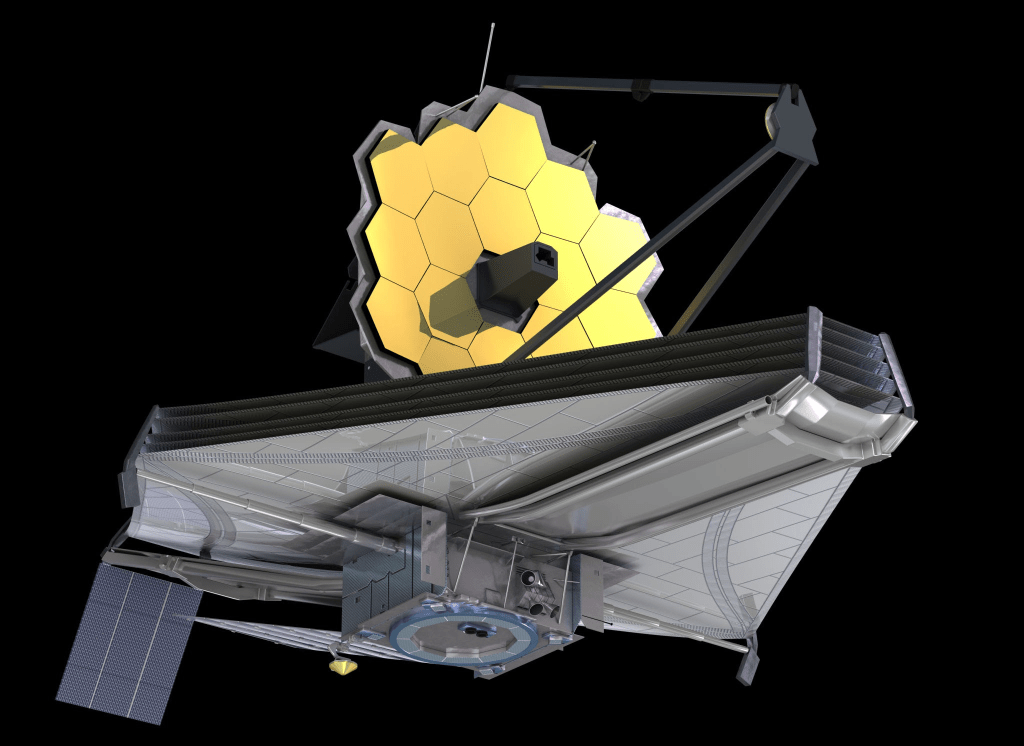
In recent years, the discoveries of the James Webb Space Telescope (JWST) have produced a great number of anomalies for astrophysicists to attempt to resolve and which cannot be ignored especially with regard to the Big Bang Theory of the universe. The dates of the origin of the universe and the formation of galaxies are now being questioned. Often, rather than investigating anomalies further and considering an overhaul of existing knowledge, anomalies are dismissed as ‘exceptions’ to the rule rather than a justification to question the rule itself. Such discussions are now occurring among the scientists in the world of astrophysics. Such anomalies and discussions will provide theoretical work for scientists for years to come and may require or provide a paradigm shift in the area of knowledge called astrophysics.

Anomalies are often the prompt for a paradigm shift in the sciences causing us to challenge existing beliefs and ideas. In Physics, perhaps the greatest anomaly lies in the Heisenberg indeterminacy principle. In the experiments conducted in the early 20th century, results often occurred which could not be corresponded to the physics of Einstein. With Heisenberg’s indeterminacy principle, the mathematical account for those outliers could be accounted for and shown mathematically.

In everyday life, calculating the speed and position of a moving object is relatively straightforward. We can measure a car traveling at 60 miles per hour or a tortoise crawling at 0.5 miles per hour and simultaneously pinpoint where the car and the tortoise are located. But in the quantum world of particles, making these calculations is not possible due to a fundamental mathematical relationship called the uncertainty principle.
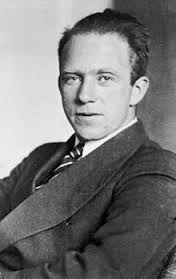
Werner Heisenberg

Formulated by the German physicist and Nobel laureate Werner Heisenberg in 1927, the uncertainty principle states that we cannot know both the position and speed of a particle, such as a photon or electron, with perfect accuracy; the more we nail down the particle’s position, the less we know about its speed and vice versa. Because sub-atomic particles behave like waves in quantum viewing, the measurements we make appear to be uncertain or inaccurate, but this is the case with wave-like properties. In the world of our experience, a chair behaves like a chair. There is a gap present between the behaviour and the nature of sub-atomic particles and the objects of our common everyday experience.

Donald J. Trump

In the Human Sciences, Donald Trump is seen by many as an ‘anomaly’ outside of the normal political activity of the community that is the USA. Is this really the case? Is he really an ‘anomaly’? If so, how is it possible that he is the Republican nomination for President? That Donald Trump is the fertilizer that brought about the flowering of the growth that was the corruption already present within the institutions of the American system of government is more of an indication of the failure of the seeing, the consciousness and conscience, present in the ‘wishful thinking’ of those who observe American politics whether they be media, academics or political pundits. Is it possible for a true outlier to achieve political power or must there be common elements present in both the aspirer for power and in those who will hand that power over to him? Was Adolf Hitler an ‘outlier’ in the German politics of the 1920s and 1930s?

Because of the manner of our viewing of the world, we usually cannot see what we are not looking for, so anomalies are often missed and when they are sighted they are usually met with the response “That’s odd”. If they are seen, they are usually ignored because people and their institutions and organizations are predisposed to confirmation bias, focusing on what aligns with their mental models rather than what violates them. In the Human Sciences, for instance, the word “anomaly” is most often used to dismiss a data point as unrepresentative and irrelevant. Even if we do not ignore anomalies, we may not try to interpret or explore them. Does an anomaly such as Donald Trump get over 70 million votes in a democracy? Why, for example, did it take so long for the symptoms of PTSD (Post-traumatic Stress Disorder) to be recognized and to be systematically dealt with?

6. In the pursuit of knowledge, what is gained by the artist adopting the lens of the scientist and the scientist adopting the lens of the artist? Discuss with reference to the arts and the natural sciences.

Van Gogh’s Sunflowers: Pb(NO3)2(aq) + K2CrO4(aq) –> PbCrO4(s) + 2 KNO3(aq)

The Arts and the Sciences have complementary histories of evolution. This history may be understood as the manner in which both of these human activities have pursued knowledge with regard to their understandings and relationships to what is understood and interpreted as Nature or Otherness. Just as Art pursues “object-less” representations of abstractions conceived in the mind so, too, does science attempt to understand our being-in-the-world through the projection of mathematical abstractions on what we think ‘reality’ is. Both art and science see themselves as ‘theories of the real’. While art must withstand the question Is it art? science, too, must withstand the question Is it science? particularly with regard to the Human Sciences. The responses to these questions can be either profound or downright silly.

Science is what we understand by ‘knowledge’, ‘knowing’. Art is what we understand by ‘making’, the performance that results in a ‘work’, whether that work be a painting, a musical composition, or a pair of shoes. Knowing and making are what we mean when we speak of “technology”, the combination of the two Greek words techne or ‘making’ and logos or ‘knowing’. The combining of these two words is something that the Greeks never did and would never do. The word was first coined in the 17th century with the rise of humanism. The ‘adopting of the lens’ of the artist by the scientist, or of the scientist by the artist is, obviously, a constant in the modern world since the outcomes or products of technology are the objects that we see all about us and which we use on a daily basis. The scientist’s knowing and the artist’s making are on display before us at this very moment if we are using a computer, an iPad or a handphone to read this blog.

The pursuit of science is the human response to a certain mode or way in which truth discloses or reveals itself. Science arises as a response to a claim laid upon human beings in the way that the things of nature appear. The sciences set up certain domains or areas (physics, chemistry, biology) and then pursue the revealing that is consistent within those domains. The claim laid upon human beings is to reveal truth, for it is in the revealing of truth that we are truly human. We are not fully human if we do not do so.

The domain, for example, of chemistry is an abstraction. It is the domain of chemical formulae. Nature is seen as a realm of formulae. Scientists pose this realm by way of a reduction; it is an artificial realm that arises from a very artificial attitude towards things. Water has to be posed as H2O. Once it is so posed, once things are reduced to chemical formulae, then the domain of chemistry can be exploited for practical ends. We can make fire out of water once water is seen as a compound of hydrogen and oxygen. In the illustration of Van Gogh’s “Sunflowers”, we have the chemical formula for the physical composition of Van Gogh’s yellow paint. While interesting, it tells us absolutely nothing of the painting itself and of the world or the artist that produced that painting. This is the situation with many recent discoveries in science, particularly the Human Sciences: their discoveries are interesting but tell us absolutely nothing meaningful about the world we live in.

The things investigated by chemistry are not “objects” in the sense that they have an autonomous standing on their own i.e. they are not “the thrown against”, the jacio, as is understood traditionally. For science, the chemist in our example, nature is composed of formulae, and a formula is not a self-standing object.  It is an abstraction, a product of the mind. A formula is posed; it is an abstraction. A formula is posed; it is an ob-ject, that is, it does not view nature as composed of objects that are autonomous, self-standing things, but nature as formulae. The viewing of nature as formulae turns things into posed ob-jects and in this posing turns the things of nature, ultimately, into dis-posables. The viewing of water as H2O, for example, demonstrates a Rubicon that has been crossed. There is no turning back once this truth has been revealed. That water can be turned into fire has caused restrictions in our bringing liquids onto airplanes, for instance, for they have the capability of destroying those aircraft.

“What we observe is not nature in itself but nature exposed to our method of questioning.  Our scientific work in physics consists in asking questions about nature in the language that we possess and trying to get an answer from experiment by the means that are at our disposal.”–Werner Heisenberg

What is the physicist Heisenberg saying here? The language that the scientist possesses is the mathematical projection or abstraction that is placed over the object that is questioned, but the object that is questioned can only appear in a manner pre-ordained by the nature of the questioning itself. Through experiment, the response to the question posed must be in the form of the mathematical language used: nature must respond ‘mathematically’. But what that nature is is not what has been traditionally understood as ‘nature’. The response must be consistent. The logos that is mathematics is this consistency.

For Heisenberg, what has been called nature has been ordered to report mathematically and this is the first level of abstraction. The mathematical viewing of nature makes the ob-ject of science non-intuitive. What does this mean? In the example above of Van Gogh’s “Sunflowers”, the color yellow is reduced to a formula describing a variety of chemical reactions between various compounds. In physics, the color yellow would be reduced to a formula describing a certain electro-magnetic wave. A person can then possess a perfect scientific understanding of the color yellow and yet be completely color blind i.e. they could not experience Van Gogh’s “Sunflowers” in its ‘reality’. In the same fashion, a person who knows yellow intuitively by perceiving yellow things such as sunflowers will fail to recognize the scientific formula as representing her lived experiences of the color yellow. This is what is meant to say that science is non-intuitive and is, thus, an abstraction.
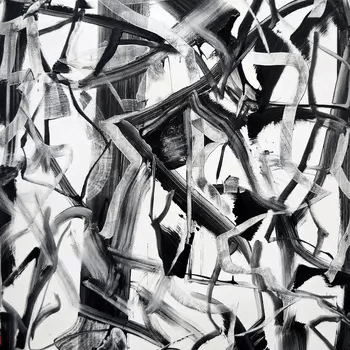
Like the abstractions of the mathematical projections in physics and the projection of formulae in chemistry, abstract art is an art form that does not represent an accurate depiction of visual reality, communicating instead through lines, shapes, colours, forms and gestural marks. Abstract artists may be said to use the lens of the scientist with their varieties of techniques to create their work, mixing traditional means with more experimental ideas. Their work is a product of the mind (or the unconscious) and does not correspond to the Otherness that is what we understand as our being-in-the-world. Jackson Pollock described abstract art as “energy and motion made visible.” Pollock’s art, in a way, attempts to approach the art that is available for us through the cinema.

The examples provided are what we might call the “pure” theoretical scientists or the “pure” abstract artists. What is ‘gained’ by such ‘abstract’ attempts? What is gained is that through the discoveries of the scientists and the artists many applications of their findings are brought into our real world in a great variety of forms and products. The computer before us is a product of the application of the discoveries of quantum mechanics. It is a seamless connection between knowing and making, art and science, the lens of the scientist and the lens of the artist.

It is easy to see what has been ‘gained’ in the coming together of the arts and sciences that we know as technology. It is much harder to see what has been lost in this development. As I have shown in other writings on this blog, an indispensable condition of a scientific analysis of the facts is moral obtuseness. The lens of both the modern day scientist and the modern day artist are not moral lens. Modern art, in its following or mirroring of the seeing of the sciences, contributes to this moral obtuseness among human beings. Since art is essential in our being-with-others in a ‘real’ world, this does not bode well for the future.

Sketch For A Portrait of Evil: The Essence of Evil: Sections III and IV

Section III: The Individual: Evil and Plato’s Divided Line

Plato’s discussion of the Divided Line occurs in Bk VI of his Republic. In Bk VI, the emphasis is on the relation between the just and the unjust life and the way of being that is “philosophy”. Philo-sophia is the love of the “whole” for it is the love of “wisdom” which is knowledge of the whole. Since we are a part of the whole, we cannot have knowledge of the whole. This, however, should not deter us from seeking knowledge of the whole and, indeed, this seeking is
urged upon us by nature, by our nature. All human beings are capable of ‘philosophy’, but only a very few are capable of becoming philosophers. All human beings are capable of “good deeds”, but only a very few are capable of being saints.

The whole is the Good, and that which is is part of the whole so it must, at some point, participate in the Good to some extent. That which we call the “good things” of life such as health, wealth, good reputation, etc. are subject to change and corruption because they are not the Good itself. To only love the “good things” is to love the part, and this love channels one off in another direction from that initial erotic urge directed toward the whole or the Good. This is why the “good things” in themselves can become evils and why we can become obsessed with and succumb to the urges we feel for their possession.

Eros as understood here is not the winged cherub or child named Cupid, nor is it merely the sexual urge which is the modern day focus. “Love (erôs) is the oldest of all the gods,” an Orphic fragment
regarding Eros runs: “Firstly, ancient Khaos’s (Chaos’) stern Ananke (Inevitability, Necessity), and Khronos (Chronos, Time), who bred within his boundless coils Aither (Aether, Light) and two-sexed, twofaced, glorious Eros [Phanes], ever-born Nyx’s (Night’s) father, whom
latter men call Phanes, for he first was manifested.” The two-faced nature of Eros is an apt indicator of how eros can operate in our lives: it can lead upwards, or it can lead downwards. It can allow us to ascend or to descend. Eros is both “fullness” and “need”. Socrates claims that he is an expert in only one thing and that is eros. Socrates is an expert in the ‘neediness’ and the ‘needfulness’ of the human condition.

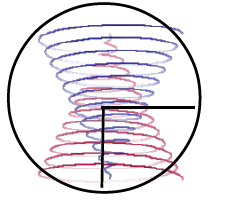
In its ascending direction, Eros’s affect is to make us love the light and truth and hate falsehood. Care and concern develop from Eros. In the illustration of the gyres presented here, the blue gyre is our ascent from the individual ego to the knowledge of the whole of things. The red gyre is the descent of the Good into the being of that which is. “Depth” arises from the ascent; the descent brings about our desires for the surfaces of things, the lower order of eros. Evil is a
‘surface’ phenomenon and eros is a part of it. (The two gyres is a rather abstract representation that is better illustrated in Blake’s painting of “The Red Dragon and the Beast from the Sea” which begins this writing.)

The image of the Divided Line provided by Plato in Bk. VI of Republic is emphatically ethical for it deals with deeds, not with words. The philosophic way of being is erotic by nature. To be erotic is to be “in need”; sexuality is but one manifestation of the erotic, though a very powerful manifestation of this human need. Socrates must chide his interlocutor Glaucon on a number of
occasions in this part of the dialogue of Republic, for Glaucon is ‘erotic’ and is driven by militaristic and sexual passions and, because of such drives, he has a predilection for politics, for seeking power within the community or polis, from which our word ‘politics’ derives. Eros in its lower form drives the appetites and acquisitiveness of human beings, and as Plato indicates in his Seventh Letter: “Of necessity, these States (polis) never cease changing into tyrannies, oligarchies, and democracies, and the men who hold power in them cannot endure so much as the mention of the name of a just government with equal laws.” (325d)

Bk VI of Republic emphasizes the relation between the just and the unjust life and the individual life that is philosophy. The just life is shown by “the love of the learning that discloses (unconceals) the being of what always is and not that of generation and decay”, the knowledge rather than an opinion of what always is. The being of what always is is phusis or Nature. Those who love truth and hate falsehood are erotic by nature i.e., they are ‘needing’ beings by nature; they feel that something is missing. Care and concern develop from this; the love of the whole (the Good) is the great struggle in its attainment. To love the “part” is to be “channeled off” in another direction. This ‘love of the part’ is what we understand as ‘temptation’.

The two-fold or “double” learning is captured in the two types of thinking that are referred to as dianoia and diaeresis. It is also present in the two-fold logos that is rhetoric and dialectic. This two-fold or “double” possibility of learning is emphasized in the construction of the Divided Line and is illustrated by the different directions indicated in the gyres shown previously.

From Plato’s Divided Line we can assert that, for Plato, science does not think in the way that thinkers think. The thinking required to combat evil’s thoughtlessness is not the type of thinking that is to be found in the sciences. Knowledge understood as episteme is dependent on, and in relation to, the higher section of the line (D:C). Socrates (534 a 4-5) relates that dialectical
noesis, the conversation between two or three that runs through the ideas, is to pistis (faith, trust, belief) as natural and technical dianoia is to eikasia (imagination).

The natural dianoia or “gathering together into a one” which is exercised in the physical world by the mind is changed into the power of dialectical insight (the conversion or turnabout of the entire soul) that occurs through the power of speech or conversation between two or three, not through the power of oratory or the written collective memory of the polis one inhabits. The “seeing” is changed into a “hearing”. The “hearing” is changed into a “judgement”. This is why we speak of the “music of the spheres”. It marks the beginning of a new life of philosophia, tolerable only to a few. It is constantly in conflict with our natural and technical dianoia, turning as it does toward the visible world and being immersed in it. Socrates, through the images of the Divided Line and the Cave, takes us on an ascending path away from this turning toward the visible world that is but the shadows reflected on the walls of the Cave.

The philosophic soul reaches out for knowledge of the whole and for knowledge of everything divine and human. It is in need of knowledge of these things, to experience and to be acquainted with these things. The non-philosophic human beings are those who are erotic for the part and not the whole. They are deprived of knowledge of what each thing is because they see by the borrowed light of the moon and not the true light of the sun; their light is a reflected and dim light.

In the Allegory of the Cave, the enchained ones see the shadows of the artifacts carried before the fire that has been ignited by the artisans and technicians. They have no clear ‘pattern’ in their souls, and they lack the experience (phronesis or “wise judgement”) that is tempered with sophrosyne or moderation that they have acquired through the experience of suffering or strife. The philosophic soul has “an understanding endowed with “magnificence” (or “that which is fitting for a great man”) and is able to “contemplate all time and all being” (486 a). The philosophic soul has from youth been both “just and tame” and not “savage and incapable of friendship”. (See the connection to The Chariot card of the Tarot where the two sphinxes, one white and one black representing the mystery of the soul, are in contention or strife (polemos) with each other.)

In looking for the philosophic way of being-in-the-world, Socrates concludes: “…let us seek for an understanding endowed by nature with measure and charm, one whose nature grows by itself in such a way as to make it easily led to the idea of each thing that is.” (486 d) The philosophic soul is such by nature i.e., it grows by itself from out of itself. Is this all souls or only some souls? Are all souls capable of attaining the philosophic way of being? The modern answer to this question, through the strange meeting of the French philosopher Rousseau and the impact of Christianity, has been a “yes”, while the ancient answer appears to be a “no”. Saints and philosophers are rare plants.

The philosophic soul is “a friend and kinsman of truth, justice, courage, and moderation.” (487a) The philosophic soul is able to grasp what is always the same in all respects. (B and C in the Divided Line) The distinction between the philosophic soul and its “seeing” is shown by its contrast to the “blind men” who are characterized as those who are erotic for the part and not the whole; those who are deprived of knowledge of what each thing is; those who see by the light of the moon; those who have no clear pattern in the soul; and those who lack experience phronesis or “wise judgment” tempered with sophrosyne or moderation, what is called arête or ‘human excellence’.

Socrates uses an eikon or image (AB of the Divided Line) to indicate the political situation prevalent in most cities or communities. The eikon uses the metaphor of “the ship of state” and the “helmsman” who will steer and direct that ship of state. The rioting sailors on the ship praise and call “skilled” the sailor or the “pilot”, the “knower of the ship’s business”, the man who is clever at figuring out how they will get the power to rule either by persuading or by forcing the ship-owner to let them rule. Anyone who is not of this sort and does not have these desires they blame as “useless”. They are driven by their “appetites”, their hunger for the particulars. (i.e., what Plato describes as human beings when living in a democracy, an oligarchy, or a tyranny). This is the reason Plato places democracy just above tyranny in his ranking of regimes from best to worst, tyranny being the worst since both of these regimes are ruled by the appetites and not by phronesis and sophrosyne or what we understand as ‘virtue’. Democracy’s predilection for capitalism is a predicate of the rule by the appetites).

The erotic nature of the philosophic soul “does not lose the keenness of its passionate love nor cease from it before it has grasped the nature itself of each thing which is with the part of the soul fit to grasp a thing of that sort, and it is the part akin to it (the soul) that is fit. And once near it and coupled with what really is, having begotten intelligence and truth, it knows and lives truly, is nourished and so ceases from its labour pains, but not before.” (490 b) The language and imagery used here is that of love, procreation and childbirth, and this indicates its
connection to the higher form of Eros as discussed earlier. With regard to the Divided Line, this is the analogy of B=C: the world of the sensible, the visible “is equal to” the world of Thought: the mathemata or “that which can be learned and that which can be taught.” That which can be learned and that which can be thought is initially the visible, that which can be sensed and experienced. Socrates sees himself as a midwife, helping to aid this birthing process that is
learning. (Notice that this indicates the descending motion within the gyres that were shown in the earlier illustration after a gnostic encounter with the Idea of the Good.)

Section IV: Details of the Divided Line

At Republic, Book VI, 508 b-c, Plato makes an analogy between the role of the sun, whose light gives us our vision to see and the visible things to be seen and the role of the Good in that seeing. The sun rules over our vision and the things we see. The eye of seeing must have an element in it that is “sun-like” in order that the seeing and the light of the sun be commensurate with each other. Vision does not see itself just as hearing does not hear itself. No sensing, no desiring, no willing, no loving, no fearing, no opining, no reasoning can ever
make itself its own object. The Good, to which the light of the sun is analogous, rules over our knowledge and the (real) being of the objects of our knowledge (the forms/ eidos) which are the offspring of the ideas or that which brings the visible things to appearance and, thus, to presence or being and also over the things that the light of the sun gives to vision:

“This, then, you must understand that I meant by the offspring of the good that which the good begot to stand in a proportion with itself: as the good is in the intelligible region with respect to intelligence (DE) and to that which is intellected [CD], so the sun is (light) in the visible world to vision [BC] and what is seen [AB].”

Republic Bk VI 508-511

Details of the Divided Line
Below is a summation of some of the thoughts and thinking contained in the Divided Line.

The sphere of space encloses the beings that are in Time. The soul of human beings is eternally in Time. When the soul is assimilated into the One that is the Good, it ceases to be in Time. Nature is eternally in Time: it is sempiternal. “Time is the moving image of eternity.” Nature is “sempiternal”, everlasting, endless. In the illustration to the left, the Divided Line AE should be seen as the circumference of the sphere that is space.

The whole of the Divided Line may be outlined into five sections. Although only four sections are spoken of in the dialogue, the Idea of the Good is implied throughout, though it cannot be properly spoken of as a “section”: a) The Idea of the Good : to the whole of AE; b) the Idea of the Good : DE, the things of the Spirit thought and knowledge; c) DE the things of the Spirit and the contemplation, attention given to them : CD the thinking upon the things of the Spirit; d) BC physical objects and the thinking associated with them= CD the forms/eidos and ideas; e) BC the physical objects and the thinking related to them : AB physical objects and imagination.

Using Euclid’s Elements, we can examine the geometry inherent in the Divided Line and come to see how it is related to the notion of thinking and being. Notice that the Idea of the Good is left out of the calculations conducted here, and this is because it is an incalculable “one”.
Let the division be made according to the prescription:

(A + B): (C + D): : A : B:: C: D.
From (A + B): (C + D): : C: D follows (Euclid V, 16)
(1) (A + B) : :C : (C + D) : D. From A :B : : C: D follows (Euclid V. 18)
(2) (A + B) : B : : ( C + D) : D. Therefore (Euclid V, 11)
(3) (A + B) : C : : (A + B) :B and consequently (Euclid V, 9)
(4) C= B.

The whole line itself (AE) is the Good’s embrasure of both Being and Becoming, that which is within both Time and Space. This embrasure is spherical in shape. (Their geometry showed to the Pythagoreans that our world was spherical and not flat, contrary to the popular notion believed today.) The Good itself is beyond Being and Becoming (i.e., Space and Time), and there is an abyss separating the Necessary (which is both Space and Time) from the Good.

Within the Divided Line, that which is “intellected” (CD) is equal to (or the Same i.e., a One) as that which is illuminated by the light of the Sun in the world of vision (BC). Being and Becoming require the being-in-the-world or participation of human beings i.e., B = C. That which is “intellected”, held in attention or contemplation (the schema, Necessity) is that which comes into being or can come into being through imagination and representational thinking, through images (or the assigning of numbers or signs to images as is done in geometry or algebra) or through the logoi or words of narrative and myth. This representational thinking in images is what we call “experience”, and it is technē as a way of knowing, the knowing of the artisan and the technician.

Below is a more detailed description of the Divided Line:


E. The Idea of the Good: Agathon, Gnosis “…what provides the truth to the things known and gives the power to the one who knows, is the idea of the good. And, as the cause of the knowledge and truth, you can understand it to be a thing known; but, as fair as these two are—knowledge and truth—if you believe that it is something different from them and still fairer than they, your belief will be right.” (508e – 509a) The Idea of the Good is the essence of things that come to be whether in the Visible or Invisible realms. The Good is beyond both Time and Being. When the soul is in direct contact with the Good, gnosis is achieved and the soul is no longer in Time for it becomes part of the One of all that is. The Good is responsible for (aitia) knowledge and truth (aletheia) or the unconcealment of all that is.

D1. Ideas ἰδέαι: Begotten from the Good and are the source (archai) of the Good’s presence (parousia) in that which is not the Good, both in being and becoming. The Good is seen as “the father” whose seeds (ἰδέαι) are given to the receptacle or womb of the mother (space) to bring about the offspring that is the world of AE (time) within space. The realm of AE is the realm of the Necessary. (Dialogue Timaeus 50-52 which occurs the following morning after the night of Republic). Because they are begotten from the Good, they are the essence of things, their “oneness”, what they are through Time. The ἰδέαι beget the eidos which bring beings to presence in time (ousia) for human beings. The things come to a stand through the eidos.D2. Intellection (Noesis): Noesis is often translated by “Mind”, but “Spirit” might be a better translation. Contemplation, attention, dialectic are the activities of noesis. It is that thinking and thought which is beyond what we commonly understand as thought and thinking. Knowledge (γνῶσις, νοούμενα) intellection, the objects of “reason” (Logoi, but not understood as “logistics”) (νόησις, ἰδέαι, ἐπιστήμην). “Knowledge” is permanent and not subject to change as is “opinion”, whether “true” or “false” opinion. Opinions develop from the pre-determined seeing which is the under-standing of the essence of things that is prevalent at the time. Understanding is prior to the interpretations of things and the giving of names to things.
C1. Forms (Eide): Begotten from the Ideas, they give presence to things through their “outward appearance” (ousia). There is no-thing without thought; there is no thought without things. Human being is essential for Being. Being needs human being. “And would you also be willing,” I said, “to say that with respect to truth or lack of it, as the opinable is distinguished from the knowable, so the likeness is distinguished from that of which it is the likeness?” The ‘shapes’ of things (eide) such as the city or society as the individual writ large. The polis or the city is a city of artisans and technicians, of technē. “The knowing one’s way about or within something” caters to the production of novelty, efficiency. The logos, like Eros itself, is two-faced or of two types. The jumping-off point, the leap, is the recognition that the Sun in the realm of Becoming (Time), like the idea of the Good in the realm of Being, is responsible for everything that is. The Sun is Time as “the moving image of eternity”, and all that is in being owes its existence to Time. The Good is eternity, and all that is in Being and Becoming owes its existence to the idea of the Good.C2. Thought (Genus) Dianoia is that thought that unifies into a “one” and determines a thing’s essence. The eidos of a tree, the outward appearance of a tree, is the “treeness”, its essence, the idea in which it participates. We are able to apprehend this outward appearance of the physical thing through the “forms” or eide in which they participate for these give them their shape.
Understanding as hypothesis (διανόια). The “hypothesis” is the “standing under” of that seeing that is thrown forward, the under-standing, the ground. Thought under-stands the limits and boundaries of things and gives them “measure” through the use of number or logoi. The giving of measure to the seeing is geometry, and from it the hearing of the harmonia of music, the music of the spheres, is recognized and produced. Thought comprehends the “measure” of things that brings about a “harmony” . The proportionals are arranged about a “mean” which is hidden or “irrational”. The principle of stringed instruments and their ratios is applicable to the whole of the universe, both the visible and the invisible.
B1. The physical things that we see/perceive with our senses (ὁρώμενα, ὁμοιωθὲν). The things that are at our disposal, the ready-to-hand. Ousia presence is understood as the thing’s way of being-in-the-world. The city or society is the individual writ large. The desires of the body and the needs of the body. Eros is both “fullness” and “need”. Sexuality, procreation, food, drink, etc. BC as the point where we see the two faces of Eros. The wants and needs of the body are radically private and at the same time require other human beings for their fulfillment. The city or polis is an artifact, a product of human making through convention, a Cave. The world of the Cave and the world outside of the Cave are the same world seen differently. There are not two worlds in Plato.B2. Trust, confidence, belief (πίστις) opinion, “justified true beliefs” (δόξα, νοῦν). Opinion is not stable and subject to change. The changing of the opinions that predominate in a community is what is understood as “revolution”. “Then in the other segment put that of which this first is the likeness—the animals around us, and everything that grows, and the whole class of artifacts.” The movement downwards to the techne of the artisans and technicians. The logoi of word and number.
A1. Eikasia Images Eikones: Likenesses, images, shadows, imitations, our vision
(ὄψις, ὁμοιωθὲν). The “icons” or images that we form of the things that are. The statues of Daedalus which are said to run away unless they are tied down (opinion). It is the logoi which ‘ties things down’. The technē or artisan as the servant of the people: “in another, for another”. The technē is the master of the ‘part’, his own art, his ‘know- how’, that knowledge that the philosopher aspires to for the whole of things. The distinction between the simple narrative of poetry and the ‘imitative’ or dramatic narrative. Music and its geometry which leads to the love of the beautiful. All music is ‘imitative’ of the ‘music of the spheres.’ The harmony of music and the harmony of the individual soul is in moderation sophrosyne. Public care and concern (spiritedness) is linked to self-interest. Art (and we mean only great art here) and justice are identical.
A2. Imagination (Eikasia): “Now, in terms of relative clarity and obscurity, you’ll have one segment in the visible part for images. I mean by images first shadows, then appearances produced in water and in all close-grained, smooth, bright things, and everything of the sort, if you understand.” The “representational” thought which is done in images. Our narratives, myths and that language which forms our collective discourse (rhetoric). Conjectures, images, (εἰκασία). The image of a thing of which the image is an image are things belonging to eikasia. We are “reminded” of the original by the image: the Beauty of Nature is the image that reminds us of the Good.
The Divided Line

Every thought and all of our thinking is a product of, or “re-collection” (anamnesis) from experience: we have to first experience before we can “re-collect” that which we have experienced and turn this into a technē. This re-collection is what is referred to as dianoia, the bringing of the separate parts into a “one”. This may account for the confusion between the concepts of eidos and ἰδέαι in the interpretations of Plato.

The ἰδέαι is number as the Greeks understood them; the eidos is number as we understand them: the two concepts represent the “double” nature of thinking (which is mirrored in the two-faced nature of Eros and of the Logos) and the distinction between thought and Intellection when understanding the Divided Line. These distinctions show why there is no separation of “consciousness” from “conscience” for “consciousness” is of those things that are “real”; awareness of the shadows of things is not “consciousness” and thus not knowledge. “No one knowingly does evil.”

The eidos of “three” is composed of three “ones” or units which we arrive at by counting, arithmos 1+1+1. This sequence of “ones” is how we understand Time, as a sequence of distinct units which we call “nows” which progress in a straight line. The idea of “three” is a “one” composed of three and it is achieved through intellection or contemplation. It is the source of the Christian mystery of the Trinity, the three-in-one God. The ἰδέαι beget the eidos and, like a father to his offspring, the father and the child are akin to each other yet separate. Intellection is akin to thinking as it is commonly understood yet separate from that thinking. (See the example in the dialogue Meno of whether or not the father can pass on his knowledge of arête or virtue to his offspring.)

Eide + logoi + ideai: the things seen and heard require a “third”. “Light” is the “third” for seeing as well as what we understand as “air” (aether) for hearing. Arete virtue or human excellence cannot be found present without knowledge and the accompanying “third”, the good. “The outward appearances of the things” + “the light” which “unconceals” them + the idea as that which begets both the outward appearance and the unconcealment. The Sun is an image of the Good in the realm of Becoming because “it gives” lavishly and, as the third, “yokes together” that which sees and that which can be seen. Neither sight itself nor that in which it comes to be (the “eye”) are the Sun itself. The Sun is not sight itself but its “cause” (aitia understood as “responsible for” and “indebted to”). The Sun is the offspring of the Idea of the Good begot in a
proportion with itself: The Good = 1 : the Sun the square root of 5/2 , so (1 + √5)/2). The two together, the Good and the Sun, give what we call the Divine Ratio. 508 c. “As the Good is in the intelligible region with respect to intelligence and what is intellected, so the Sun is in the visible region with respect to sight and what is seen”. (“Faith is the experience that the intelligence is enlightened by Love”.)

The Sun = Time; and from it things come to be and pass away. “Time is the moving image of eternity” i.e., the Sun is Time which is the movement of that which is permanent or ‘eternal’, i.e., The Good, which is that which is beyond the limiting spherical shape which is Necessity which is represented by this limiting spherical shape. “Faith is the experience that the intelligence is illuminated by Love.” Pistis trust or faith is the “experience”, the “contact with reality”, that the intelligence realizes when it is given the light of Love or the Good. This truth aletheia is proportional to the truth aletheia which is the unconcealment of things of the senses in the physical realm when revealed by the Sun i.e., the beauty of the world. This is the
distinction between the “higher” and “lower” form of Eros. The ascent or movement upwards is into “the depth of things”, while the descent deals with their surfaces and imitations.

We can see here some connections to evil. Evil abhors contact with reality and evil-doers will construct a world in which this contact with reality is lessened whether it be by choice through “intentional ignorance” or by active doing through propaganda or gaslighting or by some other misuse of the logoi to create a world in which their evil doing is allowed to flourish. It may occur through the destruction of the logoi such as is seen in the burning and banning of books and thus becomes a conscious anti-Logoi. Because contact with reality is illuminated by Love, the deprivation of love will give rise to hatred and violence; human beings become less humane. Within this world, the soul becomes shrunken or shallow and lashes out at its own betrayal of itself. This is the root of what will be called “malignant narcissism” in Part IV of this writing.

The soul, “when it fixes itself on that which is illuminated by truth” and that which is, “intellects”, knows, and appears to possess intelligence (gnosis). When it fixes itself on that which is mixed with darkness, on coming into being and passing away, it opines and is dimmed. What provides truth to the things known and gives illumination or enlightenment to the one who knows is the Idea of the Good. The Idea of the Good is responsible for (the “cause of”)
knowledge and truth. It is responsible for the beautiful, and that which makes things beautiful (the eidos and idea of the thing). But the Good itself is beyond these. It is the Good which provides “the truth” to the things known, truth understood as aletheia or unconcealment.

As the eye and that which is seen is not the Sun, so knowledge and the things known are not the Good itself i.e., those things that are “goods” for us. When Glaucon in Republic equates the Good with “pleasure”, Socrates tells him to “Hush” for he is uttering a “blasphemy”. It is clear that what is being spoken about here is a “religious phenomenon”. The soul Psyche, “the most beautiful of mortals”, is wedded to Eros who is the offspring of Aphrodite (Beauty) and Ares (“Spiritedness”), and for Plato, these characteristics were the nature of the soul. (In some versions of Greek theogony, Aphrodite is wed to Hephaestus the artisan and technician of the gods.) (For Christians, this may also be understood by Christ’s words “I am the bridegroom and you are the bride”.)

In the Divided Line, since C = B the inequality in length of the “intelligible” and “visible” subsections depends only on the sizes of A (Imagination) and D (Intellection). If then, A: B: B: D or A: C:: C: D, A: D is in the duplicate ratio of either A: B or C: D (Euclid V, Def. 9). This expresses in mathematical terms the relation of the power of “dialectic”, the discursive conversations between friends, to the power of eikasia, the
individual and collective imaginations of human beings. (To put it in modern terms and our relations of thought to our actions, it is the difference between the face-to-face conversations among friends and the collective conversations of social media chat groups, but any other collective is also apt. Modern “talk therapy” in psychology is just another attempt at “dialectic”.) If we imagine
the Divided Line as two intersecting gyres, we may be able to see how this ‘double’ thinking, learning and seeing is possible. Thinking can be either an ascent into the realm of ideas aided by the beauty of the outward appearances of things (eidos) or the dialectical conversation of friends, or thinking can be a descent into the realm of material things using the imagination (eikasia) and the rational applications of the relations of force i.e., the laws of cause and effect and of contradiction (Necessity).

At the end of Book VI of the Republic (509D-513E), Plato describes the visible world of perceived physical objects and the images we make of them (what we call “representational thinking”). The sun, he said, not only provides the visibility of the objects, but also generates them and is the source of their growth and nurture. This visible world is what we call Nature, phusis, the physical world in which we dwell.

Beyond and within this visible or sensible world lies an intelligible world. The intelligible world is illuminated by “the Good”, just as the visible world is illuminated by the Sun. The Sun is the image of the Good in this world. The Good provides growth and nurture in the realm of Spirit, or that which is Intellected, the ‘fire catching fire’. For Socrates and Plato, the world is
experienced as good, and our experience of life should be one of gratitude. The world is not to be experienced as a “dualism”, for a world without human beings is no longer a “world”. Human beings may construct their own worlds from their imaginations, but there is a real world beyond these.

The division of Plato’s Line between Visible and Intelligible appears to be a divide between the Material and the Ideal or the abstract. This appearance became the foundation of most Dualisms, particularly the Cartesian dualism of subject-object which is the foundation of modern knowledge and science. To see it as such a dualism overlooks the fact that the whole is One and the One is the Good. Plato is said to have coined the word “idea” (ἰδέα), using it to show that the outward appearances of things (the Greek word for shape or form εἶδος) are the offspring of the “ideas”, and are akin to the ideas, but they are not the ideas themselves. They are the Same, but not Identical. The word “idea” derives from the Greek “to have seen”, and this having seen a priori as it were, determines how the things will appear to the eye which is “sun-like” i.e., it shares something in common with the light itself and with the sun itself. This
commonality is what we mean by our understanding and experience.

The upper half of the Divided Line is usually called Intelligible as distinguished from the Visible, meaning that it is “seen” and ‘has been seen’ by the “mind” (510E). Mind is a translation of the Greek Nous (νοῦς), and it indicates that ‘seeing’ that is done with the mind rather than with the eye. (In English grammar it becomes “noun” and is a requirement for all statements that are made.)

Whether we translate nous as ‘mind’ or ‘spirit’ has been a topic of controversy in academic circles for many centuries. The translation as ‘mind’ seems to carry a great deal of baggage from our understanding of human beings as the animale rationale, “the rational animal.” Understanding in this manner has come to render what we consider thinking, as the ‘rational’ and ‘logistics’. Thinking has to do with reason only, the principle of reason which is composed of the principles of cause and effect and the law of contradiction. It is clear from Plato’s Divided Line that this is only one aspect of thinking. There is a thinking that is higher than the rational and it is this thinking that distinguishes the scientists from the philosophers.

In modern English, the word “knowledge” derives from “to be cognizant of”, “to be conscious of”, or “to be acquainted with”; the other stems from “to have seen”, “to have experienced”. The first is the cognate of English “know” e.g., Greek gnosis (γνῶσις), meaning knowledge as a direct contact with or an experience of something or someone. “And he knew her” is the intimate knowledge of a person that derives from sexual intercourse with that person. For knowledge, the Greeks also used epistέme (ἐπιστήμη), the root for our word “epistemology”, ‘the theory of knowledge’. Gnosis and epistέme are two very different concepts: gnosis can be understood as direct contact with the object of knowledge, while epistέme is more related to the results of “theoretical knowledge” which reside in the realm of opinion. Socrates asserts, against all common sense, that it is “cognition” which is the difference between the honest man and the dishonest man; obviously, Socrates must have a very different understanding than we do of what “cognition” or consciousness is. ‘Seeing’ is what we understand by ‘knowledge’. We shall have to see how this understanding of ‘seeing’ and thinking are related and how Socrates distinguishes between them. Thinking is not merely ‘technical knowledge’ or technē.

This stem of “to have seen” is what is rooted in the idea of “re-collection” with the associated meanings of “collecting” and “assembling” that are related to the Greek understanding of logos. Logos is commonly translated as “reason” and this has given it its connections to ‘logic’ and ‘logistics’ as the ‘rational’ and ultimately to human beings being defined as the animale rationale, the “rational animal” by the Latins rather than the Greek zoon logon echon, or “that
animal that is capable of discursive speech”. Discursive speech, dialectic, and logos in general are not what we understand by “reason” only. “Intellection”, contemplation, attention as it is understood in Plato’s Divided Line is not merely the principle of cause and effect and the principle of contradiction.

In Republic, Book VI (507C), Plato describes the two classes of things: those that can be seen but not thought, and those that can be thought but not seen. The things that are seen are the many particulars that are the offspring of the eidos, while the “ones” are the ideai which are the offspring of the Good. As one descends from the Good, the clarity of things becomes dimmer until they are finally merely ‘shadows’, deprived of the light of truth because of their
greater distance from the Good.

As there are many particular examples of human “competence” or “excellence” (arête), there is the one competence or excellence that all of these particular examples participate in. This “one” is the idea and the idea is itself an offspring of the Good, the original One. The idea is the ‘measure’ of the thing and how we come to “measure up” the thing to its idea. (Our notion of the hierarchy of the “ideal” derives from this, and consequently what our notions of good and bad are, better and worse, etc. or what has come to be called our “subjective values”. It is here that the greatest distinction between the moderns and the ancients can be seen: Nature and our being-in-the-world is not something that we measure but something by which we are measured.) It is through this measuring that the thing gets its eidos or its “outward appearance”; and in its appearance, comes to presence and to being for us.

At Republic, Book VI, 508B-C, Plato makes an analogy between the role of the Sun, whose light gives us our vision to see (ὄψις) and the visible things to be seen (ὁρώμενα) and the role of the Good (τἀγαθὸν). The Sun “rules over” our vision and the things we see since it provides the light which brings the things to ‘unconcealment’ (aletheia or truth). The Good “rules over” our knowledge and the (real) objects of our knowledge (the forms-eide, the ideas) since it provides the truth in this realm: the contact with reality is the truth that is revealed by the Good–”Faith is the experience that the intellect is illuminated by Love.”: “This, then, you must understand that I meant by the offspring of the good which the good begot to stand in a proportion with itself: as the good is in the intelligible region to intellection [DE] and the objects of intellection [CD], so is this (the sun) in the visible world to vision [AB] and the objects of vision [BC].”

As the Sun gives life and being to the physical things of the world, so the Good gives life and being to the Sun as well as to the things of the ‘spiritual’ or the realm of the ‘intellect’. That which the Good begot is brought to a stand (comes to permanence) in a proportion with itself. These proportions are present in the triangles of the geometers.

At 509D-510A, Plato describes the line as divided into two sections that are not the same (ἄνισα) length. Most modern versions represent the Intelligible section as larger than the Visible. But there are strong reasons to think that for Plato, the Intelligible is to the Visible (with its many concrete particulars) as the one is to the many. The Whole, which is a One, is greater than the parts. The part is not an expansion of the Whole but the withdrawal of the Whole to
allow the part to be as separate from itself, or rather, to appear as something separate from itself since the part remains within the Whole. In this separation from the Whole, the part loses that clarity that it has and had in its participation in the Whole. (It is comparable to the square spoken of earlier from the Meno dialogue: the original square withdraws to allow the “double” to be.)

When Plato equates B to C, we can understand that the physical section limits the intelligible section, and vice versa. We cannot have what we understand as ‘experience’ without body, and we cannot have body without intellect. We place the intelligible section above the physical section for the simple reason that the head is above the feet.

Plato then further divides each of the Intelligible and the Visible sections into two. He argues that the new divisions are in the same ratio as the fundamental division. The Whole, not being capable of being ascribed an “image” by a line is, to the entire line itself, as the ratio of the Good is to the whole of Creation. The whole of Creation is an “embodied Soul”, just as the human being is an “embodied soul” and is a microcosm of the Creation. Just as the Good
withdraws to allow Creation to be, Creation withdraws to allow the human being to be.

Later, at 511D-E, Plato summarizes the four sections of the Divided Line:

“You have made a most adequate exposition,” I said. “And, along with me, take these four affections arising in the soul in relation to the four segments: intellection (contemplation, attention) in relation to the highest one, and thought in relation to the second; to the third assign trust (faith, belief), and to the last imagination. Arrange them in a proportion, and believe that as the segments to which they correspond participate in truth, so they participate in
clarity.”

Republic, 510 d – e

We can collect the various terms that Plato has used to describe the components of his Divided Line. Some terms are ontological, describing the contents of the four sections of the Divided Line and of our being-in-the-world; some are epistemological, describing how it is that we know those contents. There is, however, no separation between the two, just as there is no separation between the components of the soul.

Notice that there is a distinction between “right opinion” and “knowledge”. Our human condition is to stand between thought and opinion. “Right opinion” is temporary, historical knowledge and thus subject to change, while “knowledge” itself is permanent. The idea of the Good is responsible for all knowledge and truth. Such knowledge is given to us by the geometrical “forms” or the eide which bring forward the outward appearances of the things that give them their presence and for which the light of the Sun is necessary. “Knowledge” as episteme and knowledge as gnosis are also distinguished.

By insisting that the ratio or proportion of the division of the visibles (AB : BC) and the division of the intelligibles (CD:DE) are in the same ratio or proportion as the visibles to the intelligibles (AC:CE), Plato has made the sections B = C. Plato at one point identifies the contents of these two sections. He says (510B) that in CD the soul is compelled to investigate, by treating as images, the things imitated in the former division (BC):

“Like this: in one part of it a soul, using as images the things that were previously imitated (BC), is compelled to investigate on the basis of hypotheses and makes its way not to a beginning but
to an end (AB); while in the other part it makes its way to a beginning that is free from hypotheses (DE); starting out from hypothesis and without the images used in the other part, by
means of forms (eide) themselves it makes its inquiry through them.” (CD)

Plato distinguishes two methods here, and these emphasize the “double” nature of how knowledge is to be sought and how learning is to be carried out. The first (the method of the mathematician or scientist and what determines our dominant method today) starts with assumptions, suppositions or hypotheses (ὑποθέσεων) – Aristotle called them axioms – and proceeds to a conclusion (τελευτήν) which remains dependent on the hypotheses or axioms,
which again, are presumed truths. We call this the ‘deductive method”, and it results in the obtaining of that knowledge that we call episteme. This obtaining or end result is the descent in the manner of the ‘double’ thinking that we have been speaking about; we descend from the general to the particular. This type of thinking also involves the ‘competence’ in various technai or techniques that are used to bring about a ‘finished work’ that involve some ‘good’ of some
type i.e., it is ‘useful’ for something. The seeing views the ‘artifacts’, the things made by human beings, not the things made by nature. This technai as knowledge is the ‘knowing one’s way about or in something’ that brings about the ‘production’ or ‘making’ of some thing that we, too, call knowledge be it shoemaking and the pair of shoes that is its end, or the making of artificial intelligence. The end result, the ‘work’, provides some ‘good’ for us in its potential use. This is the light of the fire behind the puppet stage that is shown in the Allegory of the Cave.

In the second manner, the “dialectician” or philosopher advances from assumptions based on trust or belief (opinion) to a beginning or first principle (ἀρχὴν) that transcends the hypotheses (ἀνυπόθετον), relying on ideas only and progressing systematically through the ideas. The ideas or noeton are products of the ‘mind’ or ‘spirit’(nous) that the mind or spirit is able to apprehend
and comprehend due to the intercession of the Good as an intermediary, holding or yoking itself and the soul of the human being in a relationship of kinship or friendship, harmonia. The ideas are used as stepping stones or springboards in order to advance towards a beginning that is the whole. The ‘step’ or ‘spring’ forward is required to go beyond the kind of thinking that
involves a descent. The beginning or first principle is the Good and this is the journey to the Good or the ascent of thinking towards the Good itself as is indicated in the Allegory of the Cave. The ideas are not created by human beings, but are apprehended by human beings. Historically, the ideas have become understood as “values” due to the influence of the philosopher Nietzsche.

Plato claims that the dialectical “method” or way of proceeding (and it is questionable what this “method” is exactly), which again must be understood as the conversations between friends, between a learner and teacher for example or a psychiatrist and his patient, is more holistic and capable of reaching a higher form of knowledge (gnosis) than that which is to be achieved through ‘theoretical knowledge’ or episteme. This possibility of gnosis is related to the Pythagorean notion that the eternal soul has “seen” all these truths in past lives (anamnesis) in its journey across the heavens with the chariots of the gods. (Phaedrus 244a – 257 b).

Plato does not identify the Good with material things or with the ideas and forms. Again, these are in the realm of Necessity; Necessity is the paradigm or the divine pattern, the schema. This schema involves the realms of Time and Space. The Good is responsible for the creative act that generates the ideas and the forms; and that which is is indebted to the Good for its being. The ideas and the forms are ‘indebted to’ the Good for their being and from them emerge truth, justice, and arête or the virtues/excellences of things and beings.

If we put the mathematical statement of the golden ratio or the divine proportion into the illustrations of the Divided Line and the gyres (1 + √5)/ 2), the 1 is the Good, or the whole of things, and the “offspring of the Good” (the “production of knowledge” BC + CD) and the whole of AE is the √5 which is then divided by 2 (the whole of creation: Becoming, plus Being, plus the
Good or the Divine), then we can comprehend the example of the Divided Line in a Greek rather than a Cartesian manner. Plato is attempting to resolve the problem of the One and the many here.

The city’s outline, or the community in which human beings dwell, should be drawn by the painters who use the divine pattern or paradigm (schema) which is revealed by Necessity (500 e). In the social and political realm, the individual must first experience the logoi in order to become balanced in the soul as far as that is possible. This experience, this speech with others, will provide moderation (sophrosyne), justice (recognition of that which is due to other human beings) and proper virtue (phronesis) which is ‘wise judgement’.

If we put this into modern realities, it is said that more than 50% of the American population is capable of only reading at the 12 year-old level. This lack of education can only result in unbalanced souls. According to a 2020 report by the U.S. Department of Education, 54% of adults in the United States have English prose literacy below the 6th-grade level. Since the USA is a society based on the social contract, we can only say that this is an indication of the failure of that social contract.

Socrates says (510B) that in CD the soul is compelled to investigate by treating as images the things imitated in the former division (BC). In (BC), the things imitated are the ‘shadows’ of the things as they really are. These are the realms of ‘trust’ and ‘belief’ (pistis) and of understanding or how we come to be in our world. Our understanding derives from our experience and it is based on what we call and believe to be “true opinion”.

There is no “subject/object” separation of realms here, no abstractions or formulae created by the human mind only (the intelligence and that which is intellected), but rather the mathematical description or statement of the beauty of the world. In the Divided Line, one sees three applications of the golden ratio: The Good, the Intelligible, and the Sensible or Visual i.e., the Good in relation to the whole line, The Good in relation to the Intelligible, and the Intelligible in relation to the Visible. (It is from this that I understand the statement of the
French philosopher Simone Weil: “Faith is the experience that the intelligence is illuminated by Love.” Love (Eros) is the light which is given to us and illuminates the things of the intelligence and the things of the world, what we “experience”. This illumination is what is called Truth for it reveals and unconceals things. There is a concrete tripartite unity of Goodness, Beauty and
Truth. The word ‘faith’ in Weil’s statement could also be rendered by ‘trust’ or pistis.)

This tripartite yoking of the sensible to the intelligible and to the Good corresponds to what Plato says is the tripartite being of the human soul and the tripartite Being of the God who is the Good. The human being in its being is a microcosm of the Whole or of the macrocosm. The unconcealment of the visible world through light conceived as truth (aletheia) is prior to any conception of truth that considers “correspondence” or “agreement” or “correctness” as
interpretations of truth. (See William Blake’s lines in “Auguries of Innocence”: “God appears and God is Light/ To those poor souls that dwell in night/ But does the human form display/ To those who dwell in realms of day.”)

One of the questions raised here is: do we have number after the experience of the physical, objective world or do we have number prior to it and have the physical world because of number? The original meaning of the Greek word mathemata is “what can be learned and what can be taught”. What can be learned and what can be taught are those things that have been brought to presence through language (logos) and measured in their form or outward
appearance through number (logos). Our understanding of number is what the Greeks called arithmos, “arithmetic”, that which can be “counted” and that which can be “counted on” through “measuring”. These numbers begin at 4.

Theory of Knowledge: An Alternative Approach

Why is an alternative approach necessary?