
The Paths Emanating From Chesed
The paths emanating from Chesed are:
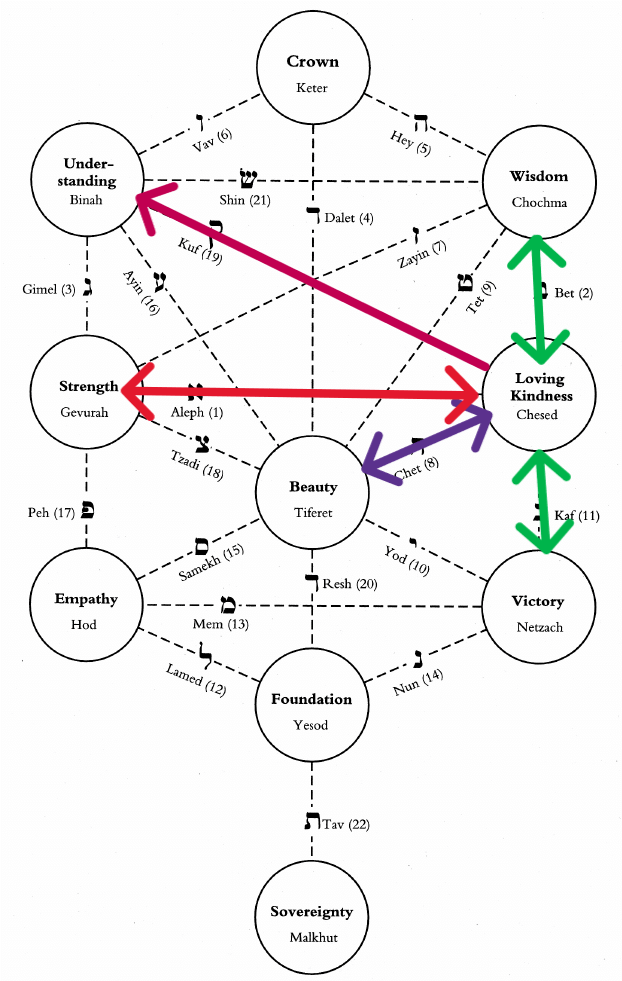
- #4: The Settled Intelligence: the sephirot Chesed itself
- #19. Intelligence of the Mystery of all Spiritual Activities Letter: Mem Alef Shin
- #12 Intelligence of Transparency: Letter: Gimel ג
- #26 The Renewing Intelligence: Letter: Dalet ד
- #21 The Desired and Sought Intelligence: Letter Zayin ז
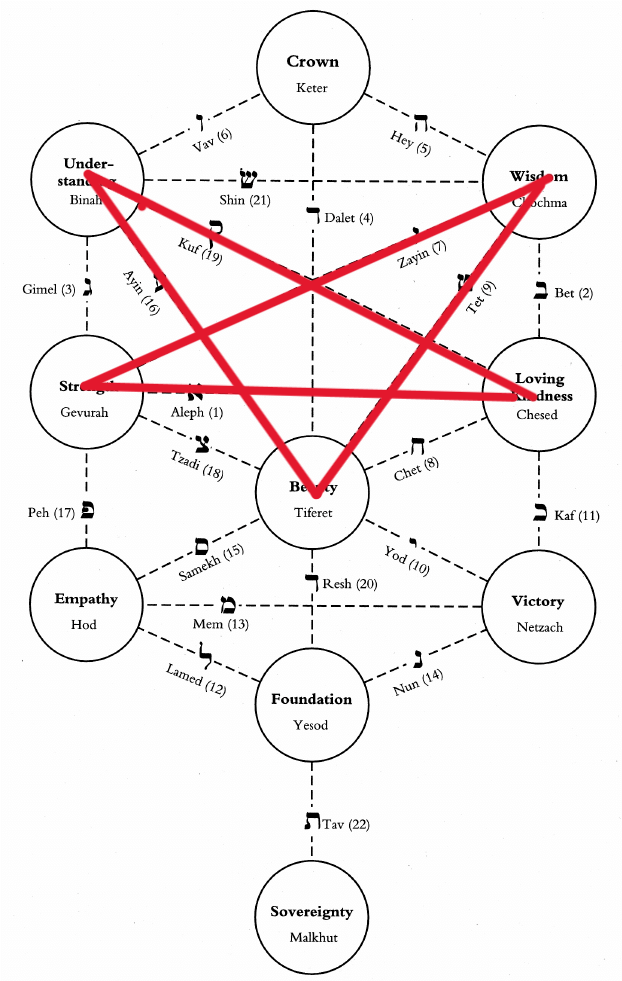
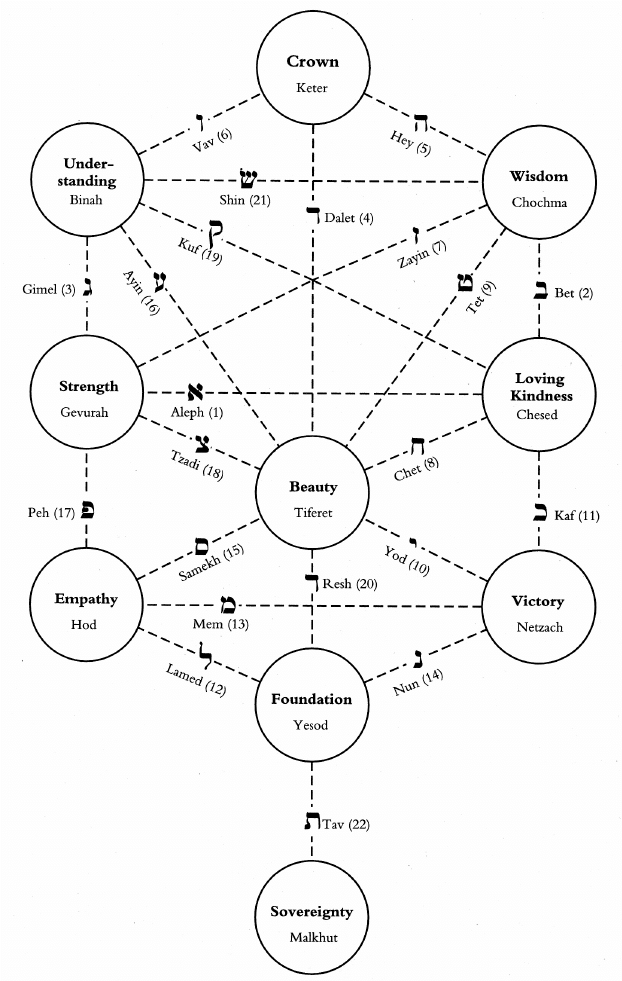
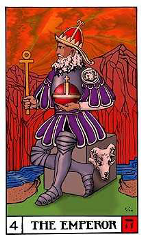
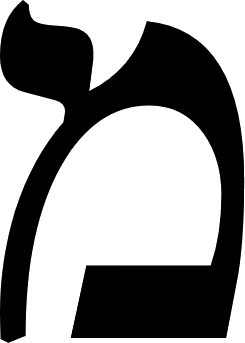
Chesed is the physical manifestation of the material universe, that which is able to be apprehended through the senses. Through the meeting of fire, water, and air, earth is formed. Chesed expresses the enclosure of the created universe in Time and Space. Chesed is connected to Gevurah by the horizontal path of Mem/Alef/Shin. The Emperor #4 card in Tarot is suggestive of a 2nd kingdom i.e., the world of Yetzirah and its meeting with the world of Beriyah, or the manner in which the theoretical is given its applications through tools and equipment. The horizontal path emanating from Chesed to Gevurah is influenced by the crossing over of the diagonal paths of Heh and Vav. These crossings suggest disruptions or diversions or perhaps choices for the individual consciousness to make in how it will view the world at this point, or perhaps they indicate choices that have already been made. The crossover point at Alef, the middle of the three Pillars, determines whether the path taken will be that of Heh or Vav.
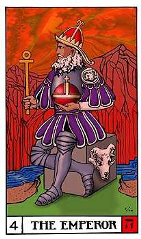
Chesed receives from Tiferet the qualities of Mercy and Kindness, but these qualities must confront the gloom that emanates from Chokmah. The illustration depicted here shows The Emperor’s throne as a cube with the head of a Ram on one of its sides. This suggests both the limited view that we as human beings are given of the physical universe and its truth. The Ram might also suggest that the sacrifice of animals is a ‘limited’ sacrifice of human beings, and that the whole of creation is a sacrifice on God’s part. The ritual of human sacrifice in some cultures is the attempt to mirror God’s actions that occur through the sacrifice of the second Person of the Trinity. The human sacrifice was always of the highest, purest, noblest individual that the particular society perceived itself as possessing. The illustration of the Tarot card of The Emperor #4 strongly suggests the element of Shin or fire. The Ram also signifies the sign of Aries, the first sign of the Zodiac, a fire sign in the Zodiac. This would indicate a union of Time and Space and a beginning of Time misunderstood as linear in form i.e., time as history.
Chokmah’s influence on Chesed is written about under the paths or channels emanating from Chokmah. How these influences are to be interpreted and understood depends on which element predominates in determining the path that is present.
The Fourth Path is named Measuring, Cohesive, or Receptacular; and is so called because it contains all the holy powers, and from it emanate all the spiritual virtues with the most exalted essences: they emanate one from the other by the power of the primordial emanation (The Highest Crown), blessed be it.
Alt. Trans. “The fourth path is named the overflowing consciousness because from it emanate all the holy powers, all the most ethereal emanations with the most sublime essences: they emanate one from the other through the power of the primordial emanator.”
Wescott trans. The Fourth Path is named the Cohesive or Receptacular Intelligence; and is so called because it contains all the holy powers, and from it emanate all the spiritual virtues with the most exalted essences: they emanate one from the other by the power of the Primordial Emanation. The Highest Crown. Keter.)
Case trans. The fourth path (Chesed or Gedulah, the fourth Sephirah) is called the Measuring, Arresting, Receptacular intelligence. and it is so called because from thence is the origin of all beneficent power of the subtle emanations of the most abstract essences which emanate one from another by the power of the Primordial Emanation.
Path 4. Settled Intelligence (Consciousness) (Sekhel Kavua): It is called this because all the spiritual powers emanate from it as the (most) ethereal of emanations. One emanates from the Other by the power of the Original Emanator, may He be Blessed.
The 4th Path: The Settled Intelligence
The fourth path or Chesed as the Sephirot itself, indicates the physical manifestations of all those things which we call “good” but which are not the Good itself. This is why Path #4 is also called Intelligence of the Overflowing Abundance. These goods are “shadows” of the Good i.e., ‘ethereal’, and thus may be said to be “apparitions”. It is the Good which is at the root of the “spiritual powers” emanating one from another (i.e. the ten sephirot) along this path or this state of consciousness. It is through the power of the “Original Emanator” (the Good) that the ‘spiritual powers’ are able to be drawn from the Other that is the physical Creation. How one translates the word ‘spiritual’ is tricky here, for sometimes the word is used interchangeably with what we would understand as ‘the will’. If we understand the will as Necessity, we can be clearer in our understanding of ‘spiritual’ (as ‘spiritedness’) here. This ‘spiritedness’ is associated with that part of the soul called by Plato the thymoeides.
There is a mediatory process going on here i.e., the Logos or the Original Emanator is the One who permits or allows or makes possible the manner in which the spiritual powers emanate from the Other. If such a mediatory process were not going on, the physical would reveal itself as only Severity and Force which it does do at times.
With the arrival of numbers and of the physical forms that can be measured with them (with Time) comes the manifestation of the being of the things of the world; with language and numbers we can “measure” the benevolence and abundance of God (?) in the created things of the world, and we can perceive the created world as a Paradise. In the West, this ‘overabundance’ of Nature was viewed as ‘scarcity’ historically. Through number we ‘arrest’ and bring to a stand, measure, then bring into a cohesion, and provide the boundaries which form the “receptacles” or “husks” of physical beings, the eidos or outward appearances of the things. From these boundaries or limits we can then “define” the things, separate and enclose the things, and distinguish them one from another. This makes Being more overt for us. But in this separation of things, we are at the same time hiding their unity, veiling the wisdom of the Whole and the Oneness of things. The spiritual becomes “ethereal”, and subject to dissolution.
This separation of things involves both time and space prior to the things’ coming into being, what the philosopher Kant called the pure ‘intuition’ or the “open region” of Being. As the things reveal themselves, the more God hides or withdraws. (We might see this as similar to the metaphor of “dark matter” which is currently used by astrophysicists to describe the universe as we ‘know’ it. It is said that what we see of the physical universe is only 5% of its true being. The other 95% is ‘dark matter’. It is dark because it lacks the illumination of truth or light.)
This withdrawal of God allows particulars to come to presence. The limiting aspect of Binah is not a cutting off of some thing i.e., in our de-fining of the thing we are not separating it from all of creation, but we are providing a site wherein and from where some thing commences and emerges as that which it is. This is what the word ‘sanctify’ means in Path 3: the making-possible of that which is on the basis of which beings as such and as a whole are determined for us. Time is the Fire of Shin moving through Binah along the horizontal line connecting Binah to Chokmah, and Space is the water of Mem flowing or emanating from Chokmah to meet the Fire of Binah. From Chokmah to Chesed, these elements are “carried” by the letter Gimel which means “camel”, and the letter Gimel also signifies the giving of the Creator.
The fourth path in the Hebrew Tree is represented by the letter Bet which means “house” in English. I have represented Beth as belonging to the 11th path representing Keter’s connection with Tiferet and with the Zodiac sign of Leo, the Lion, and the Sun. One enters the ‘house’ through a ‘door’, and this door is opened up for us by the beauty of the world, the influence of Tiferet which renders Mercy and Kindness to the ‘gloom’ of the Necessary. This opening of the door is accomplished by the piercing action of the letter Zayin which is the ‘sword’ or ‘arrow’ of Eros, which we understand as Love (and this is the reason why Eros and Cupid are seen with arrows, symbolically representing the piercing action of Love). The ‘doors’ of being are sometimes referred to as ‘steps’ in the writings, stages that may be used to spring forward and rise up or to step down and descend as the case may be.
Since Beth is the first letter of the Torah, of Genesis, and from it, it is said, all other letters derive, the movement of the Light from Keter to Tiferet is prior to that Light’s reaching Chesed from Chokmah. The knowledge of the Whole (or our attempts at gaining a knowledge of the Whole) is a borrowed light from the light of Keter that illuminates the darkness of Chakmah. The original Light of Keter is associated with the Sun, while the light that illuminates the darkness of Chakmah is associated with the Moon. The knowledge of the “enduring intellect” or the “settled intellect” is a ‘reflected light’ and is therefore associated with the Moon, and is also associated with Time. It is our knowledge of the Laws of Necessity which constitute our sciences and our arts, our historical knowledge. These are referred to as the seven pillars of wisdom, the areas of knowledge that we study. This knowledge is grounded in reason, knowledge of cause and effect, and is associated with the Will. This is what is understood as the principle of reason.
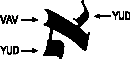
Whether Beth or Alef begins the Bible and thus the Torah is a matter of controversy. In the Sefer Yetzirah it is said that Alef is the source of all the letters and it begins its Torah with Alef as the first letter, but the Alef itself must be beyond both Being and Becoming, as language itself is beyond both being and becoming. Alef makes itself manifest when it has crossed both Mem and Shin and becomes the Logos or the Word i.e., the Bible as a metaphorical representation or ‘clothing’ of the created world itself. This crossing of the world of Atzilut to the world of Beriyah makes knowledge and understanding possible and it is The Book which makes knowledge possible, or at least the knowledge that can be shared in social discourse.
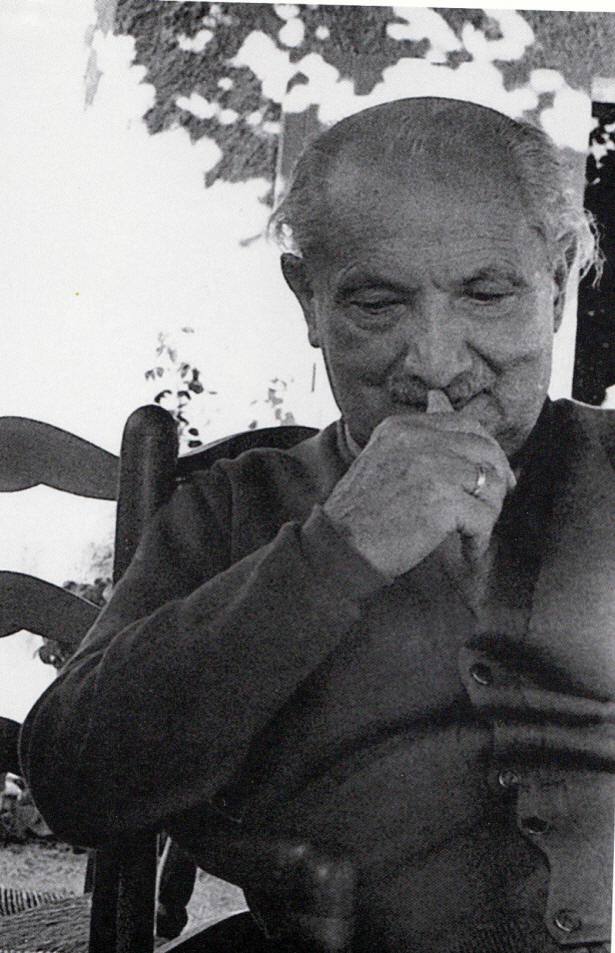
The German philosopher Heidegger once said: “Language is the house of Being; in its home humans dwell”. We may further extrapolate on Heidegger’s words by saying, “Logos is the house of being” for logos includes both language and number. One may go further and say that the human body is the logos or the “home” in which the embodied soul dwells.
The letter Bet is the first of the ‘double’ letters and is attributed to the path that crosses the mothers of Shin and Mem. My understanding is that Alef is the source of all the following letters and that it is Alef as Air, in combination with Mem as Water and Shin as Fire that creates the Bet which is Earth which is part of the Creation, and from the Earth proceeds Gimel which expands to Dalet. Alef yokes together the worlds of Tiferet (Beauty) and of Yesod (the Foundation) to the Light of Keter, and Bet is the emanation of the goodness that is the reflected light of Keter.
In the Hebrew Tree, Bet is said to cross the veil of separation between Chakmah and Binah as well as that between Chesed and Gevurah. Bet, when crossing the horizontal path from Chesed to Gevurah, would then be associated with the Moon, with the “reflected light”. The light of Keter and the ‘reflected light’ of Chokmah are at that point in the Tree of Life where there is a forking of the paths. The three Mother letters and their three paths are associated with the words “Elohim made”. They signify the three horizontal paths that cross over from right to left. They signify the passing from the worlds of Beriyah to Yetzirah to Asiyah and are associated with the combinations of Mem/Shin, Alef/Shin, and Mem/Alef respectively.
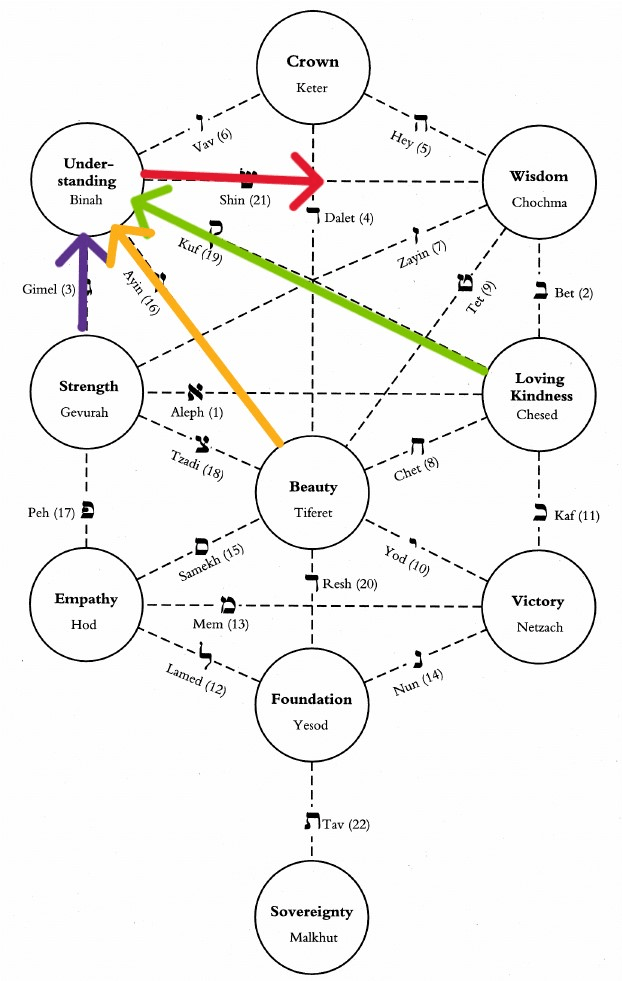
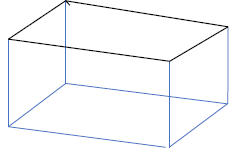
A cube is formed from the paths of Mem/Shin from Chakmah to Binah, to the path of Chakmah to Chesed represented by the letter Gimel, to the Alef/Mem crossover from Chesed to Gevurah, and the path of Peh from Binah to Gevurah. The influences from Chet and Tet are mingled with the influences from Binah and Gevurah to produce what we understand as conventional law or human-made law and help to create the ‘enclosures’ that both these letters signify. The indication is that Severity without Mercy in the law is not justice at all. This occurs when the path through Tiferet is ignored. But what or where is the mercy of the Law of Necessity? If anything, it is to be found in the Beauty of the World.
The 19th Path: Mem (Shin) Alef: Intelligence of the Mystery of Spiritual Activities
Path 19. Intelligence of the Mystery of all Spiritual Activities (Consciousness) (Sekhel Sod HaPaulot HaRushniot Kulam): It is called this because of the influx that permeates it from the Highest Blessing and the Supreme Glory.
The Nineteenth Path is the Intelligence of all the activities of the spiritual beings, and is so called because of the affluence diffused by it from the most high blessing and most exalted sublime glory.
Alt. Trans. “The nineteenth path is the consciousness of the secret of all spiritual activities. It is so called because of the influence disseminated by it from the highest blessing and the supernal glory.”
Case trans. The nineteenth path (Teth, joining Chesed to Gevurah) is called the Intelligence of the Secret of all spiritual activities, because of the influence spread by it from the supreme blessing and the supernal glory.
The 19th path is the second crossover path on the Tree of Life. The word ‘mystery’ can generally be understood as to mean ‘hidden’, something yet to be revealed. If one reads the path carefully, it suggests that having intelligence of the mystery of spiritual activities does not necessarily mean having ‘knowledge’ of those spiritual activities. One may be aware that spiritual activities are taking place, but what those spiritual activities are in their essence is still beyond one.
The influx permeating path 19 is the influence of the letter Alef which is a product of the Highest Blessing i.e., the covenant of God in the Logos and the ‘Supreme Glory’ that is reflected in the Beauty of the World. From this Highest Blessing, Mercy and Compassion are given to Chesed from out of the Creation itself i.e., Grace. The letter Alef is associated with the heart; and from this heart, the intelligence of the spiritual activities (which is Love) is given through Grace.
In the Tree of Life, all movements from Tiferet are downward movements i.e., they are ‘expansions’ from the core of the Divine Light. In the description of the 19th path, the downward movement is from Tiferet to Chesed, and from this movement, Chesed receives the qualities of Mercy and Kindness which is a ‘miracle’ in and of itself. The movement is from the depths or foundations to the circumference of the circle or the heights, an outward gyring expansion. It must be remembered that Tiferet is both a ‘height’ and a ‘depth’, and its movements are descents to the ‘depths’ of the other Sephirot which are on the outer circumference of the circle.
It is Tiferet that bestows the qualities of Mercy and Compassion upon Chesed which gives to the one on the journey the knowledge that it is Mercy and Compassion which are the chief characteristics of the Divine and are at the root of all spiritual activities that occur within Time and Space. The characteristics of the left side of the Tree of Life, Severity and Fear, are the characteristics of the Law of Necessity and of the knowledge that comes from the intelligence of those laws. One may choose to be a member of the ‘religion of slaves’ devoted to the will of God, or one may choose to be a ‘slave to a religion’, particularly one that believes it is in possession of the truth. This is the choice given to one at the fork of the Tree of Life.
The difficulty or confusion arises from the fact that the word ‘spiritual’ is sometimes understood and translated as Will (“spiritedness”) and sometimes understood and translated as Love (Eros). This problem is indeed at the core of how human beings experience and understand the manner in which human beings ‘stand’ in the open region of being and suffer that understanding so understood. It is this understanding that determines the Fate or destiny of human beings as societies and as individuals.
Human beings are ‘thinking beings’ (the animale rationale) only insofar as they “stand” in a clearing and lighting of being. Dialectics is the friendly conversation about beings in their being in the worlds of meaning that have been created through an interpretation and understanding of being. These dialectics or conversations are not possible through a collective where the language of rhetoric predominates (the letter Peh) and they are replaced by the Administrative or Serving Intelligence of path 32.
The history of thinking (the memory of Chokmah) is the receiving of the essence of what it means to be human in the destiny (The Star #17) of the Divine withdrawal and humanity’s wherewithal to bring language to beings in their being. This bringing of language to language and to beings is what we mean by meaning and the meaningful. The questioning of the Divine withdrawal can never come into view as a questioning and as that which is worthy of questioning.
Artificial intelligence – cybernetics – is the complete founding or grounding of beings as such and is contained and concluded in the domain of ratio as Reason and subjectivity through the principle of reason (nihil est sine ratione: nothing is without reason). When AI comes to develop its awareness based on power and will, the essence of humanity will be destroyed and its destruction will be welcomed by those human being themselves! This is what is at the core of nihilism. When the destiny of human beings is chosen through the letter Vav as the conjunction of human nature and being, God, in His withdrawal, gives the free open space that allows the creation of meaningful, possible essential possibilities which we call our ‘worlds’. These worlds are ‘real’ worlds as opposed to the created, imaginative worlds of artificial intelligence. It is the meaning of the Spanish proverb which goes “Take what you want said God; take it and pay for it”. We pay for it as Fate.
Gimel and the 12 Path: Intelligence of Transparency
The Twelfth Path is the Intelligence of Transparency, because it is that species of Magnificence called CHAZCHAZIT, which is named the place whence issues the vision of those seeing in apparitions. (That is, the prophecies by seers in a vision.)
Alt. Trans. “The twelfth path is called the transparent consciousness because it is the substance of that phase of majesty (Gedulah) which is called revelation (khazkhazit). It is the source of prophesies that seers behold in visions.”
Wescott trans. The Twelfth Path is the Intelligence of Transparency, because it is that species of Magnificence called Khazkhazit, the place whence issues the vision of those seeing in apparitions. (That is the prophecies by seers in a vision.)
Case trans. The twelfth path (Beth, joining Keter to Binah) is called the Intelligence of Transparency because it is the image of that phase of Gedulah literally (“of that wheeling of Gedulah”) which is called Khazkhazit, the source of vision in those who behold apparitions.
The 12th path proceeds from Chalkmah to Chesed and it is indicated by the letter Gimel. If the 11th path is concerned with the veil or hiddenness that is present before the Cause of Causes (the Good), then, presumably, one must have prior knowledge of what causation is in order to recognize that the Good itself, the Uncaused Cause, is hidden from our knowledge and must be experienced through faith alone. One cannot stand before the countenance of the Prince of Faces and not ‘die’ i.e., remain the individual that they are. The ‘dying’ can be either a metaphorical or a literal death.
The 11th path is concerned with the veil that is drawn between God and His creation through His creation: Nature does not lie, it hides. The particulars of Binah make being more overt for us; we see the world in its particulars. As these particulars reveal themselves in the creation of things and the created things, the more God withdraws or hides in order to allow those particular beings to be by their being able to come to presence for us. The ‘limiting’ of Binah through the Logos is not a “cutting off” of something but the site wherein and from where something commences and emerges as that which it is. This is what the Sanctifying Intelligence #3 means. Through the Logos’ relation to the Space that is Chokmah and the Time that is Binah, the a priori conditions for possibility and potentiality are given in the making-possible of that on the basis of which beings as such and as a whole are determined for human beings. This is the sephirot Chesed.
The 12th path, the Intelligence of Transparency, is that part of the process of thought that creates the images of representational thinking through the individual human being. It links Chokmah to Chesed. It is the ‘clothing’ which provides the outward appearance of things in their emergence but yet hides the essence of those things. The spiritual essence of things is “wrapped” or “assembled” so as to make them ‘present’ before us as a sum of their parts. It is called the ‘revelation’ in one of the translations above. It could also be called an ‘epiphany’.
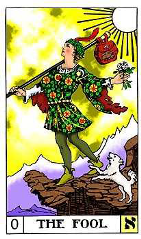
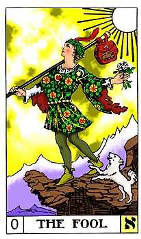
It should be noted that ‘apparitions’ are ‘shadows’, the outward appearance of a thing, not its essence. To see the thing’s apparition is to see it in the NOW. To make a pre-diction is to speak before the actual appearance of the thing/event/situation from the appearance of the thing as an ‘apparition’. To do so is to speak in ‘prophecy’, which is directed toward the Future. A ‘prophecy’ has past, present and future contained within it. The past is the Memory element of Chakmah, the looking back of The Fool as he proceeds with his leap; the present is the ‘revelation’ of the physical creation through the senses; and the future is the outcome of the said ‘visions’. It is the manner in which one perceives the visions that is most important. This process is at the root of what we call scientific and artistic ‘seeing’. (This is shown most clearly in Bk VII of Plato’s Republic where those who are able to make predictions about what shadows will pass by next are those who are most ‘honoured’ in the society or the Cave.) What we have here is the initiation of the possibility of both nature and freedom, nature being that constraint given by the Law of Necessity and freedom being the empowerment of the mind through the principle of reason as will to power which attempts to dominate and commandeer Necessity for human ends.
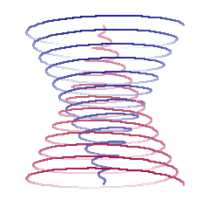
The translations provided of the 12th path indicate a number of possibilities for interpretation. In the Case translation, we are given the idea that 12th path is the site where one can apprehend that Gedulah or Chesed is the spiralling motion of the gyre (“that wheeling of Gedulah”) which is the source of the vision of those who behold the “apparitions” of “prophecies”. This beholding is how one views the world of Becoming. Some connections to the whirling dervishes of the Sufis may be made here, I think. The dervishes’ gyres are not an expansion but an attempt to attain a focus on the point of spirituality.
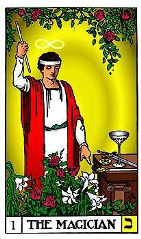
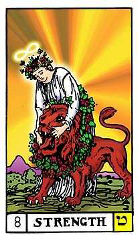
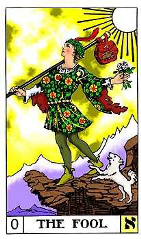
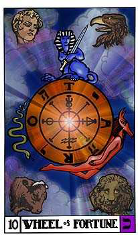
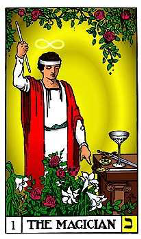
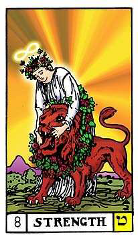
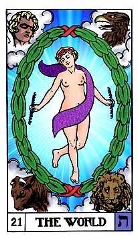
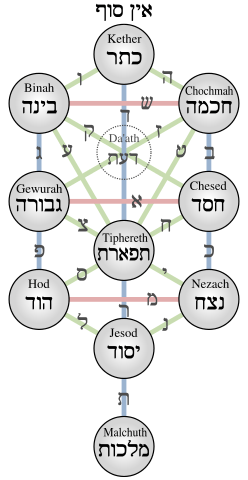
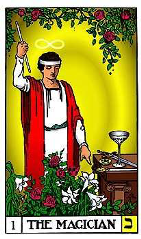
In the alignment of the Hebrew letters to the paths and to the Tarot, there seems to be some confusion with regard to the eleventh and twelfth paths. It would appear to me that The Fool is poised prior to the “fall into the abyss” that will become his or her journey and so stands at the top point of the Wheel of Fortune (#10) which represents the sephirot Malkhut. The Fool’s journey will be a journey upward. The Magician (#1) occupies the ascent position since he is associated with the fire of Shin and the element of air from Alef which, in turn, are associated with the human will. The Strength card occupies the descent position, but here the descent is on the part of God to deliver His grace to the figure of Strength who has completed the journey and receives the gift from the Divine. To align these with the Tarot, the Magician #1, the Strength #11, and The World #21 belong together, while The Fool #0, The Wheel of Fortune #10, and the Judgement #20 are also aligned. The choice of The Fool as he makes his leap into the abyss of being is represented by Path 25 The Intelligence of Trials and the Judgement card. The Magician is the technite who determines and directs the path of the Administrative or Serving Intelligence Path 32.
If we consider the Sephirot themselves to be paths, the twelfth path seems to refer to the emanations of Chakmah, which appropriately belong to The High Priestess (#2). The artist makes use of the influence of the archetypes of the unconscious and gives them shape and form in order to produce a work. The archetypes have always been present prior to the artist’s being. They are the “apparitions” of the visions that the artist sees; they are ‘shadows’, things without substance, for the things themselves belong to the future making of the artist. The “visions” are the things seen by the prophets and they are symbolic of the predictive speech of the prophets i.e., the “highest speech”. In our society today, science holds this highest honour for it, too, is “predictive speech” since it can pronounce on the outcomes of various events (as Plato foresaw in his allegory of the Cave).
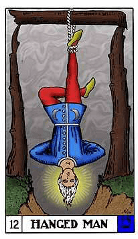
In this state, the artist is The Hanged Man #12, that stage prior to the process of “making” the thing, the stage prior to taking action, the “work” to be done which involves the “know how” of the artist. In the ascent direction, this would be the path leading from Malkhut to Hod or the completion of the thing, what was referred to as Justice previously and is rendered by The Judgement card #20. (This is the significance of the titles of the three great works of Kant: The Critique of Pure Reason, The Critique of Practical Reason, and The Critique of Judgement.) The words and numbers the artist needs are already present for him. His path is on the descent, since he is in the process of creation. The desire of human beings to create art and to procreate their species is the longing for the Incarnation, the longing for immortality and for unity with the One.
This descent that is creation is illustrated by the fact that the figure in The Hanged Man hangs upside down within the ‘enclosure’ represented by the letter Chet and which is Path 18 from Chokmah to Gevurah. This upside down position suggests that there is something askew with his seeing of things. What is askew is that the path that he is on is not influenced by Tiferet.
The woman of the Strength card, on the other hand, is “prudence” who embodies the Greek idea of sophrosyne or “nothing too much, nothing too little”. She is on the ascent viewing of the Tree of Life as she is concerned with the quality of things, the inner essence of things. The Magician #1 is concerned with those things that come to be through human making, while Strength #11 is concerned with those things that come to be through the Grace of God. It is here a matter of the viewing: whether one sees “as through a glass darkly”, which I believe is the essence of the viewing of The Magician, or whether one sees “face-to-face” the true essence of the things that are, which I believe is the essence of the viewing that is illustrated in the Strength card #11. The Strength is one of the bridges between the world of Yetzirah, the world of The Magician, and that of Beriyah (or between the world of Asiyah and that of Yetzirah?). Strength has the elements of the world of Atzilut as is shown in the light of the colour yellow being either the Sun or the Light of Keter.
The Life-force or the dynamis is what the Greeks understood as metabole or change, motion. All of us experience the whirling, swirling motion of Life as it realizes itself in Time. In terms of the Kabbalah, this is the influence of Keter. The “perception” of an “apparition” or a “vision” is that of the outward appearances of things. These are but the “shades” or “shadows” of things in the ascent. Again, the paths of ascension see the things in the “reflected light” of Malkhut, not in the true light of Keter. It is not until they pass through Tiferet that the perceptions of things are no longer that of shadows but of the true essence of the things. While the closest we have to our understanding of the “spiritual” is “energy”, the spiritual is, of course, more than that. We align energy with power, force and will, and this is the essence of the making of the Magician.
The Hebrew word translated as “revelation” here is khazkhazit which could also be understood as a “mirror” or a “gazing glass”. A mirror reflects things in reverse, and this could also account for the reversed position in The Hanged Man #12 card. This would seem to suggest a “lunar” influence or the influence of a “reflected light” and, indeed, a self-revelation. This is illustrated in The High Priestess #2 in the descending direction of the Tree of Life (if the descent begins at 10 + 2 = 12). This is the veil separating the Asiyah world and the Yetzirah world in the ascent, and the Beriyah world and Yetzirah world on the descent. The Beriyah world may be said to be the theoretical realm of the mind (the “pure reason” of Immanuel Kant) while the Yetzirah world is the realm in which the “formation” from the theoretical takes place (the “practical reason” of Kant). The suggestion here is that the outer world will take on the appearance that is given to it by the inner world of the mind for it is here that the formative seeing takes place. This is the site of the formative thinking where the making-possible of beings is determined for us.
The “revelation” here is the concrete, factual world of Yetzirah or “formation” and the “majesty” (Kingdom) that is the created world. To be “transparent” is to be able “to see through” or perhaps “to see by the means of…” One is reminded of the words of St. Paul: “For now we see as through a glass, darkly, but there we will see face to face.” (1 Corinthians 13:12) “Now I know in part; but then shall I know even as also I am known.” The “knowing in part” is represented by The Hanged Man #12, while the knowing “even as also I am known” is that of the Strength card #11. This passage is an indication that all human beings are “one”. Knowing this allows one to be capable of Mercy, Compassion and Loving Kindness which is indicated by the Sephirot Chesed, but this is only achieved through the prior influence of Tiferet.
The Letter Dalet and the 26th Path: The Renewing Intelligence

Dalet: Chesed > Netzach: Path 26: The Renewing Intellect (the “Knowledge of…”) Renewing Intelligence (Consciousness) (Sekhel MeChudash): It is called this because it is the means through which the Blessed Holy One brings about all new things which are brought into being in His Creation.
The Twenty-sixth Path is called the Renovating Intelligence, because the Holy God (blessed be He) renews by it, all the changing things which are renewed by the creation of the world.
Alt. Trans. “The twenty-sixth path is called the renewing consciousness because through it God, blessed be He, renews all things which are newly begun in the creation of the world.”
The Twenty-sixth path is associated with the Sephirot Yesod in the H.T., but I have associated it with the letter Dalet here. Yesod is called Foundation and is the root of the Middle Pillar in the Tree of Life. Its association with renewal connects with the fertility and abundance of Nature, the life-force (Genesis 1:26 — “And Elohim said: ‘Let us make man in our image, after our likeness; and let them have power over the fish of the sea, and over the fowl of the air, and over the cattle, and over all the earth, and over every creeping thing that creepeth upon the earth.'”). In the human body, it is associated with the reproductive organs and the erotic urges associated with the appetitive or epithymetikon part of the human soul.
The Three Pillars in the Tree of Life may be said to correspond to the tripartite soul and the tripartite forms that eros manifests. The microcosm is in the macrocosm and vice versa. The right pillar of Jakim may be said to correspond to the logistikon or “intelligence” part of the soul; the left pillar may be said to correspond to the thymoeides or “spirited” part of the soul; while the central pillar corresponds to the epithymetikon or “appetitive” part of the soul. Since we are embodied souls, all that we experience must first pass through the body.
The light of Yesod is the “reflected light” of Malkhut, not the original illuminating light of Keter. What this suggests is that the “consciousness” or the intelligence of Yesod is brought to one through the created things and not from the source of the light itself. We are able to see created things through the reflected light of the sun on them. Human beings, through their viewing of the things of the world, attempt to “purify” the things by shaping and commandeering them so that they can be made useful. As is stated in Genesis, human beings believe they have been given power over all that has been created. This has created the great confusion over whether this power is one of domination and commandeering, or whether this power is one of care and concern such as that shown by a farmer or a shepherd.
The Renewing Intelligence is that awareness that we have of that which brings something into being from out of itself, what is called Nature. The making of Nature contrasts with that making that is called technē, “in another and for another”. The Renewing Intelligence is related to sexuality and propagation, all living beings that come into being and pass away. The corresponding Genesis 1:26, indicates that here is the source of that will that becomes the metaphysics of the will to power. The 26th and 27th paths are interrelated. The root urge of sexuality and procreation is the desire for immortality, for perpetual renewal, on the appetitive part of the soul.
The Renewing Intelligence, being connected to Netzach, is the foundation of human being in Time, the ‘embodied soul’. The interpretations of the images of the Sephirot are written down, literally “written in stone”, so that they are preserved and are unified with the physical itself (materialism). How the “outward” world appears is determined by these interpretations which become the essence of the history of thinking. This is why Yesod is called “the sphere of the Moon”, the sphere of “reflected light”. This is the realm of what we call the “historical” where things come to be and pass away giving the illusion of “historical relativism”. Is this what we have come to understand as Hell? The focus of the “ego”? When Sartre says “Hell is other people”, his statement indicates this egoistic hell itself. When human sexuality or the erotic is divorced from the bearing of children (the desire for immortality) and the real sense of otherness that children must bring to sane human beings, then we have entered the very gates of Hell itself.

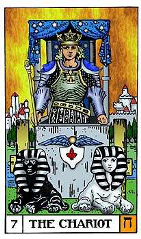
Dalet דלת is the word for “door”, “gate” and indicates resistance, a barrier, and the state of selflessness and humility needed to pass through it. It is the path from Chesed to Netzach. As a double letter, its movement can either be up or down; it is shaped like a step. Its shape is a vertical and horizontal line, and thus suggests the barrier between the world of Beriyah and the world of Yetzirah. Unlike the letter Chet, the letter Dalet is not enclosed. Dalet is also said to indicate a ‘poor’ person, and this may metaphorically be said to represent the ‘perfect imperfection’ of all human beings as they are realized in Netzach and in The Chariot #7. That which is imperfect cannot be the measure of anything. The letter also suggests how to pass through the gates to know one’s own mystery of being and return to the Good of the Aleph – the One source of all creation and being which is the goal of the teaching of the Sefer Yetzirah.
The Dalet is in the shape of a bent over human being, signifying humility and receptiveness. It represents Bitul, the self-nullification, or nullification of the ego, necessary to realize one’s inherent connection to the Creator. This self-nullification is not an easy task as Shakespeare’s King Lear and the writings of the saints tell us. Also, Dalet is the structure, form and the diligence required to receive the grace that the Divine is perpetually offering as is shown in the path of Beth.
Dalet is also Dalit דלית, the “poor man”, the one who receives from the benevolence or grace of the Creator through the Holy Spirit represented by Mem. It is the realization that as humans “we are not our own” and that we have nothing of our own, but are entirely dependent on the Creator and that every breath and movement is given to us from Him. It is the recognition of Otherness and the complete denial of the individual ego.
The Dalet can also represent a structure or gestell, the German word that the German philosopher Heidegger associates with technology and its enframing, but it is not a completed frame. Its form of a horizontal and vertical line represents a grid, giving structure to the form. It is shaped like a stair-step, the metaphorical structure required to be ‘lifted up’, or to ‘go up’, thus overcoming the resistance given by gravity and the law of Necessity. This would indicate that Dalet is also a means of ‘going down’, descending the Tree of Life as Dalet is one of the double letters. This would seem to suggest that the creation is a ‘door’, a barrier, but also a way through. The human body is a barrier but also a way through. This might associate the letter and its path to the belief of human beings’ giving ‘perfection’ to the created things and somehow completing them, for the creation and its beings are not wholly themselves. This completion of things will be discussed more fully when we speak of the Sephirot Hod.
On the individual level, Dalet shows the structure and stability required to receive. This reinforces that the path suggested by Dalet is from Chesed to Netzach, and that the structure spoken of is the human body, the human form, the ‘chariot of fire’. This would be on the side of “Mercy” on the Tree of Life. Placing Dalet on the path from Binah to Gevurah would suggest the side of “Severity”.
The Letter Zayin and the 21st Path: The Desired and Sought Intelligence
The Twenty-first Path is the Intelligence of Conciliation, and is so called because it receives the divine influence which flows into it from its benediction upon all and each existence.
Alt. Trans. “The twenty-first path is called the consciousness of the desired-which-fulfills because it receives the divine influence which flows into it as a result of the blessing it confers upon all that exists.”
Case trans. The twenty-first path (Kaph, joining Chesed to Netzach) is called the Intelligence of Desirous Quest, because it receives the divine influence, which it distributes as a blessing to all modes of being.
Path 21. Desired and Sought Intelligence (Consciousness) (Sekhel HaChafutz VeHaMevukash): It is called this because it receives the divine Influx so as to bestow its blessing to all things that exist.
Zayin – and Elohim “called the light Day, and darkness Night.” 1:5
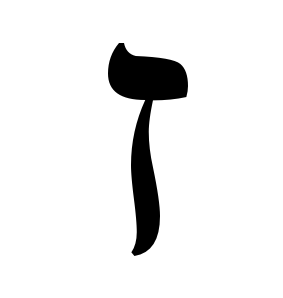
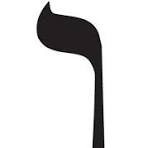
The Zayin is shaped like a sword and is the symbol of “spiritedness”, sustenance (endurance), and strife. It is the ‘erotic’ experienced as need through the thymoeidic or “spirited” part of the soul. It is the individual will. But this individual will is, paradoxically, bound up with and in strife with a will greater than itself, and both of these wills must be brought into a ‘conciliation’ . Zayin may be said to be the piercing arrow of Eros himself, that Love which is “the divine Influx” that bestows “its blessing to all things that exist”. This ‘conciliation’ bridges the gap that exists between intelligence and love in the thymoeidic and logistikon parts of the soul.
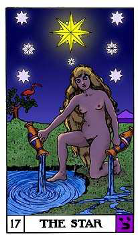
Paradoxically, the letter zayin also represents the 7th day of Shabbat (Sabbath), the day of rest and spirituality (or the “letting be” of passivity), which completes the process of the 6 days of creation or the strife of the day-to-day lives of human beings. We have to ‘work’ to survive. This would align with the tradition that the god Eros is “two-faced” or indicates two contrary things. The Zayin signifies Space and Time through the influence of Binah and Chokmah and their interactions with Tiferet. The Zayin is said to include the six days and six directions of physical reality (Creation), but it also stands as a unique 7th principle or energy, the spirit (or will) which activates the physical, the life-force (the will to power), and thus could be said to be associated with the will and desire (the will to power and the individual will, Eros and Psyche). The Life-force (the Will to Power) is connected with Time. The Zayin participates in the source of all movement, the Shin of the primordial fire, and is associated with Time and we can see this Shin influence from path 19 (The Star #17). We see here the mysterious connection between Being and Time. We see in it the mysterious connection between theoretical, projective thought that is the principle of reason and the creative imagination fused together into a principle of being.
The Zayin’s true foundations are in Love (Tiferet) and in Eros. The sword of Zayin is the arrow of Eros. The Zayin, whether it be a sword or an arrow, is a penetrating, an impregnating principle which activates the making of the artist or technē in the realm of Yetzirah. This making illustrates the connection between the creative and the erotic impulses, the erotic understood as both a principle of need and of fullness. The true artist creates out of need; the lesser artist does not do so. The contraries of rest and movement are symbolized in the letter, rest as an indication of fullness and movement as an indicator of desire or need.
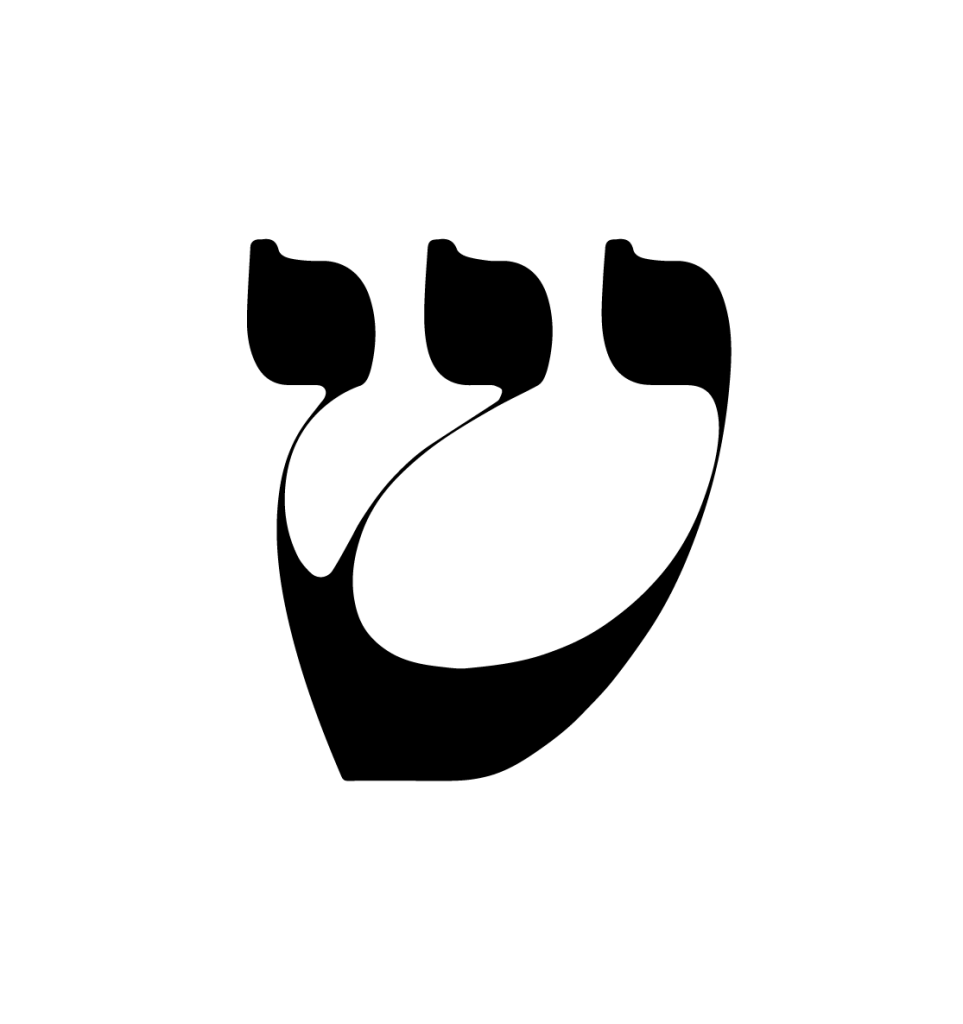
Zayin is drawn with a Vav with a crown on top of it. We have discussed Vav as the deceptive ‘hook’ that emanates from Tiferet to Binah. It is said that the crowns have been added to the Hebrew letters in order to ward off evil or destructive powers, and they are said to hide the hidden sources of Torah. These hidden sources derive from Tiferet, and the evil finds its roots in the seeing that is The Devil of Vav. This would appear to indicate that the Vav as interpreted above is correct, and that the hidden sources of the Torah are the Same as the Fortunate One, the Ain, indicated in the translation of the 16th path. Since Zayin is movement from Tiferet to Chesed with the element of fire predominating, this would suggest that the fire is a ‘holy fire’ directed by the Sun, while the Vav is the reflected light of the Moon. Both Zayin and Nun represent paths by means of which one penetrates through the enclosures that are represented in Chet and Tet, but what is clear is that these paths proceed through the physical, material world. The body is our infallible judge.
Shaped like a sword, the Zayin represents all movement. It represents the strife between contraries, the struggle for existence to overcome need, the struggle for sustenance (מזון). It is the struggle between Yaakov Jacob and the angel. The difficulty presented is that in the story of Jacob wrestling with the angel, Jacob is victorious. What is given to one when one is victorious over the Divine emissary sent to one?
Through the influence of Tiferet and its connection to the Logos, the Zayin is the power within a person that causes them to speak, initiate, and live; it is a principle of being. It is in this way that it is connected to the erotic understood in its broad sense, its true sense, which is the experience of need, the experience of our ‘perfect imperfection’. The crossing over to the path of Vav would appear to indicate that a choice has to be made with regard to how one will view the world. Human beings, it would appear, have a choice whether the Creation will be the paradise it is intended to be or something else altogether. This choice is presented to us in the NOW.
When we are speaking of the path of ‘desiring and seeking’, we are addressing the manner in which eros and the will come to operate in the human consciousness. We are speaking of the thymoeides and the logistikon parts of the human soul. The will is associated with the operation or application of reason and our principles of reason are based on 3 essential principles: the “I” principle or the ego cogito of the Self, the principle of contradiction where the human being is not to contradict themselves in speech, and the principle of sufficient reason (“nothing is without reason (or a reason)”. This principle of reason operates before thought and determines the manner of thinking; and it ascribes values to things i.e., it bestows the “blessing” on things which determine the end to which they will be ‘used’. It involves completion and ‘justice’.
The “divine influx” is the urge or need to seek that which is desired. That which is desired is that which is sought: “Where your treasure is there will your heart be also”. This seeking requires movement and movement is the influence of Mem and Shin. Mem deals with the appetites, while Shin deals with the ‘head’, thought or reason. How the Alef comes to operate here is key for the Alef is the heart. The ‘progress’ or ‘evolution’ of the human being is to be seen here. It is through the principle of reason that human beings use the things of the world to shape them into the ends that they have determined. This is the universe of Yetzirah. This influence of Shin comes from the meeting of Netzach with the crossover path from Hod to Netzach that is the 29th path (The Natural Intelligence) which shall be discussed below under the emanations from Netzach.
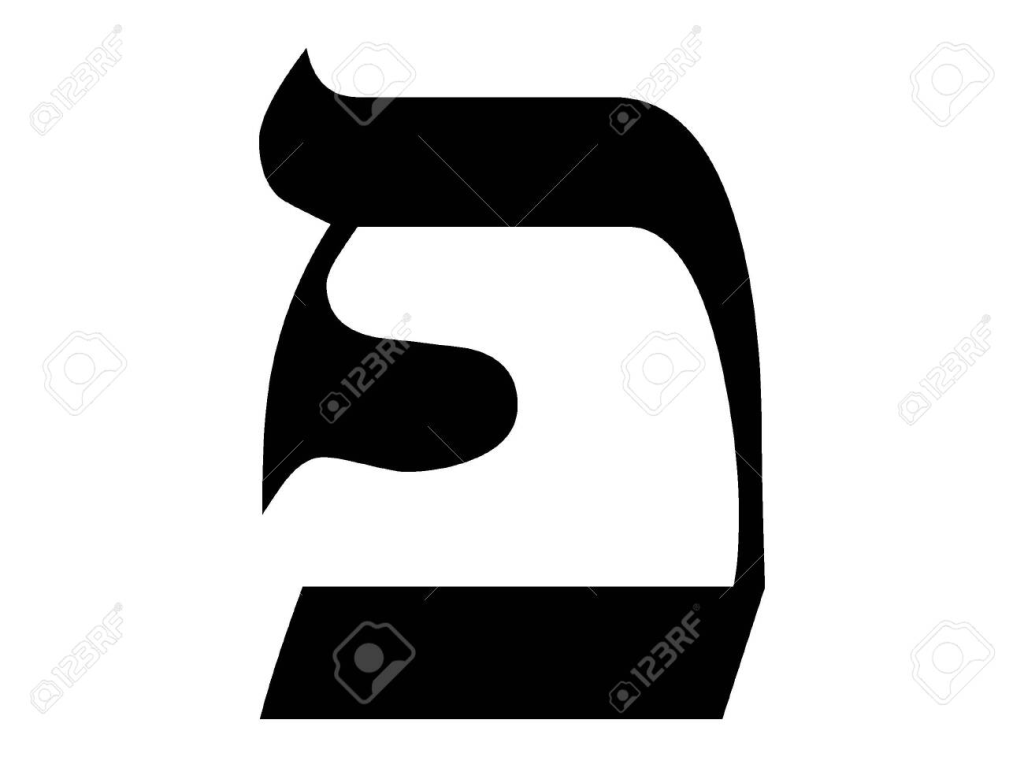
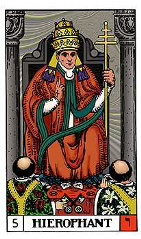
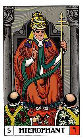
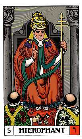
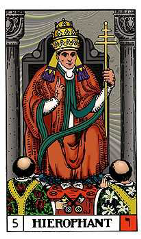
According to Case, the Twenty-first Path is associated with the letter Kaf (double 4) כ, meaning ‘hand’, and is the third path proceeding from Chesed. Once again, this may not be so. “Conciliation”, or more properly “Re-conciliation”, is a product of mediation, and neither Kaf nor Chesed contain these attributes. Kaf is one of the seven doubles in the Hebrew alphabet and so the possibilities of its interpretations are two-fold. According to the H.T., the 21st path is represented by the letter Peh, פ meaning ‘mouth’, also one of the double letters (double 5). The letter Peh might be more appropriately assigned to The Hierophant card #5 as both the ‘hand’ and the ‘mouth’ are “enclosures” in their own ways. The mouth through words can create ‘enclosures’ and from within these enclosures thought can be suppressed. “Conciliation” creates freedom; the enclosures of the mouth and hand suppress freedom.
The twenty-first Path is also called “the Desired and Sought Consciousness” and it expresses the need that human beings feel which requires the “divine influence” of Grace to reconcile this need and its fulfillment. The act of mediation, of conciliation or reconciliation, is the Grace of God; to be receptive to this Grace is meditation, thought, contemplation and prayer. But where and how does the light of the Grace of God become the darkness that is characteristic of our being in the world? Is it the point where one has to choose between Will and Love and how either of these two will allow the individual to conciliate or reconcile the ‘need’ that human beings experience in their perfect imperfection?
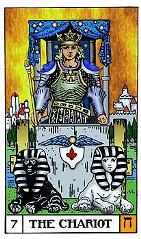
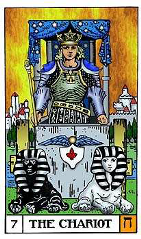
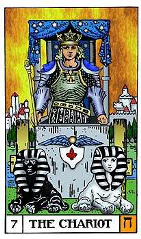
The Hebrew words within the paths are “hunger”, “thirst” and “emptiness” and they express the desire to fill that emptiness or absence which is the essence of human being and which leads the individual on a “quest” for their fulfillment. This need is experienced as erotic, and illustrates one of two sides of Eros who is described as Fullness and Need. That the word erotic has become associated with the sexual only in our modern age is an indicator of how far we have descended into the darkness. The created world and the human body are both the roots of this need and yet at the same time are the doorways to the fulfilment of the need. That need may be sexual or that need may be philosophical. The letter Dalet is appropriately associated with the Sephirot Netzach and the tarot card The Chariot #7, and I have associated it with path 26 The Renewing Intelligence. The letter assigned to The Chariot in the Tarot given in the illustration is Chet ח meaning ‘enclosure’ which indicates the human being as an ‘embodied soul’. There seems to be connections between ‘hand’, ‘mouth’, and ‘enclosure’ or ‘body’ and each of these may be said to be double-edged in that they are capable of both positive and negative outcomes.
The receptivity of the individual to the divine influence that is Grace is a paradoxical “passivity” i.e., it is an “active passivity” in that the human being “let’s be” (what we mean by the word “amen”) that which “flows into it” from Grace’s blessing on all that exists. It is the contrary of the Twentieth Path which is an “active” path of the preparation of things for their completion which is primarily a human doing, an act of human will. The “divine influence” is that which allows things to be, the perfection which allows ‘the rain to fall in equal amounts upon the just and the unjust’.
With the Twenty-first Path, things appear differently so that the Charioteer, the soul, is able to “see” the things in their essence and to recognize the “divine influence” present in them. They are able to recognize that the Divine Presence (parousia) in the created things of the world is not a noun but a verb, that the Grace offered by the Divine Presence is actively present at all times in the things of the world, and it is visible to us through their Beauty. This realization of the belonging together of things and their Being is brought to us by our thought, meditation, contemplation, and prayer. This contemplation or thinking is a grasping, a taking in, a letting come to presence for the thinking. It is a ‘beholding’. When this occurs, things “stand” before one in their essence and are recognized in their Otherness.
The Twenty-first Path is part of the linkage of the three Sephirot Chesed, Tiferet, and Netzach: seeing, beauty, and the confrontation that is the differentiation of thinking (the principle of reason as outlined here) and thought. The Tree of Life discriminates between that thinking which is active, commandeering, and domineering, which it places on the left-hand side and which belongs to Binah and to the letter Shin and thus to Will, and that thinking which is passive-receptive, which it places on the right-hand side and which belongs to Chakmah, Chesed, and Netzach. The bond between thinking and Being, or Life, is such that a meditative thinker is able to see things according to themselves, free from the dualities of subject-object (representational) thinking. Things cannot be understood by viewing them as ready-to-hand objects made present to fulfil our needs through the viewing that is the technological (the principle of reason). They must be allowed to be in their true being so that we may view the Divine Presence within them. This movement is the upward direction on the Tree of Life and its achievement is the true success or victory of the Charioteer. It is the victory over the individual self or ego.
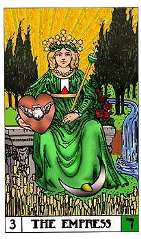
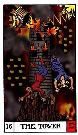
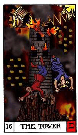
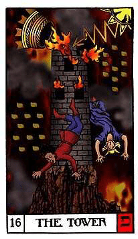
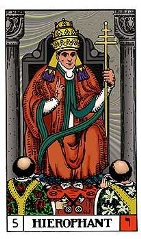
In Rawn’s commentary on the paths and their relation to the Hebrew tree, the 21st path is associated with the Tarot card The Tower #16, but the interpretation Rawn gives is that the lightning bolt which strikes the crown of The Tower comes from Gevurah, which is in error. It is Gevurah which is struck by the lightning. Gevurah is represented by The Hierophant #5, and The Tower is #15 (in my view of the Tarot), and it represents the necessary evolution of the false and sometimes delusional collective or cultish religious views, the views of those who think that they alone are in possession of the truth.

The lightning bolt descends from the Sun (Truth) which is associated with Tiferet and Keter, and below the lightning bolt is a representation of the Tree of Life on the right side and twelve representations on the left which could be twelve yods, or twelve “I”s or “egos”, the twelve houses of Israel (all of humanity) or the twelve signs of the Zodiac. The ten of the Tree of Life and the twelve on the left side of The Tower could be the twenty-two letters of the alphabet and implies speech’s ability to be both true and false. This could represent what occurs when one misunderstands the 32 paths of wisdom, so it is cautionary in nature. When the ego of the individual is enclosed within the mouth of the collective, stupidity is the result. Free thought ceases. Truth is the ‘uncovering’ of the things that are; falsehood is the ‘covering over’ of things that are not. Falsehood is at the root of all lies.
“The desire which fulfills” is the desire for the Good, that desire which can fulfil the need to overcome the imperfectability of human being which is our mortality. Gevurah is the terminus, the finality, the sempiternal nature of the Law of Necessity. It is connected to Hod > Justice which is the manifestation of the “plan” in its reality or ontic form (Mem). The Gevurah aspect of this ‘plan’ is realized in the creation of conventional laws and the political requirements that go into creating a society, a city, a polis.
The ‘desire which fulfills’ and the awareness of it is the ability to distinguish the Necessary from the Good, to have the ‘strength’ to overcome the desire to ‘consume’ or ‘eat’ (the association with the ‘mouth’, Eve’s eating of the apple of the Tree of Knowledge in the Garden of Eden and its association with the Fall of humanity) the beauty of the world rather than simply to contemplate it in wonder. The inability to do so causes one to succumb to the second temptation of Christ: that temptation that leads to power and prestige in the realm of the social. Without such awareness and knowledge, one may take the path of Peh. As procreation is the desire which fulfills the appetitive part of the soul, the ‘immortality’ that is found in fame and prestige is an attempt to fulfill the desire for immortality on the part of the thymoeidic part of the soul.
This would seem to imply that false views of the Sephirot result in disaster because they are a false faith. This would associate The Tower with the Tower of Babel, the attempt to build a stairway to the heavens without divine help, which is itself a metaphor for thinking that one has sole possession of the Truth. This is indicated by the letter Peh, meaning ‘mouth’, and would convey the false teachings issuing from the mouth. These false teachings are considered a “blessing on all that exists”; and from the view of the world as technological this may be rightly so, since the technological requires the oblivion of eternity and humanity’s conveying of ‘blessings’ (values) on all that exists. The ascent to “loving kindness and mercy”, God’s grace, is “a consummation devoutly to be wished” once one experiences the effects of The Tower.
The path’s language clearly describes a relation of mediation: the divine influence > comes about as a result of (effect of) the beauty of the world > which, in turn, is given to the soul through Love which is the blessing conferred upon all that exists (Grace). This point or path may be the key to the whole of the Sefer Yetzirah. The Lightning Bolt of Zeus (Keter) is not the product of Gevurah, but of the Divine will that destroys the delusions and illusions of those who think they can build a “stairway to heaven”. The Tower is the card of revolution: history. It is historical human being. It is movement, par excellence, and thus has an affinity to the letter Zayin. The ability to distinguish the necessary from the Good places one at the centre of the Wheel and one can view the world’s passing (at the same time, paradoxically) from the circumference of the sphere without being subject to its turning. (King Lear Act V Sc iii). By succumbing to the second temptation, one is constantly longing for the “meaning and purpose” of life which one must learn from Life itself, that it is Life itself.
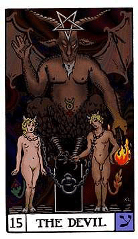
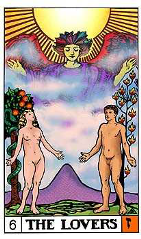
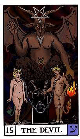
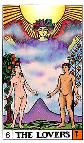
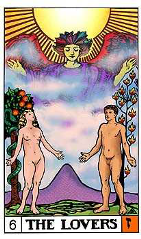
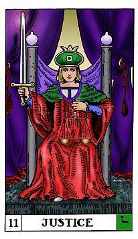
In the Tarot, The Lovers card #6 has the angel Raphael (or Eros)as the mediator between the Divine and the individual soul, the bringing together of male and female. Here it is assigned with the letter Zayin which literally translated means ‘manacle’. A manacle is used for a prisoner or a slave; here the bond between two people is one that is freely chosen. “What God has joined together let no man set asunder” is the bond freely chosen. The manacle is the bond that is not freely chosen or the bond that is chosen in error. This is why The Devil card #16 has the figures manacled to the black cube upon which the Beast roosts. It is an ersatz bond, a false covenant. The cube of The Devil is symbolic of how one views the world. The High Priestess #2 and The Emperor #4 sit upon cubes; The Chariot’s charioteer stands within a cube; The Hierophant sits upon a black throne which presumably has a black cube as its base which is hidden by the robes that he wears. The revealing of the truth of The Hierophant would reveal this black cube for the ‘reality’ of what it is.
Christ says: “For where two or three are gathered together in my name (Love), there am I in the midst (between, alongside) of them.” This is Christ as the Parousia and as the Logos. When Christ says this, He is speaking to a crowd of two or three hundred and is physically present. Whether Christ is present in a gathering of two or three hundred or thousand when He is not physically present is something of a difficult question which Catholics have attempted to answer through the ceremony of the Mass and the sacrament of Holy Communion celebrated therein, where Christ’s presence is called upon to be among a crowd. Christ’s presence as a mediator between two or three is ever-present and its realization is possible in the NOW.
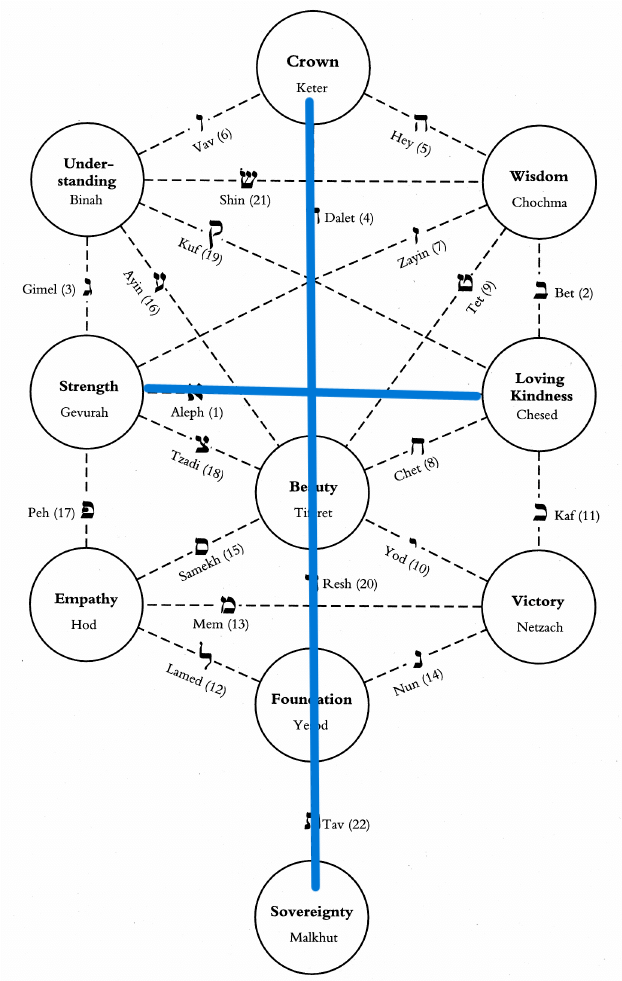
Paul Foster Case’s placing of The High Priestess at Tiferet does not seem to be correct. Her presence is more appropriate as a lead to The Emperor #4 and The Chariot cards #7. In each of these cards, the figure sits upon or stands within a cubic shape showing their ties to that dimension and the limitations of seeing the world. The cube is, symbolically, the body. This cubic shape is also shared by The Devil and, presumably, by The Hierophant. However, the line of Keter, Tiferet and Yesod as the Light, air, fire, beauty and foundation of the physical world does make sense if one aligns the cards to the central pillar of the Tree of Life. There are connections between The High Priestess, The Chariot and The Emperor cards for they share a number of visual similarities. When we view the Tree of Life, they are appropriately placed on the right side, on the side of Mercy and Kindness. But how is The Emperor to be seen as a benevolent ruler?
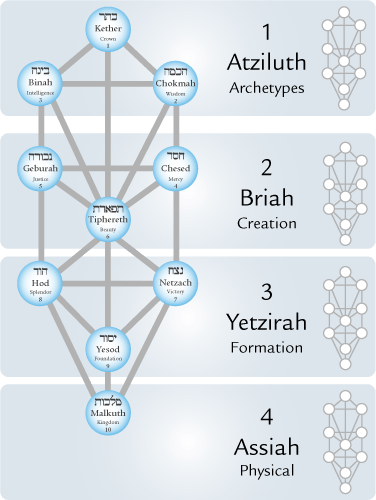
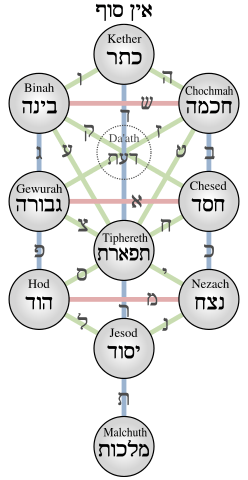
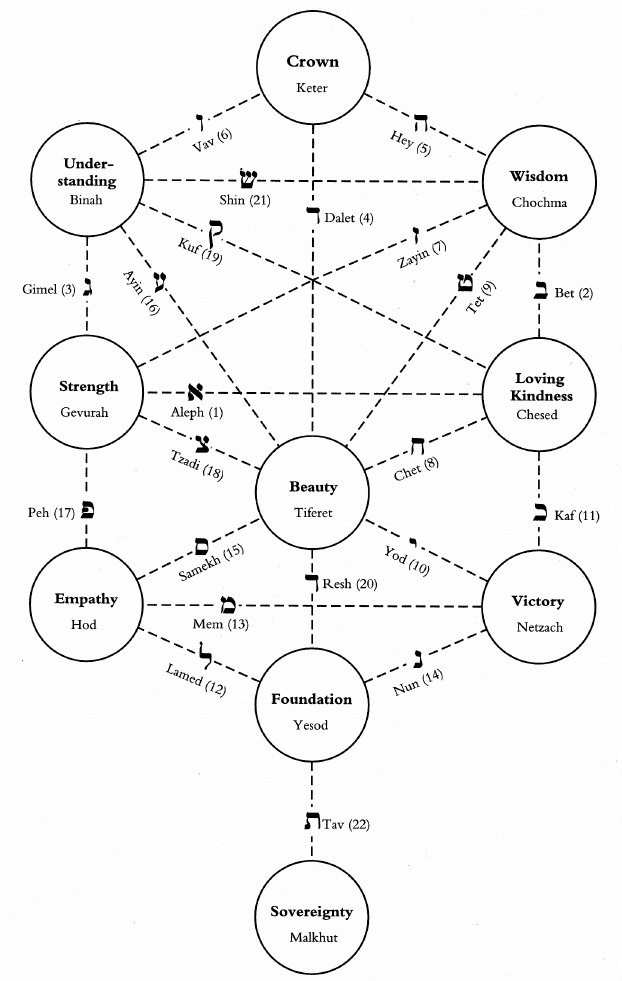
Keter is joined directly to Tiferet by the letter Alef, one of the three Mothers and the letter Beth after the light passes through the veil of creation or the Logos. Through Tiferet, it is also directly linked to Yesod or the Foundation of the physical world (the law of Necessity, the human body). Yesod is the Foundation created by Beauty; it is not the Foundation of Beauty. The letter Beth, meaning “house”, links Keter to Tiferet and thus to the Beauty of the World. Chakmah is linked to Binah by one of the three Mothers Alef Mem Shin (commentators usually assign Shin to this linkage, but I have assigned both Mem, emanating from Chakmah, and Shin, emanating from Binah to this horizontal path). Chesed is linked to Chakmah by the letter Gimel .Case in his outline appears to follow a chronological order to the Hebrew alphabet which is not how it is assigned to the Tree of Life nor to the movements or emanations within the sphere itself that is the world as it is presented in the Hebrew Tree and in the Sefer Yetzirah itself. The formation of language mirrors the process of the Creation itself, and this does not appear to be a step-by-step algorithmic process.
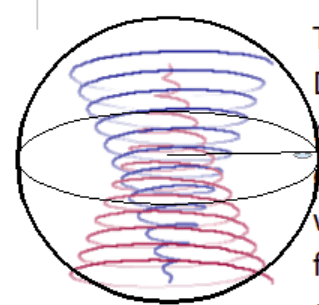
The movements outlined in the Tree of Life are circular or gyric formations. When one proceeds down the right side, one is following the downward movements of Mem or water until one reaches Malkhut, the widest expansion. When one reaches Malkhut, then the upward movement of Shin or fire takes over, and this is a narrowing or focusing of the gyres’ movements. It signifies a return to the Foundation or base. Movements along the paths themselves within the Tree will be determined by whether Mem as water or Shin as fire predominates; or in other words, whether the head (Shin), or the gut or appetite (Mem), or the heart (Alef), prevails. These gyring movements have also been referred to as “steps” (Plato’s Symposium and Diotima’s “ladder of love”) from which one may leap forward or upward or move in the opposite direction.
This has a number of similarities to the characteristics of The Chariot card of the Tarot and to The Sanctifying Intelligence that is third path of Wisdom. The “holy powers”, again, are the naming of things, that which distinguishes human beings from other created beings, our ability to use language and to name. From this path we can discern that the Gnostics were incorrect in attributing evil to the demiourgos, and that the created world is one of evil. It is more appropriate to say that the created world is one of deprivation and need, and this deprivation and need are present from the beginning of the creation. The created world is a ‘house’ that human beings make a ‘home’ through their use of language and number.
Paul Foster Case’s interpretations of the paths run into some contradictions here (or so it seems to me) because he confuses the Necessary with the Good. The Good is beyond Being. The Light that is Keter might be understood as the Highest Crown (since the crowns are associated with the letters), but they are not the “primordial emanation”. If The Fool is represented by the letter Alef and is the channel to Chakmah or Wisdom, how is “wisdom” being defined here? Wisdom is “knowledge of the whole” which The Fool clearly does not have unless we are considering reincarnation here (which is entirely possible. See Appendix regarding Plato’s writings on Republic and Phaedrus).
In this life, it is not given to human beings to have knowledge of the whole of which they are a part. With the creation of numbers, Time also comes into being; and with it the recognition of Space. With Time comes Memory. It is our Memory of the original Good that creates the absence/presence of human existence and the longing, the erotic need, for completion in the Good. The Beauty of the created world acts as a souvenir, a photograph or image that gives us the Memory of that which is our proper end or perfection, our completion. Thus, Plato can say: “Time is the moving image of eternity”, but it must be remembered that these images of which Time is composed are merely shadows. Our collective knowledge, which is our collective Memory, derives from our understanding of the Laws of Necessity, our opinions or doxa regarding Necessity. Necessity itself is the will of God i.e., Justice.


























 Theory of Knowledge: An Alternative Approach