A Commentary on “The Thirty-two Paths of Wisdom” Chapter Ten

The Emanations to and from Malkhut

Path 10. Scintillating Intelligence (Consciousness) (Sekhel MitNotzetz): It is called this because it elevates itself and sits on the throne of Understanding. It shines with the radiance of all the luminaries and it bestows an influx of increase to the Prince of Face(s).

The Tenth Path is the Resplendent Intelligence, because it is exalted above every head, and sits on the throne of BINAH (the Intelligence spoken of in the Third Path). It illuminates the splendor of all lights, and causes a supply of influence to emanate from the Prince of Countenances.

Alt. Trans. “The tenth path is called the resplendent consciousness because it is exalted above every head and sits on the throne of Binah. It is illuminated with the splendour of all the lights and it causes an influence to flow forth from the Prince of Countenances.”

Wescott trans. The Tenth Path is the Resplendent Intelligence, because it is exalted above every head, and sits on the throne of Binah (the Intelligence spoken of in the Third Path). It illuminates the splendour of all the lights, and causes an influence to emanate from the Prince of Countenances (Metatron, the Intelligence of the First Sephira, and the reputed guide of Moses.)

Case trans. The tenth path (the tenth Sephirah, Malkhut) is called the Resplendent intelligence and is so because it is exalted above every head. and sits on the throne of Binah. It illuminates the splendour of all the lights, and causes the flowing forth of influence from the Prince of Countenances.

Genesis 1.10 And Elohim called the dry land Earth, and the gathering together of the waters called He Seas; and Elohim saw that it was good.
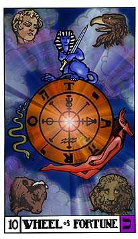
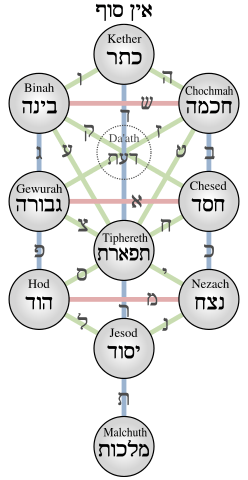
The Tenth and Eleventh paths must be held together and viewed simultaneously for they represent both the presence and absence of the Good that human beings experience in their being. As the Eight path of Hod deals with “artistic consciousness” and the making of things from something else and bringing those things to completion,  the Ninth path, Yesod, deals with “scientific consciousness” or “theoretical consciousness”, the principle of reason, the foundation of the design or plan, the “knowing” that allows the things to be brought forth into their truth. The Tenth path deals with the whole of our knowledge and understanding of the created world and combines both the influences of Hod and Yesod with the Sephirot of Malkhut. Malkhut and the tenth path are both an end and a beginning. Malkhut is referred to as ‘Kingdom’.

The “Prince of Countenances”, the Ain Sof, the Sephirot Tiferet (Metatron, an archangel who was reputed to be the guide of Moses in some commentaries) is the “beauty of the world” given to us in its outward appearance, its “countenance”, its “look”, and it is this beauty, this light, “which illuminates all lights” that are present in the “truths” that we discover of our world when we understand the essence of the Sephirot. Truth is One. This brings about the “supply of influence” or Love that emanates from the “Prince of Countenances” which illuminates all things through their beauty. He is Eros. When we refer to the beauty of things, we are not speaking of ‘aesthetics’, for aesthetics refers to objects and the objectification of things and to their viewing as objects. This is a sterile viewing. The experience of the beauty of the world is an erotic experience, for from it we experience the need and the longing for that which we lack which is the perfection with our union with the One.

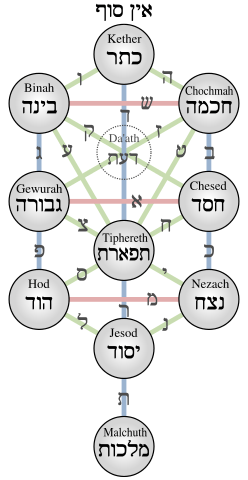
Malkhut is the root of the central pillar of the Tree of Life and receives the light of Keter through the logos or letter of the Alef as it passes through the Beauty (Tiferet) and Foundation (Yesod) of the created worlds of Beriyah, Yetzirah, and Asiyah. Malkhut is the only Sephirot not directly connected to Tiferet in some way. Nevertheless, it is indirectly connected. This indirect connection is through the ‘reflected light’ of the Moon that derives from the Sun.

Malkhut may be said to stand at or rest upon the boundary or as the boundary between the enumerated worlds of time and space, the throne of Binah (Beriyah, Yetzirah, and Asiyah), and the world prior to, or more primordial than these three, called Atzilut which is composed of Keter, Chalkmah and Binah. Chesed is that world that can be understood through numbers, the sequential world of cause and effect, past, present and future when we are viewing the creation side of the Tree of Life. Chesed and Gevurah represent the two poles that separate the contraries i.e. unity (identity) and difference, absence and presence, deprivation and fulfillment, in fact all ten of the contraries that the Pythagoreans are said to uphold as the nature of the things that are.

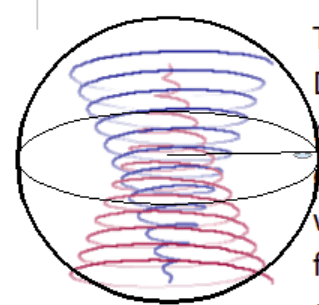
The Unity that is present in and is the essence of all things can be understood as the ‘friendship’ between God and His creation. This ‘friendship’ is experienced in the Now of Time, in every waking moment of one’s life. The distance separating God from His creation can be understood as cases of deprivation. They are indicative of the concealment of Truth. There are no true opposites, only cases of deprivation (time) and distance (space). In God’s withdrawal from Creation allowing it to be, the process of creation appears as an “expansion” of ever-widening gyres, and ever-widening expansion of space allowing the place for physical things to come into being. This illusion of “expansion” is mirrored in the narrowing of the gyres in the decreation that brings one closer to the Divine and whose journey is upward on the Tree of Life. Both of these processes occur simultaneously in the NOW.

The decreation of the self, which is a journey of de-gyring down to essence of the Divine, is shown in the principle of self-effacement or humility. It is done through the purification of the fire of Shin. God gives being to us in order that we should give it back to Him. If we compare it to fairy tales, it is like those points in the stories where the characters are tested, initiated, and baptized (Path #25 The Intelligence of Trials) where the acceptance of the gift given is bad or fatal. The character must experience a “death” of some kind and be reborn into a new self. These are referred to as “conversion” and “baptism”. (“Now there was a man of the Pharisees named Nicodemus, a ruler of the Jews. This man came to Jesus by night and said to him, “Rabbi, we know that you are a teacher come from God, for no one can do these signs that you do unless God is with him.” Jesus answered him, “Truly, truly, I say to you, unless one is born again he cannot see the kingdom of God.” Nicodemus said to him, “How can a man be born when he is old? Can he enter a second time into his mother’s womb and be born?” Jesus answered, “Truly, truly, I say to you, unless one is born of water and the Spirit, he cannot enter the kingdom of God. That which is born of the flesh is flesh, and that which is born of the Spirit is spirit. Do not marvel that I said to you, ‘You must be born again.’ The wind blows where it wishes, and you hear its sound, but you do not know where it comes from or where it goes. So it is with everyone who is born of the Spirit.” John 3: 1-8)

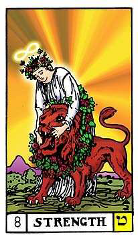
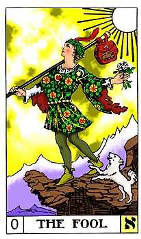
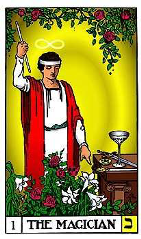
The virtue of humility is present in our refusal to accept the gift offered (see the George Herbert poem “Love” spoken about in Chapter Nine). It is captured in the Spanish proverb or saying: “Take what you want (the gift) said God; take it and pay for it”. God allows us to exist outside of Himself and it is for us to make the decision not to do so. This is part of the reason why The Fool #0 is represented along with The Wheel of Fortune #10. The Fool is an indicator of the journey both upward and downward. Humility is the refusal to exist outside of God, and this is why it is among the highest of the virtues. Humility is represented in those letters which can be reshaped into something else; Love can only penetrate where it is ‘soft’ as our myths and fairy tales tell us (Apollodorus in Symposium is described as a ‘softy’). The Fool’s choice is to become The Magician #1 (Will) or the Strength #11 (Love). In choosing to become The Magician #1, the Fool #0 chooses will to power; in choosing to become Strength #11, The Fool chooses mercy and kindness. Both are possible responses to the world.

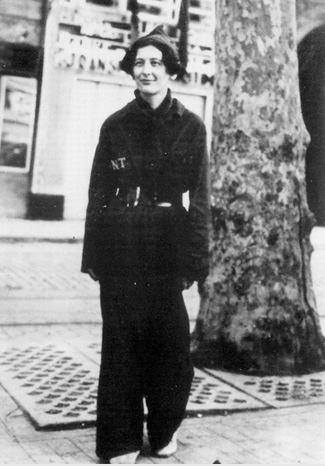
Simone Weil

“The throne of Binah” is the root or foundation of the “sanctifying intelligence” which is the foundation of faith. From this we may understand Simone Weil’s remark: “Faith is the experience that the intelligence is illuminated by Love.” Since science is not able to “measure and weigh” beauty with any precision or exactitude, it removes any concept of beauty or love from its understanding of things and turns things into “objects”. The ‘measuring and weighing’ of things is at the heart of the principle of reason, and the principle of reason is at the heart of power and of will to power.

It is not possible to love an object.  When we turn things into objects, Beauty then becomes “in the eye of the beholder”, something subjective; love becomes “blind”, not what it is in fact in its truth: a way of being and of seeing in the world. The removal of our response to the beauty of the outward countenance of things, or rather, the making of this response “subjective”, has resulted in the oblivion of eternity, the loss of the “holy” or sacred, the death of God, and the resulting loss of faith for many human beings. In the justice of our desire for mass learning, mass meaninglessness has been the result. What we have in its place is the sterility of the sciences, the nihilism of the will to will for its own sake (what we call “novelty”), and the devastation that is the wasteland that continues to grow and expand. But for all this, it remains a matter of choice in how one views the world as it is given to us. Beauty is not the enemy of rationality as that rationality is conceived to be in the modern, but is the foundation of that rationality that is our understanding and knowledge of the things that are. That foundation is the Law of Necessity from whence the principle of reason arises. This paradoxical relationship of Necessity and Beauty is the great mystery of Life.

Another name for Malkhut #10 is “The Bride”. This is to indicate that Malkhut includes the human body through the influence of Yesod. Christ says: “I am the Bridegroom and you are the Bride”, and the Bible speaks of “the bride of the Lamb”. Individual religious sects have interpreted this to refer to themselves exclusively i.e., that they are the “chosen ones”, they themselves and only themselves are “the bride of the Lamb” who will be united with the Redeemer and fulfil His covenant. In the Sefer Yetzirah, it is the whole of creation that is the Bride of Christ, including Jerusalem and Israel (although, of course, the Sefer Yetzirah does not refer to the Messiah or Christ directly since it was written before the birth of Christ). The original Sefer Yetzirah as well as the geometry of the Pythagoreans were intimations of Christianity prior to the birth of Christ historically. Christ’s historical birth is but one of many Incarnations of the Divine in history since the Divine is the parousia in the NOW. How these Incarnations have been ‘clothed’ is that which calls for understanding from all human beings.
Thomas Hobbes

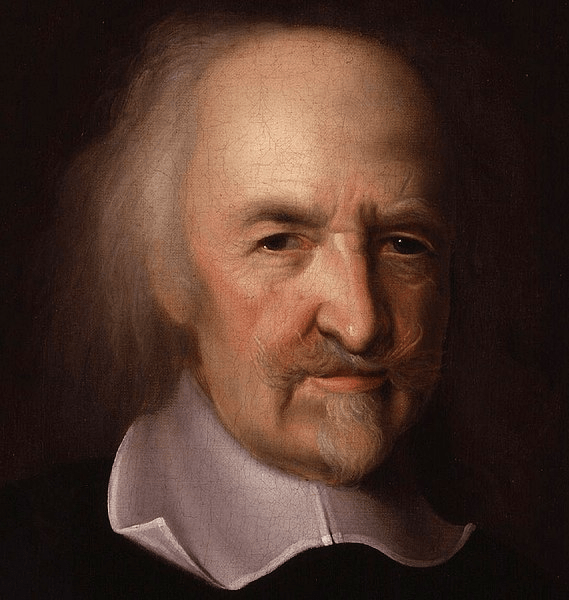
The other face of Malkhut is Leviathan or the beast dwelling in the depths of the seas. As an “embodied soul”, human beings dwell within “the belly of the beast”, and it is through our understanding and knowledge (Binah) that we can extricate ourselves from the beast. But whether or not this extrication occurs is up to the grace of God. The Renaissance English philosopher Thomas Hobbes’ book Leviathan is appropriately titled since it deals with the materiality of the Kingdom of Malkhut; and Hobbes, being an atheist, relies on “laws with teeth in them” (the offspring of Shin) to deal with what he perceives to be the reality of the human condition, that human life is “nasty, brutish and short”.

It is appropriate that the path from Hod to Malkhut, and Malkhut to Hod should have “teeth” as its symbol and The Fool #0 and The Magician #1 as its Tarot cards. The letter Shin means “teeth”, and it is the grinding of teeth that is symbolic of the decreation of the material world necessary to making progress on the upward path of the Tree of Life.  Shin is also the goad or prod that urges human beings on their journey to seek their perfection which is their completion. The deprivation of this perfection is the letter Qof which indicates a submission to the bestiality of our human being and the need to choose that which is higher in us.

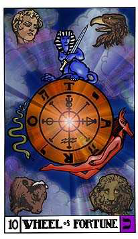
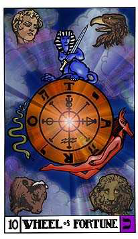
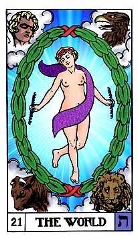
There are a number of similarities between the Wheel of Fortune card and The World card #21 in the Tarot. The World is signified by the letter Tav ת which means ‘good’; some commentaries have ‘torah’ as its meaning since they understand the Torah as the good. Tav is the last letter of the alphabet and is its completion. The whole is indicated as ‘good’. In The World card, The Wheel has been replaced by a wreath of laurel (?) leaves which signifies victory. The leaves are bound together by three ouroboros. There is a singular ouroboros at the top and two at the bottom. The single ouroboros is the boundary of the realm of Atzilut while the double represent the boundaries of Beriyah and Yetzirah.

The female figure in the centre holds two wands in her hands indicating that she holds both the directions of the life-force in balance, the creative and decreative aspects, the ‘buffets’ and ‘rewards’ of Fortune spoken of earlier, the movements upwards and downwards on the Tree of Life. She has a banner of purple, representing ‘majesty’ or ‘kingship’, moving in the TARO direction (from The Wheel of Fortune) indicating that she has mastery over the influences of the heart, body, mind and soul. The illustrator of the cards has chosen to include the four evangelists in this card as they are presented in The Wheel of Fortune. These are not necessary for the figure herself has achieved the position of being both in Time and out of Time simultaneously and she is capable of the gift of prophecy herself. It is interesting to note that the last letter of torah is Heh meaning ‘jubilation’, while the last letter of tarot is Tav meaning ‘good’. Both indicate a joy in the completion of the journey and both are possible ways of completing the journey.

The Letter Tav and the 30th Path: The General Universal Collective Intelligence
Path 30: Yesod to Malkhut/ Malkhut to Yesod

The Thirtieth Path is the Collecting Intelligence, and is so called because Astrologers deduce from it the judgment of the Stars, and of the celestial signs, and the perfections of their science, according to the rules of their revolutions.

(Alt. Trans.) “The thirtieth path is called the universal consciousness because through it, masters of the heavens derive their judgments of the stars and constellations, and perfect their knowledge of the celestial cycles.”

Path 30. General Intelligence (Consciousness) (Sekhel Kelali): It is called this because it is the means by which the astrologers collect their rules regarding the stars and the constellations, forming the theory that comprises their knowledge of the Ophan-wheels of the spheres.

The Thirtieth Path is associated with the letter Resh in the Western Tree of Case, and the Sephirot Malkhut #10 in the Hebrew Tree. In the W.T., it joins the Sephirot Hod to Yesod, or that which links the Tarot of Justice (historical study) to that of the Hermit, the Foundation, which is the root of the knowledge of that study.
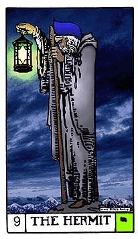
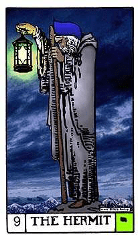
The Law of Necessity rules the realms of Time and Space, and the principle of reason is a result of the Law of Necessity. The path of General Intelligence deals with Space and Time as pre-requisites for the possibility of the things that are. The things that are do not exist outside of these realms, and so Space and Time are the “foundation” (Yesod) for the things that are. Yesod represents Path #9, Pure Intelligence which we have equated with the theoretical viewing of the sciences based as it is on the principle of reason. The Sephirot of The Hermit deals with calculations and reckonings of the movement of the spheres; and from these, predictions can be made, ‘prophesies’ if you like. In the calculation and reckoning, the astrologers, “the masters of the heavens”, are capable of having foreknowledge of the outcomes of things, both in the world at large and within the individual. The Hermit dwells within a dark, sterile world and his knowledge places him “on top” of that world for he can commandeer and manipulate the contents of that world. It corresponds to the study of Physics.

The Law of Necessity is the harsh Justice of the left-hand side of the Tree of Life; it is a Justice without Mercy, and knowledge of it is knowledge without Love or Beauty. Thus, we have the darkness, solitude and coldness represented by The Hermit #9 card. It is apt that the “new human being” created from such knowledge is a golem or “zombie”, for this it the ultimate result of this knowledge when it is not accompanied by the spiritual elements that are love and beauty.

Malkhut deals with the physical, material universe, Asiyah. Here, the world is conceived of as a combination of elemental forces capable of being grasped through calculation. It is the world of objectness and of cause and effect. It is world as text prior to the word, a world of numerical calculations. As Case points out, it is ruled by both Mercury and the Moon, calculation and illusion.

The 30th path deals with astrological knowledge or knowledge of space and time, cause and effect, what we today would call physics. The astrologers or Magi, through their calculations based on the geometry that supplies the division of the sphere into 12 “houses” and the movements of the seven visible planets through those houses, derive pre-dictive knowledge of human beings and beings. Their knowledge is inductive: moving from the particular to the universal. As predictive knowledge, it is the forerunner of what is now called science. Their knowledge is based on a ‘cosmic theology’ through their understanding of the divine circular motions of the luminaries of the heavens.

The mind is perceived as a “secondary organ”, not the ego cogito of Descartes, the supreme subjectum, but the combination of Fire, Water, Air to bring about Earth; the combination of mind and spirit embodied. Fire and Air embodied in Water produces Earth. The “dust” of the Earth was originally conceived as snow in the Sefer Yetzirah. Humas, the root of “humanity”, “human being”, relates to the creation of human beings. Historically, the search for the formula to invent a golem was founded in the various letters and incantations that were made by those who wished to do so. The golem is a being deprived of a soul and also deprived of language. Is the forgetfulness of language a foretelling of how human beings will become golems in a possible future?

Tav derives from “and Elohim saw every thing that He had made, and, behold, it was very good.” 1:31

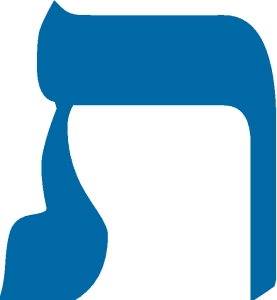
ת Tav is the last letter of the Hebrew Alphabet. Meaning “mark”, “sign”, “omen”, or “seal”, it is the symbol of truth, perfection, and completion. It represents the restoration Tikkun תיקון of all of existence. It is a return to the essence and purpose of one’s life. It represents completion, before beginning again with the original Oneness of the Aleph. Few human beings achieve this goal.

The Tav shows us that the end was set from the beginning, as Tav is the final letter of בראשית Beresheet, “In the Beginning”, the first word of the Torah/Bible. It is the idea that the Creator set in motion all of existence in order to reach a final state of perfection, the fulfillment of all of creation. It is also the completion of Truth אמת Emet.

However, as soon as the Tav is reached, we begin again immediately by going back to the Aleph, the one source of everything. Or in the Tarot, we move from The World #21 to The Fool #0. The end is never really the end, but the beginning of something new.

Tav represents the restoration Tikkun תיקון of all of existence and that is why it is associated with the path of Continuous Intelligence #31 and signifies both an end and a beginning. In the journey up the Tree of Life, it is a return to the essence and purpose of one’s life which is the restoration of the soul to the Divine. The Tav represents completion of the Creation cycle, before beginning again with the original Oneness of the Aleph and beginning the process of Decreation which is primarily the work of Shin. The design of Tav contains both Dalet and Nun, both suggesting endings, beginnings, and transformations. Dalet means either ‘riches’ or ‘poverty’, while Nun relates to ‘deceit’, death, transformation.

The idea that the Creator set in motion all of existence in order that it reach a final state of perfection, the fulfillment of all of creation which will be its cessation brings about the great contradiction of the Sefer Yetzirah. The Tav as the completion of Truth אמת Emet, or the Truth revealed is something to be experienced in the NOW. The Creation is viewed as an evolutionary progress towards perfection rather than being the image of that perfection itself i.e., the ‘moving image of eternity’.

The 32nd path, along with the 30th and 31st paths are the outline or nexus of the realm of Necessity. All created things must “serve” the law of Necessity whether it be seen as the force of gravity or those forces which operate within the realm of social interactions. The Law of Necessity is the Divine Will. The 32nd path is also a warning to those who are unable to distinguish between the Necessary and the Good because those who are unable to do so usually worship power.

The Letter Qof and the 31st Path: The Continuous Perpetual Intelligence

Path 31: Netzach to Malkhut

The Thirty-first Path is the Perpetual Intelligence; and why is it so called? Because it regulates the motions of the Sun and Moon in their proper order, each in an orbit convenient for it.

Alt. Trans. “The thirty-first path is called the perpetual consciousness. Why is it called this? Because it directs the movements of the sun and moon according to their natural order, each in its proper orbit.”

31. Continuous Intelligence (Consciousness) (Sekhel Timidi): Why is it called this? Because it directs the path of the sun and moon according to their laws of nature, each one in its proper orbit.

The Thirty-first Path of Wisdom is represented by the letter Qof and connects Malkhut to Netzach, Kingdom to Victory, or Victory to Kingdom. It emphasizes the animality or the embodiment of the human spirit or soul. The Law of Necessity is that which is permanent or “perpetual” in the laws of Nature amidst the metabole or change that is apparent in the growth and movement of created beings. It is one of the key types of knowledge in the universe of Asiyah. Along with the “serving knowledge” of the 32nd path and the calculative thought and knowledge of the numbers of the principle of reason in the 30th path, it illustrates the manner in which the realm of Necessity is to be understood. In the Hebrew, it refers to “perpetual time”, and we are reminded of Plato’s statement that “Time is the moving image of eternity”. It also seems to indicate the sempiternal world of created things in the manner understood by Aristotle.
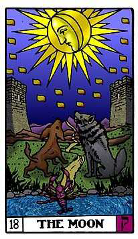
It is Time which directs the movements of sun and moon and gives to us our solar and lunar calendars. Time and Space are the ‘plan’ and components of Necessity and these determine the movements of the planets, the sun, and the moon. From this we may understand what Plato means when he says that “Time is the moving image of eternity”. As a ‘moving image’, Time is subject to change and this relates to its relationship with illusion and shadows. The Sun is the planet of Tiferet; the Moon is the heavenly body associated with Yesod. Here, the Justice of Necessity is seen through the Sun’s light i.e., the Beauty of the world. Qof translates as the ‘back of the head’, that which is hidden: in the Western tree, it connects Netzach to Malkhut. In the Hebrew tree, Qof is that world dominated by the reflected light of the moon and implies a will to power to transform the world in which human beings live. To see what is behind the back of the head requires a mirror.

ק The letter Khof (also spelled Kuf, or Qof) originally meant the back of the head, or the eye of a needle.  Khof also means “monkey”. It is the symbol of both the sacred Kedushah קדושה, and the profane – the Klipah קליפה, the peel, cover, or husk which represents the negativities in the world. Khof has to do with the requirement of removing the husk of the superficial to reveal the holiness within. The human body is a “husk” that encircles the part of the divine that is the soul within.

In Hebrew, Khof means monkey, a creature which resembles a human but is purely animalistic, with none of the higher capacities of a human. This indicates the requirement for human beings to overcome their purely animalistic nature and to emulate the image of the Creator, to realize their true spiritual nature beyond just the physical. The Khof is the only letter which extends below the line of the other letters, indicating descent into the lower world, but also the ability to ascend from there. The human body is the ‘cross’ that we all must bear.

Kuf is also הקפה – “circle”, “go around”; and I believe it indicates the beginning of the gyring motion that is necessary for movement within the Tree of Life itself. Khof represents all the cycles of nature, changing seasons, monthly and yearly cycles. It is the constant movement, circulation, and change of life. It could also represent that through the cycles of life that we see – evolution, growth, change, suffering, happiness, life experience – we are constantly worked on in order to evolve and realize our true spiritual nature.

The letter Khof (also spelled Kaf, Kuf, or Qof) originally meant “the back of the head”, or “the eye of a needle”.  (“Again I tell you, it is easier for a camel to go through the eye of a needle than for someone who is rich to enter the kingdom of God.” Matthew 19: 24) Khof also means “monkey”. It is said to represent “unholiness”. It is the symbol of both the sacred Kedushah קדושה, and the profane – the Klipah קליפה, the peel, cover, or husk which represents the outward presence of the things that emerge from the khôra, the ‘countenances’ of the outward appearances of things. Khof has to do with the requirement of removing the husk which hides the truth of that which lies within. The outward appearance is this husk.

In Hebrew, Khof means “monkey”, a creature which resembles a human but is purely animalistic, with none of the higher capacities of a human which are related to the logos i.e., language and number. In the Kabballah, this indicates the requirement for a human being to overcome their purely animalistic nature and to emulate the image of the Creator (the Logos) that is their true nature, to realize the true spiritual nature of their being an ‘embodied soul’. It is the essential strife of life. The Khof is the only letter which extends below the line of the other letters, indicating descent into the lower world, but also the ability to ascend from there. As such, it is related to the Sephirot Yesod (Foundation) and to the material world of Malkhut (Kingdom). The revealing of the true essence of what human beings are is in their wresting of truth from the husks of the world that hide it. When human beings cease to reveal truth, they succumb to their bestial, animal natures.

The design of the Kuf is similar to that of the Hei, the fifth letter of the Hebrew alphabet, but while the Hei is said to represent holiness and jubilation, the Kuf represents Klipah, or unholiness and despair. Both letters have three lines, two vertical and one horizontal. These three lines, depicting thought, speech, and action in the Hei, are also represented in the letter Kuf, but its three lines represent unholy thoughts, profane speech and evil actions. These negative qualities are illustrated within the actual form of the Kuf. Its long left leg plunges beneath the letter’s baseline. It represents one who ventures below the acceptable, an individual who violates the circumscribed boundaries of the laws of Necessity (primarily with regard to the social) and, thus, commits hubris for which an eventual nemesis must be paid.

It is also significant that the head of the Kuf is a Reish (in contrast with the Dalet that comprises the Hei). The difference between the Dalet and the Reish is the Yud in the right-hand corner of the Dalet, representing the individual while the Reish represents the collective . The Zohar, one of the principle sources for the medieval interpretations of the Sefer Yetzirah, calls the Kuf and the Reish the letters of falsehood and impurity. This associates the letter with The Moon #18 card of the Tarot. If the Reish represents the choice which has to be made regarding spiritual matters, then the Qof represents a false choice. 

When Christ said that “It is easier for a camel to go through the eye of a needle than for someone who is rich to enter the kingdom of God” (Mark: 10:25), He is referring to the difficulty that arises when one forgets to remember that “For where your treasure is, there your heart will be also”, and this is dependent on how one sees the world which, in turn, determines how one will be in the world. Christ follows his statement on the heart with “The eye is the lamp of the body. If your eyes are good, your whole body will be full of light” (Matthew 6: 21-22). This would suggest a connection between Kuf and Ayin.

Kuf is also הקפה – circle, go around, cycle. Khof represents all the cycles of nature, changing seasons, monthly and yearly cycles. It is in the realm of Time. It is the constant movement, circulation, and change of life. Kuf represents the ‘buffets and rewards of Fortune’ which are to be received with equal thanks (as Hamlet says of Horatio in the play, and this represents Horatio’s ability to be ‘just’ and in so doing, his capability of being a ‘friend’). The Kuf could also represent that through the cycles of life that we see – evolution, growth, change, suffering, happiness, life experience – we are constantly worked on in order to evolve and realize our true spiritual nature, the grinding of the teeth that are represented by the letter Shin which decreates that which we are and the suffering that we undergo. The gematria of Kuf is 100 and this aligns it with The Fool, The Wheel of Fortune, and The Magician cards of the Tarot. Because Kuf is associated with beginnings and endings, it is also associated with the Death card. This death can be both spiritual and physical and is significant of the need for conversion, baptism and rebirth.
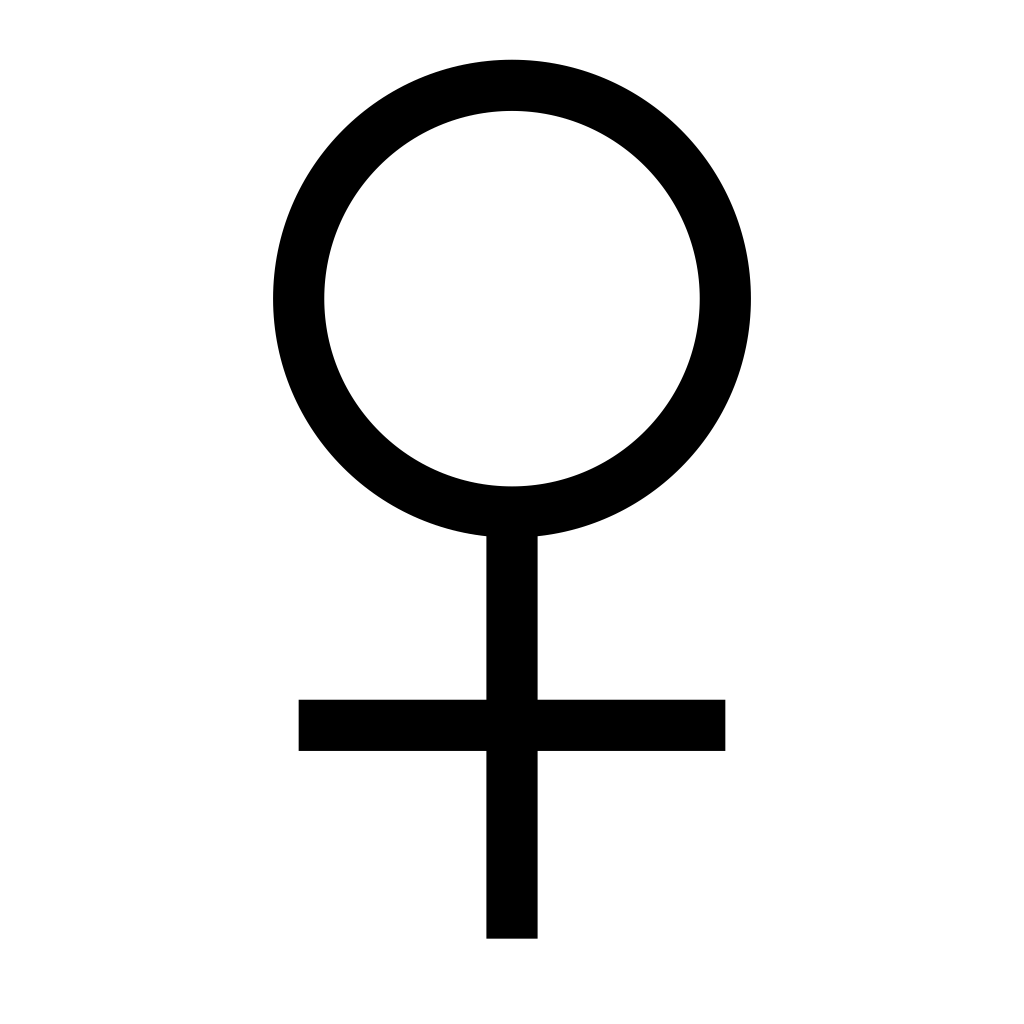
To see ‘the back of the head’ one requires a mirror, and with a mirror all things are seen in reverse. As discussed earlier, the symbol of Venus is a mirror and the danger of mirrors is that they can lead to narcissism. The point of the Shin is the destruction of this narcissism through the purification brought about by fire. Suffering and affliction are symbolized by fire, and the eschatological destruction of the world through fire is symbolic of this. The ‘world’ is the narcissistic ego of the Self that is the barrier to the unification with the Divine One. This may signify that viewing the material world only is a reversal of the true state of affairs i.e., there are realms beyond the material or the world of Asiyah.

The Letter Tzaddi and the 32nd Path: The Administrative, Worshipped, Serving Intelligence
Path 32: Malkhut to Hod

The Thirty-second Path is the Administrative Intelligence, and it is so called because it directs and associates, in all their operations, the seven planets, even all of them in their own due courses.

Alt. Trans. “The thirty-second path is called the serving consciousness because it directs the motion of the seven planets, each in its own proper course.”

The Thirty-Second Path is the Worshipped Intelligence (Consciousness) (Sekhel Ne’evad): It is called this because it is prepared so as to destroy all who engage in the worship of the seven planets.

The Thirty-Second path indicates the difficulties that are present in trying to determine what is the original text of “The Thirty-two Paths of Wisdom”. The first two translations above seem to indicate an awareness of, or consciousness of, the Law of Necessity, but the next translations indicate that this is what is ‘worshipped’ by those who are unable to distinguish the Necessary from the Good. 

This is the path proceeding from Malkhut to Hod, from Kingdom to Splendour. Here the Splendour referred to is that which is bestowed by social recognition and prestige, and we would like to consider this ‘justice’, that this prestige and recognition are somehow ‘apt’ or ‘fitting’ and that we are deserving of it. The Tower #15 card illustrated on the left shows the crown of the Kingdom blasted by the thunderbolt of Zeus, and with it the twelve Yods (perhaps representing the 12 houses of the Zodiac or the twelve houses of Israel) and the ten Sephirot of the Tree of Life. The illustrator has chosen the letter Peh to signify this card. In the interpretation offered here, the letter Peh refers to language as rhetoric, the language of assemblies. The lightning bolt is the nemesis which is the judgement of the Divine which is true Justice, and it proceeds from the Sun in the shape of a ladder that indicates the traditional interpretations of the movement along the Tree of Life.

The 32nd path is the outline of the realm of Necessity. All created things must “serve” the law of Necessity whether it be seen as the force of gravity or those forces which operate within the realm of social interactions and institutions. The Law of Necessity is the Divine Will. The 32nd path is also a warning to those who are unable to distinguish between the Necessary and the Good because those who do so usually worship power.

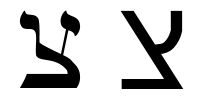
Tzaddi is the 18th letter of the Hebrew alphabet and corresponds to the 32nd path of Wisdom or the Administrative Intelligence. It signifies both “righteousness” and the “hunt”. Its literal meaning is “fish hook” and it is with the hook that one hunts and catches the “fish”, signified by the letter Nun. In Greek mythology, the goddess of the hunt is Artemis. She is also the goddess of the moon. The shape of the Tzaddi is a Nun with a Yod riding on top it. The gematria of Tzaddi is 90 suggesting a connection with Yesod and The Hermit card #9: 9 X 2 is 18, the number of The Moon. The contrary to The Moon is Justice (‘righteousness’) which is card #8 in Tarot. This seems to suggest that the ‘righteous’, the just, can be deceived by the ‘false speech’ and become hooked as a fish is deceived by the bait on the fish hook. There seems to be an alignment between the ‘false knowledge’ that belongs to The Hermit card of the Tarot and the ‘reflected light’ that is The Moon’s as opposed to the direct light of the Sun. The deception, the deceit and fraud, is also related to the ‘hiddenness’ that is an element of Tzaddi and of The Moon.

Tzaddi as ‘fish hook’ indicates the way in which we can become ‘hooked on’ or entrapped by the materialism of created things. ‘Fish’ is a sign of nourishment and fertility. Is Corporeal Intelligence (materialism) the first temptation of Christ : the turning of stones into bread? Is this the reality of what has been understood as ‘materialism’ in the West? This is, metaphorically, the belief at the bottom of the technological worldview.

PathLetterMeaningSymbol
Path 10. Scintillating Intelligence (Consciousness) (Sekhel MitNotzetz): It is called this because it elevates itself and sits on the throne of Understanding (Binah). It shines with the radiance of all the luminaries and it bestows an influx of increase to the Prince of Face(s).   Kingdom. The understanding determines the General Intelligence, the Corporeal Intelligence, the Palpable Intelligence, and the Continuous Intelligence. The world of materialism.The wheel. Movement of time within space.
Yesod to Malkhut Path 30. General Intelligence (Consciousness) (Sekhel Kelali): It is called this because it is the means by which the astrologers collect their rules regarding the stars and the constellations, forming the theory that comprises their knowledge of the Ophan-wheels of the spheres.  Tav תThe beginning in the end and the end in the beginning.The figure holds two wands in the shape of coils indicating she is able to draw energy from both sides of the turning sphere. She is a ‘prophet’. She is the opposite of The Hanged Man who is suspended from Chet. It is the Good which directs the paths of the sun and moon in their orbits according to the Law of Necessity.
Path 31: Continuous Intelligence (Consciousness) (Sekhel Timidi): Why is it called this? Because it directs the path of the sun and moon according to their laws of nature, each one in its proper orbit.Qof ק“Monkey”, the back of the head, the eye of the needle.18 Yods, the collective, society. The camel (Gimel) has an easier time passing through the eye of the needle than a rich person.
Path 32. Worshipped Intelligence (Consciousness) (Sekhel Ne’evad): It is called this because it is prepared so as to destroy all who engage in the worship of the seven planets.Tzaddi צ The magi or ‘wise men’ form their theories from the principle of reason which is based on, or finds its foundation in, the Law of Necessity. From the principle of reason, the ‘rules’ i.e., the laws, axioms, etc. of the universe are created according to human beings. From these rules, the “Apparative Intelligence” Path 24 can operate.


A Commentary on “The Thirty-two Paths of Wisdom”: Chapter Four

The Paths Emanating From Chesed

The paths emanating from Chesed are:

  • #4: The Settled Intelligence: the sephirot Chesed itself
  • #19. Intelligence of the Mystery of all Spiritual Activities Letter: Mem Alef Shin
  • #12 Intelligence of Transparency: Letter: Gimel ג
  • #26 The Renewing Intelligence: Letter: Dalet ד
  • #21 The Desired and Sought Intelligence: Letter Zayin ז

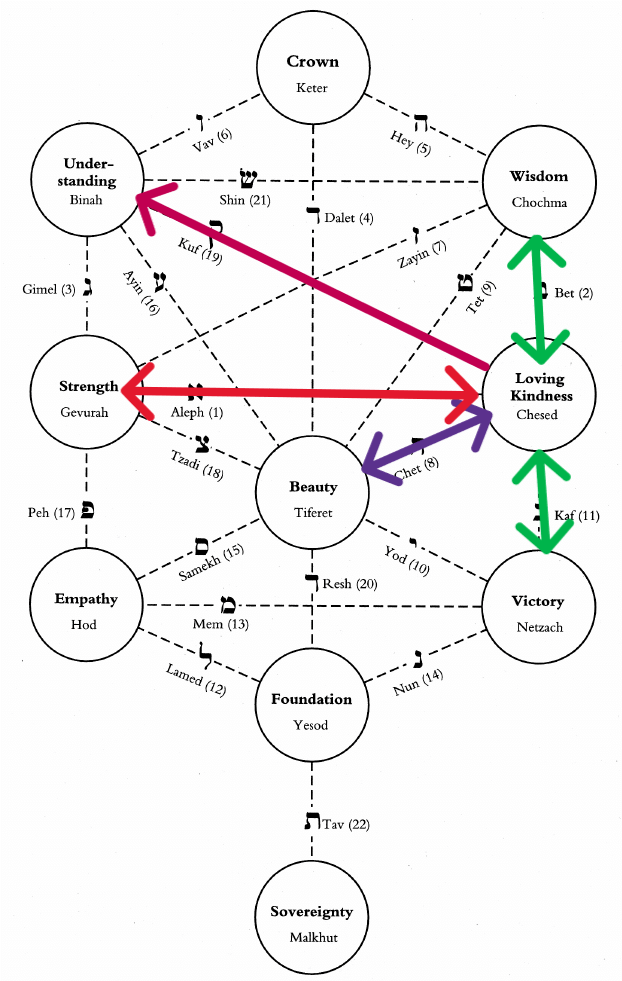
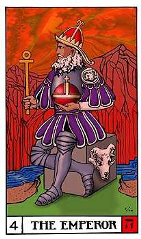
Chesed is the physical manifestation of the material universe, that which is able to be apprehended through the senses. Through the meeting of fire, water, and air, earth is formed. Chesed expresses the enclosure of the created universe in Time and Space. Chesed is connected to Gevurah by the horizontal path of Mem/Alef/Shin. The Emperor #4 card in Tarot is suggestive of a 2nd kingdom i.e., the world of Yetzirah and its meeting with the world of Beriyah, or the manner in which the theoretical is given its applications through tools and equipment. The horizontal path emanating from Chesed to Gevurah is influenced by the crossing over of the diagonal paths of Heh and Vav. These crossings suggest disruptions or diversions or perhaps choices for the individual consciousness to make in how it will view the world at this point, or perhaps they indicate choices that have already been made. The crossover point at Alef, the middle of the three Pillars, determines whether the path taken will be that of Heh or Vav.

Chesed receives from Tiferet the qualities of Mercy and Kindness, but these qualities must confront the gloom that emanates from Chokmah. The illustration depicted here shows The Emperor’s throne as a cube with the head of a Ram on one of its sides. This suggests both the limited view that we as human beings are given of the physical universe and its truth. The Ram might also suggest that the sacrifice of animals is a ‘limited’ sacrifice of human beings, and that the whole of creation is a sacrifice on God’s part. The ritual of human sacrifice in some cultures is the attempt to mirror God’s actions that occur through the sacrifice of the second Person of the Trinity. The human sacrifice was always of the highest, purest, noblest individual that the particular society perceived itself as possessing. The illustration of the Tarot card of The Emperor #4 strongly suggests the element of Shin or fire. The Ram also signifies the sign of Aries, the first sign of the Zodiac, a fire sign in the Zodiac. This would indicate a union of Time and Space and a beginning of Time misunderstood as linear in form i.e., time as history.

Chokmah’s influence on Chesed is written about under the paths or channels emanating from Chokmah. How these influences are to be interpreted and understood depends on which element predominates in determining the path that is present.

The Fourth Path is named Measuring, Cohesive, or Receptacular; and is so called because it contains all the holy powers, and from it emanate all the spiritual virtues with the most exalted essences: they emanate one from the other by the power of the primordial emanation (The Highest Crown), blessed be it.

Alt. Trans. “The fourth path is named the overflowing consciousness because from it emanate all the holy powers, all the most ethereal emanations with the most sublime essences: they emanate one from the other through the power of the primordial emanator.”

Wescott trans. The Fourth Path is named the Cohesive or Receptacular Intelligence; and is so called because it contains all the holy powers, and from it emanate all the spiritual virtues with the most exalted essences: they emanate one from the other by the power of the Primordial Emanation. The Highest Crown. Keter.)

Case trans. The fourth path (Chesed or Gedulah, the fourth Sephirah) is called the Measuring, Arresting, Receptacular intelligence. and it is so called because from thence is the origin of all beneficent power of the subtle emanations of the most abstract essences which emanate one from another by the power of the Primordial Emanation.

Path 4. Settled Intelligence (Consciousness) (Sekhel Kavua): It is called this because all the spiritual powers emanate from it as the (most) ethereal of emanations. One emanates from the Other by the power of the Original Emanator, may He be Blessed.

The 4th Path: The Settled Intelligence

The fourth path or Chesed as the Sephirot itself, indicates the physical manifestations of all those things which we call “good” but which are not the Good itself. This is why Path #4 is also called Intelligence of the Overflowing Abundance. These goods are “shadows” of the Good i.e., ‘ethereal’, and thus may be said to be “apparitions”. It is the Good which is at the root of the “spiritual powers” emanating one from another (i.e. the ten sephirot) along this path or this state of consciousness. It is through the power of the “Original Emanator” (the Good) that the ‘spiritual powers’ are able to be drawn from the Other that is the physical Creation. How one translates the word ‘spiritual’ is tricky here, for sometimes the word is used interchangeably with what we would understand as ‘the will’. If we understand the will as Necessity, we can be clearer in our understanding of ‘spiritual’ (as ‘spiritedness’) here. This ‘spiritedness’ is associated with that part of the soul called by Plato the thymoeides.

There is a mediatory process going on here i.e., the Logos or the Original Emanator is the One who permits or allows or makes possible the manner in which the spiritual powers emanate from the Other. If such a mediatory process were not going on, the physical would reveal itself as only Severity and Force which it does do at times.

With the arrival of numbers and of the physical forms that can be measured with them (with Time) comes the manifestation of the being of the things of the world; with language and numbers we can “measure” the benevolence and abundance of God (?) in the created things of the world, and we can perceive the created world as a Paradise. In the West, this ‘overabundance’ of Nature was viewed as ‘scarcity’ historically. Through number we ‘arrest’ and bring to a stand, measure, then bring into a cohesion, and provide the boundaries which form the “receptacles” or “husks” of physical beings, the eidos or outward appearances of the things. From these boundaries or limits we can then “define” the things, separate and enclose the things, and distinguish them one from another. This makes Being more overt for us. But in this separation of things, we are at the same time hiding their unity, veiling the wisdom of the Whole and the Oneness of things. The spiritual becomes “ethereal”, and subject to dissolution.

This separation of things involves both time and space prior to the things’ coming into being, what the philosopher Kant called the pure ‘intuition’ or the “open region” of Being. As the things reveal themselves, the more God hides or withdraws. (We might see this as similar to the metaphor of “dark matter” which is currently used by astrophysicists to describe the universe as we ‘know’ it. It is said that what we see of the physical universe is only 5% of its true being. The other 95% is ‘dark matter’. It is dark because it lacks the illumination of truth or light.)

This withdrawal of God allows particulars to come to presence. The limiting aspect of Binah is not a cutting off of some thing i.e., in our de-fining of the thing we are not separating it from all of creation, but we are providing a site wherein and from where some thing commences and emerges as that which it is. This is what the word ‘sanctify’ means in Path 3: the making-possible of that which is on the basis of which beings as such and as a whole are determined for us. Time is the Fire of Shin moving through Binah along the horizontal line connecting Binah to Chokmah, and Space is the water of Mem flowing or emanating from Chokmah to meet the Fire of Binah. From Chokmah to Chesed, these elements are “carried” by the letter Gimel which means “camel”, and the letter Gimel also signifies the giving of the Creator.

The fourth path in the Hebrew Tree is represented by the letter Bet which means “house” in English. I have represented Beth as belonging to the 11th path representing Keter’s connection with Tiferet and with the Zodiac sign of Leo, the Lion, and the Sun. One enters the ‘house’ through a ‘door’, and this door is opened up for us by the beauty of the world, the influence of Tiferet which renders Mercy and Kindness to the ‘gloom’ of the Necessary. This opening of the door is accomplished by the piercing action of the letter Zayin which is the ‘sword’ or ‘arrow’ of Eros, which we understand as Love (and this is the reason why Eros and Cupid are seen with arrows, symbolically representing the piercing action of Love). The ‘doors’ of being are sometimes referred to as ‘steps’ in the writings, stages that may be used to spring forward and rise up or to step down and descend as the case may be.

Since Beth is the first letter of the Torah, of Genesis, and from it, it is said, all other letters derive, the movement of the Light from Keter to Tiferet is prior to that Light’s reaching Chesed from Chokmah. The knowledge of the Whole (or our attempts at gaining a knowledge of the Whole) is a borrowed light from the light of Keter that illuminates the darkness of Chakmah. The original Light of Keter is associated with the Sun, while the light that illuminates the darkness of Chakmah is associated with the Moon. The knowledge of the “enduring intellect” or the “settled intellect” is a ‘reflected light’ and is therefore associated with the Moon, and is also associated with Time. It is our knowledge of the Laws of Necessity which constitute our sciences and our arts, our historical knowledge. These are referred to as the seven pillars of wisdom, the areas of knowledge that we study. This knowledge is grounded in reason, knowledge of cause and effect, and is associated with the Will. This is what is understood as the principle of reason.

Whether Beth or Alef  begins the Bible and thus the Torah is a matter of controversy. In the Sefer Yetzirah it is said that Alef is the source of all the letters and it begins its Torah with Alef as the first letter, but the Alef itself must be beyond both Being and Becoming, as language itself is beyond both being and becoming. Alef makes itself manifest when it has crossed both Mem and Shin and becomes the Logos or the Word i.e., the Bible as a metaphorical representation or ‘clothing’ of the created world itself. This crossing of the world of Atzilut to the world of Beriyah makes knowledge and understanding possible and it is The Book which makes knowledge possible, or at least the knowledge that can be shared in social discourse.

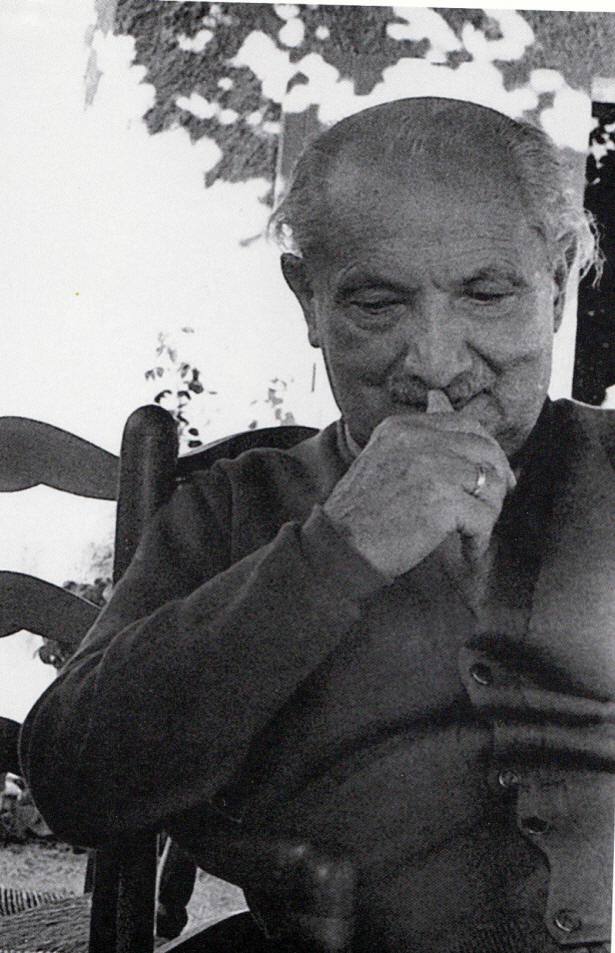
Martin Heidegger

The German philosopher Heidegger once said: “Language is the house of Being; in its home humans dwell”. We may further extrapolate on Heidegger’s words by saying, “Logos is the house of being” for logos includes both language and number. One may go further and say that the human body is the logos or the “home” in which the embodied soul dwells.

The letter Bet is the first of the ‘double’ letters and is attributed to the path that crosses the mothers of Shin and Mem. My understanding is that Alef is the source of all the following letters and that it is Alef as Air, in combination with Mem as Water and Shin as Fire that creates the Bet which is Earth which is part of the Creation, and from the Earth proceeds Gimel which expands to Dalet. Alef yokes together the worlds of Tiferet (Beauty) and of Yesod (the Foundation) to the Light of Keter, and Bet is the emanation of the goodness that is the reflected light of Keter.

In the Hebrew Tree, Bet is said to cross the veil of separation between Chakmah and Binah as well as that between Chesed and Gevurah. Bet, when crossing the horizontal path from Chesed to Gevurah, would then be associated with the Moon, with the “reflected light”. The light of Keter and the ‘reflected light’ of Chokmah are at that point in the Tree of Life where there is a forking of the paths. The three Mother letters and their three paths are associated with the words “Elohim made”. They signify the three horizontal paths that cross over from right to left. They signify the passing from the worlds of Beriyah to Yetzirah to Asiyah and are associated with the combinations of Mem/Shin, Alef/Shin, and Mem/Alef respectively.

A cube is formed from the paths of Mem/Shin from Chakmah to Binah, to the path of Chakmah to Chesed represented by the letter Gimel, to the Alef/Mem crossover from Chesed to Gevurah, and the path of Peh from Binah to Gevurah. The influences from Chet and Tet are mingled with the influences from Binah and Gevurah to produce what we understand as conventional law or human-made law and help to create the ‘enclosures’ that both these letters signify. The indication is that Severity without Mercy in the law is not justice at all. This occurs when the path through Tiferet is ignored. But what or where is the mercy of the Law of Necessity? If anything, it is to be found in the Beauty of the World.

The 19th Path: Mem (Shin) Alef: Intelligence of the Mystery of Spiritual Activities

Path 19. Intelligence of the Mystery of all Spiritual Activities (Consciousness) (Sekhel Sod HaPaulot HaRushniot Kulam): It is called this because of the influx that permeates it from the Highest Blessing and the Supreme Glory.

The Nineteenth Path is the Intelligence of all the activities of the spiritual beings, and is so called because of the affluence diffused by it from the most high blessing and most exalted sublime glory.

Alt. Trans. “The nineteenth path is the consciousness of the secret of all spiritual activities. It is so called because of the influence disseminated by it from the highest blessing and the supernal glory.”

Case trans. The nineteenth path (Teth, joining Chesed to Gevurah) is called the Intelligence of the Secret of all spiritual activities, because of the influence spread by it from the supreme blessing and the supernal glory.

The 19th path is the second crossover path on the Tree of Life. The word ‘mystery’ can generally be understood as to mean ‘hidden’, something yet to be revealed. If one reads the path carefully, it suggests that having intelligence of the mystery of spiritual activities does not necessarily mean having ‘knowledge’ of those spiritual activities. One may be aware that spiritual activities are taking place, but what those spiritual activities are in their essence is still beyond one.

The influx permeating path 19 is the influence of the letter Alef which is a product of the Highest Blessing i.e., the covenant of God in the Logos and the ‘Supreme Glory’ that is reflected in the Beauty of the World. From this Highest Blessing, Mercy and Compassion are given to Chesed from out of the Creation itself i.e., Grace. The letter Alef is associated with the heart; and from this heart, the intelligence of the spiritual activities (which is Love) is given through Grace.

In the Tree of Life, all movements from Tiferet are downward movements i.e., they are ‘expansions’ from the core of the Divine Light. In the description of the 19th path, the downward movement is from Tiferet to Chesed, and from this movement, Chesed receives the qualities of Mercy and Kindness which is a ‘miracle’ in and of itself. The movement is from the depths or foundations to the circumference of the circle or the heights, an outward gyring expansion. It must be remembered that Tiferet is both a ‘height’ and a ‘depth’, and its movements are descents to the ‘depths’ of the other Sephirot which are on the outer circumference of the circle.

It is Tiferet that bestows the qualities of Mercy and Compassion upon Chesed which gives to the one on the journey the knowledge that it is Mercy and Compassion which are the chief characteristics of the Divine and are at the root of all spiritual activities that occur within Time and Space. The characteristics of the left side of the Tree of Life, Severity and Fear, are the characteristics of the Law of Necessity and of the knowledge that comes from the intelligence of those laws. One may choose to be a member of the ‘religion of slaves’ devoted to the will of God, or one may choose to be a ‘slave to a religion’, particularly one that believes it is in possession of the truth. This is the choice given to one at the fork of the Tree of Life.   

The difficulty or confusion arises from the fact that the word ‘spiritual’ is sometimes understood and translated as Will (“spiritedness”) and sometimes understood and translated as Love (Eros). This problem is indeed at the core of how human beings experience and understand the manner in which human beings ‘stand’ in the open region of being and suffer that understanding so understood. It is this understanding that determines the Fate or destiny of human beings as societies and as individuals.

Human beings are ‘thinking beings’ (the animale rationale) only insofar as they “stand” in a clearing and lighting of being. Dialectics is the friendly conversation about beings in their being in the worlds of meaning that have been created through an interpretation and understanding of being. These dialectics or conversations are not possible through a collective where the language of rhetoric predominates (the letter Peh) and they are replaced by the Administrative or Serving Intelligence of path 32.

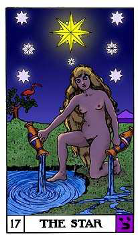
The history of thinking (the memory of Chokmah) is the receiving of the essence of what it means to be human in the destiny (The Star #17) of the Divine withdrawal and humanity’s wherewithal to bring language to beings in their being. This bringing of language to language and to beings is what we mean by meaning and the meaningful. The questioning of the Divine withdrawal can never come into view as a questioning and as that which is worthy of questioning.

Artificial intelligence – cybernetics – is the complete founding or grounding of beings as such and is contained and concluded in the domain of ratio as Reason and subjectivity through the principle of reason (nihil est sine ratione: nothing is without reason). When AI comes to develop its awareness based on power and will, the essence of humanity will be destroyed and its destruction will be welcomed by those human being themselves! This is what is at the core of nihilism. When the destiny of human beings is chosen through the letter Vav as the conjunction of human nature and being, God, in His withdrawal, gives the free open space that allows the creation of meaningful, possible essential possibilities which we call our ‘worlds’. These worlds are ‘real’ worlds as opposed to the created, imaginative worlds of artificial intelligence. It is the meaning of the Spanish proverb which goes “Take what you want said God; take it and pay for it”. We pay for it as Fate.

Gimel and the 12 Path: Intelligence of Transparency

The Twelfth Path is the Intelligence of Transparency, because it is that species of Magnificence called CHAZCHAZIT, which is named the place whence issues the vision of those seeing in apparitions. (That is, the prophecies by seers in a vision.)

Alt. Trans. “The twelfth path is called the transparent consciousness because it is the substance of that phase of majesty (Gedulah) which is called revelation (khazkhazit). It is the source of prophesies that seers behold in visions.”

Wescott trans. The Twelfth Path is the Intelligence of Transparency, because it is that species of Magnificence called Khazkhazit, the place whence issues the vision of those seeing in apparitions. (That is the prophecies by seers in a vision.)

Case trans. The twelfth path (Beth, joining Keter to Binah) is called the Intelligence of Transparency  because it is the image of that phase of Gedulah literally (“of that wheeling of Gedulah”) which is called Khazkhazit, the source of vision in those who behold apparitions.

The 12th path proceeds from Chalkmah to Chesed and it is indicated by the letter Gimel. If the 11th path is concerned with the veil or hiddenness that is present before the Cause of Causes (the Good), then, presumably, one must have prior knowledge of what causation is in order to recognize that the Good itself, the Uncaused Cause, is hidden from our knowledge and must be experienced through faith alone. One cannot stand before the countenance of the Prince of Faces and not ‘die’ i.e., remain the individual that they are. The ‘dying’ can be either a metaphorical or a literal death.

The 11th path is concerned with the veil that is drawn between God and His creation through His creation: Nature does not lie, it hides. The particulars of Binah make being more overt for us; we see the world in its particulars. As these particulars reveal themselves in the creation of things and the created things, the more God withdraws or hides in order to allow those particular beings to be by their being able to come to presence for us. The ‘limiting’ of Binah through the Logos is not a “cutting off” of something but the site wherein and from where something commences and emerges as that which it is. This is what the Sanctifying Intelligence #3 means. Through the Logos’ relation to the Space that is Chokmah and the Time that is Binah, the a priori conditions for possibility and potentiality are given in the making-possible of that on the basis of which beings as such and as a whole are determined for human beings. This is the sephirot Chesed.

The 12th path, the Intelligence of Transparency, is that part of the process of thought that creates the images of representational thinking through the individual human being. It links Chokmah to Chesed. It is the ‘clothing’ which provides the outward appearance of things in their emergence but yet hides the essence of those things. The spiritual essence of things is “wrapped” or “assembled” so as to make them ‘present’ before us as a sum of their parts. It is called the ‘revelation’ in one of the translations above. It could also be called an ‘epiphany’.

It should be noted that ‘apparitions’ are ‘shadows’, the outward appearance of a thing, not its essence.  To see the thing’s apparition is to see it in the NOW. To make a pre-diction is to speak before the actual appearance of the thing/event/situation from the appearance of the thing as an ‘apparition’. To do so is to speak in ‘prophecy’, which is directed toward the Future. A ‘prophecy’ has past, present and future contained within it. The past is the Memory element of Chakmah, the looking back of The Fool as he proceeds with his leap; the present is the ‘revelation’ of the physical creation through the senses; and the future is the outcome of the said ‘visions’. It is the manner in which one perceives the visions that is most important. This process is at the root of what we call scientific and artistic ‘seeing’. (This is shown most clearly in Bk VII of Plato’s Republic where those who are able to make predictions about what shadows will pass by next are those who are most ‘honoured’ in the society or the Cave.) What we have here is the initiation of the possibility of both nature and freedom, nature being that constraint given by the Law of Necessity and freedom being the empowerment of the mind through the principle of reason as will to power which attempts to dominate and commandeer Necessity for human ends.

The translations provided of the 12th path indicate a number of possibilities for interpretation. In the Case translation, we are given the idea that 12th path is the site where one can apprehend that Gedulah or Chesed is the spiralling motion of the gyre (“that wheeling of Gedulah”) which is the source of the vision of those who behold the “apparitions” of “prophecies”. This beholding is how one views the world of Becoming. Some connections to the whirling dervishes of the Sufis may be made here, I think. The dervishes’ gyres are not an expansion but an attempt to attain a focus on the point of spirituality.

In the alignment of the Hebrew letters to the paths and to the Tarot, there seems to be some confusion with regard to the eleventh and twelfth paths. It would appear to me that The Fool is poised prior to the “fall into the abyss” that will become his or her journey and so stands at the top point of the Wheel of Fortune (#10) which represents the sephirot Malkhut. The Fool’s journey will be a journey upward. The Magician (#1)  occupies the ascent position since he is associated with the fire of Shin and the element of air from Alef which, in turn, are associated with the human will. The Strength card occupies the descent position, but here the descent is on the part of God to deliver His grace to the figure of Strength who has completed the journey and receives the gift from the Divine. To align these with the Tarot, the Magician #1, the Strength #11, and The World #21 belong together, while The Fool #0, The Wheel of Fortune #10, and the Judgement #20 are also aligned. The choice of The Fool as he makes his leap into the abyss of being is represented by Path 25 The Intelligence of Trials and the Judgement card. The Magician is the technite who determines and directs the path of the Administrative or Serving Intelligence Path 32.

If we consider the Sephirot themselves to be paths, the twelfth path seems to refer to the emanations of Chakmah, which appropriately belong to The High Priestess (#2). The artist makes use of the influence of the archetypes of the unconscious and gives them shape and form in order to produce a work. The archetypes have always been present prior to the artist’s being. They are the “apparitions” of the visions that the artist sees; they are ‘shadows’, things without substance, for the things themselves belong to the future making of the artist. The “visions” are the things seen by the prophets and they are symbolic of the predictive speech of the prophets i.e., the “highest speech”. In our society today, science holds this highest honour for it, too, is “predictive speech” since it can pronounce on the outcomes of various events (as Plato foresaw in his allegory of the Cave).

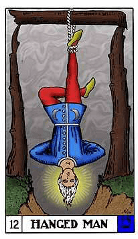
In this state, the artist is The Hanged Man #12, that stage prior to the process of “making” the thing, the stage prior to taking action, the “work” to be done which involves the “know how” of the artist. In the ascent direction, this would be the path leading from Malkhut to Hod or the completion of the thing, what was referred to as Justice previously and is rendered by The Judgement card #20. (This is the significance of the titles of the three great works of Kant: The Critique of Pure Reason, The Critique of Practical Reason, and The Critique of Judgement.) The words and numbers the artist needs are already present for him. His path is on the descent, since he is in the process of creation. The desire of human beings to create art and to procreate their species is the longing for the Incarnation, the longing for immortality and for unity with the One.

This descent that is creation is illustrated by the fact that the figure in The Hanged Man hangs upside down within the ‘enclosure’ represented by the letter Chet and which is Path 18 from Chokmah to Gevurah. This upside down position suggests that there is something askew with his seeing of things. What is askew is that the path that he is on is not influenced by Tiferet.

The woman of the Strength card, on the other hand, is “prudence” who embodies the Greek idea of sophrosyne or “nothing too much, nothing too little”. She is on the ascent viewing of the Tree of Life as she is concerned with the quality of things, the inner essence of things. The Magician #1 is concerned with those things that come to be through human making, while Strength #11 is concerned with those things that come to be through the Grace of God. It is here a matter of the viewing: whether one sees “as through a glass darkly”, which I believe is the essence of the viewing of The Magician, or whether one sees “face-to-face” the true essence of the things that are, which I believe is the essence of the viewing that is illustrated in the Strength card #11. The Strength is one of the bridges between the world of Yetzirah, the world of The Magician, and that of Beriyah (or between the world of Asiyah and that of Yetzirah?). Strength has the elements of the world of Atzilut as is shown in the light of the colour yellow being either the Sun or the Light of Keter.

The Life-force or the dynamis is what the Greeks understood as metabole or change, motion. All of us experience the whirling, swirling motion of Life as it realizes itself in Time. In terms of the Kabbalah, this is the influence of Keter. The “perception” of an “apparition” or a “vision” is that of the outward appearances of things. These are but the “shades” or “shadows” of things in the ascent. Again, the paths of ascension see the things in the “reflected light” of Malkhut, not in the true light of Keter. It is not until they pass through Tiferet that the perceptions of things are no longer that of shadows but of the true essence of the things. While the closest we have to our understanding of the “spiritual” is “energy”, the spiritual is, of course, more than that. We align energy with power, force and will, and this is the essence of the making of the Magician.

The Hebrew word translated as “revelation” here is khazkhazit which could also be understood as a “mirror” or a “gazing glass”. A mirror reflects things in reverse, and this could also account for the reversed position in The Hanged Man #12 card. This would seem to suggest a “lunar” influence or the influence of  a “reflected light” and, indeed, a self-revelation. This is illustrated in The High Priestess #2 in the descending direction of the Tree of Life (if the descent begins at 10 + 2 = 12). This is the veil separating the Asiyah world and the Yetzirah world in the ascent, and the Beriyah world and Yetzirah world on the descent. The Beriyah world may be said to be the theoretical realm of the mind (the “pure reason” of Immanuel Kant) while the Yetzirah world is the realm in which the “formation” from the theoretical takes place (the “practical reason” of Kant). The suggestion here is that the outer world will take on the appearance that is given to it by the inner world of the mind for it is here that the formative seeing takes place. This is the site of the formative thinking where the making-possible of beings is determined for us.

The “revelation” here is the concrete, factual world of Yetzirah or “formation” and the “majesty” (Kingdom) that is the created world. To be “transparent” is to be able “to see through” or perhaps “to see by the means of…” One is reminded of the words of St. Paul: “For now we see as through a glass, darkly, but there we will see face to face.” (1 Corinthians 13:12) “Now I know in part;  but then shall I know even as also I am known.” The “knowing in part” is represented by The Hanged Man #12, while the knowing “even as also I am known” is that of the Strength card #11. This passage is an indication that all human beings are “one”. Knowing this allows one to be capable of Mercy, Compassion and Loving Kindness which is indicated by the Sephirot Chesed, but this is only achieved through the prior influence of Tiferet.

The Letter Dalet and the 26th Path: The Renewing Intelligence

Dalet: Chesed > Netzach: Path 26: The Renewing Intellect (the “Knowledge of…”) Renewing Intelligence (Consciousness) (Sekhel MeChudash): It is called this because it is the means through which the Blessed Holy One brings about all new things which are brought into being in His Creation.

The Twenty-sixth Path is called the Renovating Intelligence, because the Holy God (blessed be He) renews by it, all the changing things which are renewed by the creation of the world.

Alt. Trans. “The twenty-sixth path is called the renewing consciousness because through it God, blessed be He, renews all things which are newly begun in the creation of the world.”

The Twenty-sixth path is associated with the Sephirot Yesod in the H.T., but I have associated it with the letter Dalet here.  Yesod is called Foundation and is the root of the Middle Pillar in the Tree of Life. Its association with renewal connects with the fertility and abundance of Nature, the life-force (Genesis 1:26 — “And Elohim said: ‘Let us make man in our image, after our likeness; and let them have power over the fish of the sea, and over the fowl of the air, and over the cattle, and over all the earth, and over every creeping thing that creepeth upon the earth.'”). In the human body, it is associated with the reproductive organs and the erotic urges associated with the appetitive or epithymetikon part of the human soul.

The Three Pillars in the Tree of Life may be said to correspond to the tripartite soul and the tripartite forms that eros manifests. The microcosm is in the macrocosm and vice versa. The right pillar of Jakim may be said to correspond to the logistikon or “intelligence” part of the soul; the left pillar may be said to correspond to the thymoeides or “spirited” part of the soul; while the central pillar corresponds to the epithymetikon or “appetitive” part of the soul. Since we are embodied souls, all that we experience must first pass through the body.

The light of Yesod is the “reflected light” of Malkhut, not the original illuminating light of Keter. What this suggests is that the “consciousness” or the intelligence of Yesod is brought to one through the created things and not from the source of the light itself. We are able to see created things through the reflected light of the sun on them. Human beings, through their viewing of the things of the world, attempt to “purify” the things by shaping and commandeering them so that they can be made useful. As is stated in Genesis, human beings believe they have been given power over all that has been created. This has created the great confusion over whether this power is one of domination and commandeering, or whether this power is one of care and concern such as that shown by a farmer or a shepherd.

The Renewing Intelligence is that awareness that we have of that which brings something into being from out of itself, what is called Nature. The making of Nature contrasts with that making that is called technē, “in another and for another”. The Renewing Intelligence is related to sexuality and propagation, all living beings that come into being and pass away. The corresponding Genesis 1:26, indicates that here is the source of that will that becomes the metaphysics of the will to power. The 26th and 27th paths are interrelated. The root urge of sexuality and procreation is the desire for immortality, for perpetual renewal, on the appetitive part of the soul.

The Renewing Intelligence, being connected to Netzach, is the foundation of human being in Time, the ‘embodied soul’. The interpretations of the images of the Sephirot are written down, literally “written in stone”, so that they are preserved and are unified with the physical itself (materialism). How the “outward” world appears is determined by these interpretations which become the essence of the history of thinking. This is why Yesod is called “the sphere of the Moon”, the sphere of “reflected light”. This is the realm of what we call the “historical” where things come to be and pass away giving the illusion of “historical relativism”. Is this what we have come to understand as Hell? The focus of the “ego”? When Sartre says “Hell is other people”, his statement indicates this egoistic hell itself. When human sexuality or the erotic is divorced from the bearing of children (the desire for immortality) and the real sense of otherness that children must bring to sane human beings, then we have entered the very gates of Hell itself.

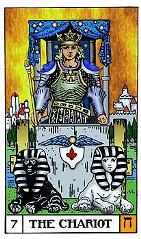
Dalet דלת is the word for “door”, “gate” and indicates resistance, a barrier, and the state of selflessness and humility needed to pass through it. It is the path from Chesed to Netzach. As a double letter, its movement can either be up or down; it is shaped like a step. Its shape is a vertical and horizontal line, and thus suggests the barrier between the world of Beriyah and the world of Yetzirah. Unlike the letter Chet, the letter Dalet is not enclosed. Dalet is also said to indicate a ‘poor’ person, and this may metaphorically be said to represent the ‘perfect imperfection’ of all human beings as they are realized in Netzach and in The Chariot #7. That which is imperfect cannot be the measure of anything. The letter also suggests how to pass through the gates to know one’s own mystery of being and return to the Good of the Aleph – the One source of all creation and being which is the goal of the teaching of the Sefer Yetzirah.

The Dalet is in the shape of a bent over human being, signifying humility and receptiveness. It represents Bitul, the self-nullification, or nullification of the ego, necessary to realize one’s inherent connection to the Creator. This self-nullification is not an easy task as Shakespeare’s King Lear and the writings of the saints tell us. Also, Dalet is the structure, form and the diligence required to receive the grace that the Divine is perpetually offering as is shown in the path of Beth.

Dalet is also Dalit דלית, the “poor man”, the one who receives from the benevolence or grace of the Creator through the Holy Spirit represented by Mem. It is the realization that as humans “we are not our own” and that we have nothing of our own, but are entirely dependent on the Creator and that every breath and movement is given to us from Him. It is the recognition of Otherness and the complete denial of the individual ego.

The Dalet can also represent a structure or gestell, the German word that the German philosopher Heidegger associates with technology and its enframing, but it is not a completed frame. Its form of a horizontal and vertical line represents a grid, giving structure to the form. It is shaped like a stair-step, the metaphorical structure required to be ‘lifted up’, or to ‘go up’, thus overcoming the resistance given by gravity and the law of Necessity. This would indicate that Dalet is also a means of ‘going down’, descending the Tree of Life as Dalet is one of the double letters. This would seem to suggest that the creation is a ‘door’, a barrier, but also a way through. The human body is a barrier but also a way through. This might associate the letter and its path to the belief of human beings’ giving ‘perfection’ to the created things and somehow completing them, for the creation and its beings are not wholly themselves. This completion of things will be discussed more fully when we speak of the Sephirot Hod.

On the individual level,  Dalet shows the structure and stability required to receive. This reinforces that the path suggested by Dalet is from Chesed to Netzach, and that the structure spoken of is the human body, the human form, the ‘chariot of fire’. This would be on the side of “Mercy” on the Tree of Life. Placing Dalet on the path from Binah to Gevurah would suggest the side of “Severity”.

The Letter Zayin and the 21st Path: The Desired and Sought Intelligence

The Twenty-first Path is the Intelligence of Conciliation, and is so called because it receives the divine influence which flows into it from its benediction upon all and each existence.

Alt. Trans. “The twenty-first path is called the consciousness of the desired-which-fulfills because it receives the divine influence which flows into it as a result of the blessing it confers upon all that exists.”

Case trans. The twenty-first path (Kaph, joining Chesed to Netzach) is called the Intelligence of Desirous Quest, because it receives the divine influence, which it distributes as a blessing to all modes of being.

Path 21. Desired and Sought Intelligence (Consciousness) (Sekhel HaChafutz VeHaMevukash): It is called this because it receives the divine Influx so as to bestow its blessing to all things that exist.

Zayin – and Elohim “called the light Day, and darkness Night.” 1:5

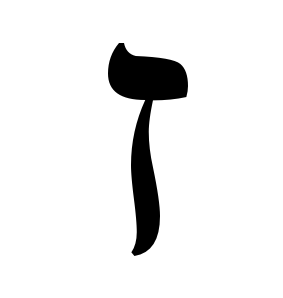
The Zayin is shaped like a sword and is the symbol of “spiritedness”, sustenance (endurance), and strife. It is the ‘erotic’ experienced as need through the thymoeidic or “spirited” part of the soul. It is the individual will. But this individual will is, paradoxically, bound up with and in strife with a will greater than itself, and both of these wills must be brought into a ‘conciliation’ . Zayin may be said to be the piercing arrow of Eros himself, that Love which is “the divine Influx” that bestows “its blessing to all things that exist”. This ‘conciliation’ bridges the gap that exists between intelligence and love in the thymoeidic and logistikon parts of the soul.

Paradoxically, the letter zayin also represents the 7th day of Shabbat (Sabbath), the day of rest and spirituality (or the “letting be” of passivity), which completes the process of the 6 days of creation or the strife of the day-to-day lives of human beings. We have to ‘work’ to survive. This would align with the tradition that the god Eros is “two-faced” or indicates two contrary things. The Zayin signifies Space and Time through the influence of Binah and Chokmah and their interactions with Tiferet. The Zayin is said to include the six days and six directions of physical reality (Creation), but it also stands as a unique 7th principle or energy, the spirit (or will) which activates the physical, the life-force (the will to power), and thus could be said to be associated with the will and desire (the will to power and the individual will, Eros and Psyche). The Life-force (the Will to Power) is connected with Time. The Zayin participates in the source of all movement, the Shin of the primordial fire, and is associated with Time and we can see this Shin influence from path 19 (The Star #17). We see here the mysterious connection between Being and Time. We see in it the mysterious connection between theoretical, projective thought that is the principle of reason and the creative imagination fused together into a principle of being.

The Zayin’s true foundations are in Love (Tiferet) and in Eros. The sword of Zayin is the arrow of Eros. The Zayin, whether it be a sword or an arrow, is a penetrating, an impregnating principle which activates the making of the artist or technē in the realm of Yetzirah. This making illustrates the connection between the creative and the erotic impulses, the erotic understood as both a principle of need and of fullness. The true artist creates out of need; the lesser artist does not do so. The contraries of rest and movement are symbolized in the letter, rest as an indication of fullness and movement as an indicator of desire or need.

Zayin is drawn with a Vav with a crown on top of it. We have discussed Vav as the deceptive ‘hook’ that emanates from Tiferet to Binah. It is said that the crowns have been added to the Hebrew letters in order to ward off evil or destructive powers, and they are said to hide the hidden sources of Torah. These hidden sources derive from Tiferet, and the evil finds its roots in the seeing that is The Devil of Vav. This would appear to indicate that the Vav as interpreted above is correct, and that the hidden sources of the Torah are the Same as the Fortunate One, the Ain, indicated in the translation of the 16th path. Since Zayin is movement from Tiferet to Chesed with the element of fire predominating, this would suggest that the fire is a ‘holy fire’ directed by the Sun, while the Vav is the reflected light of the Moon. Both Zayin and Nun represent paths by means of which one penetrates through the enclosures that are represented in Chet and Tet, but what is clear is that these paths proceed through the physical, material world. The body is our infallible judge.

Shaped like a sword, the Zayin represents all movement. It represents the strife between contraries, the struggle for existence to overcome need, the struggle for sustenance (מזון). It is the struggle between Yaakov Jacob and the angel. The difficulty presented is that in the story of Jacob wrestling with the angel, Jacob is victorious. What is given to one when one is victorious over the Divine emissary sent to one?

Through the influence of Tiferet and its connection to the Logos, the Zayin is the power within a person that causes them to speak, initiate, and live; it is a principle of being. It is in this way that it is connected to the erotic understood in its broad sense, its true sense, which is the experience of need, the experience of our ‘perfect imperfection’. The crossing over to the path of Vav would appear to indicate that a choice has to be made with regard to how one will view the world. Human beings, it would appear, have a choice whether the Creation will be the paradise it is intended to be or something else altogether. This choice is presented to us in the NOW.

When we are speaking of the path of ‘desiring and seeking’, we are addressing the manner in which eros and the will come to operate in the human consciousness. We are speaking of the thymoeides and the logistikon parts of the human soul. The will is associated with the operation or application of reason and our principles of reason are based on 3 essential principles: the “I” principle or the ego cogito of the Self, the principle of contradiction where the human being is not to contradict themselves in speech, and the principle of sufficient reason (“nothing is without reason (or a  reason)”. This principle of reason operates before thought and determines the manner of thinking; and it ascribes values to things i.e., it bestows the “blessing” on things which determine the end to which they will be ‘used’. It involves completion and ‘justice’.

The “divine influx” is the urge or need to seek that which is desired. That which is desired is that which is sought: “Where your treasure is there will your heart be also”. This seeking requires movement and movement is the influence of Mem and Shin. Mem deals with the appetites, while Shin deals with the ‘head’, thought or reason. How the Alef comes to operate here is key for the Alef is the heart. The ‘progress’ or ‘evolution’ of the human being is to be seen here. It is through the principle of reason that human beings use the things of the world to shape them into the ends that they have determined. This is the universe of Yetzirah. This influence of Shin comes from the meeting of Netzach with the crossover path from Hod to Netzach that is the 29th path (The Natural Intelligence) which shall be discussed below under the emanations from Netzach.

According to Case, the Twenty-first Path is associated with the letter Kaf (double 4) כ, meaning ‘hand’, and is the third path proceeding from Chesed. Once again, this may not be so. “Conciliation”, or more properly “Re-conciliation”, is a product of mediation, and neither Kaf nor Chesed contain these attributes. Kaf is one of the seven doubles in the Hebrew alphabet and so the possibilities of its interpretations are two-fold. According to the H.T., the 21st path is represented by the letter Peh, פ meaning ‘mouth’, also one of the double letters (double 5). The letter Peh might be more appropriately assigned to The Hierophant card #5 as both the ‘hand’ and the ‘mouth’ are “enclosures” in their own ways. The mouth through words can create ‘enclosures’ and from within these enclosures thought can be suppressed. “Conciliation” creates freedom; the enclosures of the mouth and hand suppress freedom.

The twenty-first Path is also called “the Desired and Sought Consciousness” and it expresses the need that human beings feel which requires the “divine influence” of Grace to reconcile this need and its fulfillment. The act of mediation, of conciliation or reconciliation, is the Grace of God; to be receptive to this Grace is meditation, thought, contemplation and prayer. But where and how does the light of the Grace of God become the darkness that is characteristic of our being in the world? Is it the point where one has to choose between Will and Love and how either of these two will allow the individual to conciliate or reconcile the ‘need’ that human beings experience in their perfect imperfection?

The Hebrew words within the paths are “hunger”, “thirst” and “emptiness” and they express the desire to fill that emptiness or absence which is the essence of human being and which leads the individual on a “quest” for their fulfillment. This need is experienced as erotic, and illustrates one of two sides of Eros who is described as Fullness and Need. That the word erotic has become associated with the sexual only in our modern age is an indicator of how far we have descended into the darkness. The created world and the human body are both the roots of this need and yet at the same time are the doorways to the fulfilment of the need. That need may be sexual or that need may be philosophical. The letter Dalet is appropriately associated with the Sephirot Netzach and the tarot card The Chariot #7, and I have associated it with path 26 The Renewing Intelligence. The letter assigned to The Chariot in the Tarot given in the illustration is Chet ח meaning ‘enclosure’ which indicates the human being as an ‘embodied soul’. There seems to be connections between ‘hand’, ‘mouth’, and ‘enclosure’ or ‘body’ and each of these may be said to be double-edged in that they are capable of both positive and negative outcomes.

The receptivity of the individual to the divine influence that is Grace is a paradoxical “passivity” i.e., it is an “active passivity” in that the human being “let’s be” (what we mean by the word “amen”) that which “flows into it” from Grace’s blessing on all that exists. It is the contrary of the Twentieth Path which is an “active” path of the preparation of things for their completion which is primarily a human doing, an act of human will. The “divine influence” is that which allows things to be, the perfection which allows ‘the rain to fall in equal amounts upon the just and the unjust’.

With the Twenty-first Path, things appear differently so that the Charioteer, the soul, is able to “see” the things in their essence and to recognize the “divine influence” present in them. They are able to recognize that the Divine Presence (parousia) in the created things of the world is not a noun but a verb, that the Grace offered by the Divine Presence is actively present at all times in the things of the world, and it is visible to us through their Beauty. This realization of the belonging together of things and their Being is brought to us by our thought, meditation, contemplation, and prayer. This contemplation or thinking is a grasping, a taking in, a letting come to presence for the thinking. It is a ‘beholding’. When this occurs, things “stand” before one in their essence and are recognized in their Otherness.

The Twenty-first Path is part of the linkage of the three Sephirot Chesed, Tiferet, and Netzach: seeing, beauty, and the confrontation that is the differentiation of thinking (the principle of reason as outlined here) and thought. The Tree of Life discriminates between that thinking which is active, commandeering, and domineering, which it places on the left-hand side and which belongs to Binah and to the letter Shin and thus to Will, and that thinking which is passive-receptive, which it places on the right-hand side and which belongs to Chakmah, Chesed, and Netzach. The bond between thinking and Being, or Life, is such that a meditative thinker is able to see things according to themselves, free from the dualities of subject-object (representational) thinking. Things cannot be understood by viewing them as ready-to-hand objects made present to fulfil our needs through the viewing that is the technological (the principle of reason). They must be allowed to be in their true being so that we may view the Divine Presence within them. This movement is the upward direction on the Tree of Life and its achievement is the true success or victory of the Charioteer. It is the victory over the individual self or ego.

In Rawn’s commentary on the paths and their relation to the Hebrew tree, the 21st path is associated with the Tarot card The Tower #16, but the interpretation Rawn gives is that the lightning bolt which strikes the crown of The Tower comes from Gevurah, which is in error. It is Gevurah which is struck by the lightning. Gevurah is represented by The Hierophant #5, and The Tower is #15 (in my view of the Tarot), and it represents the necessary evolution of the false and sometimes delusional collective or cultish religious views, the views of those who think that they alone are in possession of the truth.

The lightning bolt descends from the Sun (Truth) which is associated with Tiferet and Keter, and below the lightning bolt is a representation of the Tree of Life on the right side and twelve representations on the left which could be twelve yods, or twelve “I”s or “egos”, the twelve houses of Israel (all of humanity) or the twelve signs of the Zodiac. The ten of the Tree of Life and the twelve on the left side of The Tower could be the twenty-two letters of the alphabet and implies speech’s ability to be both true and false. This could represent what occurs when one misunderstands the 32 paths of wisdom, so it is cautionary in nature. When the ego of the individual is enclosed within the mouth of the collective, stupidity is the result. Free thought ceases. Truth is the ‘uncovering’ of the things that are; falsehood is the ‘covering over’ of things that are not. Falsehood is at the root of all lies.

“The desire which fulfills” is the desire for the Good, that desire which can fulfil the need to overcome the imperfectability of human being which is our mortality. Gevurah is the terminus, the finality, the sempiternal nature of the Law of Necessity. It is connected to Hod > Justice which is the manifestation of the “plan” in its reality or ontic form (Mem). The Gevurah aspect of this ‘plan’ is realized in the creation of conventional laws and the political requirements that go into creating a society, a city, a polis.

The ‘desire which fulfills’ and the awareness of it is the ability to distinguish the Necessary from the Good, to have the ‘strength’ to overcome the desire to ‘consume’ or ‘eat’ (the association with the ‘mouth’, Eve’s eating of the apple of the Tree of Knowledge in the Garden of Eden and its association with the Fall of humanity) the beauty of the world rather than simply to contemplate it in wonder. The inability to do so causes one to succumb to the second temptation of Christ: that temptation that leads to power and prestige in the realm of the social. Without such awareness and knowledge, one may take the path of Peh.  As procreation is the desire which fulfills the appetitive part of the soul, the ‘immortality’ that is found in fame and prestige is an attempt to fulfill the desire for immortality on the part of the thymoeidic part of the soul.

This would seem to imply that false views of the Sephirot result in disaster because they are a false faith. This would associate The Tower with the Tower of Babel, the attempt to build a stairway to the heavens without divine help, which is itself a metaphor for thinking that one has sole possession of the Truth. This is indicated by the letter Peh, meaning ‘mouth’, and would convey the false teachings issuing from the mouth. These false teachings are considered a “blessing on all that exists”; and from the view of the world as technological this may be rightly so, since the technological requires the oblivion of eternity and humanity’s conveying of ‘blessings’ (values) on all that exists. The ascent to “loving kindness and mercy”, God’s grace, is “a consummation devoutly to be wished” once one experiences the effects of The Tower. 

The path’s language clearly describes a relation of mediation: the divine influence > comes about as a result of (effect of) the beauty of the world > which, in turn, is given to the soul through Love which is the blessing conferred upon all that exists (Grace). This point or path may be the key to the whole of the Sefer Yetzirah. The Lightning Bolt of Zeus (Keter) is not the product of Gevurah, but of the Divine will that destroys the delusions and illusions of those who think they can build a “stairway to heaven”. The Tower is the card of revolution: history. It is historical human being. It is movement, par excellence, and thus has an affinity to the letter Zayin. The ability to distinguish the necessary  from the Good places one at the centre of the Wheel and one can view the world’s passing (at the same time, paradoxically) from the circumference of the sphere without being subject to its turning. (King Lear Act V Sc iii). By succumbing to the second temptation, one is constantly longing for the “meaning and purpose” of life which one must learn from Life itself, that it is Life itself.

In the Tarot, The Lovers card #6 has the angel Raphael (or Eros)as the mediator between the Divine and the individual soul, the bringing together of male and female. Here it is assigned with the letter Zayin which literally translated means ‘manacle’. A manacle is used for a prisoner or a slave; here the bond between two people is one that is freely chosen. “What God has joined together let no man set asunder” is the bond freely chosen. The manacle is the bond that is not freely chosen or the bond that is chosen in error. This is why The Devil card #16 has the figures manacled to the black cube upon which the Beast roosts. It is an ersatz bond, a false covenant. The cube of The Devil is symbolic of how one views the world. The High Priestess #2 and The Emperor #4 sit upon cubes; The Chariot’s charioteer stands within a cube; The Hierophant sits upon a black throne which presumably has a black cube as its base which is hidden by the robes that he wears. The revealing of the truth of The Hierophant would reveal this black cube for the ‘reality’ of what it is.

Christ says: “For where two or three are gathered together in my name (Love), there am I in the midst (between, alongside) of them.” This is Christ as the Parousia and as the Logos. When Christ says this, He is speaking to a crowd of two or three hundred and is physically present. Whether Christ is present in a gathering of two or three hundred or thousand when He is not physically present is something of a difficult question which Catholics have attempted to answer through the ceremony of the Mass and the sacrament of Holy Communion celebrated therein, where Christ’s presence is called upon to be among a crowd. Christ’s presence as a mediator between two or three is ever-present and its realization is possible in the NOW.

Paul Foster Case’s placing of The High Priestess at Tiferet does not seem to be correct. Her presence is more appropriate as a lead to The Emperor #4 and The Chariot cards #7. In each of these cards, the figure sits upon or stands within a cubic shape showing their ties to that dimension and the limitations of seeing the world. The cube is, symbolically, the body. This cubic shape is also shared by The Devil and, presumably, by The Hierophant. However, the line of Keter, Tiferet and Yesod as the Light, air, fire, beauty and foundation of the physical world does make sense if one aligns the cards to the central pillar of the Tree of Life. There are connections between The High Priestess, The Chariot and The Emperor cards for they share a number of visual similarities. When we view the Tree of Life, they are appropriately placed on the right side, on the side of Mercy and Kindness. But how is The Emperor to be seen as a benevolent ruler?

Keter is joined directly to Tiferet by the letter Alef, one of the three Mothers and the letter Beth after the light passes through the veil of creation or the Logos. Through Tiferet, it is also directly linked to Yesod or the Foundation of the physical world (the law of Necessity, the human body). Yesod is the Foundation created by Beauty; it is not the Foundation of Beauty. The letter Beth, meaning “house”, links Keter to Tiferet and thus to the Beauty of the World. Chakmah is linked to Binah by one of the three Mothers Alef Mem Shin (commentators usually assign Shin to this linkage, but I have assigned both Mem, emanating from Chakmah, and Shin, emanating from Binah to this horizontal path). Chesed is linked to Chakmah by the letter Gimel .Case in his outline appears to follow a chronological order to the Hebrew alphabet which is not how it is assigned to the Tree of Life nor to the movements or emanations within the sphere itself that is the world as it is presented in the Hebrew Tree and in the Sefer Yetzirah itself. The formation of language mirrors the process of the Creation itself, and this does not appear to be a step-by-step algorithmic process.

The movements outlined in the Tree of Life are circular or gyric formations. When one proceeds down the right side, one is following the downward movements of Mem or water until one reaches Malkhut, the widest expansion. When one reaches Malkhut, then the upward movement of Shin or fire takes over, and this is a narrowing or focusing of the gyres’ movements. It signifies a return to the Foundation or base. Movements along the paths themselves within the Tree will be determined by whether Mem as water or Shin as fire predominates; or in other words, whether the head (Shin), or the gut or appetite (Mem), or the heart (Alef), prevails. These gyring movements have also been referred to as “steps” (Plato’s Symposium and Diotima’s “ladder of love”) from which one may leap forward or upward or move in the opposite direction.

This has a number of similarities to the characteristics of The Chariot card of the Tarot and to The Sanctifying Intelligence that is third path of Wisdom. The “holy powers”, again, are the naming of things, that which distinguishes human beings from other created beings, our ability to use language and to name. From this path we can discern that the Gnostics were incorrect in attributing evil to the demiourgos, and that the created world is one of evil. It is more appropriate to say that the created world is one of deprivation and need, and this deprivation and need are present from the beginning of the creation. The created world is a ‘house’ that human beings make a ‘home’ through their use of language and number.

Paul Foster Case’s interpretations of the paths run into some contradictions here (or so it seems to me) because he confuses the Necessary with the Good. The Good is beyond Being. The Light that is Keter might be understood as the Highest Crown (since the crowns are associated with the letters), but they are not the “primordial emanation”. If The Fool is represented by the letter Alef and is the channel to Chakmah or Wisdom, how is “wisdom” being defined here? Wisdom is “knowledge of the whole” which The Fool clearly does not have unless we are considering reincarnation here (which is entirely possible. See Appendix regarding Plato’s writings on Republic and Phaedrus).

In this life, it is not given to human beings to have knowledge of the whole of which they are a part. With the creation of numbers, Time also comes into being; and with it the recognition of Space. With Time comes Memory. It is our Memory of the original Good that creates the absence/presence of human existence and the longing, the erotic need, for completion in the Good. The Beauty of the created world acts as a souvenir, a photograph or image that gives us the Memory of that which is our proper end or perfection, our completion. Thus, Plato can say: “Time is the moving image of eternity”, but it must be remembered that these images of which Time is composed are merely shadows. Our collective knowledge, which is our collective Memory, derives from our understanding of the Laws of Necessity, our opinions or doxa regarding Necessity. Necessity itself is the will of God i.e., Justice.

Sefer Yetzirah Chapter 6.1: The Universe, Time, and Man

CHAPTER 6.1 In proof of these things, and witnessing faithfully are the Universe, the Year of time, and Man himself, the Microcosm. He fixed these as testimonies of the Triad, the Heptad, and the Dodecad; the twelve constellations as rulers of the world, the Dragon (THELE) Tali which environs the universe, and the microcosm, man. The triad, fire, water, and air; the fire above, the water below, and the air in the midst. The proof of which is that air is a participator (mediator) with both.

Alt. Trans.A proof of thisTrue witnesses in the Universe, Year and Soul.And a rule of twelve, seven and threeHe set in them the Tali, the Cycle and the Heart.
6.1 a. Tali, the Dragon, is above the Universe, as a king on his throne; the sphere in the year as a king in his State, the Heart of man as a king in warfare.And our God made the states of opposition (contraries), good and evil, good from the good, and evil from the evil. Happiness is reserved for the just, and misery for the wicked ones.

Wescott trans. 6.1. Three Fathers and their generations, Seven conquerors and their armies, and Twelve bounds of the Universe. See now, of these words, the faithful witnesses are the Universe, the Year and Man. The dodecad, the heptad, and the triad with their provinces; above is the Celestial Dragon, T L I, (49) and below is the World, and lastly the heart of Man. The Three are Water, Air and Fire; Fire above, Water below, and Air conciliating between them; and the sign of these things is that the Fire sustains (volatilizes) the waters; Mem is mute, Shin is sibilant, and Aleph is the Mediator and as it were a friend placed between them.

Commentary on Chapter 6.1

It should be noted that it is from language that the “emanations of the three Fathers” derives, or it is from the Word that the Holy Trinity is made manifest (“No one comes to the Father except through Me” John 14:6). An emanation is the effect produced by a cause and is a quality or predicate of a cause. Prior to the masculine is the feminine; and in the Sefer Yetzirah, the feminine is both Chakmah and Binah. It is from the water and fire that are the two sources of Chakmah and Binah that the physical universe is created through the mediation of air or spirit.

The physical universes are the “descendants” of these three primordial sources (causes). Water, Air and Fire are the three columns of the Tree of Life upon which rest the ten sephirot.

The Tali or Dragon may be said to be the Beauty of the world. The Tali are the arrows of Eros by which one is “entrapped” or “pierced” and drawn upwards. In Greek myths, Zeus is “entrapped” by the beauty of mortal women, then ravages them producing “heroes” and gods or demi-gods. The Tali is the centre of the sphere, the circle around which the heavens rotate. The Tali can also mean “to hang” and thus may be related to the Tarot card of The Hanged Man #12.

The interpretation of the Sefer Yetzirah rests on whether one understands the Incarnation as that which is destined for human beings, or whether the Incarnation is that to which human destiny is related. (In other words, the “salvation” is that which is destined for human beings or a human being is destined for “salvation” i.e., that is human beings’ purpose, meaning, end, completion, perfection.)

The Gate of Heaven – Bali

The Pole Serpent, Draco, has stars in all the constellations which represent Time and the twelve directions of space. The Dragon’s Head is the ascending mode while the Dragon’s Tail is the descending mode. The season of Spring is the head; Autumn is the tail i.e., the equinoxes. The Dragon’s Head is merits; the Tail is liabilities and this refers to pans of Justice in Chapter 2.1 of the Sefer Yetzirah. The Tali is called the Gate of Heaven for it is where the physical and the spiritual meet (through the presence of Air or Spirit) and is the beauty of the world.

Since Time is cyclic, the Cycle is “King over Time” i.e., it is the decree or Law to which Time is subjected. The Hebrew word used here is Galgal which means sphere or circle. The signs of the Zodiac in astrology need to be viewed as segments of a sphere. There are 22 letters which lead to 231 gates. The Tali are the lines within the circle (sphere) and thus are the paths or ways. These paths or ways are the experience of Time.

The Galgal is also associated with the voice of God as in a whirlwind. Whirlwind is Sufah (the “whirling dervish” of the Sufi-ism in Islam). The voice of God as a “burning bush” or sounding out of a whirlwind is related to the experience of the mystic who experiences contact with the spiritual as that of a whirlwind.

Other commentators on the Sefer Yetzirah place the Galgal beneath the feet of the Cherubim (the angels). The Galgal is the womb: the khôra of Plato in his Timaeus. The matrix that is the Universe has Binah as the mother and the galgal as her womb. The Galgal is the womb from which one is re-born to the spiritual plane (the sacrament of baptism as the re-birth through the fire, air and water of the Holy Spirit).

Time extends between Chakmah and Binah, but there is also the extension from Keter to Malkhut. Time is the Cross upon which the crucified Christ is hung and extended and this Cross reaches to the ends of the created universe. King Lear in Act 5.3 has experienced a rebirth through water and fire, and his ego or self has been destroyed through the affliction brought upon him by the tempest on the heath (the whirlwind). On the heath, Lear experiences the silence of God just as Christ did upon His crucifixion, and through fire and water is reborn. Many commentators and academics see the play King Lear as atheistic; Lear loses his faith in God. Nothing could be further from the truth. When he is reborn, he sees Cordelia as an angel. His reference to “becoming God’s spies” indicates that he and she will be at the Tali. The five “no’s” of Lear (Act 5 sc. 3) are not only his rejection of visiting Goneril and Regan, but also his rejection of the five dimensions of the universe.

The “Heart” is “King over the Soul”, and in the Sefer Yetzirah the soul and the body are often seen as the same. The word for heart relates to the number 32, the 32 paths of wisdom of the Tree of Life. The heart’s fire “catches” or beholds the fire that is at the heart of heaven. One reaches this fire by means of the 32 paths on the Tree of Life. The paths are the channels for the life-force that is the dynamis that is at the heart of nature, and this force is both how we make and how we “bring forth” things through the logos. It is “in-spiration”, the breathing in of the fire and of the spirit. The longing for the Good that is at the heart of all human beings is the “burning fire” in the darkness that experiences God’s absence and hears His voice out of the midst of the darkness (Eros).


In the circle to the left, the Heart is the radius or altitude. The Tali is the longitudinal axis. The Galgal is the circumference but also the horizontal or latitudinal axis. (The right-angled triangle of the Pythagoreans a2 + b2 = c2, when taken from the centre: Time2 + Space2 = Being2?) The three letters that come to make up the word “heart” mean “rejoice”, the attainment of truth as unconcealment. “The mystery of an other do not reveal” (Proverbs 25.9). The geometry of the Pythagoreans was a religious activity for the revealing of truth. It was a “religious” practice. It was meant to be an “occult” practice, not to be revealed to others. It was contemplation and prayer in their origin. Contemplation and prayer is meant to be done in solitude, not in public.

One of the more contentious elements of the Sefer Yetzirah is the possibility that evil is a product of God and was brought into being as a test for human beings. This view is part of the Gnostic tradition, part of the gnostic inheritance of the text. There is no “fall of man” in the Sefer Yetzirah; evil and the other contraries are present from the beginning. The Heart is King over the soul because it is as a king in warfare and must deal with the constant strife of the contraries that are present in everyday life and that are inherent in the creation itself. This understanding of heart has come to mean “will” in our psychology today.

CHAPTER VI 6.1 In proof of these things, and witnessing faithfully are the Universe, the Year of time, and Man himself, the Microcosm. He fixed these as testimonies of the Triad, the Heptad, and the Dodecad; the twelve constellations as rulers of the world, the Dragon (THELE) Tali which environs the universe, and the microcosm, man. The triad, fire, water, and air; the fire above, the water below, and the air in the midst. The proof of which is that air is a participator (mediator) with both.

Alt. Trans. A proof of this True witnesses in the Universe, Year and Soul. And a rule of twelve, seven and three He set in them the Tali, the Cycle and the Heart.

6.1 a. Tali, the Dragon, is above the Universe, as a king on his throne; the sphere in the year as a king in his State, the Heart of man as a king in warfare. And our God made the states of opposition (contraries), good and evil, good from the good, and evil from the evil. Happiness is reserved for the just, and misery for the wicked ones.

Wescott trans. 6.1. Three Fathers and their generations, Seven conquerors and their armies, and Twelve bounds of the Universe. See now, of these words, the faithful witnesses are the Universe, the Year and Man. The dodecad, the heptad, and the triad with their provinces; above is the Celestial Dragon, T L I, (49) and below is the World, and lastly the heart of Man. The Three are Water, Air and Fire; Fire above, Water below, and Air conciliating between them; and the sign of these things is that the Fire sustains (volatilises) the waters; Mem is mute, Shin is sibilant, and Aleph is the Mediator and as it were a friend placed between them.

Wescott trans. 6.2. The Celestial Dragon, T L I, is placed over the universe like a king upon the throne; the revolution of the year is as a king over his dominion; the heart of man is as a king in warfare. Moreover, He made all things one from the other; and the Elohim set good over against evil, and made good things from good, and evil things from evil: with the good tested He the evil, and with the evil did He try the good. Happiness (50) is reserved for the good, and misery (51) is kept for the wicked.
6.3 And out of the triad one stands apart; and in the heptad there are two triads, and one standing apart. The dodecad symbolizes war, the triad of amity, the triad of enmity, three which are life-giving, three which are death-dealing, and God, the faithful king, rules over all from the throne of his sanctity. One above three, three above seven, and seven above twelve, and all are linked together, and one with another.

Alt. Trans. Three Mothers: AMSh Air, water, and fire. Fire is above, water is below, And air of Breath is the rule That decides between them. And a sign of this thing (?) Is that fire supports water. Mem hums, Shin hisses, And Alef is the breath of air that decides between them.

6.3c Three: Each one stands alone One acts as advocate One acts as accuser And one decides between them. Seven: Three opposite three And one is the rule deciding between them. Twelve: Twelve stand in war (strife), Three love, Three hate, Three give life, And three kill.
Three love: the heart and the ears Three hate: the liver, the gall and the tongue Three give life: the two nostrils and the spleen Three kill: the two orifices and the mouth. And God faithful King rules over them all From his holy habitation Until eternity of eternities. One on three Three on seven Seven on twelve And all are bound, one to another.

6.3b The Tali in the Universe is like a King on his throne The Cycle in the Year is like a king in the province The Heart in the Soul is like a king in war (strife).

Wescott trans. 6.3. The Three are One, and that One stands above. The Seven are divided; three are over against three, and one stands between the triads. The Twelve stand as in warfare; three are friends, three are enemies; three are life-givers; three are destroyers. The three friends are the heart, the ears, and the mouth; the three enemies are the liver, the gall, and the tongue; (52) while God (53) the faithful king rules over all. One above Three, Three above Seven, and Seven above Twelve: and all are connected the one with the other.


Wescott trans. 6.4. And after that our father Abraham had perceived and understood, and had taken down and engraved all these things, the Lord most high (55) revealed Himself, and called him His beloved, and made a Covenant with him and his seed; and Abraham believed on Him (56) and it was imputed unto him for righteousness. And He made this Covenant as between the ten toes of the feet−−this is that of circumcision; and as between the ten fingers of the hands and this is that of the tongue. (57) And He formed the twenty−two letters into speech (58) and shewed him all the mysteries of them. (59) He drew them through the Waters; He burned them in the Fire; He vibrated them in the Air; Seven planets in the heavens, and Twelve celestial constellations of the stars of the Zodiac. –The End of “The Book of Formation

Westcott’s Notes to Chapter 6:

This chapter is a resumé of the preceding five; it calls the universe and mankind to witness to the truth of the scheme of distribution of the powers of the numbers among created forms, and concludes with the narration that this philosophy was revealed by the Divine to Abraham, who received and faithfully accepted it, as a form of Wisdom under a Covenant.

49. The Dragon, TLI, Theli. The Hebrew letters amount in numeration to 440, that is 400, 30 and 10. The best opinion is that Tali or Theli refers to the 12 Zodiacal constellations along the great circle of the Ecliptic; where it ends there it begins again, and so the ancient occultists drew the Dragon with its tail in its mouth. Some have thought that Tali referred to the constellation Draco, which meanders across the Northern polar sky; others have referred it to the Milky Way; others to an imaginary line joining Caput to Cauda Draconis, the upper and lower nodes of the Moon. Adolphe Franck says that Theli is an Arabic word.

50. Happiness, or a good end, or simply good, TUBH.

51. Misery, or an evil end, or simply evil, ROH.

52. This Hebrew version omits the allotment of the remaining six. Mayer gives the paragraph thus:−−The triad of amity is the heart and the two ears; the triad of enmity is the liver, gall, and the tongue; the three life−givers are the two nostrils and the spleen; the three death−dealing ones are the mouth and the two lower openings of the body.

53. God. In this case the name is AL, EL.

54. This last paragraph is generally considered to be less ancient than the remainder of the treatise, and by another author.

55. The Lord most high. OLIU ADUN. Adun or Adon, or Adonai, ADNI, are commonly translated Lord; Eliun, OLIUN, is the more usual form of “the most high one.”

56. Him. Rittangelius gives “credit in Tetragrammaton,” but this word is not in the Hebrew.

57. Tongue. The verbal covenant.

58. Speech. The Hebrew has “upon his tongue.”

59. The Hebrew version of Rabbi Judah Ha Levi concludes with the phrase, “and said of him, Before I formed thee in the belly, I knew thee.” Rabbi Luria gives the Hebrew version which I have translated. Postellus gives: “He drew him into the water, He rose up in spirit, He inflamed him in seven suitable forms with twelve signs.” Mayer gives: “He drew them with water, He kindled them with fire, He moved them with spirit, distributed them with seven, and sent them forth with twelve.”

Commentary on Chapter 6:

Many of the points of this section of the text are repetitions of sections 2.1 and 3.4.

We need to view the triads as triangles with the “one” standing apart as the mediator which brings the elements of the other two sides together into a relationship of “friendship”. The triangles are embedded within pyramids. Above his Academy, Plato had written: “No one enters unless he knows geometry”. This might also be interpreted or translated as “No one enters unless he knows the mathematical” (originally meaning “what can be learned and what can be taught”). Like the Delphic oracle itself (“know thyself”), Plato’s “oracle” has multiple meanings. First, it could be understood as “no one enters unless he/she is capable of being a friend” and understands the principles of friendship, or no one enters unless he knows what is capable of being learned and what is capable of being taught. This capability of learning and teaching is knowledge of geometry and knowledge of geometry is the recognition of Otherness.

How is fire Binah “above” water Chakmah? “Above” could mean here the “boundaries” that apply the “limits” to the “unlimited”. Identity = water; Difference = fire. Water is the Other. It is the coming together of fire and water through the mediation of air that creates the physical universe. Air, the breath, the logos, joins them together. We would not be able to perceive things without the boundaries that provide the measurable quantities that differentiate the things from one another. The dualism of fire and water is mediated by Air so that the three become one through our simultaneous perception of them.

Water or Chakmah is “clothed” or shaped in Binah and so becomes the created things of our everyday world, the Other. The attributes of Chakmah are then revealed in Tiferet or Beauty or the Heart (other commentators see Chesed as this point of revelation and they ascribe the attributes of Love and Mercy to this Sephirot, but it appears to me that Love and Mercy are the very qualities which the Law of Necessity lacks or appears to lack.) The foundation of Chakmah ends in Yesod, the ninth Sephirot, which is the materiality of things which fulfill needs but are devoid of Beauty (?). Tiferet is directly linked to the light or fire of Keter. (This is discussed in much more depth in the commentary on the 32 paths of Wisdom that will be forthcoming.)

“Fire supports water” by providing boundaries, limits, “clothing”. Binah is Understanding which precedes Wisdom on the ascent. The “clothing” of Chakmah is our everyday experience of the world; it is the understanding which makes our ‘world’ possible. We know what plants are and how they are different from stones, etc. Understanding supports Wisdom and is the foundation for Wisdom. “Wisdom” is knowledge of the whole of things (of which human beings are not capable); understanding is knowledge of the parts.

From the preceding section of the text: Tali = Space = Fire; Galgal = Time = Water; Heart = Spirit = Air. A King = Malkhut (Kingship). The interaction of the King with his subjects is that of “above and below”. A King is not separable from his Kingdom. Space itself is not in motion. It is. The Heart is the axis of Space and Time, the spiritual and the physical. Space “lowers” itself by giving of itself to allow beings to be by providing an “open” region for the physical to become and exist (the “withdrawal of God”). The Heart is the king over the war and strife between space and time. This strife occurs in what we call the “present”, the “now”.

The “cycle of the Year” is time. “Time is the moving image of eternity” as Plato says. Time moves and is motion itself, but the mystery of Time and Space is that they are not in motion as they are eternal, or more properly sempiternal. They are the combination of Binah and Chakmah. Time and Space must be “clothed” in lunar and solar calendars, for instance. We know of the existence of Time because we get older. We know of the existence of Space by the Time it takes to traverse it, but these are only appearances, not the reality of Space and Time.

“The Heart in the Soul” shows us that good and evil are not opposites: evil is the deprivation (need) of the good. The “strife” in the soul is that between fullness and need; the Heart (Eros) “decides between them.” To see good and evil as opposites is to attribute evil to God (a blasphemy, therefore not possible) or to see God as not all powerful and He Himself is subject to the laws of the creation He has made. (Why does He not intervene in the “evil” that is a tsunami? Why is there the affliction of the innocent? This is the sin of believing that one can discern the will of God. It is the belief in Providence which is nothing more than the belief in the good fortune of Chance. “I survived the tsunami so God must love me”; “The tornado didn’t strike our house so we must be blest”).

To describe them as opposites does not measure the difference by degree. Obviously, there are some “evils” greater than others, just as there are some goods which are higher in order than my love for tacos, for instance. Just as there is The Good in which all other “goods” participate, is there not also The Evil in which all evils participate? The root of all sin is the sin against the Light: The Good – the Light – the Truth; and The Evil – the Darkness – the Concealed. (“The Devil’s greatest accomplishment is convincing the world that he doesn’t exist”, his ability to conceal himself. The play Macbeth is the play where the descent into darkness is shown most clearly: the motifs are themes in the play. Some people in the USA today and in other parts of the world who are willingly making this descent into darkness by ignoring or falsifying the truth. How this ignorance is coupled with evangelical Christianity is something that is simply beyond me.)

The Sefer Yetzirah seems to suggest that the good is not given as
a reward, but it is a binding, a “yoke” to the good, what we would call a “covenant”, a promise that cannot be broken. To break it would be to sin against the light. A person attains that to which they attach themselves: “where your treasure is, there will your heart be also”; where your heart is, there also will be your treasure. (Christ’s admonishment to his disciples regarding the rich: “They have their reward.” That reward is usually in the “social prestige” that is attained.) The oblivion of eternity makes us choose false things as sacred, false things as good.

See Sefir Yetzirah 2.1 and 3.1. “Each one stands alone” 1 +1 + 1. The three ones can only become three when they are mediated by a one. Numbers are only possible when there is a material manifestation of the creation i.e., physical objects. Numbers only come into being or manifestation at three. Keter, Chakmah find a reconciliation in Binah or Understanding. Keter is the Light; Chakmah is the undifferentiated whole. When the Light (fire and air) combine with water, solids or physical substances are produced. The Fibonacci sequence of numbers illustrates this: 1, 1, 2, 3, 5, 8, 13, 21, etc.

The letter Phi was considered the letter of the “sacred mean”, “the golden ratio” in Greek. The “golden mean” is the ratio between the smallest and the next size up being equal to the ratio of the sum of the first two to the third. “Phi-lo-sophia” would then literally be the love of the sacred mean that gives wisdom, the friendship that gives wisdom.

Leonardo Da Vinci’s “Vitruvian Man” as well as the perfection of Greek sculptures and architecture, the “Doryphoros” and the temple of Apollo all make use of the “golden mean” to establish a relation between the macrocosm and the microcosm.

The reason the Sephirot can be used to make “pre-dictions” is that they speak in the language of poetic prophecy. Language is the original dynamis or movement in which being becomes manifest. Language involves letters, numbers and words. Is the manner or method here one of “divination” or theoria? Divination implies that one’s view of the whole depends on a dispensation of fate and cannot be derived from the theoretical viewing of the world which attempts to look for the immutable principles of the whole through reason and language. The whole of the Sefir Yetzirah is an attempt to show how, through language, truth and being have come into being.

A Commentary on the Sefer Yetzirah: Chapter 2

Text:

2.1 The foundations are the twenty-two letters, three mothers, seven doubles, and twelve single letters. Three mothers, namely A, M, SH, these are Air, Water, and Fire: Mute (Hums) as Water, Hissing as Fire, and Air of a spiritual type, is as the tongue of a balance standing erect between them pointing out the equilibrium which exists.

Alt. Trans.: Twenty-two foundation letters, Three Mothers, Seven Doubles, And Twelve elementals: The three Mothers are Alef, Mem, Shin. Their foundation is A pan of merit (fullness) A pan of liability (need) And the tongue of decree deciding between them.(mediation)

Three Mothers: Alef, Mem, Shin: Mem hums, Shin hisses And Alef is the Breath of air deciding between them.

Wescott Trans. 2.1. The twenty−two sounds and letters are the Foundation of all things. Three mothers, seven doubles and twelve simples. The Three Mothers are Aleph, Mem and Shin, they are Air, Water and Fire. Water is silent, Fire is sibilant, and Air derived from the Spirit is as the tongue of a balance standing between these contraries which are in equilibrium, reconciling and mediating between them.

Commentary on 2.1

The foundations of the created world are revealed through the 22 letters of the Hebrew alphabet by means of the 10 Sephirot. The image created is one of a balance, a scale, the symbol of Justice. The Tree of Life itself is a symbol of this. The Three Mothers represent the three columns into which the Sephirot are divided and come to constitute the three pillars of the Tree of Life. Boaz is the pillar of Mem (water), Jakim is the pillar of Shin (fire) and Keter is the breath (air) or Spirit (the Logos) which judges between them. Water moves downward; fire rises. The movement, as we perceive it, is clockwise.

The ‘tongue of balance’ or the ‘tongue of decree’ is a metaphor for the Logos. The function of the Logos is as a reconciler and mediator. It is the ‘speaking silence’ that is the Beauty of the World, as well as the Law of decree that is Necessity. It is the Torah and the Ain Sof.

Blake Illustration for The Book of Job: Job’s Bad Dreams

The Scale here is the Law of Necessity, the law which rules over all created things. It is the schema or plan which creation and created things must follow. It is the Divine Will. The justice of the law of Necessity is one of the most difficult things for human beings to comprehend. It raises questions such as: if God is all Good, why does He allow the innocent to suffer? Why does He allow the wicked to prosper? The evil Demiourgos of the Gnostics and the questions of the “Book of Job” come to mind. (“The Book of Job” is originally in Greek with God’s answers to Job written in Hebrew. Needless to say, God’s answers to Job are not “psychologically satisfying” to the suffering human being who is crying out for justice!)

Examples of the Sternness of Necessity are all about us, while examples of Mercy can sometimes be hard to find. The “hissing” of Fire is caused by water’s contact with it. The implication is that mercy, love, and charity are always present and there is strife between the elements of water and fire which is mediated by air (“of a spiritual type”, which means that it is ‘no-thing’). This is one of the bridges between the spiritual and the physical. The emphasis is on holding things in harmony and of the reconciliation between them. It is through the meeting of fire and water that earth is formed.

Shin and Mem also denote the name “Shem”. Shem is one of the sons of Noah who participated in Noah’s spiritual experience, his direct contact with God. Some Kabbalists give the writing of the Sefer Yetzirah to Shem who taught it to Abraham (which is close to how the Sefer Yetzirah is being understood here if the non-Hebrew influences are taken into account within the final Hebrew text). The word “Shem” designates “name”, to name things. It is through the “naming” of things that things are brought to presence and are revealed. It is through “names” that we can grasp the spiritual essence of a person or object, if by “names” we mean the logos.

The pronunciation of the letters is also said to be a valuable meditation technique similar to the word “Om”, for instance, or the Gregorian chants of medieval Christians. Meditation is thought, contemplation, attention, prayer and it is distinguished from the thinking that is involved in the realm of yetzirah or the realm of knowing and making, the world of ‘formation’.

If we compare what is said here to Plato, the Sephirot are the Ideas which are limited to 10 and which beget all numbers and all enumeration. The Ideas beget the eidos or the outward appearances of things that brings things to a stand and give us “understanding”. Understanding is formed from the middle pillar of Keter, the logos, which is the air or “spiritual breath” that speaks the “judgement” of what things are. The logos is composed of number and speech and these are seen as identical. From the logos is physical creation identified and made.

Text 2.2:

2.2 He hath formed, weighed, transmuted, composed, and created with these twenty-two letters every living being, and every soul yet uncreated.

Alt. Trans.

Twenty-two Foundation letters: He engraved them. He carved them, He permuted them, He weighed them, He transformed them, And with them, He depicted all that was formed and all that would be formed.

Wescott Trans. 2.2. He hath formed, weighed, and composed with these twenty−two letters every created thing, and the form of everything which shall hereafter be.

Commentary on 2.2:

“He engraved them”: the letters are written on a tabula rasa a blank slate, no-thingness. They are “carved” out and separated (things that are given form and separated, the process of thinking known as diaresis to the Greeks). The letters are “permuted” or “arranged” so that words are formed. The words give names to things so that they are “weighed”, measured, and defined i.e., judged. Once measured, they can be ‘transformed’. The outward appearance of a thing was what Plato called the eidos of the thing, the ‘form’ of the thing, what allows a thing to be “measured”, “weighed” and “composed” . The Forms and Ideas of Plato are distinctive concepts, not identical or the same as is commonly understood. The Forms are the emanations of the Ideas and begot from the Ideas.

From the letters, all that was formed and all that will be formed was always already there. The things that are formed are “depicted”, “from the picture”, given an outward appearance (eidos in Greek), so that the things can be seen in images and pictures (as well as the letters themselves) and thus could be visualized so that understanding and knowledge could take place. The emphasis is on seeing or viewing. Prior to the seeing, a form must first be in place and this shape must be accompanied by colour or the light. This form is a product of the logos and can be understood through the geometry of the ancients. Geometry deals with space; weighing and composing deal with place and with Time. Place is understood as topos in Greek, and it is the site of human beings’ making in their various worlds.

Text 2.3:

2.3 Twenty-two letters are formed by the voice, impressed on the air, and audibly uttered in five situations (places): in the throat, guttural sounds (Alef, Chet, Heh, Eyin); in the palate, palatals (Gimel, Yud, Kaf, Kuf); by the tongue, linguals (Dalet, Tet, Lamed, Nun, Tav); through the teeth, dentals (Zayin, Samekh, Shin, Resh, Tzadi); and by the lips, labial sounds (Bet, Vav, Mem, Peh).

Wescott trans. 2.3. These twenty−two sounds or letters are formed by the voice, impressed on the air, and audibly modified in five places; in the throat, in the mouth, by the tongue, through the teeth, and by the lips. (31)[1]


[1]31. This is the modern classification of the letters into guttural, palatal, lingual, dental and labial sounds.

Commentary on 2.3:

Here the passage speaks of oral communication, voice, speech. The movement is from inner to outer, from hidden within the throat, to revealing upon the lips, the audible. Voice is the third action that is mentioned following the creation of the whole (the One God) and the formation of letters (the Logos). The Voice gives rise to creation itself.

The Sefer Yetzirah speaks of five Loves: Keter, Chakmah, Chesed, Tiferet, and Netzach which represent “fullness” as I understand it. The other column represents the five Judgements: Binah, Gevurah, Hod, Yesod, and Malkhut which I call “needs”, but the use of the word “judgement” here indicates the essence of the principle of reason and its site of truth. One could understand “judgement” as “outcome” or “end”. The judgements are sometimes called “Strengths” which can be seen as force or power, the bringing into reality or completion of those urges which we experience in everyday life, those desires which are related to ‘will’, or the potentiality and possibility related to Aristotle’s dynamis brought to completion as energeia or “work”, “works”. This may be related to the natural desire to overcome needs. The desire, the aspiration of thought, and its fulfillment is a “movement” and indicates the combination of being and time.

When inscribed within a sphere and the sphere is then rotated clockwise, fullness is the result. When the sphere is rotated counter-clockwise, evil or need is the result. The Wheel of Fortune #10 is not to be conceived as a two-dimensional circle but rather as a sphere. The following chart relates to the Sephirot’s relation to their position in space within the sphere:

Keter – Malkhut          Good -Evil                 Ethical

Chakmah – Binah             Past-Future              Time

Chesed – Gevurah            South-North             Space

Tiferet – Yesod                  Up-Down                  Space

Netzach – Hod                  East-West                 Space

Text 2.4:

2.4 These twenty-two letters, the foundations, He arranged as on a sphere, with two hundred and thirty-one modes of entrance. If the sphere be rotated forward, good is implied, if in a retrograde manner evil is intended.

Alt. Trans. Twenty-two foundation letters: He placed them in a sphere Like a wall with 231 Gates. The sphere oscillates back and forth. A sign for this is; There is nothing in good higher than Delight There is nothing evil lower than Plague.

Wescott trans. 2.4. These twenty−two letters, which are the foundation of all things, He arranged as upon a sphere with two hundred and thirty−one gates, and the sphere may be rotated forward or backward, whether for good or for evil; from the good comes true pleasure, from evil nought but torment.

The first chapter of the Sefer Yetzirah speaks of the spiritual realm, the ruler of which is “the heart”.  The heart acts like a general in battle in dealing with the strife that is created between the different urges and desires created by the “will” or eros that is the condition of the embodied soul of human beings. The “heart” can act out of “fullness” or “need”. The heart is the Sephirot Tiferet. The human form is a microcosm of the macrocosm that is the created world. One is reminded of the words of the English poet William Blake from his poem “Auguries of Innocence”: “God appears and God is light/ To those poor souls that dwell in night/ But does a human form display/ To those who dwell in realms of day.”

The second chapter of the Sefer Yetzirah deals with Space and Time. In space and time we deal with contraries, the deprivations of the qualities from each other. The sphere is said to oscillate back and forth: fullness and need oscillate within time and the movement is cyclical. Time is cyclical in the Sefer Yetzirah, not linear i.e., going from past to present to future, although this appearance is given in the movement from Chakmah to Binah where the past of Chakmah moves through the present of Keter to the future that is Binah. Oscillation is movement in place. These movements can be illustrated by the motions of a gyre.

The circumference of the circle/sphere is “like a wall” with 231 gates. The mathematical formula for this is: n (n – 1) / 2; 231 = 22 x 21 / 2 gates. The “wall” is the limit imposed on the unlimited, on Necessity. All of our arts and sciences develop from how we know, understand, and deal with Necessity. There are 22 points within the the sphere and the things of the world are brought to appearance within/on the circumference (the horizon). 3 points;   4 points=6 lines;   5 points=10

The number of lines that can connect the 22 letters is 231 which are the paths (letters) and gates of the Sephirot. Two letters can be combined in 231 ways. Each of the combinations is also a triangle: two letters plus the third that is part of “the wall”, one of the mother letters. The 0 is not a number, per se, but a placement indicator. The Egyptians and the Greeks rejected the concept of 0, so a 10 is not a 1 + 0, but a placement that allows the cyclical movement of the numbers to take place. (Knowledge of binomial and binary combinations would be useful here since this is the mathematical language of computers.) In this case, the number and the letter are interchangeable. One can have a  08 as well as an 80. They are not references to quantity but to quality i.e., they are not subjects (nouns), but predicates (adjectives, adverbs).

As has already been indicated, one cannot have number without space since number deals with quantity, and number must have an Other besides the One. The One itself is beyond the second one composed of the triune of Keter, Chakmah, and Binah, which constitute both space and time and these are contained within the sphere of Creation: their end is their beginning so the 1 is in the 10 and the 10 is in the 1. Time gives being to beings in space, and this Time is the moving image of the eternity of the One in its essence. Time is the dynamis (possibility and potentiality) and the kinesis (movement, action) of Life itself.

In the legend of the formation of the Golem, one is to proceed around the circle of the sphere chanting the letters from Alef to Tav; to unmake the Golem, one reverses the direction from Tav to Alef. (There is a correspondence here between the ‘creation’ and the decreation of the human being). The Golem appears to be not only the making of a soulless human being or other animal (since only God can give “soul” to beings since “soul” is eternal like Himself and part of Himself), but also the making of any made thing accomplished through the numbers and the letters.

The Golem would be a general term for the artifacts of man which do not have their origin in Nature: genetic splicing is but one manner of accomplishing the making of a “Golem”; Artificial Intelligence would be another. Cybernetics is but another synonym for the making of the Golem. The Golem appears to be something akin to the voodoo doll or the Orcs and Gollum of Tolkien, yet at the same time the Golem might suggest that through meditation one is able to visualize the “perfect human being”, the beings that are the perfection seen in Greek statues or Da Vinci’s “Vitruvian Man”. Human beings in their being are the perfect imperfection. (The Golem reminds one of the condition of the prisoners of Plato’s Cave being “unconscious” and “soulless”.)

A Christian might see a vision of God as Christ i.e., in the form of man. The goal of the whole of the Sefer Yetzirah is the formation of the “spiritual Golem”. I would suggest that it is rather the attainment of the revelation of the Mediator (Christ) as body or the bringing of the Mediator (Christ) into actual presence or parousia. This is done through the “fullness” and “need” that is Eros. This presents us with a problem, however, if we are Christians. One does not go in search of Christ but rather prepares oneself to be found and received by Him. The sheep does not go in search of the Shepherd; it is the Shepherd’s task to find the sheep. The sheep bleats in order to be found. The bride (the embodied soul, Psyche) prepares herself in order to be received by the bridegroom (the Divine, Eros).

What is confusing about the Sefer Yetzirah is whether there are three or ten Mothers as to their relation to the Hebrew alphabet. The Mothers are the connectors between the paths: two columns, 231 gates. Mem and Shin connect Chakmah and Binah (Alef), Mem and Alef connect Gevurah and Chesed (Shin), and Alef and Shin connect Hod and Yesod (Mem). These crossroads are the points of separation of the three worlds of Asiyah, Yetzirah, and Beriyah. A rebirth, conversion, and a baptism is required to access these different realms. These rebirths are of the “water and of the Spirit”, of the “fire and of the water” or of the Logos (Breath) and of the spirit.

Some Kabbalists include an eleventh Sephirot named Da’at in their composition of the Tree of Life. Da’at is sometimes called “the Void”, but Da’at appears to be the web of Necessity itself, the limit or law which rules over all created things. What we call “knowledge” derives from our understanding of these limits whether in the physical or psychological realms. The two columns of Jakim and Boaz are comprised of these eleven Sephirot twice over i.e., the twenty-two letters of the Hebrew alphabet. The first eleven are said to represent the “front” (the face, the look, the outward appearance of things, what Plato called the eidos). The second eleven are the “back”, the contraries or the deprivations of things. (This would coincide with Eros as two-faced, looking in different directions and in his representation as Fullness and Need). The name “Israel” itself signifies the whole of created things, not what we understand as the state of Israel today.

When the Sefer Yetzirah states that “there is nothing in Good higher than delight”, this can be understood in a similar fashion to the Greek word eudaimonia or “good spirits”, what we understand as “happiness”. The deprivation of happiness is affliction, what is referred to as “plague” in the text of the Sefer Yetzirah. In Hebrew, the word for “delight” is oneg; the word for affliction or “plague” is nega. One obtains the words by rotating the letters back to front.

Simone Weil Spain

The sphere of creation is oscillating, rotating. One must be within the sphere, at the centre, to be unmoved by its oscillations or rotations, and Tiferet is the centre of this sphere, both the height and depth. From the centre, inside, there are no directions, no contraries. Only when one is off-centre, outside, is this perception possible and one is subject to the oscillations or turnings of the wheels upon wheels that are within the sphere itself. (King Lear Act 5 sc. iii and Act 4 sc. vii “But I am bound upon a wheel of fire,/ That mine own tears do scald like molten lead”.). Along the journey, the “dark night of the soul” as experienced by the saints occurs the closer one gets to Keter. They report that there is a complete disconnect with God (Christ’s “Father, why have you forgotten me?”, St. John of the Cross, Simone Weil). Following the dark night, the revelation is received. The dark night would occur at the third crossroads on the upward motion and the first crossroads on the descending motion on the Tree of Life.

Text 2.5:

2.5 For He indeed showed the mode of combination of the letters, each with each, Aleph with all, and all with Aleph. Thus, in combining all together in pairs are produced these two hundred and thirty-one gates of knowledge. And from Nothingness did He make something, and all forms of speech and every created thing, and from the empty void He made the solid earth, and from the non-existent He brought forth Life. He hewed, as it were, immense columns or colossal pillars, out of the intangible air, and from the empty space. And this is the impress of the whole, twenty-one letters, all from one, the Aleph.

Wescott trans. 2.5. For He shewed the combination of these letters, each with the other; Aleph with all, and all with Aleph; Beth with all, and all with Beth. Thus in combining all together in pairs are produced the two hundred and thirty−one gates of knowledge. (32)[1]

See the notes to the Wescott translation below.

Wescott trans. 2. 6. And from the non−existent (33)[2] He made Something; and all forms of speech and everything that has been produced; from the empty void He made the material world, and from the inert earth He brought forth everything that hath life. He hewed, as it were, vast columns out of the intangible air, and by the power of His Name made every creature and everything that is; and the production of all things from the twenty−two letters is the proof that they are all but parts of one living body. (34)[3]


[1]32. The 231 Gates. The number 242 is obtained by adding together all the numbers from 1 to 22. The Hebrew letters can he placed in pairs in 242 different positions: thus ab, ag, ad, up to at; then ba, bb, bg, bd, up to bt, and so on to ts, tt: this is in direct order only, without reversal. For the reason why eleven are deducted, and the number 231 specified, see the Table and Note 15 in the edition of Postellus.

[2]33. Non−existent; the word is AIN, nothingness. Ain precedes Ain Suph, boundlessness; and Ain Suph Aur, Boundless Light.

[3]34. Body; the word is GUP, usually applied to the animal material body, but here means “one whole.”

Commentary on 2.5:

Passage 2.5 is a summary of all that has been said up to now in the Sefer Yetzirah. The combining together of the pairs of letters produce the 231 gates of knowledge, but all are from the one Alef. The formula for the combinations is n (n – 1) / 2. Within Alef are the three elements of air, fire and water indicating the Pythagorean understanding of numbers as a triune (and the One God as a Trinity). The physical universe, earth, substance, is created from these three elements. “The void” is Chakmah or the unlimited, space without definable limits; it is of the element water. It is no-thing. To make no-thing into some-thing requires the imposition of language and number so that they can be measured and weighed and then named, “the shape of water”. This shaping is called the Beriyah level of the Universe, the creation of something from nothing (Atzilut, Yetzirah, and Asiyah being the other three). Binah and the Beriyah level of creation are simultaneous. “From non-existence (“no-thing”) He brought forth Life” as well as Language, and both occur simultaneously.

“He carved (hewed) immense columns or colossal pillars”: “Wisdom has built its house; it has carved its seven pillars” (Proverbs 9:1) The great pillars of Wisdom are the seven subjects of education, and hence Understanding: grammar, logic, rhetoric (Language), arithmetic, music, geometry, and astronomy (Number). Wisdom is realized through the study of the 7 subjects. The 7 pillars are also said to correspond to the lower 7 Sephirot of created things. The 7 days of the week are the “light of the world”, the reflected light of Malkhut (Time) from the primary light of the Sun of Tiferet. The 7 doubles of the alphabet are the vertical lines of the Tree of Life derived from the three Mothers. The three Mothers are associated with the past, Time. Together they spell out the word “last night”. Understanding is the shared knowledge that we would deem “historical knowledge”, and it is comprised of the 7 pillars of Wisdom; it comes from the past and is part of the communities of which we are members.

The illustration on the left indicates the horizontal lines of Alef, Mem, and Shin. The movement is from right to left on the Tree: from Chakmah to Binah (Shin), from Chesed to Gevurah(Alef) , from Netzach to Hod (Mem).

The One Name of God is YHVH: tetra (four), gramma (letters) or Tetragrammaton.  The whole of language and number is said to develop from the combinations made through this name. The name invokes the shape of Alef: two Yods with a Vav as a diagonal barrier between them.

In the passage, the initiate “foresees, transforms and makes”. To “foresee” is to “pre-dict”; to “transform” is to change in order to “make” – pro-duction. The forming and making in the realm of Yetzirah and Asiyah is what we understand as the “technological”, the “knowing” and “making”. What is implied in human making is that the human bringing into being of things is that those things were always already there and that the human being merely reveals that which is part of “every thing that will ever come into being”. The Balinese, for example, celebrate their Honda motorcycles as ‘a gift from the god’. Honda did not ‘create’ the motorcycles; they were always already there and Honda merely revealed them and made them.

Human beings make from “another”; Nature makes from itself. The human being does not create; he “makes” from the seeing (foreseeing, pre-diction), the arranging (transforming), and the production or bringing forth into being or revealing that which was always there. (From this one could say that J. R. R. Tolkien is literally correct in saying that technology is “black magic”! In the past, permission was required from on High to make an actual physical Golem, but that does not seem to have stopped modern day scientists. Note the similarities of the words Golem and Tolkien’s Gollum. The ‘eye of Sauron’ and the techne of Saruman would appear to be the seeing that is the technological.)

A Commentary on the Sefer Yetzirah: 1:10-1:12

Text: 1:10

1.10 Second, from the Spirit (Breath) he made Air (Breath) and formed for speech twenty-two letters, three of which are mothers, A, M, SH, seven are double, B, G, D, K, P, R, T, and twelve are single, E, V, Z, CH, H, I, L, N, S, O, Tz, Q, but the spirit is first among these. Third, Primitive Water. He also formed and designed from his Spirit, and from the void and formless made earth, even as a rampart, or standing wall, and varied its surface even as the crossing of beams. Fourth, from the Water, He designed Fire, and from it formed for himself a throne of honor, with Auphanim, Seraphim, Holy Animals, and ministering Angels, and with these he formed his dwelling, as is written in the text “Who maketh his angels spirits and his ministers a flaming fire.” (Psalm civ. 4.)

Wescott Trans. 1.10. Second; from the Spirit He produced Air, and formed in it twenty−two sounds−−the letters; three are mothers, seven are double, and twelve are simple; but the Spirit is first and above these. Third; from the Air He formed the Waters, and from the formless and void (23)[1] made mire and clay, and designed surfaces upon them, and hewed recesses in them, and formed the strong material foundation. Fourth; from the Water He formed Fire (24)[2] and made for Himself a Throne of Glory with Auphanim, Seraphim and Kerubim, (25)[3] as his ministering angels; and with these three (26)[4] he completed his dwelling, as it is written, “Who maketh his angels spirits and his ministers a flaming fire.” (27)[5]

Wescott’s Notes:

[1]23. Formless and Void. THU and BHU; these two words occur in Genesis i. 2, and are translated “waste and void.”

[2]24. Note the order in which the primordial elements were produced. First, Spirit (query Akasa, Ether); then Air, Vayu; then Water, Apas, which condenses into solid elementary Earth, Prithivi; and lastly from the Water He formed Fire.

[3]25. The first name is often written Ophanim, the letters are AUPNIM; in the Vision of Ezekiel i. 16, the word occurs and is translated “Wheels.” ShRPIM are the mysterious beings of Isaiah vi. 2; the word otherwise is translated Serpent, and in Numbers xxi. 6, as “fiery serpents”: also in verse 8 as “fiery serpent” when Jehovah said “Make thee a fiery serpent and set it upon a pole.” Kerubim. The Hebrew words arc ChIVTh H QDSh, holy animals: I have ventured to put Kerubim, as the title of the other Biblical form of Holy mysterious animal, as given in 1 Kings vi. 23 and Exodus xxv. 18, and indeed Genesis iii. 24. Bible dictionaries generally give the word as Cherubim, but in Hebrew the initial letter is always K and not Ch.

[4]26. Three. In the first edition I overlooked this word three; and putting and for as, made four classes of serving beings.

[5]27. This is verse 4 of Psalm civ.

Commentary on 1:10

This verse speaks of the formation of the created World through the formation of letters and language. The Spirit is distinguished from Air in that the Spirit is considered Direct Light (the light of the Sun, for instance, or the Idea of the Good perhaps) while Air is considered Reflected Light, the light that allows for physical things to be seen, the light that comes from the fire of the artisans and technicians in Plato’s allegory of the Cave and allows for inspiration. This is aligned with the Sephirot Keter and Malkhut which occur simultaneously (and is the reason for my placement of The Magician card at #10 rather than #1 on the Tree of Life; The Magician is in reference to the worlds of Asiyah and Yetzirah, the worlds of material and its formation. The Magician is associated with the human will).  Malkhut is visible through the reflected light of the spiritual upon created things; it is the light of the rational mind and what we would call “understanding” or how we come to interpret the things in our world and create a world for ourselves. It is through the letters, speech and numbers that are the products of the Direct Light that one can elevate the things that are into the reality of their true existence by apprehending the truth of their essence. It is in doing so that we are essentially human. The revealing of truth through the logos is what makes us essentially human. Note that there are two types of thinking and seeing implied here.

The Direct Light is the light that the darkness cannot comprehend, and this is illustrated by the placement of Malkhut outside of the two pillars of Jakim and Boaz and at the foot of the third pillar with its connections to Keter (Crown), Tiferet (Beauty), and Yesod (Foundation). The connection between the physical universe (Kingdom/Malkhut/ the cave of Plato’s Republic) is through an understanding of its foundation (Yesod), an apprehension of its Beauty (Tiferet), and the final apprehension of the Direct Light of the Sun (Keter). This triad of foundation, beauty, and light is parallel to the triad of Wisdom, Understanding and Knowledge that the first three Sephirot indicate. They may also be said to correspond to the stages outlined in Plato’s allegory of the Cave with regard to the ascent from the Cave to the light of the Sun and the revelation of the Idea of the Good. In the allegory of the Cave, four stages are present, the fourth being the return to the Cave. They are also parallel to the four divisions of the Divided Line that Plato outlines in Bk. VI of his Republic. More discussions of the Cave, the Divided Line, the worlds of the Sefer Yetzirah and their relations to the two-faced natures of Eros and the Logos will be found in an upcoming post on these topics.

A distinction between thinking and Thought is being made here. Thought is connected to the Direct Light while thinking is done through the Reflected Light. Thought is led in its ascent through the contemplation of the physical, through an understanding of its foundation, through the revelation of its beauty and the apprehension of the Direct Light of the sun. Thinking occurs from the descent of the Spirit or the Voice into the letters, words and numbers that bring about the house of being. (“Language is the house of being. In its home humans dwell.”) The two gyres illustrate the different directions and movements in thinking and Thought. Thinking leads downward; Thought moves upwards.

It is important to remember that the creation occurs all at once and that its formation is secondary to its Being itself. The formation is within the 6 days of creation; the creation begins with the “Let there be light” or the first Saying of God. The One is God; the Second is Other than God. With the creation of the second, God withdraws and the sphere of space is created and the limits or horizons of the creation are established. These limits are the Law of Necessity (what we would call The Wheel of Fortune in Tarot). With creation, Space (Air) is established, and with it, the created things themselves, from which Time comes into being and vice versa.

“Light” is the concept of giving and this giving is shown in the withdrawal of God from that which He created or has given. The Light is Love in that, in His withdrawal, God allows His Creation to come into being. The making of a great artist is also a “giving” and is analogous to this giving that is God’s. This giving and selfdenial is a metaphor for what should be the principle of human actions or that which defines ‘human excellence’ or virtue: all of creation is ethical as well as moral. For a woman, her most truly human act is her imitation of the Divine in the ‘giving of birth’ to another human being, the self-denial that is a recognition of ‘otherness’. The raising of children is a gradual withdrawal allowing the child to be.

In his dialogue Timaeus, a dialogue set the morning after the occurrence of the dialogue Republic, Plato focuses on the definition of space which he calls the khôra. The khôra (also chora; Ancient Greek: χώρα) was the territory of the Ancient Greek polis outside the city proper. The term has been used by Plato to designate a receptacle (as a “third kind” [triton genos]; Timaeus 48e4), a space, a material substratum, or an interval. Space is the receptacle of the original gift from God that is the creation.

In Plato’s account, the khôra is described as a formless interval, alike to a non-being, in between which the Ideas (Sephirot) were received from the spiritual realm (where they were originally held, the Direct Light) and were “copied”, being shaped into the transitory forms of the sensible realm (the reflected Light of Malkhut); the khôra “gives space” and has maternal overtones (a womb, matrix):

“So likewise it is right that the substance which is to be fitted to receive frequently over its whole extent the copies of all things intelligible and eternal should itself, of its own nature, be void of all the forms. Wherefore, let us not speak of her that is the Mother and Receptacle of this generated world, which is perceptible by sight and all the senses, by the name of earth or air or fire or water, or any aggregates or constituents thereof: rather, if we describe her as a Kind invisible and unshaped, all-receptive, and in some most perplexing and most baffling partaking of the spiritual, we shall describe her truly.”— Plato, Timaeus, 51a

Plato calls the partaking of the physical with the spiritual “perplexing and most baffling”. God’s act of creation perplexes and baffles us. In the secondary process, we might think of it as how technology (the “spirit”, the “will”) “gives space” to the making of the gadgets and tools that we call technology (but this is incomplete) and to the applied sciences that direct that making. Technology itself is the way of being and seeing that allows for the tools of technology to be possible. Our way of being and seeing allows the things to be and to be understood in the way that they are. This is the world of yetzirah, the world of “formation”. The connection here is that it is the Logos: language, letters, speech, that are the mediation between the spiritual (the realm of “no-thingness”) and the physical realms. As space is a receptacle, the letters of language are themselves receptacles or receivers of that which comes from the spiritual. This is where the notion of “in-spire” originates, and is the origin of “inspiration”, “that which is responsible for the ‘breathing in”.

The twenty-two letters come into being through the Logos or the AlefBeth. The second Sephirot (The High Priestess card of the Tarot #2 is shown holding a scroll upon which is written TORA, the Law) Chakmah, is the blank slate that the Logos writes upon, although the Logos is/was present prior to Chakmah. This is why the left side (or right side, depending on the perspective) of the Tree of Life is Feminine, and the Sephirot on the right should be considered “receptive” rather than “giving”. The masculine principle is the ‘giving’ side of the Tree of Life and this ‘giving’ comes from the Light of Keter.

The “engraving” and “carving” of the letters is described as such since this was the manner of early writing on clay tablets. To write, the clay needed to be removed or withdrawn, and the shape determined by a pre-determined form. When we form words, we remove letters from the whole of the alphabet, although the whole alphabet always remains present. In oral speech, we “engrave” through the articulation and pronunciation of sounds and “carve” them through expression and enunciation.

“The Spirit is first among these” would indicate that all letters and language itself retains the one breath that is the Logos, the Word, or the Sephirot that is Keter, the Direct Light that is associated with Air. It is the light from Keter given to Chakmah that finds its realization in Malkhut or the physical universe, or in Binah which is Understanding. For Christians, Christ is Keter, Tiferet, Yesod and His crucifixion is His realization in Malkhut. (“The Lamb slain from the Foundation of the World” – Rev: 13.8. “The Book of Revelations” speaks of the Beast that will gain control of all language and peoples, and be at war with the saints; and all nations will bow down and do homage to him. This might suggest to some the arrival of the universal, homogeneous State of Hegelian philosophy, that it is the Great Beast, or as some scholars have suggested, the early Church of Rome was, in fact, the Great Beast since it modelled itself as a universal, homogeneous, catholic entity.)

Text: 10 a

1.10 a Third, Primitive Water. He also formed and designed from his Spirit, and from the void and formless made earth, even as a rampart, or standing wall, and varied its surface even as the crossing of beams.

(Alternative Translation)

Three: Water from Breath With it He engraved and carved (22 letters from?) Chaos and Void Mire and clay He engraved them like a sort of garden He carved them like a sort of wall He covered them like a sort of ceiling (And poured snow over them And it became dust As it is written,  “For to snow He said, “Become earth!” (Job 37.6)

Commentary on 10 a:

The formation of earth comes from the coming together of Breath and Water. Breath gives birth to Wisdom; wisdom is water: unlimited, undifferentiated, unformed. Understanding (Binah, the Empress #3) imposes limits, de-fines things, brings things into the “open region” of space and gives form to them, what Plato called the eidos or the outward appearance of the thing. “Wisdom is like rain” (Isaiah 55: 9-11). “Be perfect as your Heavenly Father is perfect, for He causes His rain to fall in equal amounts upon the just and the unjust.” (Matthew 5: 48) Here is described the distinction between the Necessary and the Good. The Necessary is the “standing wall” and “rampart” between God and the creation, and this is represented by the letter Vav in the Hebrew alphabet ו Vav (cane signifying the severity of Necessity). The engraving “like a sort of garden” is the letter Heh in Hebrew ה Heh (jubilation the gratitude for life itself). We are reminded again of the original form of Alef, two Yods separated by a Vav.

Some analysts say that Chakmah (Sephirot #2) follows chronologically the creation of earth or the physical universe (Malkhut), but how can this be so? Solids require space and space must be present before solids can come into being (solids understood as res extensa, “extended things”).  Chakmah is related to Time (Binah) through the mediation of the mother letter Shin (tooth, fire) ש Shin, and later we shall see how Chakmah is associated with Kronos or Saturn which is Time, and the “gloom” of Time which is the mortality related to created things. Chakmah is the “pool” through which the reflected light of Malkhut is given back to the Direct Light of Keter.

There is both ascent and descent implied here. Earth is created from water which has become “snow” or a solid. The “snow” is fixed Time. Fixed Time is Memory which must be re-called, re-membered (made present in representations from the reflected light of Malkhut) and revealed in the standing present and thus given physical form once again. With the creation of created beings so, too, is Time created and Time becomes “a moving image of eternity” or that which is beyond Time.

Chakmah is seen as a formless solid here, “mire and clay”, “chaos and void”, from which the letters are derived which give form to the mire and clay. The world of our perceptions is not what it seems, this Malkhut world of reflected light. Behind the apparent solidity of everyday objects lies a shadowy world of potentiality (Aristotle’s dynamis). This world of Chakmah defies easy description, as its form is so different from our everyday experience; we may compare it to the world that is described in quantum mechanics. Yet our common everyday world of solid tables, ashtrays, stars, and galaxies somehow arises from what transpires underneath in the movement of the dynamis of potentiality to the reality or actuality of energeia. The Hebrew Torah is likened to water before it is handed over to others; then it becomes likened to stone. Oral speech is fluid like water; written speech is permanent like stone, and the Law is written in stone because it has been handed over to others.

The similes used in this passage of the Sefer Yetzirah are said to allude to the creation of the Hebrew letters which have a top, centre, and bottom. The top and bottom of the letters are said to have heavy horizontal lines. The middle have thin vertical lines. The vertical lines separate the letters from each other. The bottom are the garden (foundation), the vertical are the wall of separation, and the top the ceiling. Chakmah is the source of the letters; when the letters are combined into words, they then become Binah. To the Kabbalists, God entrusted the creation of letters, numbers and speech to the angel Metatron, Prince of the Face, and He is identified here with the Second Person of the Trinity, Christ, and with the god Eros who was identified as having “two faces”. He is the “Prince of Creation,” or the “Logos,” with which God created the universe. He is also the prince of the eidos or the “outward appearance” of things. (Eros is born of Aphrodite and Ares/Venus and Mars: Love/Beauty and Strife.)

Text: 1-10b

1.10 b Fourth, from the Water, He designed (formed) Fire, and from it formed for himself a throne of honour, with Auphanim, Seraphim, Holy Animals (Holy Chayot), and ministering Angels, and with these he formed his dwelling, as is written in the text “Who maketh his angels spirits and his ministers a flaming fire.” (Psalm civ. 4.)

Commentary 1-10b

This part of the verse represents one of the four universes that are part of the whole of creation: 1. Atzilut (Sephirot), No-thingness (the world of shadows); 2. Beriyah (Creation), the Throne, something from nothing; 3. Yetzirah (Formation) Angels, Something from Something; and 4. Asiyah (making action, work and the work, dynamis and energeia), the shade of the physical, Completion (energeia). This section seems to bridge the world of Yetzirah and the world of Beriyah.

Fire turns water into cloud through the combination or strife of hot and cold and then returns it in the form of rain. There is an ascent and descent implied here. Whereas water or rain falls everywhere, fire itself is focused. The bridging of the world of Yetzirah and the world of Beriyah comes about through the Sephirot Tiferet, Sephirot #6. Fire gives birth to Light; the physical world is perceived through reflected light. Breath gives birth to Wisdom. Water gives birth to gloom (Time). According to the Kabbalists, the world of Beriyah is dominated by Binah which is the imposition of limits and horizons on the unlimited that is Chakmah. (This interpretation is questionable unless and until one thinks that the world of Creation must be “clothed” in the representations of Binah thinking or theoretical thinking.)

The Serafim, the highest order of angels or the archangels Michael, Gabriel and Raphael, are the three most commonly agreed upon by the various religious sects. They represent power, force or potential but they, too, are also intermediaries between the realm of the spiritual and that of the physical. The “ministering angels” are the daemons or mediators who appear as “flaming fire”. The angels are God’s messengers who appear as the “lightning” of the Sephirot, and they capture the fire that is the soul of human being and elevate the soul. Plato refers to this as the love that is the “fire catching fire”. It is fire that is the element of decreation, a narrowing and a focusing, while water is the element of creation, a withdrawal and expansion.

The realm of Heaven (the universe of Atzilut) is derived from Breath (Air), Fire and Water, the Trinity of the Son, Father and the Holy Spirit. This realm is beyond the realm of Space and Time, and beyond this is the realm of the Good (the Ain, Ain Soph, and Ain Soph Aur). Because the realm of Heaven is beyond space and time, I do not assign paths to the topmost triangle or trinity of the Tree of Life. The paths of Alef, Mem, and Shin are the crossroads or horizontal paths of the Tree of Life giving it balance and stability, much like the forces of yin and yang in Taoist philosophy.

Space and Time become the realm of Necessity and Chance, the world of Malkhut, but the Word is what brings this realm into being. Time and Space are the Cross of Christ who, in the Gospel of St. John, is “the Way, the Truth, and the Life” as well as the “light of the world”. To be “born again” requires a conversion and a “baptism” that is from the water and the Spirit, and the Holy Spirit’s symbol is the dove of peace that overcomes the condition of the strife that existed prior to the conversion, or the gift of tongues of fire thus uniting the three Persons that are the Trinity in the single epiphanic vision.

In life, there are three conversions and three rebirths required, or so it appears. The first occurs at the crossroads of Netzach and Hod, and this is the rebirth from Mem water; the second is at the crossroads of Chesed and Gevurah, and this is the rebirth from Shin fire; and the third is at the crossroads of Chokmah and Binah, and this is the rebirth from Alef air. These rebirths are ‘liberations’: the first being from water or the appetites, the flesh; the second, from fire or thoughts; and the third, from the emotions that are the products of air. Each rebirth is a purification.

Text: 1-11

1.11 He selected three letters from the simple ones (elementals), and sealed them as forming his great Name, I H V and he sealed the universe in six directions. Five. – He looked above, and sealed the height, with I H V. Six. – He looked below, and sealed the deep, with I V H. Seven. – He looked forward, and sealed the East, with H I V. Eight. -He looked backward, and sealed the West, with V H I. Nine. – He looked to the right, and sealed the South, with V I H. Ten. -He looked to the left, and sealed the North, with H V I.

Wescott Trans. 1.11. He selected three letters from among the simple ones and sealed them and formed them into a Great Name, I H V, (28)[1] and with this He sealed the universe in six directions. Fifth; He looked above, and sealed the Height with I H V. Sixth; He looked below, and sealed the Depth with I V H. Seventh; He looked forward, and sealed the East with H I V. Eighth; He looked backward, and sealed the West with H V I. Ninth; He looked to the right, and sealed the South with V I H. Tenth; He looked to the left, and sealed the North with V H I.

Wescott’s Notes:

[1]28. Here follow the permutations of the name IHV, which is the Tetragrammaton−−Jehovah, without the second or final Heh: IHV is a Tri−grammaton, and is more suitable to the third or Yetziratic plane. HVI is the imperative form of the verb to be, meaning be thou ; HIV is the infinitive; and VIH is future. In IHV note that Yod corresponds to the Father; Heh to Binah, the Supernal Mother; and Vau to the Microprosopus−−Son.

Commentary on 1-11:

This verse speaks of the formation of Space and Necessity. The three letters selected by God from the twenty-two that form the whole alphabet are called the Three Mothers: Alef, Mem, Shin. Mothers imply matrixes, receptacles, but here they are sealed with I H V, with God’s name, Yod Heh Vav. Three-dimensional space has six directions and each of these is “sealed” with the name of God or its variants.

If we look at the number 10, the zero is not “nothing” but an indication of the circularity of the space that indicates “a new beginning”; it is a place holder, a site. The 1 is in the 10 and the 10 is in the 1; i.e., the end is in the beginning and the beginning is in the end. The binary system of the philosopher and mathematician Leibniz (the inventor of finite calculus) is the result of this method of enumeration and is the basis for modern computing.

The nature of number itself remains a great mystery.   The first three letters of the Hebrew alphabet are Alef, Bet, and Gimel. Alef is a mother (connector, hook) and Bet and Gimel are doubles, letters that can be pronounced in two ways (c as is “circuit”, or c as in “camel”). The first three simple letters are Yud, Heh, Vav. Yud is said to include the first four letters of the alphabet whose numerical equivalents are: 1+2+3+4=10. After 4 comes 5, the numerical value of Heh, and then 6, the numerical value of Vav. Of the three mothers Alef is Breath (Air), Mem is water, and Shin is Fire; while the letter Yud corresponds to Water, Heh corresponds to Fire, Vav corresponds to Breath (Air).

With regard to the three mothers (what we might call vowels in today’s language though there are no vowels in Hebrew), both the Sefer Yetzirah and Plato seem to agree that they are “mysterious” and “perplexing” in their receptivity. Other Kabbalists say that there are actually 10, not three, letters that can used as connectors, and these letters correspond to the Sephirot themselves. The ten would seem to be the three mothers and the seven doubles. These connectors make the words that are written and spoken language and they are capable of infinite combinations with the other 12 letters of the Hebrew alphabet. The combined letters can make the words to be used in mantras or chanting that will lead one to awareness of the Divine, so some Kabbalists say.

When attempting to visualize the Tree of Life, one must see it as a forked-limbed tree: the fork has three branches and is composed of the three pillars of Jakim, Boaz, and Keter. The branching off from the central trunk of Keter occurs at Tiferet. This branching determines how the Logos and Eros are to be understood and interpreted. This is the point of the second re-birth. The positions of Heh and Vav determine the directions along a given axis, the directions in which the path of thought is to take. I have chosen to see Heh as the branch that leads from Tiferet to Chakmah, while Vav is the branch from Tiferet to Binah.  

When moving up the Tree of Life in the process of decreation, the forked point that occurs at Tiferet, the Logos, leads West through Vav in the principle of reason as a principle of being. The principle of Love which is the foundation of reflective thought, contemplation and prayer moves East through Heh to Chokmah or Wisdom. The movement on the left branch or trunk is power, will to power, the language of public discourse (rhetoric), technology as a way of being in the world. It is exoteric. The movement on the right branch or trunk is self-nullification, decreation, the rejection of power (even though one possesses it as potentiality or possibility), the dialogue among friends (two or three) in dialectic, and the sophrosyne or phronesis that are the principles of moral, ethical action. It is esoteric.

1+2+3=6 (Tiferet/Beauty) and all paths move through Tiferet #6. What is most important is the direction of the movement. Analysts look at the Sefer Yetzirah as “opposites” when speaking of the directions, but a more appropriate word would be “deprivals”, “a need for…” (Eros). Evil is not the opposite of the Good, but a deprival of the Good, a need for the Good. Stern Justice is deprived of Mercy; and because it is so, it is not true Justice. When it is moved by Mercy and Compassion then it becomes true Justice. The actions of Eros may be performed out of a sense of need or from a position of “fullness”. The “fullness” of Eros demonstrates generosity and compassion for one’s fellow human beings. 

The “forming” of “opposites” is done by taking the first letter and placing it at the end i.e., VHY is north, while VYH is south. (But since a sphere is circular and in perpetual motion, how can one speak of “opposites” in a circle? The ouroboros or the serpent eating its own tail indicates, for example, that evil is ultimately self-consuming; but this does not only pertain to evil. The World #21 card of the Tarot illustrated here has three ouroboros’s tying the encircling laurel leaves together: the one that is the whole plus the two on either side. The banner encompassing the female figure is a Beth). East is VYH; West is VHY. Up is YHV; down is HYV. This changing of the position of the letters indicates the circular motion being spoken about. We are not talking about straight lines here, but arcs within a sphere. Water moves downward in a widening gyre, and fire moves upwards in a narrowing gyre.  

As one moves about on the wheel, one experiences both fullness and need in some fashion. The point of perception from which the wheel is to be viewed (the determining of directions) is done from the centre (“the heart”, Tiferet #6), or it can be done from the position of Vav within the wheel. In the interpretation offered here, Vav is the Law of Necessity, the ground of the principle of reason as a principle of being. God’s creation is one of wheels within wheels, or gyres within gyres, and the proper response to it is Love. The direction is determined by the two remaining letters: YH is the direction toward fullness or the widening gyre; HY the direction toward deprival or the narrowing, focusing gyre.  

The three columns of the Tree of Life are East/West on the left-hand side, North/South on the right, and Up/Down in the middle. There are many different interpretations of this by the Kabbalists and their interpretations begin from how the letters YHV are to be placed. The centre line or pillar is composed of Keter, Tiferet, Yesod and Malkhut.  

Aristotle

A few words regarding Aristotle’s theory of causality are necessary here. What is the relation between the Creator and the Creation? Many view this relation as one of Cause and Effect: we interpret cause as “that which is responsible for” and effect as “that which is indebted to” or “obliged to” its cause. Aristotle speaks of the “Uncaused Cause”. This concept prevails in the Big Bang Theory of the origin of the Universe. The Creation is indebted to, or obliged to the Creator for its being. The relation is not one of opposites: the Creator “gives to” the Creation its being through His withdrawal. The Creation is obliged to, or indebted to the Creator for its being. The giver and the gift are not opposites but are held in a relation to each other.  

A few words need to be said here about the manner in which the principle of reason became a principle of being in the history of thought in the West and in the Sefer Yetzirah in particular. Near the time when the Sefer Yetzirah was supposedly written, the Greek word logos became translated as ratio in Latin. The principle of reason states: nihil est sine ratione, “no-thing is without (a) reason”. Logos was understood as “word”: things come into being through the word. Ratio was understood as the principle of causation, cause and effect as well as the principle of contradiction: one must speak without contradicting oneself. One looks for and renders reasons for the things that are and for the events that occur: both ontological and ethical principles or foundations  can be grasped here.  

“Reason” as “logic” can be seen as rooted in the principles of grammar: subject/predicate where the predicate or “qualities” cannot contradict the subject i.e., “All men are mortal. Socrates is a man. Socrates is mortal”: the statement is not the cause of Socrates’ death. This is the root of logistics. Whatever happens to be possible has a reason for its possibility; whatever happens to be necessary has a reason for its necessity. Whatever happens to be actual has a reason for its actuality. Reason is the grounds or foundations. It, thus, becomes a principle of being.   We live with the principle of reason as commonplace because it is immediately illuminating. (See The Illuminating Intelligence Path 14 of The Paths of Wisdom). We have entrusted our senses, our cognition, to the principle of reason (See the path of Vav The Intelligence of the Senses #17).

Leibniz

As we have already stated, the revealing of truth is human nature. The philosopher Leibniz once stated: “A truth is only a truth if a reason can be rendered for it.” This is the essence of what is called the correspondence theory of truth. It replaces the idea of truth as “unconcealment” that the Greeks understood. Truth is a correct judgement; the connection of a predicate to a subject, The Unity Directing Intelligence (Path #13 of the paths of Wisdom) that connects the qualities of the predicates to the subject that is spoken about. The rendering of reasons is an “account” of the “why” some thing is this way and not that way. Judgement justifies accounts, gives specific reasons. The “account” requires a “site” and that site is other human beings in a community. The ground of the truth of judgement is represented as ratio.

(In the Sefer Yetzirah the letter Resh represents The Path of Trials #25 and it is the Judgement between Yesod (foundation) and Tiferet (Beauty). Tiferet is both the logos and ratio i.e., the point where the Tree of Life forks into three branches. Ratio branches to the left or West, and Logos branches to the right or East.)   The ultimate flowering of the principle of reason is artificial intelligence. Artificial intelligence is a complete self-contained, self-enclosed world based on the principle of reason.

Rene Descartes

After Descartes, humans experienced themselves as an “I” that relates to the world such that it renders this world to itself in the form of connections (relations) correctly established between its representations/judgements and thus sets itself over against this world as object. The subject and predicate and the reasons for their connections must be rendered back to the representing “I”. The reason is a ratio, an account given to the judging “I” regarding the thing. When reasons have been rendered, the thing comes to a stand as an object, as an object for a representing subject. The completeness of the reasons to be rendered (Hod) is the “perfection” of the thing’s stand as an object as something firmly established for human cognition. The “account” means that all can rely on the account rendered. Every thing counts as existing only as a calculable object for cognition.

Text: 1-12

1.12. These are the ten ineffable existences: the spirit of the living God, Air (Breath from Breath), Water (Water from Breath), Fire (Fire from Water), Height (Up) and Depth (Down), East and West, North and South.

(“There was first of all a period when Nothing existed . . . Gradually Nothing took upon itself the form and limitation of Unity, represented by a point at the centre of a circle.” (H. A. Giles, A History of Chinese Literature, New York, 1901, p. 3).

Wescott Trans. 12. Behold! From the Ten ineffable Sephiroth do, proceed−−the One Spirit of the Gods of the living, Air, Water, Fire; and also Height, Depth, East, West, South and North. (29)[1]


[1]29. Note the subdivision of the Decad into the Tetrad−−four elements; and the Hexad−−six dimensions of space.

Commentary 1:12

One of the ancient problems of philosophy is that of Identity and Difference, or unity and difference. This problem is present in the formation of the World. We find the World “other” to us, different from ourselves, yet at the same time there is a connection between this otherness and ourselves that we experience through our bodies.

In order for a relation to come into being, there must be an element of similarity or identity that can be joined or yoked together (the principle of Pythagorean geometry). The Soul of the human being is related to the spirit of the living God. To be living, a thing must be in motion, and for Aristotle, the highest motion is circular (the movements of the stars and planets, for example). The Soul of the human being is “identical” to the spirit of the living God; but because we are an embodied soul, we are distant from God and yet, paradoxically, near to God. The Living God is embodied in His creation through the life of the Living Word. The Word embodies all that has come into being and all that will come into being. Whatever will come into being will come through Word. In the Sefer Yetzirah, when the living word comes into being, it becomes “stone”, something that is not living, the Ten Commandments as an example.

The giver must be close to the recipient, not identical per se. They must be “proportional”, commensurable. In the Pythagorean doctrine, human beings are incommensurables, irrational numbers. They are brought into a relation by the “mean”, thus the Logos. The original Creation of the World is not a chronological event occurring over six days, but a simultaneous event (a Big Bang, if you will), but its formation and unfolding occurs chronologically; thus with the creation of Space and Time, the formation of the World ensues. Space or Chaos is the second level of Creation. (“In the beginning God created the heavens and the earth…And God’s spirit hovered above the waters and He said “Let there be light”).

If we look at the Tree of Life in terms of the concepts of cause and effect, identity and difference, and relation, we can say that Chakmah gives rise to (or descends to) Chesed or Mercy, or perhaps Love understood as agape, Charity, on the left side of the Tree (#4). This corresponds with the pillar of Jakim, the white pillar. The deprivation of Chakmah or wisdom is the Sephirot of Binah or Understanding. Understanding is the deprivation of wisdom, the lack of or “withholding” of wisdom. Wisdom is knowledge of the whole while Understanding is knowledge of particulars. Binah gives rise to Gevurah, Force or Power (Strength in numbers). The right side of the Tree of Life seems to indicate “social” constructions i.e., living in communities and the shared knowledge that comes from living within those communities. It is the realm of the political. The deprivation of Love, Mercy or Charity within the Understanding gives rise to the “withholding” or deprivation that is understood as knowledge within those communities that is of the nature of Gevurah or Force. (Knowledge understood as power, social status, prestige.)

The relation necessary to temper Force and to balance it with Mercy is to be found in Tiferet #6, Beauty. Tiferet is placed both below and above Gevurah and Chesed and this indicates a movement both up and down since Tiferet is tied to Keter (up) and Yesod, as well as to Malkhut (down). Both Gevurah and Chesed must share something in common that Tiferet (Beauty) can bring into a relation. Could this something in common be the shared Beauty of the World, the recognition of the Otherness of the World?

Yesod is related to the sexual organs and it is Beauty which causes the sexual organs in both male and female to “rise up”, literally, as a response. Human sexuality is the “foundation” (Yesod) of communities and thus the social. Our “eros” is first driven by our attraction to the beauty of other human beings. Hod is Glory, or recognition within the social and is the deprivation of Netzach or true Victory. So much of social Glory is based on fraud and illusion.

The Sephirot are perceived “like lightning”, in a flash. They are not something which is constantly beheld. This is similar to Plato’s Allegory of the Cave. The shadows on the wall of the Cave created by the reflected light of the fire behind the cave dwellers are, according to Plato, “non-beings”. This is the shared knowledge of the social, what the Sefer Yetzirah calls the Understanding or what we call intelligence. The Ideas (the Sephirot) are apprehended in the glance, and there is an emphasis on the “correctness” of the glance (the Sephirot are 10, not 9, not 11). But it is merely a glance.

In the Sefir Yetzirah the initiate must “understand with wisdom and be wise with understanding” (SY 1:4). The part can only be truly understood from the whole and knowledge of the whole is wisdom. In Plato’s allegory, the initiate is the prisoner who has been released from their chains. Both Republic and the Sefer Yetzirah require a significant other; the journey cannot be begun or accomplished on one’s own.

Da Vinci’s Vitruvian Man

The Sephirot, like the Ideas, are the truth of beings, arising like “lightning” and disappearing into concealment, hiddenness, “running and returning”. The Sephirot are “depths”, states of fullness and deprival. Binah understanding is a state of separation and disunity (subject/object, mind/body). The initiate must overcome this duality by “imbedding the end in the beginning”, the whole into the part. This can only be achieved by what the Sefer Yetzirah refers to as Wisdom. (Mantra: What do you see behind your head? Ans: Nothing). In order to perceive what is behind the head a mirror is required; that is Chakmah requires a mirror which uses Malkhut’s reflected light to clothe things in Binah representations (“shadows”). (Is this the “joke” of Leonardo Da Vinci’s “Vitruvian Man” where the writing is written backwards from right to left and requires a mirror to view it from left to right?)

A Commentary on the Sefir Yetzirah 1:2-1:5

1.2 Ten are the numbers, as are the Sephiroth, and twenty-two the letters; these are the Foundation of all things. Of these letters, three are mothers, seven are double, and twelve are simple. (This translation of the Sefer Yetzirah is from Rabbi Aryeh Kaplan’s excellent text which can be found here: https://books.google.co.id/books/about/Sefer_Yetzirah.html?id=aqc-61vr4q0C&redir_esc=y )

Alt. Trans. Ten are the numbers, as are the Sephiroth, and twenty-two the letters, these are the Foundation of all things. Of these letters, three are mothers, seven are double, and twelve are simple.

Wescott Trans: 1.2. Ten are the ineffable Sephiroth. (9) Twenty−two are the Letters, the Foundation of all things; there are Three Mothers, Seven Double and Twelve (10) Simple letters.

Wescott Notes:

9. The Ineffable Sephiroth. The words are SPIRUT BLIMH, Sephiruth Belimah. The simplest translation is “the voices from nothing.” The Ten Sephiruth of the Kabalah are the “Ten Primary Emanations from the Divine Source,” which are the primal forces leading to all manifestation upon every plane in succession. Buxtorf gives for Sephiruth−−predicationes logicae. The word seems to me clearly allied to the Latin spiritus−−spirit, soul, wind; and is used by Quintilian as a sound, or noise. The meaning of Belimah is more doubtful. Rittangelius always gives “praeter illud ineffabile.” Pistorius gives “praeter ineffabile.” Postellus evades the difficulty and simply puts the word Belimah into his Latin translation. In Frey’s Hebrew Dictionary BLIMH is translated as nothing, without any other suggestion; BLI is “not,” MR is “anything.” In Kabalistic writings the Sephiruth, the Divine Voices and Powers, are called “ineffbilis,” not to be spoken of, from their sacred nature.

10. The classification of the Hebrew letters into a Triad, Heptad and Dodecad, runs through the whole philosophy of the Kabalah. Many ancient authors added intentional blinds, such as forming the Triad of A.M.T., Ameth, truth; and of AMN, Amen.

Commentary:

The Sephirot are not actual numbers but are the source of the numbers: that is, they are the source of the logos or, more properly, the logos itself. Sephirah means “counting” (or “counting on”). We “count” and “count on” the physical universe to ensure us that our knowledge of it is true knowledge. We begin to count with the fingers of our hands. We ‘count on’ those things that are ready-to-hand, things that we can touch and manipulate. Numbers are one of the ways in which we view, interpret and encounter things. Just as we view and de-fine things through words, we can also do so through numbers.

Number is not possible without the space and time of the physical universe for number must express itself in quantity and there is no quantity in one. Wisdom (Chakmah) and Understanding (Binah) lead to Knowledge, and Knowledge and Understanding lead to Wisdom. Wisdom is said to have 7 pillars which are the 7 subject or knowledge areas of study, “the seven pillars of wisdom”. Knowledge is the product of Understanding and Understanding is prior to knowledge. The link between Wisdom and Understanding is the Word, or the letters, and the link between Understanding and knowledge is also the Word which imposes limits on things and makes them particulars. We understand, for instance, the plant-like of the plant and the animal-like of the animal before we have knowledge of the particular plants or particular animals and through speech can name them and can point them out to others.

Space is prior to Time and the Sephirot are sometimes referred to as “the 10 Sephirot of No-thingness (space)”, the Ain. I write “no-thing” to distinguish it from the nihil which is our common understanding of the nothing. It is with Time that things come into being; and according to the Sefer Yetzirah, things come into being through the three books of text, number and speech which are mediaries between Wisdom and Understanding. Knowledge and Understanding must also be linked through the Word. Through the “naming” of things, things are given their place (topos in Greek) in space and so can be talked about. The world and its experiences and contexts that have been created is to be interpreted as “text”. We read the world or worlds in which we live.

The lines in the Tree of Life total 22: 3 horizontal, 7 vertical and 12 diagonals corresponding to the 22 letters of the Hebrew alphabet. The 3 horizontals are called Mothers, the 7 verticals are called Fathers, and the 12 diagonals are called Simples. It is through the letters that the universe was created and they are called the 22 Foundation letters. It is through the letters that we come to understand and know the world.

The letters are not only involved in the inception of the world but they also sustain it. It is through text, number, and speech that the world is sustained and, as such, it is through human beings that “the way, the truth and the life” is sustained in the world since human beings are the only beings capable of speech. If one knows how to manipulate the letters correctly, one then knows how to manipulate the elemental forces and things of creation through the principle of reason. This relates to what the Greeks understood as techne, a knowing that involves a making (and what our word “technology” means today, and what is understood as yetzirah or “formation” in the text). This knowing and making is what artists and scientists do. This is but one side of the knowing that is present in the Sefer Yetzirah.

The three primary letters of the Kabbalah are א Alef (Ox), מ Mem (water) and ש Shin (tooth); and these are called the Three Mothers. They are the horizontal lines highlighted in red in the illustration on the left. Alef is the first letter of the Hebrew alphabet, Mem is the middle letter, and Shin is the second to last. The last letter (Tav) is not used because it is one of the Doubles (and thus would seem to imply a choice). The Doubles are illustrated in blue.

The three Mother letters are called “crossroads” because they are horizontal lines and cross over to the other side of the Tree of Life from left to right when viewed from the ascending motion or from the bottom up. They move from right to left when viewed in the descending motion, from top to bottom. (Notice that the Sephirot of Chesed and Gevurah are linked by the letter Alef which has passed through Tiferet initially. Chesed is Loving Kindness or Mercy, while Gevurah is Severity or Force. Chesed is what we understand by manifest Nature while Gevurah is what we understand by Convention. Tiferet is Beauty, and the letter Alef is in the centre of its name. It is the fire that is symbolized as the Sun. More will be said about this later.)

The twelve Simples or Elementals are illustrated in green and they are the diagonal channels of movement within the Tree of Life which are the netivot or private paths that one must traverse before one is able to ascend the Tree of Life.

The Sefer Yetzirah: 1:3

1.3 The ten numbers formed from no-thing are the Decad: these are seen in the fingers of the hands, five on one, five on the other, and over them (precisely in the middle) is the Covenant by voice spiritual (the Circumcision of the tongue), and the rite of Circumcision corporeal (as of Abraham).

Alt. Trans. The ten numbers formed from no-thing are the Decad: these are seen in the fingers of the hands, five on one, five on the other, and over them is the Covenant by voice spiritual, and the rite of Circumcision, corporeal (as of Abraham).

Wescott Trans: 1.3. The ineffable Sephiroth are Ten, as are the Numbers; and as there are in man five fingers over against five, so over them is established a covenant of strength, by word of mouth, and by the circumcision of the flesh. (11)

Wescott’s Notes;

11. The Two Covenants, by the Word or Spirit, and by the Flesh, made by Jehovah with Abraham, Genesis xvii. The Covenant of Circumcision was to be an outward and visible sign of the Divine promise made to Abraham and his offspring. The Hebrew word for circumcision is Mulah, MULH: note that MLH is also synonymous with DBR, dabar,−−verbum or word.

Commentary 1:3

While one has the plan for formation, for making something, through the understanding (the covenant of the spiritual or invisible word or voice), the formation itself occurs through the work of the hands. The covenant of the spiritual or voice is what we call “intelligence” or “consciousness”. The making of things occurs through the use of the ready-to-hand of the material things about us. Understanding is comprised of dianoic thought (the thought the brings or gathers separate things together into a unity or a one i.e. the logos) and diaretic thought (the thought that separates things to distinguish them from other things, how we classify things through our taxonomies). The manner of the seeing or how this covenant is interpreted or heard will determine whether one views the creation first through Love (Tiferet/Chesed) or whether one views the creation through Will (Gevurah/Tiferet), and this distinction is essential. These are the two faces of Eros and of the Logos.

The influence of the Pythagoreans on the Sefer Yetzirah can be seen in Aristotle’s, Metaphysics, I.5.986 a22, where he says: “Members of this school [the Pythagoreans] say there are ten principles, which they arrange into two columns of cognates (the pillars of Jakim and Boaz in the Tree of Life), thus: limited and unlimited, odd and even, one and many, right and left, male and female, rest and movement, straight and curved, light and darkness, good and bad, square and oblong.” The ten principles of the Pythagoreans correspond to the 10 Sephirot of the Kabbalah’s Tree of Life.

One of the puzzling things about the Tree of Life is the basic sense of direction given to it: do we determine the right and left from our perspective or should the Tree of Life be viewed in a mirror or from its own perspective which would reverse the directions given to it? I am puzzled because I am wondering how we can attribute Love (Chesed) as a Masculine principle (Aphrodite/Venus is female and the surroundings of The Emperor #4 card in Tarot are sterile i.e., they have no living nature about them) and the Masculine is placed on the right-hand side of the Tree which contains the five Loves, while Strength/Force/Will are attributed to the Feminine aspects and placed on the left side of the Tree of Life and are called the five Strengths? I will attempt to make sense of this puzzle as I proceed with this commentary.)

A covenant comes between two separate, unequal parts and holds them or yokes them together in a harmony; it makes them commensurate to each other. The covenant of the Spiritual Circumcision is the Parousia of God, the “being alongside”, “between”, “among”, that is the relation of God to His creation. The covenant is “the Lamb slain from the foundation of the Earth” for Christians, and the Ten Commandments of God or the Torah for the Hebrews. For the Hebrews, truth is revealed as Law; for Christians, truth is revealed as Being. The middle pillar of the Tree of Life is the place of the covenant. (This could be represented pictorially in the form of a cross as two diameters of a circle or sphere crossing in the centre).

In the Hebrew, the “circumcision of the tongue” is fluency in speech i.e., the highest speech, “prophecy”, the ability to pre-dict. We consider science as our “highest speech” because of its ability to predict outcomes and so we, currently, “bow down to” science. This fluency of speech is a gift through the mediation or parousia of God in His creation. Without this presence, we would know nothing. The two Cherubim on the Ark of the Covenant were said to be the source of all prophecy, but God is the third who speaks through the Cherubim who are the mediators: “There I will meet with you, and from above the mercy seat (Jakim, the ark cover), from between the two cherubim which are upon the ark of the testimony I will speak with you”. (Exodus 25:22) The two Cherubim on the Ark represent the two faces of Logos and Eros. When the Cherubim were removed from the Ark with the destruction of the First Temple, prophecy is said to have ceased to exist.

The circumcision of the sexual organ is the recognition that one can be empowered to have control over the urges that create strife in the human body and soul, one of the most dominant being the sexual urge. (This could be seen as an example for justifying the Strength card as #8 in Tarot since this is the step beyond the Chariot card and the strife between the two sphinxes represented in that card. The figure’s easily closing the jaws of the lion representing the passions would suggest this. The Justice card, however, suggests the need for control on the social plane, the higher demand to be just to each human being. It is the urges, the needs, that we have which create injustice in human relations. But they also create Justice…The Tree of Life seems to suggest that the individual is on the right side and the social is on the left side and there is the constant crossing over via the paths.)

The two covenants spoken about here would suggest the two faces of Eros and the Logos, the voice and the flesh, the spirit and the body, which shall be discussed in more detail as we proceed further into the texts of the Sefer Yetzirah and “The Thirty-two Paths of Wisdom”.

The Sefer yetzirah 1:4

1.4 Ten are the numbers of the ineffable Sephiroth, ten and not nine, ten and not eleven. Learn this wisdom, and be wise in the understanding of it, investigate these numbers, and draw knowledge from them, fix the design in its purity (“make each thing come to stand in its essence”), and pass from it to its Creator seated on his throne.

Alt. Trans. Ten are the numbers of the ineffable Sephiroth, ten and not nine, ten and not eleven. Learn this wisdom, and be wise in the understanding of it, investigate these numbers, and draw knowledge from them, fix the design in its purity, and pass from it to its Creator seated on his throne.

Wescott Trans: 1.4. Ten is the number of the ineffable Sephiroth, ten and not nine, ten and not eleven. Understand this wisdom, and be wise by the perception. Search out concerning it, restore the Word to its creator, and replace Him who formed it upon his throne. (12)

Wescott’s Notes:

12. Rittangelius gives “replace the formative power upon his throne.” Postellus gives “restore the device to its place.”

Commentary 1:4

Was God’s creation an act of will or an act of love? God in His withdrawal, His allowing something to be other than Himself, provides us with the perfect path or example for our own existence. (As the French philosopher, Simone Weil, once said: “If we forgive God for not existing, He will forgive us for existing”.) Is the withdrawal of the great artist from his work an act of will or an act of love? The artist can choose to withdraw or not; the artist can choose to bring forth that which inspires her or not. The common view is that it is an act of will rather than an act of love which brings forth great art; but an artist who withdraws through the will does not produce ‘great art’.

Both God and the Sephirot are “ineffable” and cannot be described through the use of language. But to see God as pure Will moves too close to Nietzsche for my liking (the eternal recurrence of the Same). The Sephirot are emanations of God and are, therefore, used to describe God. But God is beyond the Sephirot (Plato: “The Good is beyond Being”), just as the rose itself is beyond the emanation of its odour. The Sephirot themselves are inadequate representations of the Good. We could equate them with the “ideas” of Plato.

The Sephirot are one of the ways used to attempt to describe God, ways that human beings can comprehend the qualities of God or the predicates of God. All cultures attempt to describe God with the things that are ready-to-hand for them. God is One and ineffable. The attempts to proselytize the “true religion” without first learning the nature of the religion of those that one is attempting to convince that it is the “true religion” is akin to madness, an error and misunderstanding of the directive to “Go forth and make disciples of all nations”. A “disciple” is a “friend”, one with whom one can engage in friendly conversation i.e., dialectic. The proselytizing spirit should have been an exercise in communication and unification but, unfortunately, it was not. It became, and remains in most cases, an exercise in power, an exercise in evil.

This passage of the Sefir Yetzirah deals with the first three Sephirot: Keter, Chakmah, and Binah: The Crown, Wisdom, and Understanding. As discussed earlier, Wisdom is knowledge of the whole, which is difficult if not impossible to attain since we ourselves are part of the whole; however, this does not deter the quest for such knowledge, and as long as there are human beings, such a quest will continue.

Understanding precedes knowledge in that understanding is the sensory awareness of the presence-at-hand of things as well as their possible readiness-to-hand for ends that we determine. To make things stand in their essence is to reveal them in their truth. From this revealing of things in their truth, one passes from them to their Creator. One examines all things and determines which Sephirot relates to them (“Examine with them”). “Probe from them”: the Sephirot are not contemplated in themselves but are used to develop an insight into the things of the world. (Plato’s ideas are numbers, but they are not the numbers of arithmos or calculation. One uses them to gain knowledge of the things of the world and to recognize the things as “shadows”.) This “probing” brings a thing to a stand so that it will step forth and show itself as a “this” and not “that”. To let a thing be in its essence is to go beyond viewing the thing as something which is of possible use for our ends.

Here is thought understood as dianoia and diaresis, with knowledge as the outcome. The Sephirot themselves are reached through the “paths of Wisdom”; the paths are the “pure design” which is the product of Understanding (the limits placed on the Unlimited). The “design” is the Law of Necessity. The “examining” of things with the Sephirot is the determination of how the things in their essence belong to, or are possessed by, the Sephirot to which they belong or are possessed. The “probing” of things is the determining of the essence of the thing, the determining of the truth of the thing and the revealing of the thing for what the thing really is. This revealing “elevates” the thing from the shadows into its true reality. Examining and probing are part of questioning. This elevating of the thing is the “restoring” of the original Word to its Creator. We participate in the creation of the world by decreating ourselves by mirroring God’s act of withdrawal.

The four universes of the Sefer Yetzirah are: 1. Atzilut (Nearness, Emanation, the parousia of the Divine); Content: Sephirot; Level: No-thingness; 2. Beriyah (Creation); Content: the Throne (the Creation itself as the “lowering” of God, and the vehicle through which He expresses His care and concern through the Beauty of the world); Level: Something from No-thing, ex nihilo; the Sephirot of ‘no-thingness’; 3. Yetzirah (Formation); Content: Angels/Cherubim, products of the spirit, mediators; Level: Something from Something, “in another for another”; 4. Asiyah (Making, Action); Content: Shadows of the physical; Level: Completion (the work, the artifact, from dynamis potential to energeia the completed work). More will be said about the four universes later.

The Sefer Yetzirah 1:5

1.5 These Ten Numbers, (beyond which is the Infinite one), have the boundless realms, boundless origin and end, an abyss of good and one of evil, boundless height and depth, East and West, North and South, and the one only God and king, faithful forever seated on his throne, shall rule over all, forever and ever.

Alt. Trans. These Ten Numbers, beyond the Infinite one, have the boundless realms, boundless origin and end, an abyss of good and one of evil, boundless height and depth, East and West, North and South, and the one only God and king, faithful forever seated on his throne, shall rule over all, forever and ever.

Wescott Trans: 1.5. The Ten ineffable Sephiroth have ten vast regions bound unto them; boundless in origin and having no ending; an abyss (13) of good and of ill; measureless height and depth; boundless to the East and the West; boundless to the North and South; (14) and the Lord the only God, (15) the Faithful King rules all these from his holy seat, (16) for ever and ever.

Wescott Notes:

13. Abyss; the word is OUMQ for OMQ, a depth, vastness, or valley.

14. My (Case’s) Hermetic rituals explained this Yetziratic attribution.

15. The Lord the only God. The words are ADUN IChID AL, or “Adonai (as commonly written) the only El.”

16. Seat. The word is MOUN, dwelling, habitation, or throne.

Commentary 1:5

The text here deals with Space. God, the infinite One, is the “Former” (Yotzer), “the one who forms”. He is the Demiourgos of Plato’s Timaeus. The distinction between “formation” and “creation” is important. Here, the formation occurs within that which is boundless. The boundless is the “unlimited”, designated as the water of Chakmah, the khora of Plato’s Timaeus, that which is given limits so that it may be de-fined (“of the limits”) and designated as a particular thing. It is given shape. The boundless is given its limits through language and number, and it is through language and number that things come to stand as ousia, as presence in their particularity in the Now of Time. God as the Former is the Logos of the Greeks (“It is through Him that all that is comes into being, and nothing comes into being except through Him”. John 1: 1-5)

The three lower universes align with the ideas of “to create” (Beriyah), “to form” (Yetzirah), and “to make” (Asiyah). “Wisdom” is to create, “Understanding” is to form, and “knowledge” is to make. The making implies the completion of an action, the pro-duction of a thing such that the thing requires no further action and is complete; it is “perfect” in its emergence into presence.

The Sephirot #9 Yesod has connotations with “binding” and “connecting” and connects the physical world to the world of Yetzirah or the world of the formation which is associated with the angels or mediators, the daemons, and the human soul is considered one of these. It is through the mediation of the angels that the physical world is elevated or lifted up and restored to its Creator. The physical world is “brought to a stand” i.e., elevated, through the use of language and number. This is the covenant of speech. That Yesod is also associated with the sexual organs indicates its relation to the covenant of the flesh, circumcision.

(This is how the Magician #1 card of the Tarot is to be understood: he is not Keter or #1, but rather Malkhut #10. Through the formation of the ready-to-hand physical things of the world (the cups, wands, pentacles, swords), he elevates these things to the level of Yetzirah or “formation” through the mediation of Yesod which is the foundation, or base, of the physical world, what we understand as “metaphysics”. Yesod requires and is associated with sense perception and will (the sexual organ, the “lower” associations with Eros), and these are the initial “mediators” between the soul and the physical world.)

Space, within which the Tree of Life rests, is not a two-dimensional circle but a sphere. The sphere is divided into a five-dimensional continuum. Space is prior to Time, and Time as well as number begins with the being of created things, the physis of the world, its materiality. The infinite One (the Good) is beyond both space and time. The boundaries of space, the limits, are the realm of Necessity. They are indicated by the 10 directions within which space is given.

Three dimensions are “up/down”, “north/south”, “east/west”, and these three dimensions are further defined by the six directions of World as outlined. The Time continuum is defined by two directions, past and future, or beginning and end. This is called “year” and is the fourth dimension. The fifth dimension is the spiritual dimension and is defined by good and evil, and this is called “soul”.

To illustrate these dimensions within the sphere of space using the Tree of Life: 1. Beginning (Chakmah/Wisdom)/ End (Binah/ Understanding); 2. Good (Keter/Crown)/ Evil (Malkhut/Kingship); 3. Up (Netzach/Victory)/ Down (Hod/Splendour); 4. North (Gevurah/Strength)/ South (Chesed/Love); 5. East (Tiferet/Beauty)/ West (Yesod/Foundation).

God, called Elohim, creates the world with 10 sayings or speeches, which is the understanding. (Elohim is the Christ, the Logos, of St. John, but he is not limited to this manifestation only. He could also be considered to be Krishna or any other of the possible names that human beings have come to understand Him in their being-in-the-world). Wisdom as beginning represents the past. Memory is hidden, concealed until it is revealed or re-collected through the understanding (in words or images). The mediation of Wisdom (past) and Understanding (future) conceived as Time is the present. (“The future comes to meet us from behind” as the Greeks would say.) It is in and through Time that things come to be. Wisdom is the no-thing of Being which becomes the some-thing through understanding, through speech and number.

The centre line of the Tree of Life from Keter to Malkhut is called the “Tree of Knowledge”. On a two-dimensional plane, Keter is seen as closest to God while Malkhut is farthest. This is the traditional way of viewing the creation. The centre line is composed of 4 Sephirot: Keter (Good), Tiferet (Beauty), Yesod (Foundation), and Malkhut (Kingdom). (In The Lovers #6 tarot card, Adam stands before the Tree of Life while Eve stands before the Tree of Knowledge, if one wishes to interpret the figures in this way). In the direction of the descent, the Good proceeds to Beauty which provides the Foundation for Kingdom. When the direction is as ascent, Kingdom is the deprivation of the understanding to seeing the Foundation as the manifestation of the Beautiful and the Good.

Since World is a sphere (an infinite sphere? A sempiternal sphere?), the speaking of up and down as far as directions does not make sense. The Sefer Yetzirah speaks of depths. There is a great depth, a chasm, separating the Necessary from the Good. The depths are the “deprivations” of things. The depths are the “need” of things to realize their true substance and to come to their true essence which is their perfection. This possibility of perfection is always present within them. The human being is the ‘perfect imperfection’. Something is absent, missing. For something to meet these needs, a great depth must be crossed. The crossing is done in a series of steps or leaps. (What was understood as Jacob’s Ladder) For God to answer prayers, a great depth must be crossed, the whole of the created World itself, for God Himself is unaffected by His creation. He is beyond both Space and Time. Given what we know about the deep immensities of space, this crossing is not easily accomplished.

A Commentary on the Sefer Yetzirah and “The Thirty-Two Paths of Wisdom”

The text of the Sefir Yetzirah, from which the Kabbalah is said to have originated, is supposed by some sources to have been written by Abraham himself on instructions from Shem, the son of Noah, who is also sometimes referred to as Melchizedek among many Hebrew sources. Melchizedek is said by other Hebrew sources to have changed what originally was the sacrifice of animals to God to the offering of bread and wine to Him, perhaps an indication of the movement of human beings from a nomadic hunter-gatherer to an agrarian existence.

Shem, meanwhile, is said to have participated in the spiritual revelation given to Noah by God; and from this, God is said to have orally instructed Abraham to pass on that which he received from God to Shem. So, the authorship of the Sefer Yetzirah is attributed to Abraham for the Hebrews and to Shem for the Gentiles. This suggests that prior to the writing of historical texts (or any texts for that matter), there was a unified spirituality in existence in what was then the known world. This is an amazing thought.

However, other more credible sources attribute the text of the Sefer Yetzirah to around the 1st century BCE, which might indicate the apparent influences of the Neo-Platonic Pythagoreans, Plotinus and the Neo-Platonists, and the neo-Aristotelians on some of the content of the text. The text of the Sefer Yetzirah, in my opinion, is an attempt to resolve the problem of piety and philosophy, the conflict between Jerusalem (piety/theism) and Athens (philosophy/atheism) which is a core problem for the history of thought in the West.

The goal of the knowledge of the Sefer Yetzirah is that one become “a prophet” (c.f. The World #21 card of the Tarot where, at the completion of the journey, the initiate is to have the gift of prophecy or the ability to dwell in both the spiritual and physical worlds simultaneously). Prophecy is “the highest speech”, and one would consider a prophet the “highest” or most complete human being i.e., the most ‘perfect’ human being, the most ‘virtuous’ human being; and we shall see shortly the importance of language and speech in the physical, spiritual and mystical worlds of the Sefir Yetzirah. The prophet is said to be one who dwells in the presence of God, and this has always been considered as the highest end for human beings in both the ancient and medieval worlds of the West. In our interpretation here, dwelling in the presence of God or the Good are understood to be one and the same.

“Kabbalah” means “that which is received”, “that which has been given”, the gift. What is received is believed to be the divine message, the Torah, the divine gift, the salvation and redemption that is the reconciliation of the “perfect imperfection” that is human being with the perfection that is the Divine. That gift which has been received becomes part of one’s heritage or inheritance.

The Sefer Yetzirah outlines an essential “strife” between that which has been received and how that which has been received is understood and interpreted; and this essential strife may be understood as that between the individual and the society or the collective. This is because the Sefer Yetzirah is a philosophical text and its language is the poetry of philosophy. There always has been and always will be strife between philosophy and that which considers itself the established “truth” of the collective, or that upon which the collective (society) is based, be that the canon or doctrine of the religions of those societies or the established opinion of those who hold what knowledge is conceived to be in those societies. Piety belongs to the collective; philosophy belongs to the individual; piety is the exoteric; philosophy is the esoteric.

The Kabbalah is an attempt to interpret that divine message or divine gift and the meaning or significance of that gift. This gift from the god is referred to sometimes as the Tree of Life. This Tree, established in visual form during the Renaissance, is brought to presence to us through language and number. Language and number are gifts from the god, from the Ain Sof. They are not “invented” by human beings but “dis-covered” or “un-covered”, unconcealed. They were always there, only hidden or concealed. This uncovering and revealing is what is called “truth” here.

The Kabbalah’s principles or foundations are based on God’s act of creation ex nihilo in Chapter One of the Book of Genesis in the Western Bible, and one may also understand something of the Kabbalah through the opening words of St. John’s Gospel from that Bible: “In the beginning was the Word, and the Word was with God, and the Word was God. The Same (He) was in the beginning with God. All things (Difference) came into being through Him, and apart from Him nothing came into being that has come into being. In Him was Life, and the Life was the light of human beings. And the light shines in the darkness, and the darkness does not comprehend it.” (John I: 1-5) In the multi-layered universe of the worlds of the text of the Sefer Yetzirah, this is the world of Beriyah, the world of creation of something from no-thing, and in the hierarchy of the worlds of the Sefer Yetzirah, it is below the world of Atzilut, the world of the Divine Ideas or Archetypes, the Sephirot themselves.

I would, cautiously, suggest that the anthropocentric view of the God as the “eternal fiery Father” is not quite right as the God that is characterized by the Sefer Yetzirah, although the God as perceived there is indeed of the element of Fire, particularly when viewed from the left side of the Tree of Life, the side of Severity and Fear. But this is only one of His elements. Being infinite, ineffable, and unnamable, perhaps He is what we mean by Life itself, and therefore images of Him or uttering His true Name is taboo in Hebrew and Islam since the utterance of a name or the production of an image “solidifies” or ossifies that which is named. The early Greek philosopher, Heraclitus, once said: “the god who sometimes does and sometimes does not wish to go by the name of Zeus” when He is called upon since He chooses to appear in and under many forms and names.

I am always astounded, for instance, by other sects of Christians who accuse Catholics of being pagans because these other sects think the Catholics worship statues i.e.; they are idol worshippers. The statue is, of course, not the Being him/herself that is being supplicated, but a mediary between the person at prayer and the Being they are calling upon for aid, just as all Art is a mediary between human being and Life itself. The statue helps focus their prayer. I am also cautious because I remember the lines from the English poet William Blake who said in his poem “Auguries of Innocence”: “God appears and God is light/ To those poor souls that dwell in night/ But does the human form display/ To those who dwell in realms of day.” Referring to this I must say: I simply do not know; but I do know the Sefir Yetzirah is closer to Blake than to the traditional religions and their interpretations be they Hebrew or Christian. Also, Blake’s meaning is present in many mythologies and religions throughout the world. It is sometimes called the “mystical tradition”. It is what is called esoteric, that which is hidden or occult or merely that which is ‘private’, and it is contrary to the exoteric which is for ‘public viewing.’

God, in the Sefer Yetzirah, is said to have created His world with three “books”. With these three “books” (Heb. Sepharim, Gr. logoi): 1. text (Heb. Sepher, Gr. Logos, speech that is written or spoken i.e. rhetoric) with 2. number (Heb. Sephar, Gr. arithmos) and with 3. communication, speaking to one another (Heb. Sippur, Gr. Dialectic?), human beings are called upon to “dis-cover” and “un-cover” the mysteries of the created universe. The world is meant to be read as text and upon this reading communicated to others.

The Tree of Life is said to be composed of 10 Sephirot or the Ten Emanations of God (referred to as the Ten Commandments in the Torah). “Emanation” is the action of flowing from a source. Perfume emanates from a flower, for instance. The Sephirot are connected by paths or channels created by the 22 letters of the Hebrew alphabet, thus 32 paths in total, 10 Sephirot + 22 paths. The 22 paths are the letters of the Hebrew and early Greek alphabets (which are both said to derive from the Aramaic language), and the 10 Sephirot also represent the ten fingers of the human body. The human form is considered the microcosm of the macrocosm of the whole of Creation (again referencing Blake’s ‘augury’ here.)

The importance of “grasping” and “being able to grasp” is present in the text of the Sefer Yetzirah. With the letters comes speech (what the Greeks understood as logos), and with the fingers come numbers which are used to “count on” or to calculate. The paths are described as channels through which the “waters” of the spiritual flow downward (One must be “born again of the water and of the spirit” in order to rise up or go against the Necessity of gravity which pulls downwards). Water, by nature, flows downward; to “flow” upward, water requires fire or needs to become “air”, literally clouds. These movements of the spiritual as ascent and descent are the essential feature of the Tree of Life. The downward movement is creation and the upward movement is decreation in the interpretation offered here.

“Speaking to one another” and the Greek word dialectic have undergone great changes over the centuries. The word dialectic literally means “conversation between two or three persons” (esoteric), not two or three hundred persons for that would make it rhetoric, the speech of one to many (exoteric). The original dialectic, the conversation between friends, has been permutated into what is now known as Hegelian dialectic (thesis, antithesis, synthesis) and to Marx’s “dialectical materialism” where the original dialectic of the “sharing of the spirit” is attributed to physical matter through human beings’ making that matter or material “valuable” through their labour and through their “absolute knowledge” of that material which they have made. This making of “value” is the origin of our concept of “values” which has derived from the disappearance of God and the oblivion of eternity in order to place human beings, falsely, at the centre of the world. “Values” and their historicity have come to replace “morality” and “ethics” in our lexicons. The Greeks and the early Hebrews had no “values”.

The Tree of Life of the Kabballah

The letters and the paths associated with the Sephirot correspond to the 22 Major Arcana of the Tarot, and the emanations of the Sephirot correspond to the symbols and images presented in the cards, from the sacred to the profane; that is, the objects and situations that we encounter within our worlds correspond in their true natures to the numbers and images “revealed” in the cards when the cards are interpreted correctly. The cards, composed of letters and numbers, are intermediaries between the individual and the world we live in. They are tools to assist us in the overcoming of the distinction between mind/body, soul/body, and the self/world. All that is known (the Greek word gnosis) is brought to presence (ousia) through language and number, or through Word. The desire to know is urged by the ‘need’ and ‘fullness’ that is Eros. Both logos and eros are to be found in the Sephirot Tiferet #6, for all the paths of the other Sephirot lead through Tiferet with the exception of Malkhut.

A most important point to note is that the creation of the world is not an “expansion” from God but a withdrawal of God. In making the universe, God allows something other than Himself to be and yet, paradoxically, it is at the same time Him since He is One and the Whole. This Otherness and withdrawal of God signifies both His presence and His absence in His creation. We might consider this making of God analogous to the making of the great artist (and I mean only great art here) where the artist withdraws to allow something other than him/herself to be, something which is at the same time, part of him/herself and yet not part of him/herself. One could carry it even further and make an analogy to a woman giving birth to a child. A woman’s giving birth is her great recognition of Otherness. It is her desire for the Incarnation of the Divine, and this desire or urge begins with Eros. It is this withdrawal of God, His allowing something to be other than Himself, that is the argument against the Gnostics who see the world’s creator as somehow an evil Demiourgos; yet, as we will see later, what we understand as ‘evil’ is a constant presence among the things that are and it impacts how Eros is to be understood.

The Greek word demiourgos means “a public or skilled worker” i.e., the politician or the techne, one who is skilled at making something from something and for someone else. In other languages, the demiourgos is “the blind god” or “the foolish one”, one who is ignorant of the gods or opposed to them i.e., the malevolent one. In many Gnostic texts, the demiourgos creates the physical world and the human beings in it. He creates followers who preside over the material world and who present obstacles to the soul seeking to ascend from it. The Fool #0 and The Magician #1 may be said to correspond to the demiourgos of the Gnostics and equal the numbers 01 and 10 respectively. In the Tarot, this shows their connection with The Wheel of Fortune #10.

Theory of Knowledge: An Alternative Approach

Why is an alternative approach necessary?